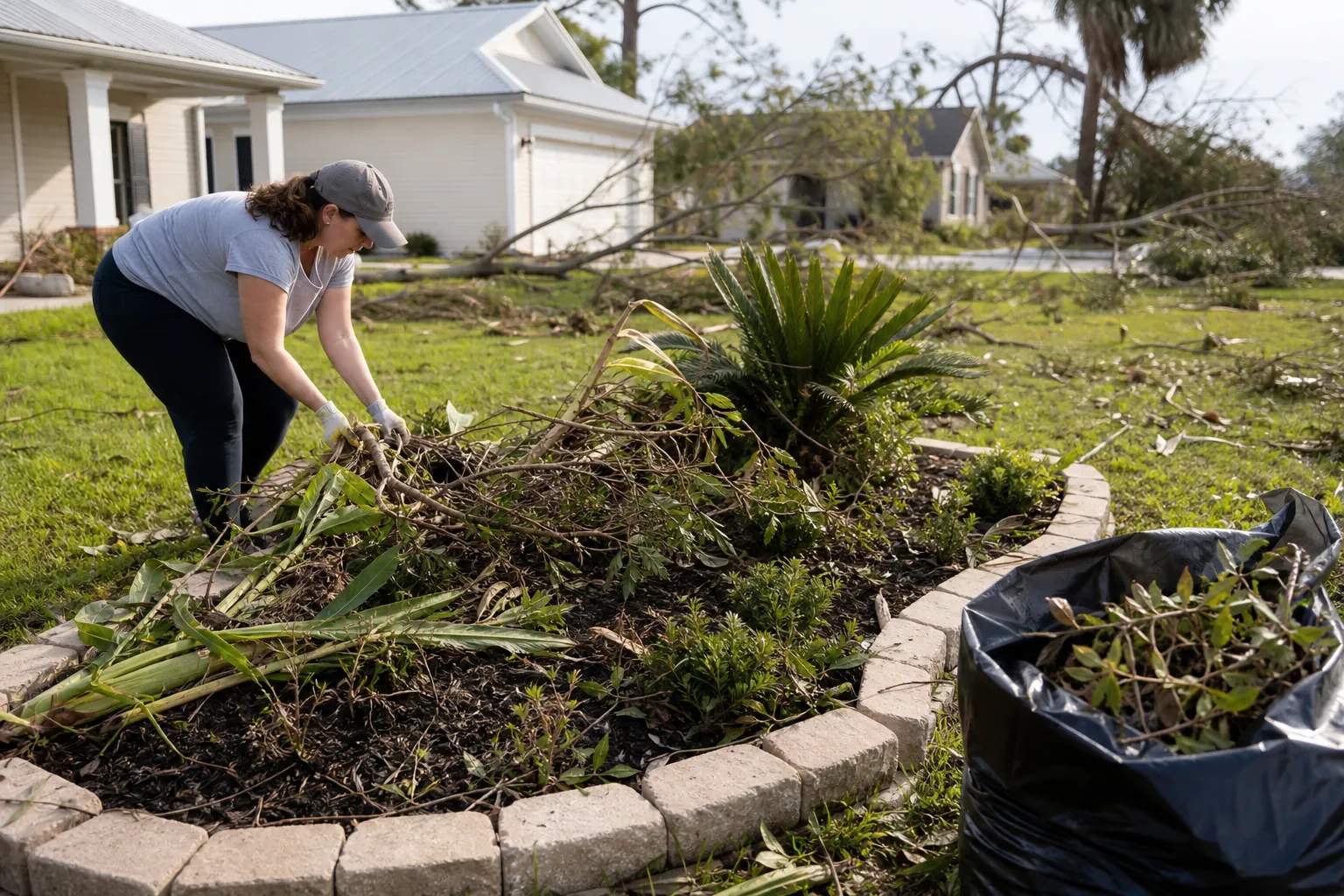
After a hurricane, plan garden bed cleanup around what you can describe, not what you can diagnose. Make separate notes about loose leaves and small twigs, hanging limbs, damaged trees, water, and electrical concerns. Do not include tree work in a household bed cleanup plan. This guide explains the difference and helps you make a clear list of questions. For more context, visit our Pensacola hurricane tree cleanup guide before you decide what information to gather.
By Tim Francis, responsible for this article’s content and editorial preparation.
What Should You Notice Before Planning Bed Cleanup?
Start by writing what you can see. Do not judge the tree or garden. The tree removal service overview gives context for tree-related questions. The contact page gives you a place to ask them. Neither page confirms that service is available in Pensacola.
A useful note is clear and limited. “Leaves cover the front flower bed” describes what you see. “A branch appears to be hanging above that bed” does too. “The tree is stable” is a judgment that a household cleanup note cannot prove. Keep these types of statements separate throughout your list.
Storm-damaged tree work can involve falling limbs and unstable trees. So, do not let a garden bed task list grow to include tree work. Source: OSHA’s hurricane tree-trimming guidance.
- Describe each bed by a familiar feature, such as the front porch or a named group of plants.
- List visible leaves and twigs apart from visible branches and tree damage.
- Write “unknown” when you cannot answer a question from what you can see.
- Keep garden notes separate from judgments about a tree’s condition.
This approach makes your list easier to read later. It also helps keep an early guess from becoming a fact. You do not need a detailed garden map. A few short sentences for each bed can give everyone in the household a shared starting point.
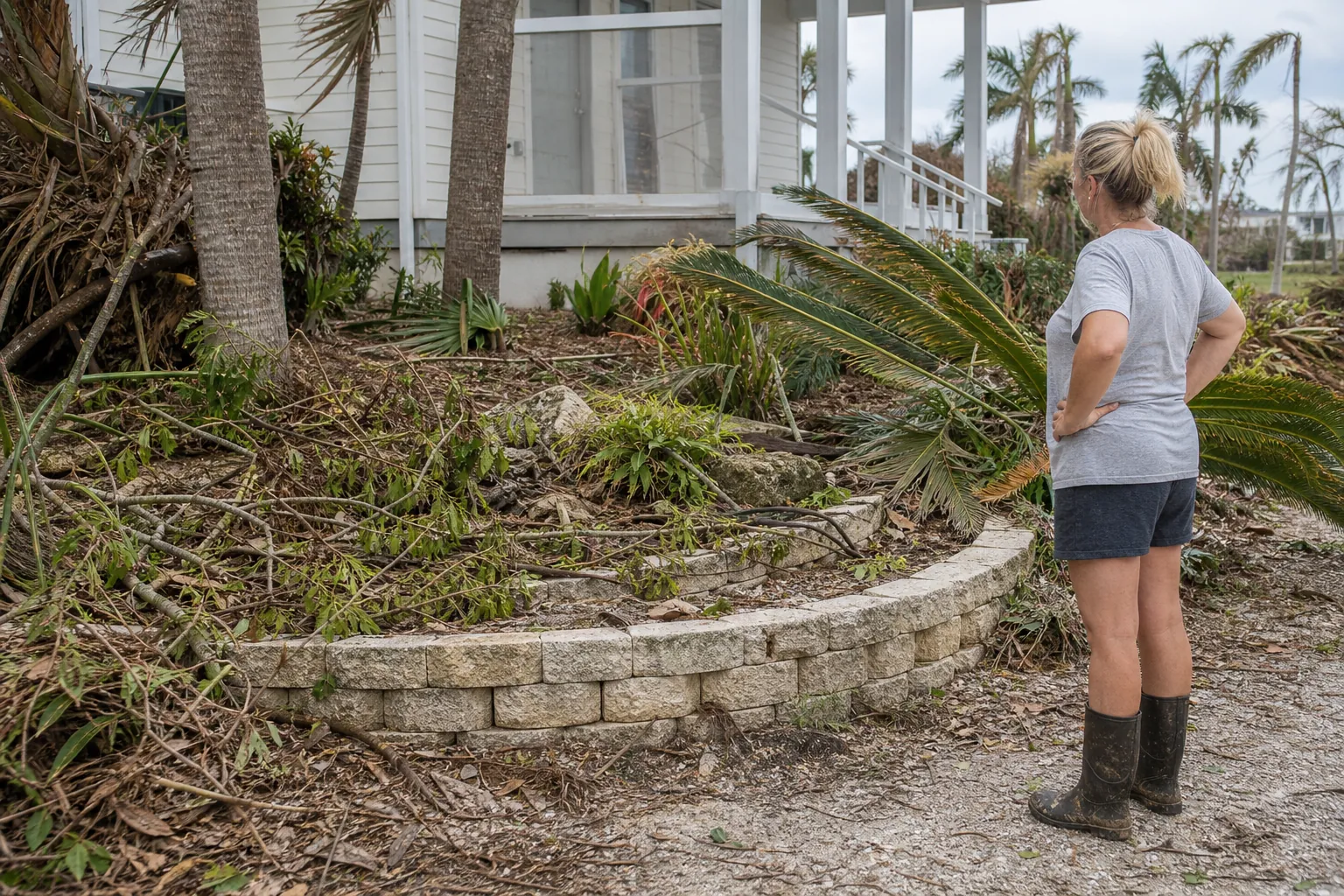
Which Debris Belongs Outside a Household Cleanup Plan?
Put hanging limbs, damaged trees, and branches you cannot assess in a separate set of questions. Do not add them to the light-debris task list. Read the tree trimming service description for context about that type of work. Use the inquiry page to ask what information may be useful.
OSHA lists tensioned tree material and rolling or sliding limbs as hazards in storm-damaged tree work. A branch’s appearance alone does not answer those concerns. Source: OSHA’s hurricane tree-trimming guidance.
Do not turn “a branch is across the bed” into an instruction to move it. Record what you see and keep the tree-work question separate. This article does not give directions for cutting, pruning, or handling branches.
- Give hanging limbs their own entry. Do not list them as “twigs.”
- Record where you see a branch. Do not guess how it is supported.
- Mark tree-related questions as unresolved. Do not assign them to someone in the household.
- Keep the original wording of an observation when you share the list.
“Light debris” describes what you see. It is not a full safety check. A bed may have loose leaves and also sit under visible tree damage. Record both observations. One does not answer the questions raised by the other.
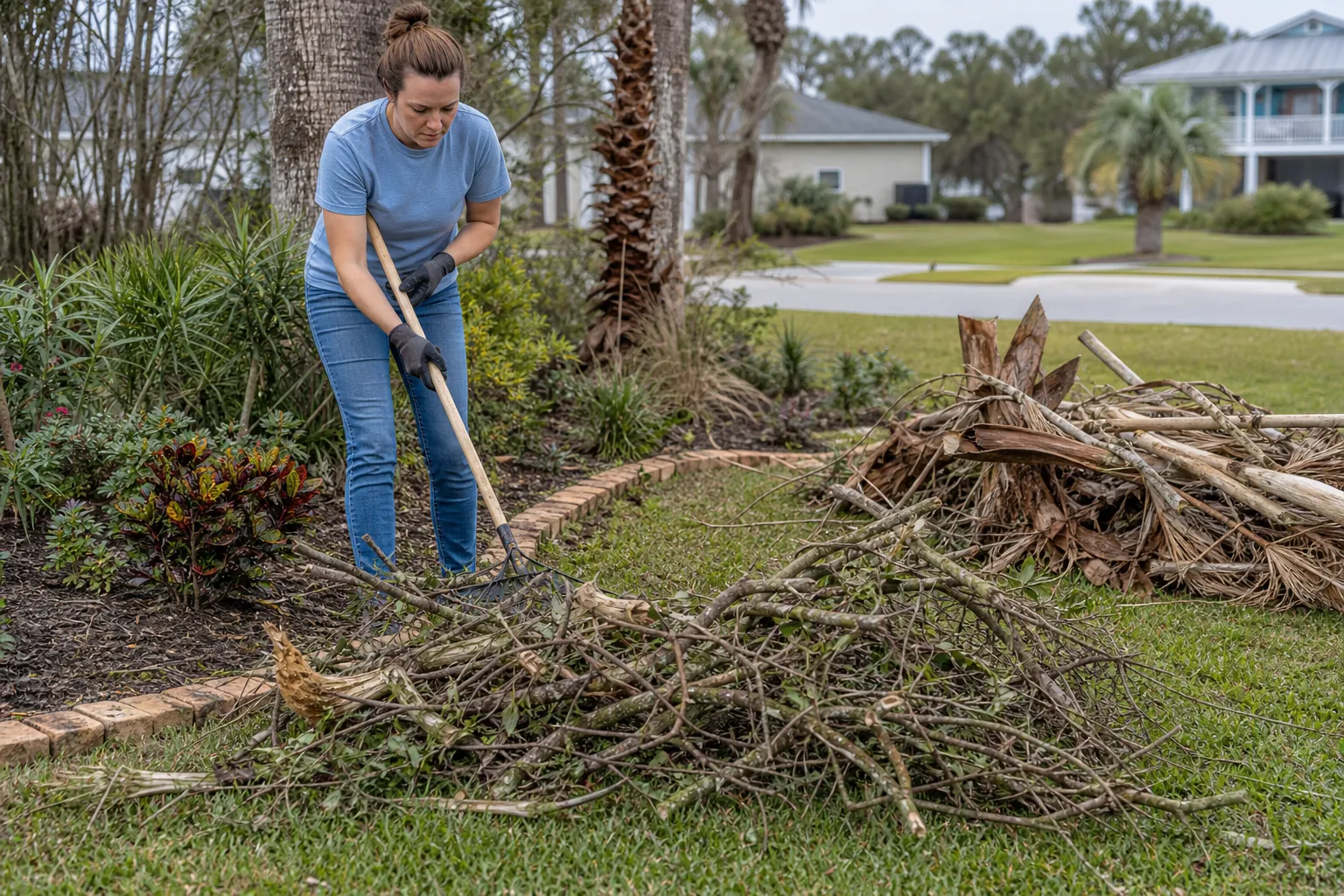
What If Water or Electrical Concerns Are Present?
Keep water and electrical concerns separate before you turn a garden bed list into a cleanup plan. The tree removal information page explains the tree-service category. The Florida Foliage company background describes the business. These links do not replace the trusted storm guidance below.
Floodwater can contain debris, chemicals, waste, and wildlife. Underground or downed power lines can also charge the water with electricity. Do not treat visible water as an ordinary garden chore. Source: Ready.gov’s hurricane guidance.
Do not touch electrical equipment if it is wet or if you are standing in water. Source: Ready.gov’s hurricane guidance. Downed electrical wires can also send power through trees and fences. Avoid direct and indirect contact. Source: OSHA’s hurricane tree-trimming guidance.
- Keep notes about water in a separate part of your written record.
- Describe visible electrical concerns. Do not try to decide if equipment has power.
- Do not call water “clean” based only on its appearance.
- Keep unanswered electrical questions out of the usual household task list.
Clear wording matters. “Water is visible beside the rear bed” is useful. “The water is harmless” adds a claim that the observation does not support. Use the same care when writing about wires, fences, and nearby trees.
Build a Simple Bed-by-Bed Planning List
A short written plan can help the household organize questions. It should not become a set of instructions for clearing debris. Read the tree trimming overview to learn about one service category. Read the tree removal overview to learn about another. Keep both apart from notes about ordinary garden conditions.
The goal is a clear record, not a technical report. One page may be enough for a small garden. In a larger yard, make a separate entry for each bed with a familiar name. This can keep notes from getting mixed up. Choose the format your household will use.
- Write the name or familiar location of each garden bed you want to include.
- Briefly describe the leaves, twigs, branches, or water you can see near that bed.
- Separate ordinary planning tasks from open questions about trees or electricity.
- Put the questions you want to ask in one clearly marked section.
- Keep a dated copy so later edits do not erase your first notes.
This numbered list helps you organize information. It does not confirm that anything is safe. Finishing the list does not prove that a tree or garden bed is safe. Use it to make information clear, especially when more than one person is taking notes.
- Use the same names for beds on every version of the list.
- Write full sentences when a short label could mean more than one thing.
- Leave a separate space for questions that have not been answered.
Do not turn the document into a long wish list. For now, use it to show what you see, what you do not know, and what you want to discuss. You can make a separate page for garden appearance goals later.
Keep Plant Observations Separate From Diagnosis
Your garden record can include notes about plants without naming causes or predicting how they will recover. The company information page gives background on Florida Foliage. The contact form gives you a way to send questions. Neither a written note nor an image can provide a diagnosis.
Use plain descriptions, such as “leaves are lying over the planting label” or “the plant looks different from my earlier garden notes.” Do not name a cause unless you have facts to support it. This guide does not diagnose plants, roots, soil, or trees.
Old garden records can help you identify plant names and locations. A planting list may show which plants are in each bed. It does not show the plants’ condition after the hurricane. Keep plant names and condition in separate fields if that makes your record easier to follow.
- Use plant names only if you already know them.
- Describe visible changes. Do not name a disease or predict what will happen.
- Mark a plant name as uncertain if you are not sure.
- Use existing images to help identify things, never as proof that a tree is safe.
If you share an existing image, add a plain caption that says what question it relates to. Without context, a reader may not know what concerns you. Do not use images to make claims about stability, electrical conditions, or whether tree work can go ahead.
Careful wording is useful. It helps readers tell what you observed from what still needs an answer.
Organize the Household Without Expanding the Task
Household planning works best when the written plan has a clear scope. The tree trimming information can help you tell a tree-service question from garden care. The Florida Foliage contact options can keep those questions in one conversation. These resources do not confirm local availability.
OSHA says to keep people who are not needed outside work and drop areas during tree work. Source: OSHA’s hurricane tree-trimming guidance. Ready.gov advises wearing protective clothing and suitable masks when cleaning debris. Source: Ready.gov’s hurricane guidance.
These safety points are not the same as household planning tips. Choosing one person to take notes, using the same names for garden beds, and putting questions in one document are suggestions for organizing. They are not technical instructions for handling storm debris.
- Choose one person to keep the shared list so different versions do not conflict.
- Agree on the names everyone will use for garden beds.
- Keep tree-related questions separate from garden appearance goals.
- Remove any task wording that treats an unanswered question as settled.
For example, replace “finish the bed under the damaged branch” with two entries. One can describe the bed. The other can describe the visible branch concern. This changes how you organize the record, not the outdoor conditions.
A shared list also gives everyone a place to add questions without rewriting the whole plan. Leave room for unknowns. A neat checklist is less useful than an honest one that shows what is still unknown.
Make a Neutral Contact Inquiry
Use the contact page to ask about your situation. Read the Florida Foliage background page first if you want to learn about the company. Florida Foliage is based in Daytona Beach. This Pensacola-focused article does not confirm a Pensacola office, local crews, response times, or service availability.
You can call (386) 481-7913. You could start with: “My property is in Pensacola, and I have questions about visible hurricane-related tree debris near garden beds. Is this a location and type of inquiry your company can consider?” This question does not assume what the answer will be.
- Say at the start of your inquiry that the property is in Pensacola.
- Share your short notes about what you see, not a diagnosis.
- Ask what information would be useful before sending a lot of material.
- Keep light garden debris separate from tree-related concerns.
For more planning context, return to the Pensacola hurricane tree cleanup resource. Use that page with your bed-by-bed notes. It does not confirm that a specific tree or cleanup task is safe.
Frequently Asked Questions
These answers explain the difference between household planning and tree work. The tree removal service information gives context about that type of service. The inquiry form lets you ask questions about your location without assuming service is available.
Can I Treat All Debris in a Garden Bed as Light Cleanup?
No. Keep notes about loose leaves and twigs apart from notes about hanging limbs, damaged trees, and branches you cannot assess. Storm-damaged tree work can involve falling limbs and unstable trees. Source: OSHA. The fact that a bed is used for gardening does not answer those tree-related concerns. Record what you see, but do not turn the note into directions for handling branches.
Does a Photo Show Whether a Tree Is Safe?
Do not use a photo as proof that a tree is safe. An existing image can add context to a written question, but this guide does not diagnose from images. If you share an image, add a short note about the concern you can see. Clearly mark conditions you do not know as unknown.
What Should I Record If Water Is Near a Bed?
Note visible water as a separate concern. Do not call it clean or harmless. Floodwater can contain debris, chemicals, waste, and wildlife. Underground or downed power lines can also charge the water with electricity. Source: Ready.gov. Describe where the water is. Do not draw conclusions about it.
What Information Should I Include in an Inquiry?
Start by saying the property is in Pensacola. Then describe the garden bed and visible tree-related concern in plain sentences. Keep observations apart from guesses. Ask if Florida Foliage can consider that location and type of inquiry. Calling (386) 481-7913 does not confirm availability or a response time.
Who Is Responsible for This Article?
Tim Francis is responsible for the article’s content and editorial preparation. Clinton Funk owns Florida Foliage and has decades of hands-on tree care experience. This does not claim that Clinton Funk personally reviewed this draft. Florida Foliage is based in Daytona Beach. The article’s focus on Pensacola does not confirm a local office or crews.
Call (386) 481-7913 to talk through next steps.