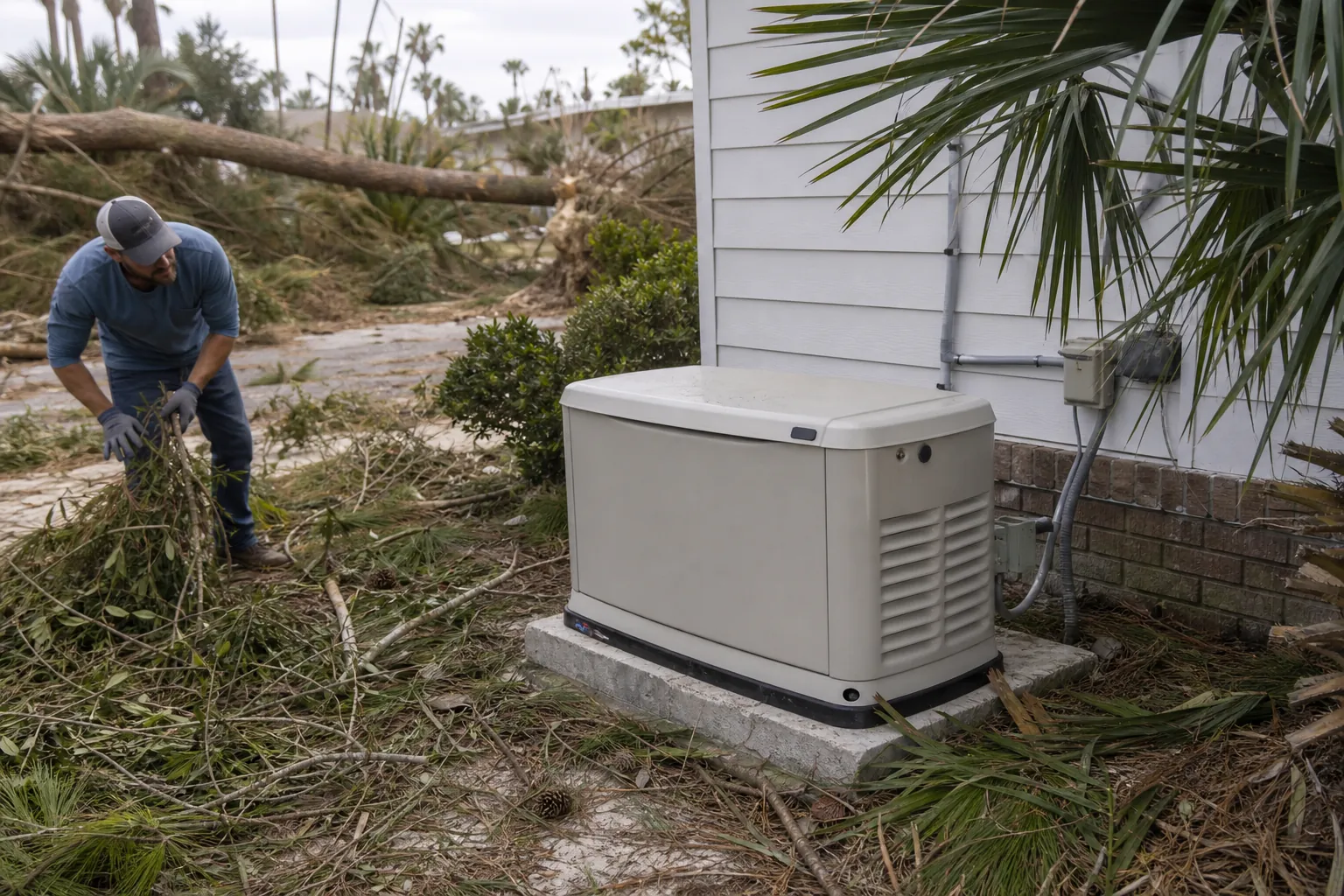
Never use a portable generator inside your home or garage, even during hurricane cleanup. The National Weather Service’s after-hurricane guidance says this directly. For Pensacola homeowners, keep that rule separate from choices about fallen branches, damaged trees, and household tasks. This guide supports our Pensacola hurricane tree cleanup resource. It shares sourced safety reminders and a simple way to organize what you notice, your questions, and later conversations.
By Tim Francis, responsible for this article’s content and editorial presentation.
Can a Generator Go Inside During Hurricane Cleanup?
No. Never use a portable generator inside your home or garage, according to the National Weather Service. This rule still applies during cleanup. Florida Foliage’s tree removal service information and tree trimming service overview explain separate types of tree services. They do not give generator placement instructions or confirm service in Pensacola.
A cleanup checklist can get confusing when it puts household tasks, generator questions, and tree concerns in one long list. Separate these topics before you choose what to discuss. A question about a branch near a garage is different from a question about generator use. Do not hide either in a broad note that says only “clean up the yard.”
This article does not give an outdoor placement plan or operating instructions. Its generator guidance is limited to the rule cited above. Keep product questions in a separate part of your household notes. Do not treat a tree service page as an operating guide.
- Write generator questions under a heading separate from tree cleanup questions.
- Describe the location in plain words, such as “beside the garage,” without calling it suitable.
- Keep the generator’s existing product information together so it is easy to find.
- Use a shared list so household members can see which questions are still open.
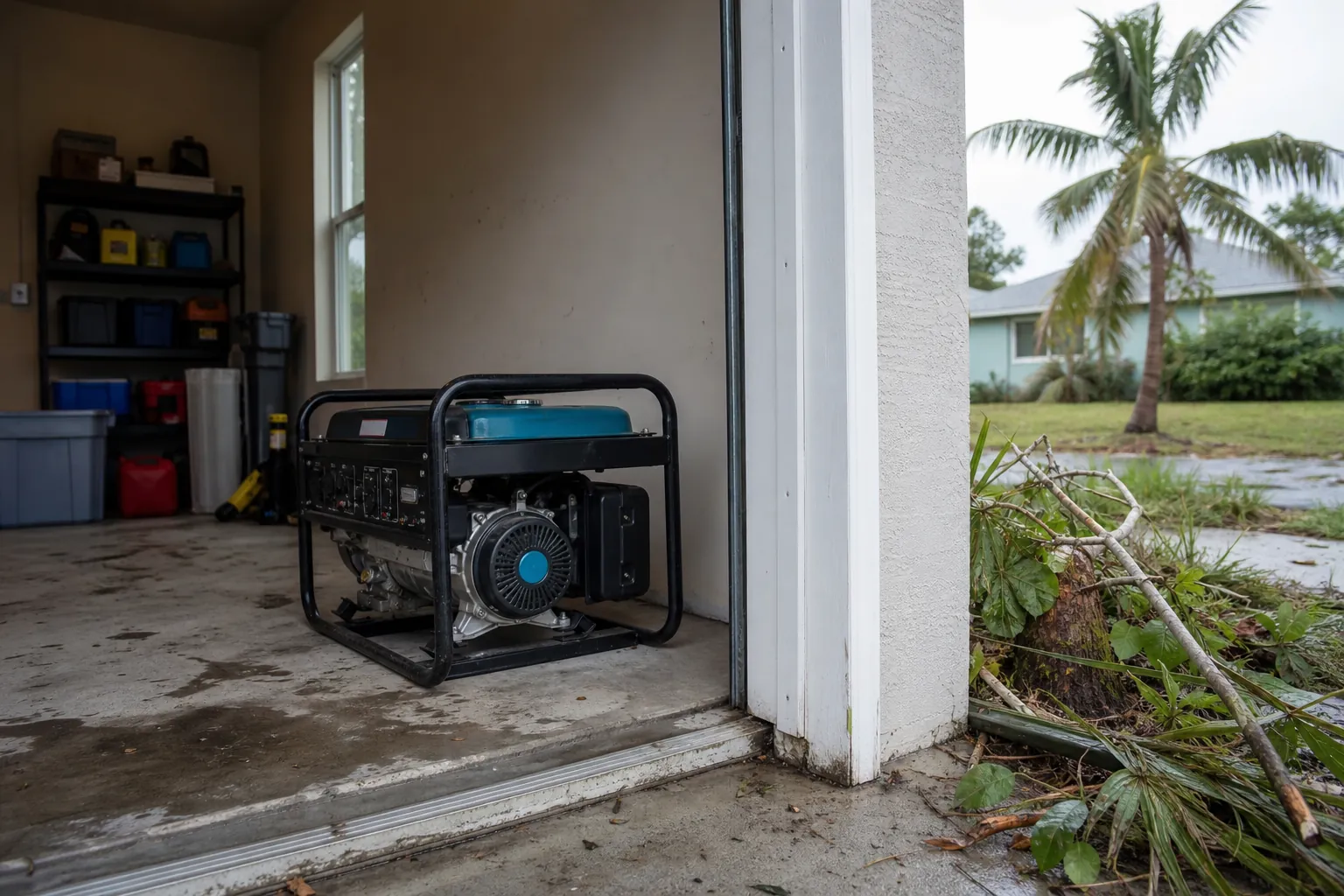
What Should You Notice Before Organizing Cleanup?
The National Weather Service says to walk carefully around the outside of your home. Check for loose power lines, gas leaks, and structural damage. For context, read Florida Foliage’s company background and use its contact information to frame questions. These resources do not assess your property.
Keep the source’s instruction separate from your household inventory. An inventory records what you noticed. It is not a reason to go closer for a better description. It is also not a technical inspection. Short notes can help, even if they leave questions open.
For example, “a branch is visible beside the garage” records what you saw. “The tree is stable” makes a claim that the observation does not prove. A picture can help explain which tree you mean, but it cannot prove that a tree is safe.
Use everyday words for locations that your household understands. “Front yard tree beside the driveway” is often clearer than a vague phrase like “that big tree.” You do not need to name a species to describe the subject of a question.
- Record only what you noticed. Do not fill gaps with guesses.
- Separate visible conditions from questions about what they mean.
- Label pictures as context, not proof of a tree’s condition or safety.
- Mark uncertain details “unknown” until you have a clearer answer.
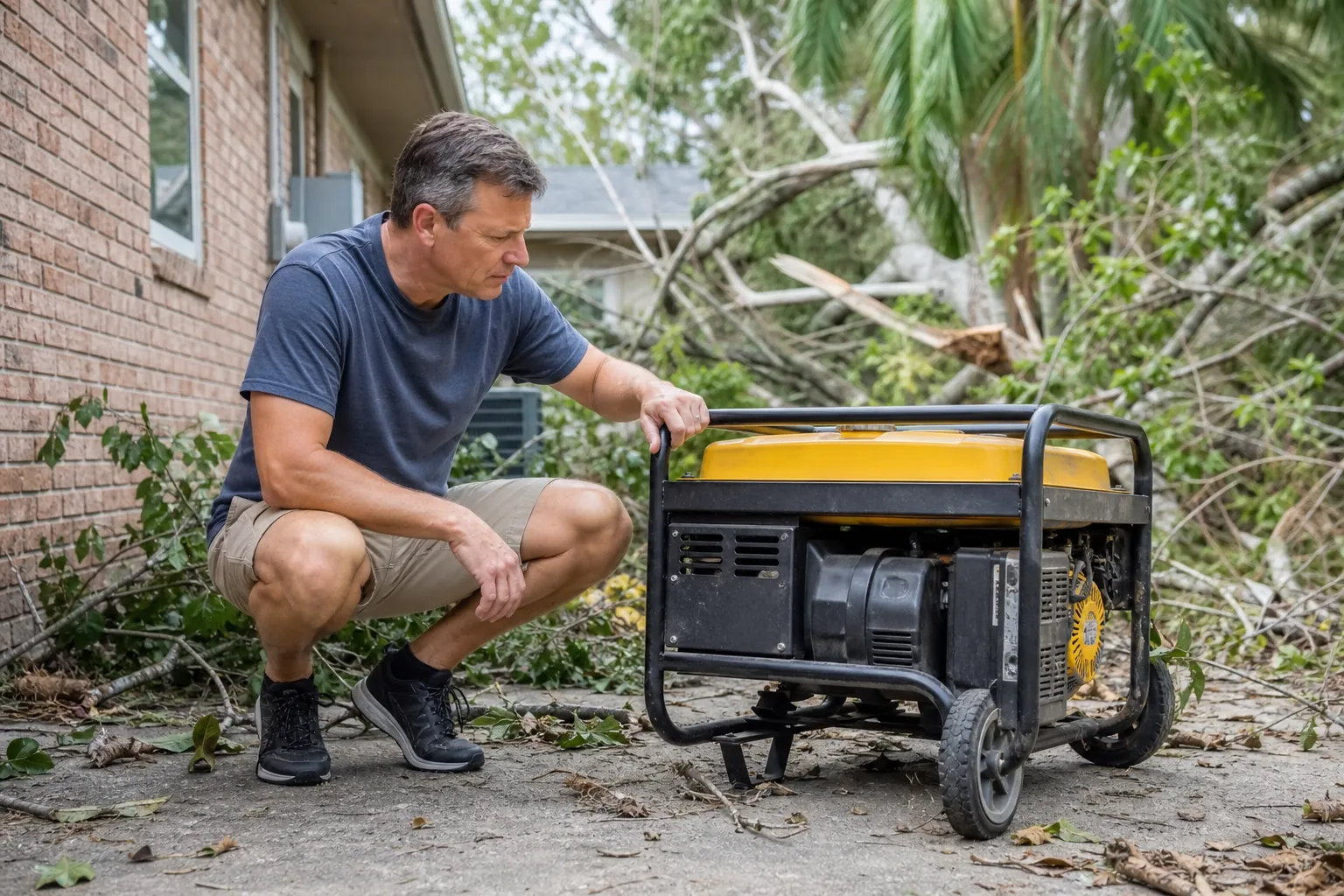
What Changes When Water or Wet Equipment Is Present?
Do not touch electrical equipment if it is wet or if you are standing in water, says Ready.gov. Keep electrical questions separate from tree questions. The tree removal information page and general inquiry page give company context. They do not assess wet equipment or your property’s condition.
Ready.gov also says floodwater can contain debris, chemicals, waste, and wildlife. Underground or downed power lines can also charge the water with electricity. Both facts appear in its hurricane guidance. Do not describe water as harmless based on how it looks.
For planning, give water-related observations their own heading. This helps keep them apart from a list of branches or leaves. It also stops a brief note like “yard mess” from hiding that your question involves water or electrical equipment.
You can keep a useful record without answering every question yourself. A blank field or an “unknown” entry is more honest than a firm label based on a quick look. Do not turn an organizing worksheet into a checklist that says the property is ready for work.
- Use separate entries for visible water, electrical equipment, and tree debris.
- Copy your question into the notes instead of making up a conclusion.
- Do not use a photograph to label water or wet equipment as safe.
- Keep unanswered electrical questions out of a completed-task column.
Keep Home Entry Separate From the Cleanup List
Your household task sheet should not decide if a building can be entered. The company information page explains Florida Foliage’s background. The tree trimming service description covers a separate topic. Neither page assesses a storm-affected building or replaces the sourced entry guidance below.
The National Weather Service says to stay out of any building if you smell gas, if floodwaters remain around it, or if authorities have not declared it safe. Keep that instruction with its original after-hurricane source. Do not shorten it to “check the house.”
Lists often mix indoor chores with yard work because both are household tasks. This can blur two different decisions. A note about a room, garage, or storage area should not become a reason to enter it. The list helps you remember. It does not give permission to act.
For basic organizing, put indoor questions on a page separate from outdoor observations. This also makes later discussions clearer. One person can refer to the building question without losing it among notes about fallen limbs.
- Give building-entry questions their own heading, separate from yard cleanup.
- Keep the source link beside the full entry reminder so its meaning stays clear.
- Mark indoor task ideas as ideas, not instructions to enter a building.
- Use the same room and building names throughout the household notes.
Build a Household Cleanup Record You Can Actually Use
A short record can help you explain your questions without choosing a tree service in advance. Compare the description of tree removal services with the description of tree trimming services for general context. A visible branch or a tree that looks damaged does not, by itself, show which service is right.
Choose one place for the record: a notebook, a document, or a shared phone note. The format matters less than clear headings. Avoid making several almost identical lists. They can leave household members unsure which one has the current questions.
The numbered list below is an editorial way to organize notes. It does not set a work order, assess a tree, or give generator operating directions.
- Create separate headings for generator questions, tree observations, water observations, and building questions.
- Add plain location descriptions under each heading, using names your household knows.
- Write each visible observation apart from any question about what it means.
- Add the relevant source link to each safety reminder you copy into the record.
- Put unanswered questions together so you can find them before a conversation.
- Update the record when you learn something new. Keep earlier uncertainty clearly marked.
A useful entry might say: “Garage-side tree: branch visible on the ground. Question: what information would be useful for a tree service inquiry?” It describes the topic without judging the tree or deciding how to handle the branch.
- Keep each entry short enough for another household member to understand quickly.
- Use dates to tell older notes from newer observations.
- Remove duplicate questions, but keep details that explain the subject.
Separate Visible Tree Conditions From a Diagnosis
The tree trimming information and tree removal overview can help you understand Florida Foliage’s service types. They do not turn a homeowner’s description into a diagnosis. Focus your inquiry on what you saw and what you want to ask. Do not name a solution before the condition is understood.
Words like “leaning,” “broken-looking,” or “branch on the ground” may describe what caught your attention. They do not explain why it happened or show the condition of the whole tree. If a detail is uncertain, say so. Your notes do not need to sound technical.
Pictures have a limited role. An existing picture can help identify the tree or show what your question is about. Do not present it as proof that a tree is safe. A clear view does not answer questions about the whole tree.
Keep the generator context factual too. “Generator questions and tree debris are on the same household list” explains the planning issue. It does not show a suitable place to use a generator or a way to handle debris.
- Use “I noticed” for visible details and “I want to ask” for questions.
- Do not say a tree needs removal based only on a household note.
- Describe pictures as reference material, not as a safety assessment.
- Do not replace an unknown condition with a label that sounds more certain.
Keep Sourced Reminders With Your Cleanup Notes
Florida Foliage’s background and ownership information and contact options serve different purposes from federal weather and preparedness guidance. Keep those roles clear in your notes. Company pages explain the business. The linked public sources support the specific storm safety statements in this article.
Ready.gov says to wear protective clothing and appropriate masks when cleaning debris. Keep that wording and its hurricane guidance link. This article does not choose clothing or masks for a specific task or describe ways to handle debris.
A short reminder sheet is easier to use than a long set of copied paragraphs. But shortening a reminder should not change its meaning. Keep the original link so anyone reading the household record can see the full source, not just a summary.
It also helps to mark basic organizing advice as such. Using a shared notebook is an editorial suggestion. It is not the same kind of statement as the National Weather Service’s rule about generators inside homes and garages.
- Put each safety reminder beside its source instead of in a summary without a link.
- Keep household choices, such as note format, separate from sourced instructions.
- Use direct wording instead of slogans that leave out key details.
- Check the original source if a shortened note leaves you unsure.
Make a Neutral Contact Step Without Assuming Availability
Use Florida Foliage’s contact page for a general inquiry and its company background page to learn who you are contacting. Florida Foliage is headquartered in Daytona Beach. This article does not establish a Pensacola office, local crews, response times, or availability in your location.
You can call (386) 481-7913 to ask whether the company can discuss your tree-related question and whether its services are available in your location. Keep your request neutral. The phone number is a way to make contact, not a promise of a visit or a certain response.
For more context, return to the Pensacola hurricane tree cleanup guide. Keep generator questions, sourced storm reminders, and visible tree observations separate when preparing your inquiry.
- Say your property is in Pensacola before describing the tree question.
- Ask if the company serves your location instead of assuming it from this article’s topic.
- Use your short observation record to explain the subject without giving a diagnosis.
- Keep unanswered generator or electrical questions separate from the tree inquiry.
Frequently Asked Questions
These answers separate reminders backed by sources from household organizing suggestions. The tree removal service page offers general service context, and the contact page gives you a way to ask questions. Neither page assesses a property or confirms that Florida Foliage is available for a Pensacola project.
Can I use a portable generator in the garage during cleanup?
No. Never use a portable generator inside your home or garage, according to the National Weather Service. Cleanup does not change this rule. Keep generator questions separate from your tree task list. This article does not give an outdoor placement plan or operating directions for a specific generator.
What if electrical equipment is wet?
Do not touch electrical equipment if it is wet or if you are standing in water, says Ready.gov. Keep this reminder with its source in your household notes. Record unanswered questions apart from tree observations. Do not use a picture or the equipment’s appearance to label it safe.
Does a photograph show that a tree is safe?
No. Do not use photos as proof that a tree is safe. An existing photo can help identify the tree or the visible condition you are asking about, but it is not a diagnosis. Describe what the image shows in plain words. Keep questions about the tree’s overall condition separate from that description.
What should I include in a tree-related inquiry?
Include your location, a short description of what you can see, and the question you want to ask. For example, identify the tree beside the garage and describe a branch you noticed. Do not decide what service it needs. Ask whether Florida Foliage serves your location. The article’s focus on Pensacola does not confirm local availability.
Who is responsible for this article and who owns Florida Foliage?
Call (386) 481-7913 to talk through next steps.