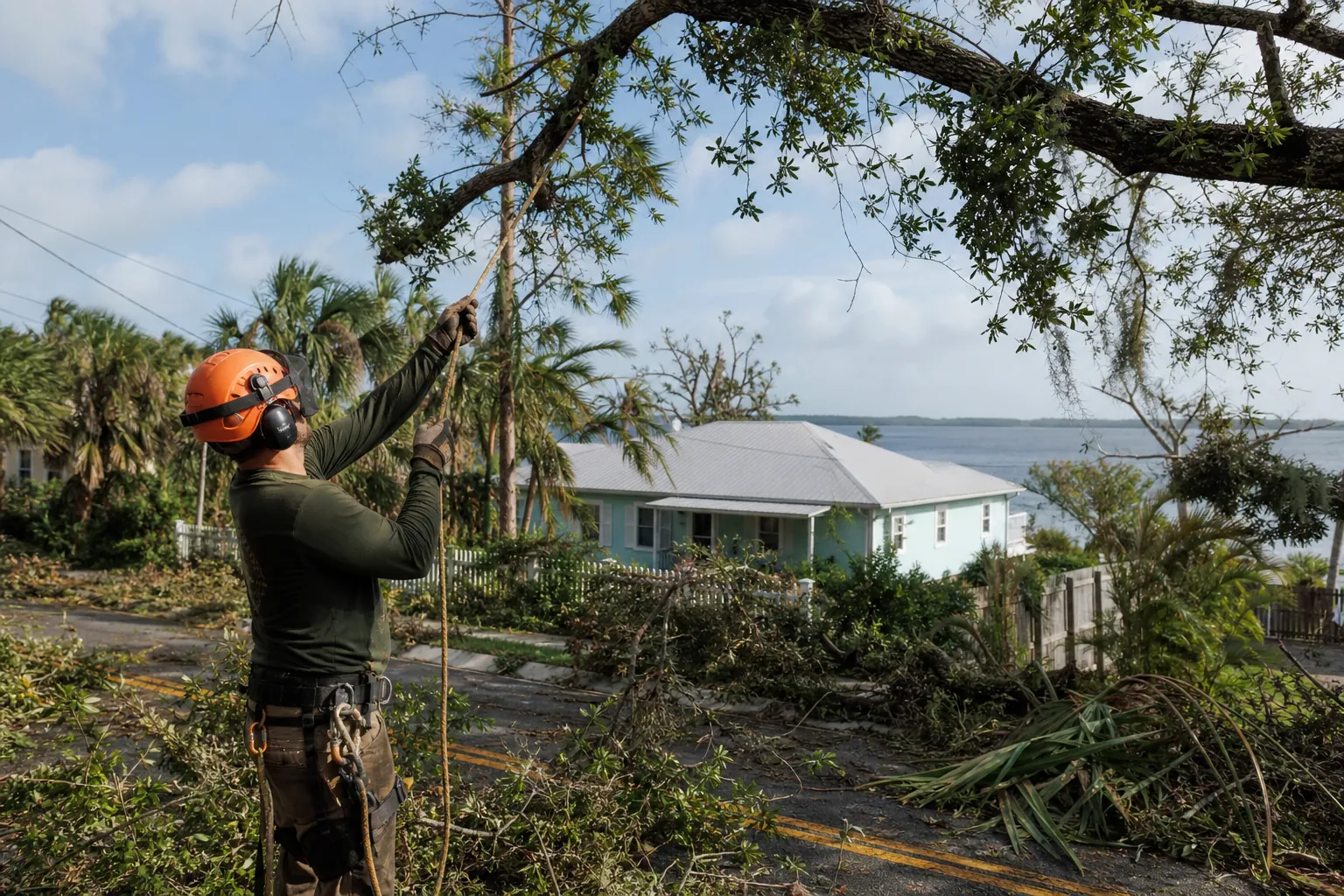
After a hurricane passes through New Smyrna Beach, the most noticeable tree damage is often on the ground. Broken limbs, scattered leaves, and fallen trunks make it easy to overlook a different problem: a branch that broke but never reached the ground. A hanging limb can remain lodged in a canopy, caught against another branch, or attached by a narrow strip of wood.
These branches deserve attention even when the tree looks mostly intact. A change in wind, movement in supporting limbs, or deterioration of the remaining attachment can cause them to fall without a clear warning. For homeowners, property managers, and community associations, the first priority is keeping people away, not beginning cleanup beneath the tree.
If you need hurricane hanging branch removal in New Smyrna Beach, understanding the hazard helps you make safer decisions while arranging professional care. Florida Foliage offers tree trimming, emergency and hurricane tree removal, and tree inspections to help address storm-damaged trees according to their condition and surroundings.
What Makes A Hanging Branch Dangerous?
A hanging branch is not always a small limb dangling visibly from a tree. It may be a substantial section resting across two other branches, a split limb still carrying green leaves, or broken wood concealed inside a dense canopy. From one viewing angle, the branch can appear normal. From another, its damaged attachment may be obvious.
The danger comes from uncertainty about what is holding the branch in place. Remaining wood fibers may be under tension, while neighboring branches may be supporting weight they were not carrying before the storm. Pulling, cutting, or moving one part can change how the entire damaged section behaves.
A limb also does not have to fall straight down. It can swing from an attachment, slide along another branch, or strike nearby limbs on its way to the ground. A driveway, porch, roof, sidewalk, or parking space outside the apparent drop point may still be exposed.
- A broken limb with a visible split or torn attachment should be treated as a potential falling hazard.
- A branch resting on another branch may shift even if it appears secure during calm weather.
- A partly detached limb above an entrance or frequently used walkway deserves prompt professional attention.
- A branch touching wires creates an electrical concern that requires coordination with the utility.
Do not judge safety by the branch's size alone. Even smaller elevated wood can cause serious injury, and heavy foliage can make the actual size difficult to estimate.
What To Do Before Anyone Starts Cleanup
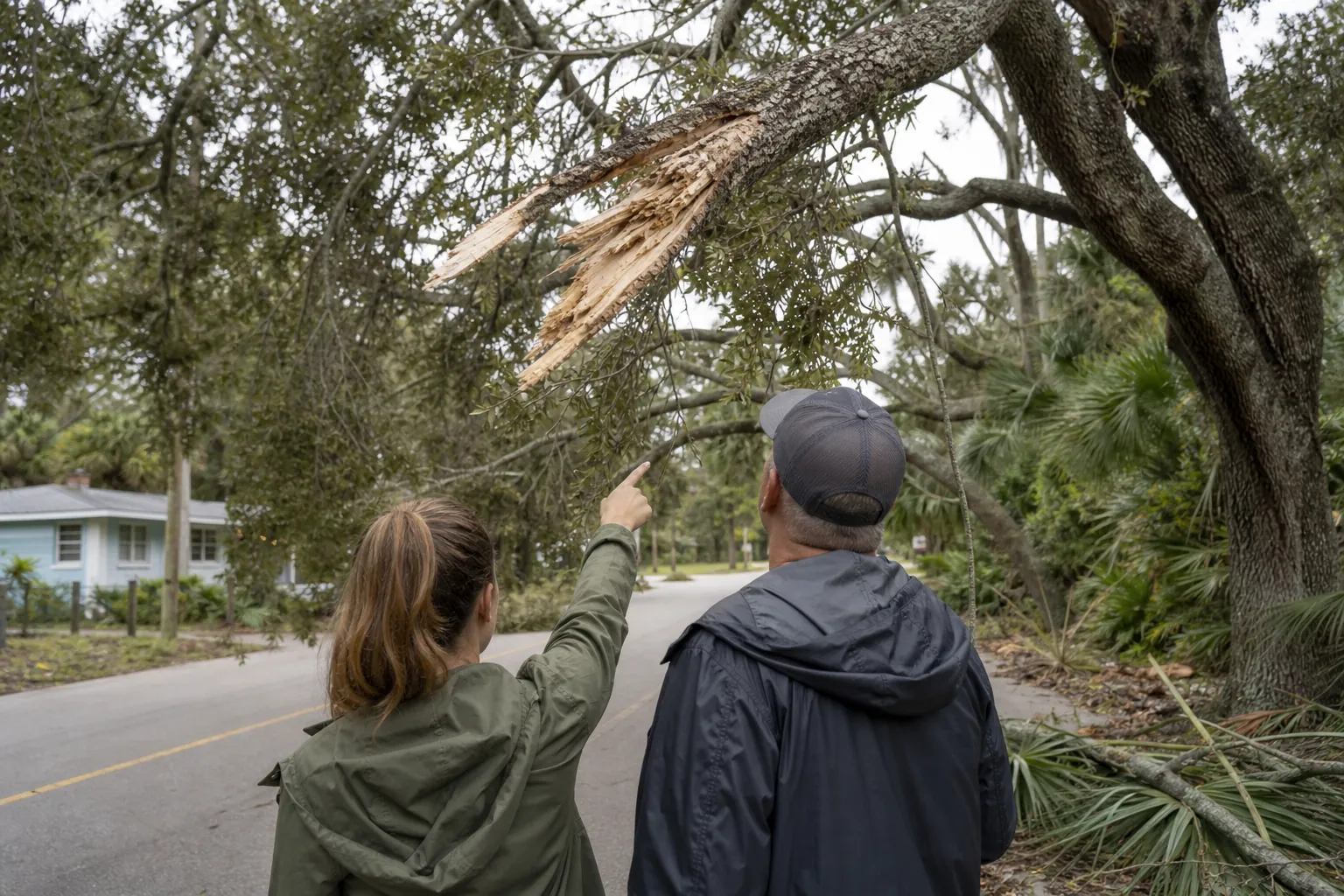
Begin by looking from a safe location outside the tree's canopy and the possible path of falling limbs. Avoid walking underneath a damaged tree to obtain a better view. If a branch is hanging over your usual exit, use another route when one is available.
Keep children, pets, visitors, and cleanup helpers away from the affected area. Stop activities that would place someone beneath the branch, including moving patio furniture, collecting debris, or retrieving a vehicle. A temporary boundary can help communicate the concern, but setting it up should not require entering the hazard area.
Do not shake the tree, throw a rope over the limb, or attempt to pull it loose with a vehicle. Those actions can release the branch unexpectedly or disturb other damaged wood. A ladder against a storm-damaged tree adds another risk because both the ladder support and the overhead canopy may be unstable.
- Identify an alternative walkway so people do not pass beneath the damaged canopy.
- Keep vehicles out of the affected area if they can be moved without approaching the hazard.
- Tell other occupants exactly which tree or entrance they should avoid.
- Call emergency services if someone is injured or there is an immediate threat to life.
If a branch touches a power line, or a wire is down nearby, stay well clear and contact the utility. Do not assume a line is safe because the neighborhood has lost power. Do not touch the tree, fence, branch, or equipment that may be in contact with electrical infrastructure.
How To Check For Damage Without Going Under The Tree
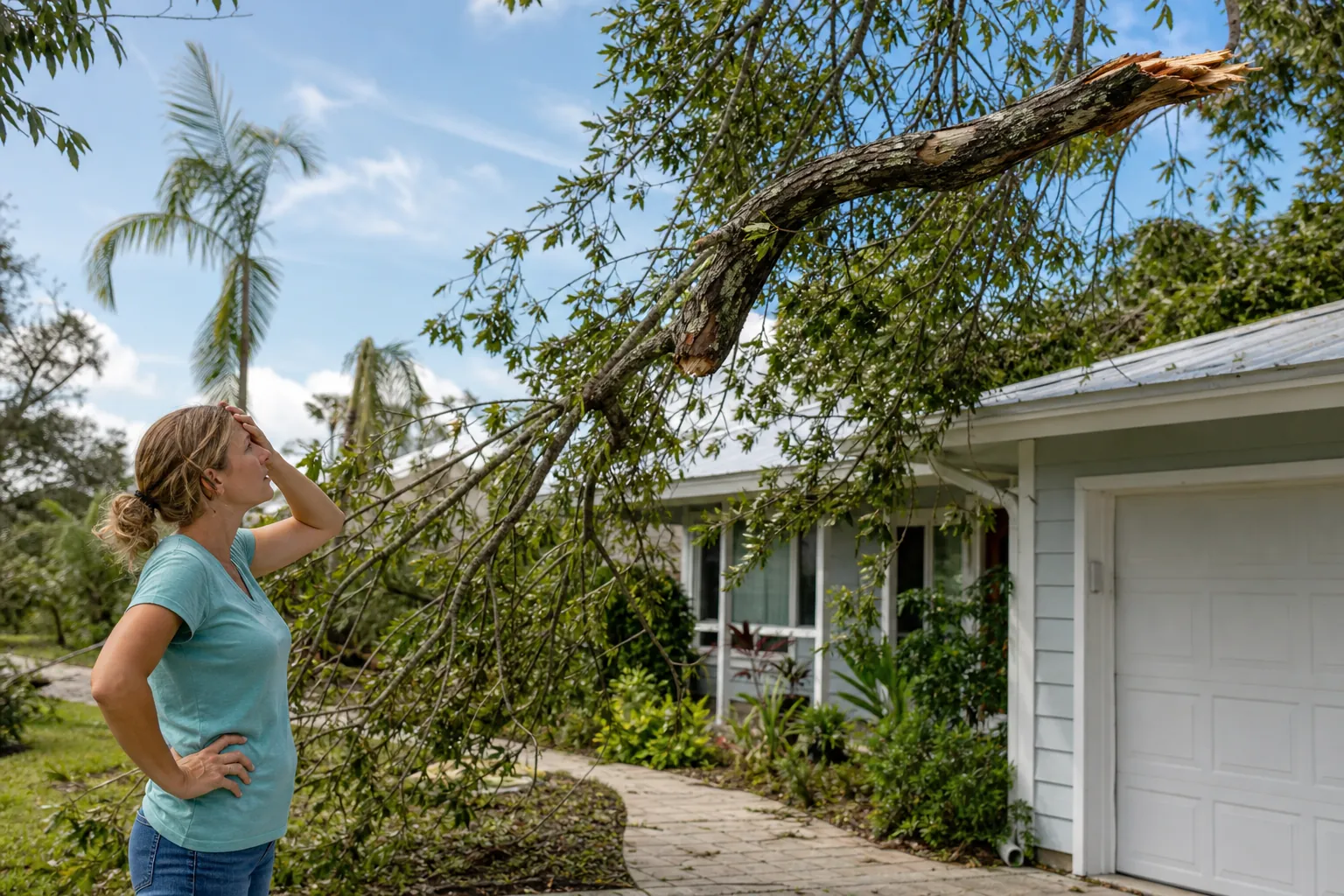
A ground-level observation from a safe distance can help you describe the problem when calling for assistance. Look for branches pointing in an unusual direction, fresh pale wood at a break, or foliage hanging lower than the surrounding canopy. Binoculars or a phone camera's zoom may help, provided you do not move closer to obtain a clearer image.
Pay attention to the whole tree, not just the visible hanging branch. A newly leaning trunk, cracks near a major branch union, soil lifting around the base, or separation between large stems can suggest a broader stability problem. These signs are reasons to restrict access and request a tree inspection rather than assume that one cut will resolve everything.
Some damage is easy to miss. Dense foliage can conceal a broken branch, and storm-twisted limbs may remain caught high in the crown. The absence of an obvious hanging limb does not establish that a tree is sound. Likewise, green leaves do not prove that a damaged branch has a reliable attachment.
When documenting damage, take wide views that show the tree and nearby structures, then closer images from the same safe position. Note whether the branch is above a roof, sidewalk, pool enclosure, driveway, or neighboring property. Explain any access limitations, such as narrow gates or standing water, when you call. Avoid entering flooded areas, where footing and hidden debris can add hazards.
Why Professional Removal Requires A Plan
Removing a hanging branch involves more than reaching the broken wood. A tree professional needs to evaluate its attachment, the strength of surrounding limbs, available access, and the consequences of releasing its weight. The method should fit the actual site rather than follow a single approach for every storm-damaged tree.
Some situations may be addressed through tree trimming that removes damaged limbs while retaining the tree. Others involve large wood above structures, limited equipment access, or a compromised trunk. Crane tree removal may be appropriate when the tree's condition and property layout call for that approach. Equipment selection depends on an assessment, not simply on the height of the branch.
Professional planning also considers what happens after the damaged section is removed. A supporting limb may reveal hidden cracks, or a branch union may be weaker than it appeared from the ground. That is why the scope of work may need to reflect inspection findings rather than rely only on a homeowner's photograph.
- The work area should account for nearby buildings, parked vehicles, pedestrians, and neighboring property.
- The removal approach should consider how damaged wood may move when its support changes.
- Utility involvement may be needed before tree work proceeds near electrical lines.
- The remaining tree should be assessed for additional defects that affect the next steps.
Ask the provider to explain the proposed scope in plain language. You should understand whether the recommendation is limited tree trimming, broader tree removal, or further inspection before a decision.
Can The Tree Stay After The Hanging Branch Is Removed?
A broken branch does not automatically mean the whole tree must come down. Some trees retain a sound trunk, stable roots, and enough healthy canopy after damaged limbs are removed. Others have structural problems that make retaining them a less suitable choice. The distinction requires an assessment of the tree, not just the branch.
Factors include the location of the break, the size of the wound, damage to major branch unions, evidence of decay, and the condition of the root area. The tree's position matters too. A defect over an unused corner of a lot presents different exposure than similar damage above a busy entrance or occupied building.
Tree trimming may be appropriate for isolated damage. Crown reduction can sometimes address selected limb length and weight when supported by the tree's condition. Canopy thinning has a different purpose and should not be treated as a universal solution for hurricane damage. Neither approach makes a tree hurricane-proof or substitutes for evaluating structural defects.
Avoid requesting that every large limb be cut back to a stub. Indiscriminate cutting can create large wounds and poorly attached regrowth rather than establish a durable structure. Ask what each recommended cut is intended to accomplish and how much healthy canopy will remain.
Florida Foliage provides arborist reports and tree inspections for situations that need a documented assessment. If tree removal is recommended, discuss the reasons, the removal scope, and whether stump grinding is part of your separate follow-up plan.
New Smyrna Beach Property Conditions That Affect The Work
In coastal Florida, hurricane winds and heavy rain can affect both the canopy and the ground supporting a tree. Saturated soil may complicate access and raise concerns about root stability. Standing water can also conceal debris or soft areas, so a clear-looking route is not necessarily suitable for equipment.
New Smyrna Beach properties vary from tightly spaced residential lots to larger parcels and shared community grounds. Fences, narrow side yards, overhead lines, screened enclosures, and nearby buildings can influence how crews reach damaged wood. Let the provider know about gates, access restrictions, and areas that should remain clear.
Property boundaries deserve attention as well. A hanging branch may extend over a neighbor's driveway even when the trunk stands on your lot. Communicate the hazard without attempting work on someone else's property or assuming that ownership and permission questions are straightforward. Confirm access and authorization before work begins.
Tree protection requirements, approvals, and storm-related procedures can vary by location and circumstance. Ask the City of New Smyrna Beach or the relevant county office what requirements apply to your property and proposed work. Do not assume that all tree work is exempt after a hurricane.
If the damaged tree is near a public sidewalk or road, explain that exposure when requesting help. Avoid placing barriers or directing traffic in a way that creates another hazard. Public access concerns may require coordination with the appropriate local authority.
Planning For HOA, Condo, And Commercial Properties
Shared properties need a clear communication plan because residents, customers, contractors, and staff may not know which trees were damaged. A hanging branch above a common walkway can expose people who never saw the storm damage report. Notify the responsible manager and identify the affected entrance, parking row, or outdoor area precisely.
Commercial tree services and HOA and condo tree services should account for how the property is used. Work near deliveries, resident parking, or accessible routes may require temporary changes to normal operations. Managers should coordinate those changes before crews arrive whenever conditions allow.
- Assign one contact who can authorize work and answer access questions.
- Share safe-distance photographs and describe the locations people use most often.
- Communicate temporary route changes to occupants and regular service providers.
- Keep records of inspection findings and the work approved for each affected tree.
Distinguish an immediate overhead hazard from routine landscape cleanup. Brush hogging or land and lot clearing may address other property needs, but neither replaces evaluating damaged limbs in standing trees. Keeping those scopes separate helps managers prioritize the actual storm-related exposure.
After initial work, check whether any restricted areas should remain closed pending additional assessment. Removing the most visible branch does not necessarily resolve every damaged tree on a large property.
Questions To Ask When Arranging Tree Service
A useful service conversation starts with the hazard and the property layout. Describe what you can see without making assumptions about how the branch should be removed. Tell the provider if there are wires nearby, a leaning trunk, damaged roofing, or people who cannot avoid the affected area.
Ask about current insurance, relevant experience, and how the site will be evaluated. Request a written scope that distinguishes hanging branch removal from other tree trimming or tree removal. If recommendations change after inspection, ask for the reason and an updated understanding of the work.
- Ask whether the remaining tree will be checked for related storm damage.
- Ask what access is needed and which areas must stay unoccupied during work.
- Confirm whether the scope includes handling the branches produced by the tree work.
- Ask whether an arborist report would help document a retention or removal decision.
If you intend to notify your insurer, document visible damage from a safe location and ask the insurer what records it needs. Do not delay restricting access while gathering paperwork, and do not assume any particular work will be covered. Coverage decisions belong to your insurer and policy.
Follow-Up Care After The Immediate Hazard
Once the hanging branch is addressed, consider a follow-up tree inspection if the storm caused multiple breaks or changed the tree's posture. Some concerns become easier to see after damaged wood is removed. Keep notes about new cracks, canopy changes, or movement at the base, and report them without entering a suspect area.
For longer-term care, ask whether selective tree trimming, crown reduction, or canopy thinning has a clear purpose for the remaining tree. The goal is appropriate structure and condition, not simply removing as much foliage as possible. Trees vary, and maintenance should reflect their species, age, existing defects, and surroundings.
If a tree must be removed, stump grinding may be considered separately based on future use of the area and site conditions. Keep immediate hazard work distinct from later property improvements so each decision receives the attention it needs.
For help with a hurricane-damaged tree in New Smyrna Beach, call Florida Foliage at (386) 481-7913. Describe the hanging branch, nearby structures, and any access concerns. Until the tree can be assessed, keep people clear and leave damaged overhead wood undisturbed.
Call (386) 481-7913 to talk through next steps.