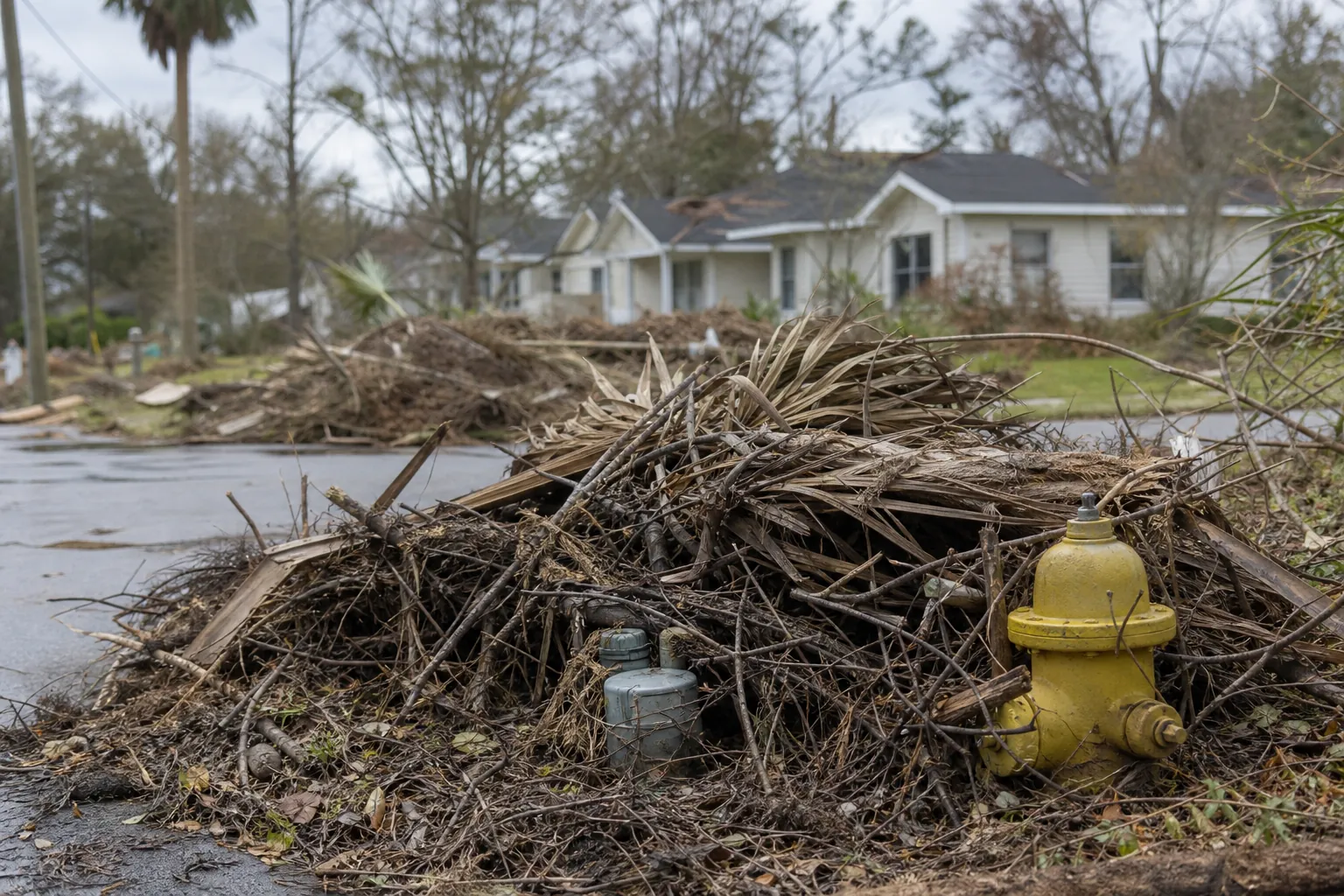
After a hurricane in Pensacola, note if debris hides meters or hydrants. Do this before you discuss where material might go. OSHA’s debris collection guidance says debris can hide meters and fire hydrants. Record what you see, what is blocked, and what you cannot confirm. Do not try to uncover equipment. This guide adds a focused way to record what you see and questions to our Pensacola hurricane tree cleanup guide.
By Tim Francis, responsible for this article’s content and editorial preparation. Florida Foliage is based in Daytona Beach. Its owner, Clinton Funk, has decades of hands-on tree care experience. This article does not mean there is a Pensacola office or service in Pensacola.
Why Do Meters and Hydrants Belong in Your Debris Notes?
Meters and hydrants belong in your notes because debris can hide them, as OSHA explains. The goal is to record what you can see, not to check equipment. Florida Foliage’s tree removal service overview and contact information offer context for later questions. They do not show that service is available in Pensacola.
A home storm list often starts with clear items: branches, leaves, furniture, and damaged belongings. Add a separate heading for known meter and hydrant locations. This keeps questions about what you can see from getting lost in a long yard description.
Use familiar words for locations, such as front walk, driveway side, or street-facing lawn. If you do not know where a meter is, say so. A blank space may look like a check is complete. A note that says “unknown” tells the next reader what is not clear.
Do not use this worksheet to plan where debris will go. Use it to list questions before you discuss placement. It does not tell anyone how to move, stack, or remove material.
- Give meters and hydrants their own heading, apart from the general debris list.
- Describe each location with words other people in your home know.
- Mark an uncertain location as unknown instead of guessing.
What Can You Observe Without Making a Diagnosis?
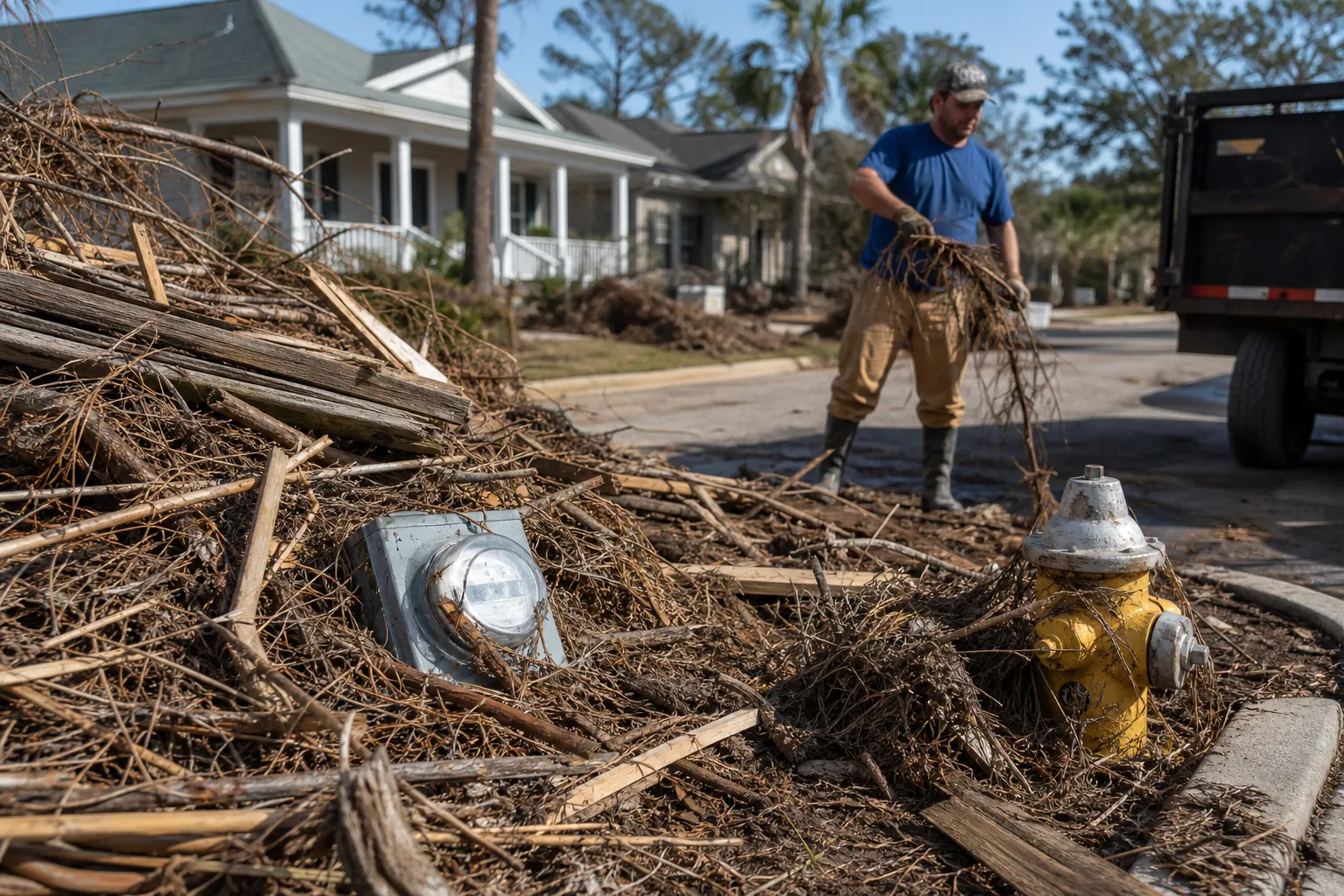
You can note if a known feature is visible, partly blocked, or not visible from where you are. These notes do not tell you a tree’s condition or confirm equipment status. The tree trimming service description gives service context. The Florida Foliage company background tells you about the business behind this article.
Write only what you noticed. “Branches overlap the area where the meter was visible before the storm” describes what you saw. “The meter is damaged” says more. Do not write that unless a reliable source has confirmed it.
The same rule applies to trees. A photo of branches beside a hydrant does not prove that a tree is safe. A simple home note also cannot tell you the state of a trunk, root system, or remaining limb.
If you have photos that were already taken, add a date and a plain description. Use them to help you remember, not as proof of safety. Part of the location may be outside the frame, so note what is missing.
- Write “partly obscured” when you can see only part of a known feature.
- Keep what you saw apart from what you think caused it.
- Use “not confirmed” when your notes or existing images do not answer a question.
How Should You Organize Notes About Possible Debris Locations?
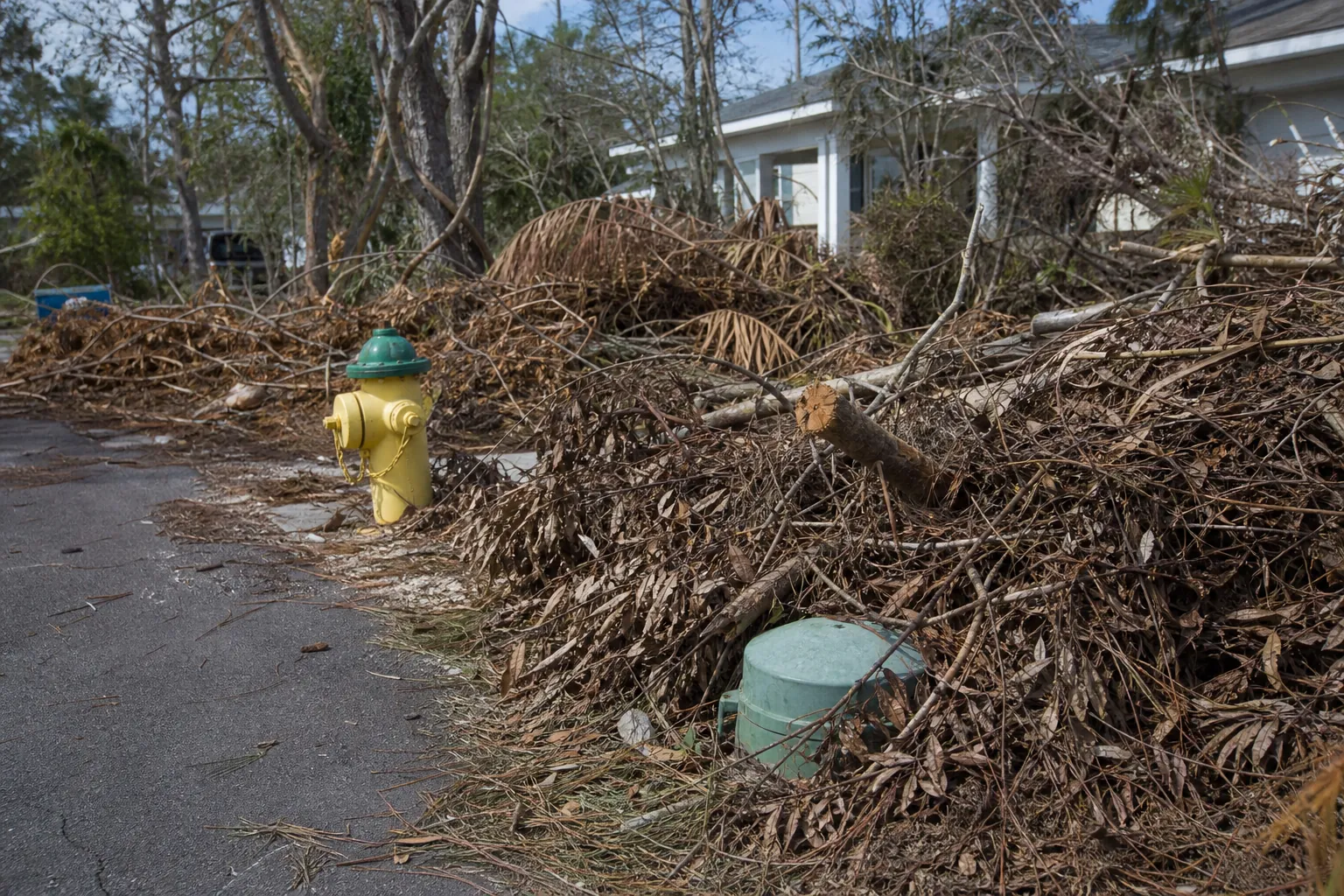
List possible debris locations as topics to discuss, not as directions to start stacking. Put known meters and hydrants beside each location. This keeps them in the discussion. The Florida Foliage contact page offers a neutral way to ask a question. The tree removal information page explains the type of service.
Use one shared page instead of several lists. Give each area a simple name and add a short note about what you know. For example: “Front lawn: hydrant location known, current visibility not confirmed.” This is more useful than “front lawn looks fine.”
Keep possible locations apart from current conditions. “Suggested during household discussion” does not mean “material is already there.” This helps stop a rough idea from seeming like a decision.
The numbered steps below are only a way to organize notes. They are not a way to handle debris, uncover a fixture, or check a tree.
- Create one household note with separate headings for current conditions and discussion questions.
- Name each area with a familiar location description.
- Add the known meter or hydrant location, or mark that information as unknown.
- Record what you can see in plain words and add the date.
- List unanswered questions at the end so you can raise them together.
- Date old entries instead of quietly replacing them with new descriptions.
- Use a short status label for each entry, such as observed, suggested, or not confirmed.
- Remove duplicate questions so the final list is easy to read aloud.
Keep Hidden Fixtures Separate From General Yard Clutter
Give a meter or hydrant its own line. A general note about storm debris may not mention it. For related service context, read the tree removal overview. For information about the company, see Florida Foliage’s background. Neither page shows that service is available in Pensacola.
Think of your record as two related lists. One describes storm material you can see. The other names familiar features whose visibility you want to discuss. You do not need a technical list. Simple headings can make a household talk clearer.
For example, “leafy branches across the front lawn” and “hydrant not visible in the existing yard image” are separate facts. Combining them as “messy front yard” loses the specific concern behind the note.
Keep earlier household records apart from what you see now. A pre-storm image may help you recall a location, but it does not show its current state. Label it as a reference image so no one mistakes it for a current view.
Leave room for doubt. If a feature is not visible in your record, that does not show why. Do not write a cause just because it seems likely.
- Use separate lines for debris notes and meter or hydrant visibility.
- Label older pictures as pre-storm references, not current views.
- Keep unanswered questions about visibility instead of treating silence as confirmation.
Which Source-Backed Safety Facts Matter Here?
The safety guidance provided covers machinery, hidden fixtures, chemical containers, and conditions around a home after a storm. Keep these facts apart from your worksheet. The tree trimming service page offers background only. The company inquiry page is for contact questions, not a replacement for the linked safety sources.
These sources do not give a full site check. They explain certain concerns that can matter when people discuss hurricane debris. Read the linked guidance. A short home checklist is not a technical check.
- Keep people who do not need to be there away from debris machinery, as stated in OSHA’s debris collection guidance.
- Debris can hide meters and fire hydrants, according to OSHA’s guidance on debris collection hazards.
- Stay clear of leaking chemical containers; a specialist must check them, according to OSHA’s debris collection guidance.
- Walk with care around the outside of your home to check for loose power lines, gas leaks, and damage to the structure, as directed by the National Weather Service’s after-hurricane guidance.
- Stay out of a building if you smell gas, if floodwaters remain around it, or if officials have not said it is safe, according to the National Weather Service.
- Never use a portable generator inside your home or garage, as stated by the National Weather Service’s hurricane safety guidance.
A meter and hydrant worksheet cannot settle any of these concerns. Use it only to sort information and record questions. A finished list, clear photo, or tidy-looking yard does not show that a property or tree is safe.
Make Household Handoffs Clear and Short
A useful handoff says what you saw, when you wrote it down, and what still needs an answer. It should not turn doubt into a conclusion. The company information page tells you about Florida Foliage. The tree trimming overview helps keep service details apart from your home record.
Keep the latest version in one place, on paper or in a shared digital note. This is a writing tip, not a safety rule. It can help keep people from sharing different versions of the same note.
Use short sentences when you share the list with someone else in your home. “The hydrant location is listed, but today’s visibility is not confirmed” is clearer than a long note that mixes memories, ideas, and conclusions. Put questions under observations, not in them.
If someone adds information, ask them to include the date and say if it is something they saw or remember. You can keep both without saying they are just as certain.
A short record is easier to update. You do not need to rewrite the whole page when a question changes. Add a dated note and keep the earlier one for context.
- Keep one current version so people in your home know which list to use.
- Keep remembered locations apart from things seen after the storm.
- End the handoff with open questions, not a general statement that everything is fine.
How Can You Contact Florida Foliage Without Assuming Availability?
You can contact Florida Foliage to ask if your question is within its service scope and if service is available in Pensacola. Use the contact page as a neutral first step. The company background page gives more context. Florida Foliage is based in Daytona Beach. This article does not promise that service is available.
Call (386) 481-7913 or use the contact page. Start with your location and question. For example: “I am in Pensacola and have hurricane debris notes about a meter or hydrant location. Is this within your service scope?”
If the talk continues, say what you can see and what you do not know. Do not present your household worksheet as an assessment. You can say a known location seems blocked without saying the equipment is damaged or that a tree needs a certain service.
- Give Pensacola as the inquiry location instead of assuming there is a nearby office.
- Ask about service scope and availability before treating the talk as a next step.
- Share brief observations and clearly mark questions that remain unanswered.
For more context, return to the Pensacola hurricane tree cleanup resource. Keep this page’s narrower worksheet focused on visibility, clear records, and questions, not choices about debris handling.
Frequently Asked Questions
Can hurricane debris hide a meter or fire hydrant?
Yes. OSHA’s debris collection guidance says debris can hide meters and fire hydrants. In your home notes, record the known location and whether it is visible, partly blocked, or not confirmed. This is a note, not a direction to uncover equipment or a finding about its condition.
Does a clear photograph prove that a tree is safe?
No. A photo does not prove that a tree is safe. For this worksheet, an existing picture only shows what is in its frame. Add its date, describe what you can see, and note what is missing. Keep tree condition and equipment status apart from these visual notes.
What should I write if I cannot see a known meter location?
Write that the known location is not visible or that visibility is not confirmed, based on your record. Add the date and a familiar location description. Do not guess if the equipment is damaged or why it is blocked. The goal is a clear question, not a diagnosis.
What does the guidance say about leaking chemical containers?
Stay clear of leaking chemical containers; a specialist must check them, according to OSHA’s debris collection guidance. A home debris worksheet does not replace that check. Keep what you see apart from guesses about the contents. Do not use this article to handle or identify the container.
Does this article mean Florida Foliage serves Pensacola?
No. Florida Foliage is based in Daytona Beach, and this article does not show that service is available in Pensacola. Use the contact page or call (386) 481-7913 to ask about service scope and availability. State your location and question plainly. Do not assume there is a Pensacola office or expect a certain response.
Call (386) 481-7913 to talk through next steps.