Reviewer and contributor: Clinton Funk, Owner, Florida Foliage. Clinton has decades of hands-on tree care experience.
Tim Francis is responsible for the research and editorial quality of this article. AI tools assisted with drafting and the editorial images. This general information does not assess a particular tree.
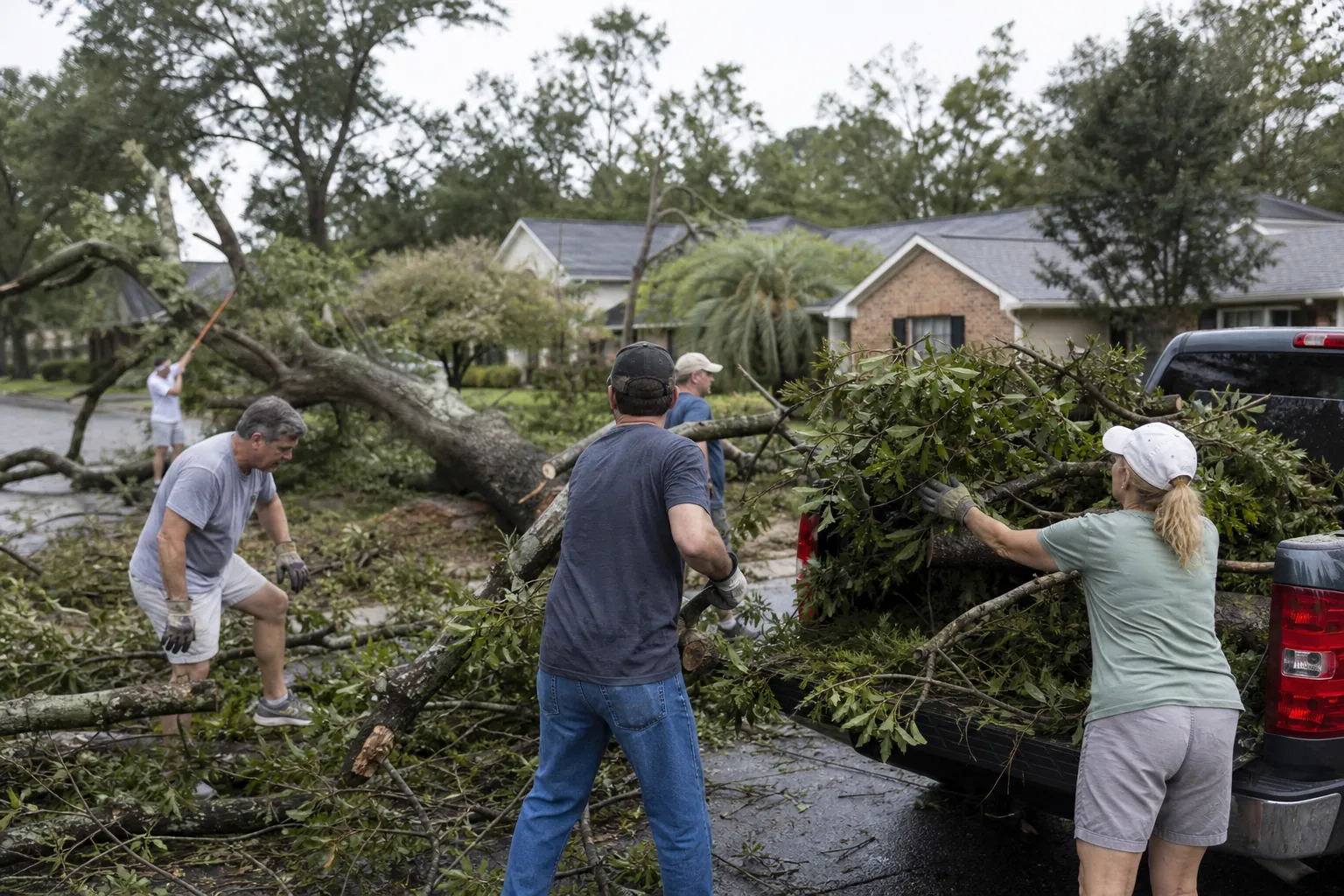
Hurricane HOA Tree Cleanup in Pensacola, FL calls for clear notes and a careful household plan.
After a hurricane, group resident cleanup messages around three points. First, say what people can see around them. Next, say where people should look for updates. Then, explain how gatherings stay apart from debris. Keep them apart from work areas as well. OSHA says people not needed for tree work should stay outside tree work and drop areas. Pensacola homeowners can use this guide for clear messages. It does not diagnose trees or direct tree work. It does not make decisions for an association. Shared notes can help reduce repeat questions. Clearly mark concerns that are still open.
By Tim Francis.
What Comes First For Hurricane HOA Tree Cleanup?
Start with a short message. Name the location and describe what people can see. Use tree removal service details for service context. Use Florida Foliage contact details for company questions.
The first message need not cover every tree or home. It gives neighbors one clear way to share details. Use familiar place names, such as a courtyard, entrance sign, or named walkway. Avoid descriptions that depend on where someone stands.
Keep notes apart from what people think they mean. “A branch lies beside the courtyard bench” describes something visible. “The tree is stable now” goes beyond that detail. The first statement says what someone can see. The second says more than that visible detail shows. A photo can help show what a report describes. It cannot prove that a tree is safe.
- Ask residents to name the place and describe what they can see.
- Date each report so readers know when it was current.
- Collect questions in one message thread or document.
- Mark missing details as unknown. Do not guess.
A useful opening note might read: “Please add courtyard tree and debris notes here. Include the place, date, and a short description. This thread collects resident details. It does not assess trees. Gathering updates will appear in a separate message.”
This message tells residents where to share notes. It does not assign anyone a work role or suggest that the message organizer can determine what a damaged tree needs.
How Can Gathering Plans Stay Separate From Debris?
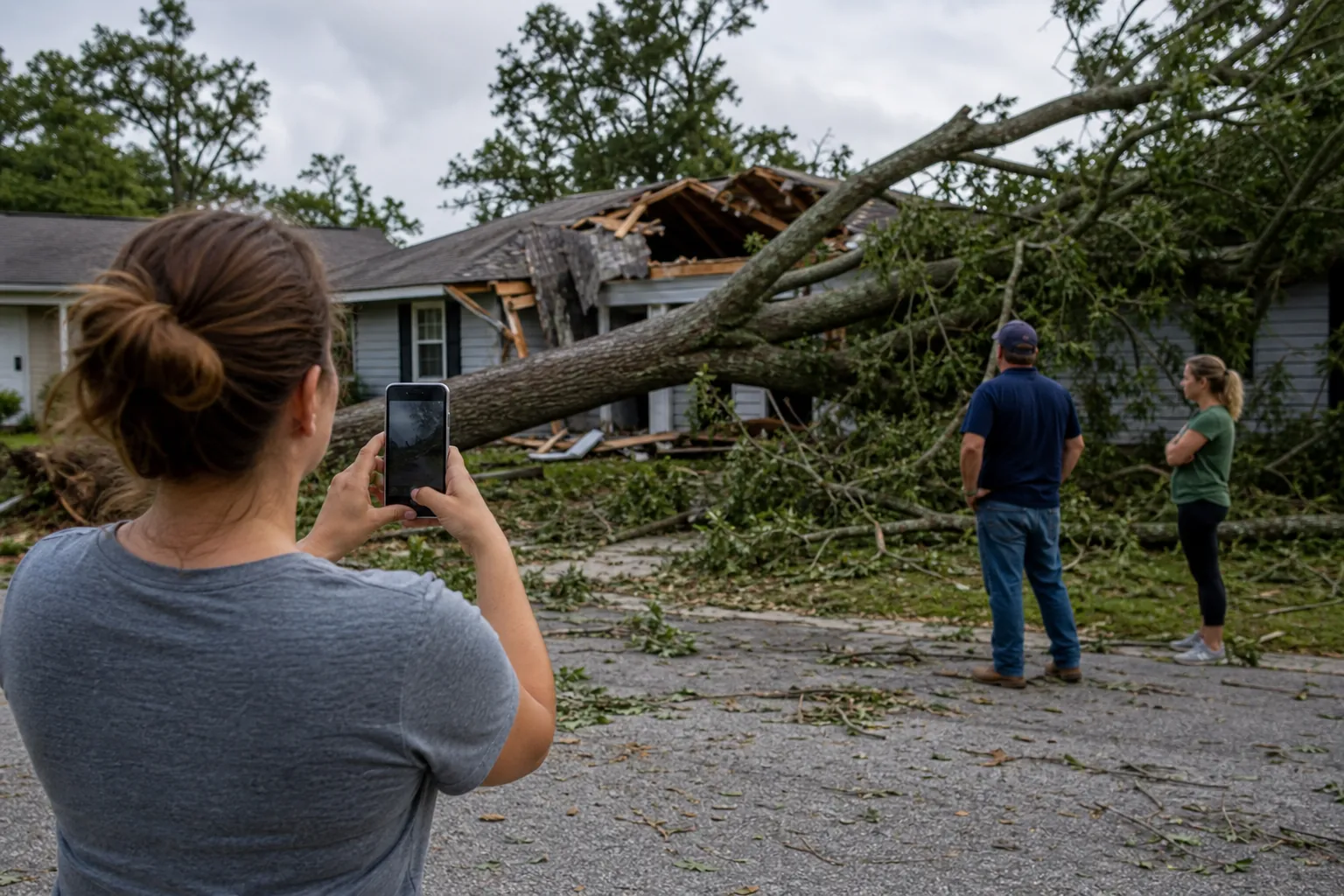
Keep gathering plans and debris reports in separate messages. See tree trimming service context and Florida Foliage company details. OSHA advises keeping nonessential people outside tree work and drop areas, and away from debris machinery. Tree work guidance; debris collection guidance.
Do not turn a debris location into a social meeting point. Give a resident check-in or neighborhood update its own heading. Readers can then tell a gathering notice from a storm debris report.
Work on storm-damaged trees has risks from falling limbs. Trees that are not stable also pose risks. See OSHA tree work guidance for these tree work hazards. No one may have reported a problem there. That alone does not show a gathering place is safe. A resident message should not say that.
- Give gathering updates a clear title that is different from the debris log title.
- Do not use a tree work area, drop area, or debris machinery location as the gathering destination.
- Keep refreshments, talk plans, and attendance questions out of the debris reporting thread.
- Use a remote message update when an in-person gathering location has not been identified.
A simple note can explain the thread's purpose. It can say: “This thread is for resident updates only. It does not invite people to gather there. Do not treat the debris location as a meeting place.” This keeps the purpose of the messages clear. It does not give a technical judgment about the site.
Build One Useful Resident Message Log
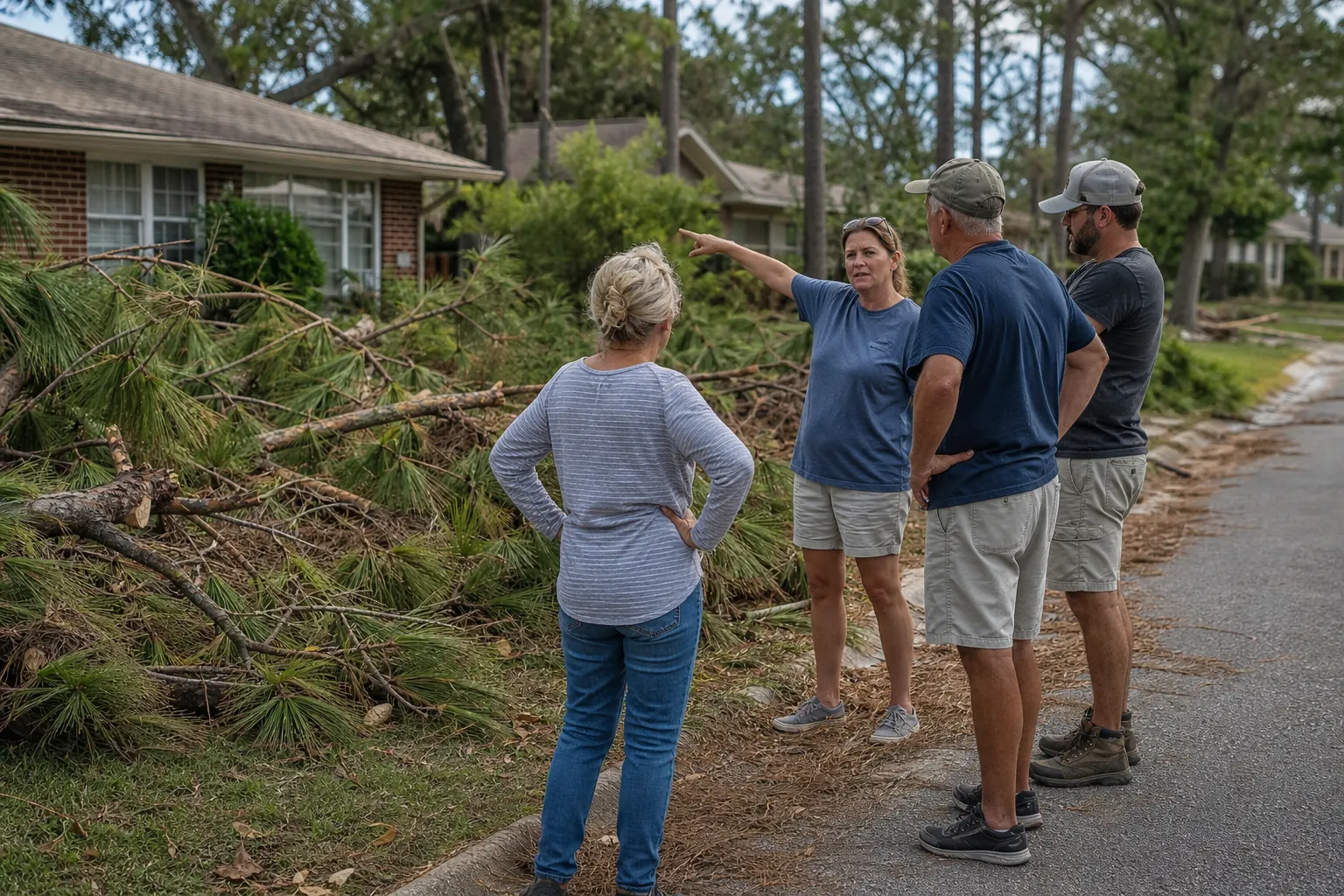
A shared log makes scattered messages easier to read. Use the company contact page for questions to Florida Foliage. See the tree removal overview for service context. The log organizes household updates. It is not a diagnosis or work plan.
Choose a format residents already know. A shared document, email chain, or chat thread can work. Pick one that needs no new system during storm updates.
Use one entry per place or distinct report. Combine reports about the same fallen branch. Keep the dates. Keep conflicting details too. Explain the difference in plain words.
- Create a heading with the community name and the date of the update.
- Record the location using a recognizable landmark or existing place name.
- Copy the visible observation in neutral words, without adding a tree condition judgment.
- List the open question separately from the observation.
- Add the latest message date and retain earlier notes when they explain a change.
- Publish a brief summary that points readers back to the full log.
- Use consistent headings such as “Location,” “Observed,” “Question,” and “Last updated”.
- Keep unrelated household requests in a different thread so the tree notes remain readable.
- Ask before including someone’s personal contact details in a shared document.
For example: “Courtyard bench area. A limb is visible beside the bench. Report dated Tuesday. Question: Is there a later observation?” This records the message without turning it into a conclusion.
What Is a note, and What Is a Diagnosis?
A note records what a resident can see. A diagnosis judges a tree's state or needed work. Keep these two kinds of statements apart. Tree trimming and removal pages explain those services. A resident message cannot determine a tree’s condition. Those pages cannot use it to tell the state of a storm-damaged tree.
Use concrete nouns and modest words. “Branches are visible on the grass” is clearer than “The whole area is ruined.” “A photo shows a tilted tree” does not mean it will fall. Keep the concern without claiming it is settled.
OSHA says tree material held under tension poses hazards. It also warns about trees that may roll or slide as they are cut down. These are hazards involved in tree work. Do not turn a photo into instructions for handling material. Do not use a resident report that way either. The log records what the resident has reported. It does not tell people how to do tree work.
- Write “visible in the image” when the details come from a photograph rather than a direct observation.
- Replace labels such as “healthy,” “stable,” or “ready to move” with the actual visible detail.
- Keep a resident’s concern in a question field instead of presenting it as an established finding.
- State when a report has not been updated, rather than assuming conditions are unchanged.
Label available images by place and date. Do not ask residents to approach debris for a better photo. Attach each image to the report it shows. It cannot prove a tree or area is safe.
Keep Specific Hazard Reports Clear and Separate
Give serious reports their own clear wording. Florida Foliage’s background explains the company. Its contact page provides a way to ask questions. Follow the hazard guidance below for safety details.
Downed electrical conductors can carry power to trees and fences. Avoid contact with the conductors, both direct and indirect. Keep reports about them apart from branch notes. Give these reports their own place in the messages. Do not call them “more yard debris.” That wording treats them like ordinary branch reports.
Debris can hide meters and fire hydrants, OSHA notes. A resident can record that a known location is obscured. Do not tell anyone to search through or move debris.
Stay clear of chemical containers that are leaking. A specialist needs to assess these leaking containers. See OSHA debris collection guidance for this safety guidance. Keep the report apart from ordinary tree debris notes. Do not guess what the leaking container holds. Leave guesses about its contents out of the report.
- Use a specific heading for a reported conductor, obscured meter or hydrant, or leaking container.
- Preserve the resident’s location description without adding an unsupported explanation.
- Keep social replies and general cleanup comments out of the specific concern thread.
- Leave unresolved details clearly marked as unknown in the shared note.
The aim is message clarity. It is not to sort hazardous material, identify chemicals, test electrical conditions, or tell residents how to handle debris.
Write Updates That People Can Scan
Keep each update short and easy to scan. Link to tree trimming service details when relevant. Use Florida Foliage’s contact page for company questions. These links give context.
Start with changes since the last update. Then list unknowns and where the full notes are kept. If nothing new was reported, say so. Repeating a long message can hide new details.
Use separate labels for each kind of update. These can be “new report,” “updated note about what someone saw,” and “question still open.” Each label tells readers what the update covers. One reported branch may no longer be visible. That may be the only detail you have. In that case, do not label the whole location “finished.” Keep the wording tied to that one branch.
- Put the update date at the top rather than hiding it at the end.
- Use location headings so residents can find the place relevant to their question.
- Separate gathering details from tree and debris notes.
- Correct an inaccurate message explicitly instead of silently replacing it.
A concise update might say: “Today’s resident notes are in the shared log. The courtyard entry has a new observation. The entrance entry has no new details. Gathering details remain in the separate resident update thread.”
The summary avoids broad statements about tree condition. It helps people catch up without repeating the full talk. Keep the history, but make the latest summary easy to find.
Make a Neutral Florida Foliage Inquiry
Florida Foliage is based in Daytona Beach. Call (386) 481-7913 to ask about current service options for your Pensacola property.
Clinton Funk owns the company. He has decades of hands-on tree care experience. Tim Francis is responsible for this article’s content and editorial presentation.
When you call, state that the property is in Pensacola and ask about current service options. An inquiry does not confirm service.
- Describe the question briefly and identify the city at the start.
- Separate resident notes from any conclusions you are unsure about.
- Ask about location-specific availability rather than assuming it from a service page.
- Record the actual reply in your message log without expanding it into a promise.
Keep plans for resident messages apart from the inquiry. A question may still be waiting for an answer. Your shared notes can still be useful meanwhile. The goal is a clear record of residents' reports. Readers should be able to follow those reports. The goal is not to predict who will do work. Nor is it to predict when work will happen.
Frequently Asked Questions
These answers keep resident messages separate from tree assessments and work. For context, see Florida Foliage’s tree removal details or its company background.
- Keep each answer with the related location note so readers do not confuse general guidance with a site-specific assessment.
Can residents gather beside the storm debris to discuss cleanup?
Keep gathering plans apart from debris and work areas. OSHA says nonessential people should stay outside tree work and drop areas, and away from debris machinery. Use a separate message for gatherings. Do not invite people to meet at a debris location. OSHA tree work guidance; OSHA debris collection guidance.
Can a photograph show that a storm-damaged tree is safe?
No. A photo cannot prove a tree is safe. Use it to show what someone saw. Include the date and place with that detail. Keep visible details apart from judgments about the tree's state. Keep them apart from judgments about needed work, too. OSHA warns of falling limbs during storm-damaged tree work. It also warns of trees that are not stable.
What should a message say about a downed electrical conductor?
Record the place where the concern was reported. Keep that concern apart from routine branch notes. Downed electrical conductors can carry power to trees and fences. Avoid contact with the conductors, both direct and indirect. Do not call the report ordinary debris. Do not guess that contact would be harmless. See OSHA’s hurricane tree work guidance for context.
How should residents describe a leaking container among debris?
Describe the location. Do not guess what a leaking container holds. OSHA says to stay clear and seek assessment by hazardous-material response personnel. Keep the report separate from routine tree debris notes. Do not identify or handle the material.
Does this guide confirm Florida Foliage service in Pensacola?
No. Florida Foliage is based in Daytona Beach. Call (386) 481-7913 to ask about current service options for your Pensacola property.
Call (386) 481-7913 to talk through next steps.