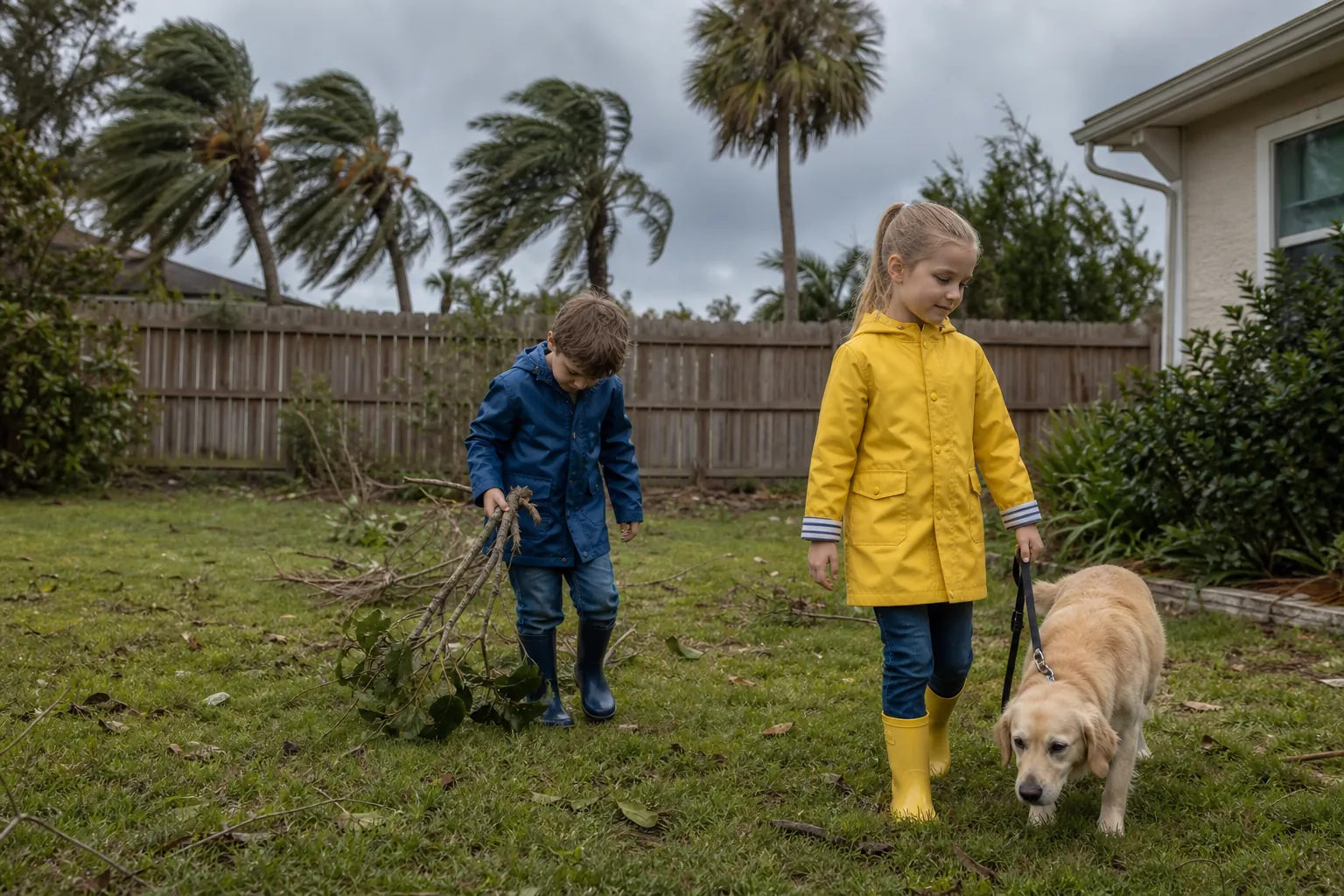
After a hurricane, keep children and pets away from storm-damaged trees, hanging limbs, and debris piles. Choose an indoor routine or a familiar alternate play space while the yard remains off limits. Do not ask children to inspect or move anything. Storm-damaged tree work can involve falling limbs and unstable trees, as OSHA’s tree-work safety guidance explains. A visible change is a reason to keep people apart from the area, not a diagnosis of what happened or proof of what the tree may do.
Make the Yard Boundary Easy to Understand
For general company context, read about Florida Foliage and its Daytona Beach headquarters and review the tree removal service page. Those pages explain the company and a service category; they do not establish local availability in Pensacola. At home, keep the message simple: the yard is closed for now, and children and pets should use another space.
A short, steady rule is easier to repeat than a long warning. Tell children not to enter the yard, touch branches, or pick up debris. Give the same message to other adults who may be helping with household routines. If a child asks why, explain that the storm changed the yard and an adult will decide what to do next.
Choose a clear point where the family stops before reaching the affected yard. That might be a doorway, a usual household transition point, or another spot that makes sense for your home. This is an ordinary organizing choice, not a technical boundary or a measure of safe distance. Do not rely on a child remembering a warning given only once.
Keep the rule consistent throughout the day. A yard that looks quiet can still contain storm-damaged material, and a familiar play area may not look familiar after a storm. Avoid inviting children to look more closely or take pictures. The useful action is to keep the group elsewhere, not to collect more detail.
What Should Children Do When the Yard Is Closed?
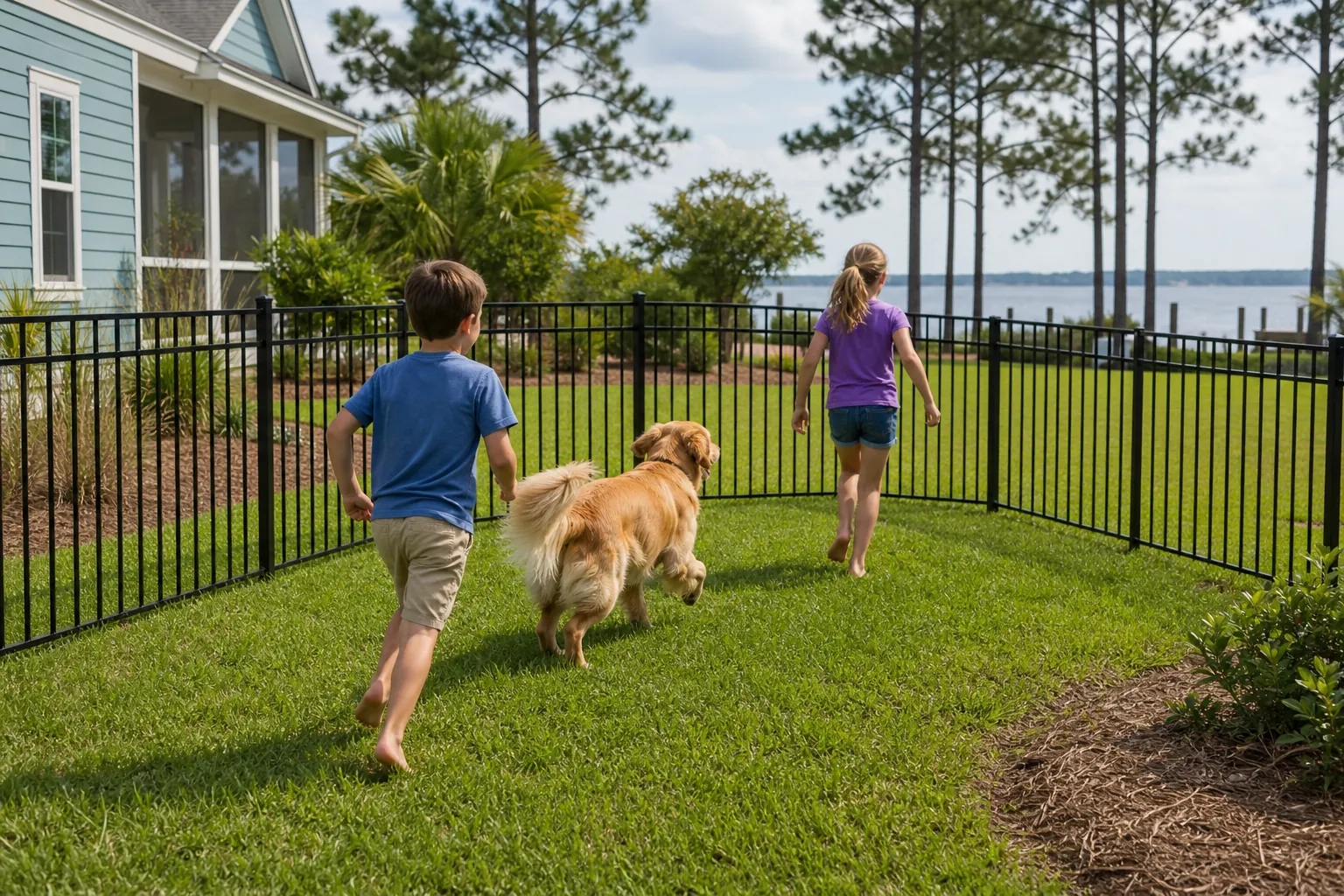
Answer with a simple alternative: stay indoors or use a familiar play space away from the affected yard. The tree trimming service page gives general information about a service category, while the contact page offers a neutral way to send a question. Neither page is a reason to enter or inspect a storm-affected yard.
Children often want a clear plan, so give them one that does not involve the yard. Name an indoor activity, a room to use, or a game to begin. If your household has an established place to play away from the affected area, you can choose it instead. These are everyday organizing ideas, not technical instructions.
Keep explanations calm and brief. You can say, “The storm changed the yard. We are staying away while an adult decides what comes next.” Avoid asking a child to report on a tree, retrieve a toy, or stand near debris for a better look. The same rule applies when a child says that something appears unchanged.
Make a plan for the ordinary moments that could draw a child outside. Put outdoor toys that are already indoors in a convenient place, and choose a substitute for a toy that remains in the yard. If a child forgets the rule, guide them back to the chosen indoor activity without sending them out to retrieve anything. Keep the explanation consistent instead of adding new details that could invite curiosity.
Older children can help by reminding younger family members of the household rule, but should not be asked to supervise the yard or assess tree conditions. The adult plan remains the same: everyone stays away from the affected area, and any next step is handled by adults.
Keep Pets Apart From Storm Debris
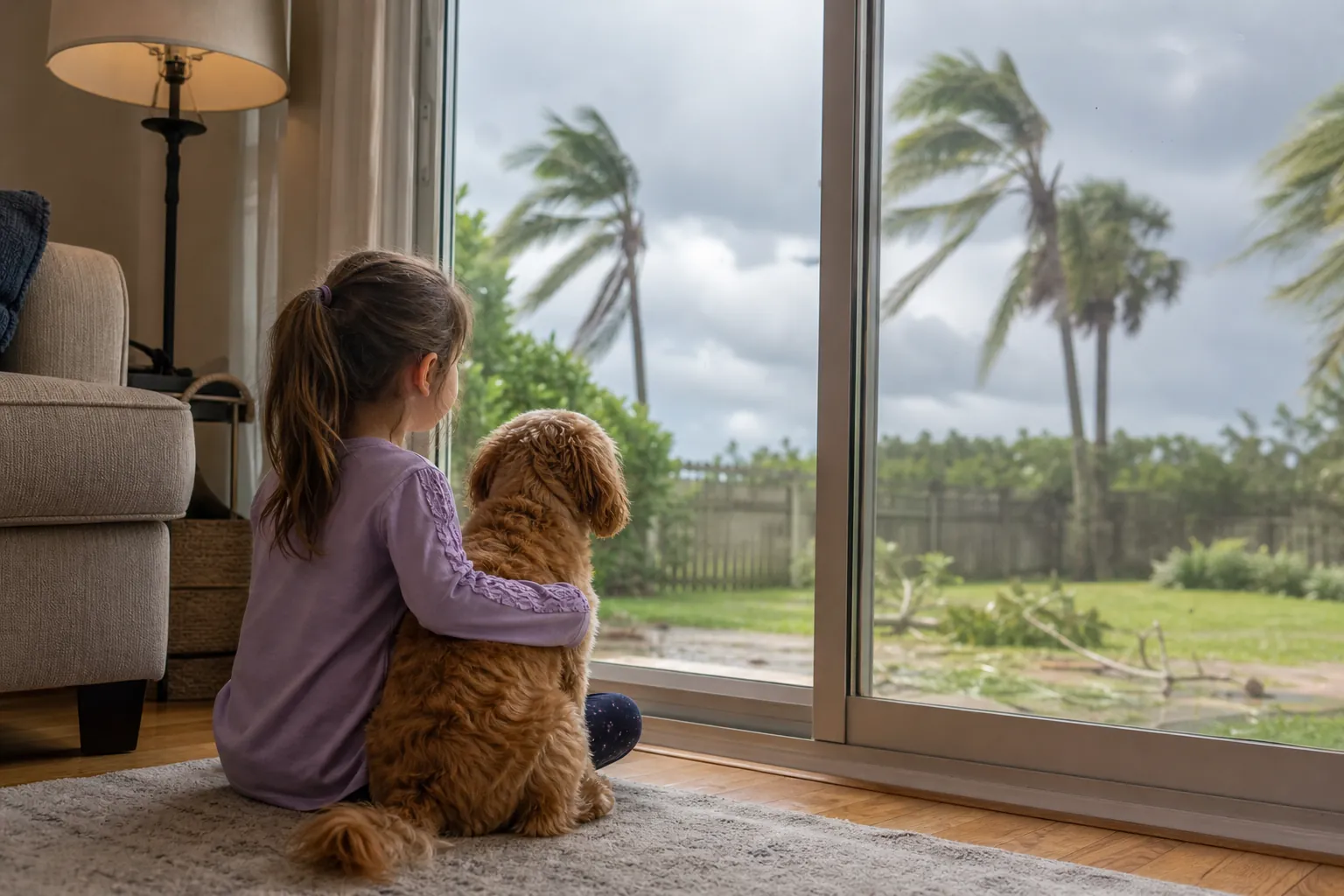
For context about the company, see Florida Foliage’s company information; for a way to send a question, use the contact page. These links are informational and do not promise service in Pensacola. At home, choose a familiar indoor routine for pets while you keep them out of the yard and away from debris.
Use the household arrangement that already works for your pet, such as staying in a room with a family member or following a familiar indoor schedule. Keep the explanation and routine steady. Do not let a pet investigate a pile, approach a hanging limb, or follow someone into the yard to retrieve an item.
If your pet expects outdoor time, decide on an alternative that fits your household and does not involve the affected yard. You might shift attention to an indoor activity or use a different familiar space. These are practical home-organizing suggestions, not a prescribed animal-care plan. Do not assume a quiet pet has recognized the boundary or will avoid the yard without supervision.
Where several people share pet care, tell each person the same rule before a routine changes. Agree on who will keep the pet with them and what indoor activity will take its place. This helps prevent one person from opening a route to the yard while another expects the pet to remain inside.
Keep children and pets together only when an adult can manage the household routine. A child should not be made responsible for keeping a pet away from storm material. The simplest arrangement is one where an adult maintains the boundary and the pet has a familiar place to settle.
Notice the Difference Between an Observation and a Diagnosis
Use the tree removal information page and tree trimming information page only for general descriptions of those service categories. They do not tell you what a particular tree needs. A hanging limb or other visible storm change is an observation, not a diagnosis; keep children and pets away rather than trying to interpret it.
It can help to describe only what you can see, using plain words. For example, you may have noticed a hanging limb or a pile of storm debris. Do not turn that description into a conclusion about the tree’s stability or what work might be needed. Those judgments are not household tasks, and this article does not provide a way to make them.
Do not use a photograph as proof that a tree is safe or that a yard is ready for play. A picture can show only what appears in that picture; it does not replace keeping people apart from the affected area. You do not need to collect images or move closer to make a decision about your family’s routine.
Write down a brief observation only if it helps you explain your question later. Keep the note factual and avoid asking a child to gather information. For instance, an adult can note that a hanging limb is visible from the house. That record is for communication, not a tree assessment, and it does not change the household boundary.
What If You See a Wire, Machinery, or a Leaking Container?
For general background, the company information page describes Florida Foliage, and the contact page is a neutral place to send a question. Keep people away from the affected area. OSHA says downed electrical conductors can energize trees and fences, and advises avoiding direct and indirect contact with them; read OSHA’s guidance on tree work after a hurricane.
Do not touch a downed conductor, tree, or fence that may be in contact with one. Keep children and pets away without approaching the area to investigate. The same OSHA guidance identifies tensioned tree material and rolling or sliding limbs as hazards. See the source for those tree-work hazards. Do not try to move or release storm material.
OSHA advises keeping nonessential people outside tree-work and drop areas. Its tree-work guidance describes that precaution. If machinery is present for debris handling, keep children and pets away from it; OSHA’s debris collection guidance says nonessential people should stay away from debris machinery.
Debris can hide meters and fire hydrants, and leaking chemical containers should be kept clear of, with specialist evaluation needed. OSHA’s debris collection guidance covers both points. Do not ask a child to identify or move a container. Keep the household away from the area and do not handle it.
Use a Simple Household Routine
For broader context, the about page explains who Florida Foliage is, and the tree trimming page describes a service category. Neither replaces your household plan. Keep that plan easy to repeat, with one adult message, one indoor alternative, and no task that asks children or pets to approach storm material.
A short routine can reduce repeated questions and make it easier for everyone to follow the same boundary. Adapt these everyday steps to your home:
State the rule. Tell everyone that children and pets are staying away from the affected yard and debris.
Name the alternative. Choose an indoor activity or a familiar space away from the yard.
Coordinate the adults. Let each caregiver know who is keeping the children and pets occupied and what the plan is.
Repeat the message. If someone forgets, calmly guide them back to the alternative without sending anyone outside.
Keep questions factual. Note what an adult can see from a place already away from the affected area, without turning that observation into a conclusion.
These steps are household organization, not a technical response plan. Use the parts that suit your family and keep the boundary clear. If a routine does not work, change the indoor activity or the person helping with it. Do not change the plan by allowing a closer look at the yard.
When Is It Time to Ask a Tree-Care Question?
If you have a question about what you observed, a neutral next step is to contact a tree-care company and describe the visible change without asking children to investigate. Florida Foliage is headquartered in Daytona Beach, not Pensacola. Its contact page and tree removal information page provide company context, not a promise of local availability or a particular response.
You can call (386) 481-7913 or use the contact page to ask a general question. Share only what you have already observed from a place away from the yard. A contact step does not establish what a tree needs, and this article cannot determine that from a description or photograph.
Keep the household boundary in place while you decide what to do next. Do not let a conversation, message, or photograph become a reason to send a child or pet closer. If you do not have an answer yet, continue with the indoor routine and keep everyone away from the storm-affected area.
When explaining what you noticed, separate observation from interpretation. “I can see a hanging limb” is a description; it does not tell you the tree’s condition. You do not need to add a guess about the cause, stability, or work required. A concise, factual question is easier to communicate and does not ask a child to take part in an assessment.
Move Back to Ordinary Yard Use Deliberately
For information about the company and its service categories, read the about page and tree trimming page. They provide general context and do not say when a Pensacola yard may be ready for use. Keep children and pets away until you have made a separate, considered decision about the affected area.
Do not treat a quiet day, a tidy appearance, or a photograph as proof that storm-damaged trees or debris are no longer a concern. Do not ask children to test whether an area is ready by walking into it. The household boundary is a simple precaution while you consider what to do next; it is not a professional finding about the yard.
When adults are ready to reconsider the routine, talk through the visible observations and the next step without involving children in any inspection. If there is still a question, maintain the indoor alternative and use a neutral contact step. Avoid promising children a specific return time when you do not know what will happen next.
Keep the message kind and matter-of-fact. The yard is not available for play right now; there are other activities to choose from. A steady routine gives children and pets a clear alternative without asking them to judge the tree or debris for themselves.
About This Article
This article was written by Tim Francis, with content and editorial responsibility. Florida Foliage is headquartered in Daytona Beach. Owner Clinton Funk has decades of hands-on tree care experience. No certification or personal review of this draft is implied. The company’s about page and contact page provide general company information and a neutral way to send a question.
Frequently Asked Questions
Should children play in a yard with storm-damaged trees?
No. Keep children away from storm-damaged trees, hanging limbs, and debris piles. Choose an indoor activity or a familiar alternate play space, and give children the same simple rule each time. Do not ask them to inspect a tree, retrieve an item, or decide whether the yard is ready for play.
How can I keep a pet away from storm debris?
Use a familiar indoor routine and keep the pet with an adult who can maintain the household boundary. Choose an indoor activity or another familiar space away from the affected yard. Do not let a pet investigate debris or follow someone outside to retrieve an item.
Can a photo show that a tree is safe?
No. Do not use a photograph as proof that a tree is safe or a yard is ready for play. A visible detail in a picture is an observation, not a diagnosis of the tree’s condition. Keep children and pets away and describe only what you have already noticed from a place away from the area.
What should I do if I see a downed electrical conductor?
Keep children and pets away and avoid direct or indirect contact with the conductor, trees, or fences that may be energized. OSHA explains that downed electrical conductors can energize trees and fences in its tree-work safety guidance . Do not approach to investigate or move anything.
How can I ask Florida Foliage a general question?
You can call (386) 481-7913 or use the contact page . Florida Foliage is headquartered in Daytona Beach, and contact does not promise Pensacola availability or a particular response. Describe only what you have already observed; do not send a child or pet to gather more information.
For a broader overview of hurricane tree cleanup in Pensacola, see the Pensacola hurricane tree cleanup guide.
Call (386) 481-7913 to talk through next steps.