Reviewer and contributor: Clinton Funk, Owner, Florida Foliage. Clinton has decades of hands-on tree care experience.
Tim Francis is responsible for the research and editorial quality of this article. AI tools assisted with drafting and the editorial images. This general information does not assess a particular tree.
For hurricane leaning tree notes in Pensacola, FL, start with clear notes and a careful household plan.
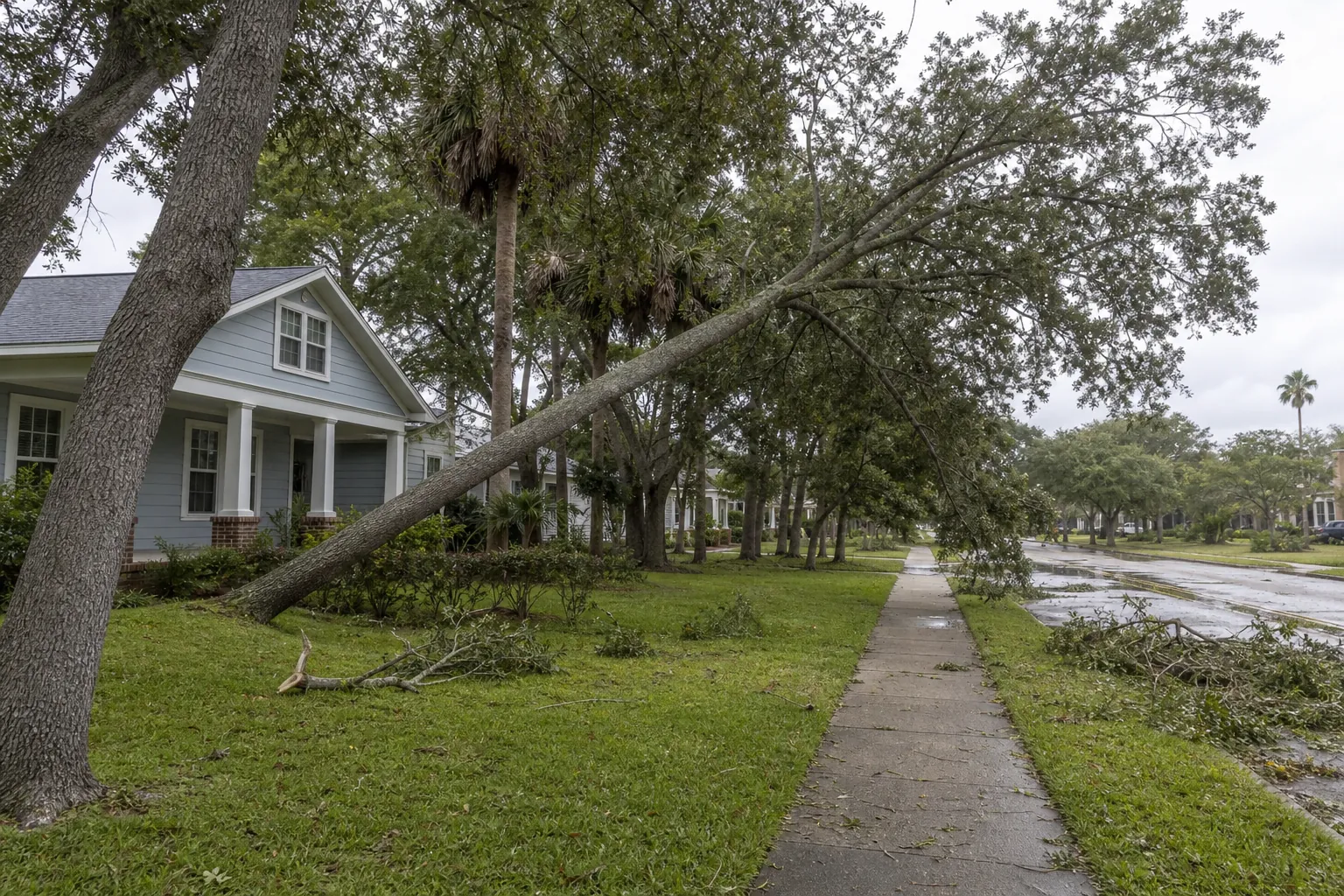
After a hurricane, a tree may look different. In Pensacola, describe what you can see without predicting what will happen. Name the tree, note its visible lean, and separate today’s view from what you remember. Do not move closer to get a better look. OSHA’s hurricane tree-work guidance describes falling limbs and unstable trees as hazards. This guide helps you record what you see. It does not diagnose a tree.
What Comes First For Hurricane Leaning Tree Notes?
A visible lean describes how a tree looks from where you stand. It does not show whether the tree will fall. Florida Foliage’s tree removal service overview and tree trimming service overview explain these services. Your description cannot establish the condition of one tree.
Keep your words close to what you saw. “The trunk appears angled toward the driveway” reports an observation. “The tree is about to fall” makes a prediction you cannot confirm. You can write a useful note without explaining why the tree leans.
Say where you were when you looked at the tree. A view from a front window may differ from an older yard picture. Note your viewing place so readers can understand the view. Do not treat two different views as a direct comparison.
If you do not remember how the tree looked before, say that. A clear gap in your memory is better than a guess.
- Identify the tree with an ordinary landmark, such as the front walk or driveway.
- Describe the direction it appears to lean without assigning a cause.
- State whether you have an earlier observation to compare with the current view.
- Leave questions about its condition separate from your description.
How Can You Describe The Tree Without Getting Closer?
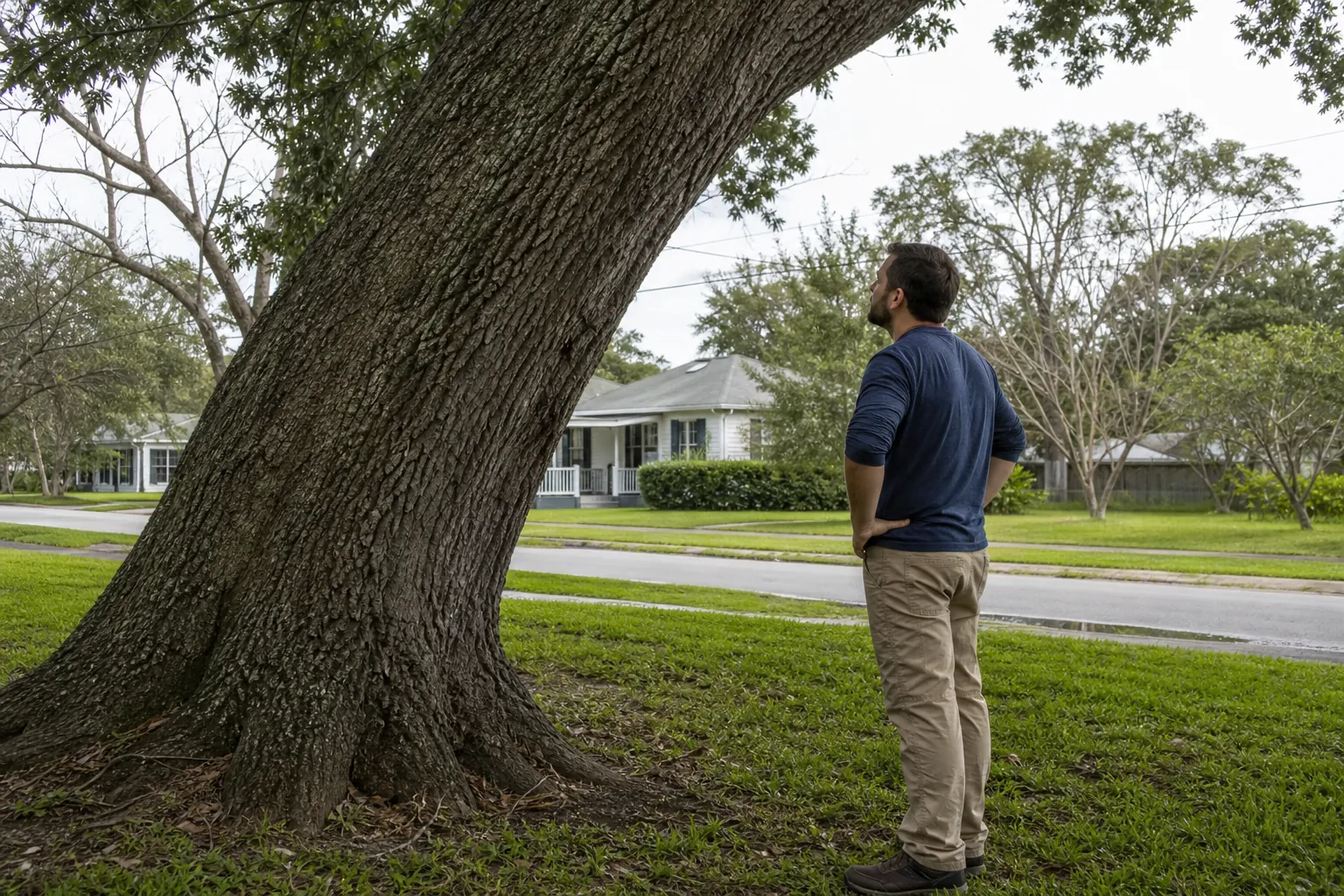
Use only what you can see from where you already are. Leave unclear details unknown. The Florida Foliage contact page explains how to reach the company. Its company background page describes the business.
You do not need a full inspection to write a clear note. Name the tree’s place in the yard, its visible lean, and nearby objects. A measured angle or a detailed trunk description is not needed.
Use familiar words for direction. “Toward the street” is clear to most readers. If several trees stand together, name one by a feature you already know, such as the tree beside the front walk. Do not guess its species.
A limited view is still useful. You might write, “I can see the upper part, but the lower trunk is hidden.” That tells the reader what you cannot see. Do not fill gaps with guesses.
- Write down the location from which you made the observation.
- Use familiar landmarks to distinguish one tree from another.
- Say which parts are visible and which parts you cannot see.
- Keep your note brief enough that someone can understand it on the first reading.
Which Storm Hazards Belong In Your Notes?
Tree removal work is one service topic. The contact page gives you a way to ask about it. Keep your description of the tree separate from any question about service.
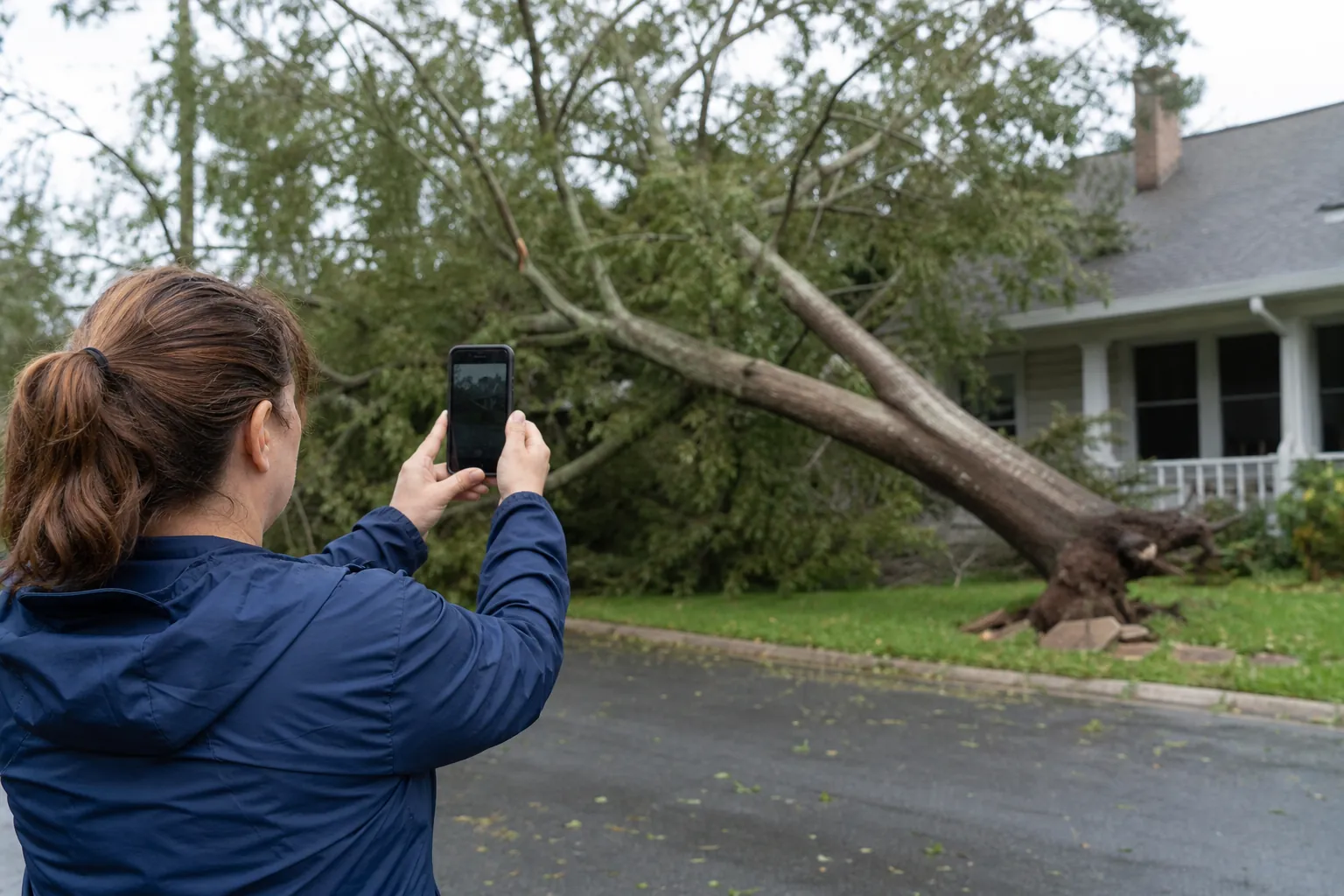
Storm-damaged tree work can involve falling limbs and unstable trees. Tensioned tree material and trees that may roll or slide during felling are also hazards in OSHA’s hurricane tree-work guidance. Do not handle a tree or limb to learn more. These hazards are reasons to keep your note focused on what you can see.
Downed electrical conductors can energize trees and fences. Avoid direct and indirect contact, as OSHA’s storm-damaged tree-work guidance states. If you can see a wire, describe it as a wire. Do not decide what it is or whether it has power.
Keep people who are not needed for the work out of work and drop areas, following OSHA’s hurricane tree-work guidance. You can note that work is happening nearby. Do not mark off a work area yourself.
- Record a visible wire as an observation, not an electrical assessment.
- Describe visible limbs or tree material without handling them to learn more.
- Keep questions about the tree’s condition separate from the listed storm hazards.
What Should You Say About Nearby Debris?
Describe debris only as it looks from where you already are. Do not assume that a hidden area is clear. The tree trimming service description explains a service topic. The general inquiry page gives you a way to ask about it.
Debris can hide meters and fire hydrants, according to OSHA’s hurricane debris collection guidance. You could write, “Debris blocks my view of that part of the yard.” That is more accurate than saying the area is clear.
Keep people who are not needed away from debris machinery, as OSHA’s debris collection guidance advises. You do not need to join nearby cleanup to describe the tree.
Stay clear of leaking hazardous chemical containers. OSHA’s hurricane debris guidance says these hazards need assessment by hazardous-material response personnel. If you already see a leaking container, record it separately from your tree note.
- State when debris blocks your view instead of guessing what lies beneath it.
- Mention visible machinery as a separate feature of the scene.
- Keep a visible leaking container in a separate line of your notes.
- Do not describe the surrounding area as safe based on a partial view.
Build A Clear Observation Record
The Florida Foliage company introduction tells you who the company is. The inquiry page gives you a contact route. Before you call, put the details you already have in one short note. Do not gather more details by going near the tree.
This is a simple household record. Use paper or a note on your phone. Keep the details in one place. Then a family member can tell which tree you mean without sorting through several messages.
- Give the record a clear label, such as “front yard tree after hurricane”.
- Add the date of your observation and the place from which you viewed the tree.
- Write one sentence about the visible lean using a familiar landmark.
- Add any earlier appearance you actually remember, clearly labeled as memory.
- List what you cannot see or do not know.
- Finish with the questions you want to ask during a tree care conversation.
For example: “From the front window, the tree beside the driveway appears to lean toward the street. I do not know if this is new. Debris hides the lower part from view. I would like to discuss what I noticed with a tree care provider.”
- Use one record for each tree when several trees are involved.
- Keep facts, memories, and questions under separate labels.
- Revise unclear wording without adding a diagnosis of the tree.
Keep Pictures And Earlier Memories In Perspective
The tree trimming service description and tree removal service description explain different services. Pictures and memories may help you identify the tree. They do not select a service or prove the tree is safe.
If you already have a picture, note when it was taken and where you were, if you know. A picture without a date or viewpoint can be hard to compare, especially when trees look alike. Do not approach the tree to take another picture.
Keep older pictures apart from current ones. Label an older image “earlier picture.” Do not say it proves how the tree looked before. Views from different places are not measured comparisons.
Treat memories with the same care. You may remember the tree looking upright but not know when you last saw it. Write, “I remember it looking different, but I do not know when.” A useful note does not need a full history.
- Label existing pictures with known dates rather than guessed dates.
- Use pictures to identify the subject, not to declare it safe.
- Keep remembered details separate from things you can currently see.
- Do not let a missing picture delay writing a clear description.
Prepare Questions Without Choosing The Outcome
The Florida Foliage inquiry page gives you a way to ask a question. The business background page describes the company. Your first message can share what you saw without deciding that trimming or removal is needed.
Start with where the tree is and what it looks like. Then say what you do not know. This keeps the talk grounded in your own view, without turning an appearance into a conclusion.
You can ask, “What details would help you discuss this tree?” You can also ask, “How can I separate what I saw from questions about its condition?” You do not need to know tree mechanics or explain a work method.
Avoid putting a proposed solution in your first note. “Please remove this dangerous tree” calls it dangerous without proof. “I want to discuss a tree that looks leaned over after the hurricane” leaves room to talk about what you saw.
- Ask what information is useful for an initial conversation.
- State that your description is based on a limited view.
- Ask about a next step without assuming a particular service is appropriate.
- Keep the message focused on the tree rather than a theory about why it leans.
Contact Florida Foliage With The Location Clearly Stated
Use the Florida Foliage contact page to send a general inquiry. The company information page gives background. Florida Foliage is based in Daytona Beach. Call (386) 481-7913 to ask about current service options for your Pensacola property.
When you call (386) 481-7913, start by saying the tree is in Pensacola. Ask whether the company can discuss your inquiry and what next step, if any, is available. Service options and availability need to be confirmed.
Keep your short note nearby. If you do not know a detail, say so. You can mention an existing picture without saying it proves the tree’s condition.
Clinton Funk owns Florida Foliage and has decades of hands-on tree care experience. This gives you background about the company. It does not diagnose this tree or show that he reviewed this article.
- State Pensacola as the tree’s location at the start of the inquiry.
- Read the observation sentence before explaining your questions.
- Ask about availability rather than assuming it from this guide.
- Keep any unanswered questions in your record for a later conversation.
Frequently Asked Questions
These answers help you describe what you saw. They do not tell you whether a tree will fall.
- Use the answers below to refine your wording, not to judge whether a tree will fall.
Does A Lean Mean The Tree Will Fall?
A visible lean describes how a tree looks. It does not show that the tree will fall. Note where the tree is, what you can see, and what you do not know. Do not turn your note into a diagnosis or use a picture to say the tree is safe.
What If I Cannot Remember Its Earlier Appearance?
Say that you do not know whether the lean is new. You can still name the tree and describe how it looks now. If you have an older picture, label it with its known date. Keep it apart from your current note. It does not prove the tree’s condition.
Should I Move Closer For A Better Description?
Do not move closer just to improve your note. Leave unclear details unknown. OSHA’s hurricane tree-work guidance describes falling limbs and unstable trees as hazards. A short note with clear limits is more useful than guesses or a risky closer look.
How Should I Mention A Visible Wire?
Describe a visible wire without deciding whether it has power. Downed electrical conductors can energize trees and fences. Avoid direct and indirect contact, as OSHA’s hurricane tree-work guidance explains. Keep the wire separate from your description of the lean. Do not investigate it.
Does This Guide Confirm Service In Pensacola?
No. Florida Foliage is based in Daytona Beach. Call (386) 481-7913 or use the contact page. Say the tree is in Pensacola and ask about current service options.
Call (386) 481-7913 to talk through next steps.