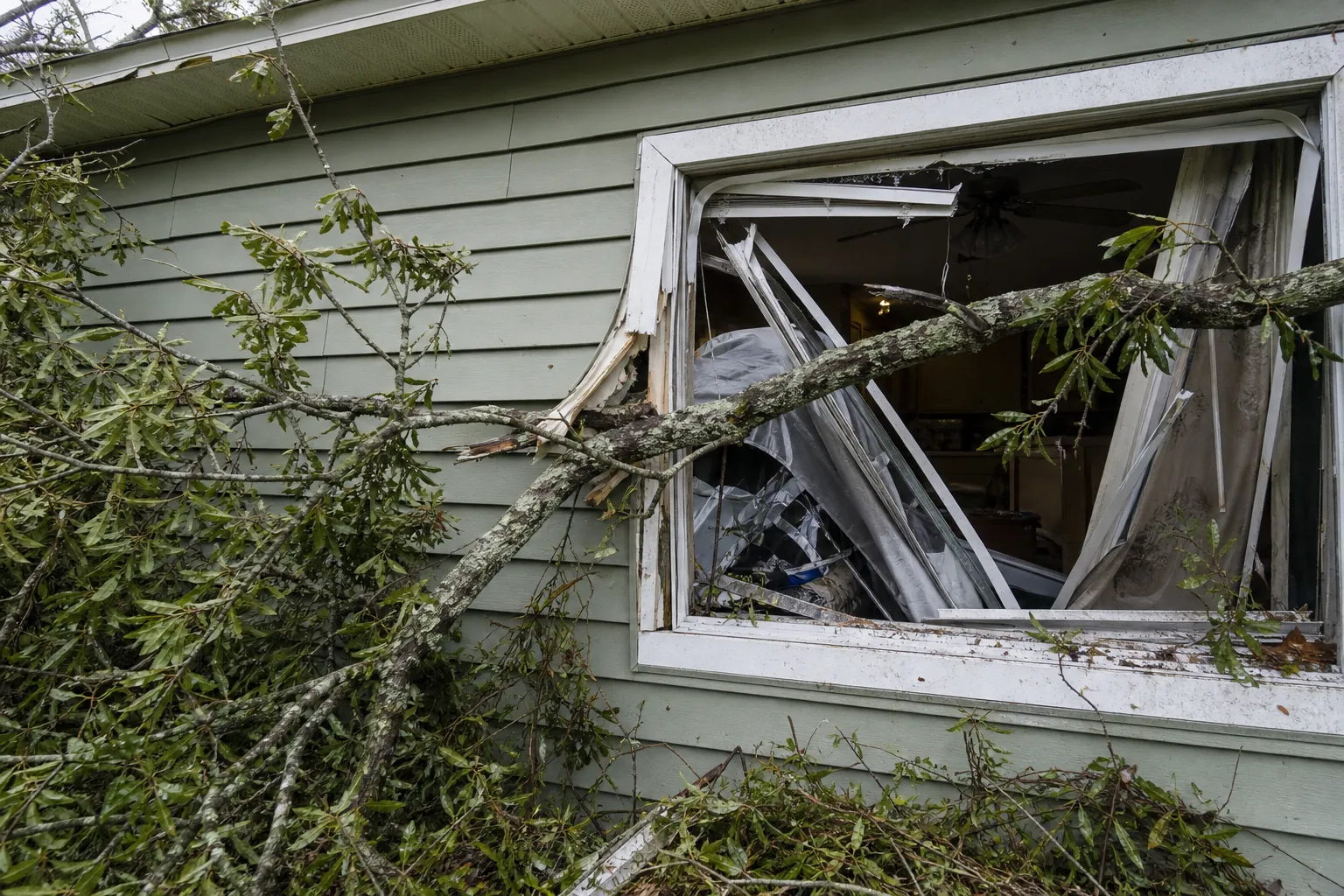
If a hurricane limb comes through a window, first leave that room unused. Do this before you start a cleanup project. Storm-damaged tree work can involve falling limbs and unstable trees. Nonessential people should stay outside work and drop areas. OSHA explains these hazards. This guide helps you organize observations and household communication. It does not diagnose the damage. For broader context, read Florida Foliage’s guide to emergency tree removal in Pensacola.
Written by Tim Francis, who is responsible for the content and editorial presentation. Florida Foliage is headquartered in Daytona Beach. This article does not establish service availability in Pensacola.
What Should You Do First When a Limb Enters a Window?
Start with a simple household plan. Leave the affected room unused, tell everyone which room you mean, and wait to collect belongings from it. The tree removal service overview explains the service category. The contact page gives you a place to ask questions. Neither page confirms Pensacola availability.
A broken window can make several tasks feel urgent at once. You may be thinking about furniture, a favorite lamp, or where everyone will sleep. Put those questions on a list. Do not turn them into a series of trips through the room.
OSHA says nonessential people should remain outside work and drop areas during tree work. Read OSHA’s tree-work guidance. Use it to help plan for your household. Do not try to mark out a work area yourself.
- Tell household members which room is affected. Use a name everyone recognizes.
- Write down which belongings people want from the room. Do not treat each request as a separate task.
- Choose another room for ordinary household planning and conversation.
Keep your message plain. “We are leaving the living room unused while we arrange the next step” is easier to follow than a long explanation about the tree. You do not need to settle every household detail in the first conversation.
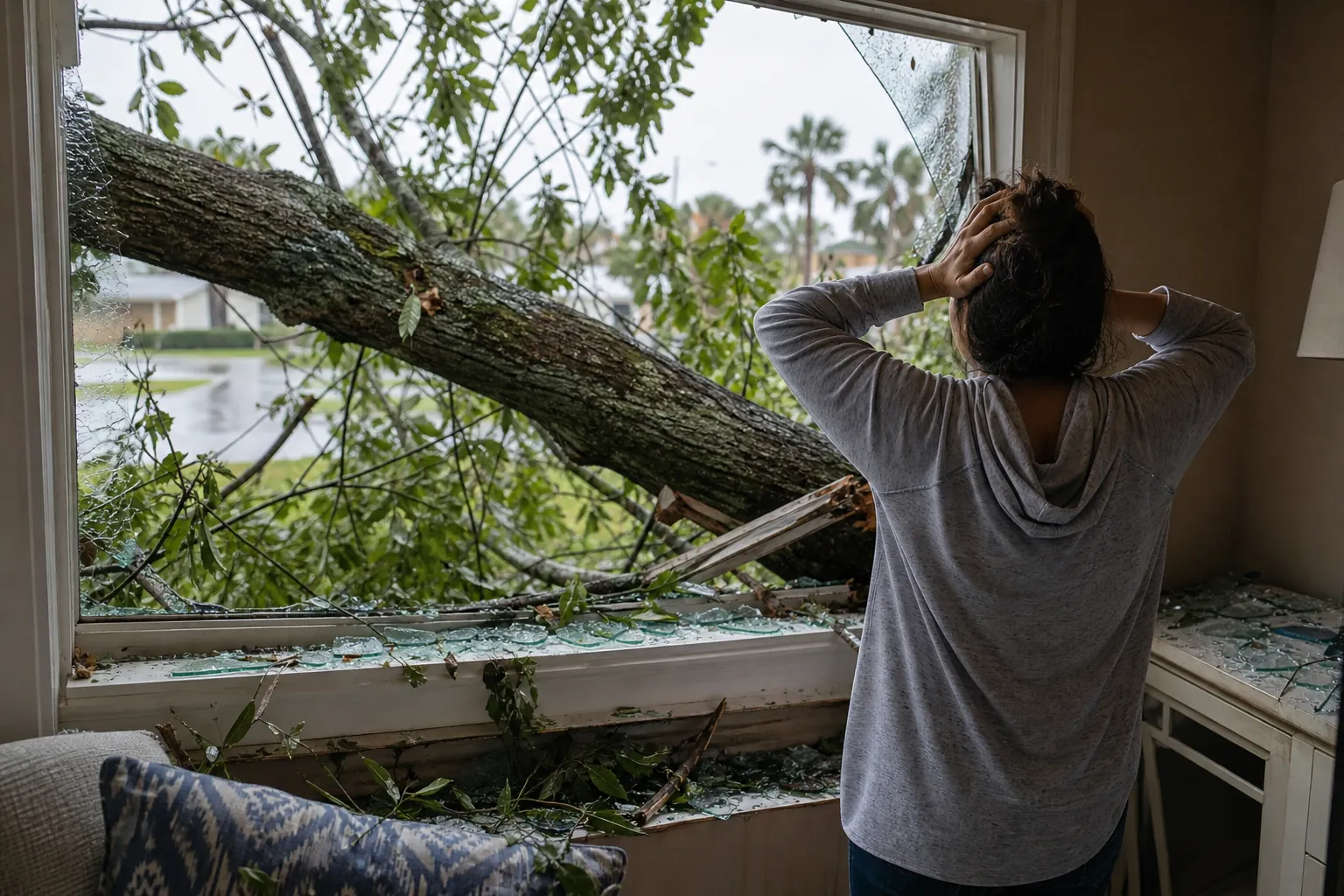
What Can You Describe Without Diagnosing the Damage?
You can describe what you see without deciding why it happened or whether the tree is stable. Use the overview of tree removal for service context. The tree trimming overview explains a different service category. Neither page can diagnose storm damage.
“A limb extends through the front bedroom window” is an observation. “The tree will stay where it is” is a conclusion. Keep these kinds of statements separate in your notes and in any message you send.
You can also separate what you know from what someone else reported. If another household member noticed the window first, record that as their report. You do not need to combine several accounts into one confident story.
- Name the affected room and the side of the home in everyday terms.
- Describe visible items, such as the limb, window opening, or glass. Do not interpret their condition.
- Mark uncertain details as unknown instead of filling gaps with guesses.
A photo may help show what someone saw, but it does not prove that a tree is safe. Do not use an image to replace an assessment or choose between trimming and removal. A useful written note can simply say, “The full tree is not visible in this image.”
The goal is a clear description, not a complete explanation. A short account with honest gaps is more useful than a detailed account built on assumptions.
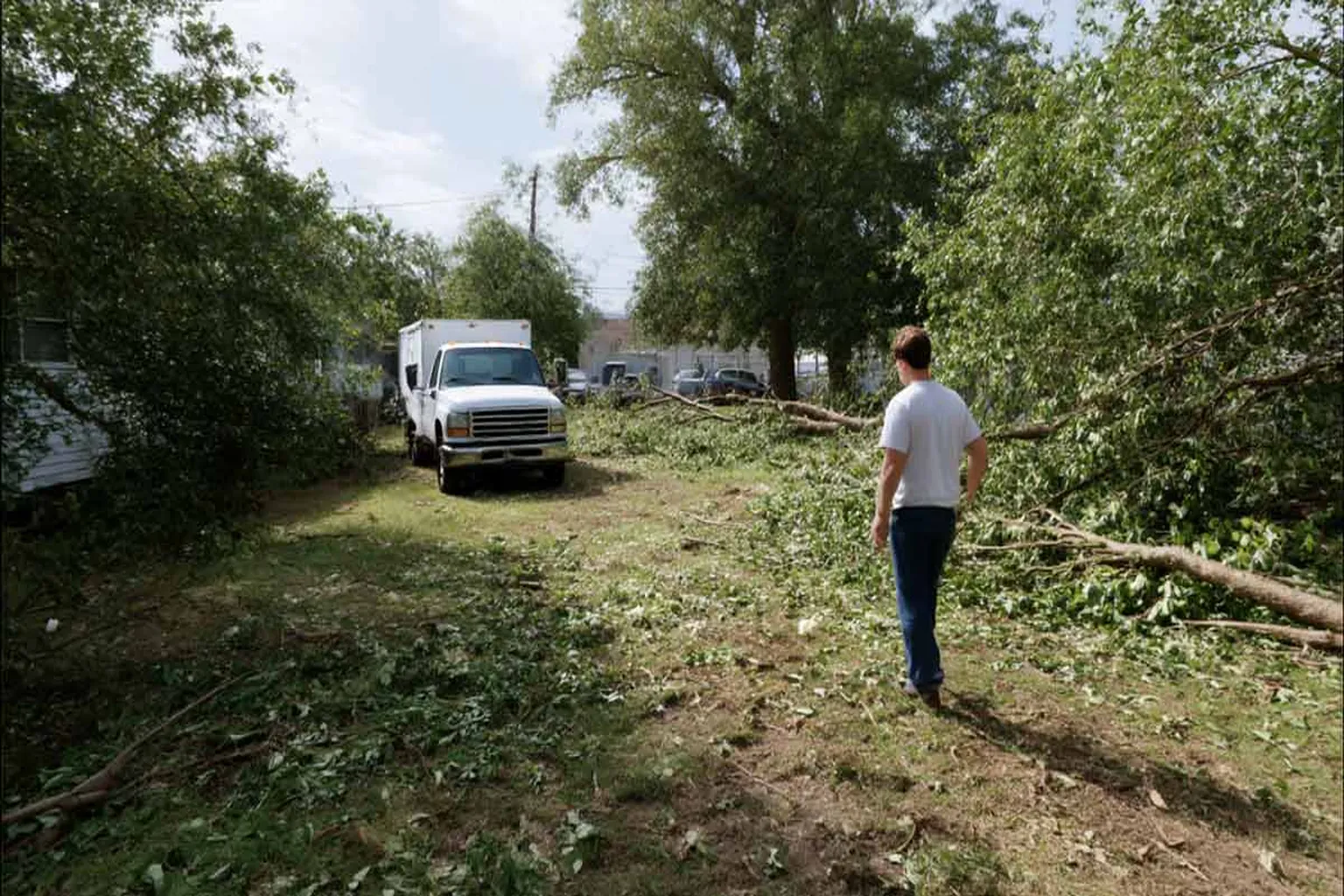
Why Should You Leave the Limb Out of Your Cleanup Plan?
Keep household organizing separate from decisions about the limb. The tree removal information page offers general service context. The Florida Foliage company background explains who operates the business. Neither page diagnoses the material resting in or near your window.
OSHA identifies tensioned tree material and limbs that roll or slide as hazards in storm-damaged tree work. See OSHA’s storm-damaged tree guidance. The position of a limb does not tell a homeowner everything about these hazards.
Make the household task “organize the next conversation,” not “get the branch out of the way.” This helps keep a planning list from becoming an improvised tree-work plan. This article does not provide cutting, pruning, or clearing methods.
- Keep tree-work questions on a separate list from ordinary household tasks.
- Write down what you want to understand about the limb. Do not suggest a way to move it.
- Tell household members that rearranging the affected room is not part of the current plan.
It is understandable to want the room back quickly. Still, wanting to restore the room does not tell you anything about the tree. Keep your notes focused on what happened, what you can see, and what you need to ask next.
How Can You Make a Useful Record Without Guesswork?
Make one short record that another person can understand without a long retelling. The Florida Foliage contact options can help you choose how to ask a question. The company information page provides background. Prepare your record first. Sending it does not confirm service.
Use a phone note, notebook, or shared document, whichever your household already uses. You do not need a special format. A few labeled lines are often easier to update than several separate messages.
- Write a plain description of the event, such as a hurricane limb entering a named window.
- List what you have seen separately from details that remain unknown.
- Add household questions, including which room is being left unused.
- Choose one person to update the record as new information arrives.
- Prepare a brief contact message. Ask about the next conversation rather than assuming an outcome.
Add the date of your note so readers know when you wrote it. If a detail changes, add a new entry. Do not rewrite the earlier observation as if you had always known the new detail.
- Use room names that match the words your household uses.
- Mark secondhand reports as reports from someone else.
- Remove duplicate messages so important questions are easy to find.
This record is an organizing tool. It does not diagnose tree damage, assess the building, or show that a room can be used.
Keep Household Plans Separate From the Affected Room
A temporary household plan can cover daily routines without becoming a damage assessment. Use the page for contacting Florida Foliage for tree-service questions. The tree removal service description offers background. Keep meal planning, sleeping arrangements, and family messages on a separate household list.
Think about what the room normally provides. It may be a bedroom, a home office, or the place where everyone gathers. List those uses and decide how to handle them elsewhere. You do not need to make the damaged room the center of every conversation.
For example, a household could move its shared calendar to another room or hold a family check-in at a different table. These are ordinary organizing choices, not technical instructions about the window or tree.
- Choose another place for household conversations and shared notes.
- List daily activities that normally happen in the affected room.
- Assign one person to update others so messages stay consistent.
- Keep questions about personal belongings on the shared list, not in scattered texts.
Use clear language with children and visitors. Name the room and explain the current household plan. Do not ask them to interpret the damage. Everyone can follow the same message even when many details remain unknown.
Review the list when new information arrives. Change only what needs to change. Do not treat a quieter moment or a clearer view as a diagnosis.
What Other Post-Hurricane Conditions Matter?
The window may draw your attention, but post-hurricane conditions can involve more than the tree. The tree trimming service information covers tree-care context. The company contact page lets you ask a service question. Neither replaces the official storm guidance linked below.
The National Weather Service advises walking carefully around the outside of a home to check for loose power lines, gas leaks, and structural damage. Read the National Weather Service’s after-hurricane guidance.
It also says to stay out of a building if you smell gas, floodwaters remain around it, or authorities have not declared it safe. See the official building-entry guidance. Leaving one room unused does not replace this guidance about the building.
- Keep observations about the window separate from observations about the rest of the property.
- List unknown electrical or building conditions among your unanswered questions.
- Share the official guidance itself instead of paraphrasing it from memory.
Downed electrical conductors can energize trees and fences. Avoid direct and indirect contact. OSHA identifies this electrical hazard.
Never use a portable generator inside a home or garage. The National Weather Service states this generator precaution. Keep these official instructions separate from ordinary household organizing choices.
How Do You Contact Florida Foliage Without Assuming Service?
Make a neutral inquiry. State your location, describe what you can see, and share your questions. The Florida Foliage contact page provides contact information. The about page gives company background. Florida Foliage is headquartered in Daytona Beach. These links do not establish a Pensacola office or local availability.
You can call (386) 481-7913 to ask whether the company can discuss your situation and whether service in Pensacola is available. A call is an inquiry, not a promise of a visit or a particular response time.
A short opening might be: “I am in Pensacola. A hurricane limb extends through a window in our living room. I would like to ask whether your company offers service here and what information you need for an initial discussion.”
- Give your location before discussing the tree so the location is clear.
- Describe what you see without naming a diagnosis or choosing a tree-work method.
- Ask about availability directly instead of assuming it from a website page.
- Write down questions that remain unanswered after the conversation.
Keep the Next Step Clear
Check your short record before making another household decision. The guide to emergency tree removal in Pensacola offers broader reading. The Florida Foliage inquiry page provides a neutral way to get in touch. Neither turns what you see into a diagnosis or confirms local service.
Keep separate what you saw, what remains unknown, and what someone has actually told you. This simple structure helps you avoid repeating guesses as facts. It also helps your household track changing plans without rewriting the whole story.
- Keep the affected room out of the ordinary household routine for now.
- Use one current note for observations and open questions.
- Ask directly about service availability before planning around a company visit.
The aim is not to solve tree damage through a blog. It is to keep household communication clear and leave technical conclusions out of your notes. A useful next step can be a well-framed question, not an attempted explanation of everything that happened.
Frequently Asked Questions
Does a limb through a window mean the whole tree needs removal?
The visible event alone does not show which tree service is right. You can report that a limb entered a window, but do not treat that as a diagnosis of the whole tree. The tree removal overview gives general service context. It does not assess your property.
Can a photo show that the tree is safe?
No. A photo does not prove that the tree is safe. An image can show a visible detail, but that detail is not a diagnosis. If you already have images to share, label what each one shows and what is outside the frame. Mark uncertain details as unknown.
Why not include moving the limb in household cleanup?
Storm-damaged tree work can involve hazards from tensioned material and limbs that may roll or slide. OSHA describes these hazards. Keep household organizing separate from tree work. Your list can cover messages, other routines, and questions. Do not suggest how to move the limb or clear the affected window.
Does Florida Foliage have a Pensacola office?
Florida Foliage is headquartered in Daytona Beach. This article does not identify a Pensacola office or confirm local service availability. Use the contact page or call (386) 481-7913 to ask whether the company can discuss your location and situation. Do not plan around a visit until you have discussed availability.
What should my first message include?
Include Pensacola as your location, name the affected room, and describe what you see in plain words. Separate observations from unanswered questions. Ask whether service is available instead of assuming it is. You do not need to choose removal or trimming in your first message. A photo should not be presented as proof of safety.
Call (386) 481-7913 to talk through next steps.