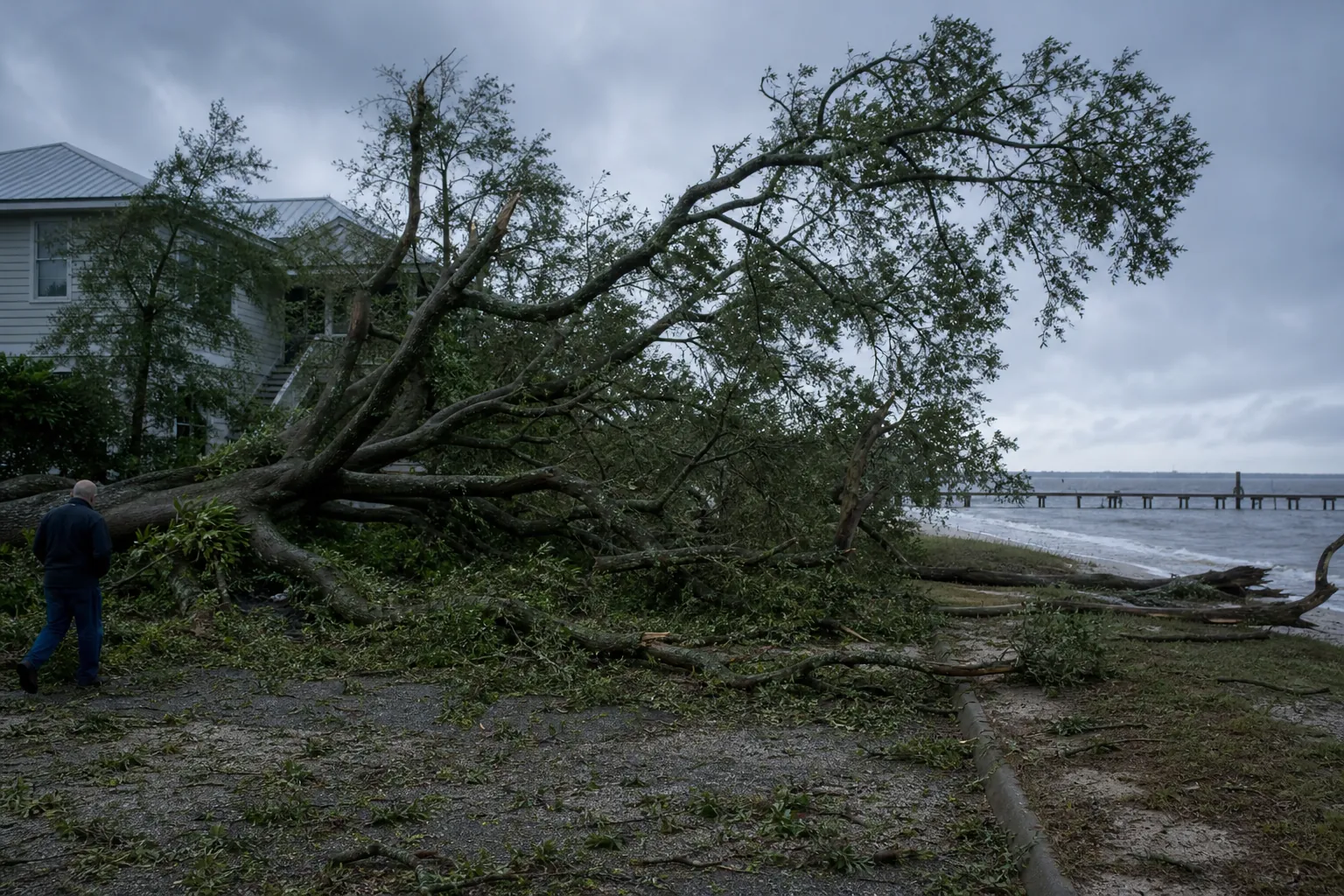
Hurricane Live Oak Damage in Pensacola, FL calls for clear notes and a careful household plan.
After a hurricane in Pensacola, note what changed on your live oak. Do not decide what those changes mean. Keep visible facts, older photos, and open questions apart. Add the date and where you viewed each detail. For example, note if you saw it from a window or in an existing photo. OSHA lists falling limbs and unstable trees as hazards in storm tree work. Your log helps you share observations. It does not diagnose the tree or prove it is safe. Related links: OSHA’s storm tree-work guidance
What Comes First For Hurricane Live Oak Damage?
Record visible changes in the tree’s outline, leaves, branches, trunk appearance, and surrounding ground, while keeping interpretation separate. The tree-trimming service overview offers context for branch-related questions, and the tree-removal service overview explains a different service category. Neither page determines what your live oak needs or establishes Pensacola availability.
Start with the clearest change. “A branch is across the driveway in today’s window photo” is clearer than “the tree is ruined.” You could also write, “The top looks thinner than in the June photo.” That describes what you see. It does not say what the change means for the tree.
Use clear labels. If the view shows several live oaks, give each one a name, such as “front oak” or “oak by the patio.” Use the same name in every note and photo caption.
- Write the observation date and identify which tree appears in the record.
- Describe the visible feature before adding any question about it.
- State when an image is unclear or when part of the tree is outside the frame.
- Keep “not visible” separate from “not present,” since those statements mean different things.
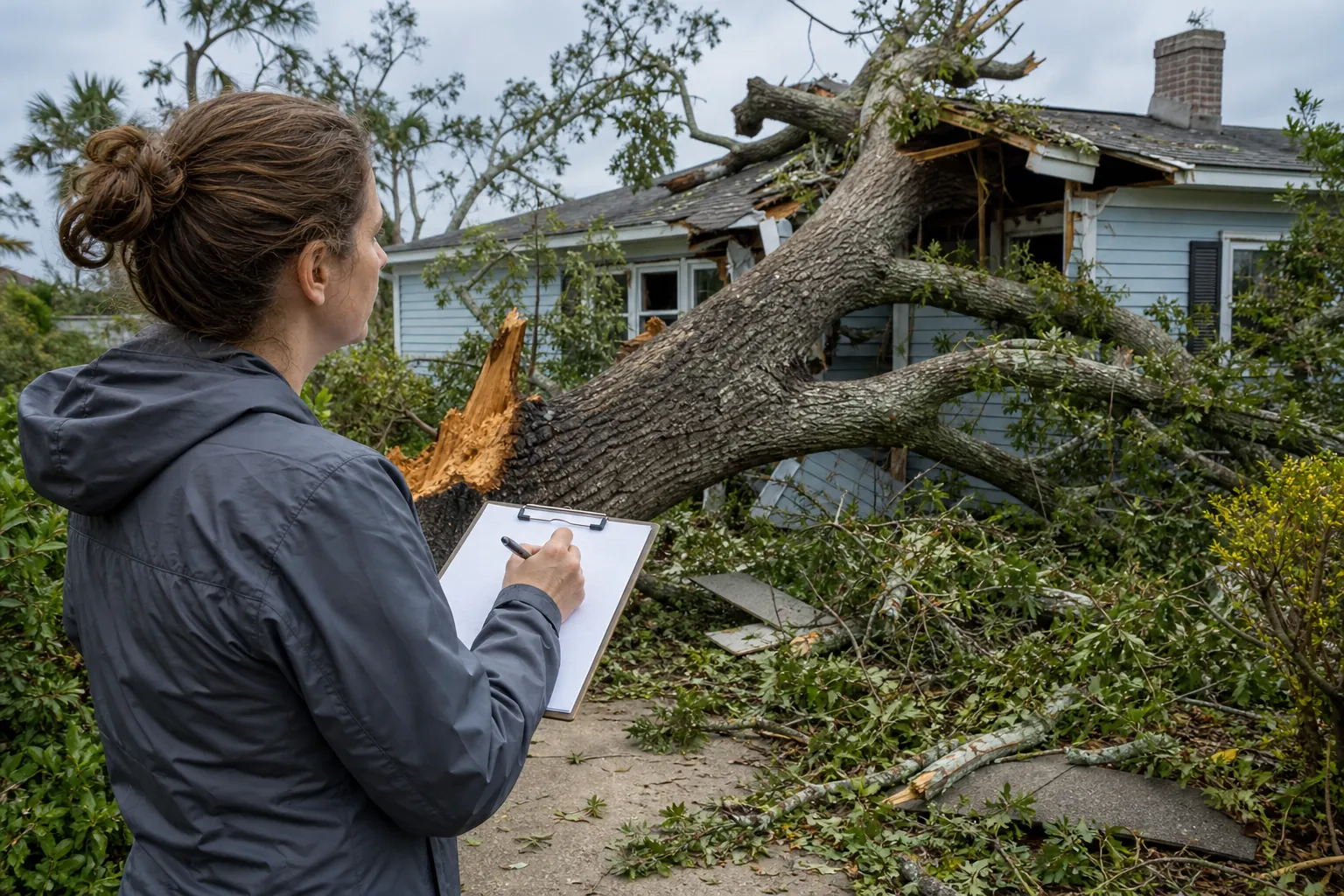
Can Photos Show Whether a Live Oak Is Safe?
No. Photos show visible details at one moment. They cannot prove that a live oak is safe or turn an observation into a diagnosis. Florida Foliage’s contact and company pages explain how to reach the company and who it is. Related links: contact page company background page
A photo shows one view at one time. Describe that view in its caption. “This image shows the trunk from the living-room window” is useful. “This image proves the tree is stable” is not.
Older photos may show what looks different. Add the known date, or write “date unknown.” Do not make an old photo seem current. If the views differ, say so when you compare them.
- Keep the original image alongside any version with arrows or labels.
- Write what an arrow points to instead of giving it a diagnosis.
- Identify blocked views, shadows, and missing parts of the frame.
- Use photographs to support a question, never to certify a condition.
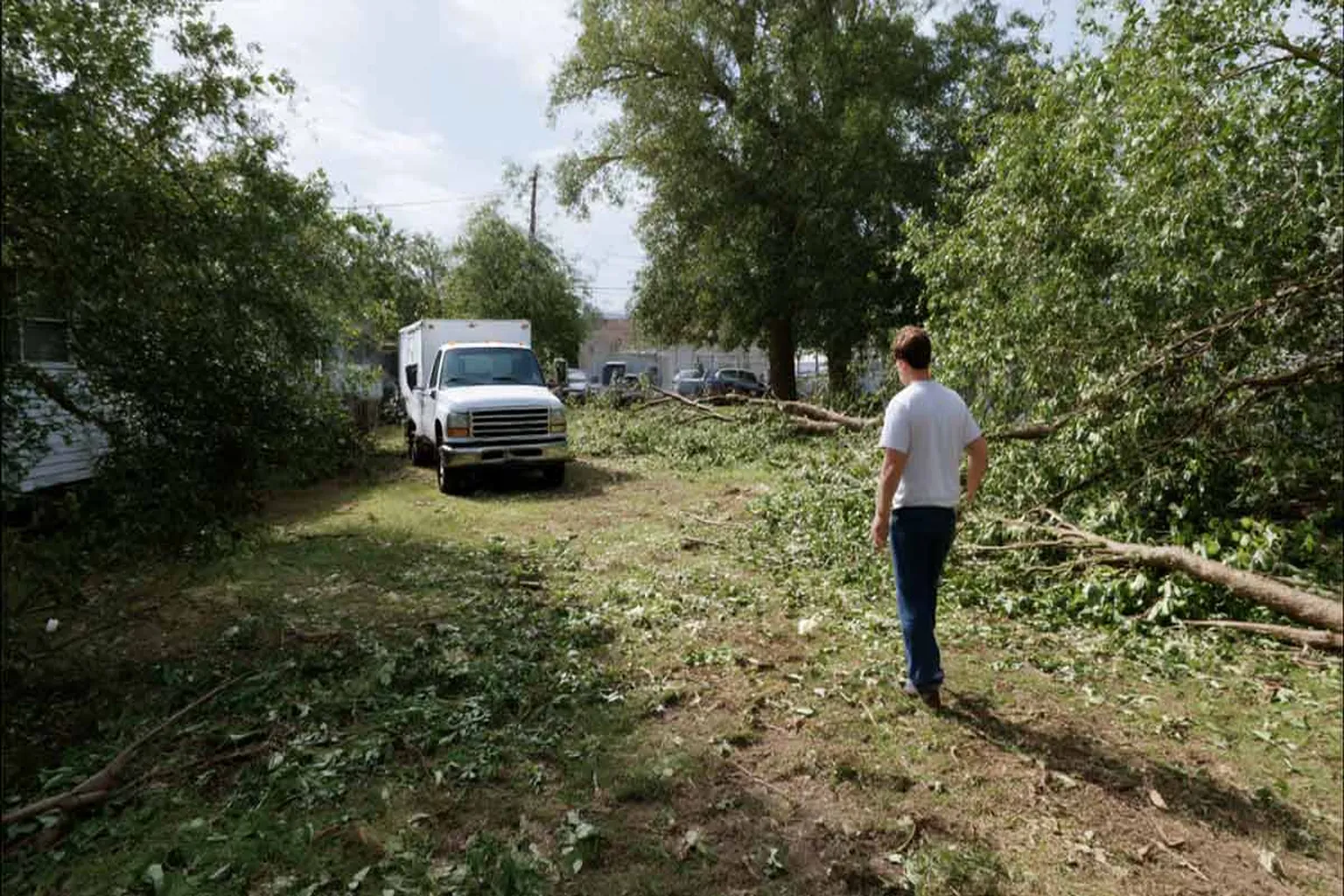
Which Storm Hazards Belong in Your Notes?
You may note visible details related to OSHA’s listed hazards. Do not investigate hazards to complete your log. OSHA’s storm tree-work guidance explains the risks. Florida Foliage’s tree-removal and contact pages describe the company’s services and contact options. Related links: tree-removal information page general inquiry page OSHA hazard guidance for storm-damaged tree work
OSHA lists falling limbs and unstable trees as hazards in storm-damaged tree work. Do not label a tree unstable based on your own notes. Source: OSHA tree-trimming activity sheet. Related links: Source: OSHA tree-trimming activity sheet.
Downed electrical conductors can energize trees and fences. Avoid direct and indirect contact. If a wire appears in an existing view, note where it appears. Do not assess its electrical status. Source: OSHA tree-trimming activity sheet. Related links: Source: OSHA tree-trimming activity sheet.
OSHA also lists tensioned tree material and trees that may roll or slide during felling as hazards. Do not say that your log measures tension or predicts movement. Source: OSHA tree-trimming activity sheet. Related links: Source: OSHA tree-trimming activity sheet.
- Record “wire visible beside branch” rather than guessing whether the wire is energized.
- Use “material appears caught between branches” instead of naming forces you have not assessed.
- Keep nonessential people outside work and drop areas, as directed by OSHA’s tree-work guidance.
Build One Simple Observation Log
One document can keep dates, captions, and questions together. Florida Foliage’s contact and company pages explain how to reach the company and who it is. Related links: Florida Foliage inquiry page Florida Foliage background page
Keep the format simple. Use a notebook, document, or phone note. Choose something you already use. Your system should not take more effort than recording what you see.
- Give the record a title that identifies the tree and the storm event in your own words.
- Add the date of each entry and the source of the observation.
- Write one plain sentence for each visible change.
- Pair that sentence with an image filename when an existing image is available.
- Add an unanswered question beneath the observation rather than mixing the two.
- Keep later updates as new entries so the earlier record remains clear.
For example: “September, front oak, kitchen window: a leafy branch is on the lawn. Image: front-oak-01. Question: what details would help?” This describes the view without guessing why the branch fell.
- Use the same tree name in every entry.
- Mark uncertain dates as uncertain instead of filling in a guess.
- Save a short summary separately from the full set of notes.
Describe the Crown, Trunk, and Ground Separately
Describe each part of the scene on its own. Tree trimming and tree removal are different service topics. A description by itself does not show whether either service is needed. Related links: branch-service information removal-service information
For the crown, describe its outline and visible details. You might note a gap, a branch in a new position, or leaves on the ground. Do not use these details to predict how the live oak will recover.
For the trunk, note where a mark appears and whether it shows in an older photo. Describe the ground without naming a root problem. “Raised soil is visible beside the trunk” reports what the photo shows. It does not diagnose the roots.
- Keep visible crown changes together under a clear crown heading.
- Describe trunk marks without assigning a cause you cannot confirm.
- State whether the ground view is complete or partly blocked.
- Leave a section blank or write “not visible” when the record does not show it.
This structure also helps keep unrelated yard details from obscuring the tree question. A separate “surrounding scene” line can hold those details.
Keep Debris Details Separate From Tree Questions
A note about nearby debris can help describe the scene. It is not a cleanup plan. Florida Foliage’s contact and company pages explain how to reach the company and who it is. Keep this part focused on what you can see, not conclusions about the oak. Related links: general contact form company information page
OSHA says debris can hide meters and fire hydrants. If an item is hidden in a photo, do not say it is absent. Source: OSHA debris-collection activity sheet. Related links: Source: OSHA debris-collection activity sheet.
Keep nonessential people away from debris machinery, as OSHA advises. A photo or homeowner log cannot replace that guidance. Source: OSHA debris-collection activity sheet. Related links: Source: OSHA debris-collection activity sheet.
Stay clear of leaking hazardous chemical containers. Hazardous-material response personnel must assess them. Do not guess what a visible container holds. Source: OSHA debris-collection activity sheet. Related links: Source: OSHA debris-collection activity sheet.
- Use a separate heading for debris so it does not become part of a tree diagnosis.
- Write “container visible” when that is all the image establishes.
- Record a blocked view as blocked rather than guessing what lies beneath it.
Compare Records Without Predicting Recovery
Compare entries to describe changes. Do not predict what the oak will do next. Florida Foliage’s tree-trimming and contact pages provide company and service details. They do not give a recovery finding for this tree. Related links: tree-trimming overview contact page
An older photo may show a fuller outline or a branch in another place. State the difference plainly. Mention if the photos show different angles. Do not say more than the images show.
Use dates with words like “before,” “after,” and “later” when you know them. If someone else shared a photo, note that. “Family photo, month unknown” is better than a guessed date.
- State which two dated records you are comparing in the note.
- Describe the visible difference without assigning a recovery outlook.
- Note when lighting, framing, or blocked views limit the comparison.
- Retain conflicting observations instead of rewriting them into a single conclusion.
Keep a clear history of what you saw. It can help you talk about the tree while its condition remains unknown.
Prepare a Neutral Contact Summary
A useful inquiry gives your location, the visible change, and your question. Florida Foliage is based in Daytona Beach. Call (386) 481-7913 to ask about current service options for your Pensacola property. Related links: Florida Foliage contact page company background page
Call (386) 481-7913 or use the contact page to ask whether your location and question fit the company’s current scope. A call does not promise a visit, response time, or outcome. Related links: (386) 481-7913
Keep your message brief. For example: “I am in Pensacola. My live oak looks different after a hurricane. I have dated notes and photos. Does this fit your service area? What details would help?”
- Identify Pensacola clearly rather than assuming the company serves your location.
- Share the most useful observations before adding the full history.
- Ask how to provide existing images rather than sending an unexplained collection.
- Keep service questions separate from conclusions about the tree.
Florida Foliage owner Clinton Funk has decades of hands-on tree care experience. Tim Francis is responsible for this article’s content. Clinton Funk owns Florida Foliage and has decades of hands-on tree care experience. The linked OSHA pages provide the safety facts. The log suggestions organize observations; they do not diagnose a tree or predict recovery.
Frequently Asked Questions
These answers help you keep a clear record of what you see. Florida Foliage’s contact and tree-trimming pages provide company and service details. Related links: tree-trimming service page contact page
- Keep each question linked to a specific observation when possible.
- Preserve uncertainty rather than changing a question into a diagnosis.
Does a branch on the ground mean my live oak needs removal?
A branch visible on the ground is an observation, not a decision about the whole tree. Record which tree it appears near, the date, and what your image actually shows. Do not infer a removal need or a recovery outlook from that detail alone. Keep the service question separate from the caption.
What if I have no photographs from before the hurricane?
You can still make a useful record of what is visible now. State that you have no earlier image for comparison, then describe the current view in plain words. If you remember an earlier appearance, label that statement as recollection rather than treating it as a dated visual record.
Should I describe a visible trunk mark as a crack?
Use wording that matches what you can actually see. If the feature is unclear, describe it as a visible line, opening, or mark and explain where it appears in the image. Leave its meaning unresolved. A careful caption is more useful than a technical label chosen without an assessment.
How should I record a wire visible near the oak?
Describe the wire’s visible location without guessing its electrical status. Downed electrical conductors can energize trees and fences, and OSHA directs people to avoid direct and indirect contact. Your record should not attempt to test or resolve that hazard. Source: OSHA storm tree-work guidance.
Can I contact Florida Foliage about a Pensacola tree?
You can ask whether your location and question fit the company’s current scope through the contact page or by calling (386) 481-7913. Florida Foliage is headquartered in Daytona Beach. This article does not promise Pensacola service, a visit, a response time, or a particular result.
Author: Tim Francis.
For a broader overview of hurricane tree cleanup in Pensacola, see the Pensacola hurricane tree cleanup guide.
Call (386) 481-7913 to talk through next steps.