Reviewed by Clinton Funk
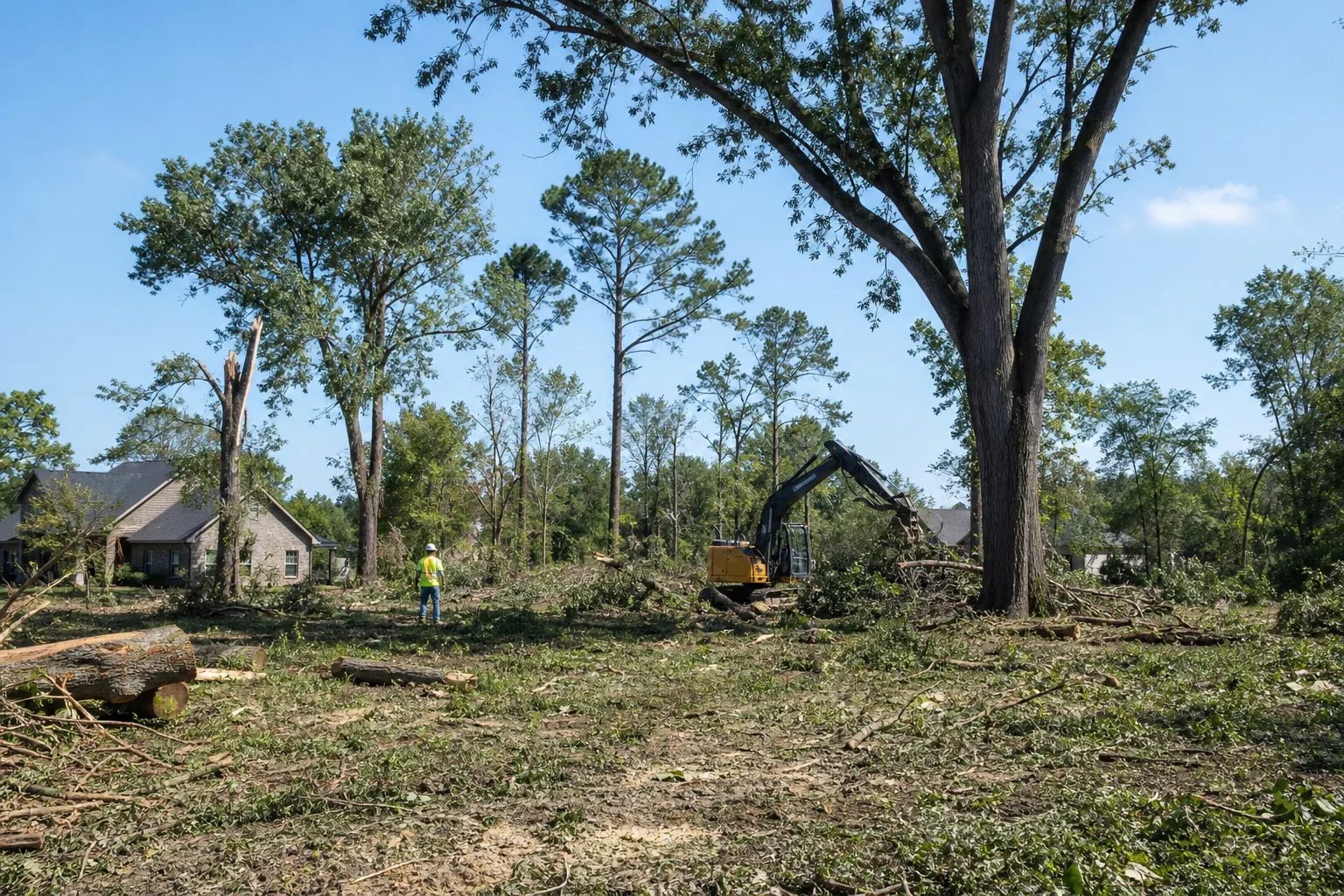
Hurricane lot clearing tree retention starts with a clear plan. Decide which trees need closer checks before brush or limbs come down. Mark root zones, access paths, and debris areas before work starts. For Pace homeowners, this helps balance storm prep with care for trees worth keeping.
A cleared lot doesn't need to become a bare lot. The goal is to reduce problem growth while protecting selected trees. That takes more care than cutting everything within a work area. Trees, roots, soil, and access routes all need attention.
This guide covers storm planning for established yards and wooded home lots. It explains what to check, what to mark, and what to discuss. No site plan can remove every risk from a hurricane. Each tree needs a site-based review before a keep-or-remove decision.
How should hurricane lot clearing tree retention be planned?
Start with tree checks before choosing the clearing limits. A tree inspection can guide which trees stay and need protection. Then mark brush removal areas, machine paths, and debris staging space. The work plan should protect trunks and roots throughout clearing, rather than treating them as an afterthought.
Hurricane readiness starts with knowing what the work should achieve. One lot may need brush removed beside an access path. Another may need a damaged tree assessed near the home. A broad request to clear the lot can hide these different needs.
Walk the property from several viewpoints before making a scope. Look from the house, driveway, yard, and lot edges. Note trees that lean, have dead tops, or show past damage. These notes help guide a closer inspection; they don't replace one.
Keep trees and remove trees should be marked in distinct ways. Use a map as well as clear field markings. Agree on what each mark means before equipment arrives. Avoid marks that could be mistaken for a removal request.
- Mark each tree proposed for retention before setting the final hurricane clearing boundaries.
- Note damaged limbs and trunk wounds that need a closer tree inspection.
- Choose access paths that avoid retained trunks and major exposed roots.
- Set aside a debris area away from trees selected for retention.
- Confirm which brush and small trees belong within the agreed clearing scope.
Leave room to change the plan when new facts appear. Dense brush can hide trunk damage or old debris. Once that growth is cleared, some trees may need another look. Pause that part of the work before making a new decision.
A useful clearing plan shows more than cutting boundaries. It identifies protected trees, restricted areas, and open equipment routes. It also records questions that remain unresolved before hurricane season. These details make the proposed work easier to explain and review.
Which trees need closer inspection before hurricane season?
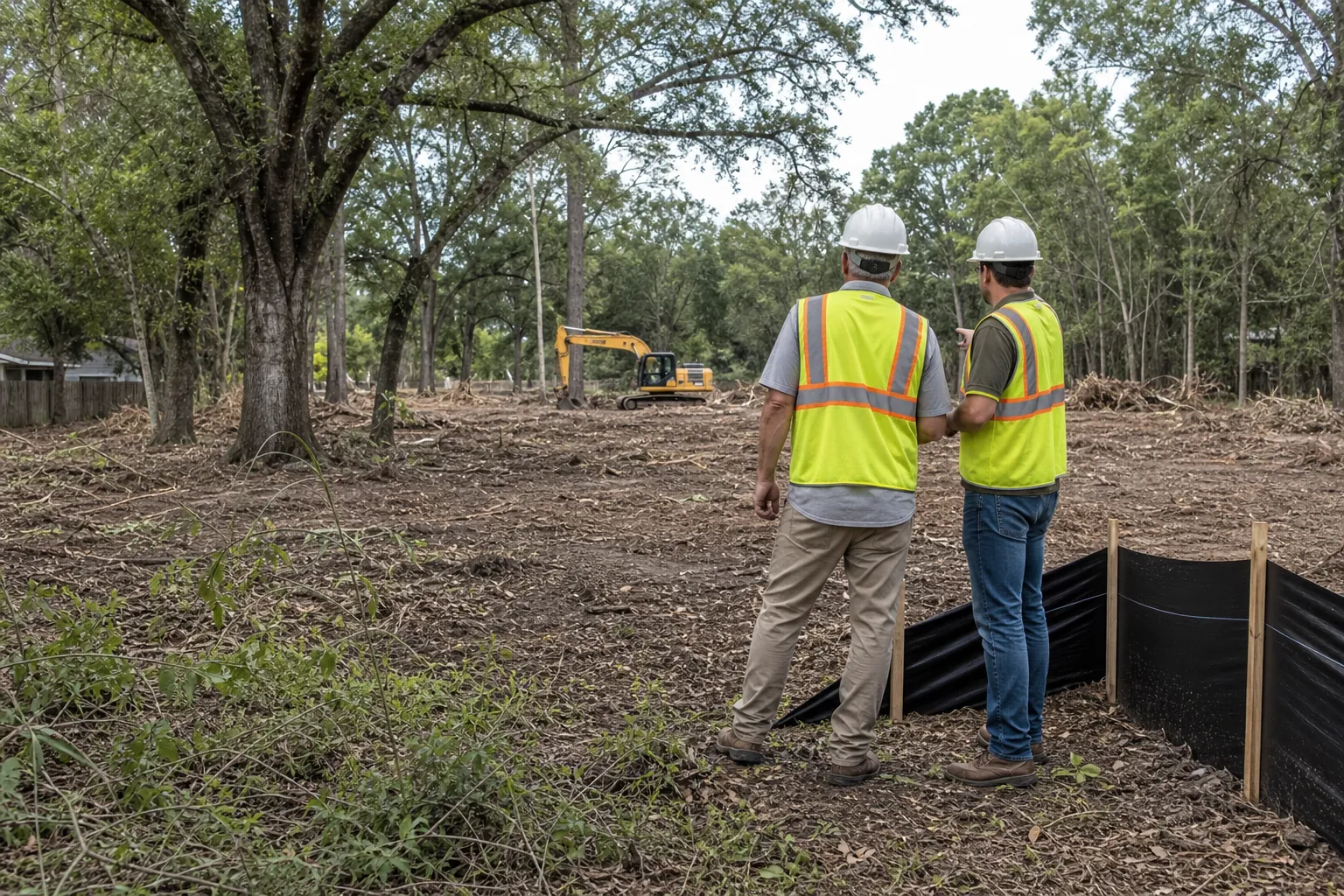
Trees with dead limbs, cracks, root damage, or recent lean need closer review. Dense brush can hide these signs near the trunk base. Request tree inspections before deciding what to retain beside a home. An arborist report can record findings and help organize the next steps for storm preparation.
A large tree is not automatically a removal candidate. A small tree is not automatically sound, either. Look at its condition, growing space, and nearby targets together. Avoid making a decision based on height or age alone.
Describe changes you have seen since the last major storm. A new lean differs from a long-standing growth pattern. Fresh soil movement deserves attention during a site review. Photos from earlier years may help explain what has changed.
Check the area around each tree without disturbing its roots. Note new trenches, grade changes, vehicle tracks, or buried trunk bases. Share those details during the inspection. Past work may matter even when the crown still looks full.
Tree inspections and arborist reports serve different planning needs. An inspection helps assess tree condition and surrounding site conditions. A report can document findings and recommendations for individual trees. Ask what the assessment will cover and which trees it includes.
Some trees may need trimming rather than full removal. Others may need more review before a firm choice. Keep those groups separate in your hurricane work plan. This prevents uncertainty from turning into broad, unnecessary clearing.
Revisit retained trees after the surrounding brush is removed. The clearer view may reveal defects hidden at first. Record any new concerns before calling that area complete. A staged review supports better choices than a single quick walk.
How can clearing avoid damage to roots and soil?
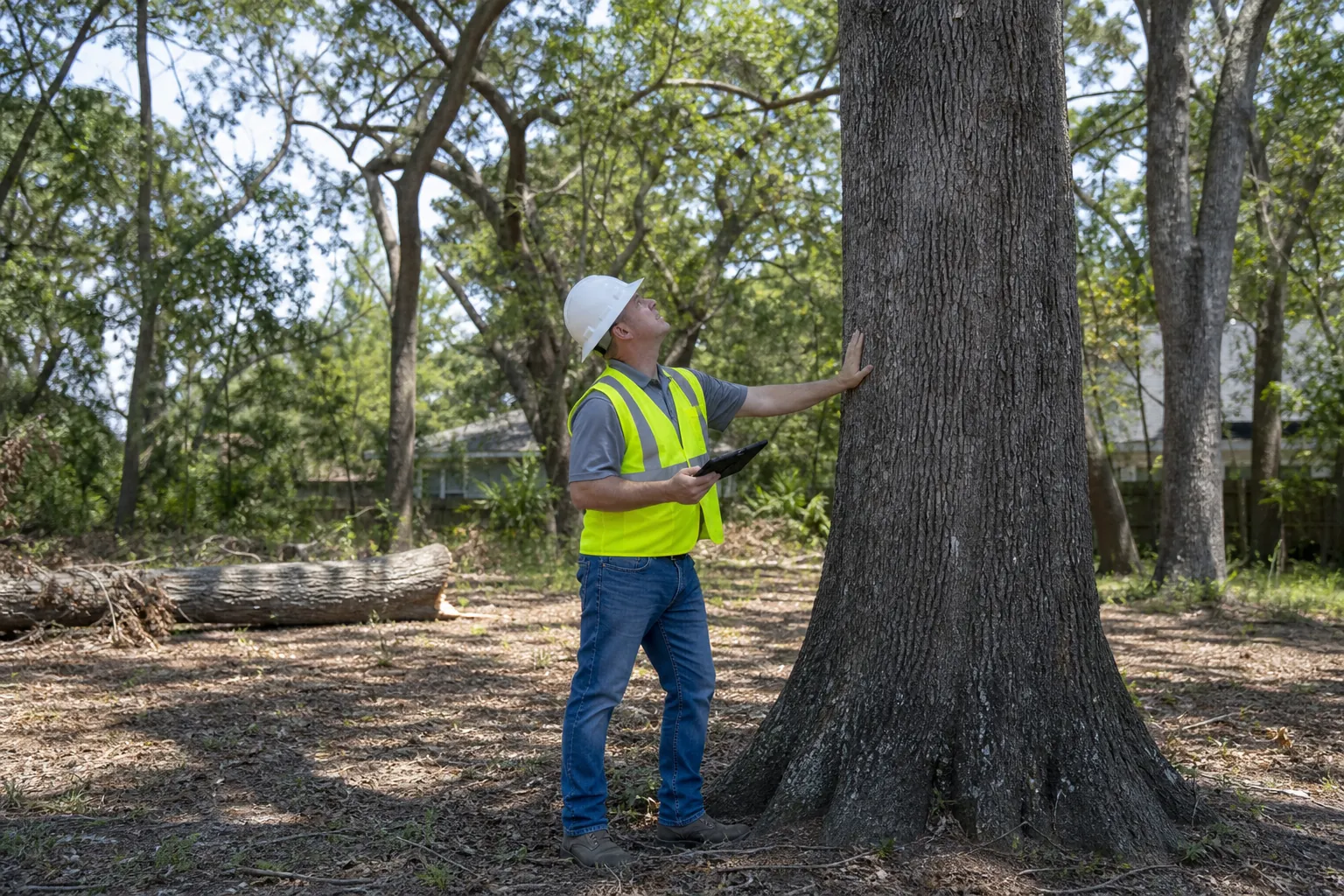
Protect roots by planning equipment access before lot clearing begins. Keep staging areas and repeated vehicle trips away from retained trees. Don't assume a tree's roots stop at its branch tips. Set site-specific protection areas during the tree review, then keep those limits visible throughout the hurricane preparation work.
Roots can suffer damage even when the trunk stays untouched. Heavy traffic can press soil down around a retained tree. Cutting through roots can cause further harm. Discuss both issues before choosing machine routes or clearing methods.
A narrow gap between trunks may look like easy access. That route may still cross important root areas. Ask how crews would reach the brush without using it. The best path on a sketch may need changes onsite.
Land and lot clearing should have a clear stopping point. Brush hogging may suit some open growth areas. It should not become a reason to drive close to every tree. Match the method to the ground and the retained trees.
Keep removed brush from becoming a pile against standing trunks. Choose staging space before cutting starts, then keep it defined. This also makes the final cleanup scope easier to check. A crowded site can blur the original clearing boundaries.
Stump grinding needs its own review near trees being kept. The planned grinding area may overlap nearby roots. Discuss that location before including the stump in the work. Treat each stump as a separate task within the storm plan.
After clearing, inspect the protected areas from the ground. Look for scraped bark, disturbed soil, and newly exposed roots. Photograph concerns and request a follow-up tree check when needed. Early review helps identify work that still needs attention.
What trimming fits a hurricane tree retention plan?
Trimming should address specific defects rather than follow a blanket cutting rule. Ask which limbs need removal and why they matter. Canopy thinning or crown reduction may suit certain trees after assessment. Neither should become a default treatment for every tree retained during hurricane lot clearing around a home.
A useful trimming plan names the tree and the intended change. It might focus on dead limbs or damaged branch structure. Avoid vague directions such as cutting everything back hard. Those words don't explain what the tree needs.
Canopy thinning and crown reduction describe different types of work. Ask how the proposed method fits the tree's structure. The answer should relate to that tree, not a storm-season slogan. Retaining a tree means keeping its future care in view.
Don't ask for the same crown shape across the whole lot. Trees differ in species, size, condition, and growth form. The scope should reflect those differences. A neat row of matching outlines is not a sound care goal.
Tree removal may be the chosen step for some trees. That choice should follow the condition and site review. Ask how removal would protect nearby trees marked to stay. Include access and debris movement in that discussion.
Crane tree removal may be considered for certain site conditions. Its use depends on access, tree position, and the work plan. Don't assume it is needed because a tree is tall. Ask what site factors support the proposed method.
Review the work from the ground once trimming ends. Compare it with the agreed goals for each tree. Record any limbs or defects left for later review. Your hurricane plan should show what remains unfinished.
What should homeowners do as a hurricane approaches?
Complete tree planning well before weather conditions begin to worsen. Follow local alerts and evacuation instructions rather than rushing outdoor work. Ready.gov explains hurricane planning and shelter choices on its hurricane preparedness page. Keep that guidance separate from your tree work checklist, since personal safety comes before clearing goals.
A tree work list is one part of household storm prep. It should not drive last-minute choices about staying outside. Use official forecasts to guide your timing. The National Weather Service hurricane safety guide explains watches, warnings, and actions before a storm.
Write down the tree tasks that remain open before storm season. Sort them by the need for review, not by appearance. A dead limb near the house needs a different discussion than distant brush. Give each task a clear next step.
- Save inspection notes and the clearing map where you can find them easily.
- Photograph retained trees before the storm without entering areas that appear unsafe.
- Keep household storm plans separate from the list of unfinished tree work.
- Review official weather updates rather than relying on a tree work schedule.
- Follow local evacuation instructions even when planned yard work remains unfinished.
Ready.gov advises planning how to receive alerts before a hurricane. Its hurricane guidance also covers evacuation planning and gathering supplies. Use those steps to support the household plan. Tree preparation does not replace them.
Keep records clear enough to use during stressful conditions. A brief tree inventory and marked property map may be enough. Include tree locations, observed concerns, and work already completed. Avoid general descriptions that leave you unsure which tree needs attention.
Once weather conditions worsen, shift from yard work to household safety. Follow the actions in official local updates. Unfinished clearing can be reviewed after conditions allow. Don't treat a partly cleared lot as a reason to delay safety steps.
How should storm cleanup preserve the trees left standing?
Start with a fresh assessment instead of reusing the old clearing plan. A hurricane can change tree condition and block planned access. Stay away from downed power lines and report them to the utility. Ready.gov includes this warning in its guidance for staying safe after a hurricane.
Do not assume a standing tree escaped damage. View it from a safe location before approaching the area. Note hanging limbs, broken tops, and newly leaning trunks. Leave close inspection of suspect trees to trained workers.
Storm-damaged trees can create hazards during removal and cleanup. OSHA's hurricane response and recovery guidance addresses hazards such as power lines and tree debris. Use that guidance when deciding where to keep people away. Cleanup speed should not set the safety standard.
Divide cleanup into areas that need assessment and areas already reviewed. Keep uncertain trees marked for a fresh inspection. Don't let debris piles hide their trunk bases. A new map can show where storm damage changed the original plan.
- Keep people away from trees with hanging limbs until trained workers assess them.
- Record visible damage from a safe place without moving storm debris yourself.
- Ask for a fresh inspection when retained trees develop new damage or lean.
- Review debris routes before equipment returns to areas near protected trees.
- Check the agreed cleanup boundaries before adding more trees to removal work.
Emergency and hurricane tree removal may form part of the cleanup scope. Other trees may need trimming or later inspection instead. Separate those tasks so the plan remains clear. Don't treat all storm damage as a reason for full removal.
End with a ground-level review of the retained trees. Compare their condition with notes taken before the storm. Record changes, completed work, and items needing another check. This becomes the starting point for the next hurricane season.
Frequently asked questions about hurricane tree retention
Should every tree near a house come down before a hurricane?
No. Distance from the house is one part of a tree review. Condition, structure, roots, and nearby targets matter too. Request an inspection rather than using a fixed distance as your removal rule. The plan should explain which trees stay, which need work, and why.
Can brush clearing replace a tree inspection?
No. Brush clearing can improve the view around a tree. It does not assess the tree's structure or root condition. Schedule a tree inspection when planning which trees to retain. If clearing reveals new concerns, ask for another look before work continues around that tree.
Does a thinner canopy mean a tree is ready for hurricanes?
No. Crown appearance alone cannot establish a tree's storm readiness. A tree may have defects that thinning does not address. Ask what each proposed cut is meant to achieve. Tree trimming should follow the assessment, rather than serve as a blanket response to hurricane concerns.
Should all stumps be ground during storm cleanup?
No. Review each stump within the cleanup plan before choosing that step. Note nearby retained trees and how equipment would reach the stump. Stump grinding may be included where it fits the site. Keep it separate from urgent assessment of damaged trees and hanging limbs.
Can Florida Foliage help me discuss a hurricane tree work scope?
Call Florida Foliage to discuss tree inspections and hurricane clearing needs. Explain that the property is in Pace and describe the site. Florida Foliage's headquarters remains in Daytona Beach. Ask about service-area fit before planning a site visit; this guide does not confirm local crews or scheduling.
For a neutral estimate discussion, call Florida Foliage at (386) 481-7913. Share your tree concerns, clearing goals, and property location. Ask what information is needed to review the proposed scope.
Call (386) 481-7913 to talk through next steps.