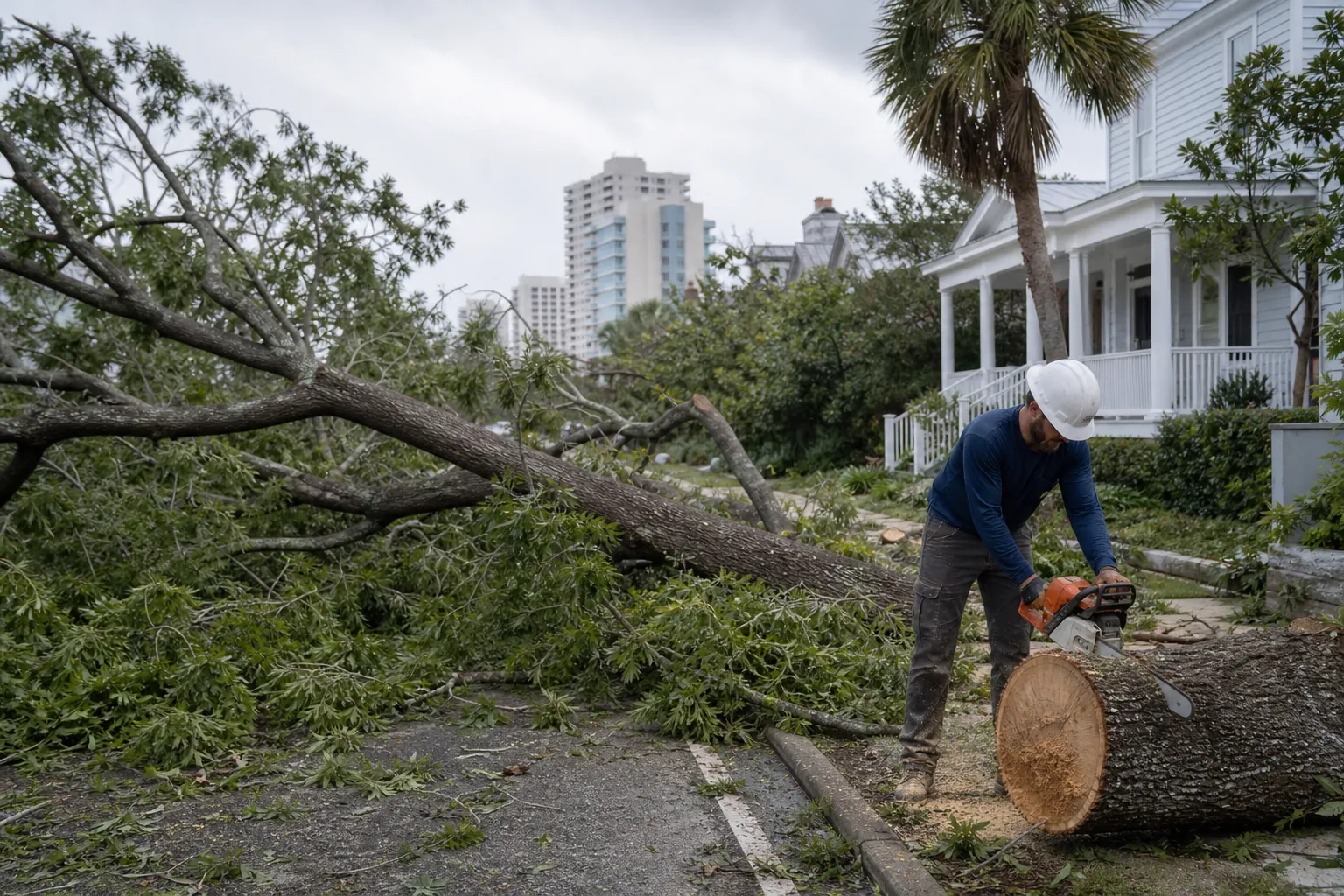
When a hurricane leaves several trees down, organize your notes around wires, buildings, access, and people. Do this instead of focusing on the size of the mess. Storm-damaged tree work has hazards from falling limbs and unstable trees. A homeowner checklist is not a work plan or a safety check. OSHA identifies these storm-damaged tree hazards. This guide supports our emergency tree removal in Pensacola resource. It offers practical ways to describe what you see and keep household information organized.
By Tim Francis, responsible for content and editorial preparation. Florida Foliage is headquartered in Daytona Beach. This article does not establish service availability in Pensacola.
What Should You Watch First When Several Trees Are Down?
Start your notes with visible wires, then buildings, blocked access, and the location of people. This is an order for sharing information, not permission to approach debris. The tree removal service overview explains the service category. The contact page for sharing your situation offers a neutral next step for questions.
The largest fallen trunk may draw your attention first. But your written summary does not need to follow that order. Give each topic its own heading. This helps keep important details from getting lost in a long account of the yard.
Downed electrical conductors can energize trees and fences. Avoid direct and indirect contact with them. OSHA explains the electrical hazards linked to storm-damaged tree work. If you note a visible wire, describe where it is. Do not call it inactive or harmless.
- Note whether a wire is visible near a tree, fence, or building. Do not try to identify its condition.
- Give each building or entry a plain label, such as front door, garage, or back porch.
- Separate what you saw from what another person in your household reported.
This approach keeps the first conversation focused. It also leaves room for uncertainty, which is more useful than filling gaps with guesses.
How Should You Describe Wires Without Guessing?
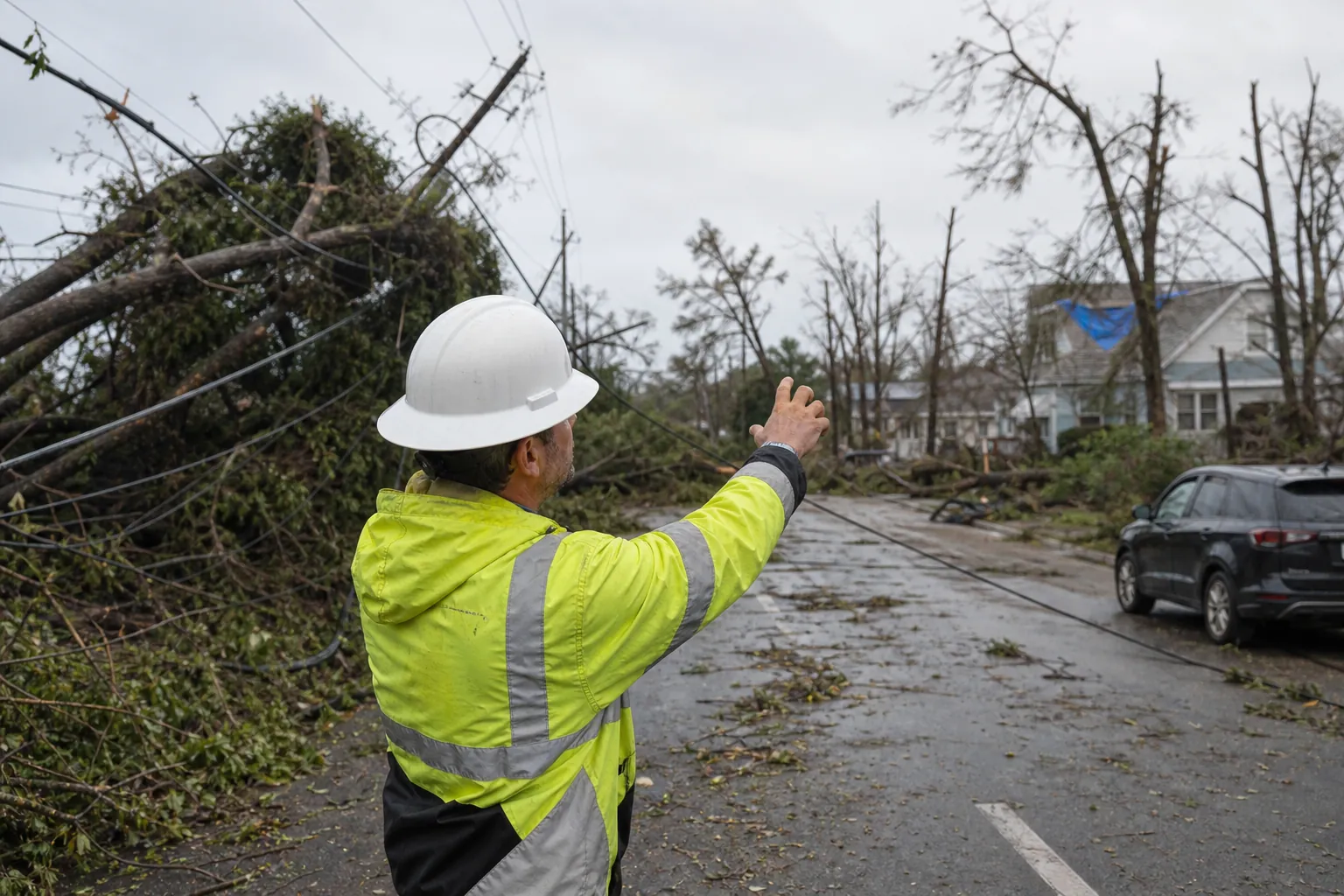
Describe what you can see and where a wire appears. Do not guess whether it carries electricity. Use the inquiry page to organize a factual message and the overview of tree removal services for context. Neither page tells you the condition of a wire or tree.
“A wire is visible beside the fallen tree near the driveway” is a useful observation. “The wire is dead” is a conclusion that the observation does not support. If you cannot tell whether an object is a wire, note that you are unsure instead of choosing a firm label.
OSHA warns that downed conductors can energize trees and fences. It says to avoid direct and indirect contact. Read OSHA's guidance on electrical contact hazards. This warning shows why seeing something is not the same as knowing it is safe.
- Use phrases such as “wire visible,” “location unclear,” or “not observed” when they match what you know.
- Keep the wire note separate from a general description of branches and leaves.
- Note who shared the information if someone else made the observation.
You do not need to make the description sound technical. Plain words help keep a guess from becoming a supposed fact when someone forwards or reads the message aloud later.
What Building Details Belong in Your Notes?
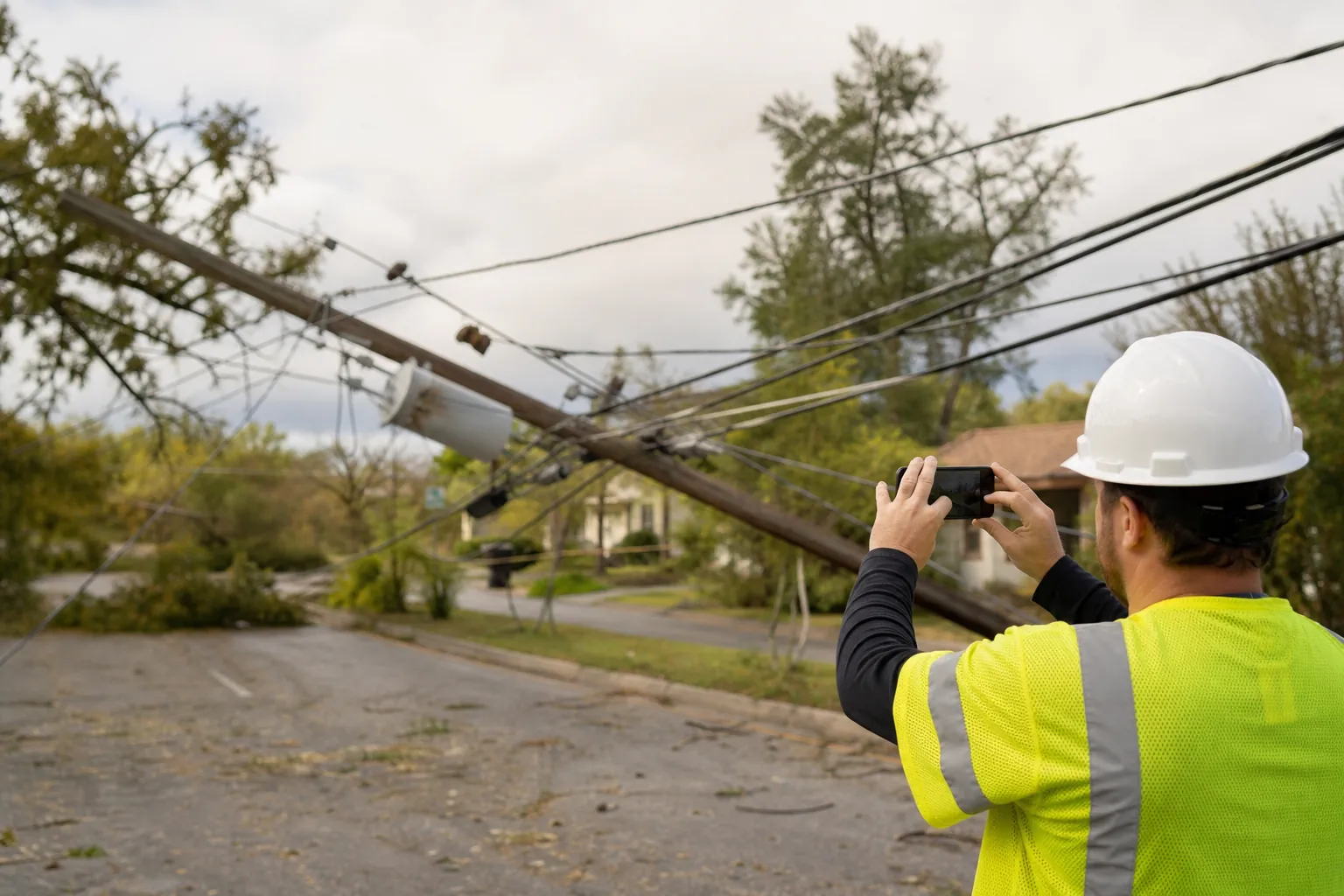
Note any visible contact between tree material and a building. Include the building's name and the part involved. Do not turn that description into a judgment about the building's structure. The removal service information gives background. The Florida Foliage company background explains who the business is. It does not imply a Pensacola location.
The National Weather Service advises walking carefully around the outside of a home to check for loose power lines, gas leaks, and structural damage. See the National Weather Service's after-hurricane guidance. This is not a reason to enter debris or get closer just to finish a checklist.
Stay out of a building if you smell gas, floodwaters remain around it, or authorities have not declared it safe. The National Weather Service lists these building-entry warnings.
- Describe tree material as on, against, or near the building only if those words match what you saw.
- Name the visible feature, such as a roof edge or porch. Do not declare the whole building damaged.
- Mark an item “unknown” if you have no observation to record.
A visible branch on a roof does not show the full condition of the roof or tree. Keep that distinction in your notes. The goal is a clear account, not your assessment of hidden damage.
How Do You Record Blocked Access and People?
List the entries or routes that seem blocked. Then note where household members are and who has received the latest update. Keep these topics separate from a tree diagnosis. The page for contacting Florida Foliage supports a factual inquiry. The tree removal overview offers service context but does not promise local availability.
Use familiar place names instead of directions that depend on where someone is standing. “Branches across the driveway near the garage” is easier to understand than “the tree on the left.” If several trees are involved, use simple labels such as Tree A and Tree B in your notes.
Keep people who are not needed out of work and drop areas. OSHA includes this precaution in its tree-work guidance. Do not describe an active work area as a place for neighbors or household members to gather.
- List each affected entry on its own instead of writing that everything is blocked.
- Keep a household check-in list separate from your tree observations.
- Choose one shared version of the notes so family members do not share conflicting summaries.
These are ways to organize information, not instructions for opening a route. You can note a blocked driveway without suggesting how to move the material. Your summary is complete when it clearly says what is known and what is still uncertain.
Build One Useful Record Before Making an Inquiry
A short, organized record is easier to share than scattered messages about each fallen tree. Use the contact information and inquiry form when you are ready to ask a question. The company background page explains who Florida Foliage is before you decide what information to send.
This record is a tool for organizing household information. It does not rank individual trees for removal, assess their condition, or set out work. Keep the original words used for your observations when possible, especially if several people have shared details.
- Write the property location and date of the observations at the top of your record.
- Make separate headings for wires, buildings, access, and people.
- Give each tree or group of visible branches you mention a plain label.
- Mark each item as something you saw, something another person reported, or something unknown.
- End with the questions you want answered, not a suggested cleanup method.
You can include photos if you already have them, but they do not prove a tree is safe. Do not use a photo to turn an unknown into a definite statement. A caption can name the view and say what you meant to show.
- Use the same labels in your filenames or captions as in your notes.
- Remove duplicate descriptions that add no new information.
- Keep unanswered questions in the record so they are not lost during a phone call.
A short opening message can point to a longer record. You do not need to list every leaf, branch, or yard item before stating the main concern.
Keep Cleanup Questions Separate From Tree Work
Organize household cleanup questions without turning them into instructions for handling damaged trees. The information about tree removal and the information about tree trimming explain different service topics. Those pages do not say which service a hurricane-damaged tree needs or whether service is available at your location.
Storm-damaged tree work has hazards from material under tension and limbs that may roll or slide. OSHA identifies these tree-material hazards. The shape or resting position of debris does not tell a homeowner how it will behave.
A household cleanup list can focus on records and communication. For example, you can group messages about belongings, yard observations, and questions in separate folders. This gives your family a way to manage information without creating a tree-work plan.
- Keep questions about personal items in a separate part of the household record.
- Do not add directions for moving tree material to a message meant only to describe it.
- Use the same tree labels in every conversation. This keeps each concern linked to the right observation.
Never use a portable generator inside a home or garage. The National Weather Service includes this warning in its hurricane recovery guidance. Keep this warning separate from the tree notes so it is easy to find in a broader household storm checklist.
Organizing your information does not need to mean handling debris. A clear record and a clear set of questions are useful results on their own.
Contact Florida Foliage With Clear Expectations
Use the Florida Foliage contact page to ask whether your location and requested service can be considered. The about page for business background provides company context. Florida Foliage is headquartered in Daytona Beach. This article does not promise service in Pensacola, scheduling, or a response.
Call (386) 481-7913 or use the contact page to make an inquiry. Start with your location. Say that multiple trees are down after a hurricane, then sum up what you can see. Ask about the next step without assuming that a visit or service has been arranged.
- State your location before asking whether the business can consider your request.
- Share what you observed. Do not say a tree is stable, harmless, or ready for work.
- Write down information from the conversation separately from your own observations.
Clinton Funk is Florida Foliage's owner and has decades of hands-on tree care experience. Tim Francis is responsible for this article's content and editorial preparation. This article does not represent a personal review of the draft by Clinton Funk.
For the broader topic, return to the guide to emergency tree removal in Pensacola. Keep general information separate from what is unknown about your property. A useful closing summary names the location, describes what you can see, and states which questions remain open.
Frequently Asked Questions
Does the biggest fallen tree always come first?
This article does not rank individual trees for work. Note wires, buildings, access, and people before describing the size of the mess. Storm-damaged tree work has hazards from falling limbs and unstable trees. Size alone does not show whether a tree is safe. OSHA describes these hazards. Keep your notes factual and mark unknown conditions as unknown.
Can I call a wire harmless if it looks disconnected?
No. How a wire looks does not show its condition. Downed electrical conductors can energize trees and fences. Avoid direct and indirect contact. OSHA provides this electrical hazard guidance. Note where the wire appears. Do not call it inactive, disconnected, or safe based on how it looks.
What should I record about a tree touching the house?
Note the building feature involved and where the tree material appears to be. Keep this observation separate from a diagnosis. Stay out if you smell gas, floodwaters remain around the building, or authorities have not declared it safe. The National Weather Service gives these entry warnings. Do not enter a building in these conditions to fill in missing notes.
Do photos show whether a fallen tree is safe?
No. This guide does not treat photos as proof that a tree is safe. Images can help organize an inquiry by showing which view or tree you mean. Give each image a plain caption and link it to your written notes. Keep unanswered questions in the record. Do not treat what an image seems to show as a diagnosis.
Does this article mean Florida Foliage serves Pensacola?
No. Florida Foliage is headquartered in Daytona Beach. This article does not establish service availability in Pensacola. Call (386) 481-7913 to ask whether your location and requested service can be considered. Give a short, factual description and ask what next step is right. The inquiry does not promise service, scheduling, or a response time.
Call (386) 481-7913 to talk through next steps.