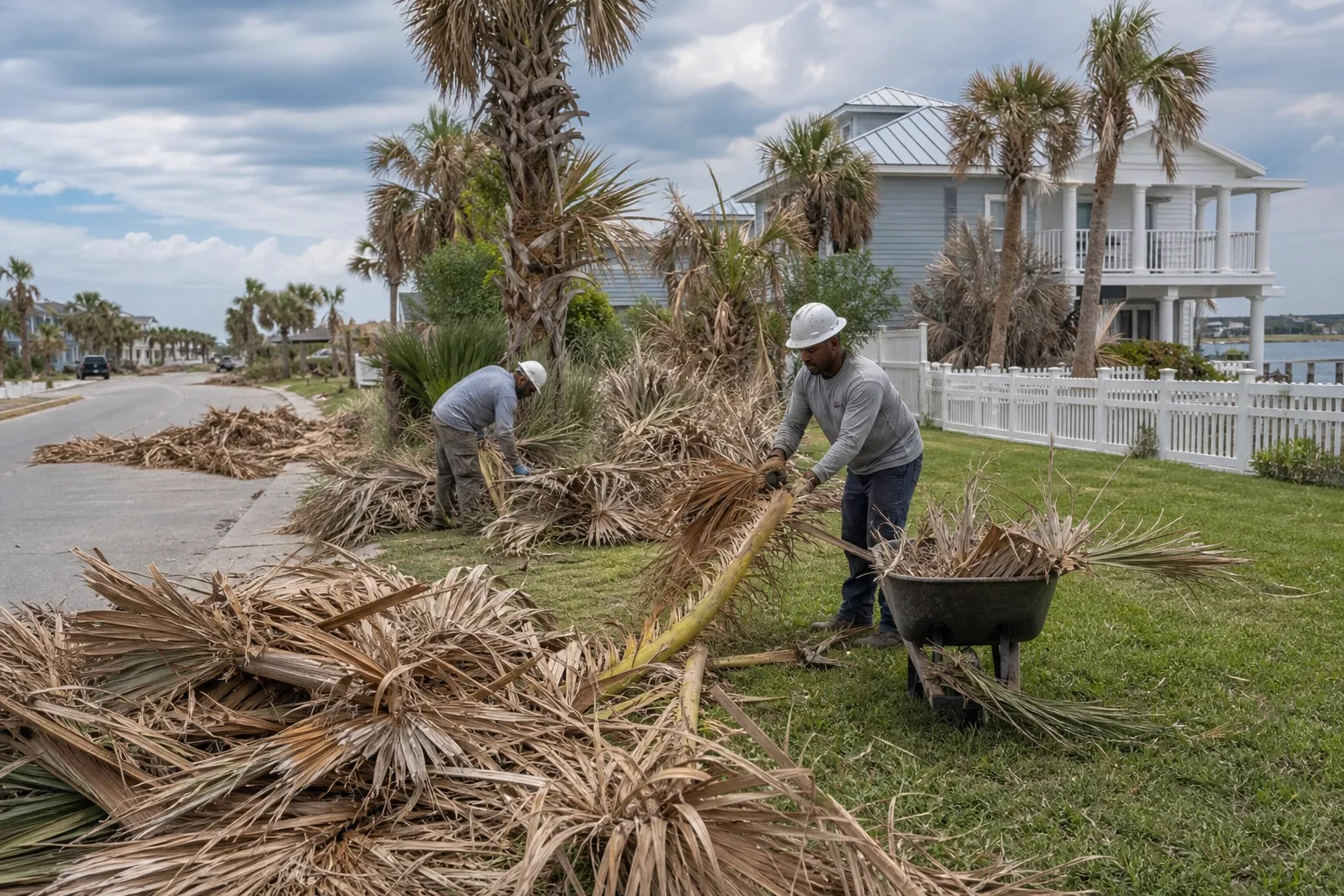
Reviewer and contributor: Clinton Funk, Owner, Florida Foliage. Clinton has decades of hands-on tree care experience.
Tim Francis is responsible for the research and editorial quality of this article. AI tools assisted with drafting and the editorial images. This general information does not assess a particular tree.
Hurricane Palm Cleanup in Pensacola, FL calls for clear notes and a careful household plan.
After a hurricane in Pensacola, keep your palm cleanup plan simple. Stay clear of damaged material. Record what you can see. Storm-damaged tree work involves falling-limb and unstable-tree hazards, according to OSHA’s tree-work guidance. A short note can list the place, visible details, and existing photos. This can help you form questions. It cannot diagnose a palm, prove it is safe, or predict recovery.
What Comes First For Hurricane Palm Cleanup?
Start by separating what you saw from what you do next. Write down what you know instead of inspecting damaged material. Florida Foliage’s tree removal service overview and tree trimming service overview explain service types that may help you frame questions.
“Palm beside the driveway” and “material by the mailbox” give clear locations. Another person can understand them without guessing.
Do not turn that note into a cleanup plan. A description of a fallen frond is not a finding about the condition of the remaining palm. Likewise, a palm that looks upright in a picture has not been shown to be safe. The point is to record observations, not settle questions that the observations cannot answer.
- Give each palm or pile a plain location label that you can use consistently.
- Record the date of each observation so that old and newer notes remain distinct.
- Write your main question beneath the description instead of adding a guessed answer.
- Use an existing photo when it adds context, but leave the photo field blank when it does not.
Keep records short. They are easier to update than a long hurricane story. Keep background details only if they explain a change you can see or identify the material.
Which Storm-Damaged Material Should You Keep Clear Of?
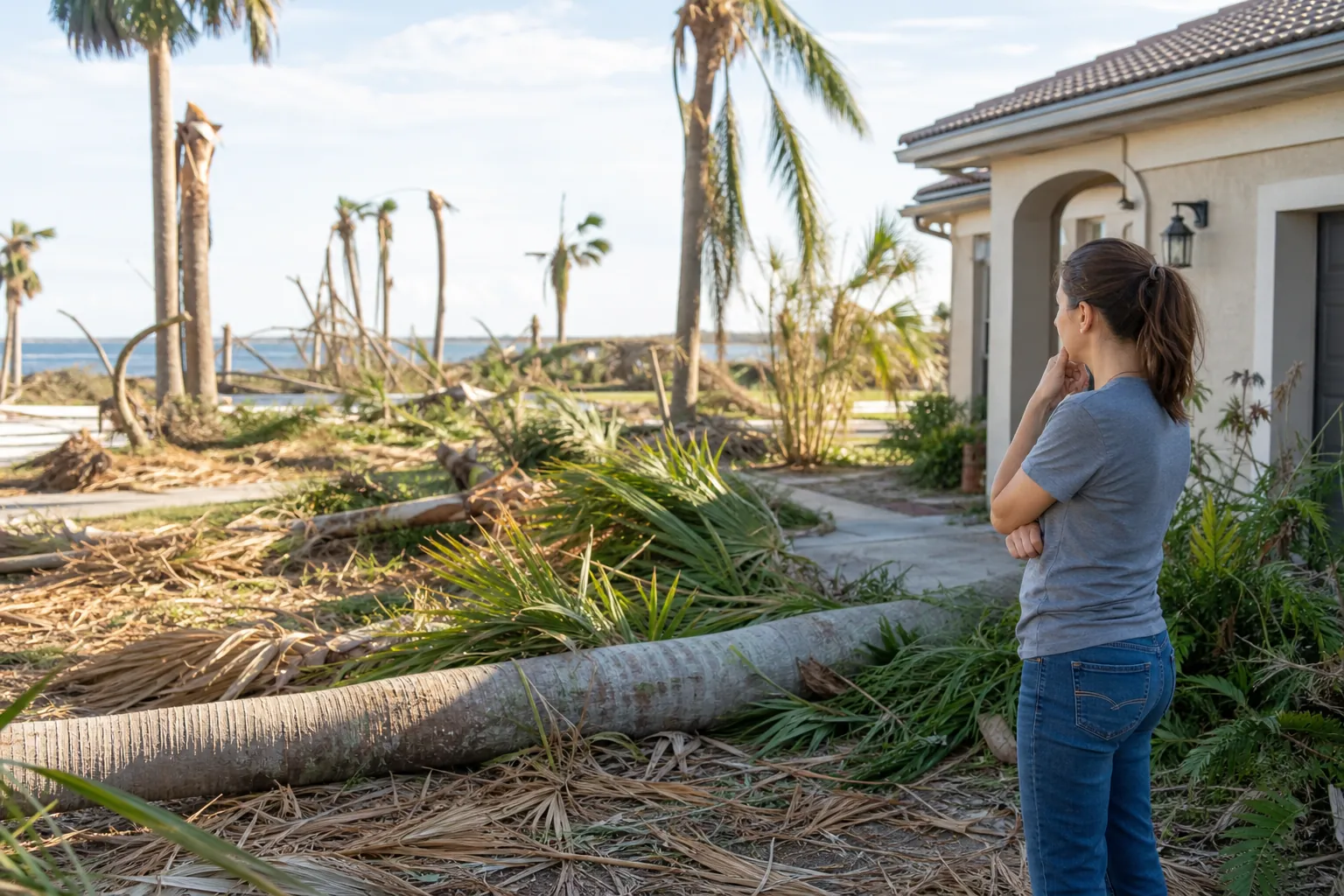
Keep clear of storm-damaged tree material instead of treating it as ordinary yard clutter. OSHA identifies falling limbs, unstable trees, tensioned material, and trees that may roll or slide during felling as hazards. The removal information page explains service types. The contact page for service questions lets you ask service questions.
A homeowner note can say where material appears to rest without guessing why. For example, “long piece leaning against the palm” is an observation. “It is secure” is a conclusion. Leave that conclusion out, even when the material has not changed since your first note.
Electrical concerns deserve a separate entry. OSHA says downed electrical conductors can energize trees and fences and that direct and indirect contact should be avoided. Do not use a photo or the appearance of a wire to declare it harmless.
- Describe leaning, hanging, or fallen material in plain words. Do not assign a risk level.
- Put any visible wire-related observation in its own line so it is not buried in the rest of the note.
- Record what was visible at the time, instead of writing that the situation will remain unchanged.
- Keep uncertain details clear. You could write, “wire-like line near the material”.
You do not need to name the cause of every change. A useful record can say “unknown” where the view is unclear. That is more accurate than filling a gap with a confident guess about the palm or the surrounding debris.
How Can You Make a Useful Photo-and-Location Note?
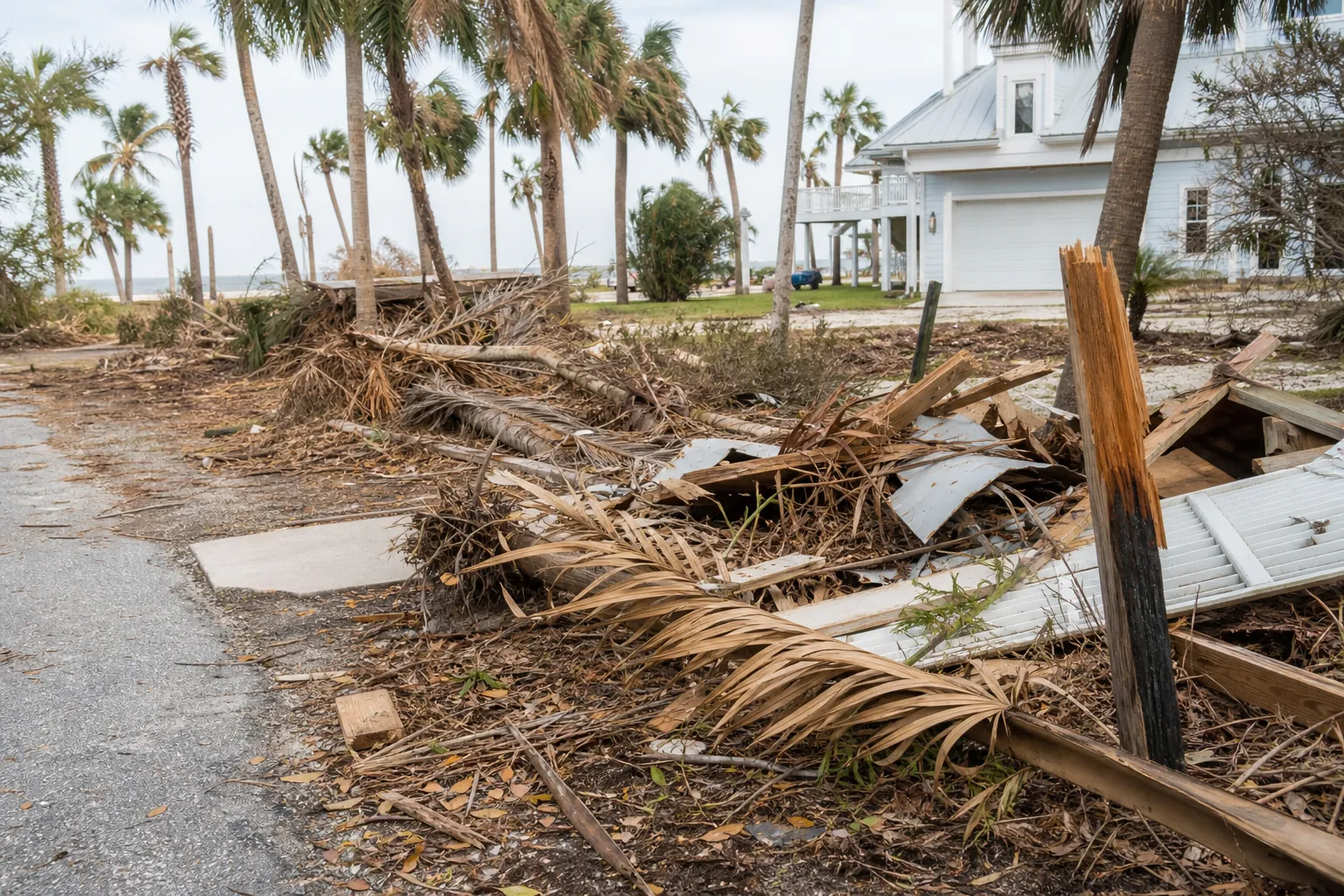
Use a repeatable format: place, date, what you can see, photo reference, and an open question. The Florida Foliage inquiry page offers a way to contact Florida Foliage. The company background page explains who the company is. Describe the scene, not a palm diagnosis or work plan.
Existing photos may help connect a description to a specific palm. They do not prove safety, show every part of the scene, or show recovery. You can sort the photos you already have without creating a new photography task. If a detail is missing, mark it as missing.
- Choose a location label, such as “front yard palm beside driveway,” and use it in the note and photo filename.
- Add the date the observation or photo was made, keeping those dates separate if they differ.
- Describe details you can see. For example, note “fronds on ground” or “material beside the fence”.
- List photo filenames. If you have none, write “no photo available”.
- End with a question, such as “What further details would be useful to discuss this palm?”.
Keep facts and questions apart. For later updates, add a dated entry. Do not rewrite old notes as if you knew more then.
- Use short filenames that match the location labels in your note.
- Keep an original copy of each image instead of relying only on a marked-up version.
- Label arrows or captions as descriptions, not as findings about stability or health.
Write Observations Without Diagnosing the Palm
A useful note names what you can see and leaves the cause open. The tree trimming overview explains one service type, and the Florida Foliage background page gives company background. A photo cannot diagnose a palm.
Compare “brown fronds in the photo” with “the palm is dying.” The first describes a look. The second makes a health judgment.
The same distinction applies to recovery. “The top looks different from an older photo” can be a useful observation when both images are dated. “It will grow back” predicts an outcome. “It cannot recover” also predicts an outcome. Your record does not need either statement to be useful.
- Replace a guessed diagnosis with the specific appearance that led you to wonder about it.
- Use “not visible in this photo” instead of assuming a hidden part is absent.
- Keep comparisons tied to dated images instead of relying on a broad memory of the yard.
- Put questions about condition or recovery in a separate question list.
Plain language is not a weakness here. “Several fronds are on the ground” is clearer than a new term used with uncertainty. If you do use a term, keep the visible description alongside it so the note remains understandable.
Before saving the record, read each sentence once. Ask if it reports something you observed or adds an explanation. Keep the observation, and move the explanation into a question if it still matters to you.
Keep Mixed Debris Separate in Your Notes
A palm note may include nearby objects that are not palm material. Keep them in separate entries. The tree removal overview explains tree service. The general inquiry page lets you ask the company questions.
Some nearby details deserve attention without a homeowner trying to interpret them. OSHA notes that debris can hide meters and fire hydrants. Record a known location if it is already part of your household notes. Do not write that a hidden feature is clear when your view is incomplete.
OSHA also says to stay clear of leaking hazardous chemical containers and that assessment by hazardous-material response personnel is needed. A tree-related note should not turn that issue into a palm cleanup task.
- Use separate labels for palm material, other debris, and visible containers.
- Write “view obscured” when debris prevents you from seeing a known feature.
- Keep an observation about a container separate from questions about the palm.
- Do not name an unknown substance by its color, look, or a guess about its source.
The goal is not to produce a full inventory. It is to prevent unrelated details from disappearing inside one sentence about the yard. Separate entries make it easier to see which questions concern the palm and which concern something else.
If there is machinery involved in debris collection, OSHA says to keep nonessential people away from debris machinery. A household note is not a reason to approach that activity.
Organize a Household Record Without Creating a Work Plan
Keep household notes focused on questions, not tree work. The trimming service information and removal service information explain the names of service types. Use those names when you ask a question.
Choose one folder or notebook for the notes. Use a separate page for each location label, then put the related images beside it. This is an organizing suggestion, not a special process. A simple system that you can read is more useful than an elaborate one you will not keep.
OSHA says nonessential people should remain outside work and drop areas. Keep your record-making separate from those areas. Nothing in a household checklist requires someone to enter an active work area to complete a missing detail.
- Choose one person to combine household notes so that location names stay consistent.
- Keep each person’s observation date instead of merging different days into one account.
- Set aside repeated photos so the main folder contains the clearest available context.
- Leave unfinished fields blank or mark them “unknown” instead of assigning someone to investigate.
When two accounts differ, preserve both as dated observations. One person may have seen a detail that another did not. The record does not need to resolve the difference by guessing which description is right.
End each page with a short question list. That gives the next call a clear purpose. Keep the household record free of instructions for moving, trimming, or removing material.
Contact Florida Foliage With Clear Expectations
Read the Florida Foliage contact page to ask about service area. The company information page gives company background. Florida Foliage is based in Daytona Beach. Call (386) 481-7913 to ask about current service options for your Pensacola property.
Tell the company the palm is in Pensacola. Then share the place name and one or two things you can see. Ask how to share your notes or existing photos. Keep questions about nearby debris separate from questions about the palm.
- State that the palm is in Pensacola before describing the scene.
- Use your location label and one or two plain observations to introduce the question.
- Ask how to share existing notes or images instead of assuming a preferred format.
- Keep questions about the palm separate from questions about unrelated debris.
A short opening could be: “I have a hurricane-related palm question in Pensacola. My note describes fallen material beside the driveway, and I have dated photos. Do you serve this location, and is this the kind of question your business handles?”
Frequently Asked Questions
These answers explain what to write down and ask. The contact information page lets you ask about service area and scope. The company background page gives company background.
Can a photo show that my palm is safe?
No. Use a photo as a record of what was visible, not proof that the palm is safe. Pair it with a date and location label, and note anything the image does not show. Keep questions about condition separate from the caption instead of treating the image as a diagnosis.
What should I write if I do not know the palm species?
Write “palm” and describe its location. You do not need to guess a species to sort a useful note. Add visible details in ordinary words, such as fallen fronds or material resting nearby. If species name matters to your question, list it as unknown instead of choosing a name from a similar-looking image.
Should I move material to get a clearer picture?
Do not make moving storm-damaged material part of your photo note. OSHA identifies tensioned material and trees that may roll or slide during felling as hazards. Use existing images and mark unclear details as unknown. An incomplete record is still useful when it honestly states what you could and could not observe.
Can this guide tell me whether the palm will recover?
No. This guide helps you sort notes, not predict recovery. Keep dated descriptions of changes you can see, and do not treat them as forecasts. You could note, “What details would someone need to assess this palm?” Do not write that it will or will not recover.
Does Florida Foliage have a Pensacola office?
Florida Foliage is based in Daytona Beach. Call (386) 481-7913 or use the contact page to ask if the business serves Pensacola.
Call (386) 481-7913 to talk through next steps.