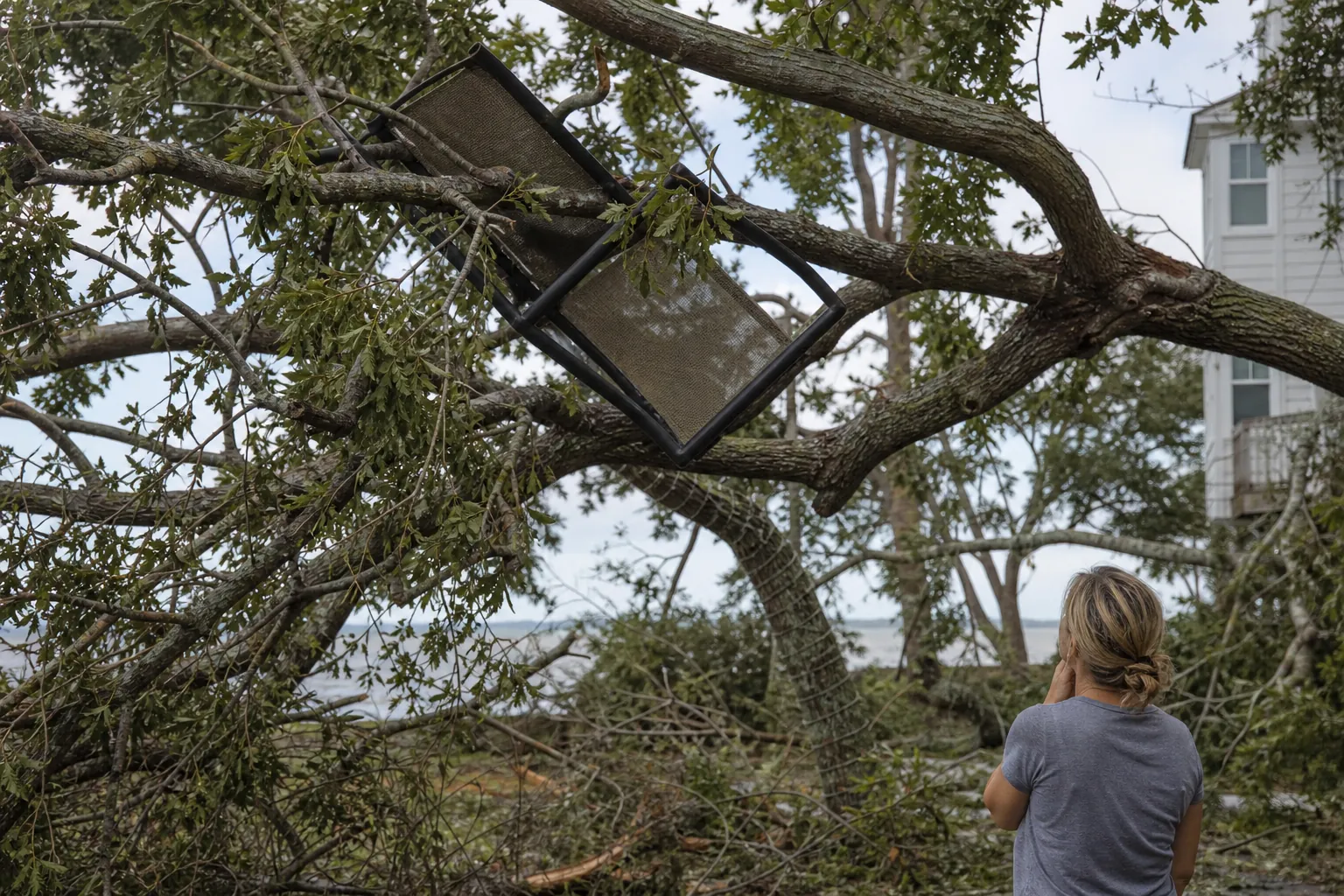
If hurricane limbs are tangled with your patio furniture in Pensacola, leave the furniture until later tree work. Do not make getting it back your first task. OSHA lists tensioned tree material, unstable trees, and falling limbs as storm-work hazards. A tangled chair is not a simple household organizing problem. Read OSHA’s storm-damaged tree guidance. Start with a written record of what you know, not a diagnosis. Our Pensacola hurricane tree cleanup guide gives this topic broader context.
By Tim Francis, responsible for this article’s content and editorial presentation.
Why Should Tangled Patio Furniture Wait?
Discuss tangled furniture later, as part of the tree work. Seeing a chair, table, or umbrella does not show the condition of the nearby tree material. The tree removal service overview and tree trimming service overview explain separate service categories. They do not tell you whether either service is right for your yard.
It is important to tell the difference between seeing an object caught in limbs and knowing what the limbs may do. OSHA lists tensioned tree material and rolling or sliding limbs as tree-work hazards. OSHA’s tree-work hazard list supports treating the tangle as part of the storm debris, not as a separate furniture problem.
You do not need to decide whether a branch is under tension to describe the scene. “The chair is caught beneath several limbs” is useful. “The chair is holding the tree stable” is a conclusion that the visible scene alone cannot support.
Leave questions about the tree material for later tree-work discussions. This article does not explain how to separate furniture from branches or decide what to move first.
- Put tangled furniture on your later-work list, not your ordinary patio organization list.
- Describe which furniture items seem caught. Do not assign them a role in holding up the tree.
- Write down whether your main concern is the furniture, the tree debris, or both. This will help keep the conversation clear.
What Can You Describe Without Diagnosing the Tree?
You can describe the objects and arrangement you see without deciding that a tree is stable or a limb is ready to move. Use the contact page to share your questions. Read the company background page to learn who you are contacting before you discuss the scene.
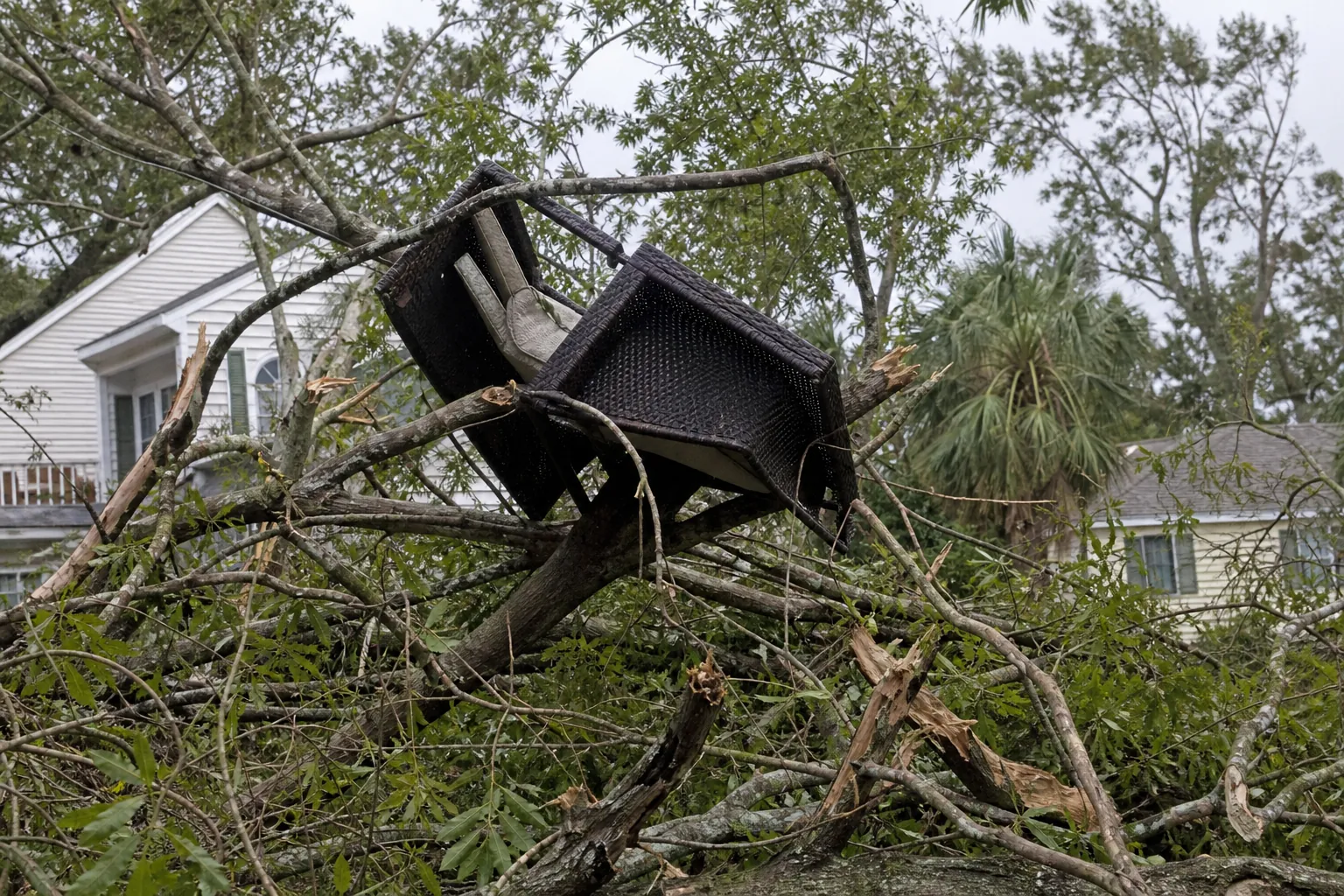
Useful observations are plain and limited. A table may be partly covered by limbs. An umbrella may be tangled with branches. A chair may be hidden beneath debris. These statements describe what you see. They do not show what forces are involved or establish the tree’s condition.
Keep uncertainty in your notes. If you cannot tell whether an object is fully covered, write “partly visible” or “not sure.” A clear note about what you do not know is more useful than a confident guess that someone else might mistake for fact.
A photo can show the arrangement, but it must not be used as proof that a tree is safe. In your notes, separate what the image shows from what remains unknown. This article does not offer tree assessments based on images.
- Name the furniture item in ordinary words, such as “patio table” or “folding chair.”
- Note whether it seems to be beside, beneath, or mixed with the limbs. Do not interpret the arrangement.
- Use “unknown” for details you cannot confirm from the information you have.
- Keep older yard images separate from storm images so their different dates are clear.
A short description is enough. You do not need technical words, a theory about the damage, or a detailed account of how each branch got there.
Which Storm-Debris Hazards Matter Here?
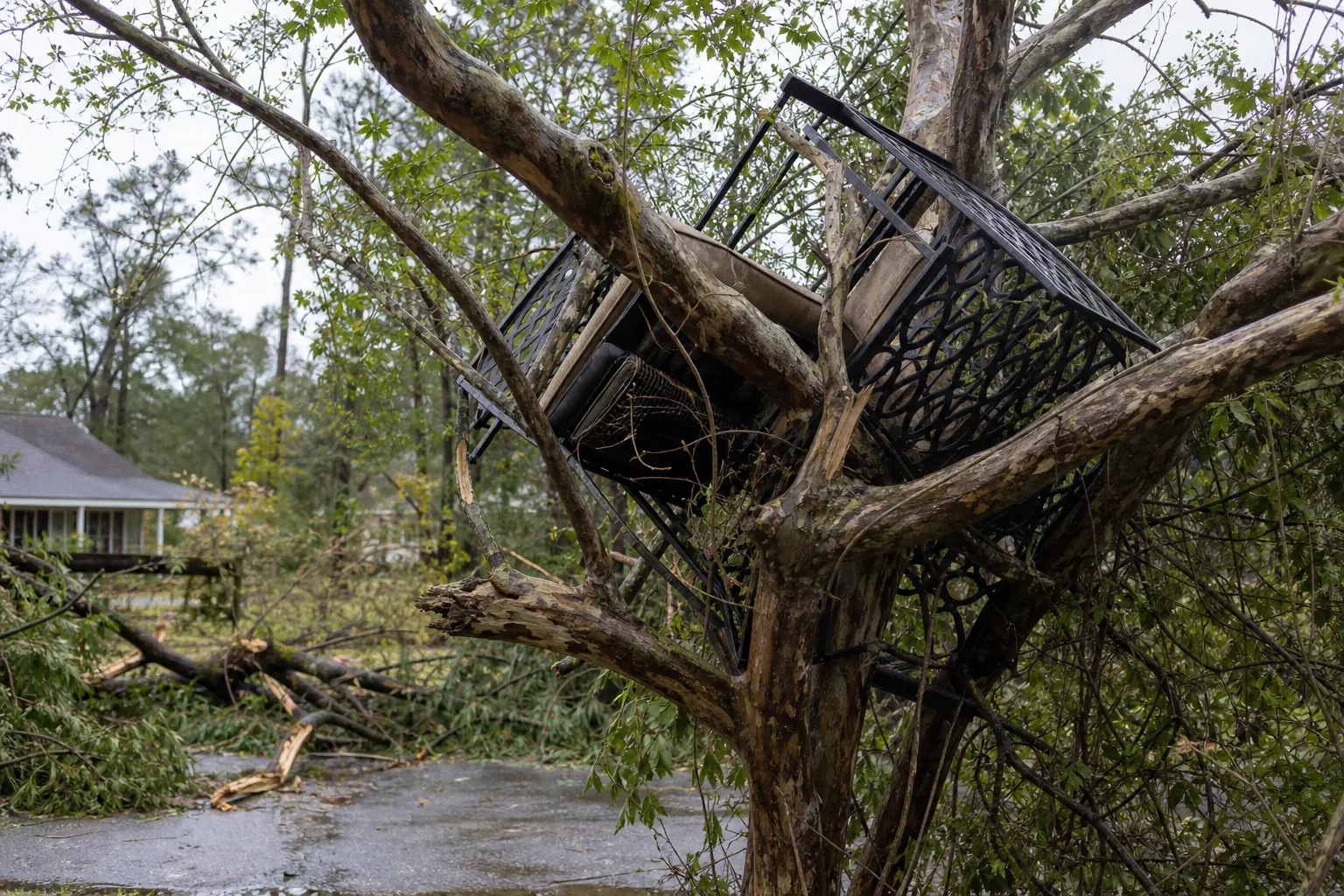
The hazards involve more than the furniture. OSHA lists unstable trees, falling limbs, energized tree material, and moving limbs as hazards in storm tree work. See OSHA’s listed hazards. The removal information page and trimming information page explain service options. They do not diagnose any of these conditions.
Downed electrical conductors can energize trees and fences. Avoid direct and indirect contact with them. OSHA explains electrical contact hazards in storm tree work. If electrical conductors are involved, a question about furniture should not replace this broader concern.
OSHA also says to keep people who are not needed for the work outside work and drop areas. Read the tree-work area guidance. Wanting a chair or umbrella back does not make someone needed for tree work.
Debris collection has its own concerns. Keep people who are not needed away from debris machinery. OSHA’s debris collection guidance addresses this hazard separately from tree work.
- Include any electrical conductor concern you already know about in your written questions. Do not try to resolve it yourself.
- Keep your furniture list separate from unresolved storm-debris concerns.
- Do not present getting a household object back as a reason for more people to enter work areas, in line with OSHA’s work-area guidance.
These are types of concern, not a checklist that can show the yard is safe. If a detail is missing from your notes, that only means it has not been recorded.
Keep Furniture Notes Separate From Other Debris Concerns
Make a separate heading for furniture in your notes, with room for other debris concerns. The general inquiry page provides a place for questions. The Florida Foliage company profile gives background. Neither page confirms Pensacola service or a particular response.
For example, a list can say “one table, two chairs, one umbrella.” A separate notes section can say that some objects are not visible. This keeps a household list from being mistaken for a tree assessment.
Other debris may matter even if it has nothing to do with the patio. OSHA notes that debris can hide meters and fire hydrants. See OSHA’s collection hazard information. A description focused on furniture should not suggest that you have identified everything beneath the debris.
Stay clear of leaking chemical containers. Specialist evaluation is needed. OSHA addresses leaking containers in debris collection. Note this concern separately. Do not combine it with a general request about chairs.
- Use one heading for furniture and another for other observations or unanswered questions.
- Label an item “not visible” instead of deciding that it is missing or destroyed.
- Keep the wording of an earlier note when you add an update. This makes the order of events clear.
- Choose one household member to keep the written list if that makes organizing easier.
This is an editorial suggestion for organizing information, not a technical inspection process. It helps keep information clear and prevents guesses from becoming facts through repetition.
How Can You Prepare a Useful Written Summary?
Write a short summary that names the setting, the furniture, and the questions that remain. The overview of removal work can help you understand one service category. The inquiry form can help you ask about next steps without assuming that service is available in Pensacola.
Make the summary easy to scan. A long storm story can hide useful details. Put the main issue first: patio furniture is tangled with hurricane limbs, and you want to discuss the tree debris before you consider getting the furniture back.
The numbered list below is a way to organize your writing, not a set of steps for working near damaged trees. You can fill it in using information you already have.
- Write one sentence about the issue. Include Pensacola as the location and name the type of furniture.
- List the furniture items you can identify. Mark uncertain items as unknown.
- Add visible details in plain language. Keep them separate from any interpretation or guess.
- Note open questions about the tree debris and any other concerns you already know about.
- End with the information you want from the recipient, including whether they handle inquiries for your location.
For example: “Hurricane limbs are tangled with a patio table and chairs at a Pensacola property. I have not established the condition of the tree material and would like to ask what information is needed.” This wording explains the issue without judging whether it is safe.
- Keep the summary in one document or message so you can find it again.
- Use clear file names if you already have images to include.
- Check that your message does not present an image or personal impression as proof that a tree is safe.
Discuss Later Tree Work Without Assuming the Outcome
A later conversation can help answer your questions without assuming that removal or trimming is needed. Read the description of tree trimming services and the description of tree removal services for general context. These pages do not show which service, if any, fits the tangled furniture or damaged tree material.
A table caught in limbs does not tell you by itself whether a tree should be removed. A smaller-looking pile does not show that trimming is the answer. Keep your preferred outcome separate from the service category until the relevant questions have been answered.
Your household goal may simply be to understand how the furniture concern fits into later tree work. Say that directly. You do not need to suggest a work method, choose a branch to start with, or propose an order for moving objects.
OSHA lists rolling or sliding limbs and tensioned tree material as hazards. Read the authoritative tree-work hazard list. For this reason, this article leaves the tangled materials for the tree-work discussion. It does not offer a way to free the furniture.
- Ask what information is needed to understand your inquiry instead of naming a method.
- Explain whether your question concerns a standing tree, fallen material, or an arrangement you cannot describe clearly.
- Keep any wish to save the furniture separate from assumptions about the tree.
A useful conversation may still leave some questions unanswered. Record them as unanswered instead of filling the gaps with a household guess.
Contact Florida Foliage With Clear Expectations
Florida Foliage is headquartered in Daytona Beach, so start a Pensacola inquiry by asking about location and scope. The owner and company information gives background. The Florida Foliage contact page provides a way to reach out. Neither confirms a Pensacola office or local availability.
You can call (386) 481-7913 or use the contact page. Say that your property is in Pensacola and that patio furniture is tangled with hurricane limbs. Ask whether the company handles this type of inquiry for that location and what information would help.
Contacting the company does not promise a response, scheduling, or service. The purpose is to find out whether there is a relevant next conversation, not to suggest that work has been arranged.
- Start with your location instead of assuming the company already knows it.
- Share your short written summary instead of diagnosing the tree.
- Ask one clear question about location and one about the information needed.
For more on this topic, return to the Pensacola hurricane tree cleanup overview. Keep the furniture issue in context: a household item caught in tree debris is not an ordinary organizing task.
Frequently Asked Questions
These answers keep the furniture question separate from a tree diagnosis. The tree removal background page gives service context. The contact options page helps you ask a question about your location. Neither confirms your tree’s condition or Florida Foliage’s availability for a Pensacola property.
Does a trapped chair prove that a limb is under tension?
No. A trapped chair is something you can see, not a way to diagnose forces in the tree material. OSHA lists tensioned tree material as a hazard, but that does not show the condition of a specific limb. See OSHA’s tree-work guidance. Describe where the chair is and leave the meaning unclear.
Can a photo show that the tree is safe?
No. Do not use a photo as proof that a tree is safe. An image can show which furniture items are visible and how the scene looks. Keep that description separate from a diagnosis. Mark details you cannot confirm as unknown instead of drawing a safety conclusion from the picture.
What should my first message say?
Say that the property is in Pensacola and hurricane limbs are tangled with patio furniture. Name the items you can identify and say which details remain unknown. Ask whether the recipient handles inquiries for your location and what information is needed. You do not need to suggest a work method or choose between removal and trimming.
What if the debris includes a leaking container?
Stay clear of leaking chemical containers. Specialist evaluation is needed. OSHA’s debris collection guidance identifies this concern. In your written summary, keep it separate from the furniture list. Do not let a question about getting a chair back hide a different debris concern.
Does Florida Foliage have a Pensacola office?
Florida Foliage is headquartered in Daytona Beach. This article does not identify a Pensacola office. Call (386) 481-7913 to ask about your location and the scope of your inquiry. Contacting the company does not confirm local availability, a response time, or that any tree work will be scheduled.
Call (386) 481-7913 to talk through next steps.