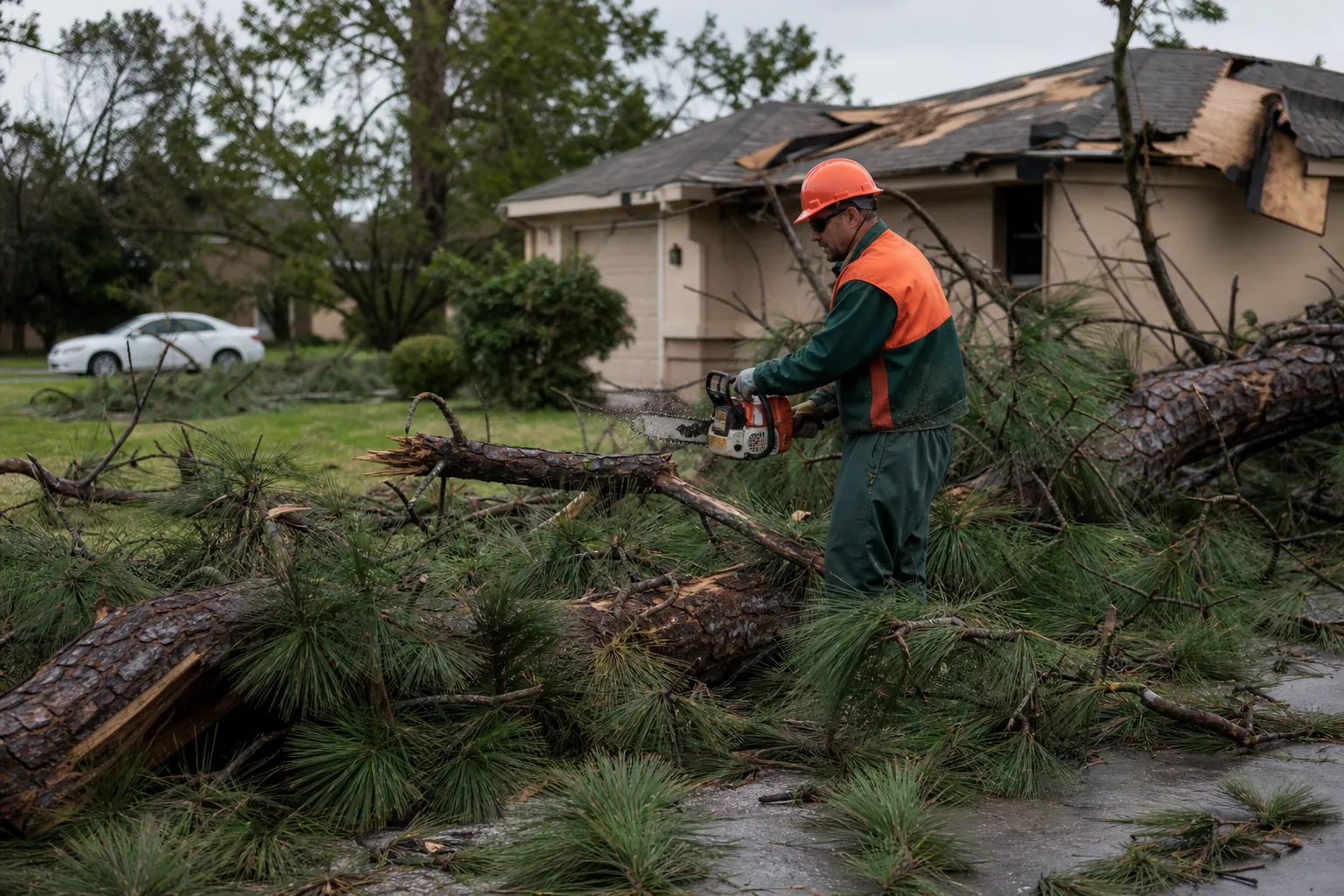
Reviewer and contributor: Clinton Funk, Owner, Florida Foliage. Clinton has decades of hands-on tree care experience.
Tim Francis is responsible for the research and editorial quality of this article. AI tools assisted with drafting and the editorial images. This general information does not assess a particular tree.
Hurricane Pine Damage in Pensacola, FL calls for clear notes and a careful household plan.
After a hurricane in Pensacola, keep notes about visible pine damage simple. Record where broken limbs are, from a place you already know. Do not approach them or guess what may snap next. Storm-damaged tree work can involve falling limbs and unstable trees. OSHA storm-damaged tree guidance. This guide helps you sort what you saw from what remains unknown. A pine's species or a photo cannot prove that it is safe.
What Comes First For Hurricane Pine Damage?
Stay away from a broken limb. Do not try to judge its stability. OSHA lists falling limbs and unstable trees as hazards in storm-damaged tree work. OSHA tree-work guidance. Read the tree removal overview for service details. Use the contact page to ask about your location.
Keep each entry tied to one place. If you have several observations, do not combine them into one broad description. A location label helps a reader know which view you mean. It also makes it easier to keep later notes with the right observation.
Your useful next step is a location note, not a closer look. If you saw a broken limb from where you were, describe that view. Do not go toward the tree to fill gaps. An incomplete note can still explain what caught your attention.
Use a familiar landmark to make the note clear. “Pine near the front walk” gives a location. “The dangerous pine” adds a conclusion your view cannot prove.
- Write the location using a landmark you know, such as a window or driveway.
- Describe what you can see in plain words. For example, a broken limb may appear to remain attached.
- Mark details you cannot confirm as unknown. Do not return for a closer view.
Can You Predict Whether a Pine Will Snap?
This guide cannot predict whether a pine will snap or how a species will fare in a hurricane. Keep visible details separate from those questions. The tree trimming service description gives general service details. The company background page explains who Florida Foliage is.
Simple words can keep a note honest. A reader should be able to tell what you saw, what you could not see, and what remains a question. You do not need to explain why a limb broke or what may happen later. Leave those points open when the view does not answer them.
A search for “pine tree snap risk” may seem to call for a yes-or-no answer. A useful record has a smaller purpose. It tells someone what you saw and where. It does not turn an appearance into a diagnosis or forecast.
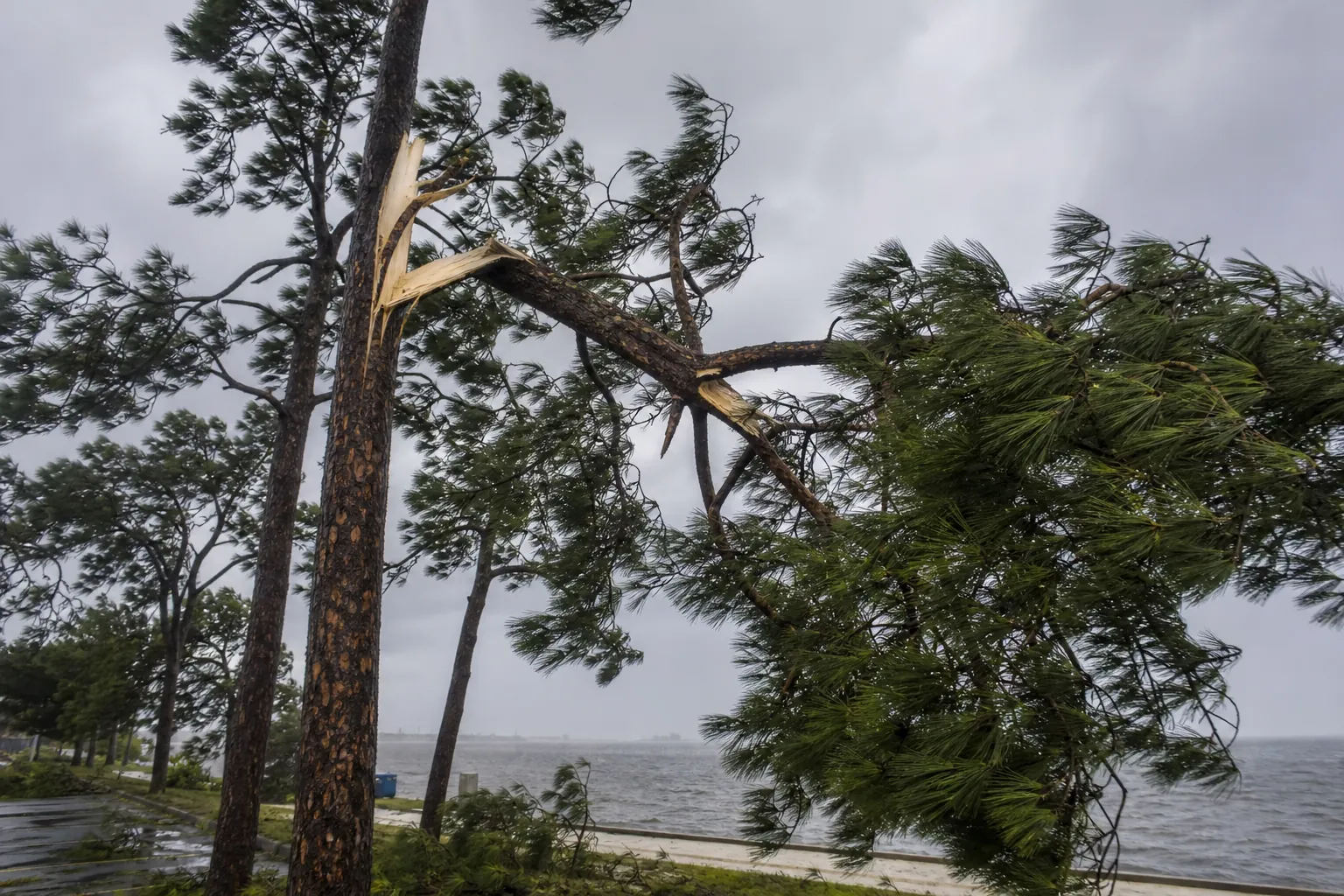
For example, “a pale broken surface is visible on one limb” describes what you saw. “That limb will fail next” predicts what may happen. Calling a tree a pine does not show how that tree will respond after a storm.
- Use words like “visible,” “appears,” and “not known” when they fit your view.
- Do not give a tree a risk score or predict when it may snap.
- Keep questions about the tree separate from the details you observed.
How Can You Record Locations Without Approaching Damage?
Use what you already saw. Do not make a route through damaged trees. OSHA lists falling limbs and unstable trees as hazards in storm-damaged work. OSHA hazard guidance. The contact page is a place to ask a question. The tree removal page gives service details. Neither page confirms service in Pensacola.
Someone else who reads the note may not share your view of the property. A common landmark gives that person useful context without asking anyone to go closer. If a label could fit more than one tree, make it a little clearer with a room, window, or familiar yard feature you already know.
Keep the date and the observation together when you update the record. That can help readers distinguish an earlier note from a later one. Do not erase an earlier description just because a newer note is available. Clear labels and dates help show which details came from which view.
A short list can keep your notes clear. It is for household use, not a technical review. You can write it from memory, an existing view, or material you already have. Leave any unknown field blank.
- Give the observation a plain label, such as “front-yard pine” or “tree seen from kitchen window”.
- Write when you noticed it. An approximate time is fine if that is all you recall.
- Describe only what was visible. Do not guess at the cause or what may happen next.
- Note what you could not see or determine from that view.
- Keep the note with any existing image so they stay together.
Keep the record short and easy to read. A few clear entries help more than a long account mixed with guesses.
- Use the same label each time you refer to the same tree.
- Make a separate entry for each location so details do not get mixed.
What If Wires or Fences Are Near the Tree?
Avoid direct and indirect contact. Downed electrical conductors can energize trees and fences. OSHA electrical hazard guidance. A note can describe what you already see. Do not use it as a contact test. The tree removal details and contact page do not provide an electrical evaluation.
Words such as “line,” “wire,” or “fence” should describe only what you can identify from your existing view. If you are unsure what an object is, say that it is unclear. Do not use a guess to fill the gap. In particular, a written description cannot show whether an electrical conductor is live.
Keep location and interpretation separate. “A line is visible beside the pine” describes a view. It does not show what the line is, whether it is energized, or how it relates to the tree. A photo cannot settle those questions.
You can add a “not determined” field. This helps stop an open question from becoming an assumption later.
- Note a visible line or fence as a location detail. Do not label it safe.
- Do not touch a tree, fence, or other object to test for an electrical connection. OSHA direct and indirect contact warning.
- Mark electrical details as unknown when you copy the note into a message.
Why Should You Leave Broken Material Alone?
OSHA lists tensioned tree material and trees that may roll or slide during felling as hazards. OSHA tree-material hazard guidance. This location record is not a handling task. Read the trimming service overview for service details. See Florida Foliage background for company details, not do-it-yourself instructions.
A note is most useful when it stays separate from plans for physical work. You can describe where you noticed material and what it looked like from your view. Leave decisions about handling it outside the household record. That keeps the note from being mistaken for a safe work plan.
A broken limb may be the detail you want to describe. You do not need to move it. Keep the note about where it appears to be. Do not add a task such as “move this first.” That changes an observation into a work direction.
People in the household can share one record. This helps prevent someone from mistaking an old message for a new observation. Mark changes clearly instead of quietly replacing the first note.
- Describe where material appears to be. Do not give directions to shift or handle it.
- Keep people who are not needed outside tree-work and drop areas. OSHA work-area guidance.
- Label household notes as observations, not a work plan.
What Else Belongs in a Storm Debris Note?
Include other visible debris without exploring the pile. OSHA notes that debris can hide meters and fire hydrants. OSHA debris collection guidance. Use the contact page to organize an inquiry. The tree removal overview explains the service category.
Separate labels also help when a message mentions more than one kind of debris. A tree observation and a visible meter obstruction are different details. Keeping them in separate lines makes the message easier to read. It also avoids implying a relationship that you did not observe.
Keep tree details apart from other debris. Use separate headings for the pine, visible equipment, and other items. This avoids treating every nearby object as part of one issue.
Do not turn a missing detail into a search task. “I cannot see the meter from here” fully describes your view. You do not need to look for it.
- Keep people who are not needed away from debris machinery. OSHA machinery guidance.
- Stay clear of leaking hazardous chemical containers. Hazardous-material response personnel need to assess them. OSHA chemical-container guidance.
- Use separate labels for tree material and other visible debris. This keeps your message clear.
How Should You Use Existing Photos?
Use an existing photo to record its view, never as proof that a tree is safe. Pair it with a location note and any unknowns. The trimming information page explains a service category. Use the contact page to ask what details may help with an inquiry.
A short caption can name the location and the date if you know it. It can also say what is unclear in the image. Keep the caption descriptive. Avoid words that promise a complete view or state that a condition is safe.
Give the image a clear label. “Front pine after storm” tells the reader what it shows. Avoid labels that state a conclusion. Keep the original image and write your description separately.
You do not need a complete photo set. Existing images may not show every part of a tree. Your note can say so. An area outside the frame remains unknown. It does not prove there is no damage.
- Use the same location label for an existing image and its note.
- Say whether a detail appears in the image or comes from another view.
- Do not call a photo proof of stability, safety, or future performance.
How Can You Contact Florida Foliage?
Florida Foliage is based in Daytona Beach. Call (386) 481-7913 to ask about current service options for your Pensacola property.
If you call, you can share only the details you are comfortable providing. A location and a brief description may be enough to begin the inquiry. You do not need to turn an uncertain observation into a firm conclusion. If you do not know an answer, say that it is unknown.
Keep your message focused on your location and what you already know. You might say, “I am in Pensacola, Florida. I have notes about visible storm-broken pine limbs. Is this an area you serve, and what details would help with an inquiry?” This asks about service without assuming it is available.
- Include your city and the location labels from your notes.
- Summarize what you saw. Do not ask for a prediction from a photo.
- Ask about service options before assuming the company can help.
Frequently Asked Questions About Hurricane Pine Observations
These answers focus on visible details, not predictions or tree work. Read the tree removal description for service details, or the company background for business details. Neither page confirms the condition of a particular tree.
When reading these answers, keep the same distinction in mind: a note can describe a view, but it cannot settle what is outside that view. The source links support the safety statements about storm work and debris. They do not determine the condition of a particular pine at your property.
The questions cover unclear limb attachment, existing images, tree names, location notes, and contact wording. They do not replace an unanswered question with a diagnosis.
- Keep an OSHA source link with any safety statement you share from this guide.
- Keep what you saw separate from what you want to ask.
Author: Tim Francis. Tim Francis is responsible for this article's content and editorial presentation. Clinton Funk owns Florida Foliage and has decades of hands-on tree care experience. The household record described here helps organize observations; it is not a tree diagnosis.
Should I go closer to see whether a broken limb is attached?
No. Mark the attachment as unknown. Do not approach storm-broken material for a closer look. Storm-damaged tree work can involve falling limbs and unstable trees. OSHA tree-work guidance. Your note can say that a broken limb is visible, but its attachment is unclear from your current view.
Can a photo show that my pine is safe?
No. Do not use a photo as proof that a pine is safe. Use it only to record the view it shows. Add a location label and a short note about visible details. If something is outside the frame or unclear, record that instead of drawing a conclusion about the whole tree.
Does calling the tree a pine establish its snap risk?
No. This guide does not support a conclusion about snap risk. It records visible locations and details. It does not compare species or predict failure. You can use “pine” in a familiar location label. Keep the tree’s condition, future behavior, and any uncertain identification separate from what you observed.
What if I cannot describe the exact limb location?
Use the clearest landmark you already know. Leave the rest uncertain. “Broken limb visible on the pine near the front window” can be useful. Do not invent an exact position to make the note seem complete. Add “location within the tree not clear” if that matches your view.
Does this article confirm Florida Foliage service in Pensacola?
No. Florida Foliage is based in Daytona Beach. Call (386) 481-7913 to ask about current service options for your Pensacola property. State your city and summarize what you already observed. Do not assume a visit or response time.
Call (386) 481-7913 to talk through next steps.