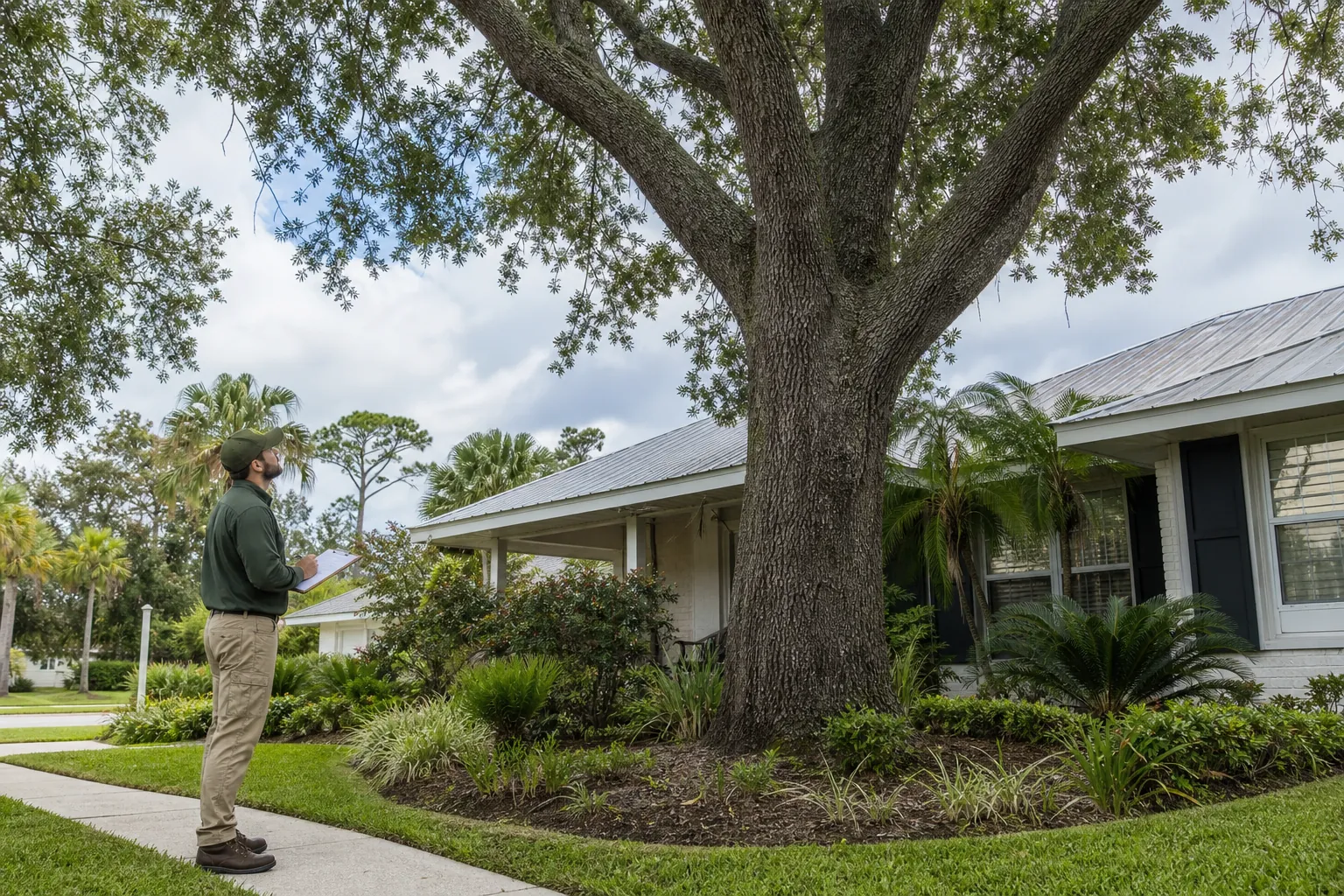
Reviewer and contributor: Clinton Funk, Owner, Florida Foliage. Clinton has decades of hands-on tree care experience.
Tim Francis is responsible for the research and editorial quality of this article. AI tools assisted with drafting and the editorial images. This general information does not assess a particular tree.
Hurricane Tree Prep in Pensacola, FL calls for clear notes and a careful household plan.
For hurricane tree planning in Pensacola, start indoors. Make a household checklist, not a trimming plan. Gather contact details and write down what you have noticed. Keep those observations separate from questions that need a site review. A checklist helps everyone stay organized. It cannot show whether a tree needs work. Leave that decision and any trimming methods to a site review. Use this guide to organize notes, contact details, and open questions.
What Comes First For Hurricane Tree Prep?
Include household contacts, existing observations, open questions, and space for updates. Read the tree-trimming service overview for general context. Use the contact page to plan an inquiry.
Keep the checklist clear enough for another household member to follow. Use simple labels and date each entry. Dates help separate older notes from new observations.
Divide the checklist into three parts: known details, uncertain details, and questions. This keeps observations from sounding like conclusions. For example, record a branch's position as an observation. Put “Does this need work?” under questions.
- Keep household contact details together instead of across scattered messages.
- Give each tree a simple label, such as “tree by the kitchen”.
- Separate trimming questions from decisions. The checklist is not a work plan.
- Record the date and name of the person adding each note.
A paper folder or digital file can both work. Choose the format your household will use. Keep one main copy to avoid conflicting versions.
- Use the same tree label on notes, photos, and questions about that tree.
- For each entry, note its date and who added it.
- Mark whether a detail came from a household note or an older image.
- Keep contact details in one place so family members can find them.
These small labels make the checklist easier to scan. They also help readers see which details are old, new, or still uncertain. Do not fill in a date or source if you do not know it.
Can Visible Tree Changes Tell You Whether Trimming Is Needed?
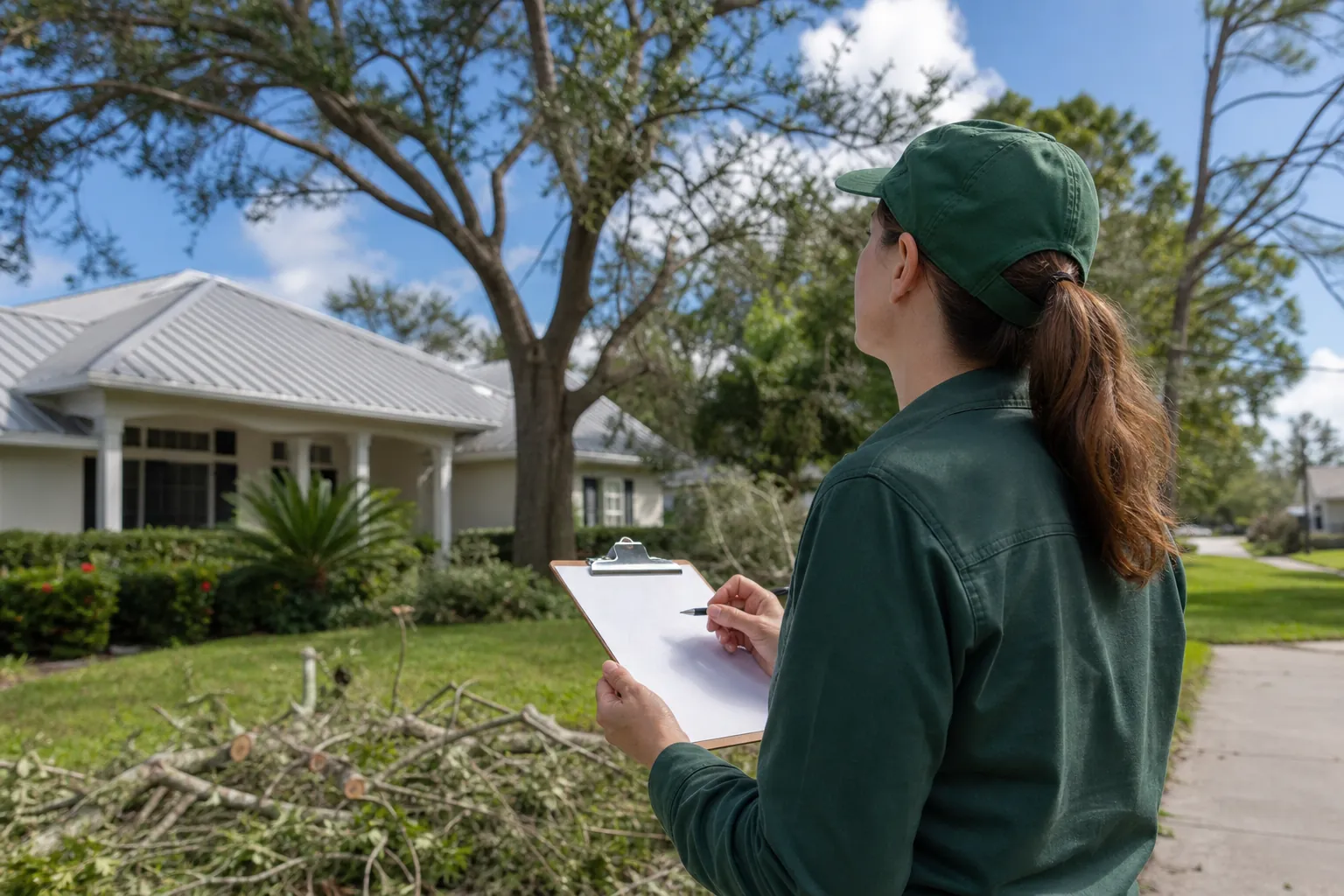
No. An observation describes what someone noticed. It does not diagnose a tree or decide what work is needed. The trimming overview gives general context. The removal overview explains a separate service. Use these pages to name your questions, not to choose work from appearance alone.
Write only what you can describe from existing details. “The branch looks lower than in an older picture” is an observation. “The tree needs trimming” is a conclusion. Keep that difference clear. An indoor checklist cannot replace a site review.
Existing photographs may help identify a tree. They do not prove it is safe or provide a full assessment. Keep an image with the related question. Do not treat it as an answer.
- Use plain descriptions instead of words like “healthy” or “dangerous”.
- Mark uncertain details as uncertain. Do not fill gaps with guesses.
- Keep the date on older images so they are not mistaken for current views.
- Ask whether a site review is appropriate. Do not choose a service yourself.
It is fine to have few details. Write “no current observation recorded” when that is accurate. Your household can make the inquiry clearer. It cannot make a technical finding.
When details are available, record them without adding meaning. Note what the person saw and when they saw it. If an image is already saved, label it with the tree name and its known date. Keep an uncertain date marked as unknown.
A clear note might say, “Photo saved on May 4; tree label: front yard.” Avoid adding a judgment about the tree. The purpose is to help everyone refer to the same record when discussing questions.
How Can You Build the Plan Without Going Outside?
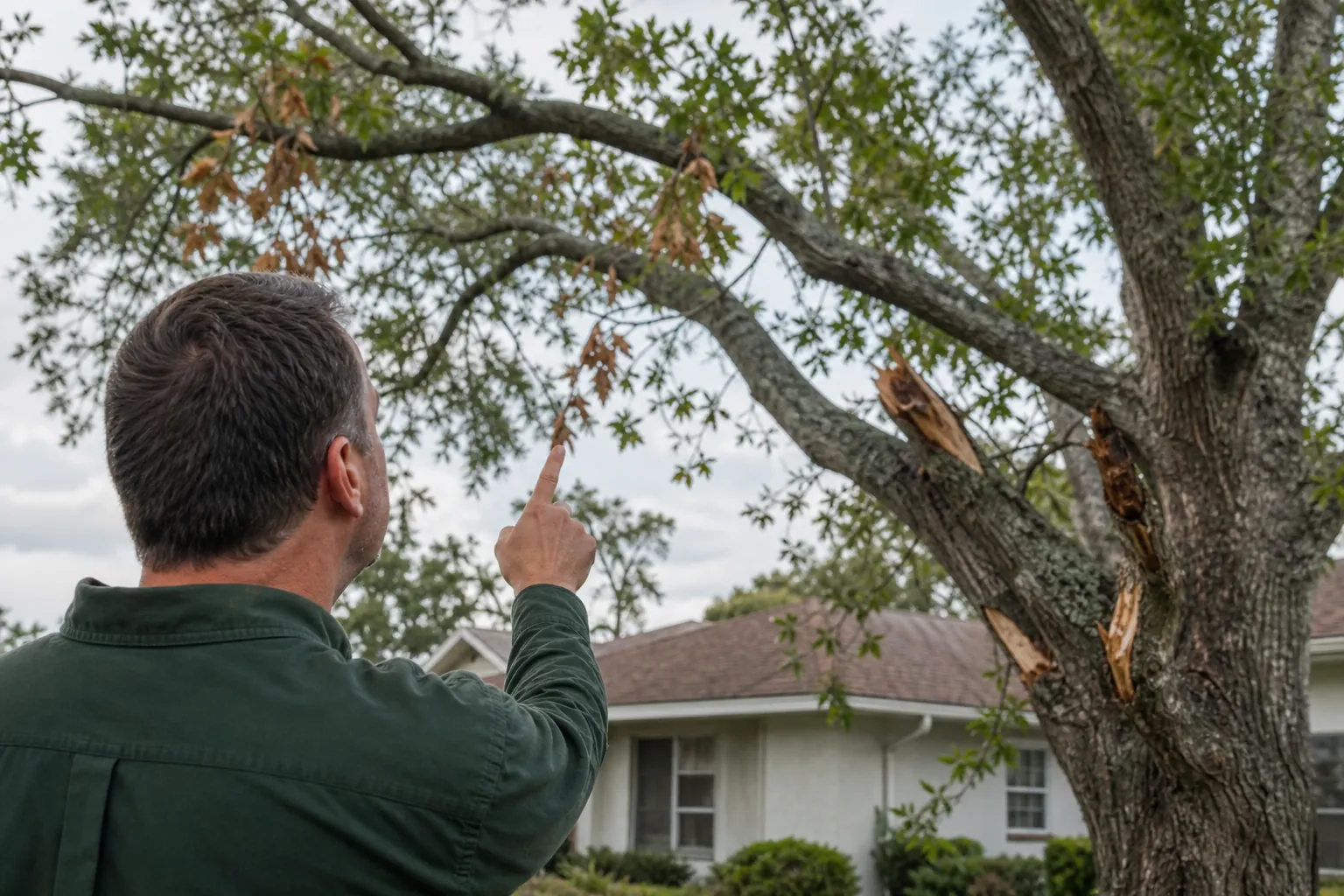
Use notes, saved images, household discussions, and contact details already indoors. The company background page gives context about Florida Foliage. The contact page offers a next step. You do not need new outdoor observations or a decision about tree work to organize your records.
Set a short time to organize the checklist. Choose one person to maintain the main copy. Others can add questions. One clear version helps prevent mix-ups.
- Create one folder or file called “Hurricane Tree Questions.” Add preferred household contact details.
- Add existing notes and images. Keep original dates when known.
- Use a consistent, easy label for each tree in the notes.
- Place observations, questions, and replies in separate groups.
- Write an inquiry about the service area and a possible site review.
- Record replies as given. Keep any unanswered questions open.
Keep the file focused. You do not need every tree-care article you have read. A few relevant notes are easier to use than a long list with conflicting advice.
Before sharing the checklist, read it once for clarity. Check that each tree label is consistent and each question is easy to understand. Separate a reply from the question it answers, and leave other questions open.
If the household adds notes over time, keep the older entries visible with their dates. That gives readers context without making an old description look current. Remove only true duplicates, and keep separate accounts when people noticed different details.
- Keep one main copy. Mark printouts as copies.
- Place open questions near the top, where they are easy to find.
- Remove duplicate notes that describe the same visible tree change.
The useful result is a clear record, not a trimming decision. It is fine if technical questions remain unanswered.
Separate Household Planning From Storm-Damaged Tree Work
The tree-trimming service page and tree-removal service page can help name an inquiry. They are not instructions for storm-damaged tree work. Keep your checklist focused on details and questions.
Storm-damaged tree work can involve falling limbs and unstable trees. Tensioned tree material and trees that may roll or slide during felling are hazards too. Do not assess or handle damaged material as part of this planning task. Source: OSHA tree-trimming activity sheet.
Downed electrical conductors can energize trees and fences. Avoid direct and indirect contact. Treat this warning as applying even when a tree or fence looks familiar. Source: OSHA tree-trimming activity sheet.
Keep nonessential people outside work and drop areas. Do not gather family or visitors near tree work. Source: OSHA tree-trimming activity sheet.
- Label the file “household planning only” to make its purpose clear.
- Put requests for technical advice under questions. Do not write your own answers.
- Leave trimming methods and work steps out of the checklist.
- Record unknown conditions as unknown. A picture cannot prove a tree is safe.
Use this guide to organize details. A site review is the place to discuss whether work is needed and how it may be done.
Keep Debris Questions Separate From Tree Questions
Use the contact page to ask about an inquiry. The tree-removal service page gives context about that service. A tree inquiry may not answer questions about storm debris or what is inside a debris pile.
Keep nonessential people away from debris machinery. The warning concerns the machinery as well as the tree that produced the debris. Source: OSHA debris-collection activity sheet.
Debris can hide meters and fire hydrants. A visible pile does not show everything beneath it. Do not list hidden contents as known. Source: OSHA debris-collection activity sheet.
Stay clear of leaking hazardous chemical containers. Hazardous-material response personnel must assess them. Keep this issue separate from ordinary tree questions. Source: OSHA debris-collection activity sheet.
- Use a separate heading for questions about storm debris removal.
- Describe only details already known to your household. Leave hidden contents unknown.
- Mark which questions have replies and which still need an answer.
This separation makes later discussions easier to follow. It also keeps “yard cleanup” from hiding several different questions. The goal is a clear record, not a debris assessment.
Use separate labels for tree observations, debris questions, and replies. If a note mentions more than one subject, split it into entries so each question stays clear. Do not guess what a pile contains or use the checklist to assess it.
Make a Neutral Inquiry About a Site Review
The Florida Foliage background page and contact page explain whom you are contacting. Florida Foliage is based in Daytona Beach. Call (386) 481-7913 to ask about current service options for your Pensacola property.
Identify Pensacola as the location when you contact the company. Ask whether the company serves that area and whether a site review can be discussed. Keep the reply in your notes without adding promises that were not made.
You could open with: “I am organizing hurricane tree questions for my home in Pensacola. Do you serve this area, and can we discuss a site review? I have existing observations, but I have not decided whether the tree needs work.”
- State your property location before describing the questions you have.
- Explain that your notes are observations, not a diagnosis.
- Ask about the service area. Do not assume Pensacola service.
- Record the reply accurately, without adding unstated commitments.
Keep the Checklist Readable as Details Change
The trimming service page can help label service questions. The company background page keeps company details separate from household observations. Keep those groups distinct as you update the file.
Add a short update instead of rewriting the full checklist. Note what changed and whether an older entry still matters. If household members describe a tree differently, label both accounts. Do not choose one as a technical conclusion.
- Mark older entries so no one mistakes them for current details.
- Keep each reply beside the original question that it addresses.
- Leave open questions unresolved until you receive a clear answer.
A checklist can remain unfinished and still be useful. It shows what your household knows and what it wants to ask. Completing it does not prove that a tree is safe.
Frequently Asked Questions
Should I decide which branches need trimming before contacting someone?
No. Describe what you have noticed and ask whether a site review can be discussed. You do not need to choose branches or suggest a trimming method. Note what you saw, when you saw it, and what remains uncertain. Leave work decisions to a site review.
Can existing photographs prove that my tree is safe?
No. Photos may help identify a tree or show an earlier record. Keep dates when known. They do not prove a tree is safe, replace a site review, or provide a diagnosis.
What if household members disagree about what they noticed?
Record each account and who provided it. Keep known dates and state that the details differ. You do not need to settle the disagreement. Make it an open question for a discussion about a site review.
Does this guide mean Florida Foliage is available in Pensacola?
No. Call (386) 481-7913 or use the contact page to ask about options for your property.
Who is responsible for this article's content?
Tim Francis is responsible for this article’s content and editing.
Tim Francis is responsible for this article’s content and editorial presentation. Clinton Funk owns Florida Foliage and has decades of hands-on tree care experience. These are distinct roles.
Call (386) 481-7913 to talk through next steps.