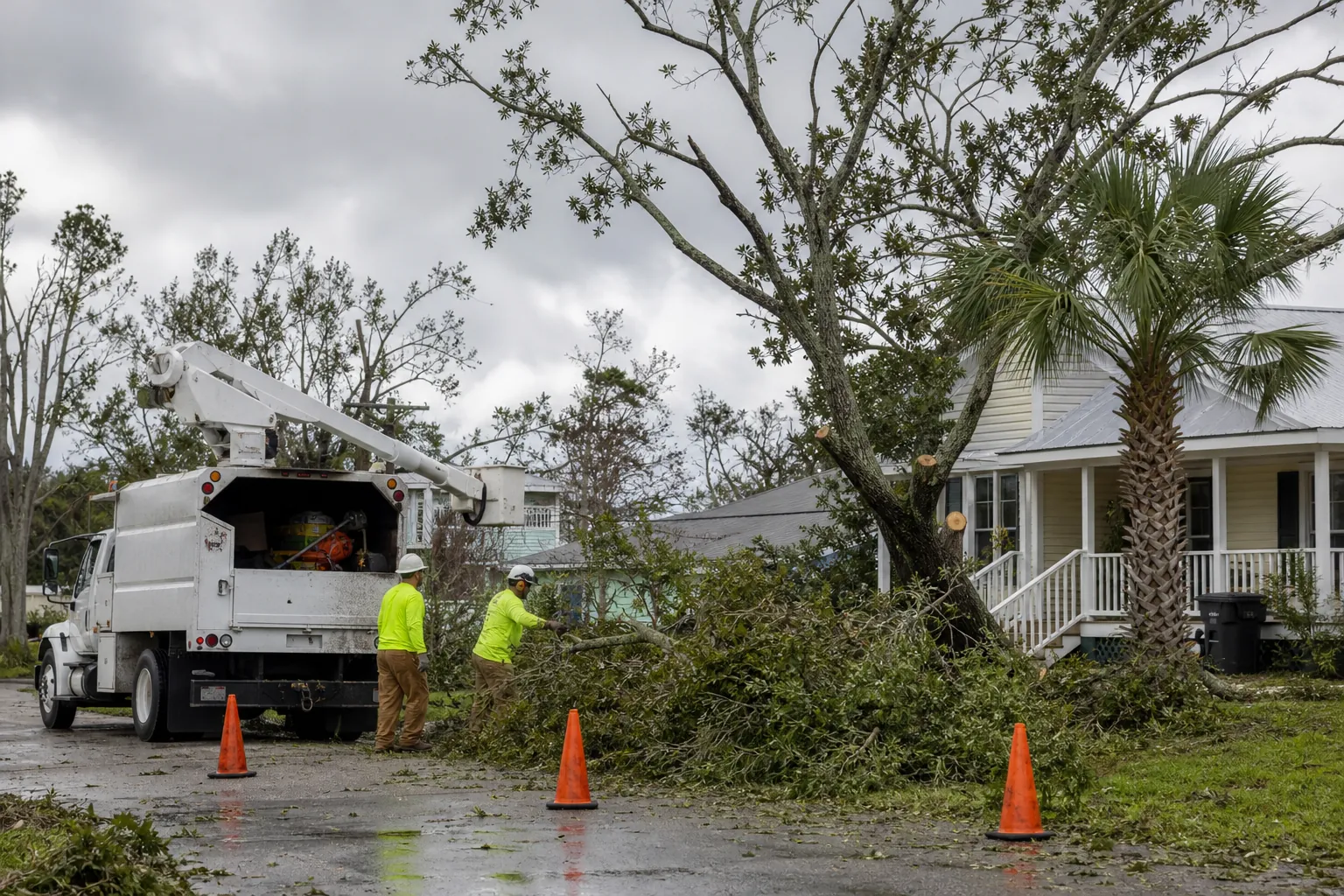
Prepare for a hurricane tree crew visit by making household plans, noting what you can see, and keeping nonessential people outside work and drop areas. This follows OSHA’s storm tree work guidance. Preparation does not mean handling damaged branches or deciding that a tree is safe. This guide supports Florida Foliage’s emergency tree removal in Pensacola resource. It offers practical ways to plan for people, pets, vehicles, and questions before a possible visit. It does not assume that service is available in your area.
Author: Tim Francis. Tim Francis is responsible for this article’s content and editorial presentation. Clinton Funk is Florida Foliage’s owner and has decades of hands-on tree care experience. Florida Foliage is headquartered in Daytona Beach.
What Should You Prepare Before a Tree Crew Visit?
Prepare a short household plan, a list of visible conditions, and questions about a possible visit. Florida Foliage’s tree removal service information provides context for your inquiry. The contact page lets you ask about your location and needs. Neither resource confirms service availability in Pensacola.
Clear communication is more useful than yard work. Write down what led you to inquire and what you want to understand. A brief note is easier to use on a phone call than a long account of every storm event.
Keep household planning separate from decisions about the tree. “A branch is resting across the driveway” records what you see. It does not explain why the branch fell or establish the condition of the rest of the tree.
- Choose one household contact to keep notes and share updates with other household members.
- Write your address, preferred contact number, and main reason for your inquiry in one place.
- List questions about a possible visit, without assuming that one has been arranged.
- Focus on communication, not on trying to do tree work.
How Do You Plan for People and Pets?
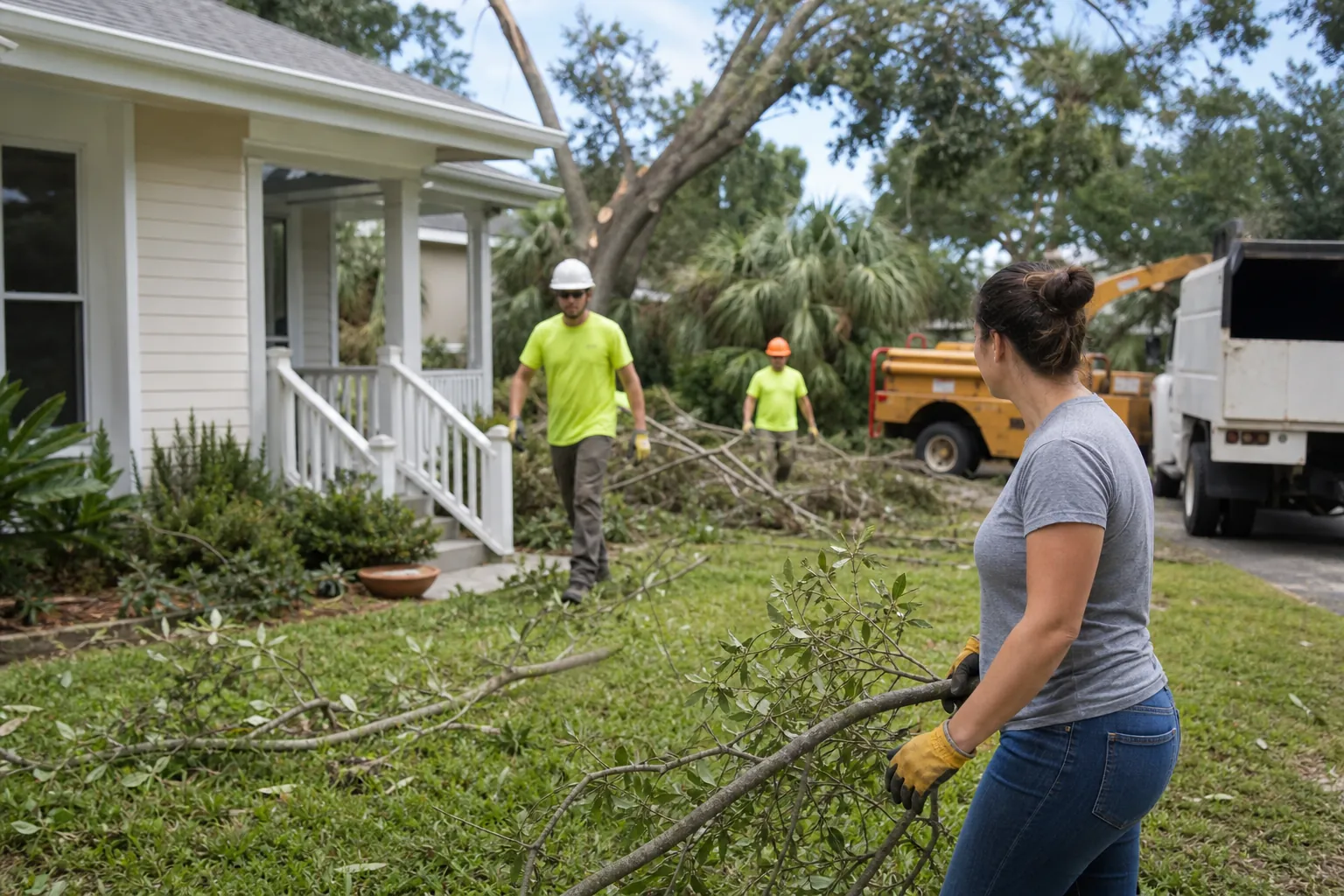
Plan who needs to be present and what the rest of the household will do during a possible visit. Read the Florida Foliage company background to learn who you are contacting. Use the service inquiry page to ask about a visit. Do not make watching work from the yard part of your household plan.
OSHA says nonessential people should stay outside work and drop areas. Use this guidance in your household plan. Do not treat a crew visit as an event for neighbors or guests to watch. Source: OSHA storm tree work guidance.
For pets, plan familiar routines instead of making decisions when a visit begins. Think about who will feed them, where everyday supplies are kept, and whether anyone needs a reminder about doors. These are planning tips, not an assessment of any outdoor area.
- Tell household members who the main contact is. This can keep several people from trying to manage the conversation.
- Choose an ordinary indoor activity for children or guests who do not need to take part in the visit.
- Put pet food, bowls, and other routine supplies together before the planned visit.
- Explain that watching tree work is not part of the household plan.
Where Do Vehicles Fit Into the Plan?
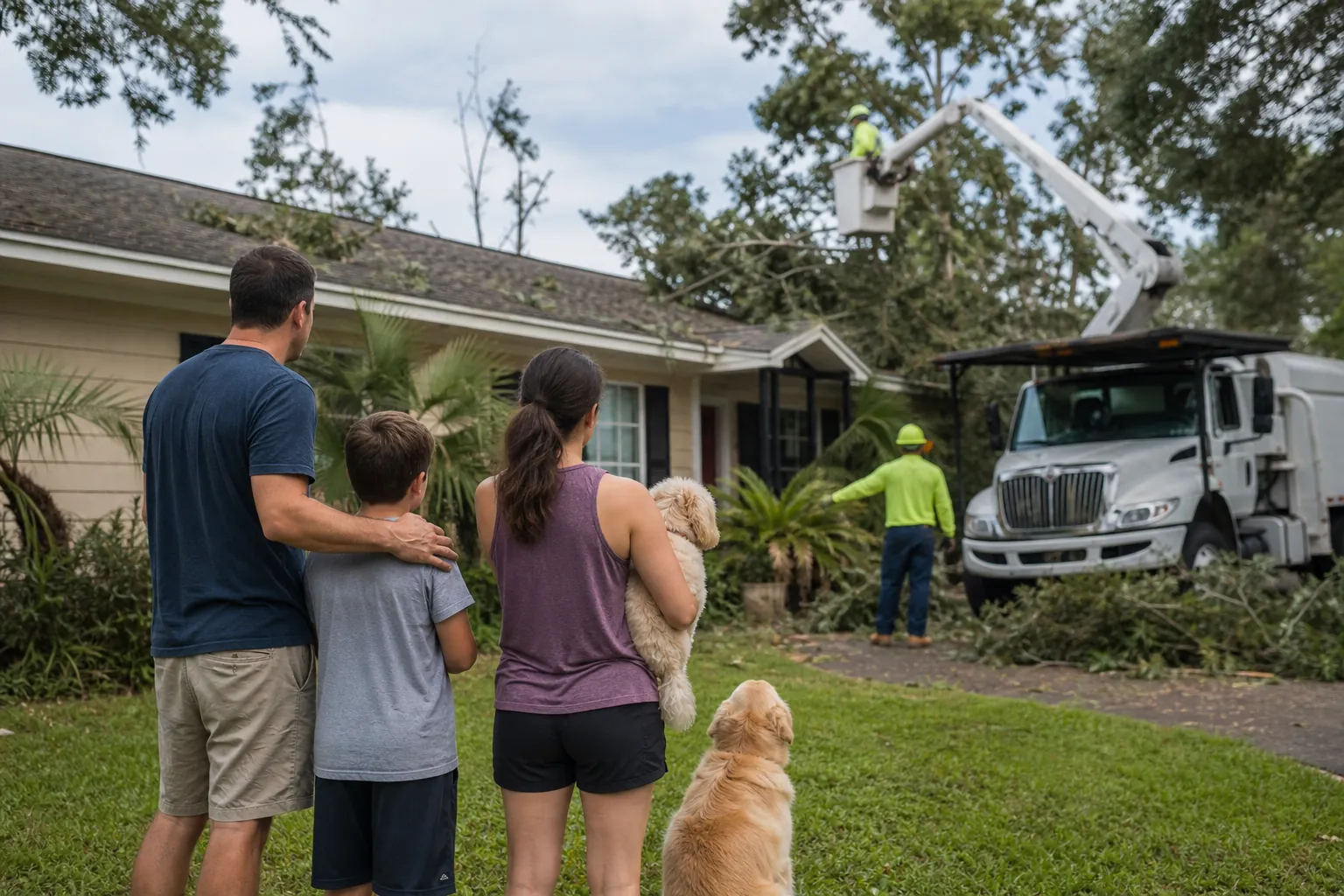
Plan vehicle needs before a possible visit. Do not assume the driveway will remain convenient. The tree removal overview can help you frame questions about the work. The visit inquiry form lets you raise parking concerns. This planning step does not tell you where to place vehicles.
Note who expects to leave, which vehicles they will use, and whether anyone needs access to keys. Discuss these needs when arranging a visit. Do not guess where a work or drop area is based on a tree’s size or a vehicle’s current location.
OSHA says nonessential people must stay outside work and drop areas. Plan vehicle use in a way that supports this separation. Do not use vehicle planning as a reason to enter an active work area. Source: OSHA guidance on storm tree work areas.
This article does not name a place to park or tell anyone to cross a storm-damaged yard. Note access concerns and ask how they would be handled during a possible visit.
- List the vehicles your household expects to use during the planned visit.
- Keep keys in a familiar place at home. Tell others if you change the routine.
- Ask where vehicles should go before treating any parking plan as settled.
- Note expected departures so you remember to mention them during the conversation.
Record What You Can See Without Diagnosing the Tree
Use the tree trimming service overview to learn about one service category. Use the tree removal service overview to learn about another. These pages can help you ask questions. They do not let you decide which service a storm-damaged tree needs based on its appearance.
A useful note keeps what you see separate from what you think it means. “There are branches on the driveway” describes something visible. “The tree is stable” makes a claim that this homeowner checklist cannot confirm. Use plain words and leave unanswered questions open.
Do not add a new yard inspection to this task. Use observations you already have. If you have images, describe what they show. Do not present them as proof that a tree is safe. Images and notes help you communicate; they do not diagnose a tree.
- Describe visible items by location, such as the driveway, front yard, or side of the house.
- Write “I do not know” when you cannot answer a question. Do not guess.
- Separate what you noticed before the storm from what you noticed afterward.
- Keep any existing images with your notes, but do not use them to decide whether the tree is safe.
For example, “I noticed a branch on the ground after the hurricane” is more useful than calling the whole tree dangerous or harmless. The first statement gives the contact person a clear observation. It does not claim to establish the tree’s condition.
Know the Source-Documented Storm Hazards
Read the removal service description for general service information. Use the contact options to explain your concern. The hazards below come from OSHA’s storm cleanup guidance. They are reasons not to handle tree or debris work as part of your preparation. They are not instructions for doing that work.
- Storm-damaged tree work has falling-limb and unstable-tree hazards. Source: OSHA storm tree work guidance.
- Downed electrical conductors can energize trees and fences. Avoid direct and indirect contact. Source: OSHA electrical hazards in storm tree work.
- Tensioned tree material and limbs that roll or slide are hazards. Source: OSHA tree material hazards.
- Nonessential people should stay away from debris machinery. Source: OSHA debris collection guidance.
- Debris can hide meters and fire hydrants. Source: OSHA debris collection hazards.
- Stay clear of leaking chemical containers. They need specialist evaluation. Source: OSHA chemical container guidance.
You do not need to identify these conditions to prepare household notes. Record concerns you already know about. Do not approach them to get a better description. This article is about household preparation, not technical assessment or cleanup.
Use a Simple Preparation Sequence
The company information page explains Florida Foliage’s background. The contact page for questions gives you a neutral next step. Use this list to put your information in order. It is an organizing checklist, not a schedule, tree assessment, or confirmation that a crew will visit.
- Write the purpose of your inquiry. In a few plain sentences, sum up what you see and what you want to know.
- Identify the household contact. Choose who will receive messages and keep shared notes up to date.
- List people, pets, and vehicle needs. Include everyday routines that could affect a possible visit, such as a household member leaving or feeding a pet.
- Collect existing information. Put your address, phone number, observations, and any existing images together. Do not seek new close-up views.
- Ask about your location and request. Say that the property is in Pensacola and ask whether Florida Foliage can address your inquiry.
- Update the household plan after the conversation. Note what you discussed and mark any open questions as unresolved.
One page is enough if it has the information you need. You do not need to make a formal report. Use words that another household member can understand.
- Put open questions at the top so they are easy to find during a call.
- Keep a copy of the notes where your chosen household contact can find it.
- Change the plan when you get new information. Do not fill gaps with guesses.
What Should You Ask When You Contact Florida Foliage?
Ask whether Florida Foliage can address your Pensacola inquiry, what information would help, and what is still undecided. The contact page gives you a way to start the conversation. The company background page explains the business. Florida Foliage is headquartered in Daytona Beach. This article does not confirm that the company is available in Pensacola.
You can call (386) 481-7913 or use the contact page. Give your location and describe what you see in plain words. Contacting the company is a request for information. It does not promise a visit, a set response time, or a particular result.
- Ask what information is needed to understand your request before sending a long set of notes.
- Explain household scheduling needs without assuming a visit date has been set.
- Ask what preparation would matter if a visit is discussed.
- At the end of the conversation, repeat any open questions so your notes are clear.
Keep a short record of the conversation for your household. Note what you discussed and any open questions. Do not treat a general service discussion as a decision about the tree’s condition or confirmation of an arrangement that was not made.
Keep the Household Plan Clear Through the Visit
Use the trimming service information for context about a service question. Use the company contact page to clarify the conversation. Keep your household plan simple: one contact, shared notes, familiar pet routines, and no assumption that preparation proves a tree is safe.
Keep nonessential people outside work and drop areas and away from debris machinery. These are separate points in OSHA’s guidance for storm tree work and debris collection.
- Tell household members when your notes change so everyone has the same information.
- Keep routine questions with the main household contact instead of having several people ask them.
- Review vehicle and pet plans as household arrangements, not as conclusions about outdoor conditions.
For more on this topic, return to the guide to emergency tree removal in Pensacola. This supporting article focuses on preparation and communication. It does not assess a particular tree or confirm that Florida Foliage serves your location.
Frequently Asked Questions
The Florida Foliage background page and inquiry page give company information and a way to ask questions. These answers keep household planning separate from tree assessment.
- Use these answers to organize your questions, not to decide a tree’s condition.
- Confirm details through direct contact. Do not treat this article as confirmation of a visit.
Should everyone in the household watch the tree work?
No. OSHA says nonessential people should stay outside work and drop areas. Source: OSHA storm tree work guidance. Choose one household contact and plan ordinary activities for everyone else. Do not plan a crew visit around watching from the yard. This article does not name a place to watch from.
Can existing pictures prove that my tree is safe?
No. Do not use pictures as proof that a tree is safe. Existing images can go with a description of what you see, but keep observation separate from diagnosis. Write what the image shows and what you do not know. You do not need new close-up images to complete this household checklist.
Should I move branches before a possible visit?
Do not include branch handling in your preparation plan. OSHA lists tensioned tree material and limbs that roll or slide as hazards. Source: OSHA storm tree material guidance. Focus on notes, household routines, and questions instead. This guide does not explain how to move branches or assess material in your yard.
How should I organize pets and vehicle needs?
Write down routine pet needs, expected household departures, and which vehicles people plan to use. Keep familiar supplies and keys organized, and share the plan with your household contact. Ask about vehicle placement if a visit is discussed. These are household planning tips, not directions to enter a damaged yard or choose a work area.
Does this article confirm a Florida Foliage visit in Pensacola?
No. Florida Foliage is headquartered in Daytona Beach. This article does not confirm service in Pensacola or a visit. Call (386) 481-7913 or use the contact page to explain your location and request. Tim Francis has content and editorial responsibility for this article; it does not say that owner Clinton Funk personally reviewed the draft.
Call (386) 481-7913 to talk through next steps.