Reviewer and contributor: Clinton Funk, Owner, Florida Foliage. Clinton has decades of hands-on tree care experience.
Tim Francis is responsible for the research and editorial quality of this article. AI tools assisted with drafting and the editorial images. This general information does not assess a particular tree.
Hurricane Rental Yard Cleanup in Pensacola, FL calls for clear notes and a careful household plan.
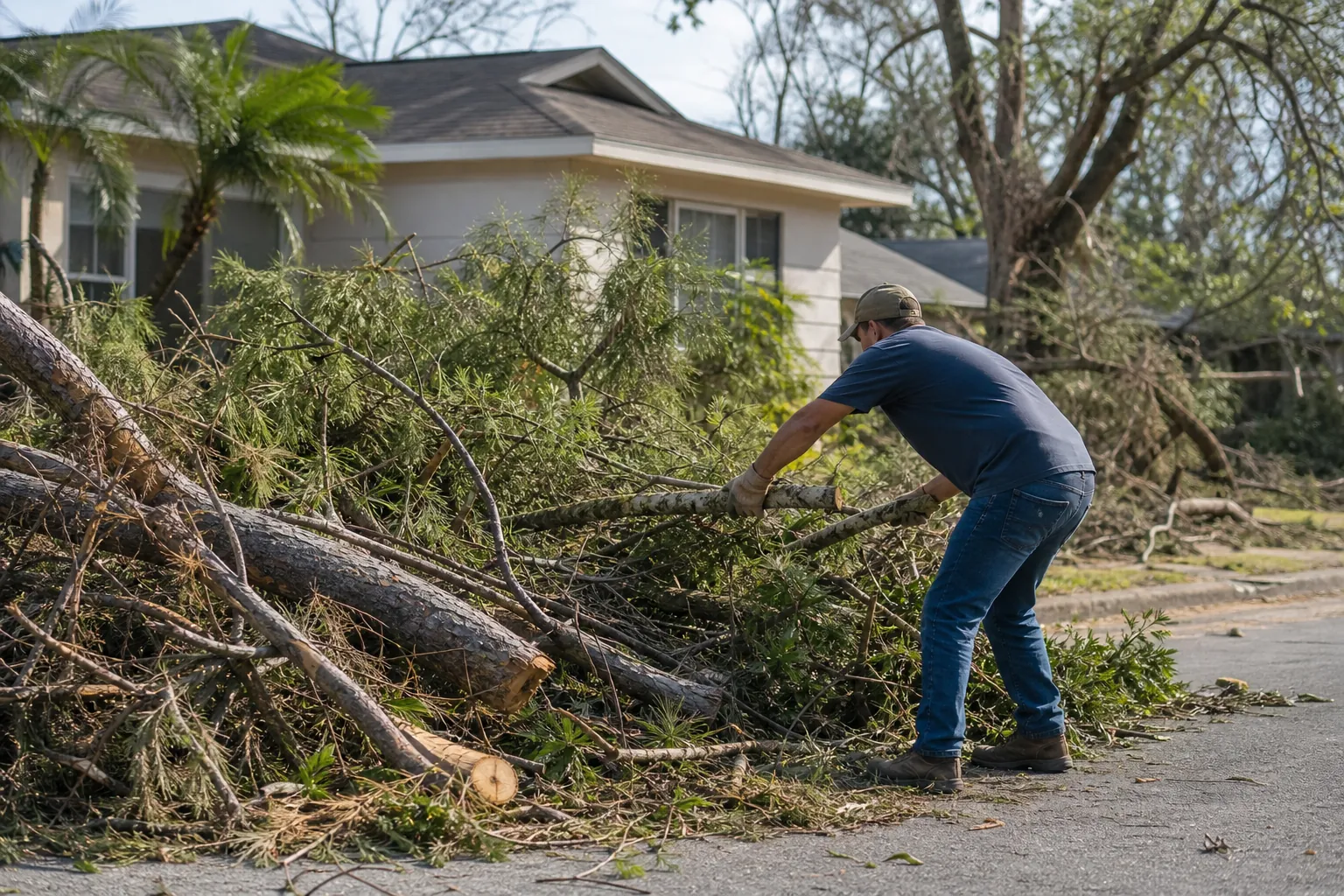
After a hurricane in Pensacola, start by listing the routes your household uses. Note which doors, walkways, or yard paths look blocked. Keep what you see separate from questions about tree condition. Storm-damaged tree work can involve falling limbs and unstable trees, OSHA says in its tree-work guidance. A clear path, photo, or short note cannot show that a tree is safe. Use the list to explain household needs, not to plan tree work.
What Comes First For Hurricane Rental Yard Cleanup?
Start with the access your household needs and what appears to block it. The tree-removal overview explains that service topic. The contact page gives you a way to ask about current options.
Keep the first list simple. Name the front door, back door, driveway, walkway, or another familiar route. Next to each name, describe what you can see. Use plain words for the location and obstruction. Avoid guessing what caused the damage or what a tree might do.
For example, write “branches cover the walkway near the front steps.” That tells others which route is affected. “The whole yard is ruined” gives less useful detail. The first note also avoids telling anyone to move debris or judging the tree.
- List the routes people in the household use most often.
- Describe visible blocks without calling a tree stable or harmless.
- Put open questions in a separate column. Do not turn guesses into facts.
This first step is only a way to organize household needs. You do not need a cleanup order, a tool list, or a plan for handling damaged material.
How Can You Describe a Blocked Route?
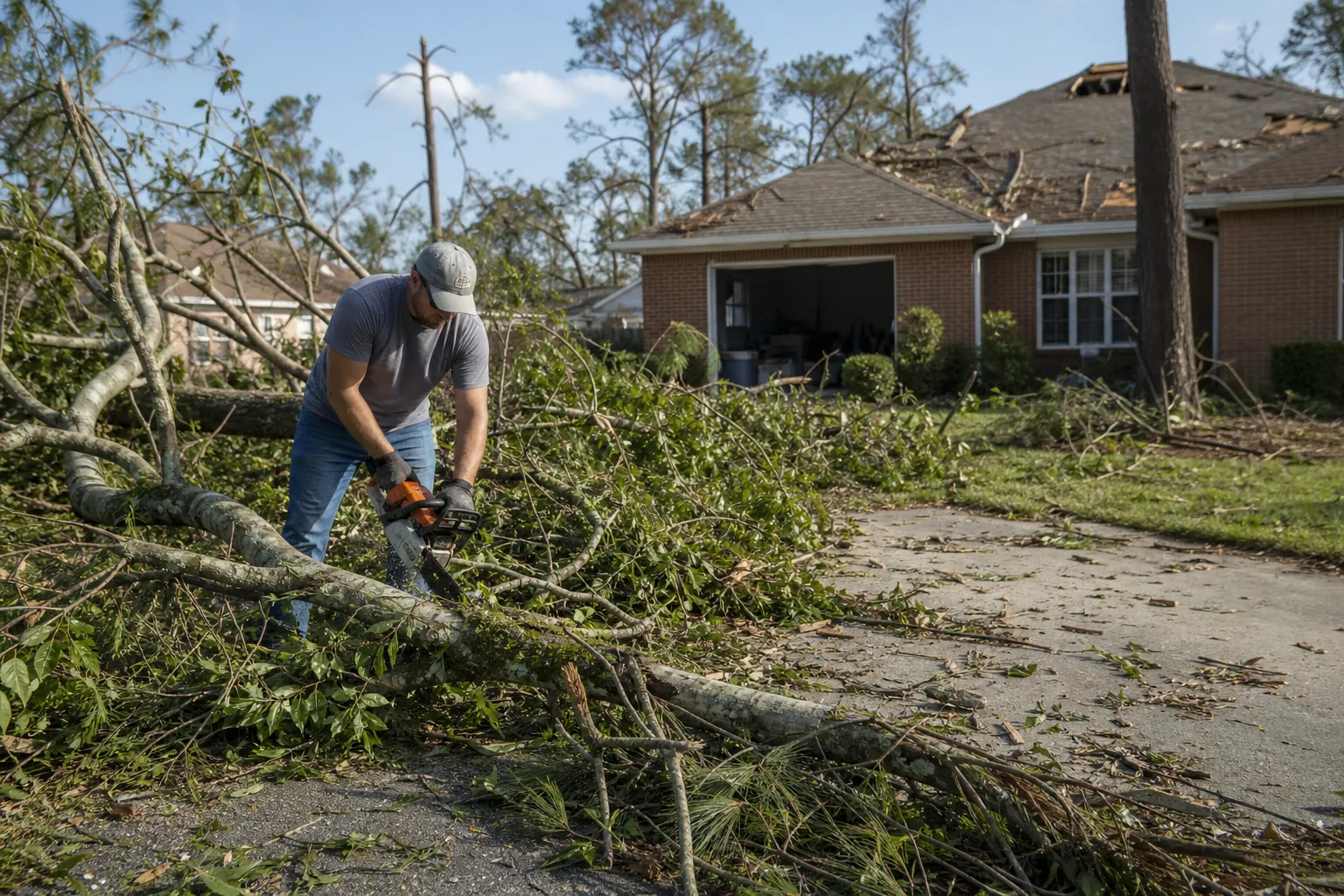
Describe the location and what you can see. Do not guess about the tree or its movement. The tree-trimming overview gives background on that service. The company background explains who Florida Foliage is. Keep those pages as general context. Your notes should stay with the visible details at your property.
Use words such as “across,” “beside,” “covering,” and “visible.” For example, “a large branch lies across the walkway” reports what you see. “That branch cannot move” makes a statement you cannot confirm from a view. Use the same care when a tree looks tilted or has missing branches.
OSHA lists tensioned tree material and trees that may roll or slide during felling as hazards in its storm tree-work guidance. Damaged material can behave in ways that are hard to judge by sight. Do not treat it as ordinary household clutter.
- Say where the material is beside a familiar feature.
- Use everyday size words. Do not guess weight or strength.
- Write “condition unknown” when you cannot confirm a detail.
If you already have a photo, you may keep it with the notes. It can help show which area you mean. It does not prove that a tree or route is safe. Label what the photo shows and leave unknown details open.
How Should You Note a Concern Near Wires or Fences?
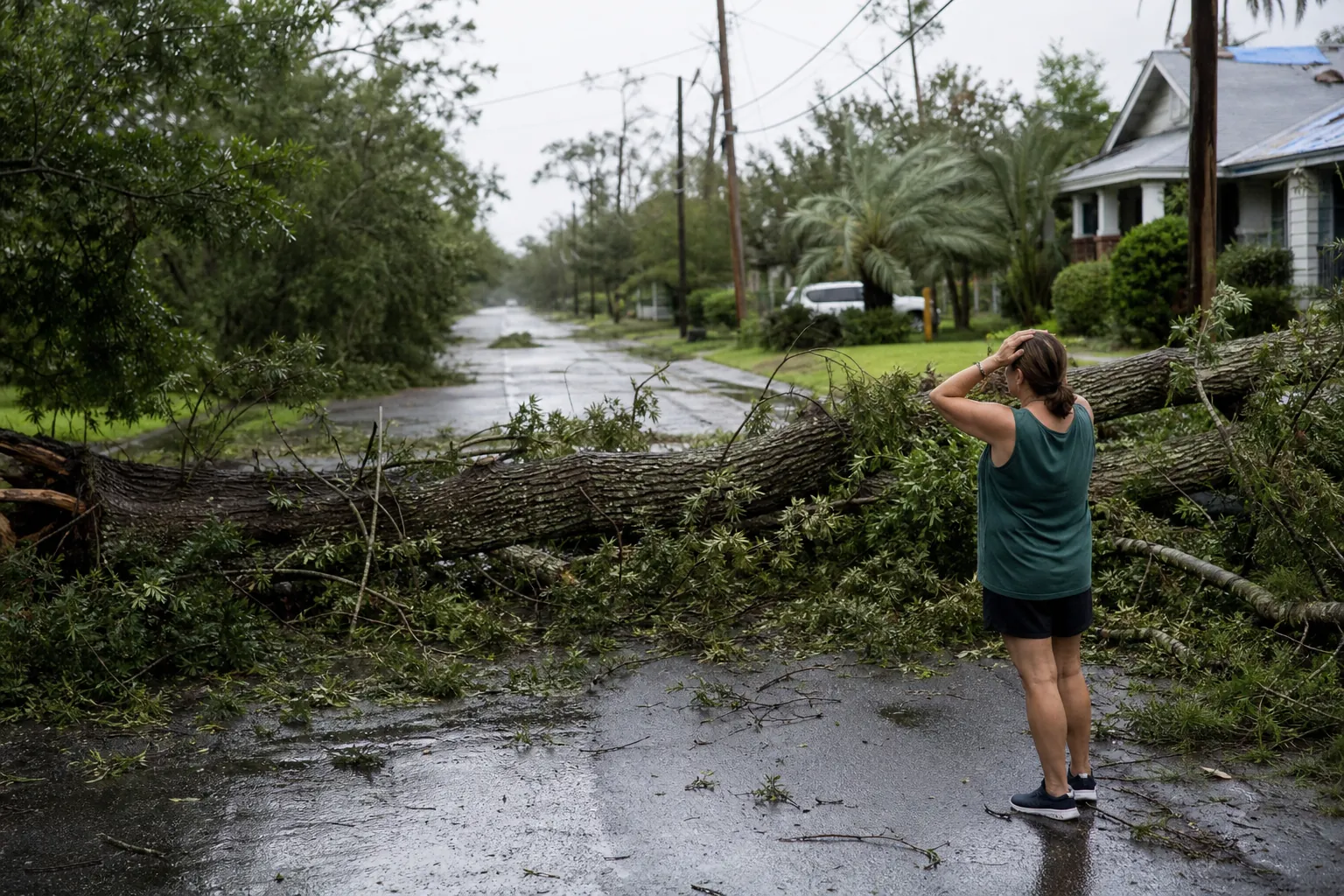
Keep a wire-related concern separate from routine yard notes. OSHA says a downed electrical conductor can energize a tree or fence. Its tree-work guidance says to avoid direct and indirect contact. Record what is visible. Do not treat the note as an electrical check.
A household note can describe the concern without asking anyone to look closely. For example: “A wire is visible near the fallen branch and fence.” Avoid writing “the wire looks inactive.” Appearance does not confirm whether a conductor is energized.
Keep this entry apart from ordinary route choices. Do not suggest moving the branch, touching the fence, or testing for contact. Record the location and leave the electrical condition unresolved.
- Mark the entry as a wire-related concern, not routine yard clutter.
- Name the route so household members know which area you mean.
- Remove guesses about whether a conductor is active.
A short, accurate note is enough. The goal is to share what you see. It is not to judge electrical conditions from a distance or a photo.
Build One Household Access List
Keep access concerns in one shared list instead of scattering them across messages. The tree-removal page gives general service context. The contact page gives you a place to ask about current options. Use the list to explain your household’s needs and questions.
The list can be on paper or in an app your household already uses. Pick a format people know. The format matters less than keeping observations, preferences, and open questions distinct. Do not fill every blank with a guess just to make the list look complete.
- Name each route with a familiar label, such as “front walkway”.
- Write one short, factual description of the visible obstruction.
- Say why the route matters to the household’s daily routine.
- Put unanswered questions in their own clearly labeled note field.
- Update the same list when facts change. Avoid competing copies.
For example, an entry might say: “Back-door route: branches are visible across the walkway. Household use: access to the usual outdoor storage area. Tree condition: unknown.” This states a need without telling anyone to cross the area or move branches.
- Choose one household member to keep the shared wording current.
- Date each update so older notes are not mistaken for current details.
Separate Household Priorities From Tree-Work Decisions
Your household can explain what matters without deciding how tree work should happen. The tree-trimming overview and tree-removal overview describe different service topics. They are background only. They do not tell you how to handle storm damage.
Household priorities might include the usual entrance, access to stored belongings, or a route between parts of the yard. Write these as needs. Do not turn them into directions to clear one limb first. A household preference and a tree-work decision are separate matters.
OSHA says nonessential people should stay outside work and drop areas in its tree-work guidance. A preferred route does not change that safety boundary. Do not enter a work area just because a route seems convenient.
- Rank household needs with plain labels, such as “usual entrance”.
- Leave the work order and method out of the household list.
- Record access questions without predicting when a route will be usable.
This keeps the list useful. It explains what your household needs while leaving tree condition and work-area decisions open.
Keep Machinery and Unusual Debris in Separate Notes
Some concerns need their own category. Use the contact page for company questions and the background page for general details. OSHA’s collection guidance describes hazards around machinery and leaking containers.
OSHA advises people to stay away from debris machinery. It also says to keep clear of leaking hazardous chemical containers and notes that these need assessment by hazardous-material response personnel in its debris-collection guidance. Keep these concerns apart from a note about branches across a path.
You do not need to name a chemical or explain how machinery works. If a container looks like it is leaking, record that visible detail. Do not guess what is inside or suggest handling it.
- Keep machinery concerns apart from household route preferences.
- Note a visibly leaking container without guessing its contents.
- Do not turn unusual debris into a household sorting task.
Separate categories make the list easier to read. They also keep it from treating every kind of storm debris as the same household task.
Account for Features Debris May Hide
Include familiar yard features in your notes, but do not assume they are visible now. The tree-removal page offers service context. The contact page gives you a way to ask follow-up questions.
OSHA notes that debris can hide meters and fire hydrants in its debris-collection guidance. You can record that a feature may be hidden without trying to uncover it. Write “not currently visible” when that is all you know.
Separate remembered locations from what you can see today. “The meter is usually beside the side walkway” describes what you remember. “The meter is visible beside the side walkway” describes a current view. These are different statements.
- Mark remembered locations as remembered, not currently confirmed.
- Write “not visible” instead of saying a feature is gone or damaged.
- Keep questions about hidden yard features separate from household route preferences.
This wording avoids statements beyond what you know. An incomplete note can still help if it names the missing detail. Do not move debris to fill in a blank.
Prepare a Clear, Neutral Contact Message
A useful inquiry can name the location, visible access concern, and open question. Visit the contact page to send a message, or read the company background first. Include Pensacola and the household route in your message.
Keep the question open. Do not assume a response time, a visit, or a particular outcome from a phone number or service page. Ask whether the company can discuss your location and type of inquiry.
A short message might say: “I am asking about a yard in Pensacola. Branches are visible across the front walkway, and tree condition is unknown. Can you tell me whether this is a service option for my location and what details would help?”
- Name Pensacola at the start so the location is clear.
- Describe what you see without making a statement about tree condition.
- Ask about current options before assuming a service arrangement.
If you include a photo you already have, label the area it shows. Say what remains unknown. The image can add context to your note, but it cannot prove that a tree or route is safe.
Keep the Plan Useful as Details Change
Treat the access list as a way to share details, not as a safety clearance. The tree-trimming page can help you name a service question. The contact page gives you a place to ask it. Keep the list focused on your household’s needs and current observations.
When details change, update the entry that changed. Keep the route name so everyone knows which concern you mean. If a question remains open, leave it marked that way. Do not delete uncertainty just to make the list shorter.
A useful plan stays modest. It names household needs and records visible details. It also makes clear what remains unknown. It does not predict tree movement, choose work methods, or promise when routines can resume.
- Keep one current access list where household members can find it.
- Use specific observations when reliable new details become available.
- Mark open questions clearly. Do not treat silence as confirmation.
For a Pensacola household, this structure offers a practical starting point: familiar route names, clear observations, and useful questions. It keeps household access planning separate from decisions about storm-damaged trees.
Frequently Asked Questions
Does a clear-looking walkway mean a nearby damaged tree is safe?
No. A clear walkway is an observation, not proof of tree condition. OSHA lists falling-limb and unstable-tree hazards in its storm tree-work guidance. Note what appears clear, but leave tree condition open. A photo does not prove safety, even if it shows the whole route.
What should I write if branches and a wire are visible together?
Describe the visible wire, branches, and affected route. Do not guess whether the wire is active. OSHA says downed electrical conductors can energize trees and fences. It advises avoiding direct and indirect contact in its tree-work guidance. Keep this note apart from routine household planning.
Should every piece of debris go on the same household list?
You can use one document, but keep separate categories. Route blocks, machinery concerns, and leaking containers are different issues. OSHA says to stay away from debris machinery and leaking hazardous chemical containers. Its collection guidance says leaking containers need assessment by hazardous-material response personnel.
Can I use photographs to explain the access problem?
Yes. An existing photo can add context, but it cannot prove a tree is safe. Label the route or feature shown. State what remains unknown. Keep a written note with the image so others understand the household concern. A photo cannot show every condition in the area.
Does Florida Foliage have a Pensacola office?
Florida Foliage is based in Daytona Beach. Call (386) 481-7913 to ask about current service options for your Pensacola property.
Tim Francis is responsible for this article’s content and editorial presentation. Clinton Funk owns Florida Foliage and has decades of hands-on tree care experience.
Call (386) 481-7913 to talk through next steps.