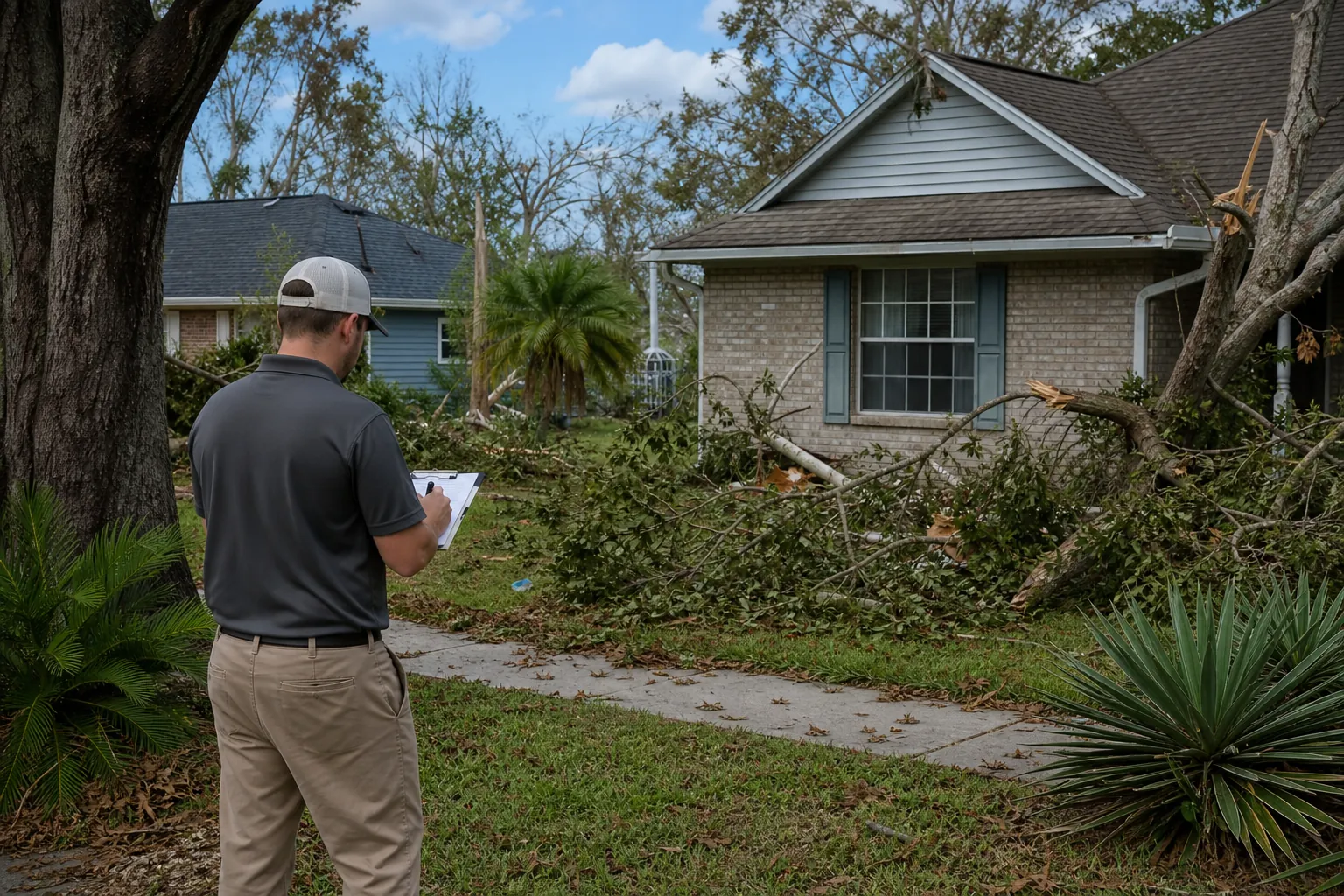
A second-week hurricane yard recheck helps you record what looks different. It does not tell you whether a tree is safe. Compare what you can see now with earlier notes. Describe any changes in plain words. Mark details you are unsure about as unknown. This guide supports our Pensacola hurricane tree cleanup resource. Use the Florida Foliage contact page if you want to ask about your situation. Do not assume that service is available in Pensacola or that you will get a reply by a set time.
By Tim Francis, responsible for content and editorial presentation.
What Should You Look For in the Second Week?
Look for visible changes from your earlier notes. For example, a limb may appear to be in a new position, or debris may appear in a different place. Describe the change without naming its cause. Our tree removal service information and tree trimming service overview give context for questions. They do not diagnose a tree or confirm local availability.
Ask one simple question: What looks different now? You might note that a branch crosses a new part of the background. You might see a section that was hidden before. Or you might not be able to tell if anything changed. Each is a useful note. You do not need to turn every observation into a conclusion.
For this task, start with information you already have. Earlier written notes may be enough. If you have pictures, use them to recall what things looked like, not as proof that a tree is safe. A change in camera position, light, or framing can make a comparison unclear.
- Write down which part of the yard you mean. Use familiar features around the home as landmarks.
- Record what you see now before you read your earlier description.
- Use words such as “appears,” “visible,” and “not clear” when they fit.
- Keep “no visible difference” separate from “safe.” They do not mean the same thing.
A second-week label is just a way to sort your notes. It is not a safety milestone. This article does not use the time that has passed to judge a tree's condition.
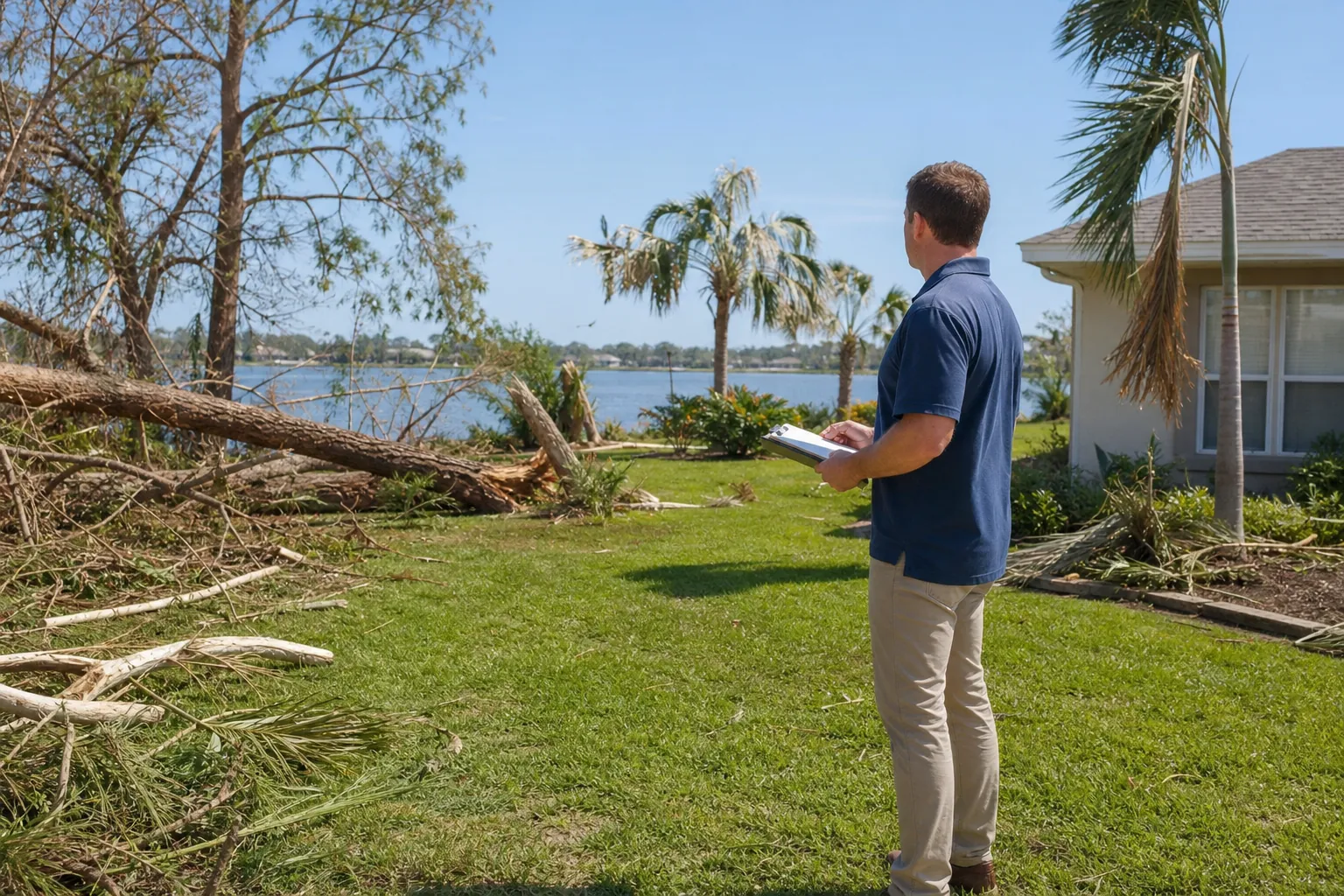
Does a Shifted Limb Tell You Whether a Tree Is Safe?
No. A visible change is an observation. It is not a diagnosis of the tree or a decision that work can begin. Record what you see and what you are unsure about as separate notes. The tree trimming information page can help you frame service questions. The contact form gives you a neutral way to send those questions.
For example, “the limb now appears lower against the shed roof” describes what you see. “The limb is about to fall” goes beyond what you saw. In the same way, “the trunk looks unchanged from this view” does not show that the whole tree is unchanged. Describe only what you can see.
Storm-damaged tree work has falling-limb and unstable-tree hazards. OSHA's hurricane tree-work guidance names these hazards. That is why this recheck focuses on descriptions and questions, not on how to handle damaged trees.
- Keep the visible detail separate from any reason you think it changed.
- If a comparison is unclear, say so instead of guessing.
- Do not describe a photograph as proof that a tree is safe.
- Ask what more information is needed. Do not ask someone to confirm your own diagnosis.
An incomplete note can still be useful. “I cannot see that part from the same view” is more honest than a claim you cannot support. Keep that limit in your notes.
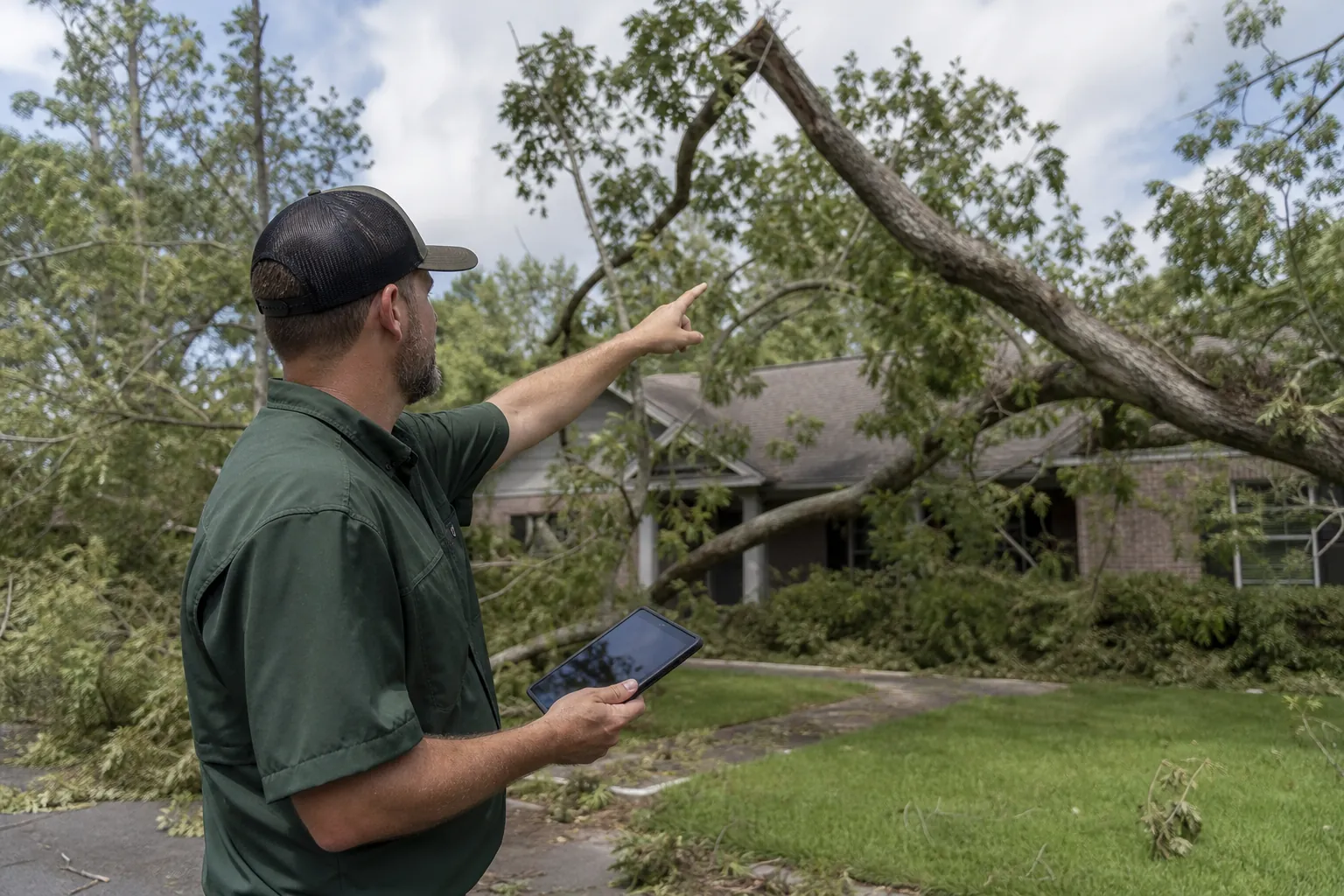
Which Storm Hazards Still Belong in Your Notes?
Keep known storm hazards apart from your yard notes. This helps prevent one from being mistaken for the other. OSHA names electrical contact, unstable trees, and moving tree material as hazards. The tree removal overview gives service context. The company background page explains who Florida Foliage is. Read OSHA's source guidance.
Downed electrical conductors can energize trees and fences. Avoid direct and indirect contact. OSHA explains this electrical hazard. A yard note should not try to judge whether a wire, tree, or fence is safe from electricity based on how it looks.
Tree material under tension and limbs that roll or slide are hazards named in OSHA's storm tree-work guidance. This article does not explain how to test, move, or handle that material. A note such as “a limb appears in a different place” sticks to what you saw.
- Keep any mention of a visible wire apart from your usual debris list.
- Note an apparent change in a limb's position. Do not suggest how to move it.
- Write “condition unknown” if your notes cannot answer a question.
- Keep people who do not need to be there outside work and drop areas, as OSHA's hurricane cleanup guidance directs.
These reminders do not show you a safe path through a yard or a safe place to stand. They explain why a household recheck should not become a tree-work plan.
How Can You Make a Clear Before-and-Now Record?
Make a short record. Include the date, a familiar location, the earlier description, and what you see now. Add a line for unknown details instead of forcing a conclusion. The Florida Foliage inquiry page can receive your questions. The tree trimming service description gives background for a discussion.
A single page or phone note is often easier to read than a long message thread. Give each entry its own heading, such as “backyard near the shed” or “front yard viewed from the window.” These are labels to help you sort notes. They are not technical descriptions of a tree's condition.
- Choose one existing note or image to compare. Record its date if you know it.
- Describe what you saw earlier in one plain sentence.
- Describe what you see now in a separate sentence.
- List anything that makes the comparison uncertain, such as a different view or a missing date.
- End with the question you want to ask. Do not add a diagnosis.
For example: “Earlier note: a branch was visible beside the shed. Current note: the same branch appears farther across the shed wall. Unknown: the views may not match. Question: What information would be useful to discuss this change?”
- Use the same names for the same yard features throughout your notes.
- Keep your original notes. Do not rewrite them to fit your latest impression.
- Mark an image with no date as undated.
- Leave out household details that do not help explain what you saw.
This format makes it easy to spot what is unknown. It also keeps a set of pictures from looking like an all-clear.
What About the House and Other Storm Reminders?
Keep notes about the house in a separate part of your record. This helps keep them from getting lost among tree notes. The National Weather Service gives specific reminders for after a hurricane below. Our Florida Foliage company information and general contact options give context for tree-related questions, not a building assessment.
The National Weather Service advises you to walk with care around the outside of your home to check for loose power lines, gas leaks, and structural damage. See its after-hurricane safety guidance. This reminder does not tell you to go near damaged tree material to finish a checklist.
Stay out of a building if you smell gas, if floodwaters remain around it, or if officials have not said it is safe. The National Weather Service states these building-entry precautions. Keep this guidance separate from any view about how the yard looks.
- Put notes about the house under their own heading.
- Write the date beside each note so older and newer details do not blend together.
- Never use a portable generator inside your home or garage, as the National Weather Service states.
- Keep questions about the house separate from questions about visible tree changes.
You do not need one document to solve every concern after a storm. A tidy record can keep topics separate without suggesting one answer settles them all. This article covers tree observations and the storm reminders provided here.
How Should You Organize Questions Before Making Contact?
Prepare a short summary. Include the location, the visible change, and what you do not know. Then ask what information is needed and whether your inquiry can be addressed. The contact page is the direct starting point. The tree removal information page explains the subject, but does not promise service in Pensacola.
You could start with a message like this: “I am asking about a hurricane-related tree observation at a home in Pensacola. My earlier note shows one appearance, and my current note looks different. I have not determined the tree's condition. Can you tell me whether you can address this inquiry and what information you need?”
You do not need a technical term in your message. You also do not need to predict what will happen next. If the change is hard to describe, say so. A clear note about what you do not know is more useful than an explanation you cannot support.
- Name Pensacola as the property's location in your first message.
- Choose the clearest observation. Leave out details that are not related.
- Include the dates of your notes if you know them.
- Ask what information is needed next. Do not assume a time or that service is available.
Keep a copy of your message with your yard notes. This is simple household record keeping. It lets you see what you asked, what details you sent, and which questions still need answers.
What Should Pensacola Homeowners Know About Florida Foliage?
Florida Foliage is based in Daytona Beach. This article does not say that the company has a Pensacola office or local crews, or give response times. Read the Florida Foliage background for company details. Use the contact page to ask whether your location and inquiry can be addressed. Do not assume service is available based on this guide.
You can call (386) 481-7913 or send a message through the contact page. Start with your location and say that your question is about an observation, not a diagnosis. Contact lets you ask for information. It does not promise a visit, a response time, or a particular result.
- Give the property's location before you describe the yard.
- Ask whether Florida Foliage can address your inquiry.
- Keep your written description separate from any guess about the tree's condition.
- Make a note of any questions that remain unanswered.
For more on this subject, return to the Pensacola hurricane tree cleanup guide. This second-week post has a narrower purpose: it helps you describe a visible change while staying clear about what you do and do not know.
Second-Week Yard Recheck FAQs
These answers help keep household notes apart from tree diagnosis and service availability. The tree trimming overview gives general service context. The Florida Foliage contact page gives you a place to ask questions about your location. Neither one determines a tree's condition or confirms that Pensacola service is available.
- Use these answers to improve your notes, not to say a tree is safe.
- Keep unknown details in view when you prepare a question.
Does an unchanged appearance mean the tree is safe?
No. “No visible difference” records only what you can see and compare. It does not show the tree's condition. Keep the note narrow. Mention any limits in your view. Do not use pictures as proof that a tree is safe. Storm-damaged tree work has falling-limb and unstable-tree hazards, as OSHA's guidance notes.
How should I describe a limb that looks different?
Describe how it looks against a familiar feature, such as a shed or window. Say that its position appears different. Include the dates of both observations if you know them. If the views do not match, note that limit. Do not name a cause or predict what the limb will do next.
Can earlier pictures help with the recheck?
Earlier pictures can help you compare views, but they do not prove a tree is safe. Keep their dates. Note any differences in framing or viewpoint. If a picture does not clearly show the detail you mean, write “not clear in this image.” Do not treat a missing detail as proof that nothing changed.
What if a wire is visible near tree debris?
Do not judge whether it is safe from how it looks. Downed electrical conductors can energize trees and fences. Avoid direct and indirect contact, as OSHA's hurricane tree-work guidance says. Keep this note separate from an ordinary debris list. Do not treat it as a household sorting task.
Does this article confirm Florida Foliage serves my Pensacola address?
No. Florida Foliage is based in Daytona Beach. This article does not say that Pensacola crews are available or that the company serves your area. Call (386) 481-7913 with your location and a short description. Ask whether your inquiry can be addressed. Contact does not promise a response time, visit, or result.
Call (386) 481-7913 to talk through next steps.