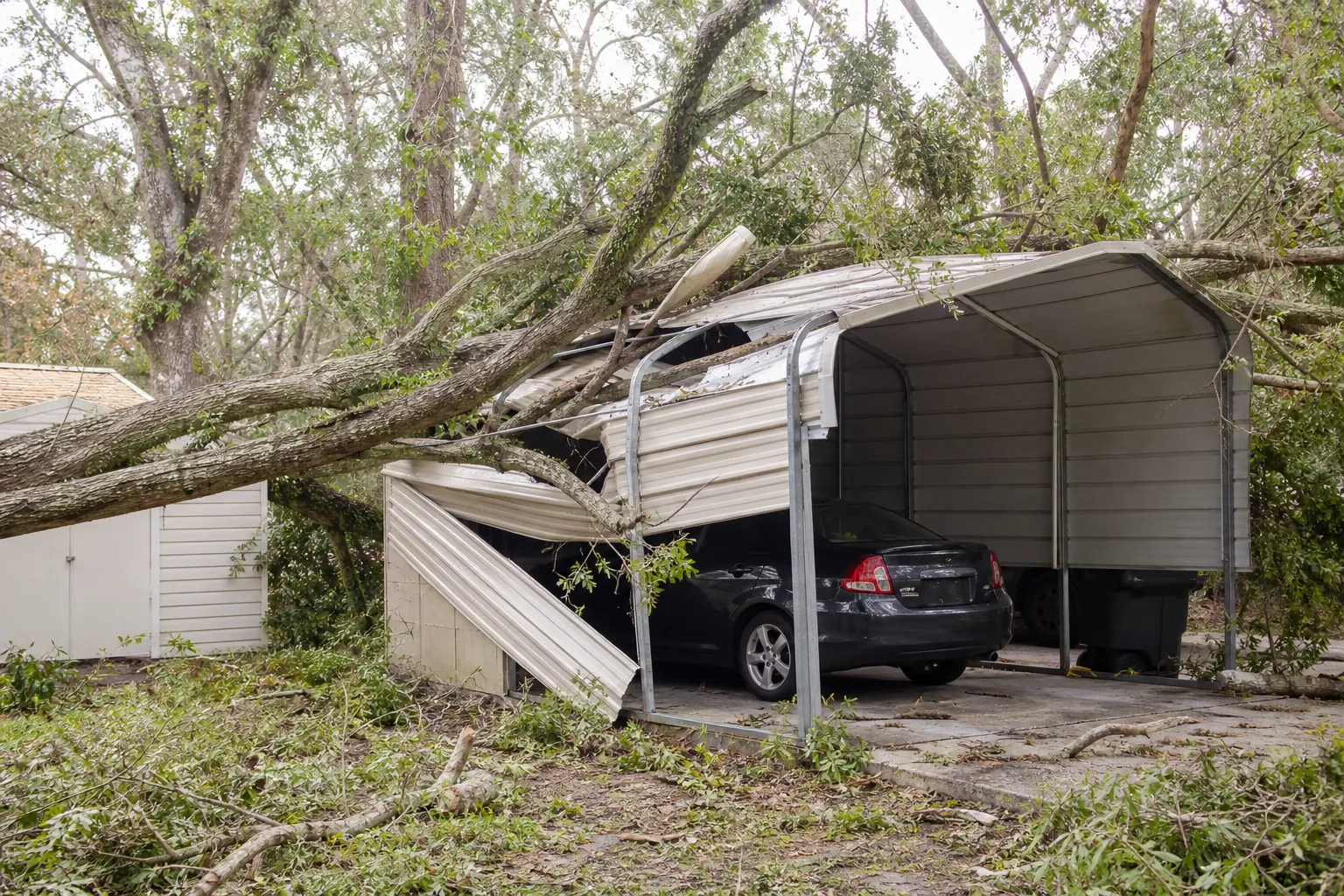
If hurricane limbs are on your shed or carport in Pensacola, keep people away from the area. Do not try to move the wood. OSHA lists falling limbs, unstable trees, and rolling or sliding limbs as storm cleanup hazards. It says people who are not needed for the work should stay out of work and drop areas. Read OSHA’s storm tree safety guidance. This guide supports our Pensacola hurricane tree cleanup resource. It explains how to note what you see without treating it as a diagnosis.
Written by Tim Francis, who is responsible for this article’s content and editorial presentation.
What Should You Do About a Limb on a Shed or Carport?
Focus on people and information, not debris. OSHA says people who are not needed for the work should stay out of work and drop areas. See OSHA’s guidance. Our tree removal service overview and contact information can help with a later question. They do not confirm that service is available in Pensacola.
A limb across a shed roof may be the first thing you see. A branch caught against a carport may be harder to spot in a cluttered area. Describe only what you can see from a distance. Do not turn what you see into a claim about what holds the limb up or what should happen next.
Your household note can be simple: “A large limb appears to rest across the shed roof.” This names the object and its location. It does not say that the roof holds the limb safely, that the limb has stopped moving, or that the structure is safe.
- Give the structure a clear name, such as the backyard shed or driveway carport.
- Note whether you see one limb or several. Do not try to measure them.
- Use “appears” if you cannot clearly see where the limb touches.
- Keep questions in a separate list. Do not add guesses to your note.
You do not need a polished report. A few plain sentences are easier to share and update than a long account that mixes what you see with guesses. Mark details you do not know as unknown.
What Can You Learn From Looking at the Debris?
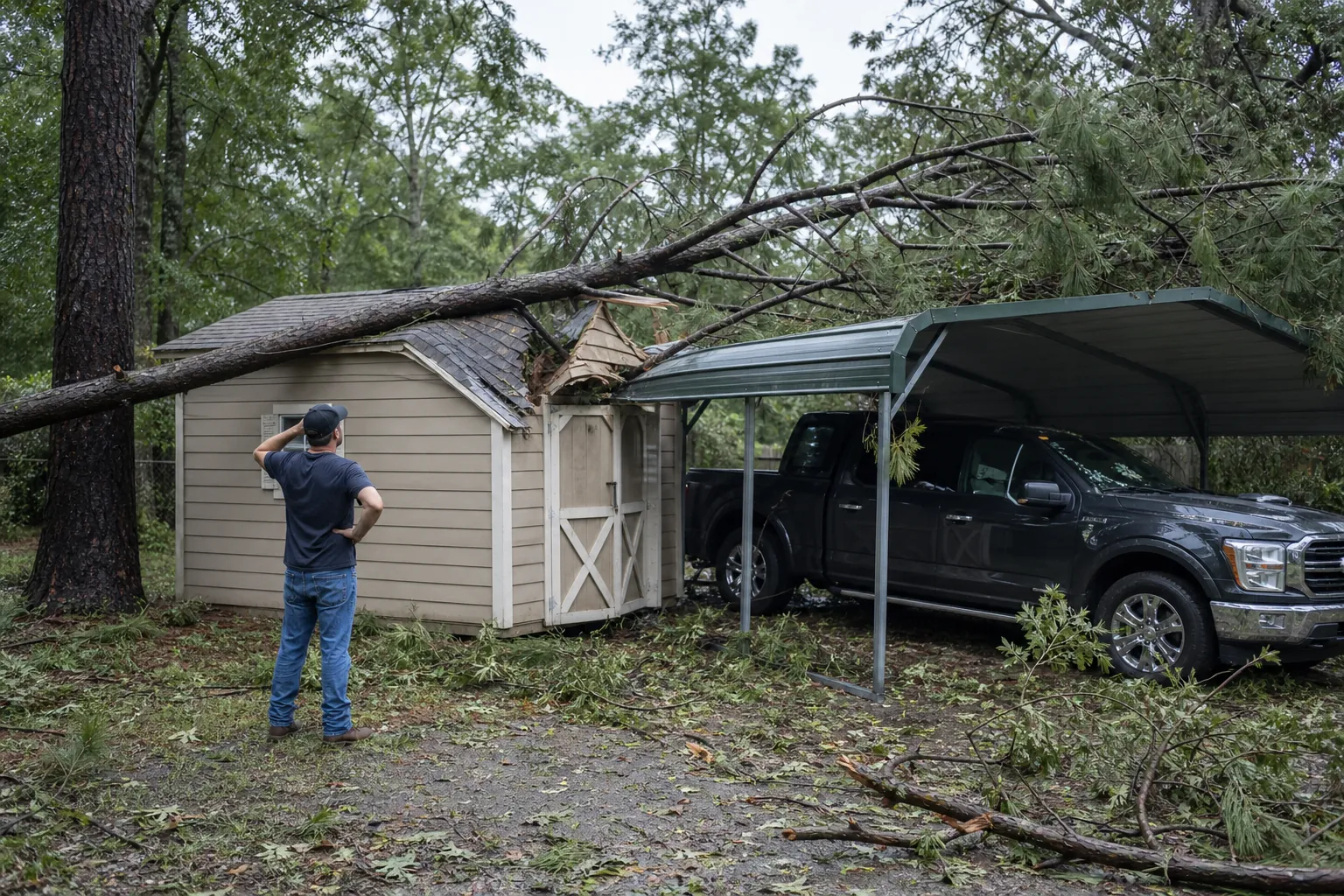
You can note what you see, but it does not give a diagnosis or prove that a tree is safe. The tree trimming service overview gives general information about the service. The Florida Foliage company background explains the business. Neither page tells you the condition of your shed, carport, or tree.
Sort your notes into two groups: what you see and what you still need to ask. “Branches cover part of the carport roof” is something you see. “Is anything else holding this limb?” is a question. This simple split keeps a household note from sounding like a technical finding.
Visible storm debris does not show you everything about the area. OSHA lists unstable trees and tensioned tree material as hazards in storm-damaged tree work. See OSHA’s hazard information. Do not use a neat-looking pile or a branch that seems still as an answer to a safety question.
- Describe what you see instead of naming a possible failure.
- Note which parts of the area you cannot see from where you are.
- Do not use words like “secure” or “stable” in a note that only records what you see.
- Mark details you are not sure about as questions for later.
If you already have a photo, it can help show which structure you mean. Do not use it as proof that a tree is safe. A caption such as “shed roof, viewed from the house” describes the photo without judging the tree or building.
You do not need to fill in every blank. “I cannot see that part” is a useful, honest note.
Which Storm Hazards Matter Around These Structures?
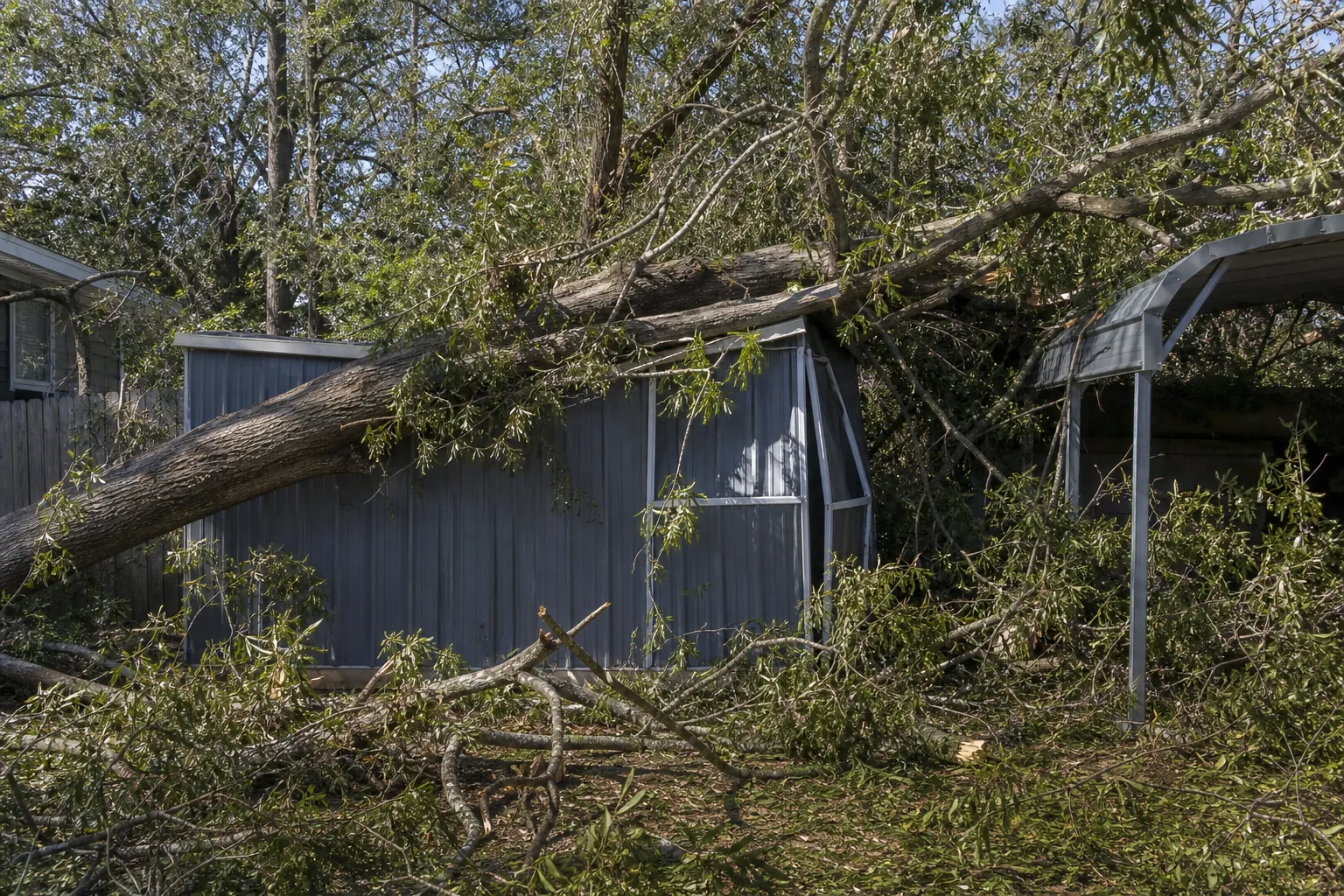
The guidance provided lists falling limbs, unstable trees, electrical contact, and moving tree material as key concerns. OSHA lists these storm tree hazards. Read our tree removal page for service details. Use the inquiry page to ask questions. Do not assume service is available in your area or that you will get a reply by a certain time.
A shed or carport may draw your attention to the roof and away from other parts of the area. You can name the structure in your note without focusing only on the roof. Note tree debris and any visible wires separately. Do not describe them as one confirmed problem.
OSHA says fallen electrical wires can send power through trees and fences. Avoid direct or indirect contact. Read OSHA’s electrical hazard guidance. A note about a wire does not tell you whether it has power.
OSHA also lists tensioned tree material and rolling or sliding limbs as hazards. Read the storm debris hazard list. This article does not tell you how to move, separate, or work on that material.
- Note visible wires separately. Do not guess what they are for.
- Describe where a limb seems to rest. Do not guess what holds its weight.
- Write down questions about the tree as well as the structure.
- Use the source guidance for hazard facts, not guesses about what is happening.
A short note can keep these details clear. For example: “Limb visible over carport; wire visible nearby; contact between them unknown.” This shows what you do not know.
Keep the Household Message Clear
The company information page explains Florida Foliage’s background. The tree trimming overview covers a different service. For your household, keep the main message simple: OSHA says people who are not needed for the work should stay out of work and drop areas. See the OSHA instruction.
Use one name for the affected place. If one person calls it the rear shed and another calls it the garden building, write both names together once. This is a way to organize your notes, not a technical review of the property.
A shared note can show which details are new and which are older. Add the date to each entry. Keep the earlier version if someone later reports a different view. Do not settle a disagreement by choosing the description that sounds more reassuring.
- Use the same name for the structure in household messages and any later question.
- Keep notes together instead of spreading them across several conversations.
- Write down who made each note so you know who to ask about it.
- Mark copied information as copied, not as something you saw yourself.
You do not need to send everyone a long explanation. A short message can say which structure is involved, that limbs are there, and that your household is not treating appearance as a safety check.
If someone asks whether the area looks “fine now,” keep what you see separate from a safety finding. You can say: “The visible arrangement looks unchanged in the existing view, but that does not show that the tree is safe.” Agreement among household members does not make it a technical finding.
Organize a Useful Storm Debris Note
Use the Florida Foliage contact page to ask a service question. The tree removal overview can explain the terms. Before you ask, make a short, clear note. It can help you describe the situation without suggesting that you have assessed it.
This list is a way to organize household notes. It is not a set of steps for checking, reaching, or clearing the area. Use information you already have. Leave details blank if you do not know them. Do not seek a closer view just to fill in the list.
- Name the location as Pensacola, FL, and clearly name the shed or carport.
- Write one sentence about the limbs you can see from where you are.
- List visible wires or other concerns on their own. Do not decide what they mean.
- Write down what you cannot see or do not know as questions.
- Choose what you want to ask before making a service inquiry.
Here is one example: “Backyard shed in Pensacola, FL. A limb appears to cross the roof. I cannot see the far end from where I am. I do not know its condition. Is this the type of situation your business discusses, and do you serve this location?”
- Keep your description factual, not dramatic.
- Remove repeated details so the main question is easy to find.
- Ask about service availability separately from what you can see.
- Keep the original words of an uncertain note. Do not turn it into a firm claim.
This format makes it easier to get a clear answer. It also avoids suggesting that a website page or household note can tell you the tree’s condition.
Do Not Overlook the Building Guidance
The tree trimming page and tree removal page cover different tree services. They do not say whether a building is safe to enter. The National Weather Service says to walk with care around the outside of your home to check for loose power lines, gas leaks, and structural damage. Read its after-hurricane guidance.
The National Weather Service also says to stay out of a building if you smell gas, if floodwaters remain around it, or if authorities have not said it is safe. See the building entry guidance. These are separate from a household note about limbs on a roof.
You can make separate notes about tree debris and building concerns for a shed or carport. Do not let a detailed note about branches stand in for an answer about the building. This article does not assess buildings.
- Keep your note about tree debris separate from any note about the building.
- Copy the weather guidance you need into your household notes, with its source link.
- Mark the building’s condition as unknown if you do not have an answer.
- Do not use a tree service page as advice about entering a storm-hit building.
If your household has a portable generator, the National Weather Service says never to use it inside your home or garage. Read the generator warning. Keep this warning as its own item, not buried in a note about debris.
Clear groups make notes more useful: tree details, building concerns, and household questions. Keep each one brief.
Make a Neutral Contact Step
The Florida Foliage background page and contact page can help you learn who you are contacting. Florida Foliage is based in Daytona Beach. Owner Clinton Funk has decades of hands-on tree care experience. This article does not confirm service in Pensacola or promise a visit or reply time.
You can call (386) 481-7913 to ask if the business serves your location and if your question fits its services. Start by giving Pensacola, FL, as the location. Briefly describe the shed or carport issue. Keep visible details separate from things you do not know.
- Ask about location and service type before assuming either one.
- Use your short note about what you see instead of offering a diagnosis.
- Say that an existing photo shows only what is in view. It does not prove the tree is safe.
- Keep questions you still need answered in your notes after the call.
For more information, return to the Pensacola hurricane tree cleanup guide. The aim of this post is simple: clear notes about what you see, storm safety information from sources, and a neutral way to ask about service.
Frequently Asked Questions
Does a limb resting on a shed roof mean it is stable?
No. Seeing a limb at rest does not show that the tree is safe. OSHA lists unstable trees, tensioned material, and rolling or sliding limbs as storm tree hazards. See OSHA’s hazard guidance. Note where the limb is. Do not call it stable or secure.
What if a wire is visible beside the carport debris?
A visible wire does not tell you if it has power. OSHA says downed electrical wires can send power through trees and fences. It tells people to avoid direct and indirect contact. Read OSHA’s electrical warning. Note the wire on its own. Do not guess about its condition.
Can I use an existing photo to explain the situation?
Yes. An existing photo can help name the structure and show the view you mean. It cannot prove that a tree is safe. Use a clear caption, such as “limbs visible over the backyard shed.” Note what the photo does not show. Do not fill in gaps with guesses.
When does the weather guidance say to stay out of a building?
The National Weather Service says to stay out if you smell gas, if floodwaters remain around the building, or if authorities have not said it is safe. Read the after-hurricane guidance. A note about branches on a roof does not answer these separate questions or show the building’s condition.
How can I ask Florida Foliage about this situation?
Call (386) 481-7913 or use the contact page to ask if Florida Foliage serves your location and if the situation fits its services. The business is based in Daytona Beach. State Pensacola, FL, and describe only what you can see. Do not assume service is available or that you will get a reply by a certain time.
Call (386) 481-7913 to talk through next steps.