Reviewer and contributor: Clinton Funk, Owner, Florida Foliage. Clinton has decades of hands-on tree care experience.
Tim Francis is responsible for the research and editorial quality of this article. AI tools assisted with drafting and the editorial images. This general information does not assess a particular tree.
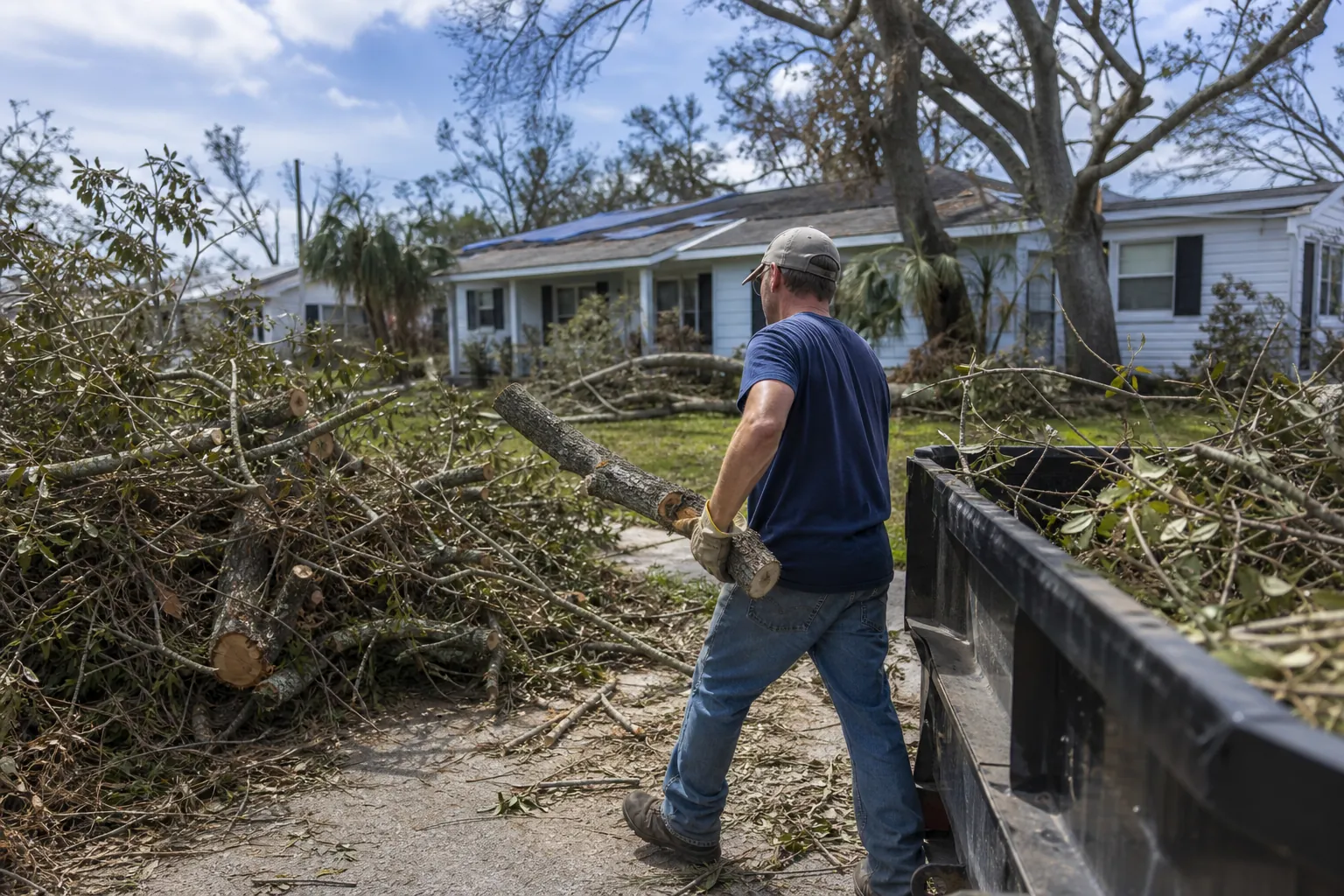
Hurricane Storm Debris Cleanup in Pensacola, FL calls for clear notes and a careful household plan.
After a hurricane in Pensacola, separate household planning from tree and equipment work. Start with a written note of what you noticed, what you do not know, and what you want to ask. Storm-damaged tree work involves falling-limb and unstable-tree hazards, according to OSHA’s tree-work guidance. This guide helps you organize details without turning debris you see into a diagnosis or a do-it-yourself work plan.
Written by Tim Francis, who is responsible for the content and editorial presentation.
What Comes First For Hurricane Storm Debris Cleanup?
Begin by organizing what you already know, rather than choosing a removal method. The tree removal service overview explains removal services, while the contact page for general inquiries lets you ask about your situation.
Start with a short, clear note: where it is, what you saw, and what you still want to ask. Use everyday words. “A branch is lying near the side fence” is an observation. “The tree is stable” is a conclusion that the observation does not show.
Keep the planning task modest. A household note can help everyone use the same words. It should not give instructions for handling debris. Use it to prepare for a talk. Do not use it to decide how tree work should happen.
- Write down things you have already noticed. Do not make a new inspection a requirement.
- Use familiar place names, such as front yard or rear corner. This makes your notes easy to follow.
- List open questions separately. Do not fill gaps with guesses.
Which Parts of Cleanup Are Not Ordinary Yard Planning?
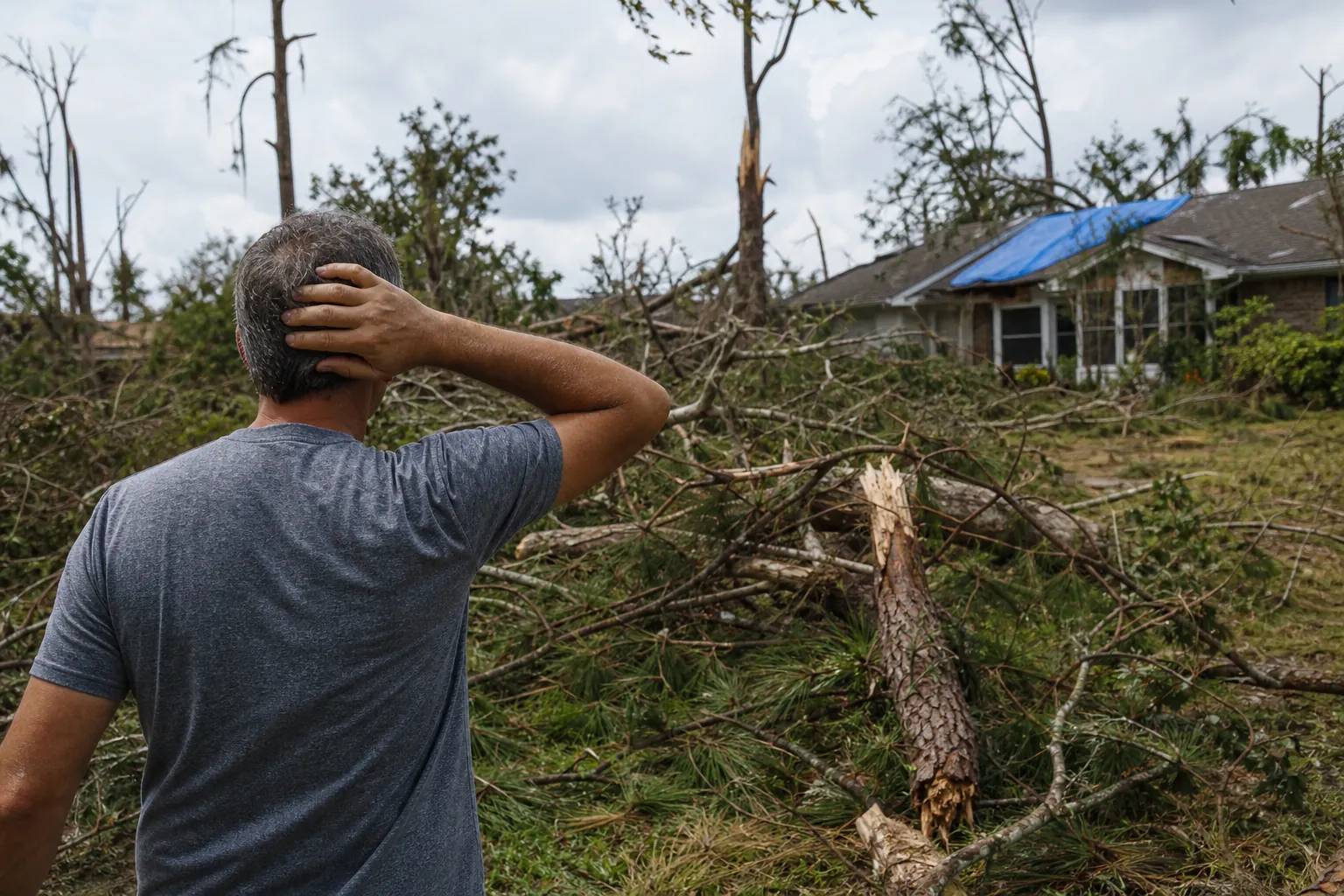
Storm-damaged trees and debris equipment bring hazards. Making lists and sorting household details are different tasks. Read the tree trimming service overview for general service details and the Florida Foliage company background for company details. Do not use them as instructions for damaged trees or equipment.
Falling limbs and unstable trees are hazards in storm-damaged tree work. Tensioned tree material can be dangerous. Limbs can roll or slide. These are identified in OSHA’s hurricane tree-work guidance. Do not turn these hazards into household tasks.
Keep people who are not needed out of tree-work and drop areas, as directed by OSHA’s tree-work guidance. Keep people who are not needed away from debris equipment, according to OSHA’s debris collection guidance. Do not assume household members should help just because they want to.
- Label tree-work questions separately from household organizing tasks.
- Do not use the length of your debris list to decide which work is simple.
- Keep equipment questions out of a casual yard chore checklist.
How Should You Record Visible Damage Without Diagnosing It?
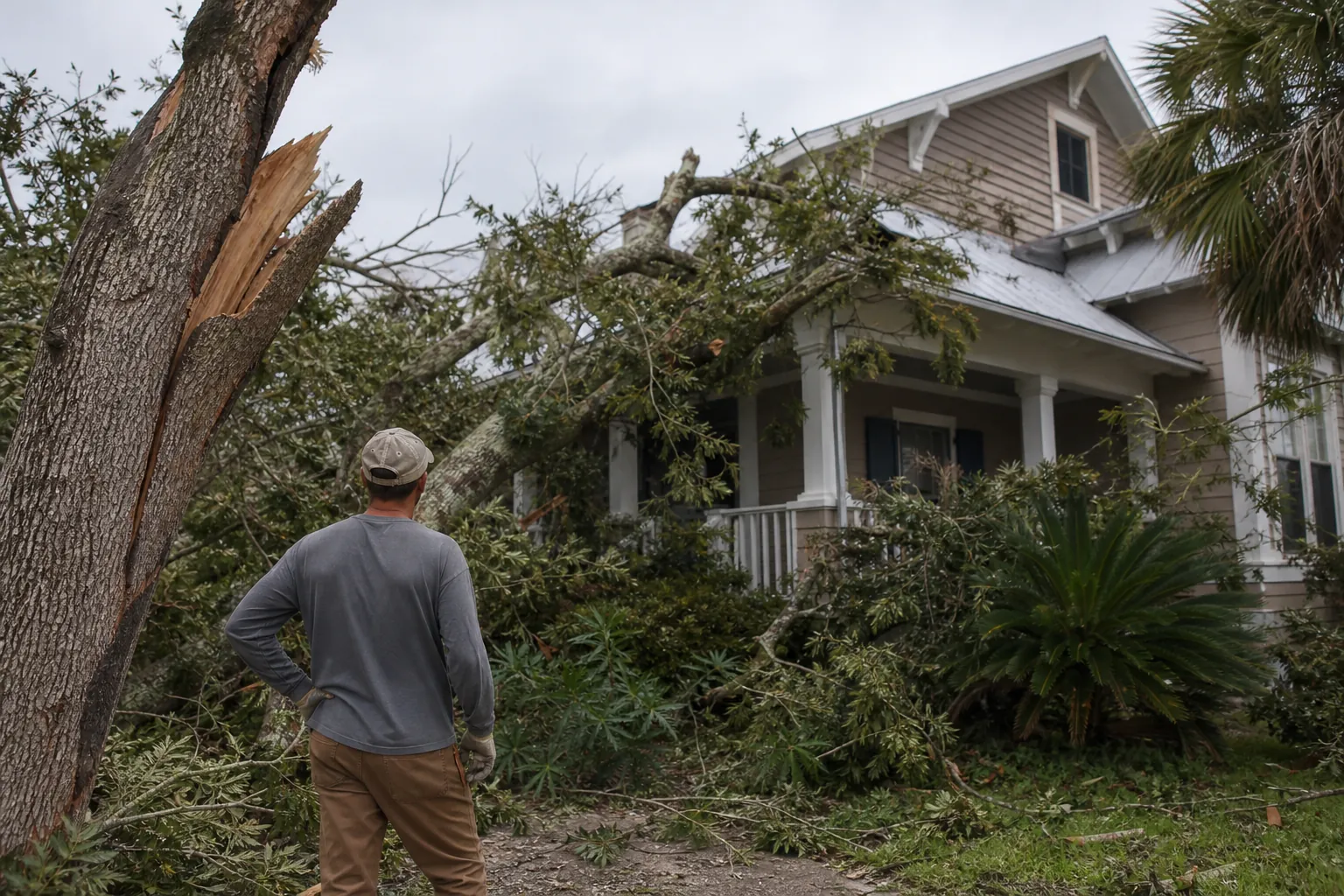
Describe what is visible in ordinary language, and leave the meaning of those things you noticed unresolved. The removal overview for service questions can help frame one kind of question, while the trimming overview for general context explains another service category. Written notes do not diagnose a tree.
For example, “I noticed a split in the trunk” records an appearance. “The tree must be removed” adds a conclusion. Likewise, “A limb rests against the fence” is different from “The fence can support the limb.” This difference helps you write an accurate message.
Do not use photographs as proof that a tree is safe. If you already have images, use them to show which tree or area you mean. A picture does not replace your question. Do not use it to decide on work.
Your notes should also show what is uncertain. If you do not know whether two branches belong to one tree, say so. If you could not see everything, say so. Do not present your notes as complete.
- Use phrases like “I noticed” or “I cannot tell” when accurate.
- Record when you noticed something. Do not guess when the damage happened.
- Keep your original words. Do not make them sound more technical.
Keep Electrical and Chemical Concerns Separate
Keep possible electrical or chemical concerns separate from general branch observations. The general contact form can organize a question, and the company details page explains who Florida Foliage is. These concerns need separate attention.
Downed electrical conductors can energize trees and fences. Avoid direct and indirect contact, as stated in OSHA’s hurricane tree-work guidance. Avoid touching a downed conductor. Trees and fences can also carry electricity.
Stay clear of leaking hazardous chemical containers. The source says hazardous-material response personnel should assess them, according to OSHA’s debris collection guidance. A leaking container is not ordinary yard debris, even if it is among leaves or branches.
Keep these concerns in their own category in your notes. This keeps a general tree question from sounding like a request to handle every concern. Say what you noticed and what you do not know. Do not guess the contents or electrical status.
- Keep electrical concerns distinct from questions about tree appearance.
- Record an unknown container as unknown instead of guessing its contents.
- Do not turn a general service question into a household plan for handling either concern.
Build a Household Planning List, Not a Work Plan
A shared list can organize decisions. It should not explain how to move or process debris. Use the trimming service overview to label service questions and the question page to prepare a clear message. The list below helps organize details. It is not a cleanup sequence.
A useful list separates details from actions. A location label, an existing observation, and an open question belong in a planning document. Do not add instructions for damaged trees or equipment. Keep the note clear. Another household member should understand it without a long explanation.
- Title one note with your city and the date you wrote it.
- Use familiar area names to keep things you noticed separate.
- Add what you already noticed. Use plain words.
- Add a clear heading for your pending tree service questions.
- Choose one household contact to keep the question and reply together.
- Update the note when details change. Keep earlier questions that still need answers.
This can reduce repeated messages and show what is missing. It cannot show a tree’s condition or decide what work is needed.
Keep each entry short and easy to scan. A clear note helps a household member understand what you saw and what you still need to ask. It also helps you avoid mixing a fact with a guess. If something changes, add the date and describe the change in plain words. Keep unanswered questions visible until you have a clear reply.
- Keep one current note. Avoid several lists that conflict.
- Use short entries for facts, questions, and household preferences.
- Remove wording that makes a guess sound like a fact.
Describe Yard Features Without Planning Debris Placement
Your notes can name yard features without choosing where debris should go. The tree removal details page explains the service, while the contact options page helps you prepare questions. They do not plan debris movement or equipment placement at your property.
Debris may hide meters and fire hydrants, according to OSHA’s debris collection guidance. Keep this fact in mind when noting debris concerns. Do not move a pile to see what may be underneath.
You can list familiar features you already know. Keep that list separate from judgments about access or work. A note about a fence, garden, or side yard explains the setting.
If your existing details do not show a feature, mark it as not confirmed. An old yard description may not show current conditions. Show what you do not know. Do not imply that someone checked every part of the property.
- Name features you already know. Do not add a new survey to this checklist.
- Keep place descriptions separate from ideas about where debris should go.
- Mark uncertain details clearly. Do not repeat them later as facts.
Prepare a Neutral question to Florida Foliage
Ask a clear question. First ask whether Florida Foliage can help with it. The company background page provides business context, and the contact page provides a question route. Florida Foliage is based in Daytona Beach.
Clinton Funk owns the company and has decades of hands-on tree care experience. Tim Francis prepared this page.
Call (386) 481-7913 to ask about current service options for your Pensacola property.
You could ask: “My property is in Pensacola. I have questions about a storm-damaged tree. Can you tell me whether Florida Foliage can address a question for this location?” Then share what you noticed and your main question.
- State that your property is in Pensacola when you make contact.
- Ask what service options are available before planning next steps.
- Keep household preferences separate from conclusions about tree work.
What Should Stay Unresolved Until You Have More details?
Leave tree condition and work choices undecided when details are limited. The removal service overview and trimming service overview explain general services. They cannot answer questions about one storm-damaged tree. A note can be useful even when questions remain.
You do not need to settle every question to write a useful question. An honest unknown is better than a guess. Separate your wishes from what you know: wanting a clearer view does not decide what should happen to a tree.
You can still organize household details. You can collect messages in one place, decide who will communicate, and make a concise question list. These are household choices, not decisions about damaged material.
- Ask whether removal or trimming is an option. Do not assume either is needed.
- A photo, a short description, or a household vote cannot prove a tree is safe.
- Change wording that sounds certain when details are missing.
Frequently Asked Questions
These answers separate household planning from hazardous work and conclusions about one property. The Florida Foliage background helps clarify company context, while the general question page offers a neutral way to ask questions.
Can a photograph show that my tree is safe?
No. Do not use a photograph as proof that a tree is safe. An existing image can identify a tree or show what you noticed. Your notes should separate appearance from diagnosis. Describe what the image shows and what you do not know, without using it to justify a tree-work decision.
Why should tree concerns be separate from household chores?
Storm-damaged tree work includes falling-limb and unstable-tree hazards, according to OSHA’s tree-work guidance. A household list should separate tree-work questions from messages and things you noticed. Calling it a chore does not remove the hazards or show how work should happen.
What if debris is near a fence and a downed conductor?
Avoid direct and indirect contact. Downed electrical conductors can energize trees and fences, according to OSHA’s hurricane tree-work guidance. Record this concern separately. Do not call it only branch cleanup. A general tree service question cannot tell you whether the area is electrically safe.
Should leaking containers go on my ordinary debris list?
Keep them separate from ordinary debris planning. Stay clear of leaking hazardous chemical containers; review by hazardous-material response personnel is needed, according to OSHA’s debris collection guidance. Record only what you know. Mark unknown contents as unknown. Do not turn the note into a household task.
Does this article mean Florida Foliage serves Pensacola?
No. The company is based in Daytona Beach. Call the number above to ask about service options for your Pensacola property.
Call (386) 481-7913 to talk through next steps.