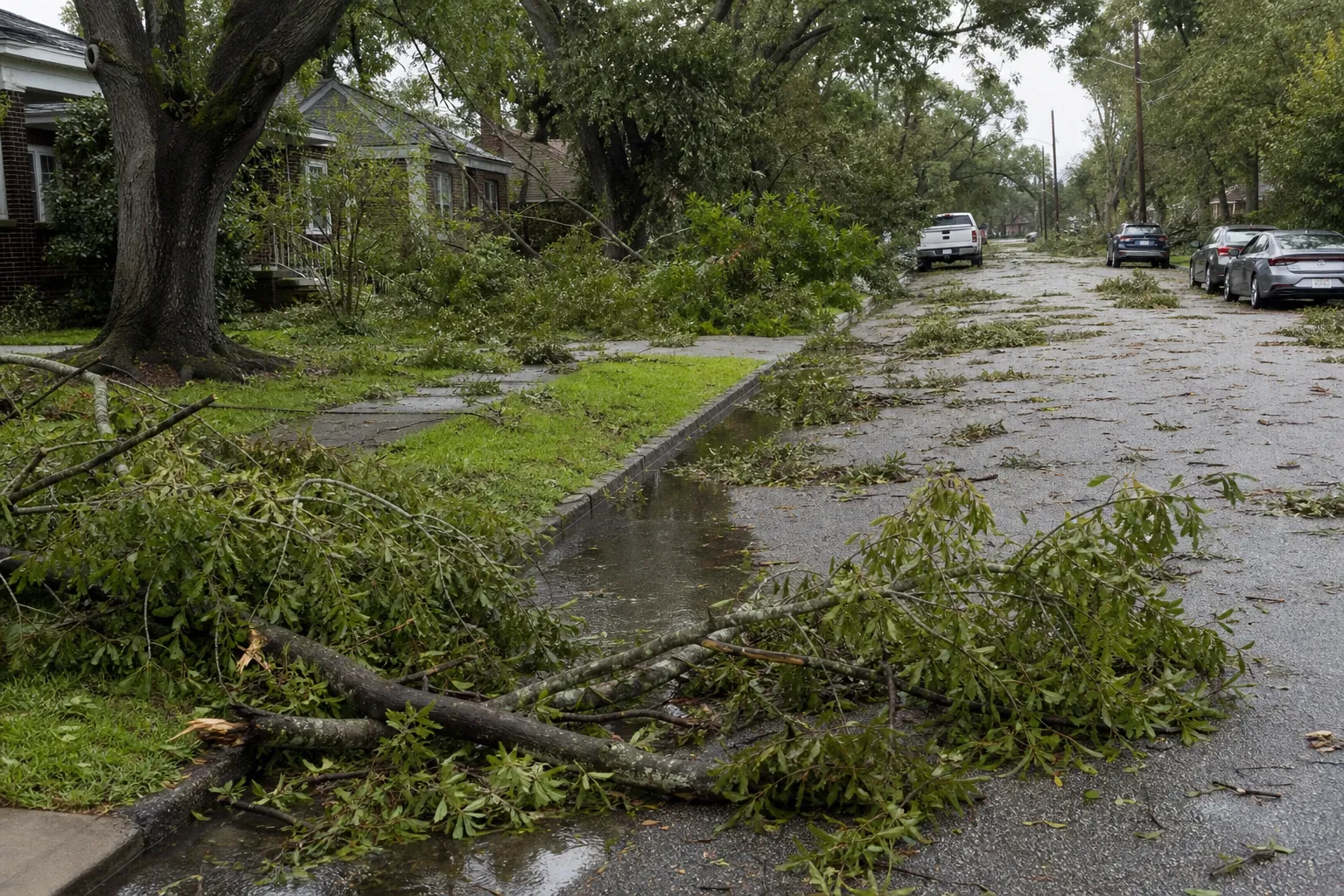
When hurricane limbs block a sidewalk or street in Pensacola, describe what you can see. Do not guess about the tree’s condition. Use an official reporting channel for the affected place. Keep household route notes separate from any discussion of tree work. This guide supports our Pensacola hurricane tree cleanup overview. It offers ways to record what you see, describe an obstruction, and understand storm debris hazards listed by OSHA.
By Tim Francis, responsible for content and editorial presentation. Florida Foliage is headquartered in Daytona Beach. Clinton Funk is the owner and has decades of hands-on tree care experience. This article does not establish service availability in Pensacola or describe a local office.
What Should You Note When a Limb Blocks a Sidewalk?
Note the location and visible obstruction. Say whether it affects a sidewalk, street, or both. Keep your notes factual. Do not label the tree safe or unsafe. Florida Foliage’s tree removal service information and tree trimming service overview explain separate service topics. They do not describe the condition of a particular tree.
Make your observation clear enough for someone else to understand the location. Include the street name, nearby intersection, and affected walking area. Describe only what you can see from where you are.
For example, “A large limb lies across the sidewalk near the intersection” is an observation. “The whole tree will fall” is a diagnosis or prediction. A limb’s appearance does not give you enough information to make that second statement.
OSHA lists falling limbs and unstable trees as hazards in storm-damaged tree work. This warning helps explain why a household note should not become a do-it-yourself tree assessment. OSHA: storm-damaged tree work hazards.
- Write the street name and nearby intersection in the same note as the obstruction.
- Say whether the limb appears across the sidewalk, along its edge, or in the street.
- Separate what you saw from what someone else told you.
- Use plain words. Do not guess the tree species, level of damage, or work needed.
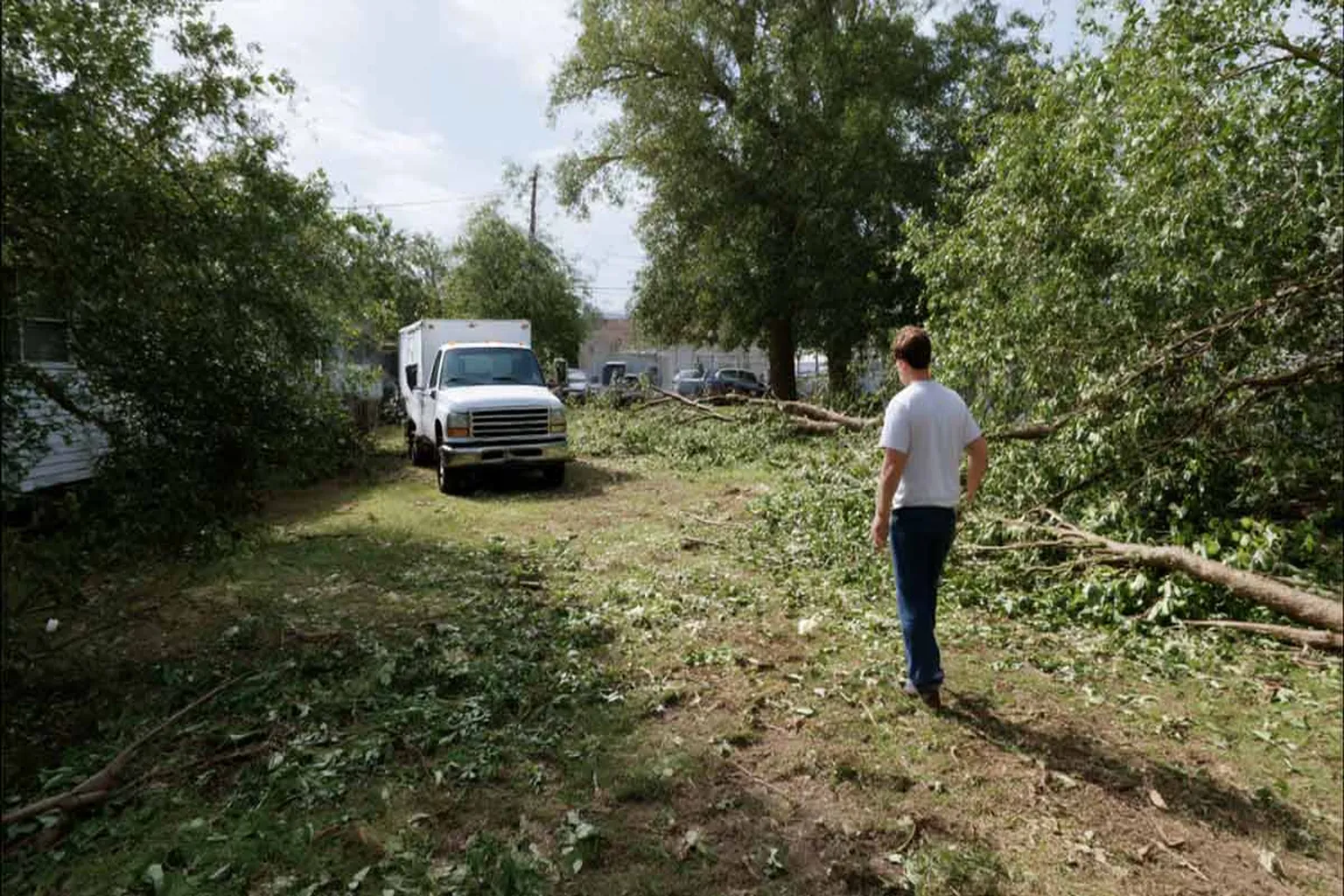
How Should You Describe Limbs Near a Street?
Describe which part of the street is affected and what you can see. Do not decide that a route is safe to drive. Use Florida Foliage’s contact information for a separate business inquiry. Read its company background to learn who you are contacting. Neither page is an official street reporting channel.
A street report and a tree service inquiry have different purposes. A street report describes an obstruction in a specific place. A business inquiry asks about a company and its services. Keep the messages separate to make your records easier to follow.
If you cannot see the whole street, say so. “A limb is visible along the curb; I cannot see the full roadway” is more useful than a broad claim that the street is open. Do not describe a space that looks clear as a confirmed travel route.
This guide does not assess whether a vehicle can pass a limb or whether a sidewalk route can be used. It helps you describe the scene without turning a partial view into travel advice. Household plans can refer to current official information instead of your own informal route rating.
- Say whether your note concerns a curb, travel lane, intersection, or sidewalk.
- Record when you made the observation so an old note is not mistaken for a current update.
- State the limits of your view instead of filling gaps with guesses.
- Keep a street obstruction message separate from questions about tree services.
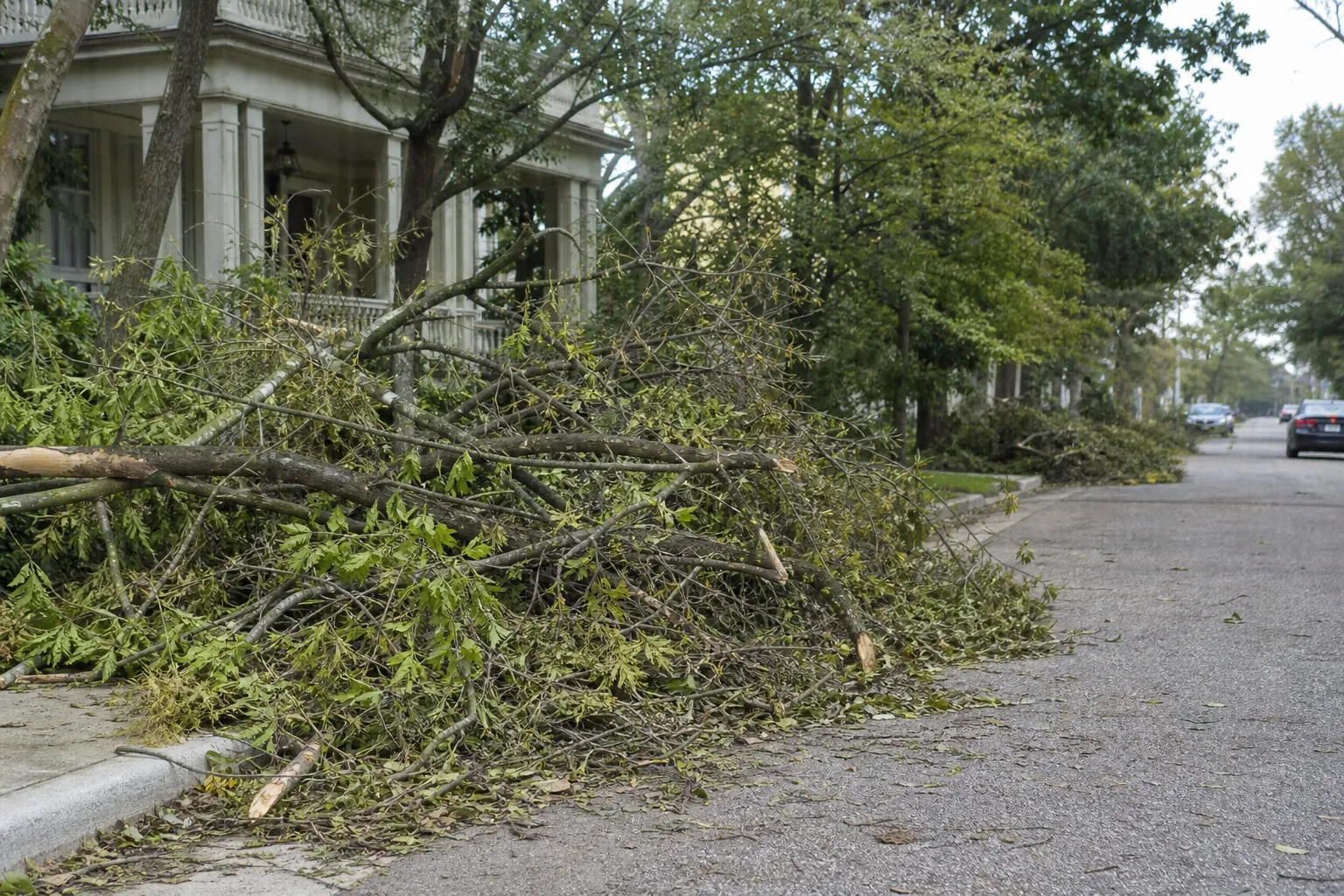
Which Storm Debris Hazards Does OSHA Identify?
OSHA lists falling limbs, unstable trees, electrical contact, tensioned material, and rolling or sliding limbs as tree-work hazards. Read OSHA’s tree-work hazard guidance. Florida Foliage’s tree removal overview and tree trimming information explain services. They do not diagnose roadside debris.
Downed electrical conductors can energize trees and fences. Avoid direct and indirect contact. A household report can describe a visible wire without deciding whether it is energized. OSHA: electrical hazards involving trees and fences.
OSHA also lists tensioned tree material and limbs that can roll or slide as hazards. You might write, “A limb rests against another limb.” That is still only an observation. It does not show how the material will move. OSHA: tensioned material and moving limbs.
Do not turn these warnings into a homeowner checklist for testing a tree. The guidance describes hazards. It does not explain how to declare a storm-damaged tree safe. Photos, written notes, and a view from a window all have limits.
- Describe visible wires without stating their electrical status.
- Do not call supported or tangled limbs stable based on appearance alone.
- Record the source of a warning separately from your description of the scene.
- Use the OSHA links for the hazards they name. Do not add unsupported danger rules.
How Can You Report an Obstruction Through Official Channels?
Use the official reporting channel named by the public agency for the affected sidewalk or street. Give a brief description that includes the location. Florida Foliage’s business contact page and ownership and company information can help with company questions. They do not replace an official report about a street obstruction.
Start with the agency’s own website. Do not assume an old neighborhood post has current instructions. Look for the agency’s published way to report storm debris or street obstructions. This article does not name a Pensacola reporting number, form, or department because none is supplied in the source material.
Follow the fields in the official channel. If it asks for a location and description, provide those details without adding a diagnosis. If you get a reference number or confirmation message, keep it with your original note. Later updates can then refer to the same report.
Use this numbered list to keep household records. It is not a set of instructions for approaching debris:
- Open one note for the location. Label it with the street or intersection.
- Add the date, time, and a short description of what you observed.
- Find the reporting method on the relevant agency’s official website.
- Copy your factual description into the requested fields.
- Save any confirmation and record later updates separately.
- Say when another household member gave you the description, rather than you seeing it yourself.
- Keep the original wording when you add an update.
- Keep business messages in a separate thread from official reporting records.
Keep Household Walking and Driving Notes Clear
For household planning, separate an observed obstruction from an official route update. Florida Foliage’s tree trimming service page explains a service category. The company inquiry page is for business questions. Neither confirms whether a Pensacola sidewalk or street is open.
A shared household note can help when several people discuss the same place. Give it a simple label, such as “Sidewalk near the corner.” Add the newest observation below the earlier one. This is an organizing suggestion, not a technical assessment.
Avoid short notes that sound more certain than the facts. “Looks clear from our window” and “official notice says open” mean different things. Keep that difference clear when you discuss school trips, errands, or a usual walking route.
You can also keep planned trips in a separate list. This helps prevent a to-do item from sounding like advice to pass the obstruction. The list can show the destination, who is checking current information, and whether the plan is still undecided.
- Label secondhand information so no one mistakes it for a direct observation.
- Put the date beside each update instead of overwriting older notes.
- Write “not confirmed” when the route status is unknown.
- Keep household destinations separate from descriptions of storm debris.
Understand Work Areas and Mixed Debris
Cleanup activity brings issues beyond the visible limb. Florida Foliage’s tree removal service description and company background page provide context for a business discussion. The linked OSHA guidance is the source for the work-area and mixed-debris warnings below.
Keep nonessential people outside tree-work and drop areas. OSHA gives this advice for tree trimming and removal work. This guide does not set a distance or tell readers how to mark an area. OSHA: tree-work and drop areas.
Keep nonessential people away from debris machinery. A household note can record that machinery is present. Do not treat that as permission to enter the work area. OSHA: debris collection machinery.
Debris can hide meters and fire hydrants. Record only what you can see. Do not assume a pile contains nothing else. OSHA: concealed meters and fire hydrants.
Stay clear of leaking chemical containers. A specialist needs to assess them. Do not try to identify an unfamiliar container yourself. OSHA: leaking chemical containers.
- Separate “cleanup machinery is visible” from “the obstruction has been removed.”
- Describe a visible container without guessing what is inside.
- Keep notes about work activity separate from any statement about street status.
- Use the format requested by the official reporting channel for updates.
Use Photos and Written Notes as Observations
A photo can go with a description, but it does not prove a tree is safe. Florida Foliage’s tree trimming information and tree removal information describe service topics. They do not turn a homeowner’s photo into a diagnosis or show what work a particular tree needs.
If you already have images, sort them by location and date. A short caption can describe the visible sidewalk, street edge, or limb. Avoid captions such as “safe tree” or “ready to move.” An image cannot prove those things.
Keep useful written details with the image. Note whether it shows the whole obstruction or only part of it. If someone else took or sent the image, record that fact. Do not present it as your own current observation.
Changes between images may support a limited statement, such as “the visible pile appears smaller.” They do not show the condition of the remaining tree, the status of electrical conductors, or whether a street has officially reopened. Keep those questions separate.
- Use captions that name visible features instead of rating their condition.
- Keep the date and source of each image in your records.
- Describe what is missing when an image does not show the whole area.
- Submit images only in the format requested by the receiving channel.
A Neutral Florida Foliage Contact Step
If you want to ask about Florida Foliage’s services, use the contact page after reading the company background. Say that the location is Pensacola and ask whether the company can address your inquiry. Contact alone does not establish local availability, a visit, or a response schedule.
Florida Foliage’s headquarters is in Daytona Beach. You can call (386) 481-7913 with a brief description of your question. Keep this inquiry separate from an official street or sidewalk report.
For more context, return to the Pensacola hurricane tree cleanup guide. Use this article to make clear observations and records, not to decide how to handle damaged tree material.
- Give the location before discussing the service topic.
- Ask about availability without assuming a Pensacola presence.
- Keep any business reply with your business inquiry notes.
Frequently Asked Questions
These answers separate household observations from tree diagnosis, and business contact from official reporting. The Florida Foliage contact page is for company inquiries. The Florida Foliage background page explains the business. Neither confirms a street’s status or service availability in Pensacola.
Can I tell whether a damaged tree is safe from a photo?
No. A photo shows what was visible when it was taken. It does not prove that a tree is safe. Use it to describe visible features. Keep conclusions about the tree’s condition separate. OSHA lists falling-limb and unstable-tree hazards in storm-damaged tree work. OSHA tree-work guidance.
What should I include in a sidewalk obstruction report?
Include the street or intersection, when you saw the obstruction, and a plain description of the visible limb. Say if your view is partial. Follow the official channel’s requested format, and save any confirmation.
What if a wire appears near fallen limbs?
Describe the visible wire without deciding whether it is energized. OSHA says downed electrical conductors can energize trees and fences. It advises avoiding direct and indirect contact. Keep this warning separate from your own observations. A photo or casual view does not show the wire’s electrical status. OSHA electrical hazard guidance.
Does visible cleanup activity mean the street is open?
No. Seeing cleanup activity does not give an official update on street status. Keep the two things separate in household notes. OSHA says to keep nonessential people away from debris machinery. Use official information for the street’s status. Do not treat machinery activity as proof that work is complete. OSHA debris collection guidance.
Does contacting Florida Foliage confirm Pensacola availability?
No. Florida Foliage is headquartered in Daytona Beach. Contact does not confirm availability in Pensacola or a response schedule. Call (386) 481-7913, give the location, and ask whether the company can address your inquiry.
Call (386) 481-7913 to talk through next steps.