Reviewed by Clinton Funk
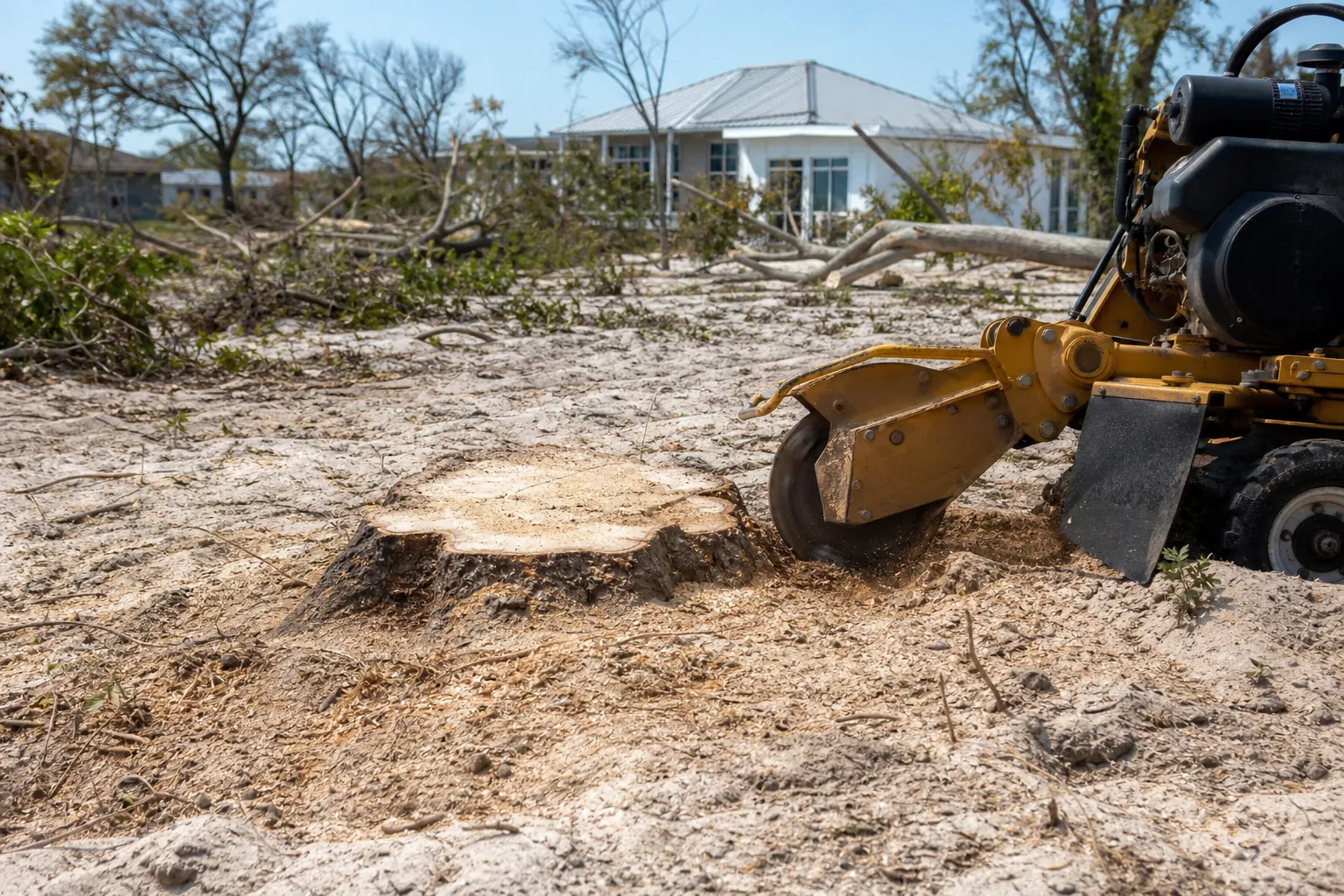
For hurricane stump grinding sand presents a special cleanup challenge. Loose soil can hide roots, wash into holes, and mix with chips. In Milton, FL, a sound plan starts with the whole tree site. It should address access, nearby trees, and the ground left behind.
Grinding is one part of storm cleanup. It doesn't replace tree removal or a close look at damaged trees. Before work starts, decide what the space needs to become. A lawn, planting bed, and clear access path each need a different finish.
This guide explains how to organize stump work in sandy yards. It covers fallen trees, exposed roots, grinding scope, and soil restoration. Florida Foliage is based in Daytona Beach. This information does not imply a Milton crew or local availability.
How does hurricane stump grinding work in sand?
Hurricane stump grinding breaks leftover stump wood into small chips below the chosen finish level. In sand, planning should include exposed roots, soil mixed with chips, and the final grade. The goal is a clear scope for both grinding and yard repair, rather than a bare stump measurement.
Grinding equipment removes wood within its operating reach. It does not remove the entire root system from the yard. Remaining roots may extend beyond the stump, including near pathways or beds. Ask which visible roots are included within the proposed work area.
Sand can move as wood is ground away. Chips may spread into nearby low spots or mix with loose soil. That mix can look like finished ground while still holding lots of wood. Ask how the work area will be left after cleanup.
Grinding depth should match the next use of the site. A lawn repair may call for a different finish than a new planting bed. A future tree needs a plan for space, roots, and soil. A ground stump alone does not make a ready planting hole.
Before any ground work, arrange to have buried utility routes marked. Share known sprinkler lines, private yard wiring, and drainage pipes as well. Don't assume a general utility mark identifies every private line. Keep the planned grinding area clear until these details are resolved.
- Mark each stump so the work scope matches the full storm cleanup area.
- Describe the planned use of each space before choosing the grinding finish.
- Identify exposed roots near paths, beds, drains, and other yard features.
- Ask which chips will remain and which material will leave the site.
- Include soil placement and final grading as separate parts of the cleanup plan.
Take photos before loose debris changes the view. Include a wider image of each stump and surrounding yard features. These photos help describe the work when you request an estimate. They aren't a substitute for an on-site tree inspection.
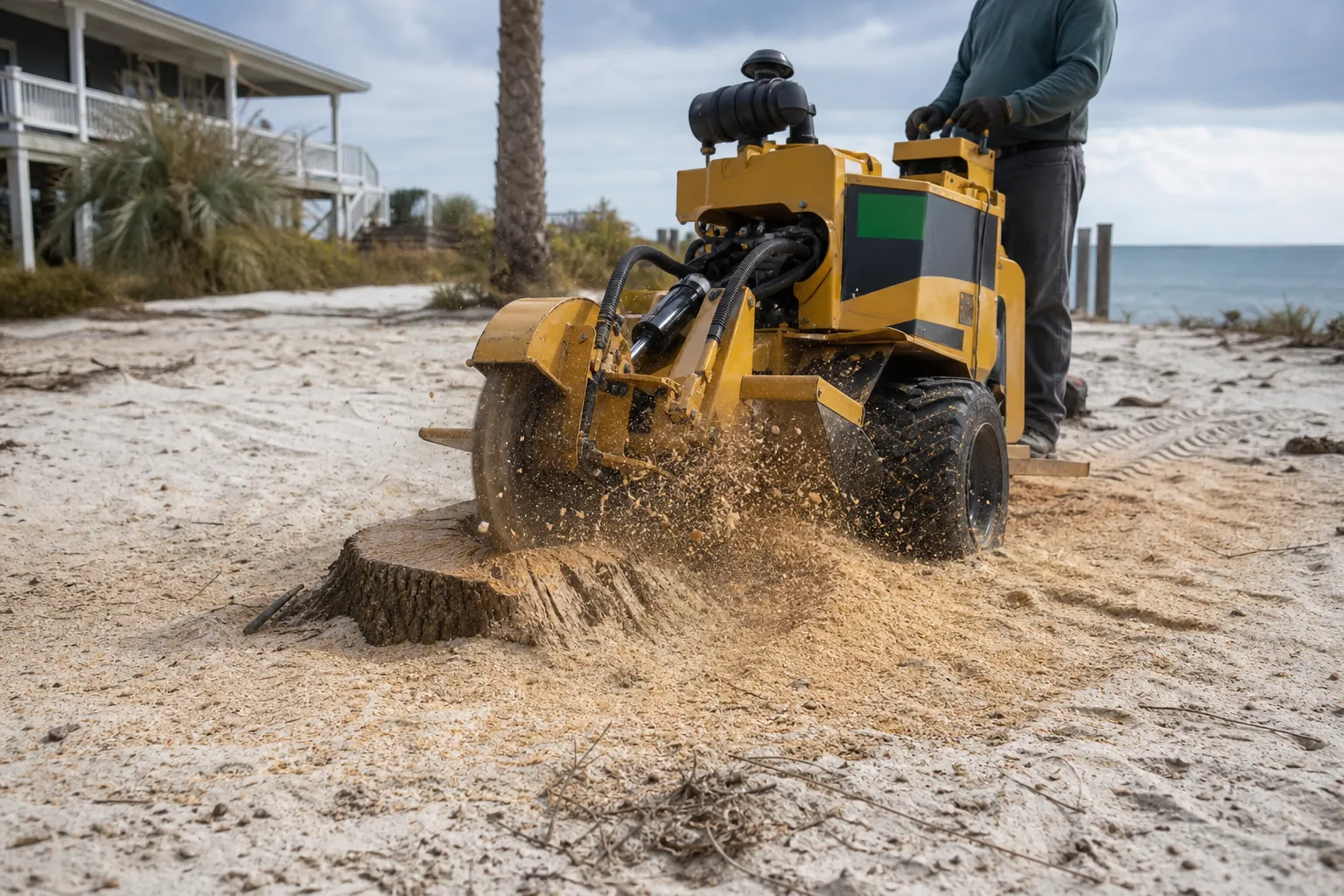
When should a hurricane-damaged stump wait?
A stump should wait when the surrounding site still has unresolved storm hazards. Downed wires, hanging limbs, standing water, and unstable trees take priority over grinding. Homeowners should assess from a safe location and avoid entering damaged areas to get better photos or measure exposed roots.
Ready.gov's hurricane guidance advises staying away from fallen power lines and reporting them. Do not move a branch resting on a wire. Keep other people and pets away from that area. Stump work can wait while the electrical hazard is addressed.
Standing water creates another reason to pause. The National Weather Service flood safety guide warns against walking or driving through floodwater. Don't cross water to inspect a stump or reach the backyard. Its depth and the condition beneath it may be unclear.
A tipped tree may leave a large upright root plate. That mass can include roots, soil, and buried debris. Do not treat it like a settled stump that only needs grinding. OSHA identifies unstable trees and root balls among tree-care hazards that require suitable work methods.
Leave hanging limbs and damaged trees to trained tree workers. OSHA's tree-care guidance describes struck-by and electrical hazards during tree work. Do not climb, cut, or tug at storm-damaged limbs yourself. Keep the stump discussion separate from any urgent tree hazard.
Once immediate hazards are addressed, review access and ground conditions. Sand at the surface may look dry while deeper soil stays wet. Ask the service provider to assess the route and work area. A calendar date alone cannot show that a yard is ready.
Milton storm cleanup may involve several steps across different days. Record what still needs attention rather than rushing to finish everything together. A clear sequence helps keep stump work from distracting from larger tree concerns.
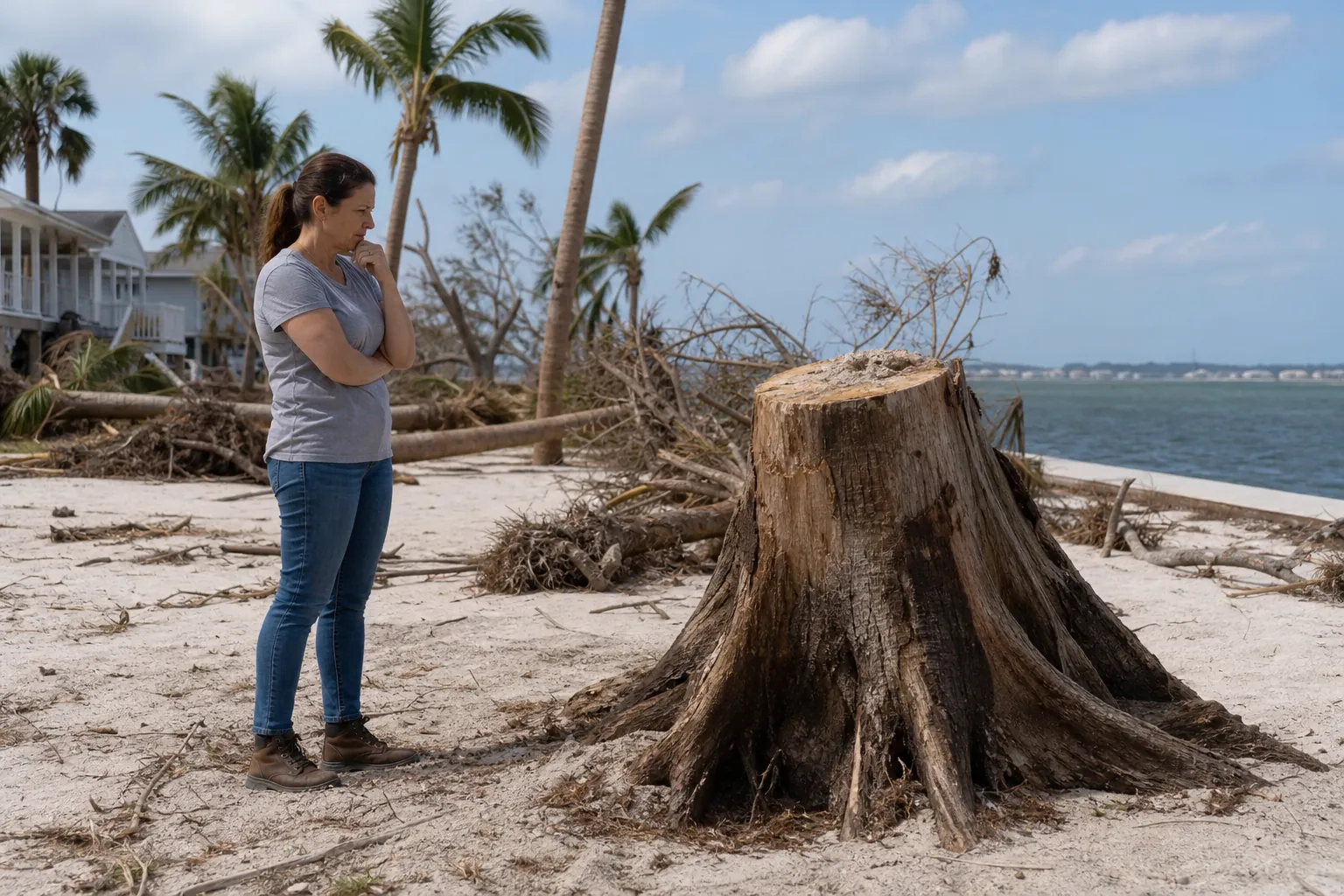
What should the stump grinding scope include?
A useful scope identifies the stump, exposed roots, access route, chip handling, and intended finish. It should distinguish grinding from tree removal and soil repair. For hurricane cleanup, it should also explain how remaining trunks, branches, and root plates affect the order of work.
Start by counting stumps from a safe, unobstructed viewpoint. Include older stumps only if you want them assessed with the storm work. Identify each stump by location, such as beside the rear fence. This helps prevent confusion when several trees require attention.
Measurements can help describe a settled stump, but don't approach hazards to collect them. Note broad features that are easy to see. A flared base, split trunk, or exposed root system may need closer review. Photos often explain those features better than one width measurement.
Ask how access will work before focusing on grinding depth. Gates, narrow side yards, and tight turns can affect the approach. Share the location of drains, beds, and buried yard systems. Mention any areas that you want kept outside the work zone.
The work description should explain how loose wood and chips are handled. Basic debris cleanup differs from preparation for lawn restoration. Some work leaves chips on site for later handling. Other work may include their removal, so clarify that detail in advance.
- List every stump by location and include clear photos when safely available.
- State which exposed roots need review within the proposed grinding area.
- Describe gate widths, tight turns, and known limits along the access route.
- Clarify how loose chips and wood debris will be handled after grinding.
- Identify who will place soil and restore the intended surface level.
- Ask how nearby storm-damaged trees affect the planned order of work.
Tree removal, stump grinding, and land and lot clearing are distinct tasks. A fallen trunk may need removal before its base can be assessed. Broad storm debris may need a separate cleanup scope. Name the task you need instead of assuming one service includes everything.
Request clarification if the proposed finish is unclear. Terms such as cleared, ground, and restored can describe very different results. Specific descriptions help align the work with your hurricane cleanup plan.
How should sandy ground be restored after grinding?
After grinding, review the hole and chip pile before adding soil. A mix rich in wood chips is different from soil suited for lawn repair. Plan for excess material, suitable fill, and a finish that follows the surrounding yard without creating a new low spot.
Keep clean mulch separate from material used to rebuild the hole. Wood breaks down over time, which can leave the surface lower. Filling a deep void mostly with loose chips may create repeat repair work. Ask what material is proposed beneath the final surface.
Choose the finish based on the yard's use. A lawn area needs a stable surface for later grass repair. A bed may need a different soil plan and mulch layer. Neither should be shaped without considering where storm runoff already moves.
Do not treat every sandy hollow as a stump problem. Water may have moved soil before the tree fell. Compare the site with the surrounding grade and any earlier photos. Note channels, washouts, or low areas that extend beyond the stump location.
Avoid pushing loose spoil toward drains or nearby paved surfaces. Keep the repair focused on the intended area. If runoff repeatedly crosses the site, discuss that pattern before final grading. Grinding alone does not correct a broader drainage issue.
Inspect the repaired area after normal rainfall once access is safe. Look for settling, exposed chips, and small depressions. Additional repairs may be needed as the ground settles. Document changes so later repairs address the affected area rather than spreading loose fill outward.
For a future tree, review placement before buying a replacement. Remaining roots and the old stump zone can limit the planting space. Consider room for the mature canopy as part of hurricane readiness. Tree inspections can help guide a separate plan for nearby trees.
Choose a finished condition you can clearly describe and inspect. Identify who handles soil placement, lawn restoration, and follow-up inspections. That keeps the final stage of storm cleanup from becoming an undefined task.
How does stump work fit the next hurricane plan?
Stump work fits best within a yard-wide hurricane plan. Review damaged trees first, then organize removal, grinding, debris handling, and ground repair. Use the finished site to improve access and reduce clutter. Keep tree inspection needs separate from the cosmetic goal of a smooth lawn.
Start with trees that survived the storm. A standing tree may still have broken branches or visible changes at its base. Don't assume removing the fallen tree resolves nearby concerns. Ask about tree inspections where damage or a changed lean is visible.
Tree trimming, canopy thinning, and crown reduction serve different needs. They should follow an assessment of the tree and its condition. Don't choose heavy cutting simply because a hurricane occurred. Discuss which work, if any, fits each remaining tree.
Some damaged trees may need emergency and hurricane tree removal. Others may need planned tree removal after assessment. Crane tree removal may be considered where access or tree position calls for it. Homeowners should describe site conditions rather than select equipment without an inspection.
Use stump cleanup to review the yard's practical layout. A former tree site may sit near a gate or main walkway. Plan the finished grade with that use in mind. Keep paths clear of leftover chips, loose branches, and stored cleanup materials.
- Record visible tree damage from a safe place before planning routine yard repairs.
- Group stump locations with their related trunks, branches, and ground repair needs.
- Choose a final use for each cleared space before placing new soil.
- Review nearby trees before adding new plants beneath their damaged canopies.
- Keep a simple list of unfinished storm cleanup tasks for the next visit.
For shared grounds, clear descriptions matter even more. HOA and condo tree services may involve many stumps and access points. Commercial tree services may require a staged cleanup plan. In each case, identify the work areas and intended finish without assuming local availability.
Hurricane readiness is an ongoing process, not one cleanup visit. Revisit the list after the yard is stable and usable. Address remaining tree concerns before focusing solely on new planting.
Frequently asked questions about hurricane stump care
Does grinding remove every root left after a hurricane?
No. Grinding targets the stump and agreed portions of nearby roots. Roots beyond that area usually remain in the ground. Ask which visible roots are included, especially near paths or beds. If you plan new planting, discuss the remaining root zone before choosing the exact spot.
Can a tipped root plate be ground like a normal stump?
Do not assume it can. A tipped root plate needs assessment before a grinding plan is set. OSHA lists unstable trees and root balls among tree-care hazards. Stay clear of the plate and attached tree. Let trained tree workers determine the work sequence.
Should I keep all the grinding chips in the hole?
That depends on the planned finish, but chips aren't a direct substitute for soil. A hole filled mostly with wood can settle as that wood breaks down. Clarify chip removal and soil placement before work begins. Keep mulch use separate from the plan for rebuilding the ground.
How soon after a hurricane can stump work begin?
There is no single waiting period that fits every yard. Site hazards, access, ground conditions, and remaining tree work all matter. Ready.gov advises avoiding fallen power lines after a hurricane. Resolve immediate hazards first, then have the actual stump site assessed before setting the work sequence.
What should I share when requesting a stump estimate?
Share the Milton property location, stump count, safe photos, and desired finish. Note access limits and any known buried yard systems. Explain if trunks, branches, or tipped roots remain. Florida Foliage is based in Daytona Beach, so ask about service options for the property rather than assuming local availability.
To discuss hurricane stump grinding and request an estimate, call Florida Foliage at (386) 481-7913. Have your site notes ready and ask which next steps fit your storm cleanup needs.
Call (386) 481-7913 to talk through next steps.