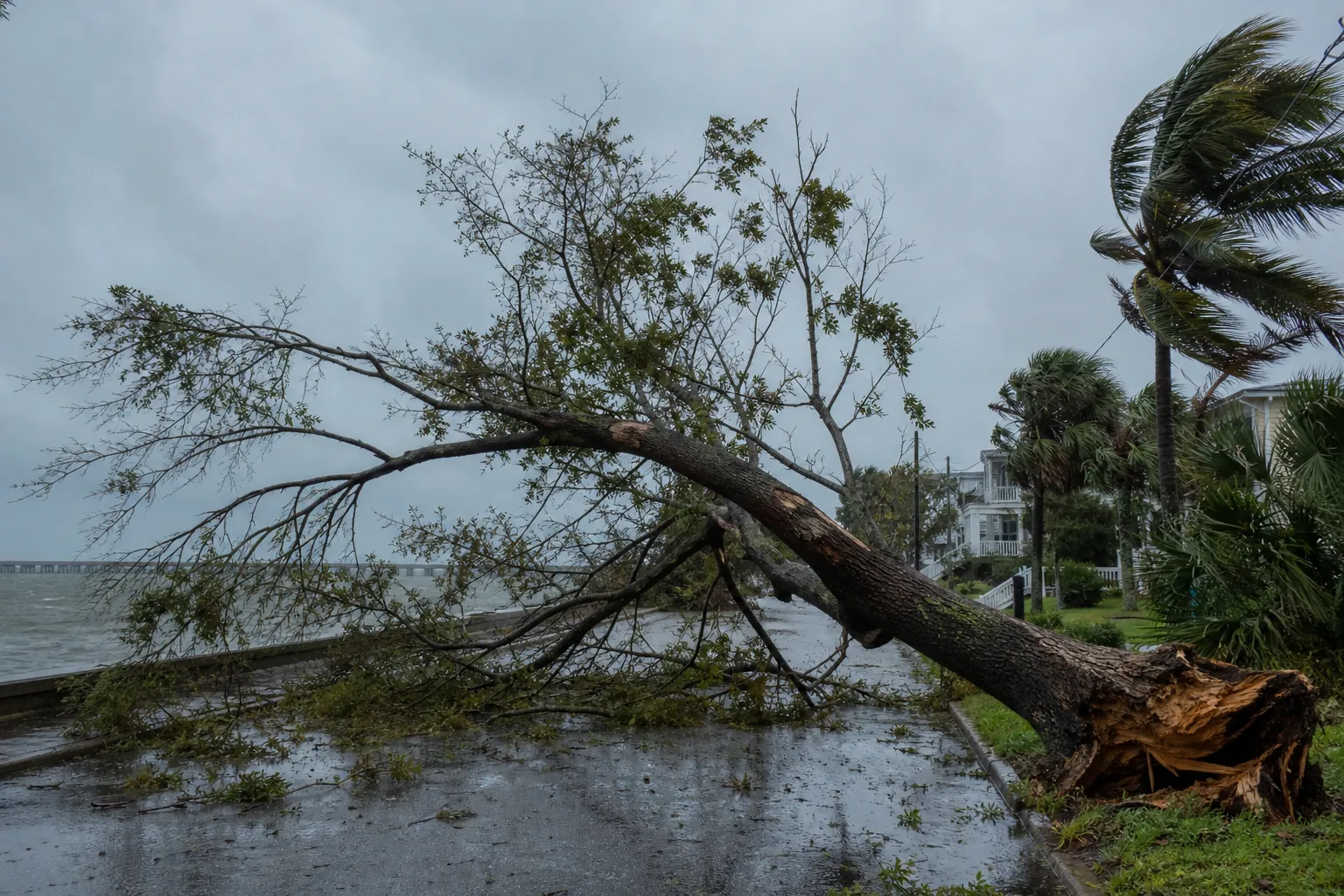
After a hurricane in Pensacola, observe bent limbs. Do not cut or handle them. OSHA lists tensioned tree material, falling limbs, and unstable trees as storm cleanup hazards in its tree work guidance. A limb’s appearance alone is not a diagnosis. This guide explains how to describe what you see, organize household notes, and make a neutral inquiry. For more context, see Florida Foliage’s guide to emergency tree removal in Pensacola. Do not assume service is available in your area.
By Tim Francis, responsible for this article’s content and editorial presentation.
Why Are Bent Limbs a Concern After a Hurricane?
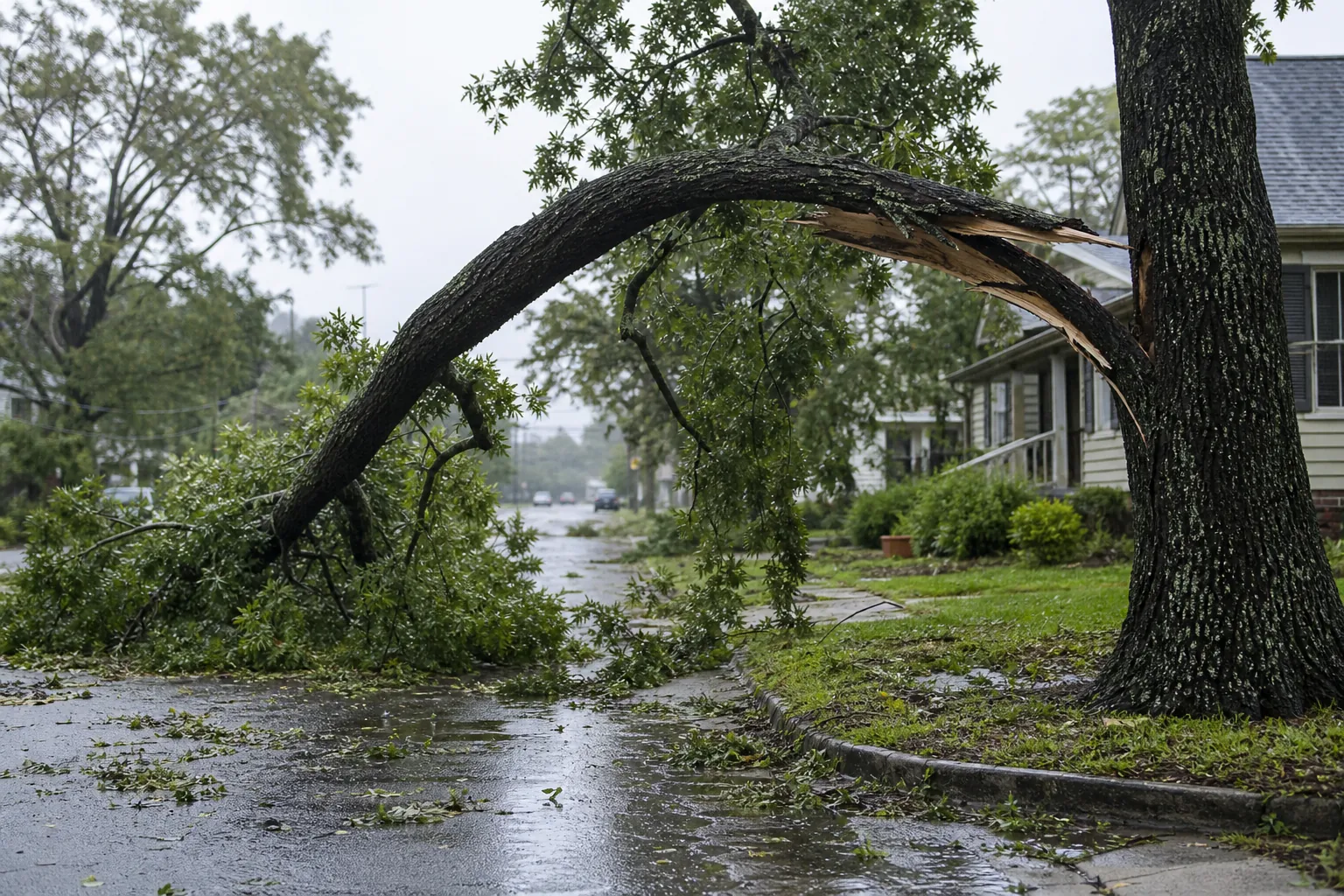
A bent limb deserves attention. OSHA lists tensioned tree material and rolling or sliding limbs as hazards in storm tree work. Read the tree removal service overview and tree trimming service overview for context. They are not instructions for deciding what work a limb needs.
It is important to separate a limb’s shape from its condition. You may be able to describe it as bent, hanging, or resting against something. These words record what you see. They do not show the forces involved, the tree’s overall condition, or the right work plan.
In this article, “under load” describes the concern behind the warning. It is not a conclusion about your tree. A homeowner’s note should not call a limb tensioned just because it looks curved. Leave that question open when you describe what you see.
- Describe the visible curve. Do not give the limb a technical label.
- From your existing view, note whether the limb appears attached, detached, or unclear.
- Keep questions about removal or trimming separate from your description of the scene.
OSHA also lists falling limbs and unstable trees as hazards in its hurricane tree work guidance. That guidance supports an observation-only approach for this article. It does not show homeowners how to confirm a tree’s condition from a window, a written description, or an image.
The goal is to give a useful account, not a verdict. “A curved branch is visible over the back patio” gives the reader a clear starting point. “The tree is stable” goes beyond what that observation can show.
What Can You Record Without Calling It a Diagnosis?
Record what you can see. Mark anything else as unknown. The contact page can help you frame an inquiry. The company background page explains who Florida Foliage is. Neither replaces an assessment or confirms that service is available in Pensacola.
Use familiar reference points that someone who does not know your home can understand. “Beside the driveway” is clearer than “over there.” If your notes mention several trees, give each one a simple label. Use that label throughout your message.
Do not write a possible feature as if it were confirmed. For example, write “a dark line is visible on the limb,” not “the limb has a structural crack.” The first describes what you see. The second adds an interpretation that your notes may not support.
- Use plain words to identify the part of the property shown in each note.
- Record when you made each observation. This keeps older and newer notes distinct.
- Use “not visible” or “unknown” when your view does not answer a question.
- Keep what you saw yourself separate from information another household member gave you.
If you already have photographs, treat them only as supporting records. Do not use a photograph as proof that a tree is safe. A useful caption says what the image shows without adding conclusions. For example: “View of the back patio taken from inside the house.”
You do not need to fill in every blank in a household note. An honest gap is more useful than a confident guess. If you add information later, keep the original wording. This shows what changed instead of replacing uncertainty with certainty.
How Should a Household Organize Its Notes?
Use one shared record with clear labels, dates, and unanswered questions. The inquiry page gives you a place to begin a conversation. The removal service description offers background terms. These resources can help you organize information. They are not a reason to choose a service before the situation has been assessed.
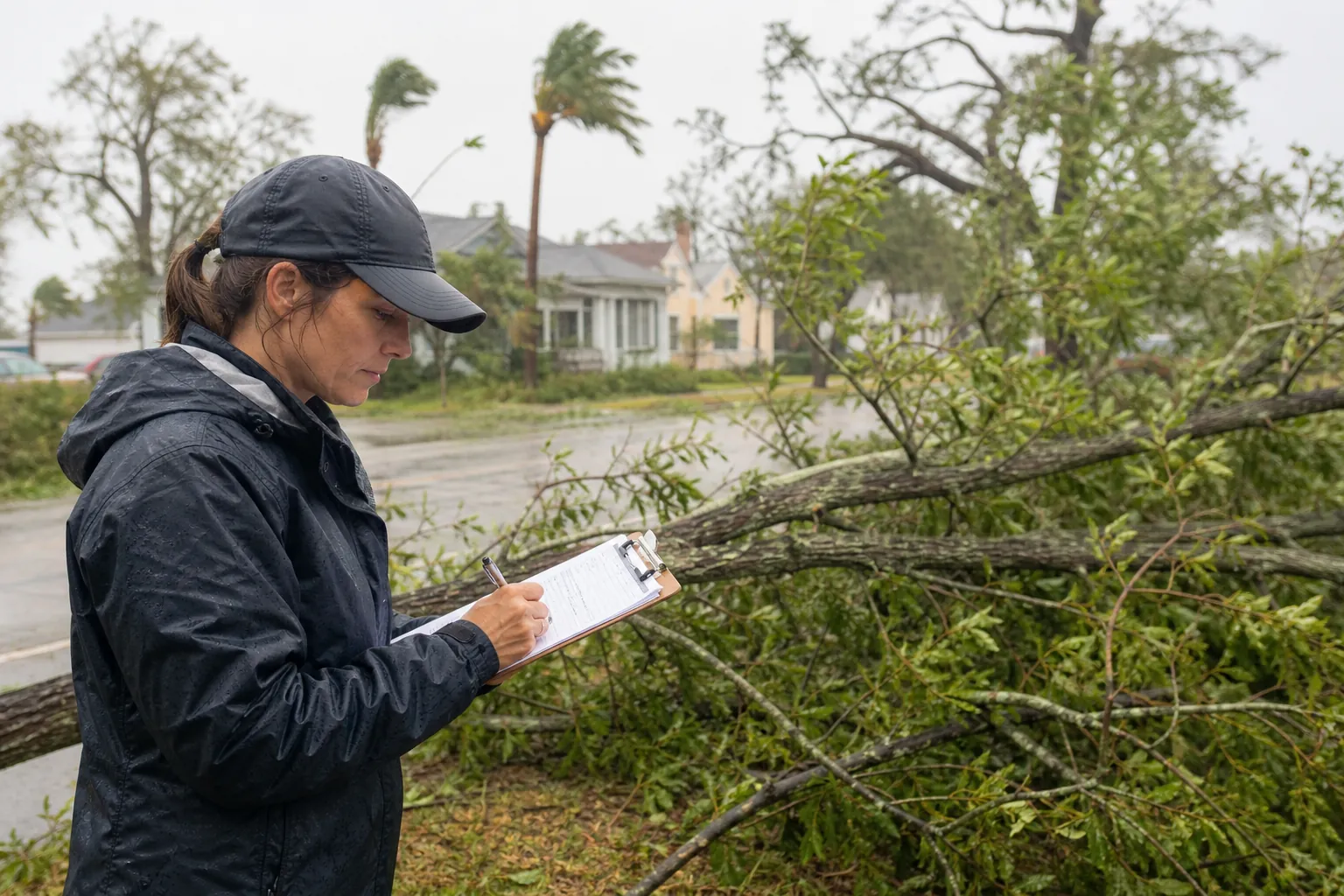
A storm can leave a household with scattered messages and different accounts. One page can bring those accounts together. No one needs to inspect the tree to do this. Choose a format people already use, such as a notebook or shared text document.
- Add a heading with the property location and the date of the notes.
- Briefly describe each visible issue. Use a separate label for each tree or area.
- List any existing images. Add captions that give their viewpoint and date.
- Write down unanswered questions. Do not try to answer them by guessing.
- Save a copy of your inquiry. Add any reply below it for easy reference.
This list is an editorial tool for managing information. It is not a technical inspection checklist. Completing it does not show a tree’s condition or mean a yard is ready for cleanup.
- Ask one household member to combine the notes so several versions do not compete.
- Keep firsthand observations separate from interpretations and secondhand reports.
- Leave room for corrections. Add a note to explain why a description changed.
Keep the record brief and useful. A few clear sentences often say more than a long chain of repeated messages. If two people describe the same limb differently, keep both descriptions. Note what is uncertain instead of choosing the version that sounds more certain.
Which Other Storm Cleanup Hazards Matter?
OSHA lists electrical contact and debris hazards along with tree hazards in its tree work guidance and debris collection guidance. The trimming service information and removal service information offer context. This article does not give cleanup instructions.
Downed electrical conductors can energize trees and fences. Avoid direct and indirect contact, as OSHA’s hurricane tree work guidance directs. If you can already see electrical conductors, do not describe only the tree.
Debris can hide meters and fire hydrants, according to OSHA’s debris collection guidance. If your existing notes mention a familiar feature that you can no longer see, record that uncertainty. Do not assume the feature is gone.
- Keep nonessential people outside work and drop areas, as stated in OSHA’s tree work guidance.
- Keep nonessential people away from debris machinery, as stated in OSHA’s debris collection guidance.
- Stay clear of leaking chemical containers. Specialist evaluation is needed, according to OSHA’s debris collection guidance.
These are separate concerns, not clues for diagnosing a bent limb. Keep them in a separate part of your household record. This makes it easier to report a visible electrical concern or a leaking container without burying it in a long description of branches.
This guide does not explain how to move debris, handle containers, or work around electrical conductors. It focuses on observation and clear communication. It does not turn a homeowner article into a work plan.
How Can You Make a Neutral Tree Care Inquiry?
Start by asking whether Florida Foliage serves your location and handles the type of concern you describe. Use the company contact page to make an inquiry. The Florida Foliage background page gives company context. Neither page promises that service is available in Pensacola.
Florida Foliage is headquartered in Daytona Beach. This article does not establish a Pensacola office, local crews, or a response time. Clinton Funk is the owner and has decades of hands-on tree care experience. Tim Francis is responsible for this article’s content and editorial presentation. Clinton Funk is not presented as its reviewer.
You can call (386) 481-7913 or use the contact page. Say that the property is in Pensacola and briefly describe what you see. Ask about the service area before assuming that a further conversation will lead to work at your property.
- Start with your location so the service-area question is clear.
- Describe the visible limb. Do not say that it needs removal or trimming.
- Ask what information would help with an initial conversation. Do not send a disorganized set of notes.
- Record the reply as given. Do not add a response time or service commitment that was not stated.
You might begin with: “I am contacting you about a property in Pensacola. A bent limb is visible near the back patio. Do you serve this location, and what information would be useful for an initial discussion?”
This message leaves room for a clear answer. It does not assume a diagnosis, a chosen service, or availability. If the answer about location is unclear, keep the question open in your notes. Do not treat the article’s Pensacola focus as confirmation.
What Should You Keep in Mind Before Closing Your Notes?
Keep the difference between an observation and an assessment clear in your final summary. The tree trimming overview and contact options can help with a later conversation. Neither turns a household record into a technical finding. Your notes should keep uncertainty visible, not hide it with confident wording.
Read the summary once as if you had never seen the property. Can you tell which tree it describes? Is the date clear? Does each sentence report something you saw, name a question, or record an actual reply? Remove repeated descriptions that make the main issue harder to find.
- Keep the date of the original observation beside any later update.
- Label unanswered questions so they are not mistaken for confirmed findings.
- Keep useful image captions, but remove any wording that treats an image as proof of safety.
For more reading, return to the guide to emergency tree removal in Pensacola. Use it as context for questions, not as confirmation of local availability. This page has a narrower purpose: describe bent limbs clearly, avoid unsupported conclusions, and organize a neutral contact step.
Frequently Asked Questions
These answers explain the limits of homeowner observations and the next step for making contact. The company information page explains Florida Foliage’s background. The contact page lets you ask about service scope. Neither establishes a tree’s condition or confirms availability at a Pensacola address.
Does a bent limb mean the tree must be removed?
No. A visible bend alone does not show that removal is needed. OSHA lists tensioned tree material as a hazard in its hurricane tree work guidance. Still, your description should be an observation, not a diagnosis. Record what appears bent and leave the service choice open.
Can a photograph show that a tree is safe?
No. Do not use a photograph as proof that a tree is safe. An existing image can help show which limb your notes describe, but keep its caption factual. Include the viewpoint and date when known. Do not add conclusions about the tree’s condition or the work it might need.
What if a wire is visible near the tree?
OSHA says downed electrical conductors can energize trees and fences. Its storm tree work guidance directs people to avoid direct and indirect contact. Keep your written description factual. Do not use the wire’s appearance to draw conclusions about its electrical status or the tree’s condition.
Does this article confirm Florida Foliage serves Pensacola?
No. Florida Foliage is headquartered in Daytona Beach. This article does not confirm that the company serves Pensacola. Call (386) 481-7913 or use the contact page to ask whether the company serves your location and handles the concern you describe. The inquiry does not promise local crews or a response time.
Who is responsible for this article?
Call (386) 481-7913 to talk through next steps.