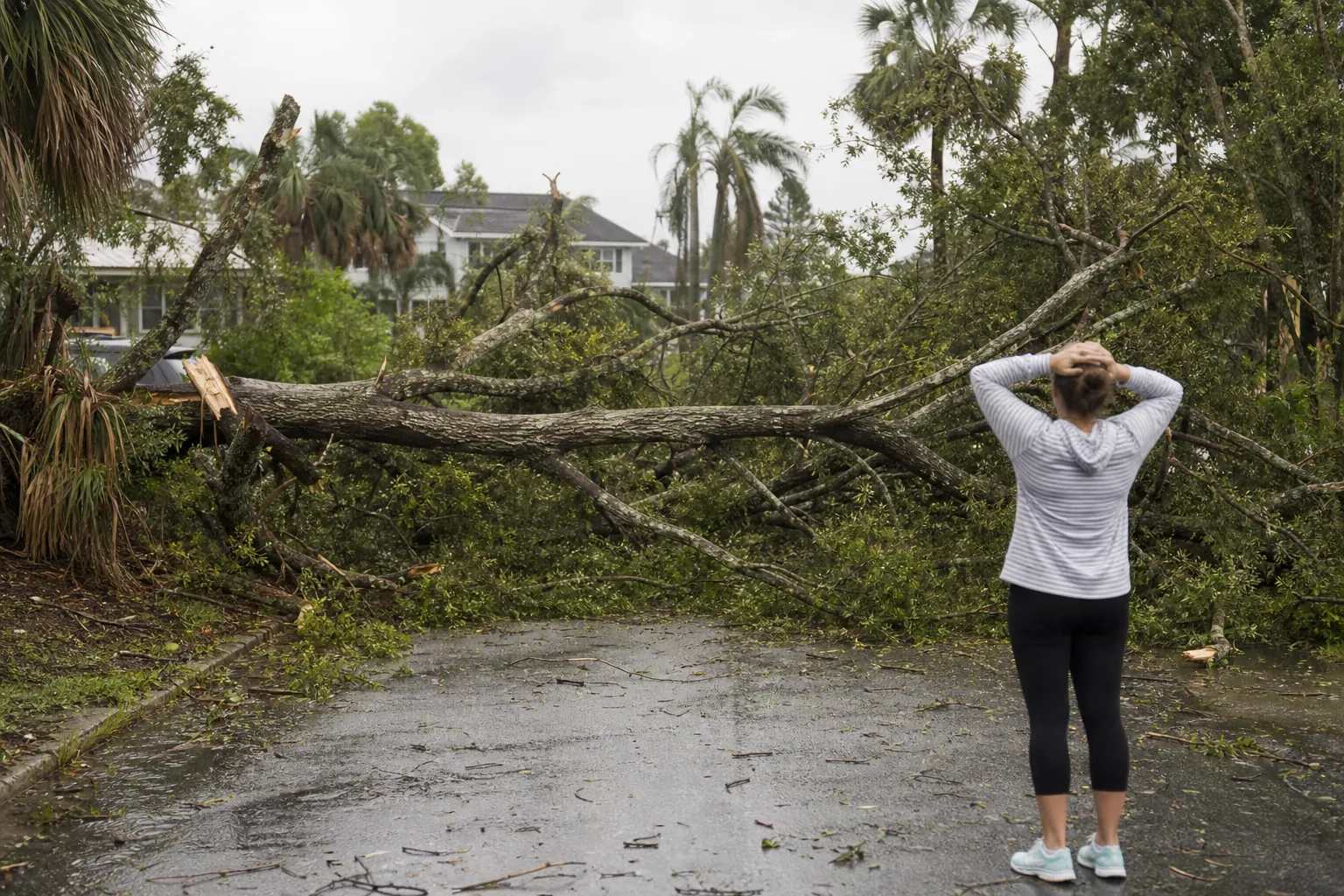
A hurricane tree blocking your street in Pensacola is not a homeowner cleanup job. Storm-damaged trees can have falling limbs and unstable parts. Staying clear matters more than getting a closer look. OSHA describes these storm-tree hazards. Use official local information to find the current reporting channel. Then describe only what you already know. This guide supports our page on emergency tree removal in Pensacola. It focuses on observations, reporting, and household organization, not removal work.
Written by Tim Francis, who is responsible for this article’s content and editorial presentation.
What Should You Do When a Hurricane Tree Blocks the Street?
Treat the situation as a report to organize, not a project to start. Use current official Pensacola information to find the reporting route. Florida Foliage’s tree removal service overview explains the service category. Its company background explains who the business is. Neither confirms local availability.
Start with the street name and the nearest intersection you know. If you are not sure of an address, say so. A plain location description is more useful than a confident guess that sends the conversation to the wrong block.
Your report does not need to explain how the tree fell or how someone should move it. Those are separate from where the obstruction is and what you saw. Keep your message focused on the street blockage.
- Write down the location in the same way each time you communicate.
- Describe whether the tree seems to cross all or part of the street, if you can already see that.
- Mark an uncertain detail as uncertain. Do not fill the gap with a guess.
Storm-damaged tree work involves falling-limb and unstable-tree hazards. A blocked street does not make that work a household task. OSHA identifies those hazards in hurricane tree work.
For household planning, use one short shared note instead of several separate retellings. Include what was reported and which official channel you used. This helps family members use the same information. It also keeps each new message from seeming like a new event.
What Can You Observe Without Diagnosing the Tree?
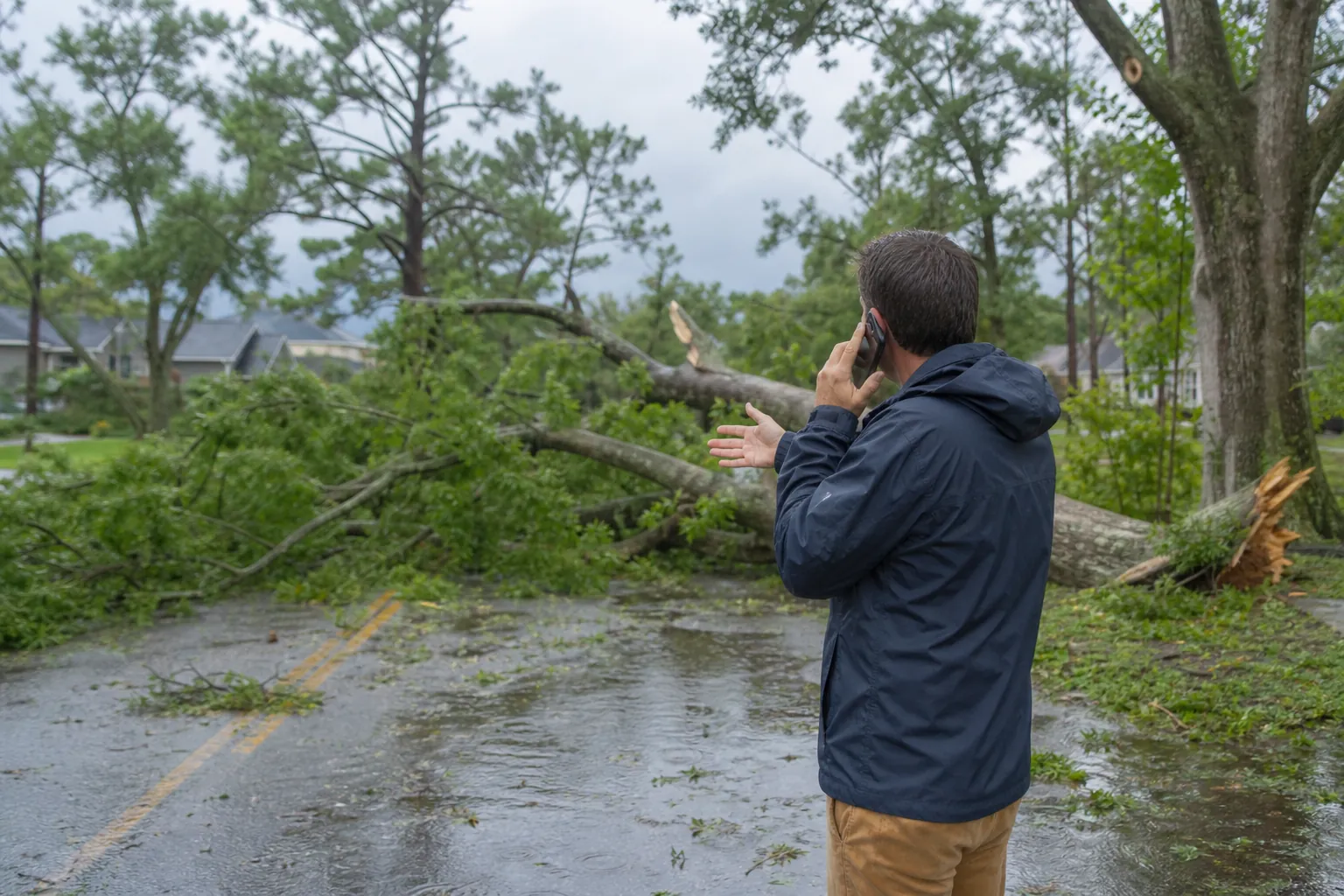
Record visible facts, not conclusions about stability, electrical contact, or removal needs. The tree trimming service description gives general service context. The tree removal page describes a different service category. Neither page turns a homeowner’s view into a diagnosis of a storm-damaged tree.
“A trunk is across the street” is an observation. “The tree is stable” is a conclusion. “I can see branches near a wire” describes what you see. “The wire is harmless” goes beyond what you can know from its appearance.
Downed electrical conductors can energize trees and fences. Avoid direct and indirect contact with them. OSHA explains electrical contact hazards around storm-damaged trees.
- Use phrases such as “I can see” and “I cannot tell” to separate facts from unknowns.
- Describe an object you can see. Do not guess if it is active, damaged, or sound.
- Leave out the cause of the fall unless you saw it happen.
A photograph may show what was visible when it was taken, but do not use a photo as proof that a tree is safe. Keep any existing image with a plain description of what it shows. Do not add an opinion about hidden conditions.
A report can still be useful if you have questions. You might know the road name but not the tree species. You might see the trunk but not the root area. State those limits clearly. There is no need to turn a street blockage report into a tree assessment.
How Do You Organize a Clear Official Report?
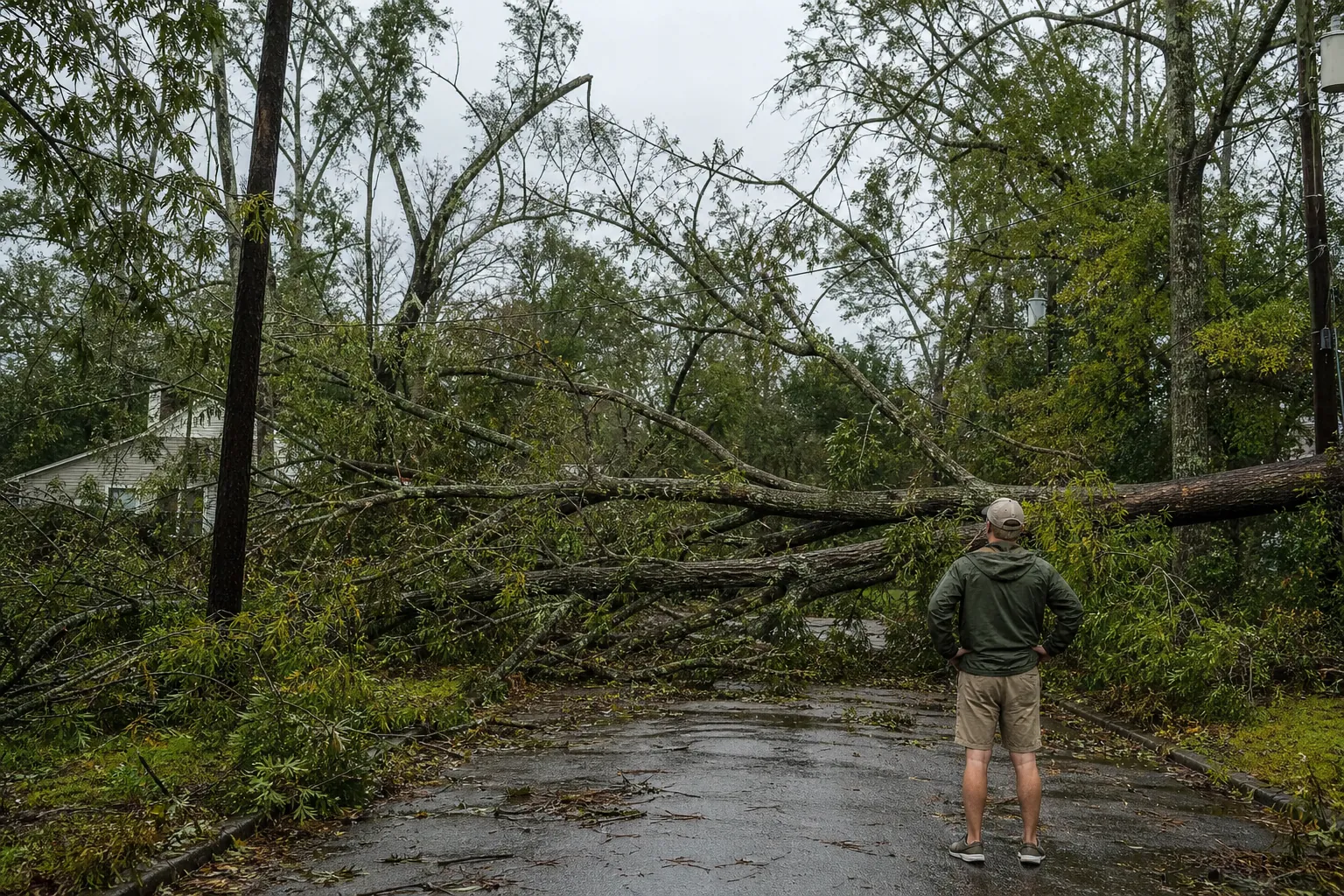
Build a short report around the location, visible obstruction, and any uncertainty. Check current official local information to find where to send it. Florida Foliage’s contact page is a separate business contact route. Its company information helps you tell the business apart from an official street-reporting channel.
This article does not give a current Pensacola reporting number or submission form. Use an official city or county website to find the right channel. Do not treat a business page, an old shared post, or a search result snippet as the current reporting destination.
- Write the street name and the nearest known intersection or recognizable address.
- Describe the visible obstruction in one plain sentence. Do not guess about stability.
- Separate what you saw from information someone else shared.
- Use the reporting channel listed in current official information.
- Save your message and any reply so your household can refer to the same record.
A sample description might read: “A fallen tree is across the street near the intersection of the named roads. I cannot tell whether the entire road is blocked.” Replace the general wording with what you actually see. Do not mention a wire, vehicle, or damaged object you have not seen.
- Keep the original message instead of recreating it from memory.
- Note whether later information comes from you or someone else.
- Use the same location wording in follow-up messages to reduce confusion.
Sending a report is not the same as getting an update that the work is done. Keep those notes separate. This helps everyone see what is known without assuming that a report means the street has reopened.
Why Is Moving Even One Branch Not a Homeowner Task?
A small visible piece does not show all the hazards of the obstruction. Keep this guide focused on reporting, not moving material. The removal service overview gives category context. The trimming service overview explains another category. Neither gives homeowners work instructions.
Tree material under tension and limbs that can roll or slide are hazards in storm-tree work. The part you notice first may not show what other material is doing. OSHA lists tensioned material and rolling or sliding limbs among tree-work hazards.
Keep nonessential people outside work and drop areas. OSHA gives this precaution for storm-related tree work. Also keep nonessential people away from debris machinery. OSHA addresses machinery hazards during debris collection.
- Keep your household note focused on the obstruction, not a suggested way to remove it.
- Do not turn a neighborhood message thread into a plan to move the tree.
- Make clear whether you are asking for an official update or asking neighbors to do the work.
The reporting question is simple: where is the tree, and what can you see is blocked? You do not need to choose equipment, judge a limb’s weight, or decide which piece should move first. Those topics are outside this homeowner guide.
If someone shares a firm opinion about the tree, record it as that person’s opinion. Do not let it replace what you saw. Clear wording helps stop an unverified judgment from becoming the household’s assumed starting point.
What Other Debris Details Belong in Your Notes?
Include other visible debris only if it helps describe the location or obstruction. Do not turn the report into an inspection. The Florida Foliage inquiry page gives a business contact option. The company profile identifies the business. Official street information is a separate matter.
Debris can hide meters and fire hydrants. OSHA notes these concealed objects in hurricane debris. If a detail you can already see belongs in your report, describe it plainly. Do not say an area is clear just because you cannot see what is under the material.
Stay clear of leaking chemical containers. A specialist needs to assess them. OSHA identifies leaking-container hazards and the need for specialist evaluation. If you do not know what a container holds, say so. Do not guess at the substance.
- Write “container” if that is all you can identify from what you can see.
- Describe tree material and other visible objects separately.
- Mark an older observation as old instead of presenting it as a new update.
A useful note is selective. It does not need every detail of the storm or every item mentioned in a neighborhood conversation. Keep the location, obstruction, and any extra details you saw together. Put unrelated household reminders elsewhere.
This also makes later updates easier to read. If the street status changes, you can update that line without rewriting the whole storm account. If nothing is confirmed, leave the status as unknown. Do not treat silence as progress.
How Can Your Household Keep Updates Straight?
Use one shared record for reports, replies, and open questions. This is an organizing choice, not a technical safety procedure. The Florida Foliage background page explains the company’s identity. The business contact page keeps a company inquiry separate from your official street report.
Choose a note format your household already uses. A paper list, shared document, or message thread can help organize information. You do not need a detailed storm diary. You need a clear place to find the latest confirmed information and its source.
- Put the street location at the top so the note is easy to identify.
- Label entries as observations, reports sent, replies received, or open questions.
- Keep errands and schedule changes in a separate part of the note.
- Leave a question open until you have information that answers it.
For example, “report sent” and “street reported open” are different entries. A neighbor’s message and an official update come from different sources. Record those differences. This avoids combining several uncertain events into one firm statement.
Household plans may change while the street status is unclear. Write down postponed visits or changed pickup plans as useful reminders. Do not add a guessed reopening time. This keeps everyday planning useful without making predictions about the work.
When you share an update, say where it came from. A short sentence with a source is more useful than an unexplained “all clear.” Do not use an image or a lack of visible activity as proof that the tree is safe.
How Can You Contact Florida Foliage Without Assuming Availability?
Contact Florida Foliage to ask whether your location and request fit its current service scope. Start with the contact options. Read the company background for context. A business inquiry does not confirm Pensacola availability, a response time, or a plan for the blocked street.
- Say that your question is about a hurricane tree blocking a street in Pensacola.
- Ask whether the location and type of request fit the company’s current scope.
- Keep the business inquiry separate from reports through official channels.
Call (386) 481-7913 or use the contact page for that neutral inquiry. Neither route promises local service or a particular response.
For related information, visit the supporting guide to emergency tree removal in Pensacola. Keep the immediate household task simple: organize what you know, find the official reporting route, and do not turn observations into a diagnosis.
Frequently Asked Questions
These answers separate observations, official reporting, and business inquiries. Use the tree removal overview for service context and the Florida Foliage contact page for a company inquiry. Neither replaces current official information about a blocked Pensacola street or confirms that a business serves your location.
Can I tell whether a fallen tree is stable by looking at it?
A visible observation is not a diagnosis. Describe what you see, but do not say the tree is stable or safe. Storm-damaged tree work has unstable-tree and falling-limb hazards. OSHA describes these hazards. A photo can show what the tree looks like, but it does not prove the tree is safe.
What should I include when reporting the street blockage?
Include the street name, a known intersection or address, and a plain description of the blockage. Say what you cannot tell. State whether you saw the information yourself or heard it from someone else. Use current official local information to find the reporting channel. Keep your message and any reply.
What if a wire appears to touch the tree?
Do not assume a wire is harmless based on how it looks. Downed electrical conductors can energize trees and fences. Avoid direct and indirect contact. OSHA explains this electrical hazard. In your report, describe only where the wire seems to be. Do not guess about its condition.
Should neighbors gather near debris removal equipment?
No. Keep people who are not needed away from debris machinery. OSHA gives this debris-collection precaution. Keep them outside tree-work and drop areas too. OSHA states this tree-work precaution. Share written updates instead of gathering near the work area.
Does contacting Florida Foliage confirm Pensacola service?
No. Florida Foliage is headquartered in Daytona Beach. Contacting the company does not confirm Pensacola availability or response timing. Call (386) 481-7913 to ask whether your location and request fit the company’s current scope. Keep that question separate from reporting the blocked street through official channels.
Call (386) 481-7913 to talk through next steps.