Reviewer and contributor: Clinton Funk, Owner, Florida Foliage. Clinton has decades of hands-on tree care experience.
Tim Francis is responsible for the research and editorial quality of this article. AI tools assisted with drafting and the editorial images. This general information does not assess a particular tree.
Hurricane Tree Cleanup Scope in Pensacola, FL calls for clear notes and a careful household plan.
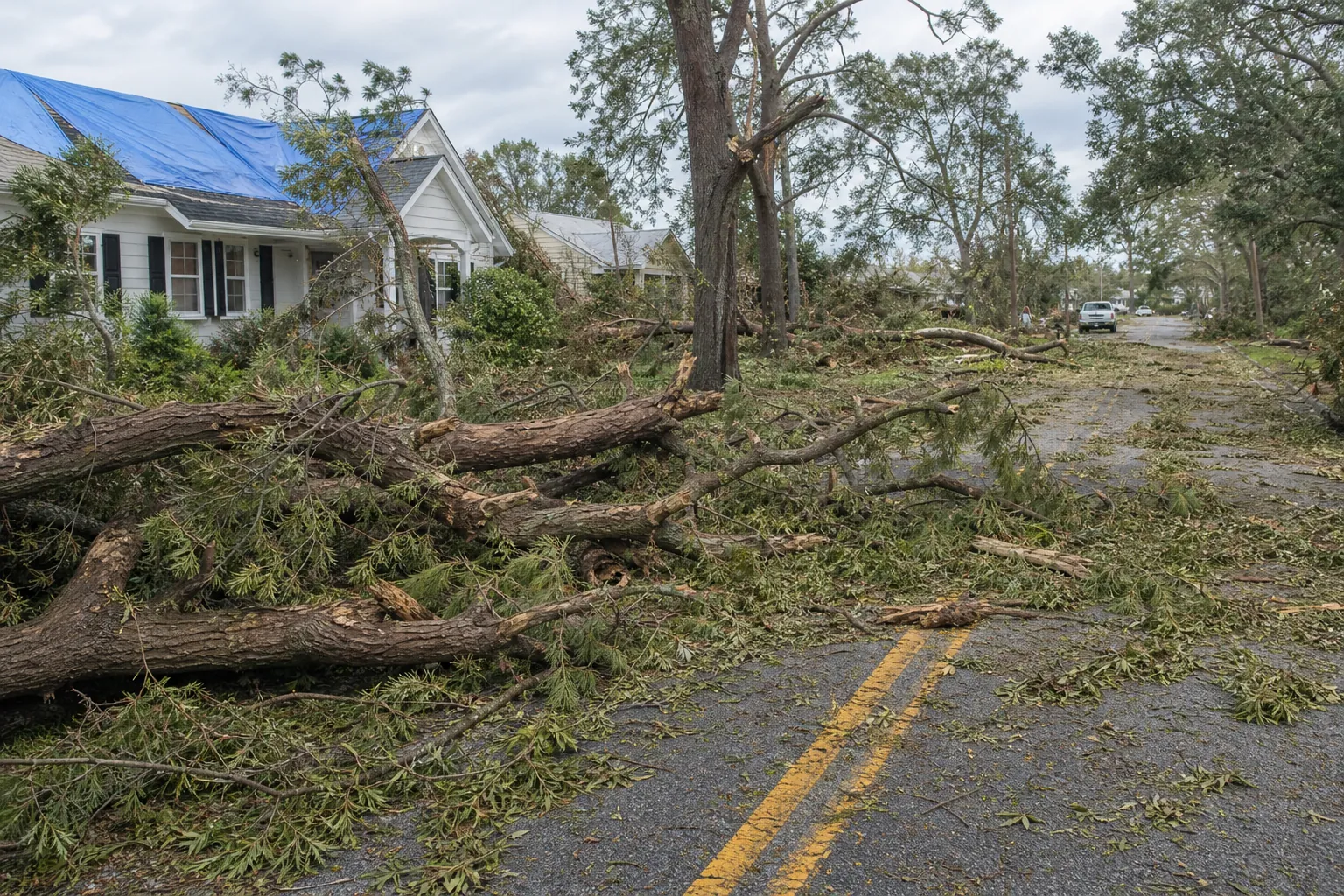
For a hurricane cleanup talk in Pensacola, describe visible debris, where it lies, and any blocked routes. Separate ground debris from material still on trees. Mark unknown details as unknown. Your notes can describe the property. They cannot say if a tree is safe or what work it needs. Use your notes to discuss what you see. Do not use them to diagnose a tree or plan tree work.
Written by Tim Francis, who is responsible for this article’s content and editorial presentation.
What Comes First For Hurricane Tree Cleanup Scope?
Your notes should list debris zones, blocked routes, and open questions. Use common place names, not technical labels. The tree removal overview and tree trimming overview explain two kinds of tree work. They cannot tell you what a storm-damaged tree needs.
A useful note names a place, then says what you see. For example, “The driveway has leafy branches near the garage, and a larger piece lies across the entrance” tells more than “There is storm damage everywhere.” It leaves room for questions about what you cannot see.
Name familiar places, such as the front walk, patio, garage, or garden bed. If several trees are nearby, label each by location. “Tree beside the driveway” is enough for a first talk. Do not guess the species or type of damage.
- Give each debris zone a short name that you can use throughout the discussion.
- Describe visible material with plain words such as branches, leaves, trunk pieces, or mixed debris.
- State whether your view is complete, partial, or blocked.
- Keep questions in a separate part of your notes so guesses do not become facts.
Storm-damaged tree work has falling-limb and unstable-tree hazards, according to OSHA’s hurricane tree-work guidance. A written note cannot clear these hazards or show that work can begin.
How Can You Describe Separate Debris Zones?
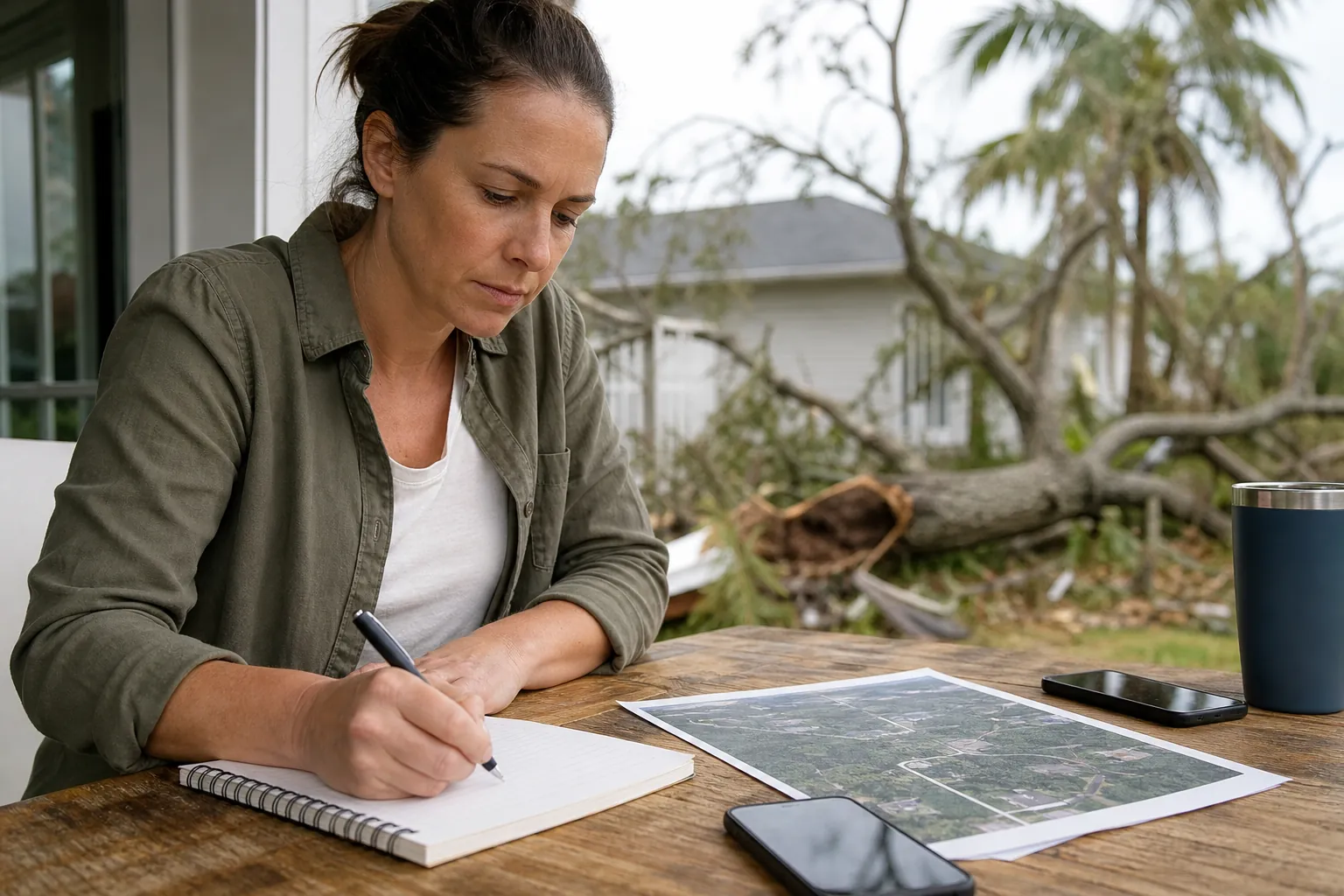
Group debris by location, not by how you think it should be removed. A front yard, driveway, and rear patio can be separate zones. The tree removal page and contact page can help you ask questions.
A zone is a label for one part of the property. It needs no measurement and does not mean a work area is set. The label helps people tell one group of debris from another.
In each zone, keep notes about ground debris separate from notes about what is overhead. “Branches lie on the patio” and “a branch appears to remain attached above the patio” are different statements. Neither statement tells you the tree’s condition. Do not use the second statement to judge stability or needed work.
- Use one zone name for each clearly distinct location in your notes.
- List what you can see on the ground separately from what appears attached to a tree.
- Describe overlapping debris as mixed or obscured when individual pieces are hard to identify.
- Keep the same zone names in messages, image captions, and later talks.
You can also record what the debris interrupts in everyday terms. A patio may have debris, a walkway may be blocked, or a garden bed may be difficult to see. These words explain your concern without choosing a tree-work method.
Tensioned tree material and trees that may roll or slide during felling are hazards identified in OSHA’s tree-trimming activity sheet. A zone label does not mean its contents are safe to handle.
Which Access Details Belong in the Discussion?
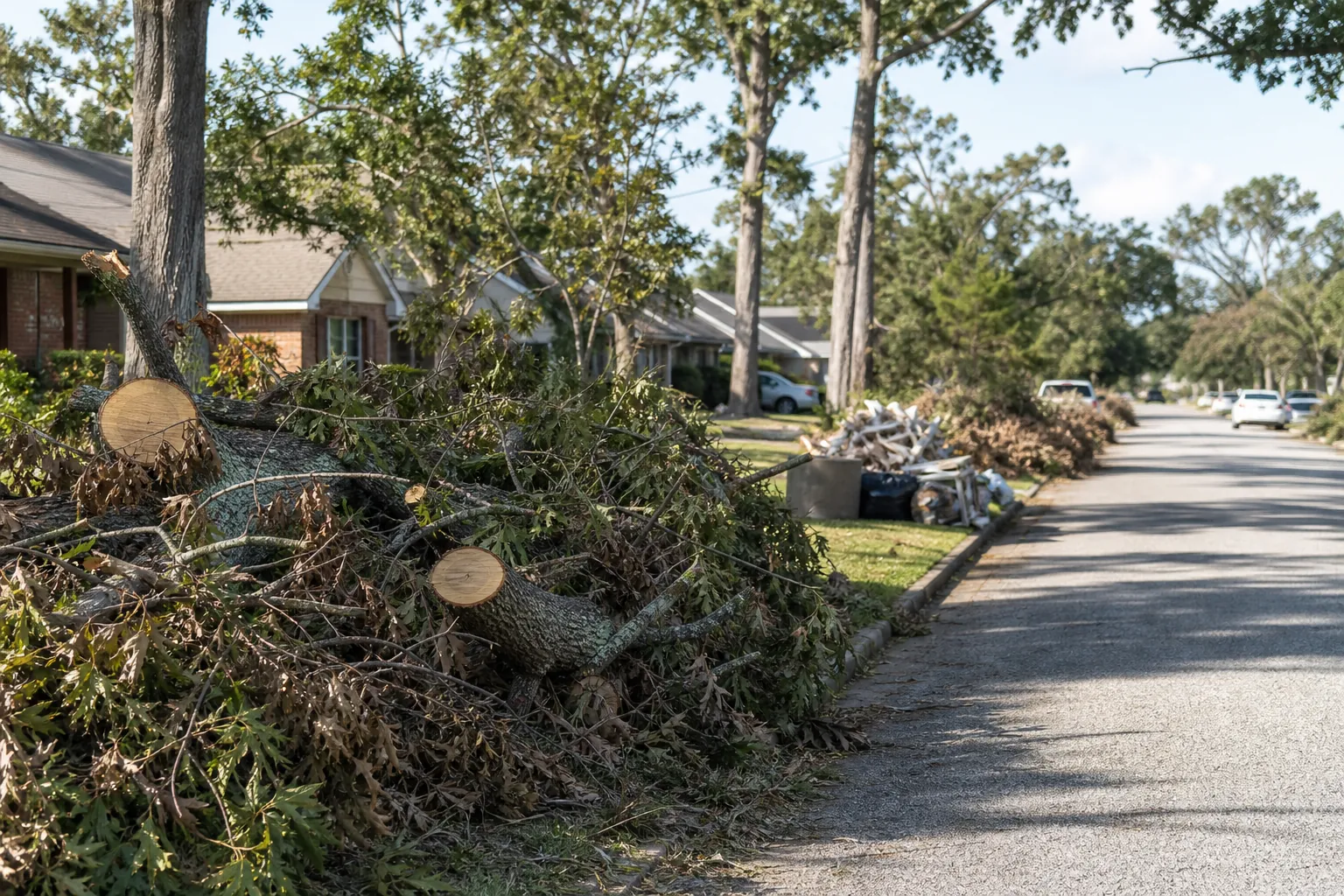
Describe the usual routes and what blocks them. Include entrances, paths, and features that are hard to see. The general inquiry page offers a way to ask questions, while the company background page explains who Florida Foliage is without proving service is available in Pensacola.
Access notes should describe what you see. They should not pick a route for people or equipment. “The side gate is visible, but branches cover the path beyond it” is useful. “Equipment can use the side path” makes a judgment that a homeowner’s notes may not support.
Include ordinary details you already know, such as which entrance leads to the rear yard or whether a gate normally opens inward. If the current condition is unclear, say so. Do not make up measurements or inspect an unfamiliar area to fill out your notes.
- Name the usual front, side, and rear approaches to the areas being discussed.
- Identify routes that appear blocked, partly obscured, or unchanged in your current view.
- Distinguish a visible entrance from a route whose full condition is unknown.
- Explain which daily household uses are interrupted, such as reaching a parked vehicle or using a patio.
Debris can hide meters and fire hydrants, as noted in OSHA’s debris collection guidance. If your notes mention such a feature, distinguish its known usual location from whether it is currently visible.
Keep people who are not part of the work away from debris machinery, according to OSHA’s debris collection activity sheet. An access note helps a discussion. It does not invite anyone near machinery.
What Is an Observation, and What Is a Diagnosis?
An observation says what you see. A diagnosis explains what it may mean for the tree. Write “a split is visible.” Do not guess its cause or outcome. The trimming topic overview and removal topic overview can help frame questions, but they cannot settle a diagnosis from homeowner notes.
You can describe a visible change without deciding what it means. You might note missing foliage, a branch on the ground, or a tree that appears different from its position before the hurricane. Add any limit to that observation, such as a blocked view or uncertainty about which tree the material came from.
A useful note can state a fact and an open question. “A large branch lies near the back steps; I do not know which tree it came from” is clear and honest. A label such as “failed tree” may say more than you can see.
- Use “visible,” “appears,” and “unknown” when those words accurately reflect your details.
- Record changes you actually noticed without assigning a cause you cannot establish.
- Ask what needs further evaluation rather than choosing removal or trimming in advance.
- Keep old property details separate from current storm observations.
Images you already have may show a place or what you saw at the time. They do not prove a tree is safe. Captions should say what is in view, not certify a tree. Note when an image does not show the full tree or surrounding area.
Downed electrical conductors can energize trees and fences. Avoid direct and indirect contact, as directed by OSHA’s hurricane tree-work guidance. If you are unsure about a line, do not assume it is safe.
How Do You Turn Notes Into a Useful Conversation?
Use the same order each time: location, debris, access limits, and open questions. This makes your notes easier to follow. The Florida Foliage contact details provide a neutral inquiry option, and the Florida Foliage company overview gives background before you decide what to ask.
Start with a short summary, then list each zone. State the main issue in plain words, such as debris across the driveway and branches on the patio. Then use the same zone labels you prepared earlier. Use the same name for each place.
- Write a brief property summary that names the main affected areas and your current questions.
- Add each debris zone in a consistent order, such as front yard, side yard, and rear yard.
- Describe visible material in each zone without assigning a work method.
- Add access observations and clearly mark routes whose condition is unknown.
- Finish with the questions you want the talk to address.
This is a way to organize notes, not a tree-work procedure. Use it in a notebook, message, or phone call. When you learn more, update that zone. You do not need to rewrite all your notes.
- Put your most important household concern near the start of the summary.
- Ask whether the recipient needs a clearer description of any location.
- Keep uncertain points open until they can be addressed rather than filling gaps with guesses.
Keep nonessential people outside work and drop areas, as stated in OSHA’s tree-work activity sheet. These notes help people talk. They do not invite anyone to join the tree work.
What Details Should Stay Separate From Tree Debris?
List other objects and unknown materials apart from tree debris. This helps preserve important differences. The tree removal details page gives tree-work context, while the inquiry channel lets you ask which details are relevant without assuming every item is a tree-work matter.
A storm scene may have branches and objects you cannot identify. Describe that mix plainly. “Branches and an unidentified container are visible beside the shed” is more useful than calling the entire area brush. The note should not suggest that all items should be handled the same way.
Stay clear of leaking hazardous chemical containers. They need a review by hazardous-material response personnel, according to OSHA’s debris collection guidance. Your tree-work notes cannot identify the contents of a leaking container or replace that review.
- List recognizable tree material separately from other visible objects.
- Call an unidentified item unknown rather than guessing its contents or purpose.
- Keep questions about non-tree material distinct from questions about trees.
- Explain when mixed material prevents a clear view of the area.
Use the same care with reports from other people. If a household member reports something you have not seen, identify it as their report. This keeps your observations separate from what others tell you.
You do not need to solve every uncertainty before starting a talk. A complete account can include unknowns. A short list of open questions can be clearer than guesses stated as facts.
How Can Pensacola Homeowners Contact Florida Foliage?
Florida Foliage is based in Daytona Beach. Call (386) 481-7913 to ask about current service options for your Pensacola property. You can also read the company background or use the contact page.
Call (386) 481-7913. Say the property is in Pensacola and give a brief summary. Ask whether the area fits current service options before sharing more details.
Clinton Funk is the owner of Florida Foliage and has decades of hands-on tree care experience. Tim Francis is responsible for the content and editorial presentation of this article.
- Name the property’s city at the start.
- Share your zone summary and identify the questions that remain open.
- Ask which other details would help the provider understand your request.
- Website service pages do not confirm Pensacola availability.
Frequently Asked Questions
Should I Call Every Debris Pile a Separate Zone?
No. A zone is a simple location label, not a count of individual piles. Group material by familiar areas such as the driveway or rear patio when that makes the description easier to follow. Separate nearby material only when the distinction helps explain a different location, access issue, or unanswered question. Use labels consistently throughout your notes.
Can I Decide Between Trimming and Removal From My Notes?
Your notes should describe observations and questions, not select the work a tree needs. A visible branch, split, or changed position does not turn a homeowner description into a diagnosis. Use service details to understand discussion topics, then leave the choice open. State what you can see and what you want clarified about that particular tree.
Can Images Prove That a Tree Is Safe?
No. Images should not be used as proof that a tree is safe. They may illustrate visible debris or help identify the location being discussed, but a caption should stay descriptive. Mention limits such as a partial view or material hidden behind other objects. Keep the question of tree condition separate from what the image shows.
What Should I Say About a Blocked Entrance?
Name the entrance and describe the visible obstruction in ordinary words. For example, say that branches cover the driveway entrance or that the side path is partly obscured. Distinguish what you can see from what remains unknown beyond that point. Do not turn an access observation into a recommendation about which route people or equipment should use.
Does This Article Confirm Service in Pensacola?
No. Call (386) 481-7913 to ask about current service options for your Pensacola property.
Call (386) 481-7913 to talk through next steps.