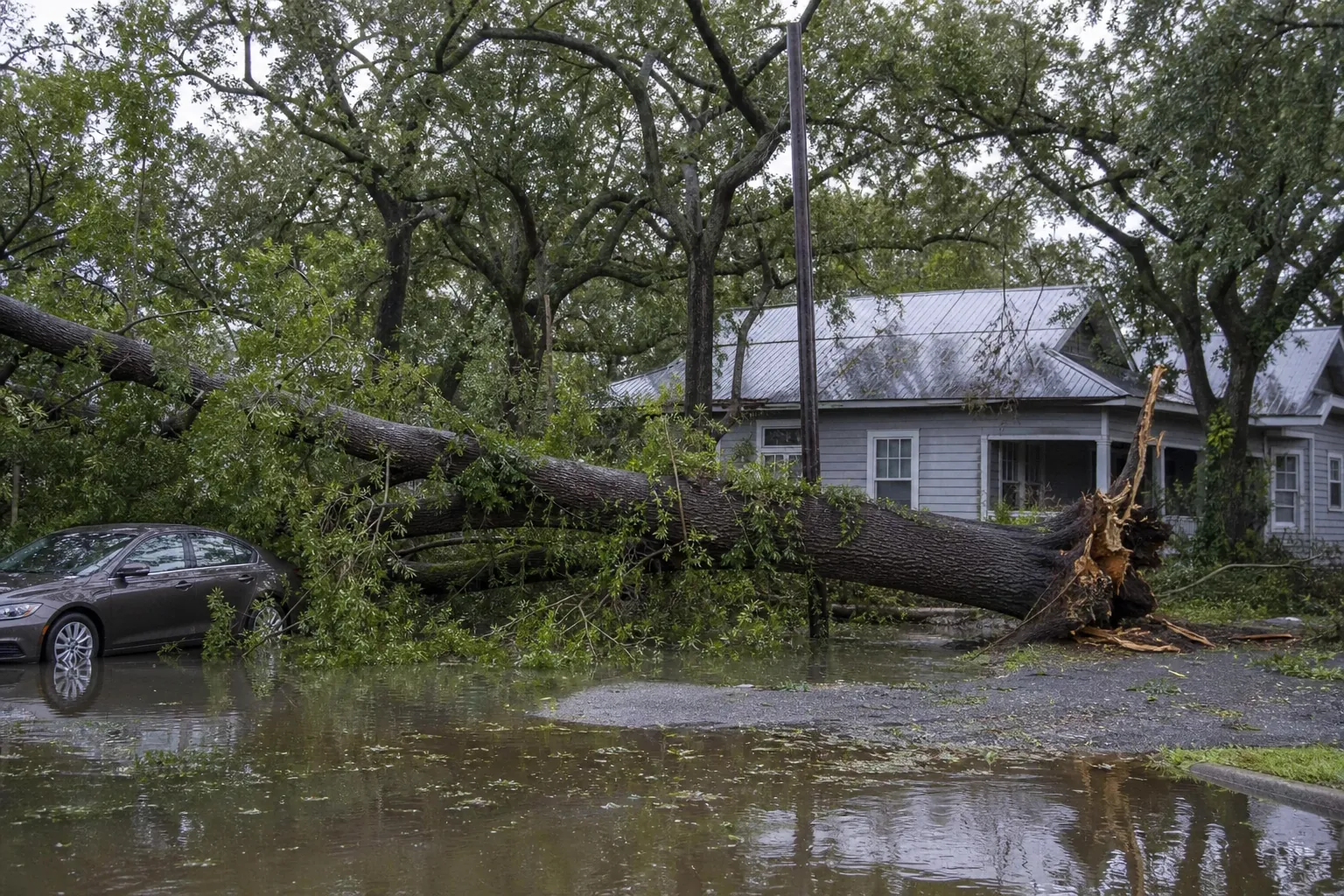
If a hurricane leaves a tree down in standing water in Pensacola, stay out of the water. Do not approach the tree. Underground or downed power lines can electrically charge water, according to Ready.gov hurricane guidance. Start with this warning, not a cleanup task. This guide supports our page on emergency tree removal in Pensacola. It explains how to organize what you already know. A distant view or photo cannot prove that the scene is safe.
Written by Tim Francis, who is responsible for this article's content and editorial preparation. Florida Foliage is based in Daytona Beach. Owner Clinton Funk has decades of hands-on tree care experience. These company details do not confirm service in Pensacola or a response schedule.
Why Should You Stay Out of Water Around a Fallen Tree?
Use caution around water near a fallen tree. Underground or downed power lines can electrically charge it, as Ready.gov explains. Review the tree removal service overview for service context. The company contact page is for questions, not a reason to approach the scene.
Ready.gov also says floodwater can contain debris, chemicals, waste, and wildlife. This warning applies to the water, not just the visible trunk or branches. See the hurricane safety guidance. So, make standing water a main part of your description, not a small detail at the end.
Keep your notes' purpose modest. Describe what you already know. Do not try to decide whether the water is charged or whether you can approach the tree. Those are different questions. Your description can still help without answering either one.
- Start your written summary with “tree down in standing water.”
- Use plain words for the location, such as the front yard or the area visible from a window.
- Write “unknown” for details you cannot describe without going closer.
- Keep your notes together so household members do not need to ask the same questions again.
If your first observation was brief, keep it brief. You do not need a full list of every branch to explain the main concern. A clear note about a fallen tree and standing water is more useful than a detailed account based on guesses.
What Can You Observe Without Diagnosing the Tree?
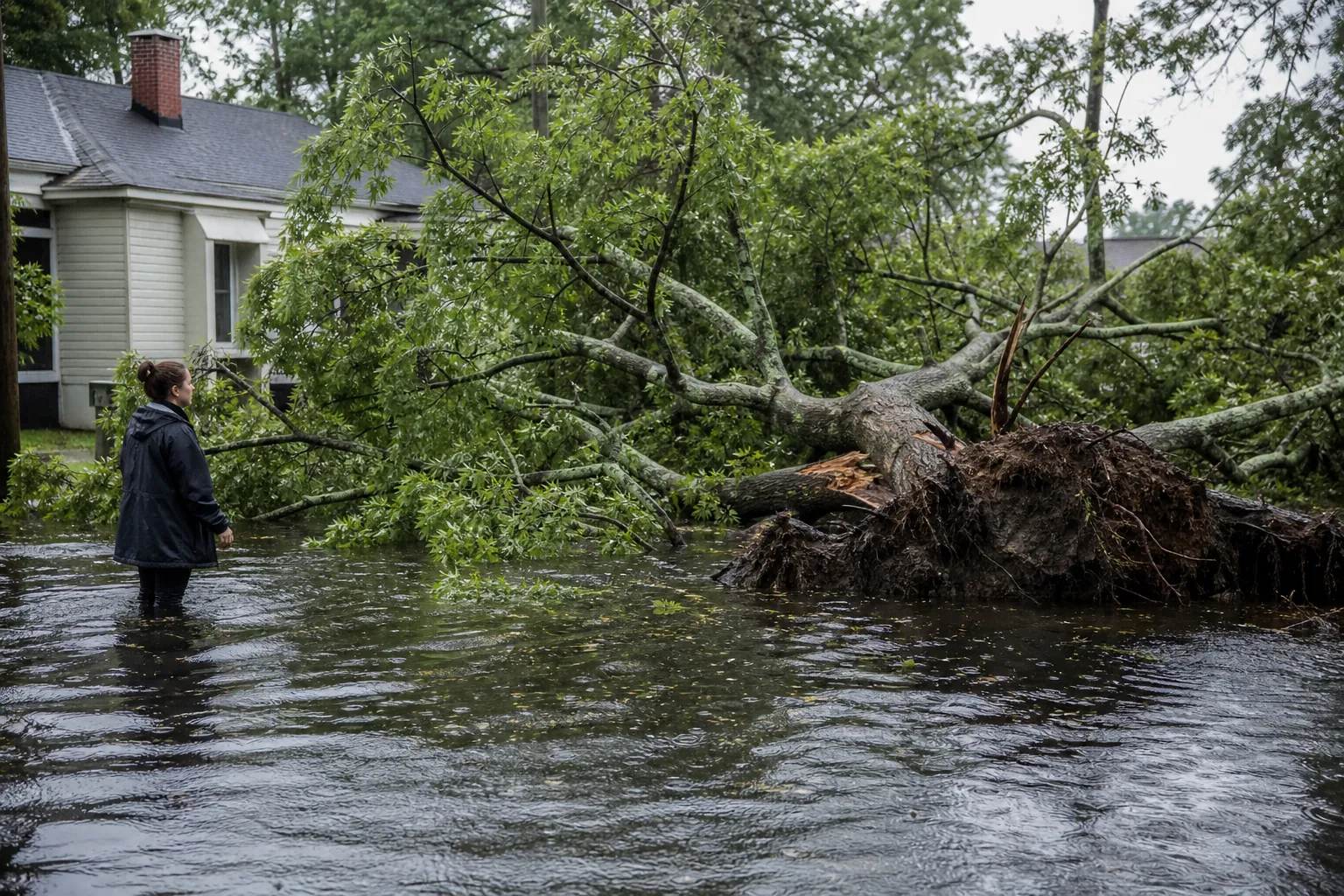
You can describe what is already visible without deciding whether the tree is stable or safe. The removal service description and tree trimming service overview cover different service topics. Neither turns a homeowner's observation into a diagnosis. Stick to what you actually saw.
For example, “a tree is lying across part of the yard” is an observation. “The tree cannot move” is a conclusion. In the same way, “I can see branches above the trunk” describes what you see. It does not tell you the condition of those branches. Storm-damaged tree work has falling-limb and unstable-tree hazards, according to OSHA's storm-damaged tree guidance.
Separate known details from questions in your notes. This makes a conversation easier to follow. It also keeps uncertain details from seeming as certain as things you saw yourself. You do not need tree-care terms when everyday words explain the scene.
- Describe where the tree appears to be. Do not call it stable.
- Say whether you saw standing water the last time you looked. Do not guess its depth.
- Call a visible object a wire only if that is what you saw. Leave its status unknown.
- Mark details from another household member as that person's observations.
Photos you already have may help show the location, but they do not prove that a tree is safe. A photo records how something looked. It is not a diagnosis. Organizing photos you already have is different from going outside to take more.
Which Electrical Warnings Matter Around Water and Debris?
Do not touch electrical equipment if it is wet or if you are standing in water, according to Ready.gov. The contact information page supports a neutral inquiry. The Florida Foliage company background explains the business. Neither page tells you the electrical condition of a storm scene.
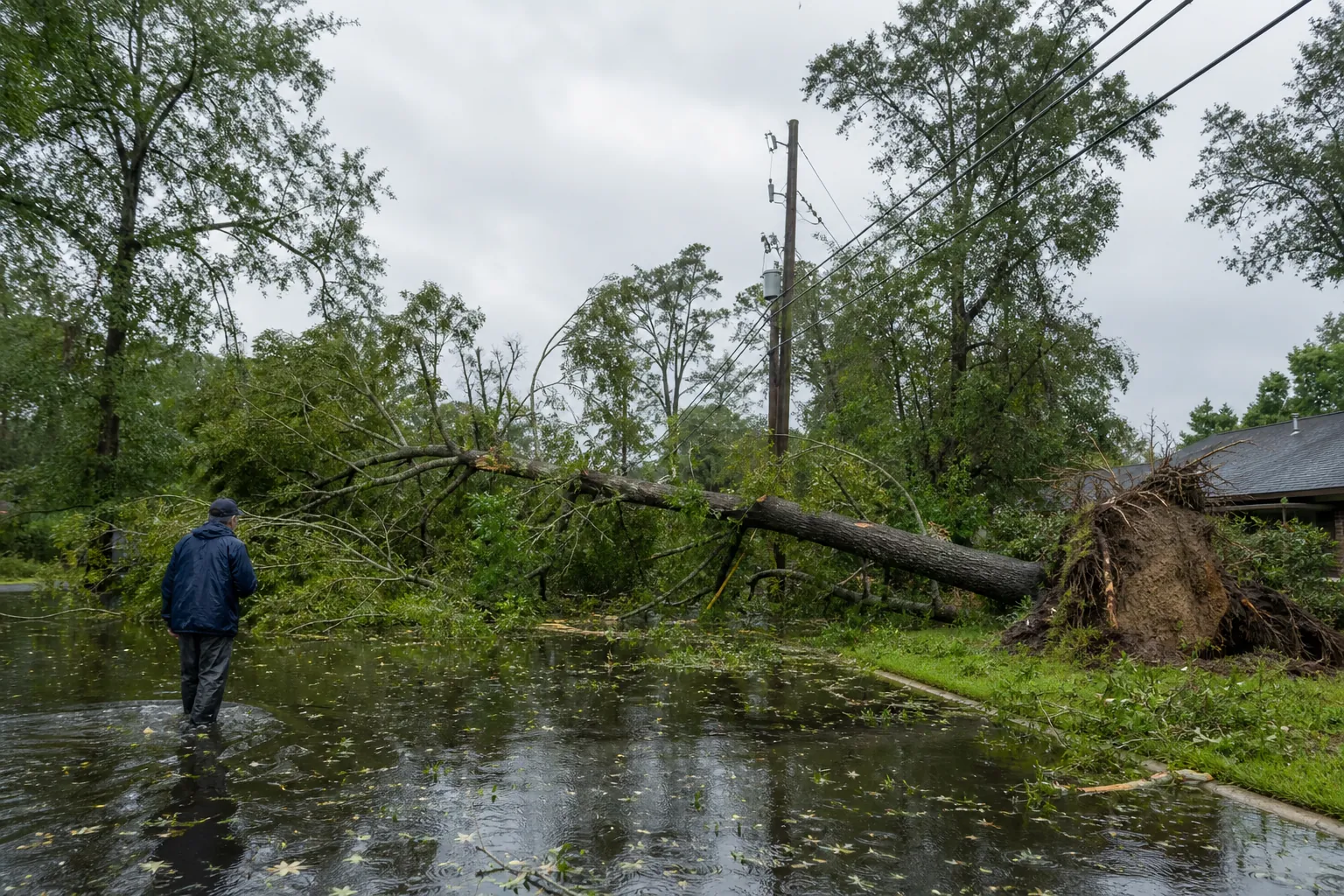
The concern is not limited to electrical items you recognize. Downed electrical conductors can energize trees and fences. OSHA advises avoiding direct and indirect contact. Read the warning in OSHA's tree-work safety guidance. Include visible water, trees, fences, and wires in your description. Do not try to work out how they are connected.
A useful note could say, “Standing water is visible beside the fallen tree, and I do not know whether electrical lines are involved.” This keeps the uncertainty clear. It does not claim that an unseen line is there or rule one out.
- List electrical questions apart from the tree's visible location.
- Do not describe equipment as inactive just because it looks quiet.
- Write “not known” rather than “none” if you do not know whether electrical lines are nearby.
- Keep one version of the description so later messages do not leave out important uncertainty.
You do not need to identify the electrical source to explain your concern. Household notes are for communication. They are not for testing equipment, examining a wire, or deciding whether it is safe to touch anything.
Organize Household Information Before Making Contact
The Florida Foliage inquiry page gives you a place to ask questions. The company information page helps you identify whom you are contacting. Before you send a message, put the observations you already have into a short, clear record. This is a suggestion for organizing information, not a technical assessment.
Start with the location and main issue. Then add what you know about the water and the tree's position. End with your questions. This order keeps a long account from hiding the key detail in a story about the storm.
- Write the property location and name the part of the property in everyday language.
- Say that a hurricane left a tree down and that you saw standing water.
- Note when you made each observation, using information you already have.
- Separate what you saw yourself, what someone else described, and what remains unknown.
- Prepare a short question about whether the company serves that location and handles that type of inquiry.
These steps do not ask you to walk around the property again. They help you organize information you already have. If something was not recorded, leave it blank or write “unknown.” An incomplete but accurate message is better than a polished one that sounds more certain than you are.
- Choose one household note or document as the main record.
- Label existing images with the date they were taken, if you know it.
- Put unanswered questions at the end so they are easy to find during a call.
Remove repeated details before sending your message. Keep important differences clear, such as observations made at different times. Do not blend them together.
Keep Cleanup Planning Separate From Tree Work
The tree removal information page gives general service context. The tree trimming information page covers another tree-care topic. Use these pages to learn about the subjects, not to choose a task based on how a storm-damaged tree looks. Household planning and tree work are separate activities.
OSHA lists tensioned tree material and rolling or sliding limbs as hazards in storm-damaged tree work. See OSHA's tree trimming activity guidance. This article does not explain how to move, cut, or handle that material. It focuses on organizing information and knowing the limits of a homeowner's visual account.
Ready.gov says to wear protective clothing and appropriate masks when cleaning debris. That guidance appears on its hurricane page. It does not mean that water or a fallen tree is safe to enter or handle. Keep that difference clear when you make a household task list.
- Put indoor recordkeeping and phone calls on a separate list from outdoor cleanup ideas.
- Do not call a tree task simple based on how large the debris appears.
- Keep questions about tree work together instead of assigning them as household chores.
- Note supplies you already have at home, but do not treat them as permission to begin work.
A planning list can help even if you schedule no outdoor task. Sorting messages, gathering existing records, and preparing questions can make the next conversation clearer. None of these steps requires a diagnosis of the fallen tree.
Give Household Members One Clear Update
The Florida Foliage business overview can help you keep company details accurate. You can save the contact options page with your household notes. A shared update should say what is known, what is unknown, and whether anyone has sent an inquiry. It should not say a service visit is planned unless one has been confirmed.
For tree work, OSHA says to keep nonessential people outside work and drop areas. Refer to OSHA's storm tree-work guidance. Do not use a household update to invite people to gather around the tree or watch work from those areas.
Keep your message simple. “We have a fallen tree with standing water nearby. We have written down what we could already see and are asking about service availability” explains the situation without promising an outcome. If no one has contacted a company, say so.
- Use the same short description in household messages and company inquiries.
- Choose one person to collect replies so information does not get scattered.
- Record the actual response, not what a household member expects it to mean.
- Update the note when new information arrives, and label earlier observations.
This is about avoiding confusion, not managing technical work. A short update helps people tell the difference between a question sent and an answer received. It also makes it easier to avoid repeating an assumption as if it were confirmed.
A Neutral Next Step With Florida Foliage
Use the Florida Foliage contact page to ask about your location and situation. Read the company background for context. Florida Foliage is based in Daytona Beach. This article does not confirm a Pensacola office, local crews, response times, or service for your property.
You can call (386) 481-7913 and start with a factual sentence: “I am in Pensacola, and a hurricane left a tree down in standing water. Do you serve this location and handle this type of inquiry?” This asks for information. It does not promise that work can be arranged.
- Ask about the location before assuming the company can serve it.
- Mention the standing water early in the conversation.
- Say which parts of your description are observations and which are unknown.
- Write down the reply with your original notes.
For more context, return to the guide to emergency tree removal in Pensacola. Focus first on the water warning, a clear description, and an inquiry that makes no assumptions about availability.
Frequently Asked Questions
The general removal service page and company inquiry options provide context for these questions. The answers below separate sourced safety guidance from household organizing suggestions. They do not diagnose a tree, treat a photo as proof of safety, or confirm local service availability.
Can I walk through the water to look at the tree?
Stay out of the water. Do not enter it for a closer look. Underground or downed power lines can electrically charge water. Floodwater can also contain debris, chemicals, waste, and wildlife, according to Ready.gov. Use observations you already have. Mark missing details as unknown instead of approaching the tree to find out.
Does a photograph show whether the tree is safe?
No. A photo does not prove that a tree is safe. It may help show the location or appearance, but do not use it to diagnose the tree. Storm-damaged tree work has falling-limb and unstable-tree hazards, as described in OSHA's guidance. Organize photos you already have. Do not make a new trip to take photos.
What should I say if wires might be involved?
Say only what you saw, and state what you do not know. For example, say a wire is visible if that is true. Do not guess whether it is live. Downed conductors can energize trees and fences. OSHA says to avoid direct and indirect contact: OSHA. Make that uncertainty clear in your message.
What information should I prepare before calling?
Prepare your location, a short description of the fallen tree, and your observation of standing water. Note when you saw it. Separate what you saw yourself from information someone else gave you. List unknown details without guessing. This is a household organizing suggestion, not a technical checklist. Before discussing next steps, ask whether the company serves your location.
Does this article mean Florida Foliage is available in Pensacola?
No. Florida Foliage is based in Daytona Beach. This article does not confirm service in Pensacola, local crews, or a response schedule. Call (386) 481-7913 to ask about your location and situation. Owner Clinton Funk has decades of hands-on tree care experience. That is company background, not confirmation of service for your property.
Call (386) 481-7913 to talk through next steps.