Reviewed by Clinton Funk
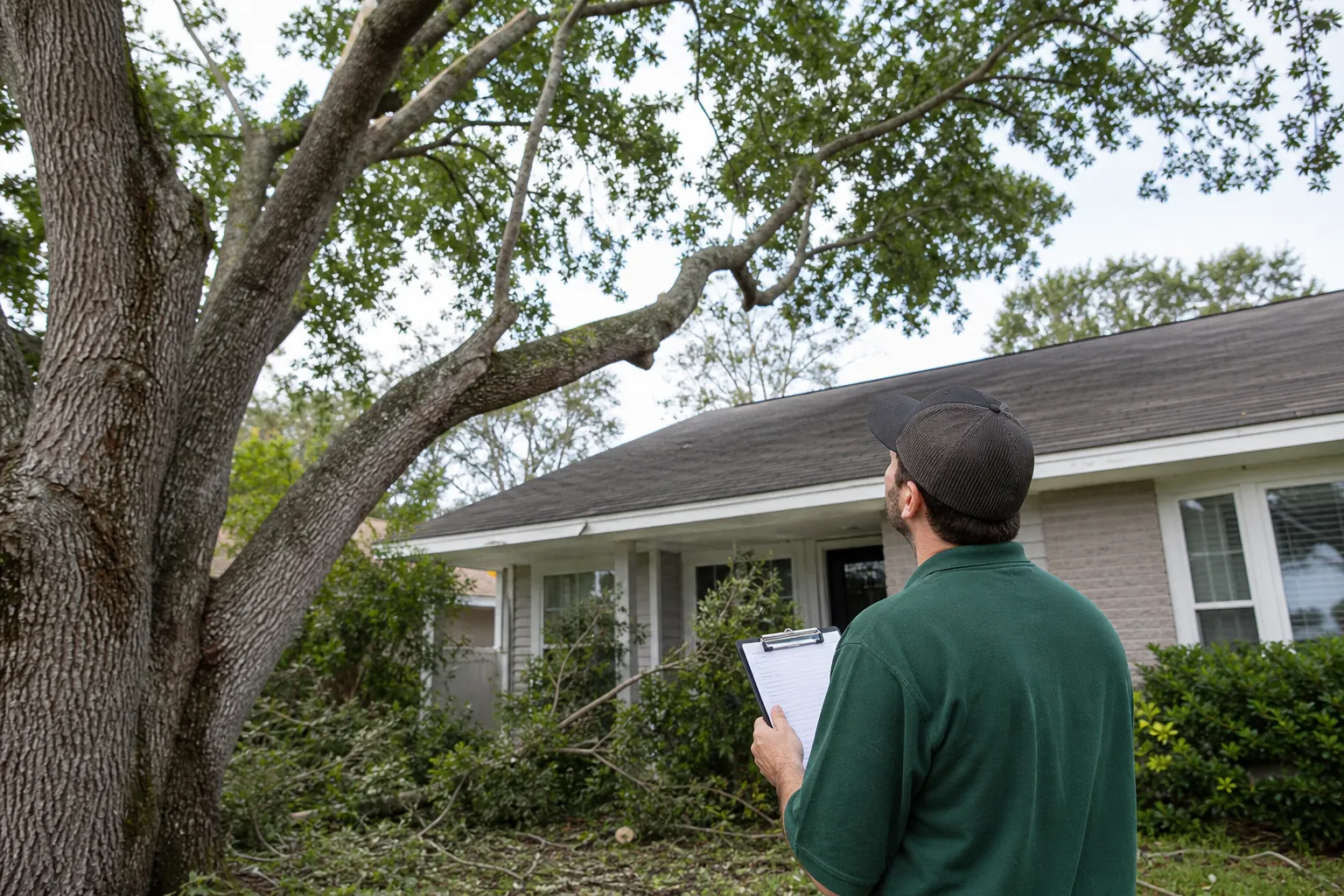
A hurricane tree inspection checklist can help Pensacola homeowners notice changes before a storm and plan care after it passes. Look at each tree from the ground, check for visible changes, and note areas that may need an arborist’s review. A home check can flag concerns, but it cannot confirm that a tree is safe.
Florida Foliage offers tree inspections, arborist reports, tree trimming, and other listed tree services. The company’s headquarters are in Daytona Beach; this page does not claim a Panhandle crew or service availability. For a neutral estimate, call (386) 481-7913 and ask what options may fit your property and storm-care needs.
Hurricane Tree Inspection Checklist: What to Check Before the Season
Start with a calm, ground-level look around the whole tree. Check the trunk, main limbs, canopy, and soil near the base. Compare what you see with past photos if you have them. A new lean, fresh crack, or broken limb deserves attention, but a visual check alone cannot tell you how strong a tree is.
Walk around the tree only when the area is safe. Keep clear of hanging branches, leaning trees, and damaged power lines. Do not climb to get a closer view. Note the tree’s location and the visible concern from a safe spot, then share those details with a tree care professional.
- Look for fresh cracks, cavities, or sections of missing bark on the trunk.
- Check for large dead limbs, split branches, and hanging pieces in the canopy.
- Notice exposed roots, lifted soil, or a change in the tree’s lean.
- Look for limbs that touch a roof, fence, or other structure.
- Record which trees sit near walkways, driveways, and common outdoor areas.
Make a short record for each tree. Include its location, the concern, and when you first noticed it. A photo taken from the same safe place can help show change over time. Avoid standing under the canopy for a picture, and do not move close to a tree that seems unstable.
Give extra attention to trees that have changed since the last growing season. A limb that was sound before may now be dead, split, or crowded by newer growth. This does not mean every visible defect calls for removal. It means the tree may need a closer assessment before storm season.
How Can You Spot Changes in the Trunk and Roots?
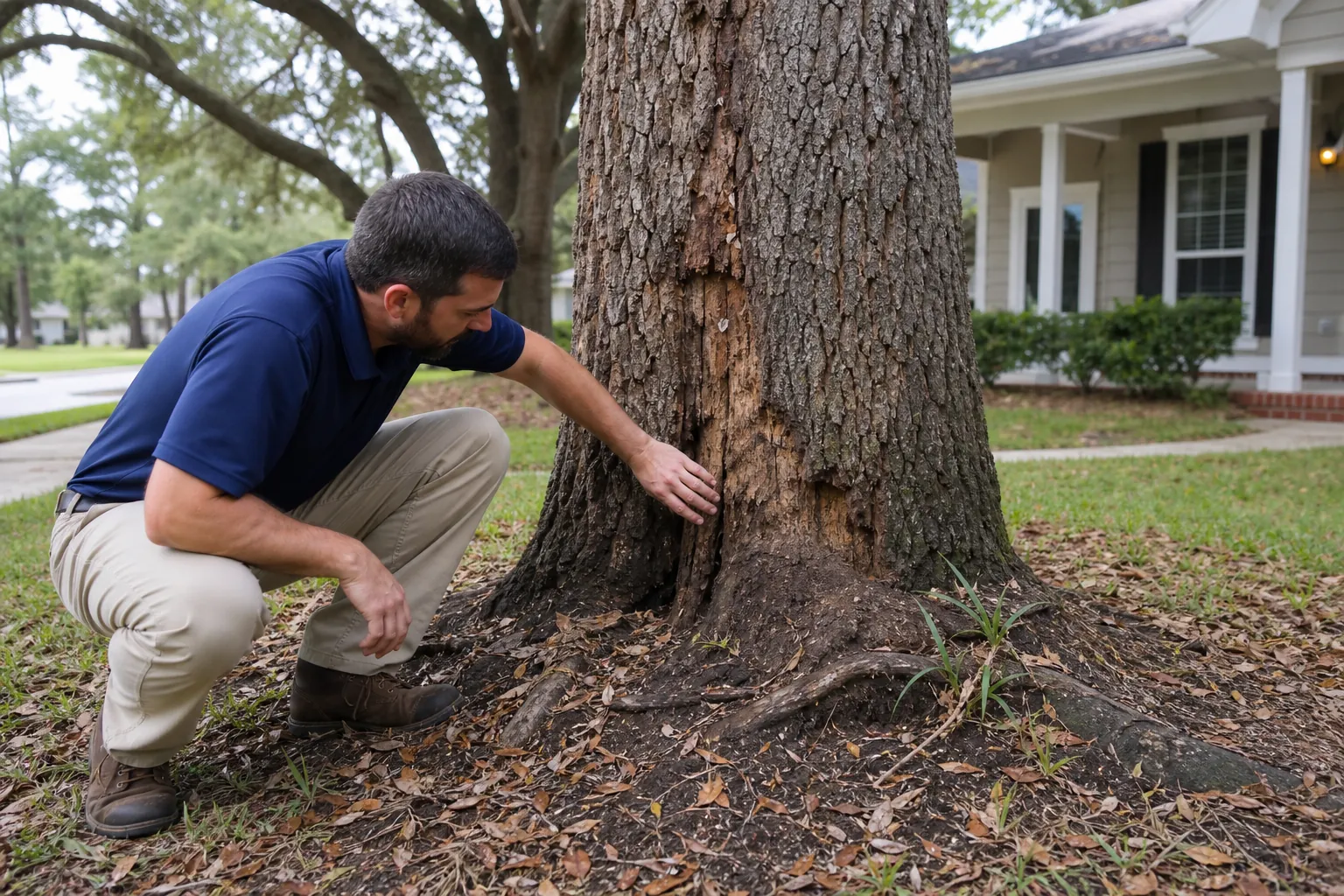
Check the trunk for cracks that run into large limbs, open cavities, or bark that has come loose. Look for a new lean and soil that appears raised or split on one side. These signs call for care in how you approach the tree. They do not, by themselves, prove what work is needed.
Roots help support a tree, but many roots are below the soil and cannot be checked by sight. Exposed roots, fresh soil movement, or a change in the tree’s position can be useful details to report. Do not dig around the base or cut roots to see what is happening. Those steps can harm a tree or make an unstable area harder to assess.
Keep people, pets, and parked cars away from a tree that has shifted or has a large crack. If the tree is close to a home or shared space, tell the tree care professional about that location. A tree inspection can help assess visible signs and discuss suitable next steps. It is not a promise that a tree will withstand a storm.
Look at nearby trees, too. One tree may lean into another, or a damaged limb may rest on a neighboring canopy. Note these conditions without trying to pull or cut anything. A trained review can consider the full setting, including the tree’s size, location, and visible condition.
Which Branches and Canopy Signs Need Attention?
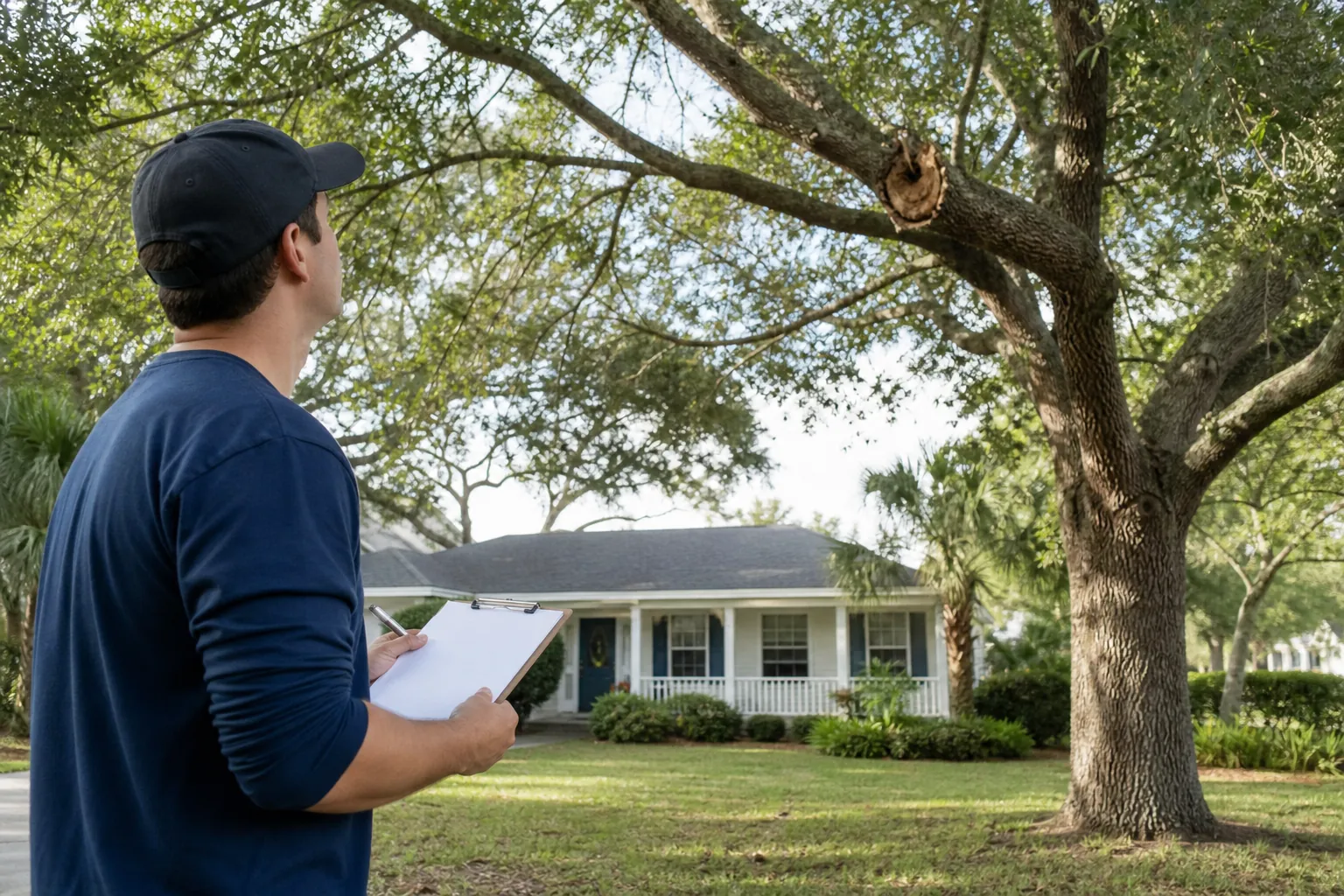
Look for dead or broken limbs, deep splits, and branches that hang lower than before. Notice limbs that extend toward a roof, path, or place where people gather. A crowded canopy can also be worth discussing during an inspection. Avoid deciding on your own that heavy cutting will make a tree storm-safe.
Canopy work should fit the tree and the concern. Tree trimming, canopy thinning, and crown reduction are distinct services, and they are not interchangeable in every case. Ask what the proposed work would address, what parts of the tree would change, and how the work relates to your storm-care plan.
- Point out limbs that are dead, broken, split, or resting on another branch.
- Describe branches that extend above a roof, walkway, or outdoor seating area.
- Ask how trimming or canopy thinning would address the concern you observed.
- Discuss crown reduction only as a specific option for the tree and its setting.
Do not climb a ladder to inspect upper branches. Do not cut limbs near power lines, and do not use a saw on a branch that is under tension or caught in another tree. NWS hurricane guidance and OSHA chainsaw safety resources stress the risks of storm conditions and tree work. Leave dangerous work to trained people with suitable equipment.
More cutting is not always the right answer. A tree may need a focused trim, a broader assessment, or no immediate work. Ask the tree care provider to explain the concern in plain language and describe the scope before work begins. Keep your own notes so you can compare the discussion with what you observed.
How Should You Prepare the Yard Before a Storm?
Before a storm, make a yard plan that starts with people’s safety. Follow local emergency messages and official weather updates. If officials direct people to shelter or leave an area, follow that guidance rather than trying to finish yard work. A tree checklist is useful during calm conditions, not a reason to go outdoors as hazardous weather approaches.
In advance, note which trees have known concerns and where people can stay clear. Move outdoor items only when conditions are safe and official guidance allows it. Do not store loose items under a tree with hanging limbs. Tell household members which areas to avoid if a tree or branch changes.
Decide what information you would share if you request an inspection: the tree’s location, visible signs, nearby structures, and any changes since your last check. If you have photos, use those taken from a safe place. This can help focus a conversation about tree inspections, trimming, or other listed services.
- Check official weather and emergency messages as the storm approaches.
- Keep people away from trees with visible cracks, hanging limbs, or soil movement.
- Make a simple list of trees and concerns to discuss after conditions are safe.
- Do not climb, trim, or haul branches when wind, rain, or other hazards are present.
Florida Foliage lists emergency and hurricane tree removal among its services, along with crane tree removal. Service fit depends on the situation and assessment. Do not assume a crew is nearby or available in Pensacola. When conditions are safe, call (386) 481-7913 to discuss the tree, its location, and the next step for an estimate.
What Should You Do After Wind or Flooding?
After a storm, wait for official messages and make sure it is safe to go outside. Stay away from downed power lines and treat them as live. Do not walk beneath hanging limbs or approach a tree that has fallen against a wire, home, or another unstable object. Contact the proper emergency or utility service for immediate hazards.
From a safe place, scan the yard for fallen limbs, leaning trees, blocked paths, and new cracks. Do not touch a branch tangled in a wire or a tree that is caught against a structure. Do not use a chainsaw to clear storm debris unless you are trained and equipped for that work. The tree’s weight and tension may shift without warning.
Take notes and photos only from a safe distance. Record where debris blocks access and whether a tree has changed position. These details help explain the cleanup scope when you speak with a tree care provider. They do not replace an on-site assessment, and a picture may not show hidden damage.
Storm cleanup may involve tree removal, emergency and hurricane tree removal, or crane tree removal, depending on the site and the tree. Other services on the company’s list include stump grinding and brush hogging. Ask which work addresses the observed condition and which work can wait. Keep people away until the hazardous area has been assessed and made safe.
How Can You Plan Tree Care for Shared Properties?
For a condo, HOA, or commercial property, make a tree list by location rather than relying on memory. Note shared walkways, parking areas, building entrances, and places where people gather. Florida Foliage lists HOA and condo tree services and commercial tree services. The list can help organize an inspection conversation without assuming that every tree needs the same work.
Use clear, factual notes. Describe what you see, where it is, and when you noticed it. Avoid labeling a tree as safe or unsafe based only on appearance. Share the notes with the person coordinating tree care, and keep access clear for an assessment when conditions permit.
For larger sites, group trees by area and identify which ones need prompt attention. Ask whether an arborist report or tree inspection may help clarify visible concerns. Reports and inspections can support planning, but the scope and findings depend on the tree and the inspection. Do not treat a general yard walk as a technical assessment.
Some properties may also need land and lot clearing or brush hogging as part of broader outdoor work. Those services do not replace a tree-by-tree storm review. Ask which work concerns trees, which concerns brush or land, and how the planned work fits the site’s storm-care goals.
Frequently Asked Questions About Hurricane Tree Checks
Can I tell from the ground if a tree is safe?
No visual check can confirm that a tree will withstand a hurricane. A ground-level review can help you notice cracks, dead limbs, soil movement, and other visible changes. Keep clear of trees that look unstable and ask a tree care professional to assess concerns from a safe approach.
Should I remove every tree with a dead branch?
Not necessarily. A dead branch is a concern to note, but it does not by itself show that the whole tree needs removal. Ask about the branch, its location, and whether trimming or another step may address the issue. The right scope depends on an assessment.
Can I cut a hanging limb after a storm?
Do not cut a limb that is hanging, caught, under tension, or near a power line. Stay clear and wait for qualified help. OSHA warns that chainsaw work and storm-damaged trees pose serious risks. Follow official emergency guidance and do not enter an unsafe area to clear debris.
What details should I share when I call?
Share the property location, the tree’s position, what you noticed, and whether it is near a building, walkway, or power line. Say if the concern appeared before or after a storm. Photos taken from a safe place may help explain the issue, but an assessment may still be needed.
Does a tree inspection mean the tree will be storm-proof?
No inspection can make that promise. An inspection can review visible concerns and help explain possible care options. Storm conditions can change trees and bring down branches, even after earlier care. Keep following official weather and safety guidance before, during, and after a hurricane.
Plan a Safe Next Step
A steady routine can make tree care easier to plan. Look from the ground during calm weather, keep notes on changes, and avoid risky work around damaged trees. After a storm, wait for safe conditions and follow official guidance before checking the yard. An inspection can help you understand visible concerns and discuss a suitable scope.
For a neutral estimate, call Florida Foliage at (386) 481-7913. Describe the tree, its location, and what you have noticed. Florida Foliage is based in Daytona Beach; no local crew or availability in Pensacola is implied. Ask about the listed services that may fit your tree and storm-care needs.
Sources
- National Weather Service: Hurricane Safety and Preparedness.
- Occupational Safety and Health Administration: Tree Care.
- Occupational Safety and Health Administration: Chainsaw Safety.
Call (386) 481-7913 to talk through next steps.