Reviewed by Clinton Funk
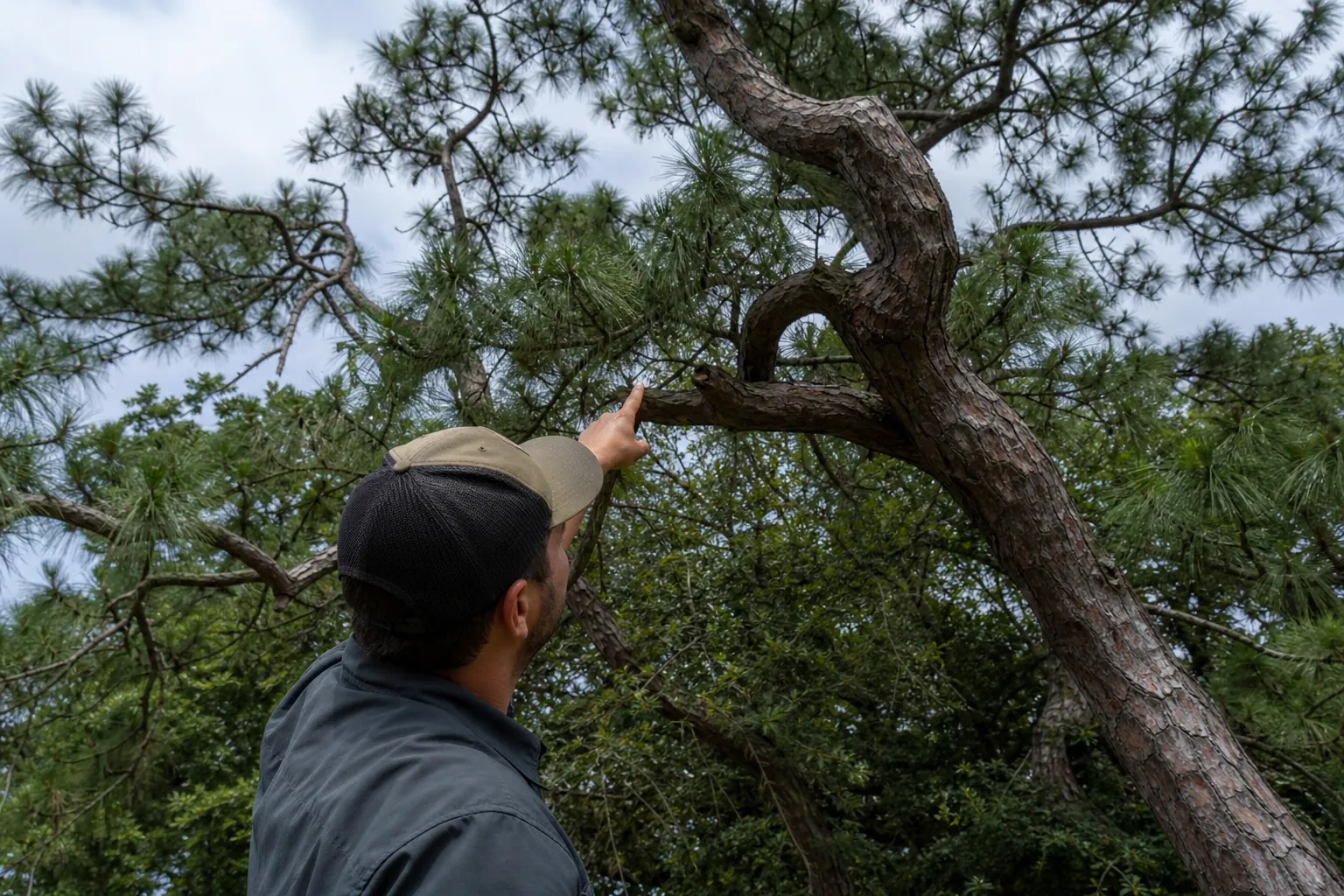
A hurricane tree inspection twisted branches checklist starts with changes, not appearance alone. A curved limb may reflect years of growth. A fresh split, displaced branch, or hanging limb needs assessment. For Navarre homeowners, documented observations can help explain storm damage without climbing or testing weakened wood.
This guide covers tree checks before and after hurricanes near Pensacola. It explains what to record, what an inspection can assess, and how cleanup tasks differ. Florida Foliage is based in Daytona Beach. This article does not state that a crew is based in Navarre or available there.
What can twisted branches reveal during a hurricane tree inspection?
Twisted branches can reflect natural growth, previous damage, or recent storm stress. Appearance alone cannot establish how much strength remains. A useful inspection compares branch structure with cracks, torn bark, and dead wood. Changes at the trunk matter too. Photos from before the hurricane can help document these differences.
Some limbs curve toward open light over many growing seasons. Others bend around nearby branches or past pruning cuts. These shapes may have been present long before a storm. A new angle matters more when it appears with other damage.
Look for differences you can describe from an ordinary ground view. A branch may now cross a gap it once cleared. Its tip may sit lower than it did last month. Leaves may face down because the whole limb has turned.
These observations help guide an inspection, but they don't establish the result. A bent limb and a fractured branch can appear similar. Dense foliage can conceal the location where damage begins. Document visible changes without assigning a cause you cannot confirm.
Hurricanes can leave loose limbs above otherwise clear ground. Ready.gov advises watching for fallen power lines and damaged trees after storms. Keep observations well away from those hazards, and don't approach for a better photo. See Ready.gov's hurricane safety guidance.
For your notes, describe location rather than guessed strength. Write “large limb over rear patio” instead of “safe branch.” Note the tree's position, the branch's height, and nearby features. This gives the person assessing the tree a clearer starting point.
Which branch changes deserve a closer look after a hurricane?
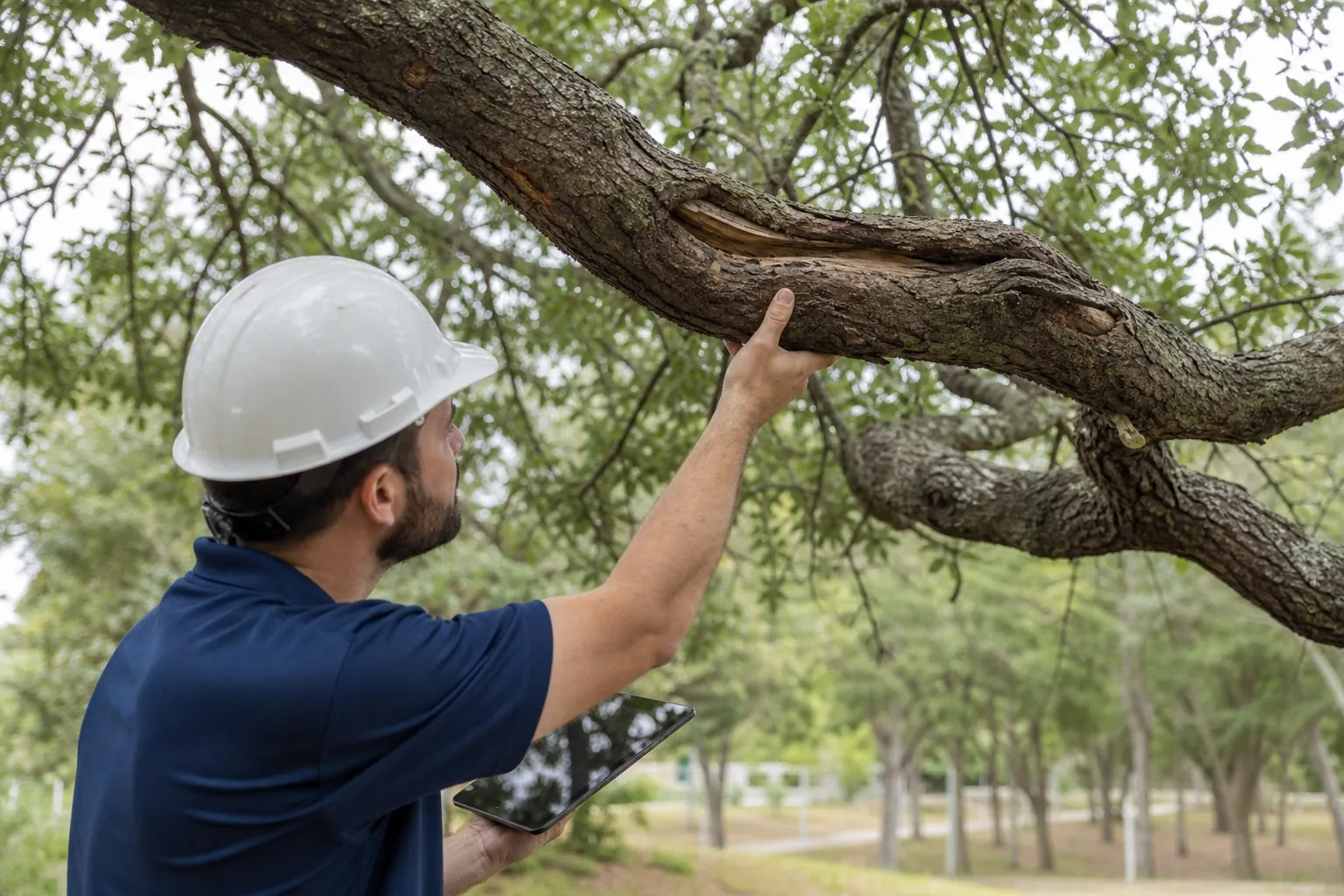
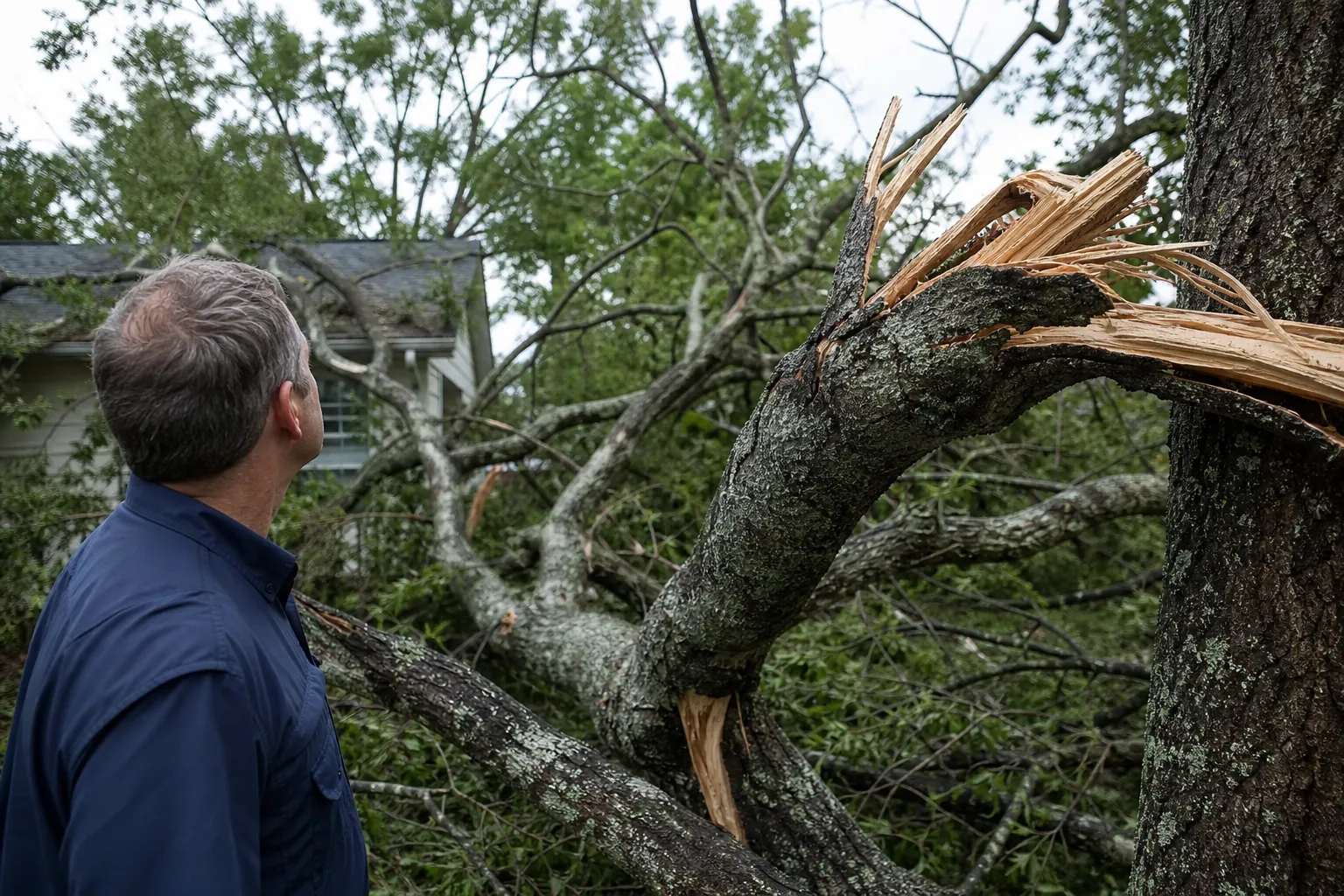
Fresh cracks, partly attached limbs, torn branch unions, and sudden shifts deserve closer assessment. A new lean or raised soil near the trunk adds another concern. Don't treat a full green crown as proof of sound wood. Leaves can remain on a damaged branch after the storm has passed.
A branch union is the point where a limb meets another limb or the trunk. Storm force can tear this area without breaking the branch free. From the ground, you may see a dark gap or pale exposed wood. Note the change without reaching toward it.
Twisting can also leave bark torn along one side of a limb. The branch may still hold leaves while part of its attachment has failed. That is why leaf color alone is a poor screening tool. The connection and nearby wood need attention too.
- Record fresh splits where a large branch joins the main trunk.
- Note limbs that now rest on a roof, fence, or neighboring tree.
- Photograph newly exposed wood from a clear spot outside the damaged area.
- Describe hanging branches that remain caught within the upper crown.
- Record new soil cracks or lifted ground near the tree's base.
A tree inspection considers these observations together. A broken twig differs from a fracture in the main stem. Several damaged limbs may affect the cleanup scope. The purpose is to assess the tree's overall condition, rather than count individual broken branches.
Stay away from trees touching power lines or standing near fallen wires. Ready.gov directs people to avoid downed lines and report them. Never move a branch to check what lies beneath it. Follow Ready.gov's post-hurricane guidance when choosing where to walk.
How can you document storm changes without testing branches?
Build a short record using existing photos, clear descriptions, and views from safe areas. Note what changed, where it changed, and what sits nearby. Don't pull, shake, climb, or cut a branch to judge its strength. Leave hands-on assessment and storm cutting to people trained for that work.
Start with photos you already have on your phone. A yard picture from spring may show the old branch angle. A roof photo may reveal how much clearance existed before the hurricane. Even a wide family photo can provide a useful comparison.
Next, prepare a simple tree map. Identify each tree by a permanent feature, such as the driveway. Use that same location label in each photograph's description. Consistent labels prevent confusion when several trees have similar foliage or trunks.
Keep observations separate from guesses. “Branch moved lower after the storm” describes a change. “Roots have failed” states a cause that may need closer assessment. Clear notes help the next person ask better questions without relying on an uncertain conclusion.
- Label each tree by its location beside a fixed yard feature.
- Save older photos that show branch height and the tree's earlier shape.
- Note the storm date and when you first noticed each change.
- Describe nearby roofs, paths, fences, and other trees in your notes.
- Keep wide views and closer views together under the same tree label.
Don't enter a damaged area just to finish the record. Missing photos are better than close contact with unstable wood. OSHA describes serious hazards in tree care, including falling limbs and electrical contact. Read OSHA's tree care safety information before considering any hands-on storm work.
What should a post-hurricane tree inspection assess?
A useful inspection looks beyond the twisted limb. It considers the crown, branch attachments, trunk, visible roots, and surrounding ground. It should also account for nearby structures and routine yard use. The result should explain observed damage, limits of the assessment, and reasonable next steps for storm care.
Start by sharing your main concern. You may want to understand a changed branch angle. You may need help planning cleanup around a damaged tree. Those are related goals, but they can call for different levels of detail.
Ask which parts of the tree could be seen clearly. Leaves, height, and blocked views can limit a ground check. A report should distinguish visible findings from areas that remain uncertain. An inspection cannot reveal every hidden defect inside wood or below soil.
Ask how the damaged branch affects the remaining crown. Removing one heavy limb may leave an uneven structure. Previous pruning cuts or older wounds may influence the next steps. A useful explanation connects each proposed action to a specific observation.
Arborist reports and tree inspections can help organize that information. Request plain descriptions rather than a list of unexplained terms. If a report uses “branch union” or “crown,” ask what that means for your tree. You should understand which part needs attention and why.
For a Navarre property, include the way the yard is used. A branch above a regular walking route deserves clear discussion. So does a damaged limb over a shed or driveway. These details help define the inspection scope without assuming a certain outcome.
Can a twisted branch be trimmed, or does the tree need removal?
A twisted branch does not automatically mean the whole tree needs removal. The choice depends on the attachment, remaining wood, crown condition, and other damage. Tree trimming may address a limited damaged limb. Tree removal may be considered when broader damage makes retaining the tree a poor option.
A useful plan explains what each proposed cut would achieve. It may remove a broken limb or reduce a damaged branch's reach. The plan should also explain what healthy growth would remain. Cutting every bent branch is not a sound goal by itself.
Crown reduction and canopy thinning are different tasks. Crown reduction shortens selected branches to suitable growth points. Canopy thinning removes selected branches within the crown. Neither task should be chosen from the tree's outline alone after a hurricane.
Ask why either method fits the observed storm damage. Thinning cannot mend a split branch attachment. Reducing branch length cannot restore torn wood. The tree's condition should guide the work, rather than a wish to make every tree look evenly shaped.
Emergency and hurricane tree removal may be part of a severe-damage plan. Crane tree removal may also be discussed where the setting calls for it. These are work methods and service scopes, not proof that any one tree needs removal. Ask for the reason behind the proposed approach.
Storm-damaged wood can shift during cutting, and branches may hold stored force. OSHA identifies falling limbs, equipment, and electrical hazards in tree work. Homeowners should not test removal methods themselves. See OSHA's tree care guidance for the hazards behind that boundary.
How should you plan hurricane tree cleanup around the yard?
Separate the standing-tree assessment from debris work and later yard tasks. First, identify areas that need restricted access or further review. Then define which branches, trunks, brush, and stumps are included in cleanup. A clear scope helps prevent loose debris from being confused with unresolved damage above it.
A yard can look tidier while a damaged limb remains overhead. Keep those two conditions separate in your notes. Debris pickup does not itself resolve a split trunk. Likewise, tree removal may leave stump grinding as a separate task.
Describe the material rather than classifying everything as “storm debris.” Loose twigs differ from a substantial trunk section. Brush beside a fence differs from branches suspended in another tree. These descriptions clarify the cleanup scope without relying on a broad label.
- List standing trees that still need inspection before nearby cleanup begins.
- Separate loose brush from large limbs and trunk sections in your notes.
- State which access routes and yard features need discussion during planning.
- Ask if stump grinding is included or remains a later task.
- Confirm which tree concerns remain unresolved after visible debris is removed.
Plan around changing conditions after the storm. Ready.gov advises returning only when authorities say it is safe and avoiding floodwater. A familiar route may still be blocked or unsafe. Use Ready.gov's hurricane recovery guidance before entering affected areas.
For shared grounds, HOA and condo tree services may involve several trees and common paths. Commercial tree services may involve similar scope questions. Keep the focus on damaged trees, access, and cleanup tasks. Avoid treating a broad cleanup plan as a substitute for individual tree assessment.
What belongs in a tree plan before the next hurricane?
A pre-storm plan starts with an updated view of each tree's condition. Record known defects, earlier storm damage, and branches that need assessment. Keep photos and tree labels easy to find. Review the plan before hurricane season, rather than waiting until a storm is close.
Use the last storm's notes as a starting point. Mark which branches were removed and which concerns remain open. Add fresh photos when the yard changes. This creates a useful record without asking you to judge hidden wood strength.
Discuss tree trimming before the weather turns dangerous. A planned inspection gives more room to compare options. It can also clarify if crown reduction or another listed service fits the tree. Avoid requesting heavy cuts simply to make the crown smaller.
Readiness also means knowing when yard work must stop. The National Weather Service advises staying indoors during hurricane conditions and away from windows. Tree checks should never compete with shelter instructions. Follow National Weather Service hurricane safety guidance as conditions change.
For Navarre homeowners, the most useful plan is simple and current. Keep a tree list, dated photos, and open questions together. Add your storm cleanup priorities, such as a blocked path or damaged crown. Review unresolved concerns after each hurricane rather than assuming they have healed.
Frequently asked questions about hurricane-twisted branches
Does a spiral-shaped branch mean hurricane damage?
No. A spiral or curved shape may have developed over years. Fresh cracks, torn bark, or a sudden position change provide more useful clues. Compare older photos when possible. An inspection can assess the branch in context, though hidden damage may remain beyond the view available.
Can green leaves show that a damaged limb is sound?
No. Green leaves alone do not establish that a branch attachment is sound. A partly attached limb may still carry leaves after a storm. Focus your notes on changes in angle, splits, and torn wood. Leave the condition judgment to an inspection rather than testing the limb.
Should I straighten a bent branch after a hurricane?
Don't pull or force a storm-bent branch back into place. Damaged wood can move in ways that are hard to predict. Keep people away and seek assessment instead. OSHA's tree care safety information explains why falling wood and tree work require care.
Does stump grinding resolve damage in nearby trees?
No. Stump grinding addresses a stump left after tree removal. It does not assess nearby crowns, branch attachments, or trunks. If several trees changed during the hurricane, list them separately. Ask which trees still need inspection before treating the cleanup plan as complete.
What should I ask when calling Florida Foliage?
Describe the tree's location, visible changes, and the storm cleanup work you want discussed. Ask about tree inspections and a neutral estimate for the proposed scope. Florida Foliage's headquarters remains in Daytona Beach. Confirm service-area fit and scheduling directly rather than assuming Navarre availability.
To discuss your hurricane tree concerns, call Florida Foliage at (386) 481-7913. Share your notes and ask about service-area fit, inspection scope, and an estimate.
Call (386) 481-7913 to talk through next steps.