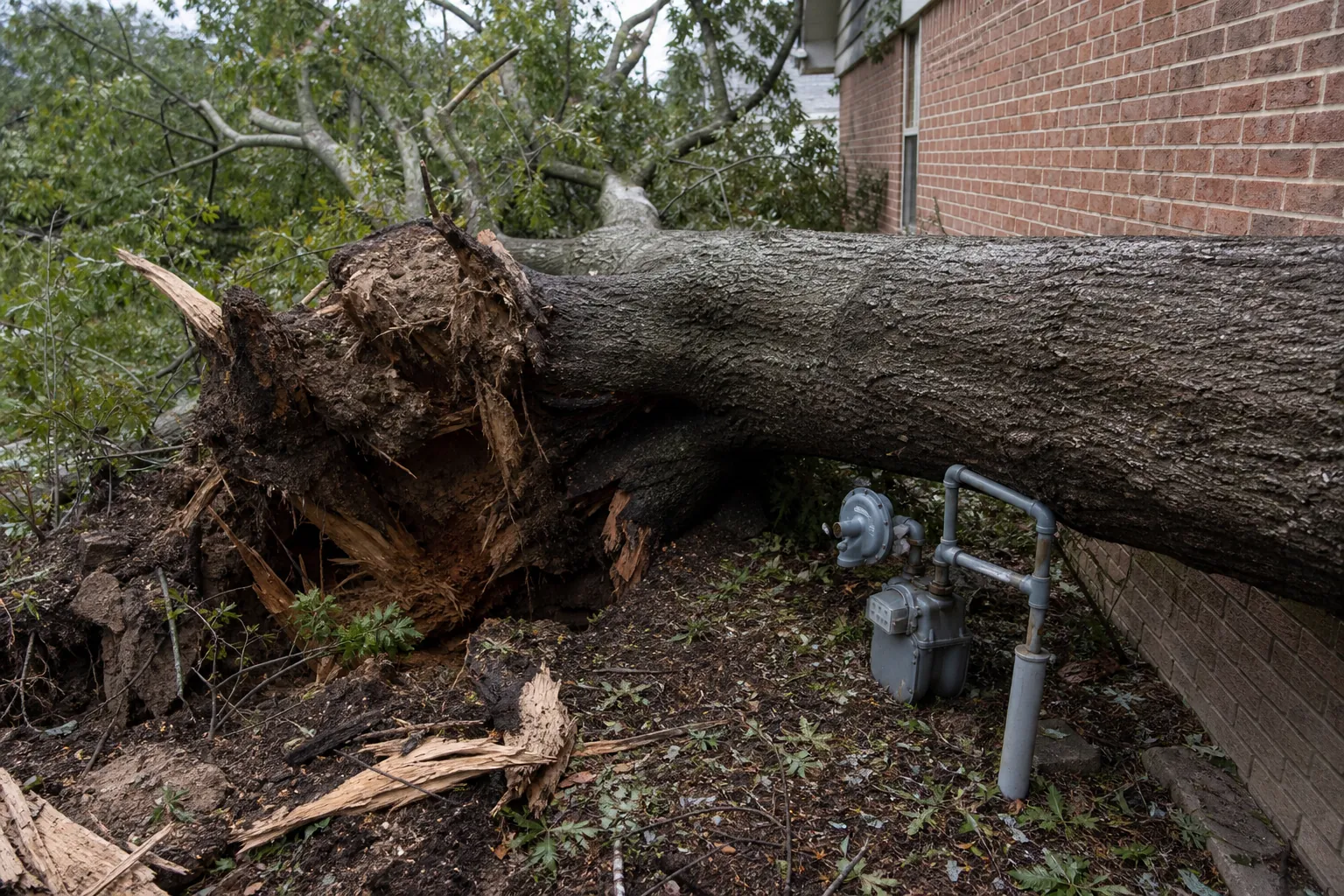
If a hurricane brings a tree down near your gas meter in Pensacola, treat it as a safety question first, not a yard cleanup task. If you smell gas, stay away, leave the area, and stay out of the building. Follow National Weather Service guidance on gas smells after hurricanes. A hidden meter does not show that everything is fine. This guide supports our emergency tree removal in Pensacola resource. It offers ways to record what you know and plan household communication, while making clear what it cannot tell you.
By Tim Francis, responsible for this article's content and editorial presentation.
What Should You Do If You Smell Gas?
If you smell gas, stay away and leave the area. Do not treat the tree as a cleanup project. The National Weather Service says to stay out of a building if you smell gas. Our tree removal service overview and contact information offer background, but they do not replace that guidance.
You may see several things at once: a fallen trunk, branches across the yard, and a partly hidden meter. These details do not show where a smell comes from. They also do not show if the tree touches the meter. Describe each thing on its own. Do not draw a conclusion from the whole scene.
For household records, one person can write down what has already been noticed. This is a recordkeeping suggestion. It is not a reason to gather more details or go back for a closer look. A useful note might say that the tree is down, the meter cannot be seen, and someone noticed a gas smell.
- Write “gas smell noticed” rather than naming a cause that has not been confirmed.
- Describe the tree and meter separately. Do not assume one explains the other.
- Write down unanswered questions as unknowns. Do not fill in gaps from memory or guesswork.
This article does not assess gas equipment. It aims to keep a tree inquiry from becoming a mistaken judgment about another system.
What If Storm Debris Hides the Gas Meter?
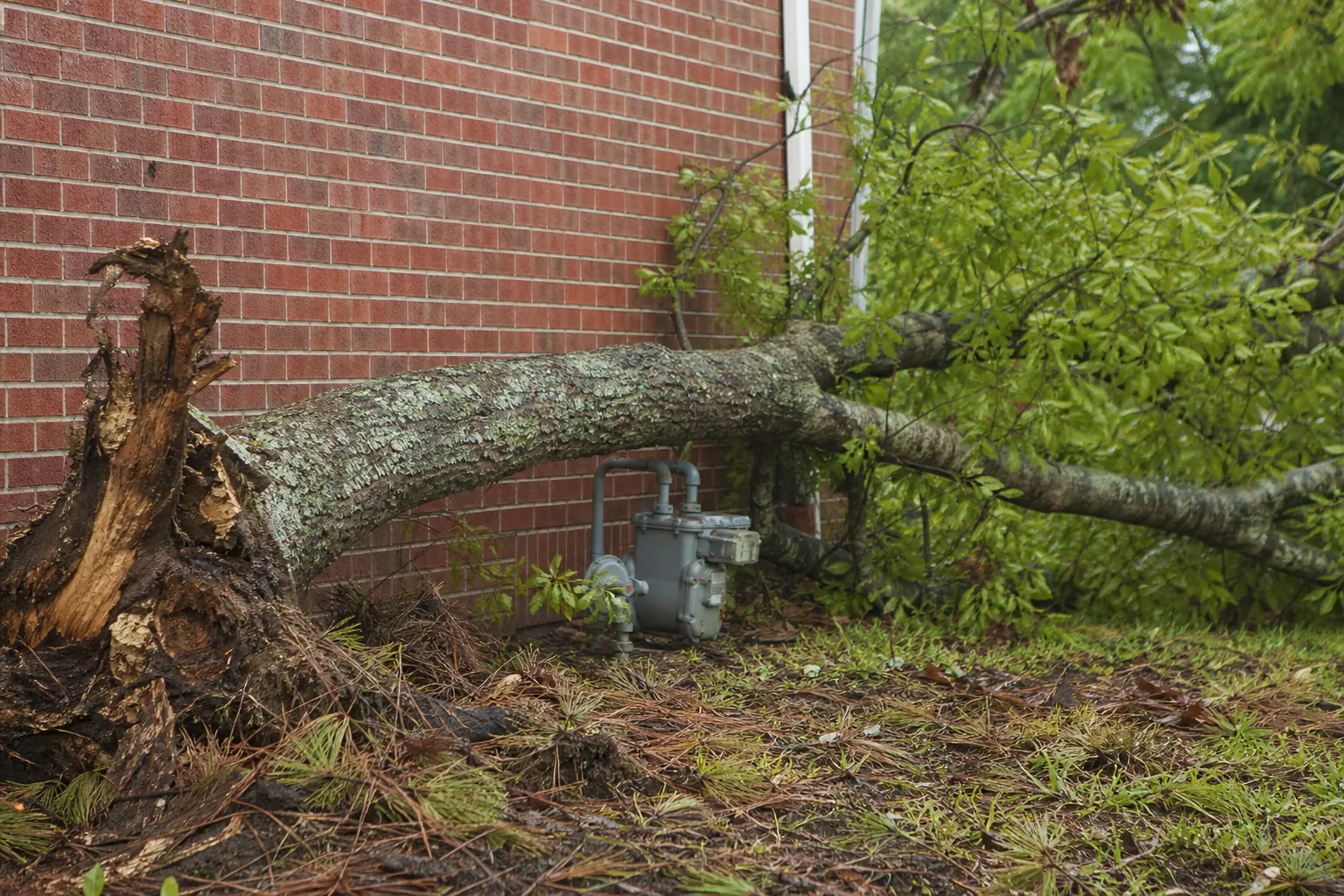
Describe a hidden meter as unknown. Do not treat it as a reassuring sign. OSHA notes that debris can hide meters and fire hydrants. The fallen-tree service information and tree trimming overview explain different tree services. They do not tell you the condition of hidden equipment.
After a storm, you may not see familiar features in the yard. You may remember where the meter usually is, but see only branches in that area. That memory is useful context. It is not the same as seeing the meter now, and it does not show what lies under the branches.
Use plain words to keep this difference clear. If you have not seen the equipment, “Debris covers the area where the meter normally sits” is clearer than “the tree crushed the meter.” Likewise, “the meter is partly visible” does not tell you the condition of the part you cannot see.
- Describe the meter's location as a remembered location if that is what you know.
- Say if the meter is visible, partly visible, or not visible. Do not state its condition.
- Use existing household records only to show its location, not its current condition.
Do not turn a partial view into a full story. A short, accurate description is more useful than a detailed account based on guesses. Keep the question about hidden equipment separate from the question about the visible tree.
What Can You Observe Without Diagnosing the Problem?
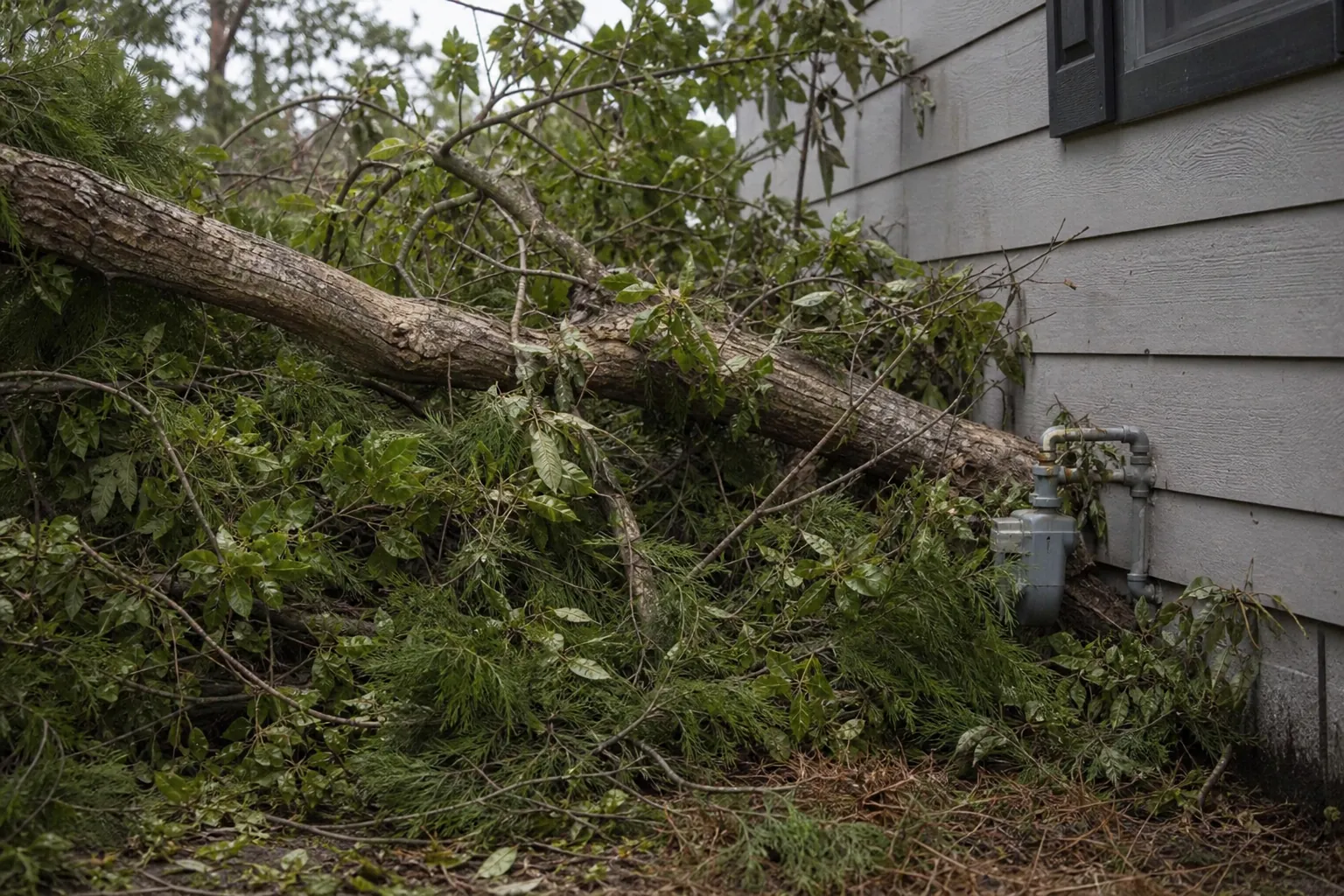
You can describe what you have already noticed without deciding if a tree or meter is safe. Useful details include a fallen trunk, scattered branches, and equipment you cannot see. The tree removal information page and Florida Foliage company background offer context. Neither turns observations into a diagnosis.
An observation describes something already seen, smelled, or noticed in another way. A diagnosis explains a cause or condition. “A limb is lying beside the meter” is an observation. “The meter has no damage” is a conclusion that a general yard description cannot support.
Photographs have the same limits. An existing image may help explain the yard layout or show which tree a message is about. It does not prove that a tree is safe, that hidden equipment is intact, or that a gas smell has a certain source. This article does not ask you to take new photos.
- Use simple descriptions such as “the trunk is down” rather than technical terms you cannot confirm.
- Mark details you are unsure about with words such as “not visible” or “I do not know.”
- Keep any existing images with a note about what they do and do not show.
Being consistent matters more than using technical words. One person may call something a branch while another calls it a limb. The message can still be clear. Avoid unsupported claims about damage, stability, or equipment condition.
How Can You Organize the Household's Next Steps?
A shared note can keep household conversations clear without becoming a technical checklist. Separate what is known, what is unknown, and what you want to ask. The Florida Foliage inquiry page and company information page explain how to get in touch and provide business background before you send a tree-related message.
Storm conversations can repeat when people keep separate notes. One person may remember a hidden meter; another may remember a tree across the yard. One summary can include both details without suggesting that either person has assessed the situation. Keep the summary short enough to read back accurately.
- Write a plain opening sentence that says the property is in Pensacola and describes the fallen tree.
- Add the meter detail on its own. Say whether its location is visible or covered by debris.
- List only details already noticed, including a gas smell if someone noticed one.
- Make a separate list of unanswered questions. Do not add guesses to the description.
- Save the final note in one place so later conversations use the same basic facts.
This numbered list is a tool for organizing information. It is not a set of steps for checking the yard, testing equipment, or starting tree work.
- Choose one household contact name for messages if that makes communication simpler.
- Use a clear subject line, such as “Pensacola hurricane tree near gas meter,” to state the topic.
- Update the note if information changes. Keep earlier uncertainty clear rather than changing it into certainty.
Which Storm Safety Facts Matter Beyond the Tree?
The tree may be what you notice first, but the storm guidance provided here also covers buildings and cleanup areas. Read the tree removal service description and tree trimming service description as background only. Neither replaces the specific hurricane and debris guidance linked with the facts below.
The National Weather Service advises walking carefully around the outside of a home to check for loose power lines, gas leaks, and structural damage. This general advice does not show the condition of your property. It also does not make a close check of hidden equipment part of this article's household planning suggestions.
National Weather Service guidance says to stay out of a building if floodwaters remain around it or authorities have not declared it safe. The same source states that a portable generator must never be used inside a home or garage.
- Keep people who are not needed away from debris machinery, as directed by OSHA's debris collection guidance.
- Stay clear of leaking chemical containers. OSHA says specialist evaluation is needed, according to OSHA's guidance on debris collection hazards.
- Remember that debris can hide fire hydrants as well as meters, as noted in OSHA's debris removal guidance.
These facts cover different conditions. Do not combine them with a tree inquiry into one conclusion, such as “the yard is fine.” Your note can keep observations separate without trying to settle them.
What Information Belongs in a Tree-Related Inquiry?
A useful inquiry describes the tree, the nearby meter, and what you do not know. It does not ask for a safety judgment based on a short message. The online contact route and tree removal service background can help you frame the conversation. They do not suggest Pensacola availability or a particular response.
Start with the location and basic situation. For example: “The property is in Pensacola. A tree came down during the hurricane near the area where our gas meter sits. Debris hides part of that area. We have not confirmed the meter's condition.” This example states what is unknown instead of hiding it.
Add only details that help the conversation. A long account of every branch may hide the main issue. Keep clear what you can see, what you remember about the meter's location, and what you cannot see. If someone noticed a smell, state that clearly rather than guessing at its source.
- Say that the inquiry is about a tree brought down by a hurricane near a gas meter.
- Explain which details you saw and which come from what you knew about the yard before the storm.
- Ask what information would help with a tree-related conversation. Do not assume that work can be arranged.
You do not need to be sure which service you need before you ask a question. Whether the tree needs removal or trimming can remain a question. The linked service pages give general descriptions, not a decision about this property.
How Does Florida Foliage Fit Into the Conversation?
Florida Foliage is headquartered in Daytona Beach. This article does not say that the company has a Pensacola office or crews, or confirm response times or local availability. The Florida Foliage background page and contact page offer a neutral way to learn about the company and ask if a conversation about your situation is appropriate.
You can call (386) 481-7913 or use the contact page. Explain where the property is and ask if Florida Foliage's services are relevant to your inquiry. This is a way to get in touch, not a promise of a visit, a response schedule, or service in Pensacola.
- Begin with “Pensacola” so the location question is clear.
- Keep the tree inquiry separate from questions about the condition of gas equipment.
- Ask what conversation may be appropriate without assuming that a service arrangement exists.
For more context, return to the emergency tree removal in Pensacola guide. The main point here is narrower: describe what you can see, keep unknowns clear, and do not use a tree description to judge a hidden meter.
Should I go closer if I smell gas near the fallen tree?
No. If you smell gas, stay away and leave the area. Do not go closer to look. The National Weather Service says to stay out of a building if you smell gas. A tree-related message can wait. This article's tips for organizing information are not instructions to return and gather more details.
Does a hidden gas meter mean the tree damaged it?
No. A hidden meter alone does not show what happened. OSHA notes that debris can hide meters and fire hydrants. Say that the meter is hidden or partly visible, based on what you know. This describes what you can see. It does not claim that the meter is damaged or intact.
Can an existing photograph prove the tree is safe?
No. An existing photo may help identify the tree or show the yard layout, but it cannot prove that the tree is safe. Use the image only as context. Your written note should still separate visible details from hidden conditions, uncertain contact points, and unanswered questions.
What should I include when contacting Florida Foliage?
Include the Pensacola location, a plain description of the fallen tree, and whether the meter area is visible or hidden. Mark unknown details as unknown. Use the contact page or call (386) 481-7913 to ask about a tree-related conversation. Neither option promises local availability or a response schedule.
Who is responsible for this article?
Call (386) 481-7913 to talk through next steps.