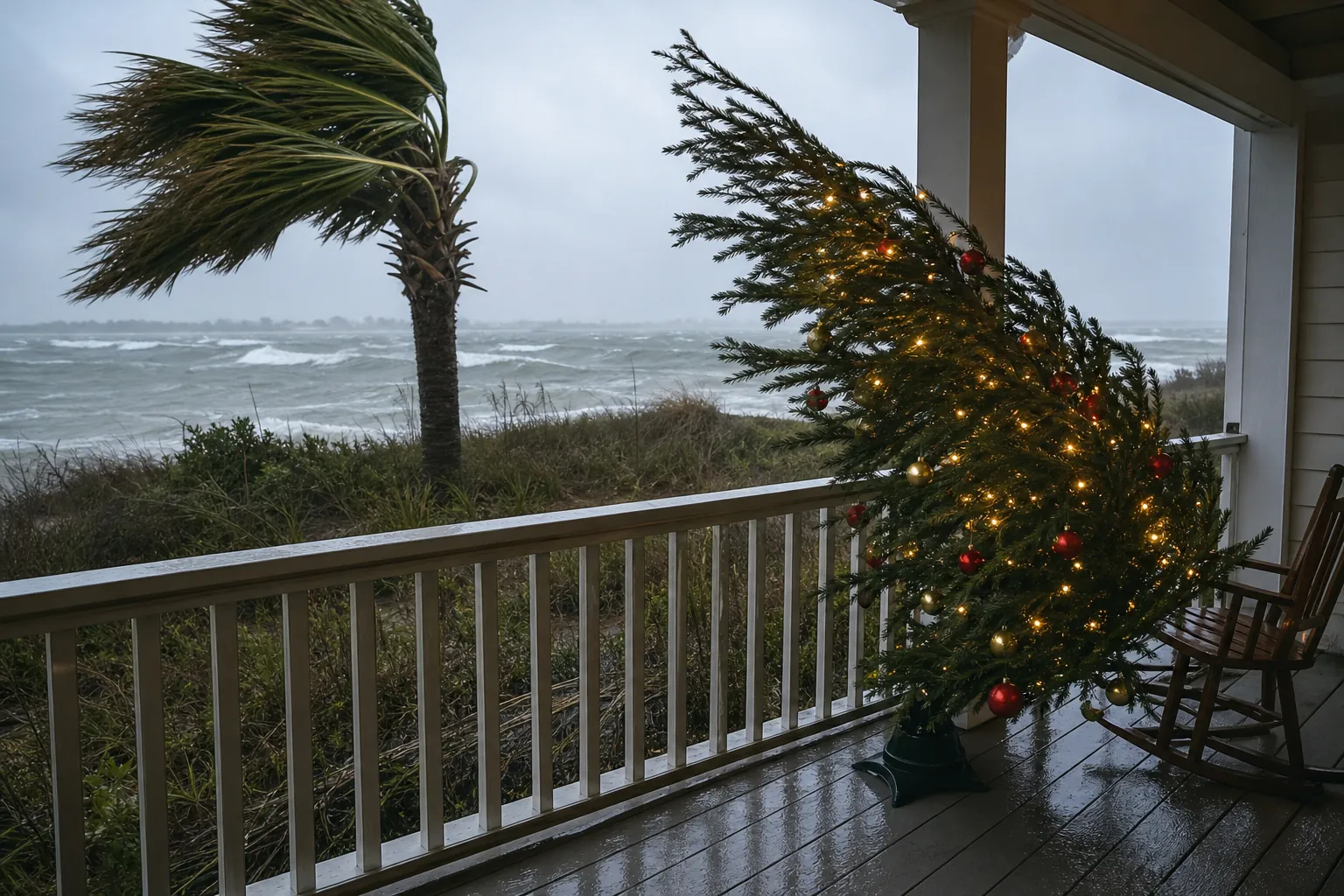
When a hurricane leaves a tree on your deck or porch in Pensacola, do not use that space. Keep people who are not needed outside work and drop areas. Storm-damaged trees can have falling limbs and be unstable, according to OSHA’s storm tree guidance. Start by stating what you can see. Do not try to diagnose the problem or clean it up. This guide supports our overview of emergency tree removal in Pensacola. It explains how to organize your next conversation without assuming that service is available.
Written by Tim Francis, who is responsible for this article’s content and editorial presentation. Florida Foliage is based in Daytona Beach. This article does not establish a Pensacola office or local service availability.
What Should You Do When a Tree Lands on Your Porch?
Do not use the affected porch. Keep people who are not needed outside work and drop areas, as directed by OSHA’s storm tree guidance. Read our tree removal service overview for context. Use our contact page to ask about the situation, without assuming a local crew is available.
Start with a simple description. For example, a tree is resting on the front porch, a large limb is across the rear deck, or foliage covers part of an entrance. These statements describe what you can see. They do not show whether the tree, porch, or house is stable.
You do not need to name every branch or identify the tree species before making an inquiry. Start with the location on the property and the part of the deck or porch that seems affected. If you do not know where the tree fell from, leave that detail unknown.
- Write down whether the affected area is a front porch, side porch, rear deck, or another outdoor space.
- Separate what you saw from details someone else reported.
- Use plain words such as “resting across the railing” instead of technical terms.
- Note unanswered questions instead of guessing.
Keep your notes short enough to read aloud. A clear first sentence helps a business understand your question. It also means they do not have to sort through a long storm story. Do not turn uncertainty into a firm conclusion.
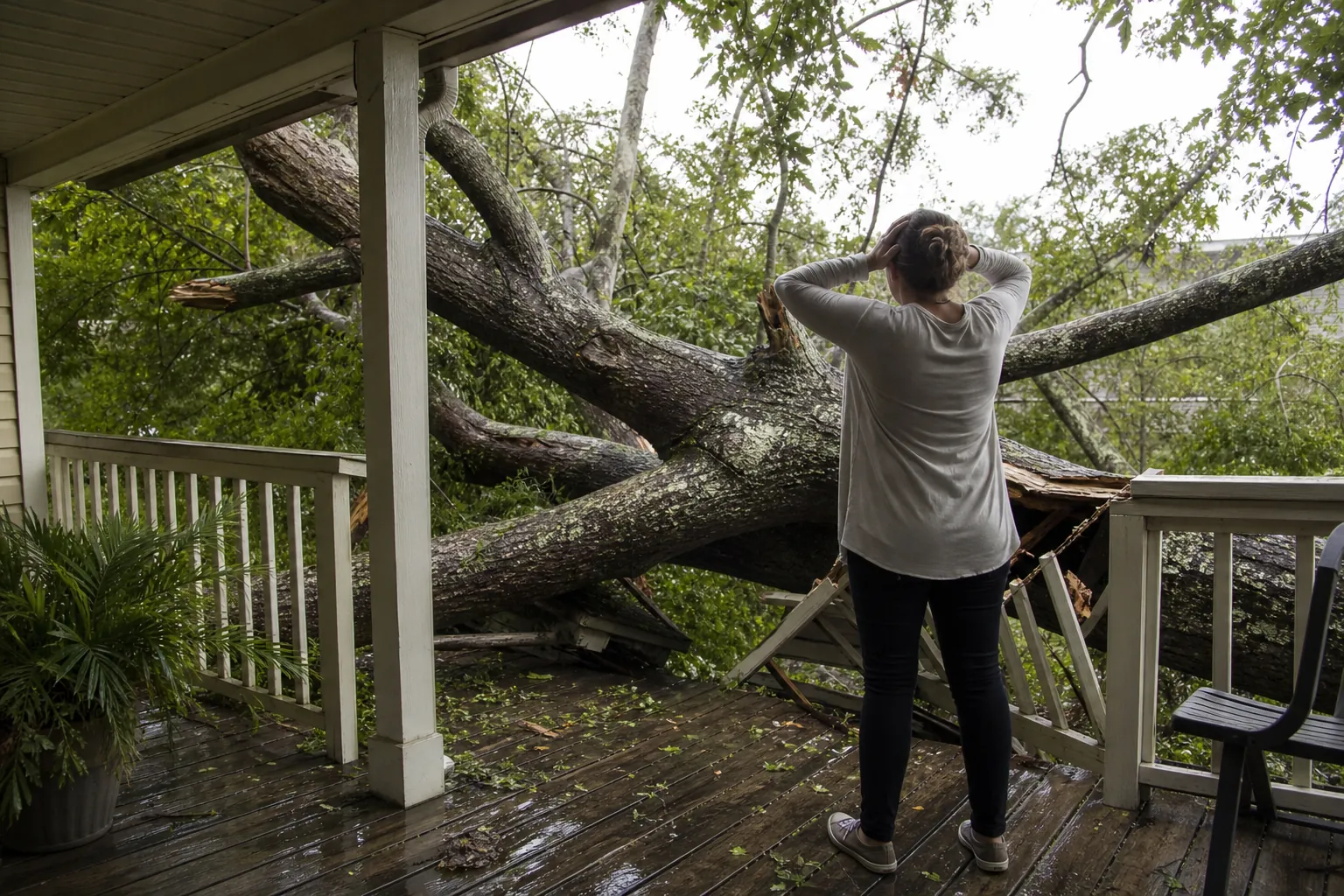
What Does a Tree Resting on a Deck Tell You?
It tells you where the tree seems to be, not whether it is stable. OSHA lists tensioned tree material and rolling or sliding limbs as hazards in its storm cleanup guidance. Our removal service information and company background provide context for a conversation. They are not a diagnosis.
A trunk across deck boards can look settled in a photo. A branch caught on a railing can look fixed in place. Neither view proves that the tree parts are stable. The visible position is one thing you can note. Judgments about tension or support are different.
Do not call a branch “under control” or a trunk “secure” based on how it looks. This article does not explain how to test those things. It can help you describe what you see without making a technical judgment.
- Write “the trunk appears to touch the deck” if that is what you see.
- Write “the railing is hidden by branches” instead of guessing about damage below them.
- List covered or hidden areas as unknown.
- Do not make claims about stability in your notes.
Photos may help show the location, but they do not prove that a tree is safe. If you already have a photo, describe what it shows and what it leaves out. Label a photo from before the hurricane as an earlier view, not the current condition.
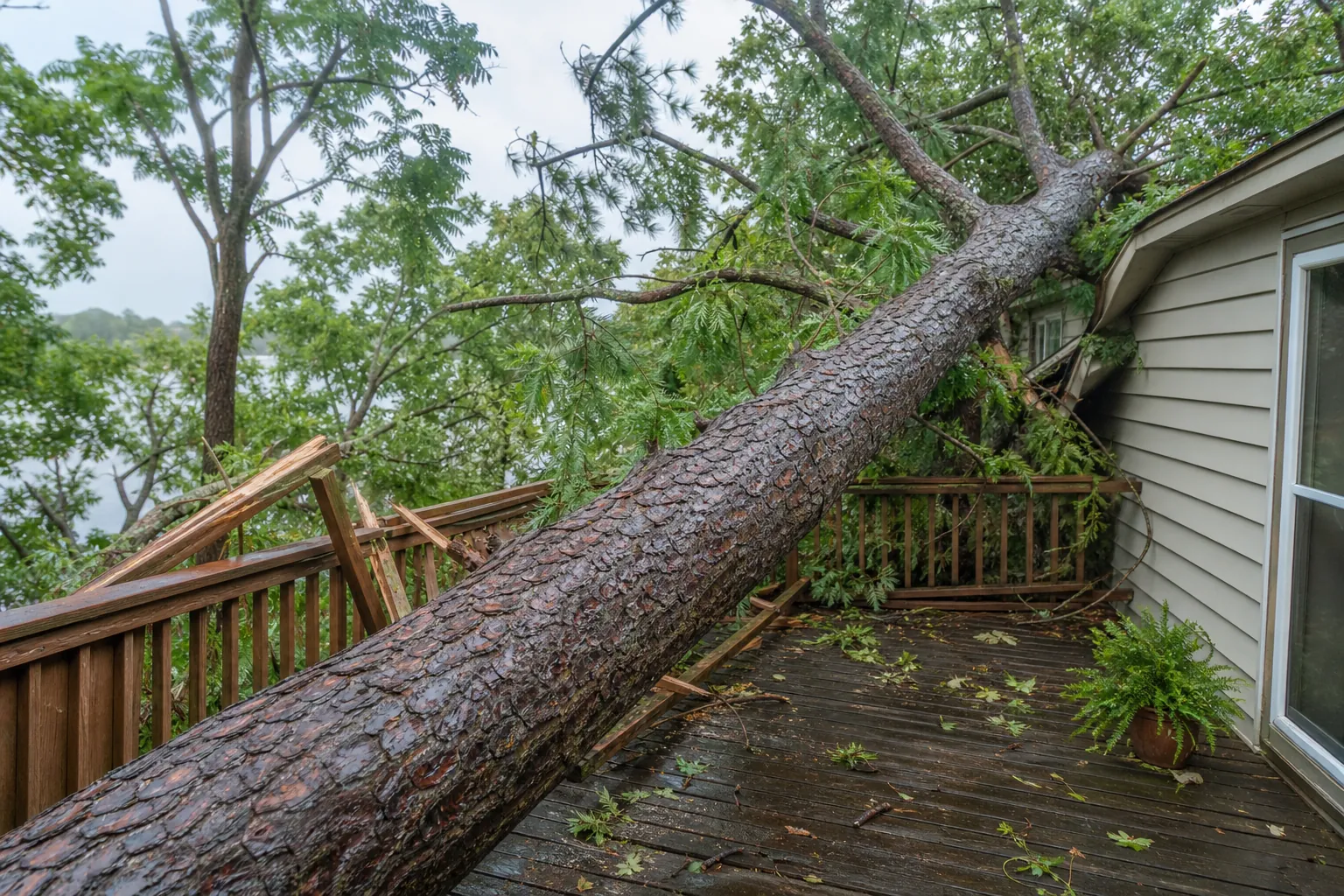
How Do Power Lines and House Damage Change the Situation?
Keep electrical and building concerns separate. Downed wires can send power through trees and fences. Avoid direct and indirect contact, according to OSHA. Our tree removal information explains the service type. Our inquiry page gives you a place to describe what you see, without assuming tree work will address every concern.
The National Weather Service says to walk with care around the outside of your home. Check for loose power lines, gas leaks, and damage to the building. See its after-hurricane safety guidance. This is not a reason to go near a tree, wire, or blocked porch.
Stay out of any building if you smell gas, if floodwater is still around it, or if officials have not said it is safe, as stated in the National Weather Service guidance. A question about a tree does not replace these steps for the building.
- Note a visible wire separately from your description of the tree.
- Say if something is clear to see or partly hidden by leaves and branches.
- Do not call an unknown line harmless in your notes.
- Use a separate heading for notes about the building so they do not get lost in the tree details.
If your household uses a portable generator after the storm, never use it inside your home or garage, according to the National Weather Service. Keep this storm safety step separate from any talk about cleaning up the deck or porch.
Organize a Useful Description Before Making Contact
A short note can make your inquiry easier to follow. Use the Florida Foliage contact options when you are ready to ask a question. Read the company information for background. These pages tell you about the business, but do not confirm that service is available in Pensacola.
Treat your note as a record of what you saw, not a full assessment. The person who reads it needs to know what you mean by “on the porch.” Is the tree above the floor, across the railing, or covering the area so much that you cannot tell? It is useful to say when you do not know.
This numbered list is a way to organize a message. It is not a set of steps for entering the affected space or handling storm debris.
- Start with the city and the location of the affected deck or porch on the house.
- Describe where the tree appears to be in one or two plain sentences.
- List any separate notes about wires, the building, or hidden areas.
- Label existing images by date. Note which ones were taken before the storm.
- End with your questions about whether the business serves the area and what information it needs.
For example, your note might say: “A tree appears to rest across the rear deck in Pensacola. Branches hide part of the railing. I cannot see the whole deck surface. Does your business serve this location, and what information would you need to discuss the situation?”
- Keep one main version of your description so later messages do not conflict.
- Add new details in a dated note. Do not change an earlier observation into a fact.
- Choose one household contact person if that makes it easier to communicate.
Separate the Cleanup Question From Future Tree Care
Your first inquiry is about the tree now resting on the deck or porch. The tree removal page gives background on that service type. The tree trimming page gives context for a separate talk about future care. Neither page says what a storm-damaged tree needs.
A storm conversation can easily turn into a list of every tree concern in the yard. Put the current situation first in your message. Save questions about other trees for later, instead of mixing them with details about the affected porch.
The fact that one tree fell does not show the condition of every nearby tree. Also, a branch on a railing does not by itself show whether removal or another service is right. Keep the service question open. Do not choose an answer based only on how things look.
- Put the deck or porch situation first in your written note.
- Make a separate list of questions about other trees.
- Use the trimming page for general service details, not steps for handling damaged branches.
- Ask which service type may fit. Do not present your guess as a diagnosis.
You can also keep household planning separate from tree work. You might keep messages in a folder, make a dated list of what you see, and record your questions. These are simple ways to stay organized. They do not make the site ready for cleanup or show that anyone can use the affected space.
Keep Household Communication Clear During the Cleanup Discussion
A clear message for everyone in the household can reduce confusion about what you saw and what is still unknown. Share the removal service context with the person making inquiries. Use the contact page to keep the conversation with the business focused. These are ways to communicate, not a substitute for checking the scene.
Keep people who are not needed outside work and drop areas, as directed by OSHA’s storm tree guidance. Do not let a casual update suggest that anyone has checked the deck or porch if no one has reached that conclusion.
For household messages, use words that match what you know. “We have sent a description” means only that. “Someone has replied” means only that. Neither means that work is set, the tree is stable, or the porch is safe to use.
- Share the same notes about what you saw with household members who need them.
- Keep questions separate from confirmed replies in your notes.
- Mark guesses clearly, or leave them out if they are not useful.
- Do not say the affected space is ready to use based on a photo or message.
A short update is often better than more guessing. You could say that the household has a description ready and is asking if service is available in the area. This shows that you are organizing the inquiry. It does not suggest that anyone has checked the tree or building.
Contact Florida Foliage Without Assuming Local Availability
Florida Foliage is based in Daytona Beach. Read the Florida Foliage company background and use the contact page for an inquiry to ask if the business serves your Pensacola location. Contacting the business is a way to ask. It does not promise a schedule, dispatch, or local availability.
You can call (386) 481-7913 and start by asking if the business serves your area. Then give a short description of the tree on the deck or porch. Ask what information the business needs to continue the conversation. A phone number alone does not confirm that service is offered in your area.
- Ask if the business serves your location before discussing possible next steps.
- Say what you can see and what you do not know.
- Ask how to share existing notes or images if the conversation continues.
- Keep any reply separate from guesses about timing or availability.
For more context, read our guide to emergency tree removal in Pensacola. Use it with this porch-focused article to organize your questions. Do not use it to decide if a damaged tree or building is safe.
Frequently Asked Questions
These answers help separate what you can see from what you cannot know. They also explain what a service inquiry can and cannot do. The tree removal overview gives service context. The contact page gives you a neutral way to ask about your location. Neither tells you the condition of your deck, porch, or tree.
Does a Tree Resting on My Deck Mean It Is Stable?
No. Its position does not show that it is stable. OSHA lists unstable trees, tensioned tree material, and rolling or sliding limbs as storm cleanup hazards in its tree work guidance. Say where the tree seems to rest, but do not claim that it is stable. A photo does not prove that the tree is safe.
What Should I Say if Branches Hide the Porch?
Say that branches hide the porch and name the parts you cannot see. Do not treat a hidden area as proof of damage or safety. You could note that leaves and branches cover the railing and deck surface. Keep what you can see separate from what you do not know. Use that approach in later messages too.
What if a Wire Appears to Touch the Tree?
Do not assume the wire is safe. Downed electrical wires can send power through trees and fences. OSHA says to avoid direct and indirect contact in its storm tree guidance. Describe the wire separately from the tree. Do not touch either one to identify the wire or make your notes clearer.
Can Existing Photos Help Explain the Situation?
Existing photos can help show where the trunk or branches are. They cannot prove that a tree, porch, or deck is safe. Label each photo with its date. Mark which views are old and which are current. Note anything hidden or outside the frame. Ask the business how it wants you to send photos before you do so.
Does Contacting Florida Foliage Confirm Pensacola Service?
No. Florida Foliage is based in Daytona Beach. An inquiry does not confirm that service is available in Pensacola. Call (386) 481-7913 or use the contact page to ask if the business serves your location. Give a short description and ask what information it needs. Do not assume that a crew, schedule, or response time is available.
Call (386) 481-7913 to talk through next steps.