Reviewed by Clinton Funk
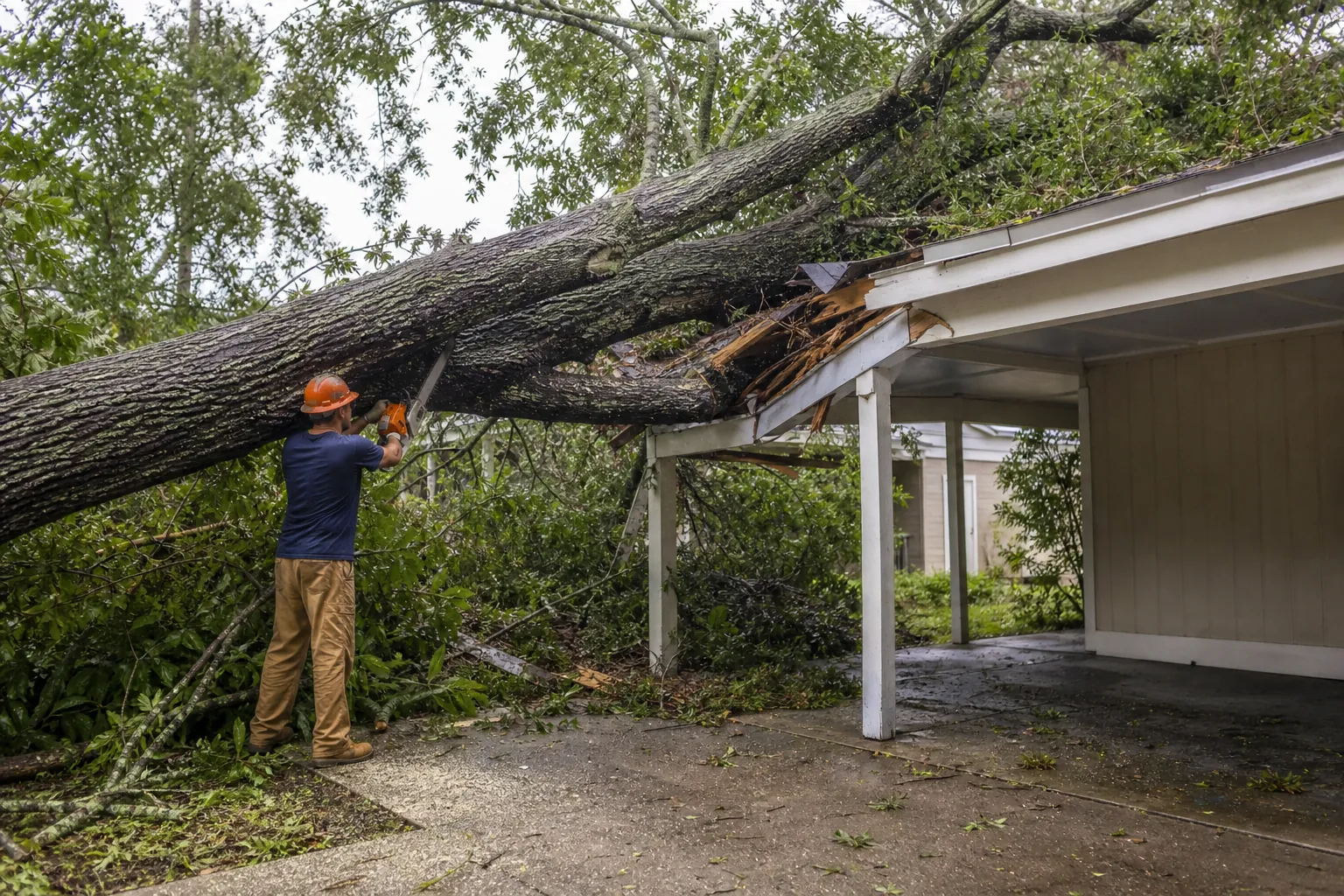
When a hurricane leaves a tree against your carport, keep your distance. Hurricane tree removal carport work starts with checking hazards from a safe place. Don’t enter the carport, move trapped cars, or cut loaded limbs. Follow local alerts and arrange a tree assessment before cleanup starts.
For Gulf Breeze homeowners, the concern extends beyond the fallen trunk. Damaged branches, roofing, or displaced roots can affect the removal plan. The sections below explain useful observations and cleanup planning. They also discuss tree care before the next hurricane near Pensacola.
Florida Foliage is headquartered in Daytona Beach. This guide does not state that a Panhandle crew is available. Contact the company to discuss your location, tree concerns, and service scope.
What makes hurricane tree removal near a carport different?
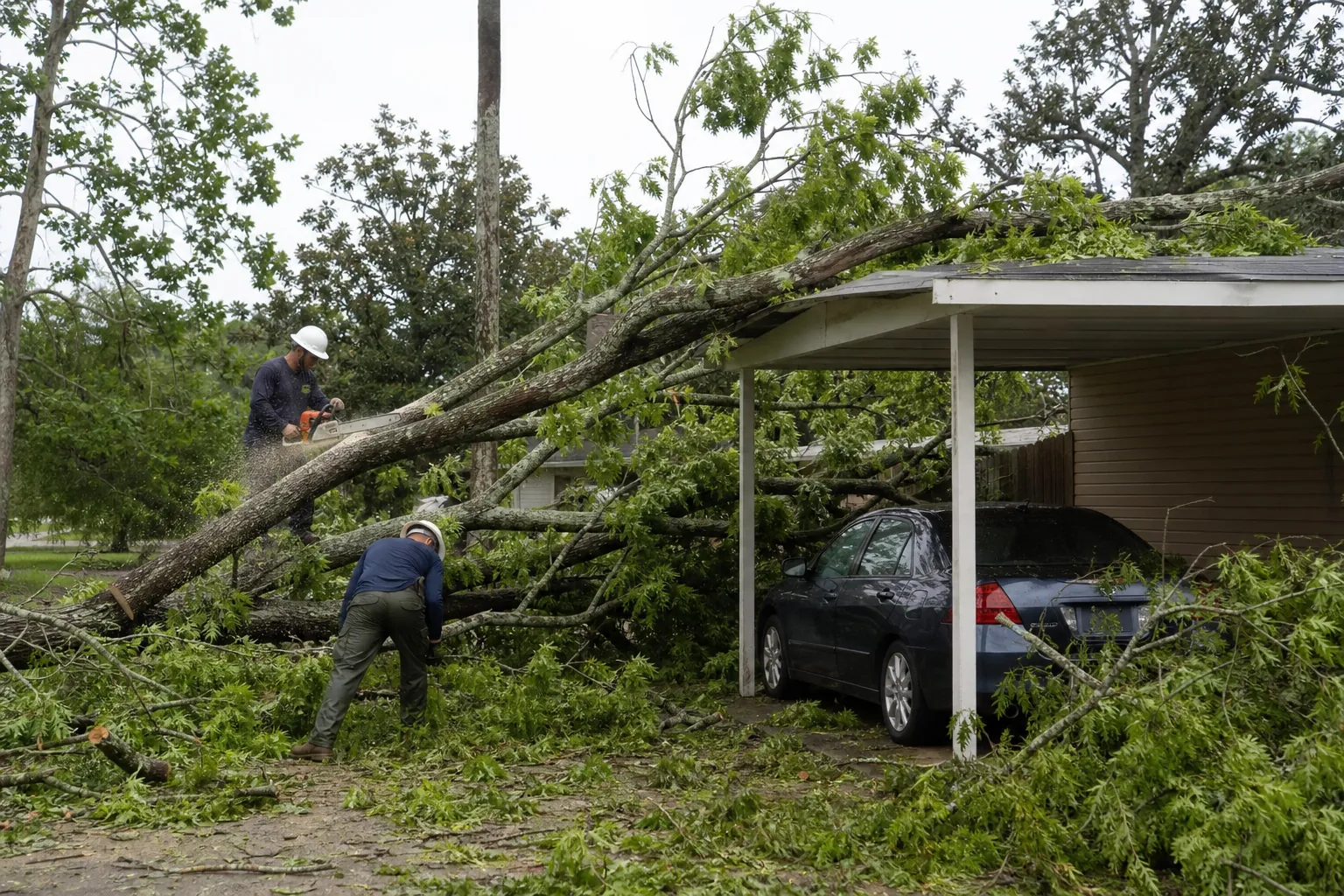
A carport adds a structure beneath the damaged tree. Branches may rest on roofing panels, support beams, or parked vehicles. The removal plan must account for every point of contact. A tree inspection helps assess damage before anyone selects cutting locations or methods.
A fallen tree may look still while holding stored force. Bent limbs can spring back when cut. Trunks and branches may shift as their weight changes. OSHA describes these hazards in its hurricane response guidance for tree trimming and removal.
Access is an important part of the tree assessment. A wide driveway does not always provide suitable equipment access. Gates, roofing edges, overhead lines, and surrounding trees may affect removal planning. The person assessing the tree needs a clear view of these features.
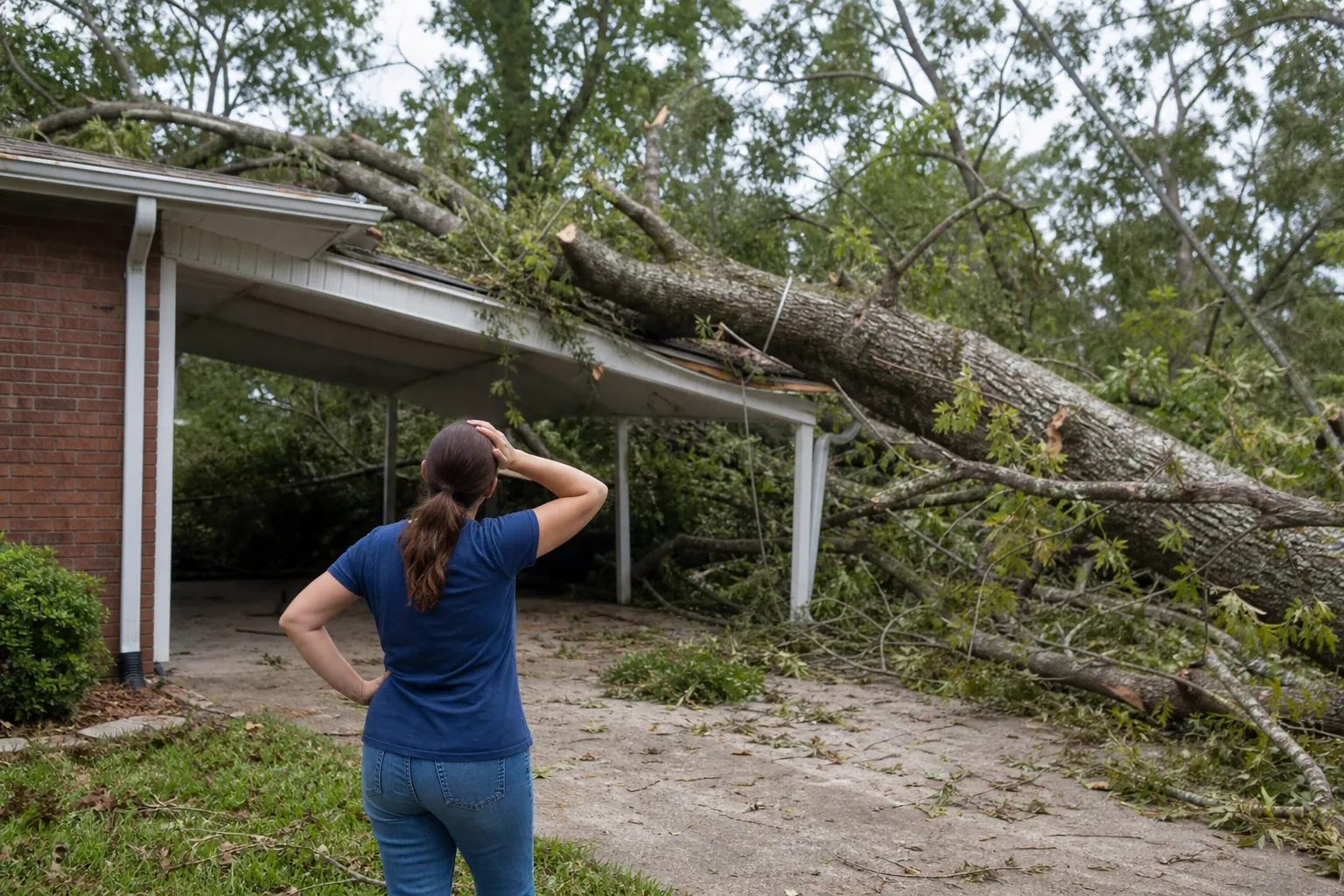
From a safe place, note where the tree touches the carport. Describe contact with the roof, posts, gutters, or a vehicle. Don’t go closer to confirm a detail. An uncertain note is more useful than a risky close look.
Tree removal and carport repair are separate work tasks. Removing wood does not establish that the structure is safe. Keep the area unused until the tree hazards and structural damage have been assessed. Don’t use a roof that appears straight as your only safety check.
Crane tree removal may be considered when access or tree position calls for it. It is not the default choice for every damaged carport. The assessment should guide the method, equipment placement, and order of work. Avoid selecting a method from a photo alone.
What should you do before approaching a damaged carport?
Stay in a safe place until the storm has passed. Follow local directions before going outside or returning home. Then check the scene from a distance, without entering the damaged area. Ready.gov explains these steps in its hurricane preparation and recovery guidance.
Begin with people, pets, and a clear route away. Keep everyone out of the carport and the nearby tree area. Don’t step beneath hanging branches to collect tools or take photos. A needed item can wait until the hazards have been assessed.
Power lines require special care after a storm. Stay away from fallen lines and anything they touch. Don’t approach a tree to check whether a wire is live. Follow the electrical safety advice in Ready.gov’s hurricane guidance and contact the local utility.
- Keep children and pets away from the damaged tree and carport.
- Leave parked vehicles in place when reaching them requires entering the damaged area.
- Take photos only from a safe spot with a clear exit route.
- Report fallen power lines without approaching wires, branches, fences, or nearby objects.
- Follow local alerts before starting any outdoor storm cleanup work.
Don’t climb onto the carport to remove branches or tarps. Storm damage can make access unsafe, even when the roof looks intact. Ready.gov advises care around damaged buildings and recommends protective clothing during cleanup. That advice does not make work beneath a damaged tree safe.
If safe access is unclear, stop at that point. You do not need a full set of photos before asking for help. Describe what you can see from shelter or another safe location. Let the assessment fill in details that require closer access.
What should a storm tree assessment cover?
A useful assessment considers more than the branch touching the roof. It includes the entire tree, surrounding trees, and the proposed work area. Its purpose is to identify damage and define the cleanup scope. Tree inspections or arborist reports can document findings and guide further decisions.
Start by comparing the tree’s position before and after the hurricane. A recent lean, fresh split, or elevated soil deserves attention. Document when you first noticed these changes, if known. Don’t test a trunk or branch by pushing, pulling, or shaking it.
Root conditions matter even when the canopy still appears green. From a safe distance, note elevated soil around the trunk. Include cracks or gaps that appeared after the hurricane. These observations help guide assessment questions; they cannot establish whether a tree can remain.
Look at neighboring trees as part of the same discussion. One tree may have fallen into another crown. A broken limb may remain caught above the carport or drive. OSHA identifies hanging limbs and storm-damaged trees as hazards in its storm tree work guidance.
Prepare a brief written history for the tree inspection. Include previous storm damage, known dead branches, and changes observed before landfall. Mention previous tree trimming, crown reduction, or removal of neighboring trees. Don’t replace missing information with assumptions about decay or root strength.
Ask for clear findings in plain language. Which trees need work, and what work is proposed? Which parts need a closer look before a decision? If an arborist report is requested, clarify what it will cover. A useful record separates observed damage from questions still open.
The carport should remain part of the assessment discussion. Describe its use, entrances, and the available space around it. Identify the paths connecting the home, yard, and driveway. These details help establish a practical work area without assuming the structure is safe.
How should you plan tree removal and cleanup?
Plan removal around hazards, access, and a clearly defined finish point. The scope should identify the tree, affected branches, and material for removal. It should also describe debris handling and any proposed stump work. Keep structural repairs separate from tree removal so each task remains clear.
A shared plan prevents small details from being missed. For example, removing a trunk may leave scattered branches behind. Stump grinding may be a separate step after tree removal. Ask what the yard and driveway should look like when the agreed tree work ends.
| Planning point | Useful details to discuss |
|---|---|
| Tree damage | Identify the trunk, broken limbs, and contact points on the carport. |
| Site access | Describe gates, driveway space, fences, and nearby overhead lines. |
| Wood and debris | Clarify which branches, trunk sections, and loose debris are included. |
| Stump work | Ask whether stump grinding is part of the proposed scope. |
| Remaining trees | Identify nearby trees that need a separate inspection after the storm. |
Keep your notes focused on what is present. State that a branch rests on a roof panel, for example. Avoid telling the crew where to cut or attach equipment. OSHA’s tree removal guidance describes hazards that require careful work planning.
If crane tree removal is proposed, ask why it suits the site. Discuss the space needed and how access will be managed. Homeowners should not try to prepare a lifting route by moving loaded limbs. Leave those decisions within the assessed work plan.
Before work begins, agree on how household access will work. Know which doors, paths, and parking spaces must remain unused. Keep pets indoors and follow the work crew’s site directions. Don’t cross the work area to check progress or retrieve belongings.
After tree work ends, review the completed scope from a safe location. Document remaining branches, trunk sections, stumps, or restricted areas. Ask which tree concerns still require assessment. This record provides a clear starting point for future hurricane tree-care planning.
How can tree care help before the next hurricane?
Start with a tree inspection well before storm conditions arrive. Focus on trees whose limbs reach the carport, driveway, or home. Ask about dead wood, weak branch joints, and earlier damage. Tree trimming, canopy thinning, or crown reduction should follow the tree’s needs and structure.
No pruning plan can remove all storm risk. The goal is thoughtful care, not a storm-proof tree. Ask why each proposed cut is needed and what it changes. Avoid choosing a service only because its name sounds suited to hurricane season.
Tree trimming may address dead or damaged limbs found during inspection. Canopy thinning and crown reduction serve different purposes. Neither should be treated as a routine step for every tree. A clear explanation should connect the proposed work to the tree being assessed.
- Schedule tree inspections before a storm watch creates pressure to rush decisions.
- Discuss branches that extend above the carport, driveway, and main walking paths.
- Keep dated photos of trees so later changes are easier to describe.
- Ask how proposed pruning supports the tree’s form and future care.
- Review remaining trees after each major storm, even without obvious carport damage.
Include ground conditions around trees in your hurricane readiness review. Identify areas where water collects or access becomes difficult. Share these observations during the tree inspection. They provide useful information about the property without replacing a direct tree assessment.
Make your wider household plan before hurricane season as well. Know where you will shelter and how you will receive alerts. Ready.gov’s hurricane readiness guide covers evacuation planning, supplies, and staying informed. Tree care is one part of that larger plan.
Once strong winds arrive, postpone outdoor tree work. Don’t make last-minute cuts from a ladder or roof. Follow local alerts and stay sheltered as directed. Use the National Weather Service hurricane safety resources to guide storm preparation and response.
What should you record after hurricane tree cleanup?
Keep a clear record of changes following the hurricane. Document tree removals, pruned branches, and any unfinished stump work. Include photographs taken from safe ground once access is cleared. These records support future tree inspections and your next hurricane readiness review.
Use plain labels rather than technical guesses. “Oak beside the carport” is more useful than a species name you doubt. Mark the tree’s location on a simple yard sketch. Add the date and a short account of visible storm damage.
Separate completed work from questions requiring further assessment. Removing one branch may resolve a concern while another tree still needs inspection. Record these items on separate lines for clarity. This helps future discussions and reduces confusion about the remaining cleanup scope.
- Record which trees were removed and which trees remain near the carport.
- Note any tree inspections or arborist reports requested for later review.
- List stump grinding or debris removal tasks that remain outside completed work.
- Save safe-distance photos that show the yard before and after cleanup.
Review the property again before the next hurricane season. Compare current conditions with photographs from your previous review. Report recent changes rather than assuming the previous assessment still applies. Tree conditions and the surrounding space can change over time.
For shared grounds, keep the same approach to clear records. HOA and condo tree services can address trees near shared carports. Commercial tree services may address other shared or business sites. The storm-care plan should still identify each tree and its proposed work.
Frequently asked questions about hurricane tree removal
Can I cut a branch resting on my carport?
Don’t treat it as a simple pruning job. A loaded branch can move when cut or freed. Keep clear and arrange an assessment before work begins. OSHA explains stored-force and hanging-limb hazards in its hurricane tree cleanup guidance. Don’t climb onto the roof to reach it.
Should I move a car from beneath the damaged tree?
Leave it in place if access means entering the damaged area. Don’t walk beneath hanging limbs or a tree resting on the roof. Tell the person assessing the tree where the vehicle sits. Follow Ready.gov’s advice to avoid damaged structures and storm hazards.
Does every storm-damaged tree need removal?
No. The next step depends on the tree’s condition and setting. Some trees may need tree trimming; others may need removal. A tree inspection should guide that choice. Describe new splits, lean, broken limbs, and root changes without trying to test the tree yourself.
Is stump grinding part of hurricane tree removal?
It may be a separate part of the work plan. Ask before work starts so the finish point is clear. Discuss the stump’s location, nearby access, and any remaining tree concerns. Don’t assume removing the trunk includes grinding the stump or clearing all yard debris.
What should I share when contacting Florida Foliage?
Share your Gulf Breeze location, the tree’s position, and visible carport contact. Add safe-distance photos if you already have them. Florida Foliage is headquartered in Daytona Beach, so confirm location details directly. Ask about tree inspections, the proposed work scope, and next steps without assuming local availability.
To discuss hurricane tree care and request an estimate, call Florida Foliage at (386) 481-7913. Share what you can observe safely and ask about service for your location.
Call (386) 481-7913 to talk through next steps.