Reviewed by Clinton Funk
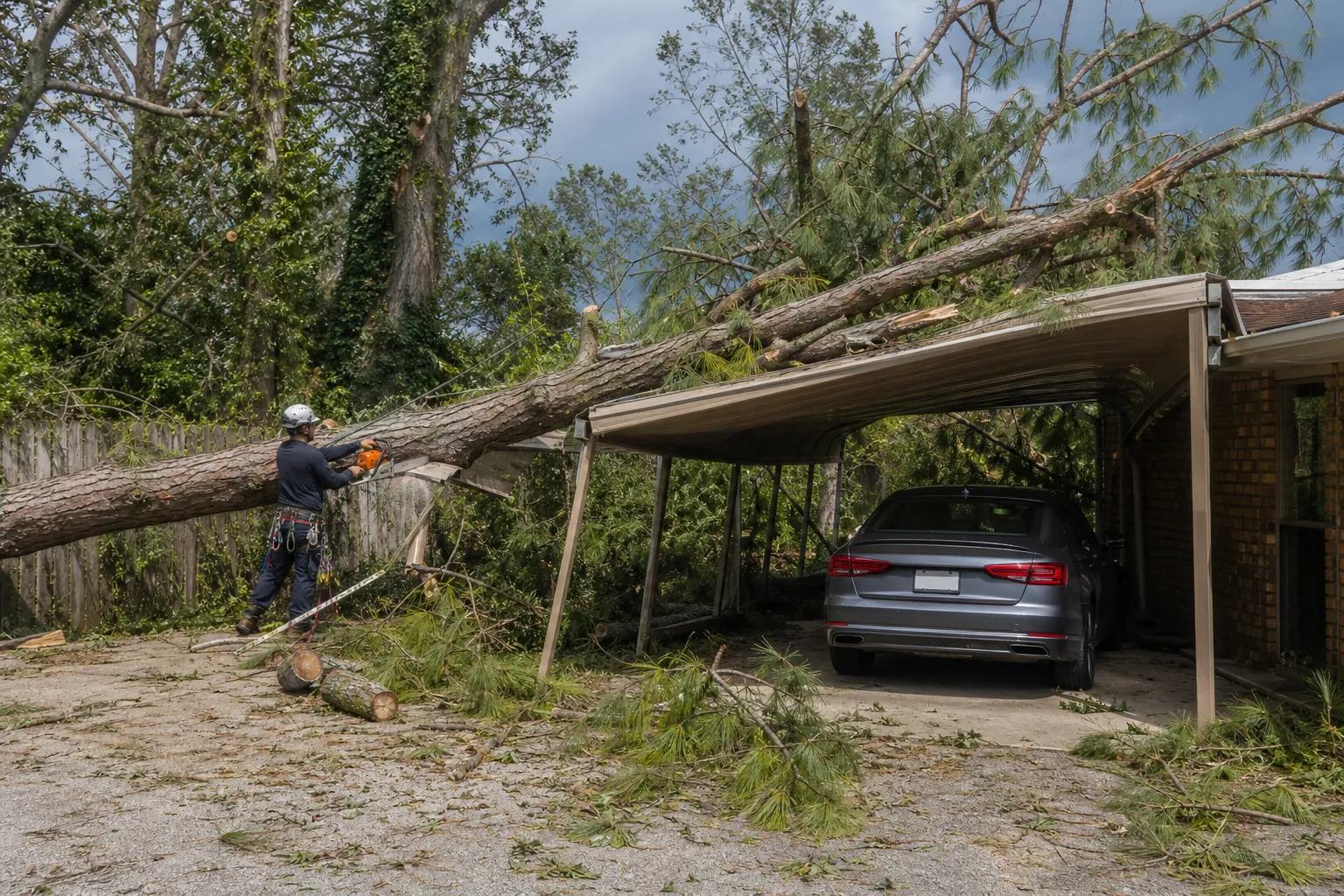
A hurricane can leave a tree resting across your carport. It may block your car, bend roof panels, or split nearby limbs. For homeowners seeking hurricane tree removal carport guidance, start with distance. Keep people away, check conditions from a safe place, and plan tree work before moving debris.
This guide explains storm cleanup around carports in Pensacola, FL. It covers what to observe, what to share, and how to plan. Florida Foliage is headquartered in Daytona Beach. This page does not confirm service availability in Pensacola.
What comes first for hurricane tree removal at a carport?
Stay clear of the tree, carport, and nearby wires. Check for hazards from a safe spot without entering the damaged area. Follow local alerts before going outside after a hurricane. Ready.gov advises waiting for officials to say it’s safe and avoiding damaged buildings and fallen power lines.
See Ready.gov’s hurricane safety guidance before starting any outdoor check. An open-sided carport can still have serious storm damage. Don’t assume the roof is sound because you can see beneath it.
Start by deciding where people can safely stay. Keep children and pets indoors, away from the damaged carport. If the damage affects your usual exit, choose another safe route. Don’t cross debris simply to get a better view.
Use these first steps while you arrange a closer assessment:
- Keep people away from the tree, damaged roof, and any hanging branches.
- Look for fallen wires from a safe place without approaching them.
- Take photos only when you can remain outside the damaged area.
- Write down blocked paths and other access limits for the tree assessment.
- Follow local weather alerts before returning to outdoor cleanup tasks.
A wire may be hidden beneath leaves or roof debris. OSHA warns that downed lines can create deadly electrical hazards. Treat fallen lines as energized and stay away. See OSHA’s hurricane response and recovery guidance for this safety limit.
Don’t try to pull the tree away with a vehicle. Don’t start cutting limbs to make room for your car. OSHA identifies unstable trees and debris as storm cleanup hazards. Removing one piece can change how the remaining weight rests.
Your first goal is a clear plan, not a cleared driveway. A tree inspection can help define the next work steps. Until then, keep the affected area out of normal use.
How do you assess a tree resting on a carport?
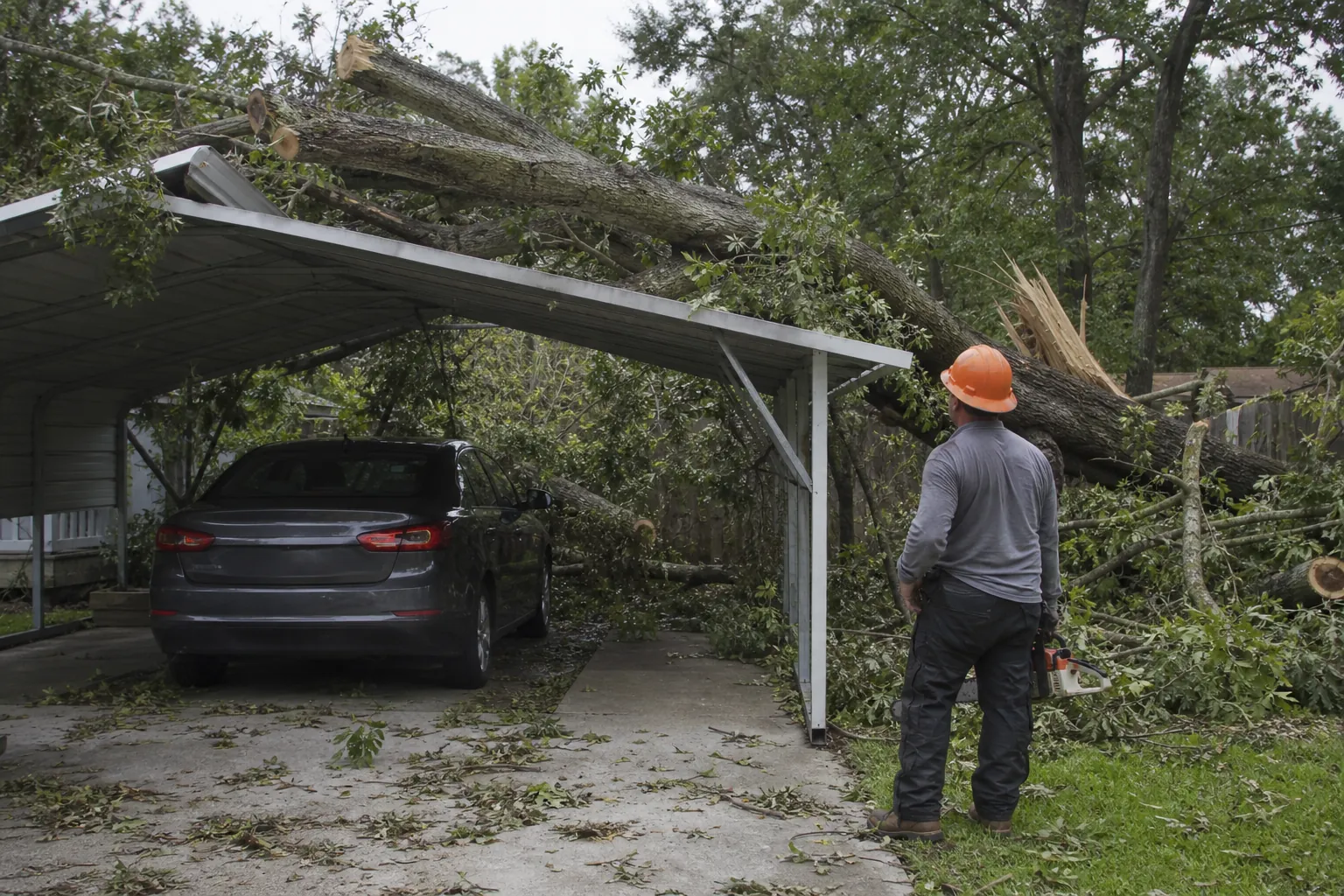
A useful assessment looks at the whole tree and carport together. Note where the trunk rests, which limbs hang, and what blocks access. Share those details without climbing or touching debris. OSHA’s storm cleanup guidance highlights unstable trees, damaged structures, and overhead hazards that need careful attention.
Read OSHA’s hurricane cleanup guidance before approaching any work area. The tree’s visible damage is only part of the picture. Root movement, nearby limbs, and roof damage may affect the removal plan.
From a safe viewpoint, describe the tree’s position in plain words. Does the trunk cross the roof or rest beside it? Is the root base lifted from the ground? Are large limbs hanging above the driveway? These details help explain the job without guessing at hidden damage.
Photos can show several views without requiring close access. Include the whole carport if you can see it safely. A wider photo may reveal fences, nearby trees, and narrow paths. A closer photo is useful only when distance remains safe.
Note what the tree blocks during storm cleanup. It may cover the driveway, trap a parked car, or close a gate. Mention each obstacle when discussing tree removal. Access affects how a work area can be set up.
Keep observations separate from conclusions. “The trunk rests across two roof panels” is a useful description. “The roof can hold the tree” is an unsupported judgment. A tree inspection does not establish that a damaged carport is safe.
Don’t press on a post, lift a panel, or test a branch. Ready.gov advises staying away from damaged buildings after a hurricane. Its post-hurricane safety guidance supports keeping your check visual and brief.
Good notes help define the cleanup scope. They don’t replace an on-site assessment of the tree and access.
When might storm cleanup need crane tree removal?
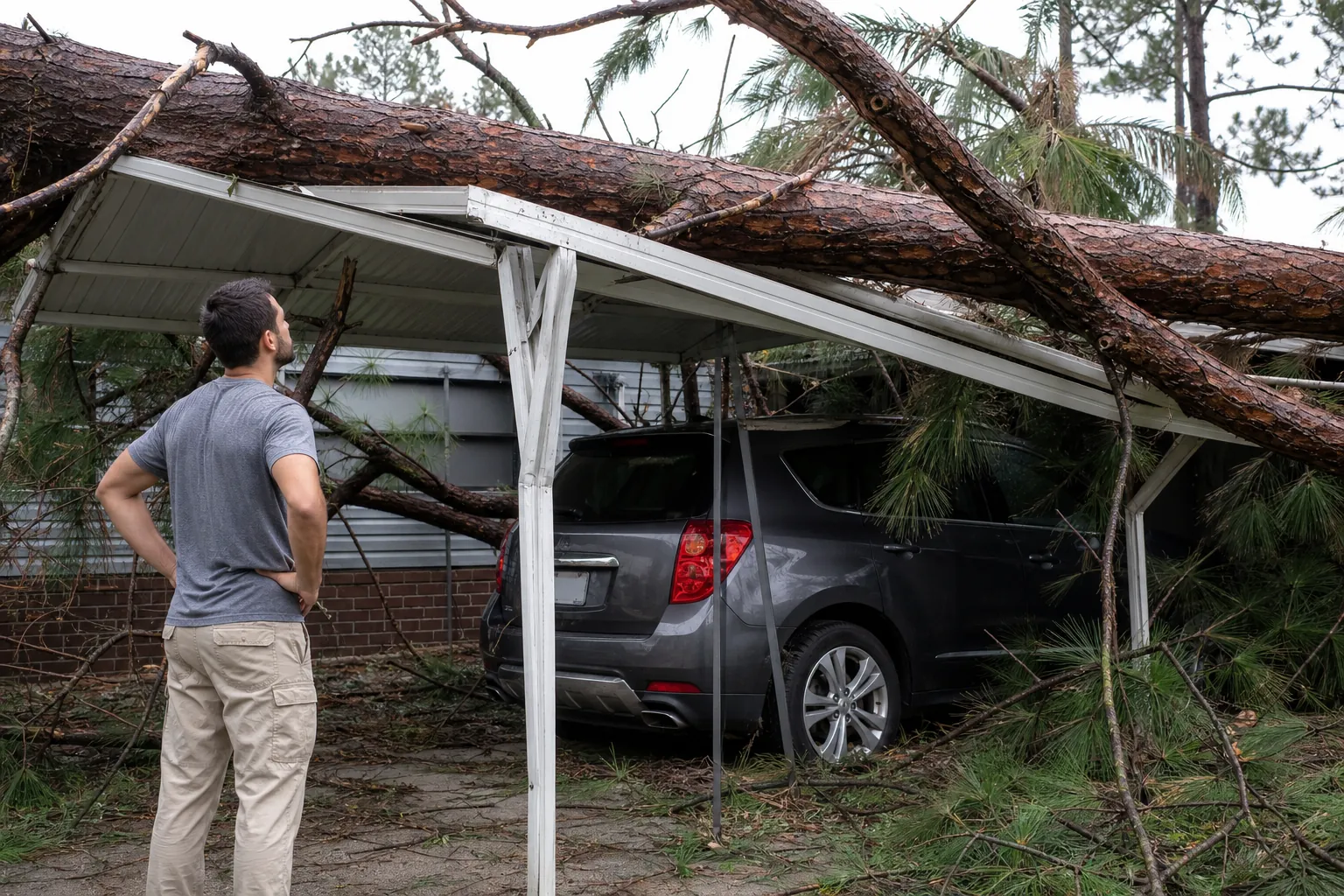
Crane tree removal may be considered when a fallen tree has difficult access. A trunk across a carport can leave little room below. The method depends on tree position, nearby hazards, and equipment access. OSHA’s hurricane guidance supports planning around unstable debris rather than treating each cut as routine.
See OSHA’s storm response guidance for cleanup hazards. A crane is one possible tool, not the default answer. Some jobs may use other tree removal methods after assessment.
The main question is how to control each piece during removal. A carport roof may limit access beneath the trunk. A fence or narrow driveway may limit access from the side. Nearby trees may add overhead obstacles that need separate attention.
Tell the tree service about access before the assessment. Describe driveway width, gates, parked vehicles, and tight turns. Share photos of the approach when you can take them safely. Don’t move through the damaged area to measure it.
Crane planning must account for the work site and surrounding hazards. Homeowners shouldn’t choose a lifting method from photos alone. Nor should they request a particular cut sequence. Those decisions belong within the assessed removal plan.
OSHA’s tree care safety guidance describes serious hazards in tree work. These include falls, falling objects, and contact with power lines. Keep household members outside the work area during removal.
Ask how the tree removal scope will address roof contact. Also ask what access must remain clear before work starts. These questions help you understand the plan without directing technical steps.
A removal plan should distinguish tree work from carport repair. Taking the tree away does not resolve damage to roof supports. Keep the carport out of use until its condition is assessed.
Can you move a car before the tree is removed?
Don’t enter a damaged carport just to retrieve a vehicle. A car that still runs may sit beneath an unsafe roof. Wait until the hazards around the vehicle have been assessed. Ready.gov advises avoiding damaged buildings and fallen wires after a hurricane, even when something important remains inside.
Follow Ready.gov’s guidance for returning after a hurricane. Vehicle access is a separate question from engine condition. The route to the driver’s door may cross unstable debris.
Tell the tree service where the vehicle sits. Note if branches touch its roof or block its doors. Explain which side faces the driveway exit. This helps define access needs during the tree assessment.
Don’t crawl through a passenger door beneath damaged panels. Don’t climb across the hood to reach an open side. Avoid pulling branches away to create a narrow walking path. Those actions place you inside the area being assessed.
OSHA identifies falling objects and unstable debris as hurricane cleanup hazards. Its response and recovery guidance supports keeping clear while those hazards remain. A quick trip beneath the roof still exposes you to them.
Keys, tools, and stored items may need to stay put. Tell the person assessing the job about anything urgent. Don’t retrieve it before they understand the conditions around it.
After tree removal, the carport may still need a separate damage assessment. Bent panels, damaged posts, or loose fasteners can remain. A clear driveway does not mean the covered parking space is ready.
Plan an alternate parking spot while storm cleanup continues. Keep that spot away from damaged trees and hanging limbs. This gives the household a workable option without rushing access.
What should a hurricane tree cleanup scope include?
A clear cleanup scope identifies the tree work and debris handling. It should describe which damaged tree parts need attention. It should also explain what happens to branches, logs, and the stump. OSHA’s hurricane guidance supports checking the work area for hazards before cleanup begins.
Use OSHA’s hurricane recovery guidance as a safety reference. Then discuss the specific tree and access conditions. Keep the conversation focused on storm damage and the work area.
Tree removal and debris cleanup are related but distinct tasks. Removing a trunk from the roof may leave material below. Branches may block a walkway after the largest sections are gone. Ask which areas the planned tree cleanup will clear.
Use this checklist to organize the discussion:
- Identify each storm-damaged tree included in the proposed removal or trimming scope.
- Ask where branches and trunk sections will go during the cleanup.
- Confirm which walkways and driveway areas need to remain accessible.
- Discuss whether stump grinding belongs in a later stage of work.
- Ask how nearby damaged limbs will be addressed during the tree assessment.
- Keep carport repair separate from the stated tree service scope.
Stump grinding may be discussed after the fallen tree is removed. Its timing depends on access and the remaining work area. Don’t assume it happens during the first cleanup stage.
Tree trimming may address damaged branches on trees that remain. Arborist reports and tree inspections can help document observed tree conditions. Ask what each inspection or report will cover. Don’t treat a report as proof that future storms cannot cause damage.
Brush hogging or land and lot clearing may suit broader storm debris needs. They aren’t substitutes for assessing a tree on a carport. Start with the immediate damage, then discuss wider cleanup.
Ready.gov recommends planning for continued hazards after a storm. Review its hurricane guidance before reopening outdoor areas for normal use.
How can you prepare carport trees before another hurricane?
Start with a tree inspection well before storm conditions arrive. Discuss damaged limbs, changes in tree lean, and branches over parking areas. Tree trimming, canopy thinning, or crown reduction may be considered after assessment. Ready.gov recommends preparing before a hurricane rather than waiting until dangerous weather reaches your area.
See Ready.gov’s hurricane preparation guidance for household planning. Tree care is one part of that plan. It does not make a tree or carport storm-proof.
Look for changes during routine yard checks in calm weather. A new crack, dead branch, or lifted root area merits attention. Describe when you first noticed the change. Photos from earlier dates may help explain what looks different.
Don’t decide that every tree near a carport needs removal. Some may need trimming, while others need closer inspection. The right discussion starts with the tree’s condition and location. It should preserve useful shade when sound care allows.
Build these tasks into your hurricane readiness plan:
- Arrange a tree inspection before storm season if nearby trees show damage.
- Discuss branches over the carport and driveway during the inspection.
- Plan alternate parking before hurricane conditions make outdoor movement unsafe.
- Keep recent tree photos where you can find them after a storm.
- Review household alerts and shelter plans before severe weather approaches.
Avoid last-minute tree work when wind or lightning threatens. The National Weather Service advises going indoors when thunder is heard. See NWS lightning safety guidance before any outdoor preparation.
Canopy thinning and crown reduction need a clear tree care purpose. Ask why either service is being suggested for hurricane readiness. A tree inspection can help frame that discussion without assuming one method fits every tree.
After each major storm, revisit the trees around your carport. Compare safe observations with your earlier notes and photos.
How should you plan the next steps after cleanup?
After tree removal, check which areas still need attention. Separate remaining tree work from debris sorting and carport damage assessment. Keep blocked or damaged areas out of use while those questions remain. Ready.gov’s hurricane guidance warns that hazards can continue after the storm has passed.
Review Ready.gov’s after-storm guidance before resuming yard tasks. A cleaner yard may still contain sharp debris or damaged limbs. Take time to review the space rather than rushing back.
Walk only through areas that have been cleared for access. Note leftover branches, stump locations, and damaged trees nearby. Share those observations when arranging any follow-up tree inspection.
Keep a simple record of the completed tree work. Save photos and notes about trees that remain. This can support the next hurricane readiness discussion. It also helps you remember which areas need another look.
OSHA’s hurricane cleanup guidance identifies sharp debris and unstable materials as hazards. Don’t treat mixed debris as ordinary yard waste while sorting it. Keep children and pets away from the remaining cleanup area.
For shared parking areas, discuss commercial tree services or HOA and condo tree services. Keep the discussion focused on tree condition, access, and storm cleanup. Coordinate a clear view of which trees and paths need attention.
Florida Foliage offers tree services, including emergency and hurricane tree removal. Its headquarters remain in Daytona Beach. Ask about current service availability before planning any Pensacola assessment.
Frequently asked questions about hurricane carport tree damage
Should I cut a branch touching my carport roof?
No. Leave storm-damaged branches in place until the hazards are assessed. Cutting can change how nearby debris rests. OSHA’s hurricane cleanup guidance highlights unstable trees and debris. Keep clear rather than testing a branch with hand tools.
Does every fallen tree require crane tree removal?
No. The method depends on tree position, access, and surrounding hazards. A crane may be considered for some carport jobs. A tree assessment should guide that choice. Photos help describe the site, but they don’t settle the removal method.
Can tree trimming help before the next hurricane?
Tree trimming may address damaged branches found during an inspection. Canopy thinning or crown reduction may also be discussed. The choice depends on the tree, not a fixed storm checklist. No tree care method removes all risk from severe weather.
Should stump grinding happen during the first cleanup?
It depends on access and the cleanup plan. Removing the tree from the carport may come first. Stump grinding can be discussed as a separate step. Ask how the remaining stump affects safe yard use and later tree care.
What should I share when requesting a tree estimate?
Share the Pensacola location, safe photos, and a short damage description. Mention roof contact, blocked access, parked vehicles, and visible wires. Don’t approach hazards to collect more detail. Ask about current service availability and what an assessment would include.
To discuss a neutral estimate, call Florida Foliage at (386) 481-7913. Explain the carport damage and ask about current service availability. Keep people away from the affected area while planning the next step.
Call (386) 481-7913 to talk through next steps.