Reviewed by Clinton Funk
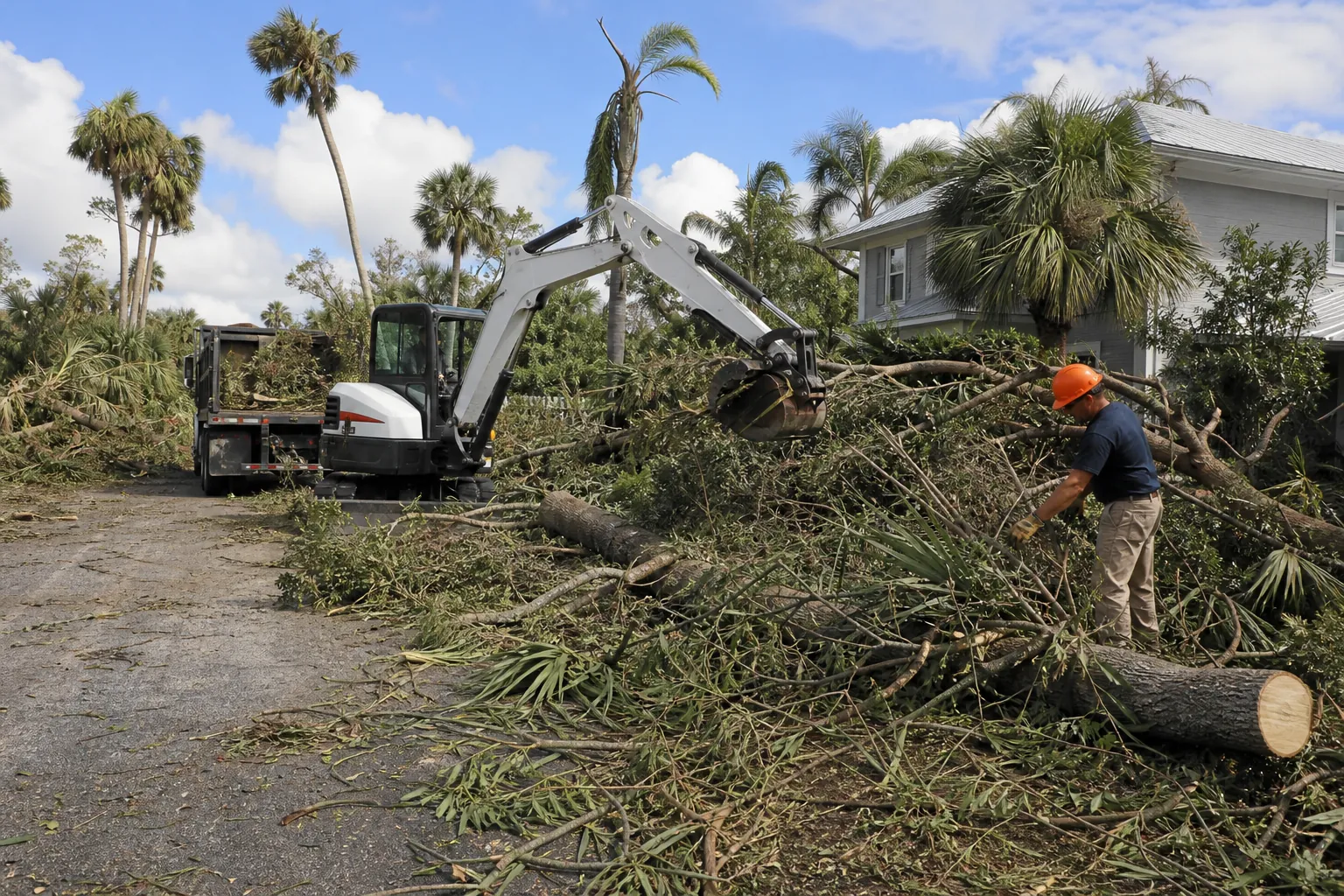
After a hurricane, a fallen tree can turn a familiar driveway into a blocked route, while a damaged standing tree can make the same driveway unsafe to use. Getting help onto the property takes more than opening a gate. Tree crews need a safe approach, suitable working space, and clear information about hazards before removal begins.
For homeowners and property managers researching hurricane tree removal contractor access in Flagler County, the most useful preparation is a simple access plan. It should explain how a crew can reach the site, what might prevent entry, and which areas must remain clear. Florida Foliage provides emergency and hurricane tree removal, along with tree inspections and other tree services. The guidance below can help you organize the information needed for an initial conversation without putting yourself near unstable trees.
Start With Safety, Not Clearing A Path
A blocked entrance can feel urgent, especially when residents need to leave or emergency vehicles need access. However, attempting to open the route yourself can expose you to moving limbs, loaded branches, unstable root plates, and electrical hazards. A tree that looks settled may still shift when another branch moves or the soil beneath it changes.
Look at the property only from a safe location. Do not walk beneath broken limbs, climb over fallen trunks, or stand beside a lifted root plate. Keep children, pets, visitors, and residents away from the affected area. If a tree is touching a wire, or a wire is lying on the ground nearby, stay well away and contact the utility. Call emergency services when there is an immediate threat to life.
A tree contractor cannot assume that a downed wire is harmless. Electrical hazards may need to be addressed by the appropriate utility before tree work can proceed. Likewise, a visibly damaged structure may require separate evaluation before equipment or workers approach it.
- Tell the contractor whether anyone is trapped or whether the only usable exit is blocked.
- Report hanging branches, leaning trees, split trunks, and visible root movement without approaching them.
- Describe any wires, damaged utility equipment, standing water, or structural damage near the tree.
- Keep a safe access route available for emergency responders whenever possible.
Do not cut a fallen trunk simply to create an opening. Storm-damaged wood can hold substantial tension, and releasing it without understanding the load can cause sudden movement.
Describe The Entrance Before The Crew Arrives
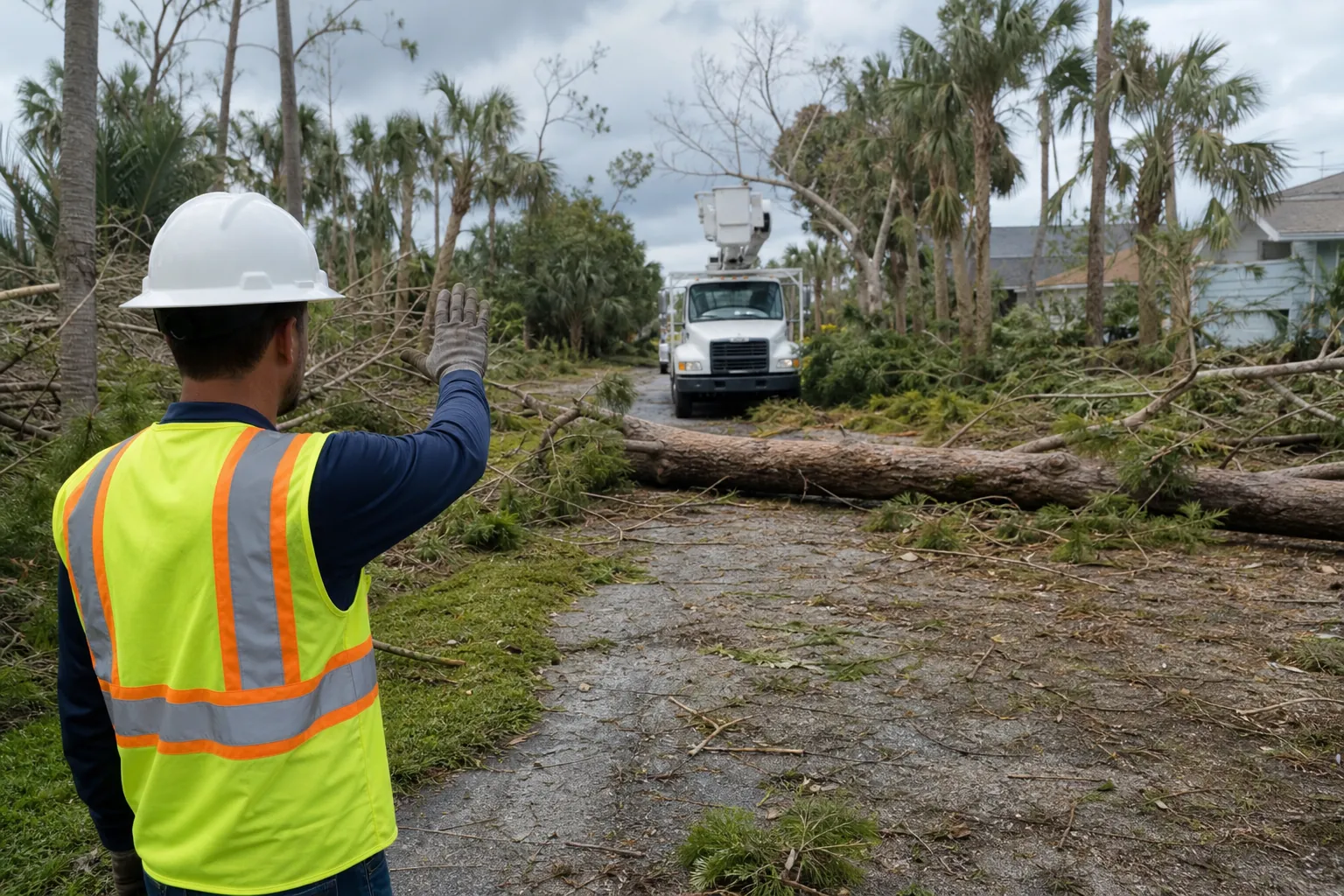
Contractor access begins at the street. A residential gate may admit a pickup but not the equipment suited to the job. A curved driveway may provide enough width at the entrance yet become too narrow near the house. Low branches, overhead lines, parked vehicles, and tight corners can all affect the approach.
From a safe position, describe the entrance and route to the damaged tree. If you already know the gate width or driveway dimensions, share them. Otherwise, explain what you can see and let the contractor determine whether measurements or a site visit are needed. Never enter a hazardous area just to collect dimensions.
Identify gates that are normally locked, entrances controlled by a guard, and access points that depend on power. After a hurricane, an electric gate may not operate normally. Arrange authorized entry with the owner, property manager, or association rather than forcing the gate or assuming a crew can get through.
- Provide the correct property address and identify the entrance the crew should use.
- Explain whether the approach includes sharp turns, a narrow bridge, a culvert, or a steep driveway.
- Share gate instructions securely with the contractor rather than posting codes publicly.
- Identify any overhead obstacles visible from a safe location.
- Explain whether the crew will need an escort or authorization to enter a gated community.
If street access is affected by debris or a road closure, mention that during the first call. Do not direct vehicles around barricades. Use current instructions from the responsible authorities, since conditions can change as recovery work progresses.
Check Ground Conditions And Hidden Features
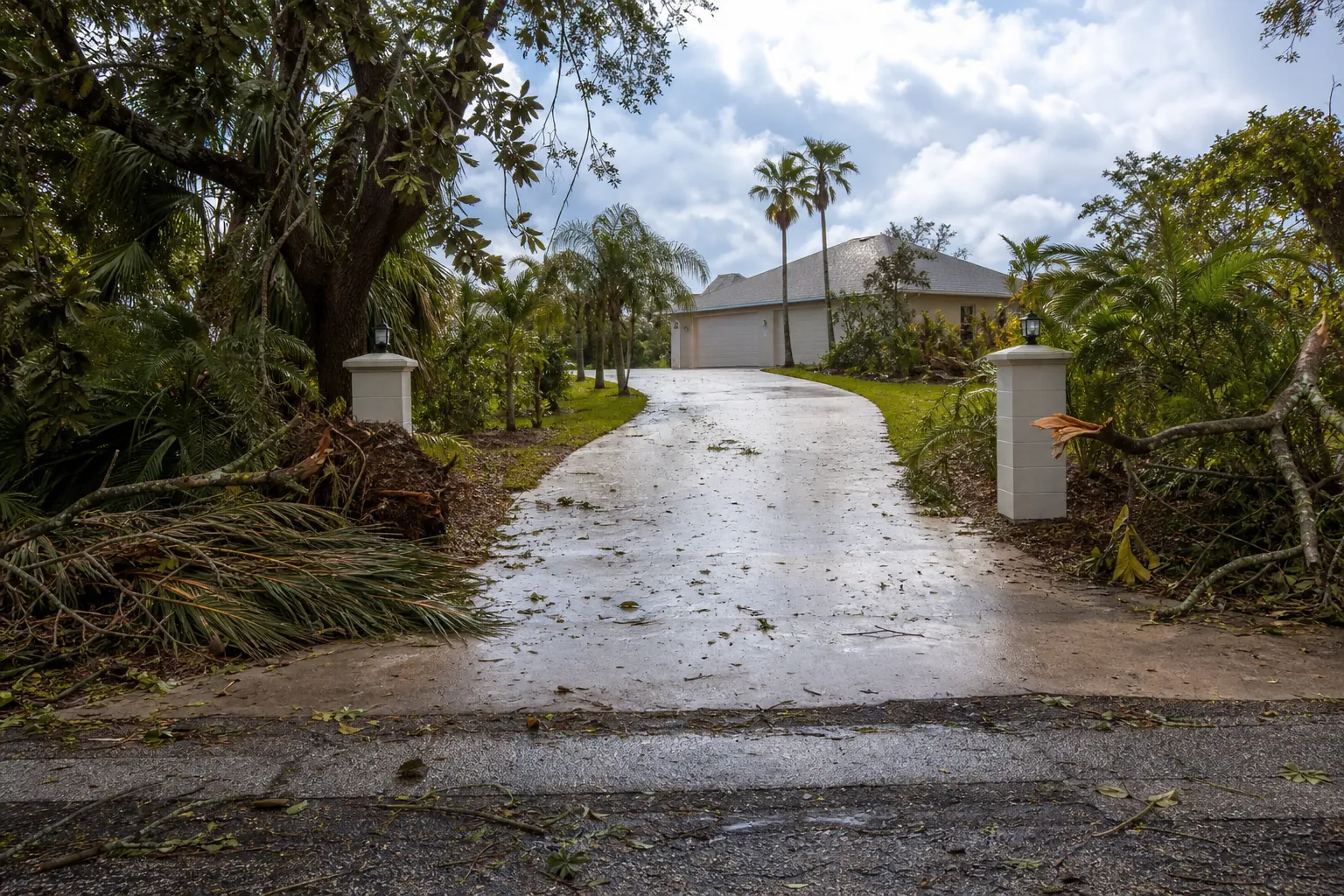
Hurricane rainfall can leave soil saturated even when the surface looks firm. Heavy equipment may sink, lose traction, or damage areas that normally support lighter vehicles. Standing water can also conceal holes, debris, and damaged surfaces. The contractor should evaluate the working route rather than relying on appearance alone.
Flagler County properties vary widely. A paved driveway, a sandy side yard, and a low area beside a drainage feature present different access questions. Tell the crew where water tends to collect and whether any part of the proposed route has recently washed out or softened.
Hidden infrastructure matters too. Septic components, underground utilities, irrigation lines, drainage pipes, and buried structures can limit where equipment travels or stands. Point out known locations using existing records or information you already have. Do not dig, probe, or enter floodwater to locate them.
- Identify known septic tanks, drain fields, underground lines, and irrigation features before equipment enters the yard.
- Explain whether driveway edges, pavers, or retaining walls have visible storm damage.
- Tell the contractor about areas that flood regularly or remain soft after heavy rain.
- Describe any bridge, elevated surface, or culvert without assuming it can support the proposed equipment.
Protecting the property is part of planning, but no route should be selected solely because it avoids a lawn. A safe, workable approach depends on ground support, clearance, equipment requirements, and the condition of nearby trees. Discuss those factors together before work starts.
Match The Access Plan To The Removal Method
Tree removal methods depend on the tree's condition, its surroundings, and the available working space. A fallen tree in an open area presents a different problem from a broken tree suspended over a roof. Restricted access can influence how a contractor stages equipment and handles sections, but it does not automatically determine the method.
Crane tree removal may be considered when the situation and site conditions support it. A crane needs a suitable setup area, an evaluated approach, sufficient clearance, and ground conditions appropriate for its use. It also requires planning around the reach and weight of the pieces being handled. A large driveway alone does not establish that crane access is feasible.
Similarly, a narrow side yard does not prove that removal is impossible. The contractor needs to assess the full site, including potential hazards, neighboring structures, and any authorized alternative access. Let the crew explain the proposed approach rather than assuming that a particular machine is required.
Ask where equipment will stand, where tree sections will be placed, and which areas must be kept empty. These are separate spaces, and each may affect vehicle access or resident movement. If a proposed setup involves a sidewalk, roadway, shared driveway, or neighboring property, confirm the necessary permissions and any applicable requirements with the responsible parties and local authorities.
The access plan should remain flexible. Conditions discovered during inspection may change the safest working arrangement. Avoid promising neighbors that a driveway or parking area will remain available until the contractor has reviewed the site.
Prepare The Property Without Entering The Work Zone
Once the contractor identifies safe areas, small preparations can help reduce avoidable delays. Move vehicles that are outside the hazard area, secure pets indoors, and relocate portable items from an approved staging space. Leave anything beneath a damaged tree or near wires untouched until the hazard is addressed.
Explain access needs before work begins. A household member may need a clear route to a vehicle, or a business may need to coordinate employee arrival. Tree work can require a temporary exclusion area, so the contractor needs to know about these needs rather than discovering them during removal.
- Move parked vehicles only when the path to reach them is safe.
- Keep children and pets away from gates, equipment routes, and the designated work area.
- Remove portable planters, furniture, or other movable objects only from areas the contractor has identified as safe.
- Tell the crew about residents who need an accessible entrance or regular assistance.
- Arrange a contact person who can answer access questions without entering the work zone.
Do not remove a fence panel, alter landscaping, or open a neighboring gate without authorization. If temporary access changes are proposed, discuss who is responsible for approving them and what the arrangement includes. Clear agreement is especially important when the property is rented or jointly managed.
Keep people away from the working area even if equipment appears to be idle. Crews may be assessing loads, changing positions, or preparing the next cut. The designated exclusion area should remain in place until the contractor says it is safe to return.
Coordinate Shared Access For HOAs, Condos, And Businesses
Shared properties need an access plan that accounts for more than one household. In an HOA, condo community, or commercial setting, a tree near an entrance may affect resident traffic, deliveries, visitor parking, and emergency access. A single point of contact helps the contractor receive consistent instructions.
Florida Foliage provides HOA and condo tree services and commercial tree services. For storm-related work, managers should identify the affected trees, explain site access controls, and clarify who can authorize work. They should also distinguish common property from privately owned areas rather than assuming that every tree falls under the same authority.
Give residents a straightforward notice once the working arrangement is established. Explain which entrance or parking area will be affected, where people should stay clear, and whom to contact with access concerns. Avoid publishing an exact reopening time unless it has been confirmed and can be updated as conditions change.
- Identify the person authorized to approve work and any temporary use of shared areas.
- Coordinate gate access with security personnel or the property manager.
- Keep designated emergency routes available as directed by the appropriate authorities.
- Explain scheduled deliveries or other activity that could conflict with the work area.
- Notify occupants when pedestrian routes or parking spaces need to be temporarily restricted.
Where work could affect public access, confirm applicable requirements with the city or county. A community's internal approval does not necessarily resolve questions about a public sidewalk, street, or right-of-way.
Use Photos And Notes To Improve The First Conversation
Useful photographs can help a contractor understand the situation before visiting, but they do not replace an on-site assessment. Take photos only from a location you can reach safely. Do not step under leaning trees or approach suspended branches to obtain a better angle.
If possible, show both the damaged tree and the route from the entrance. A close-up of a broken limb may show damage without showing the access problem. Wider views can help explain nearby structures, fences, parked vehicles, and available working space.
Along with photos, prepare a short description of what changed during the storm. Mention whether the tree is on the ground, leaning, split, or resting on a structure. Describe observable facts rather than guessing about stability. If you heard cracking or noticed movement, tell the contractor and keep away.
- Include a safe view of the driveway or gate and a separate view of the affected tree.
- Explain whether the tree blocks the only entrance or whether another authorized route exists.
- Identify nearby wires, buildings, fences, and other trees visible in the photos.
- State whether utilities or emergency responders have already been contacted.
- Provide a contact who can confirm entry instructions and property authorization.
Ask what additional information the contractor needs before arrival. Clear communication helps distinguish access questions from immediate hazards and gives the crew a better basis for planning the site assessment.
Confirm Local Requirements And Plan The Next Steps
Tree removal requirements can vary by location, property type, and circumstances. Do not assume that hurricane damage removes every approval requirement. Confirm applicable tree rules, access permissions, and any requirements affecting public areas with your city or Flagler County. An HOA or condo association may also have internal procedures to check.
Once immediate hazards are addressed, consider whether nearby trees need tree inspections or arborist reports. Storm damage is not always obvious from the ground. Tree trimming, canopy thinning, or crown reduction may be appropriate for some trees after evaluation, while others may require tree removal. Avoid treating extensive cutting as a universal solution.
Discuss stump grinding separately when a stump remains. Its access needs may differ from those of the original removal, and the location of underground features remains important. Larger properties may also need land and lot clearing or brush hogging, but those services should be planned around the site's conditions rather than used to approach unresolved tree hazards.
For help discussing emergency and hurricane tree removal access in Flagler County, call Florida Foliage at (386) 481-7913. Share the entrance conditions, visible hazards, and any restrictions on reaching the tree. A clear access conversation is a practical first step toward organizing the work while keeping residents and crews out of unnecessary danger.
Call (386) 481-7913 to talk through next steps.