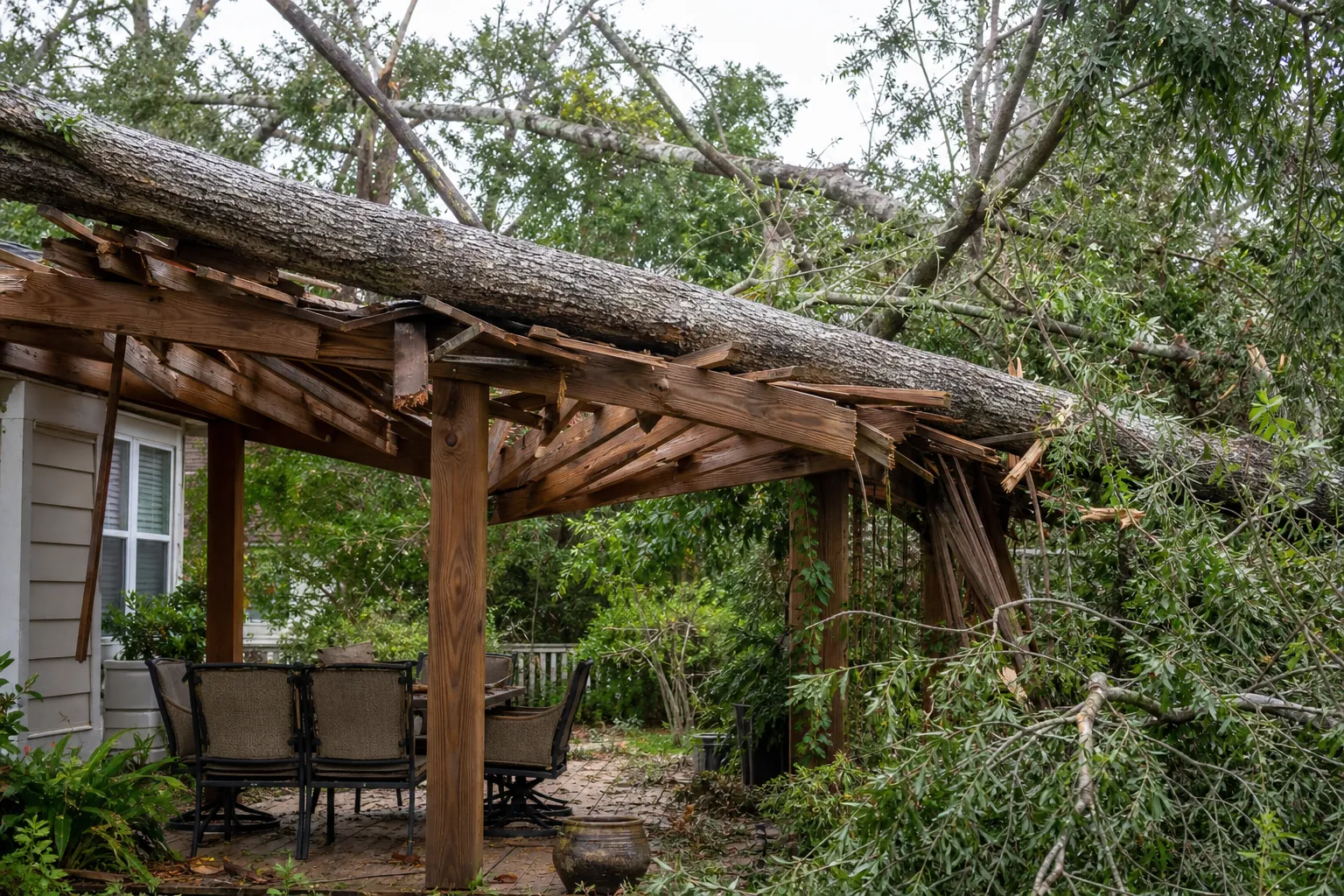
A tree across a pergola needs careful review before cleanup begins; For homeowners researching hurricane tree removal damaged pergola concerns, the first task is distance; Keep people away while the tree, pergola, and nearby ground are checked. The removal plan should account for each part of the damage.
These steps help Pace homeowners describe damage and plan next steps; It covers tree checks, cleanup scope, access, and future storm care; Florida Foliage is headquartered in Daytona Beach. This page offers guidance without suggesting a local crew or current availability.
A pergola's open roof can hide how a fallen tree rests. A trunk may sit across several beams at once; Branches may reach into a fence, roof edge, or nearby tree; What looks like loose debris may still bear weight.
Start with what you can see from a safe location; Don't enter the damaged pergola to get a closer view; Ready.gov advises avoiding damaged buildings until local authorities say they are safe. Apply that caution to a visibly damaged outdoor structure too. Read Ready.gov's hurricane safety guidance.
How should hurricane tree removal around a damaged pergola begin?
Use the UF/IFAS urban forest hurricane recovery guidance for storm-damaged trees; OSHA provides hurricane debris collection safety guidance for cleanup hazards.
Begin with a clear view of the whole scene, from a distance; Note where the tree rests and what it touches; Describe nearby wires, blocked paths, and hanging limbs. Then request a tree inspection that addresses removal around the pergola. The goal is a defined plan before any cutting starts.
Keep the first description simple and factual; Say that a tree rests on the pergola roof beams; Note if the trunk also touches the ground. Mention any tree parts caught in a second tree. These details help explain the work without guessing at the safest cutting method.
Don't assume a quiet tree has stopped moving. OSHA identifies falling limbs, electrical contact, and equipment hazards in tree care; Its guidance supports a cautious approach to damaged trees; Homeowners should leave cutting and lifting decisions to trained workers. See OSHA's tree care hazard guidance.
- Describe where the trunk rests without standing beneath the tree or pergola.
- Note hanging limbs, split branches, and any tree parts caught overhead.
- Identify gates, narrow paths, fences, and yard features that may affect access.
- Explain which doors or walkways are blocked by the fallen tree.
- Keep children and pets away from the damaged tree and work area.
Share photos only when you can take them without entering the damaged area. A wide photo can show the tree and pergola together. A second view may show the access route; Don't climb, shift debris, or pass beneath branches for a better shot.
If a fallen tree involves wires, stop the tree discussion there; Ready.gov advises staying away from fallen power lines and reporting them. A tree service should know about that hazard before any visit; Don't treat a wire as safe based on its appearance. Review Ready.gov's post-storm precautions.
What should a tree inspection check near the pergola?
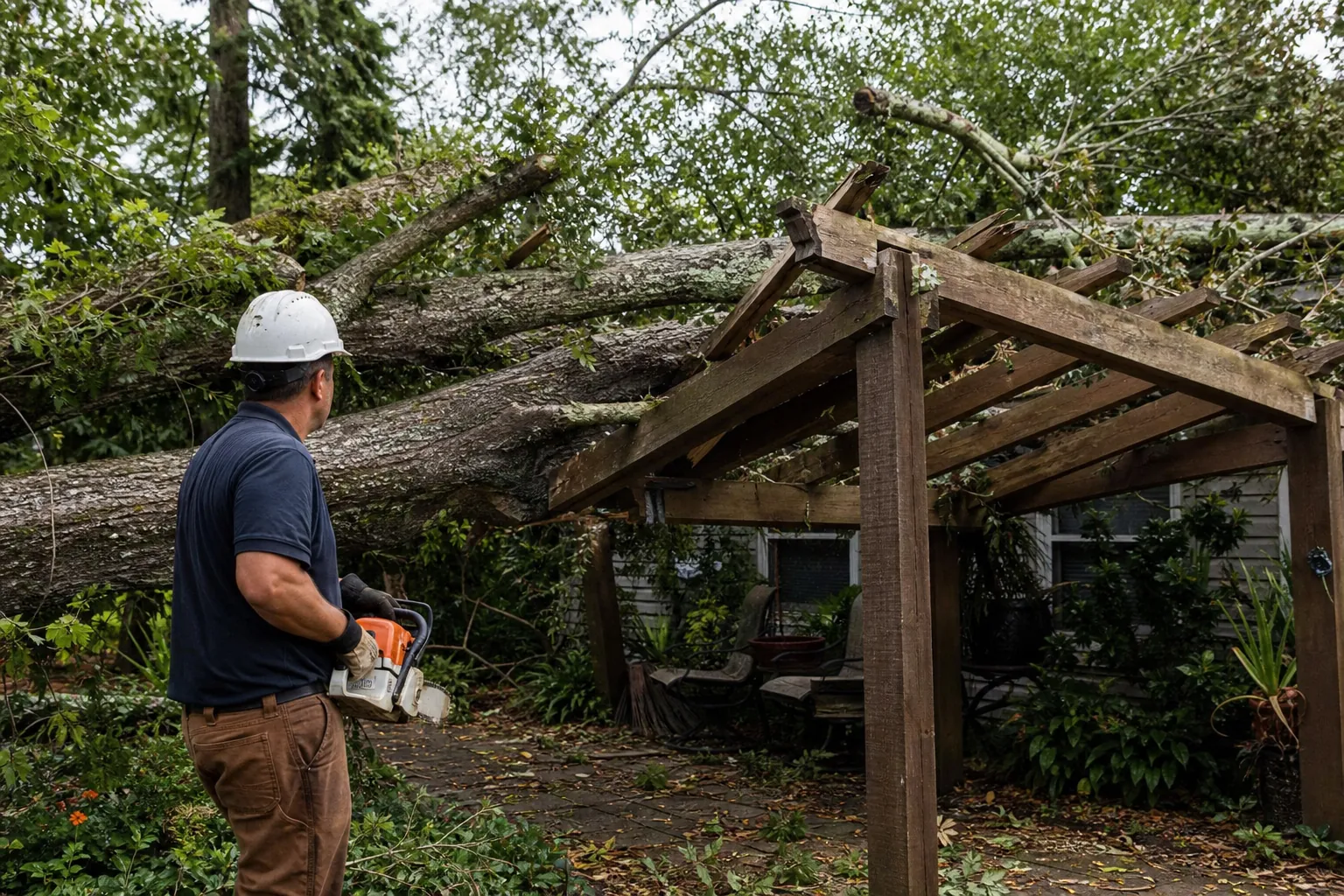
A tree inspection should look beyond the branch on the roof; It should consider the trunk, roots, crown, and nearby trees; The pergola contact points matter because they affect the removal sequence. Ask for a clear explanation of what needs removal, what needs trimming, and what needs further review.
A tree can sustain several types of storm damage at once; One branch may break while another remains caught above it; The trunk may split near a fork. The root plate may shift even when the crown still looks full. Describe each visible change rather than judging the tree yourself.
Tree inspections and arborist reports can help organize those findings; Ask what the report covers and how it describes each tree. A useful record should identify the tree and observed damage; It should distinguish current findings from areas that need another look.
The inspection should also consider trees beside the pergola. A fallen branch may have struck another crown on its way down; Dense foliage can make broken limbs hard to see from the ground. OSHA lists overhead and falling-object hazards among tree care risks. Read OSHA's overview of tree work hazards.
Separate tree condition from pergola condition during this review. A tree inspection doesn't establish that damaged beams or posts are safe; Ask how removal will avoid relying on damaged pergola parts; Any needed structural review belongs with someone suited to that work.
Ask for plain answers rather than a list of technical terms; Which tree parts need removal first? Can any standing tree remain after storm trimming? What area needs to stay clear during the work? Which findings remain uncertain until the fallen material is removed?
A useful inspection can lead to different choices for different trees. One may need full tree removal. Another may need tree trimming after a limb breaks. A third may need a later check after access improves. The plan should explain those differences without treating all nearby trees alike.
How is removal planned when a tree rests on a pergola?
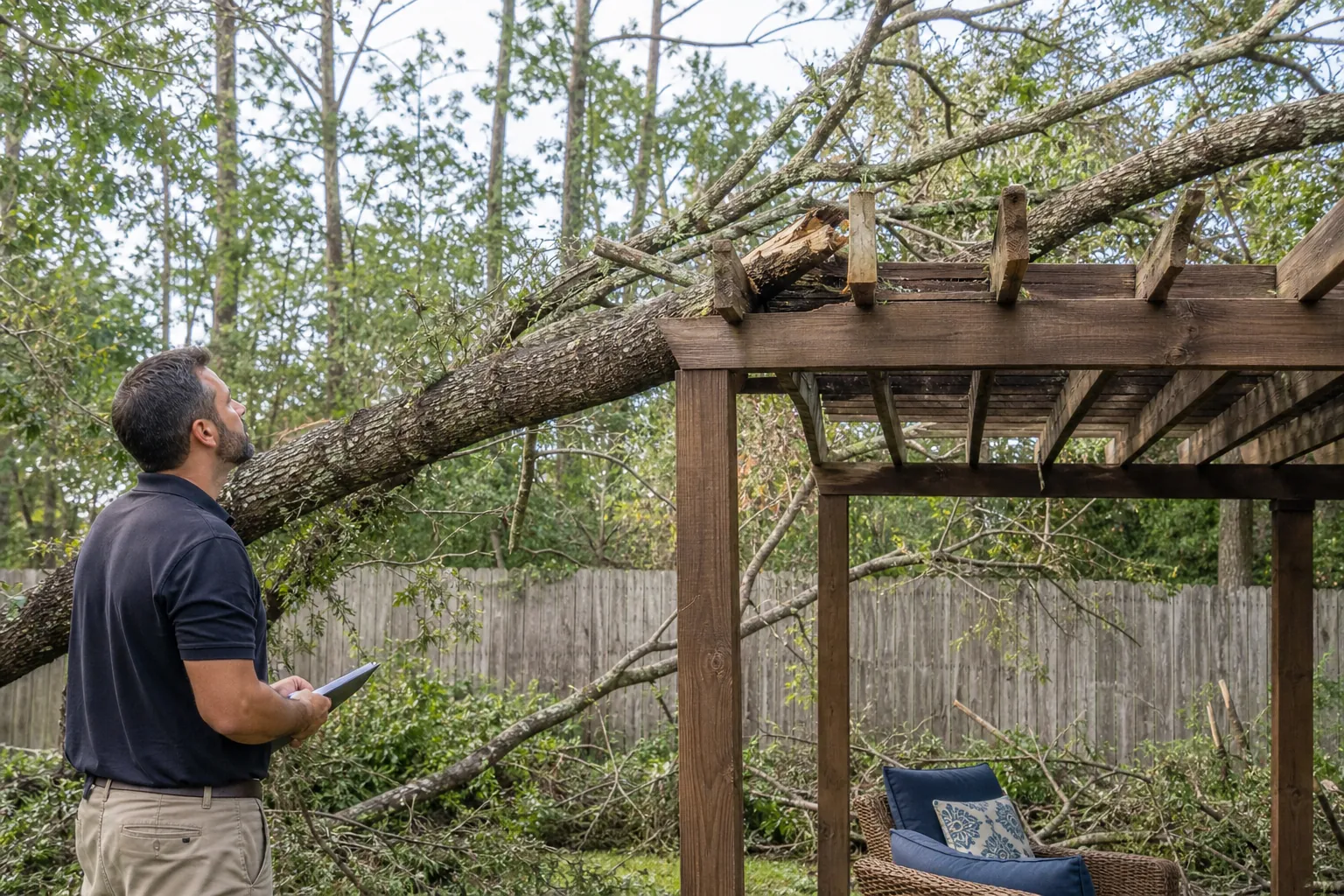
The removal plan should explain how the tree will be handled in sections. It should account for the pergola, nearby buildings, and access. Some sites may call for crane tree removal. Others may allow a different approach. The method depends on the tree and site, not the pergola alone.
A pergola can create several contact points beneath a fallen trunk. The tree may rest across beams while branches reach the ground. Removing one section can change how the remaining material sits. That is why homeowners should avoid cutting branches to help before the crew starts.
OSHA's tree care guidance addresses hazards from chainsaws, falling objects, and equipment. Those risks support leaving storm-damaged tree cutting to trained workers. A homeowner's role is to describe the scene and keep clear. It isn't to release weight from the pergola. Review OSHA's tree care safety information.
Crane tree removal may be discussed when access or lifting needs warrant it. Ask why that method fits the specific site. Also ask what space the equipment needs. The presence of a damaged pergola alone doesn't establish that a crane is required.
Describe obstacles that may not show in a close photo. These include a narrow gate, enclosed courtyard, or tight driveway turn. Mention a septic area or underground yard features if you know their location. Don't guess at equipment paths or move heavy debris to open one.
The plan should separate urgent tree work from later cleanup tasks. Emergency and hurricane tree removal may address a dangerous fallen tree first. Branch hauling, stump grinding, and follow-up trimming may require separate steps. Ask which tasks belong in the initial work scope.
Before work begins, agree on how you will receive updates. You may need to remain inside or away from the yard. Ask who will explain changes if hidden damage appears. A calm plan leaves room for new findings without inviting homeowners into the work area.
What should the hurricane cleanup scope include?
A useful cleanup scope names the tree material and each planned task. It should distinguish trunk removal, branch removal, stump work, and follow-up trimming. It should also note where tree debris will be placed or removed. Keep damaged pergola materials separate from the tree work unless their handling is clearly discussed.
Use a simple list to compare the damaged area with the proposed work. This helps prevent a large trunk from overshadowing smaller cleanup needs. A broken limb in a nearby tree may still need attention. So may a branch pile blocking a gate.
| Storm finding | Tree care discussion | Useful question |
|---|---|---|
| Trunk resting on pergola beams. | Tree removal sequence. | How will the tree be separated from the damaged structure? |
| Broken limbs in a standing tree. | Tree inspection and tree trimming. | Which damaged limbs need attention after the fallen tree is removed? |
| Large wood left in the yard. | Debris handling. | Which wood and branch piles are included in cleanup? |
| Stump remaining near the pergola. | Stump grinding. | When can the stump area be reviewed for grinding access? |
| Nearby trees with visible storm changes. | Tree inspections or arborist reports. | Which trees need a separate assessment? |
Stump grinding needs its own discussion after a tree comes down. Note nearby posts, paving, irrigation, and known underground features. Ask what material will remain after grinding. Also ask how the work area should be left for later pergola work.
A lifted root plate is different from a stable stump. Don't climb onto roots or dig beneath them after a storm. Have the tree service assess that area as part of removal. OSHA's guidance identifies unstable trees and falling material as tree work hazards. See OSHA's tree care hazard resources.
- List the fallen trunk and each branch pile included in tree cleanup.
- Ask if damaged limbs in nearby trees need separate trimming work.
- Confirm whether stump grinding belongs in this plan or a later visit.
- Describe the access routes that should remain open after cleanup ends.
- Discuss how tree debris will stay separate from damaged pergola materials.
Finish by asking what the completed tree work should look like. A clear answer may include removed wood and an open path. It may also identify remaining stumps or trees awaiting review. That description gives the next stage of storm recovery a clear starting point.
How can homeowners plan safer storm care around a pergola?
Future storm care starts with the trees that reach toward the pergola. Arrange tree inspections before hurricane weather becomes urgent. Discuss damaged limbs, crowded growth, and changes in tree condition. Tree trimming, canopy thinning, or crown reduction may be considered after assessment. Each choice should fit the tree and its setting.
Don't request a broad cut simply to make a crown look smaller. Ask what the proposed pruning is meant to address. The answer should relate to the tree's condition and nearby features. No pruning plan can make a tree storm-proof.
A pre-storm record can help you notice changes later. Take ordinary yard photos while conditions are calm. Include the pergola, nearby trunks, and the wider canopy. After a storm, compare those views only from a safe place. Photos support a discussion but don't replace an inspection.
Ready.gov recommends bringing loose outdoor items indoors before a hurricane. Around a pergola, that may include chairs, planters, and small tables. Follow local instructions as the storm approaches. Yard tasks should never delay shelter or an evacuation directed by local officials. Read Ready.gov's hurricane preparation steps.
- Schedule tree checks before storm conditions make yard work unsafe.
- Discuss branches that extend toward the pergola and nearby home.
- Keep calm-weather photos that show the trees and outdoor structure together.
- Bring loose outdoor items indoors as part of hurricane preparation.
- Review local storm alerts before starting any outdoor preparation tasks.
Readiness should cover more than the tree nearest the pergola. Include trees along the driveway and common yard paths. Note areas where thick growth limits the view of trunks. Ask whether selective tree care would help ongoing checks after storms.
Land and lot clearing or brush hogging may suit some broader cleanup needs. They aren't substitutes for assessing damaged trees above a pergola. Discuss each service in terms of a specific storm-care task. Keep the scope focused on what the site actually needs.
What should Pace homeowners share when requesting an estimate?
Share your location, visible tree damage, and how the pergola is affected. Explain access limits and any nearby wires without approaching them. Ask about an estimate for the tree work you need. Confirm service options and timing directly. Florida Foliage's Daytona Beach headquarters does not establish availability in Pace.
A short description is often more useful than a long guess. Explain whether the tree lies across the full pergola or one corner. Say if the driveway or a door is blocked. Mention nearby trees that also show broken branches.
Keep observations separate from conclusions. You can report that a post appears bent or displaced. You don't need to decide how much weight it holds. You can describe a lifted root area without deciding the tree's final condition.
Include your main goal for the first stage of work. That might be removing the tree from the pergola. Later goals may include stump grinding or checking nearby trees. Clear priorities help frame a practical storm cleanup discussion.
Hurricane pergola tree cleanup FAQs
Can I cut a small branch off the damaged pergola?
Don't cut a branch that may support or restrain other tree parts. Size alone doesn't show its role in the fallen tree. Leave that decision to trained workers after assessment. OSHA identifies chainsaw and falling-object hazards in tree care. Review OSHA's tree care guidance.
Does every tree on a pergola need crane tree removal?
No. The method depends on access, tree position, and the surrounding site. A crane may be useful for some lifting needs. Other situations may call for a different removal plan. Ask the tree service to explain its proposed method.
Should nearby trees be checked after hurricane cleanup?
Yes, discuss nearby trees that show new damage or changed position. Ask about broken limbs, trunk splits, and visible root movement. A tree inspection can help define the next steps. Keep clear of overhead damage while waiting for that assessment.
Is stump grinding part of removing the fallen tree?
It may be a separate task, so ask directly. The stump area may need review after the trunk is removed. Nearby posts, paving, and underground features can affect the plan. Confirm what material will remain after grinding.
Can Florida Foliage confirm tree service availability in Pace?
Contact Florida Foliage directly to discuss your location and tree work needs. The company's headquarters remains in Daytona Beach. This guide doesn't establish Panhandle crew availability. Ask about service options, timing, and a neutral estimate for the proposed work.
For a calm discussion of hurricane tree removal and cleanup scope, call Florida Foliage at (386) 481-7913. Describe your Pace location and the damaged pergola. Ask about service options and an estimate before planning the next step.
AI-assisted draft with editorial oversight by Tim Francis; Clinton Funk is the named approving reviewer.
Call (386) 481-7913 to talk through next steps.