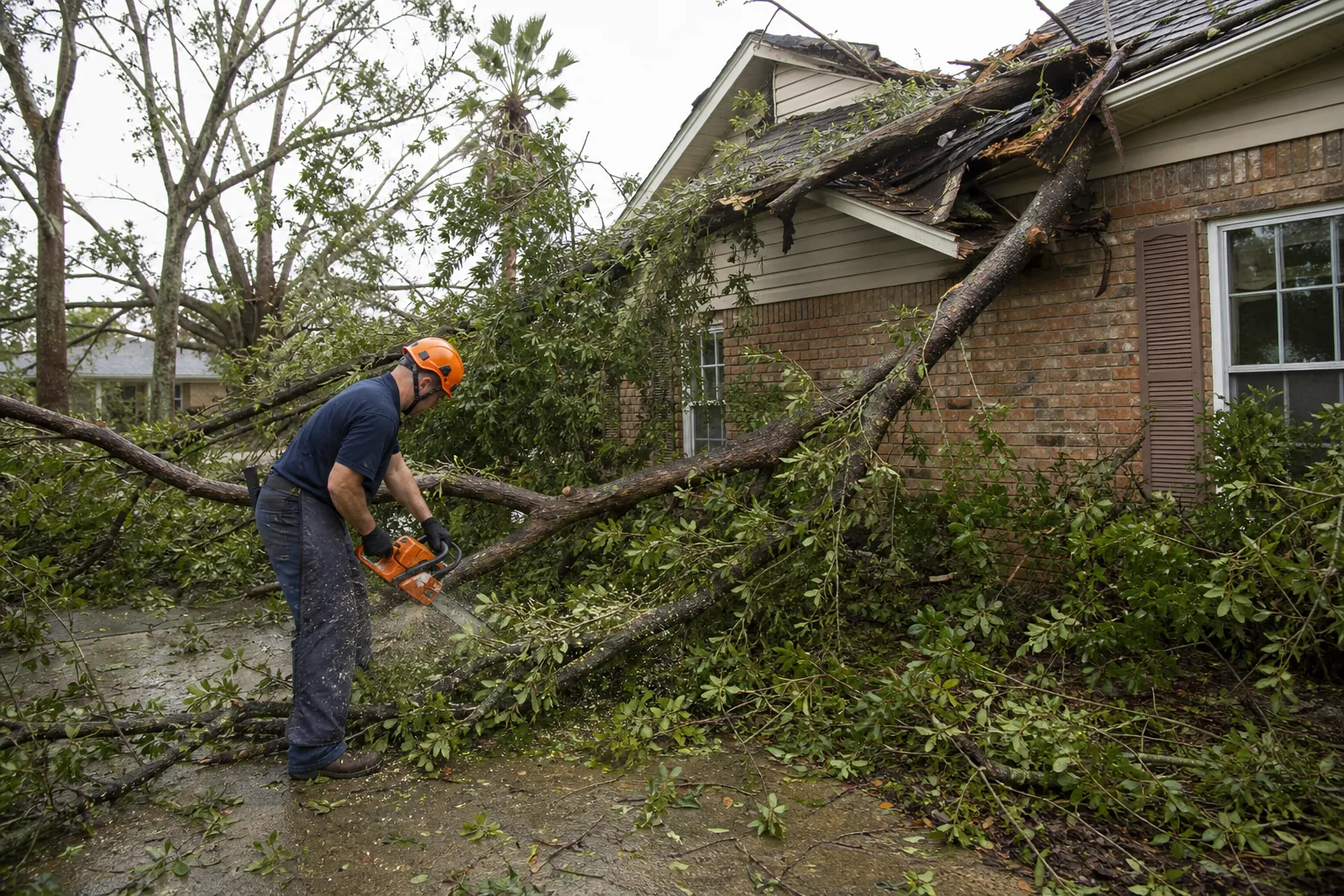
For hurricane tree removal lodged branches need careful review before cleanup begins. A broken limb may still hang high in the crown; Another branch may hold it above a yard or driveway; Keep people away, then seek a tree inspection to plan removal and nearby cleanup.
These steps help Milton homeowners plan around that risk; It also fits hurricane cleanup concerns across the Pensacola, FL area; Florida Foliage is based in Daytona Beach. This guide does not state that local crews or service dates are available.
A lodged branch can look still while remaining loose or strained; Its weight may rest on weak wood or damaged limbs; You don't need to know its exact weight to act cautiously. Start with distance, clear notes, and a plan for assessment.
For storm preparation and updates, use Ready.gov's hurricane guidance. For tree work hazards, see OSHA's tree care guidance. These sources support the safety limits discussed below.
What makes hurricane removal of lodged branches different?
Use the UF/IFAS urban forest hurricane recovery guidance for storm-damaged trees; OSHA provides hurricane debris collection safety guidance for cleanup hazards.
A lodged branch has broken or shifted without reaching the ground; Other limbs, forks, or nearby trees may hold it up; Cleanup must address the hanging wood and its support points. OSHA's tree care guidance explains tree work hazards, while NWS wind safety guidance supports keeping clear of storm-damaged trees.
Loose yard debris and hanging wood need different cleanup plans; Leaves and small twigs may lie clear of the tree. A large limb caught overhead creates a wider work area; The crew must assess how it rests before choosing a removal method.
A branch may hang from a strip of torn wood; It may also sit across two limbs like a bridge; Some branches lodge in a nearby tree instead. Each setup changes where the weight rests and what may move during removal.
Look from a safe place without standing beneath the crown; You may see fresh splits, bare wood, or a changed branch angle; These details help describe the concern during your first call. They don't show the full strength of the remaining tree.
Tree trimming may address a broken branch on an otherwise sound tree; Tree removal may be considered when damage affects the main stem; An inspection helps separate those choices. A hanging limb alone doesn't mean the whole tree must come down.
Ask for the lodged branch to be named in the cleanup scope. A broad request for yard cleanup can leave that detail unclear; Note the tree's location and what lies beneath it; Include nearby paths, fences, sheds, and outdoor sitting areas.
Photos may help explain the setting without a close approach; Use a zoom view from a safe place; Don't move into the fall area for a clearer shot. OSHA identifies falling limbs and electrical contact as serious tree work hazards.
What should you do before anyone starts hurricane cleanup?
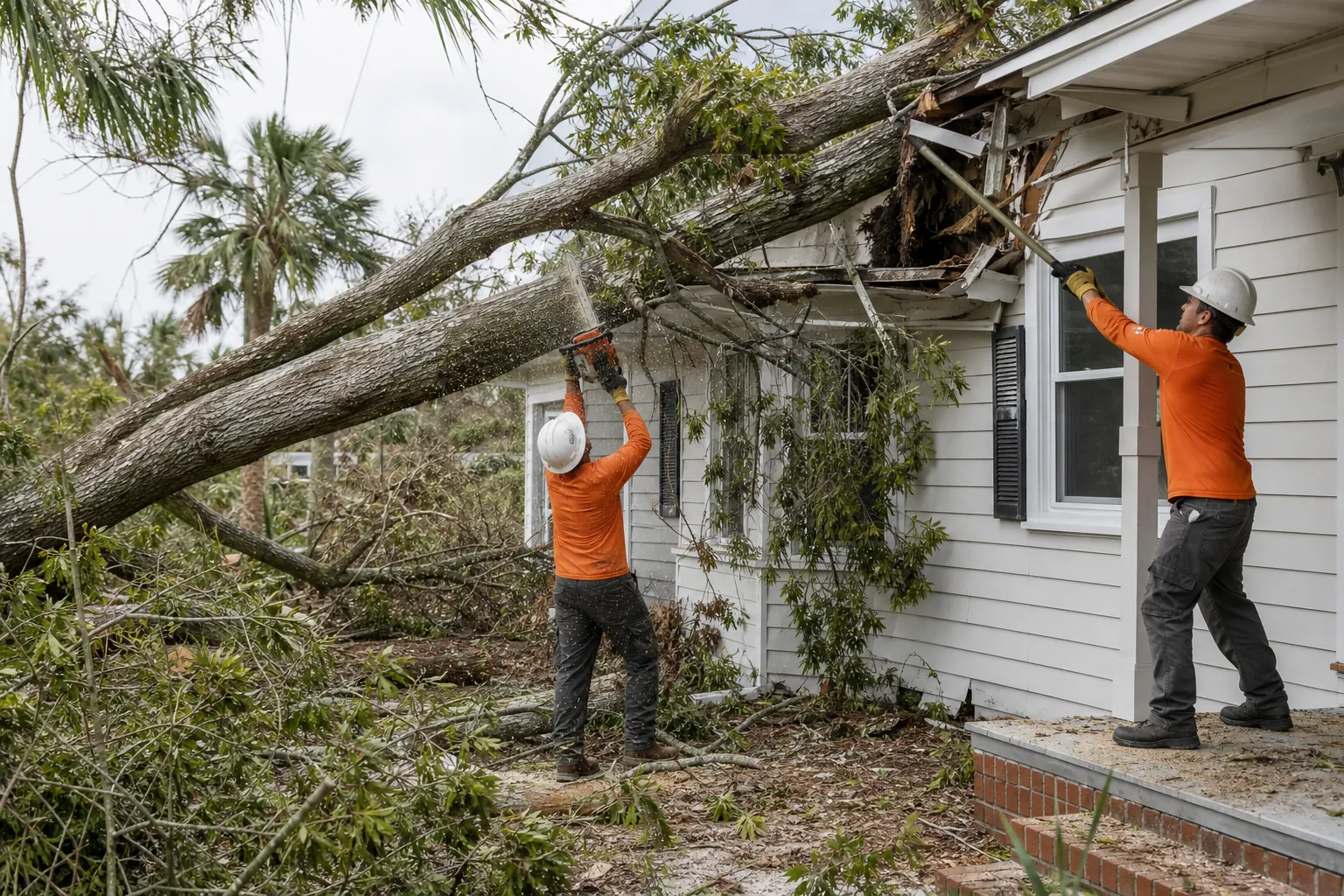
Start by keeping people and pets away from the damaged tree; Check storm updates before going outside, and leave wire hazards untouched. Ready.gov's hurricane safety guidance addresses post-storm dangers. NWS wind safety guidance advises caution around trees and power lines after high winds.
You don't need to mark the area from beneath the limb; Choose another route from the house to the street; Keep children from using nearby play areas. Tell others which tree has the hanging branch before they enter the yard.
A branch may hide a wire behind leaves or broken wood; Don't touch a branch that rests on a wire; Don't try to lift, cut, or drag it away. Contact the utility about fallen or damaged lines and keep your distance.
Use these steps to organize your first response without starting tree work:
- Check official weather updates before entering the yard to view storm damage.
- Keep people and pets away from hanging limbs and damaged trees.
- Choose a clear route that avoids the damaged crown and nearby wires.
- Take distant photos only when you can remain outside the hazard area.
- Describe the lodged branch and nearby structures when requesting a tree inspection.
Wait to move lawn gear beneath the damaged canopy. A mower or storage bin can wait until access is safe; The same applies to patio chairs and garden tools; Retrieving small items isn't worth entering an overhead hazard area.
Don't use a ladder to inspect the branch more closely; Don't throw ropes over it or try to shake it free; Those actions can change how the limb rests. OSHA's tree care guidance identifies falls, falling objects, and equipment hazards during this work.
Keep the first call focused on facts you can see; Explain if access to the home or driveway is blocked; Mention wires without approaching them to check details. Ask what information is needed before an inspection or cleanup visit can be discussed.
How does a hurricane tree inspection guide removal?
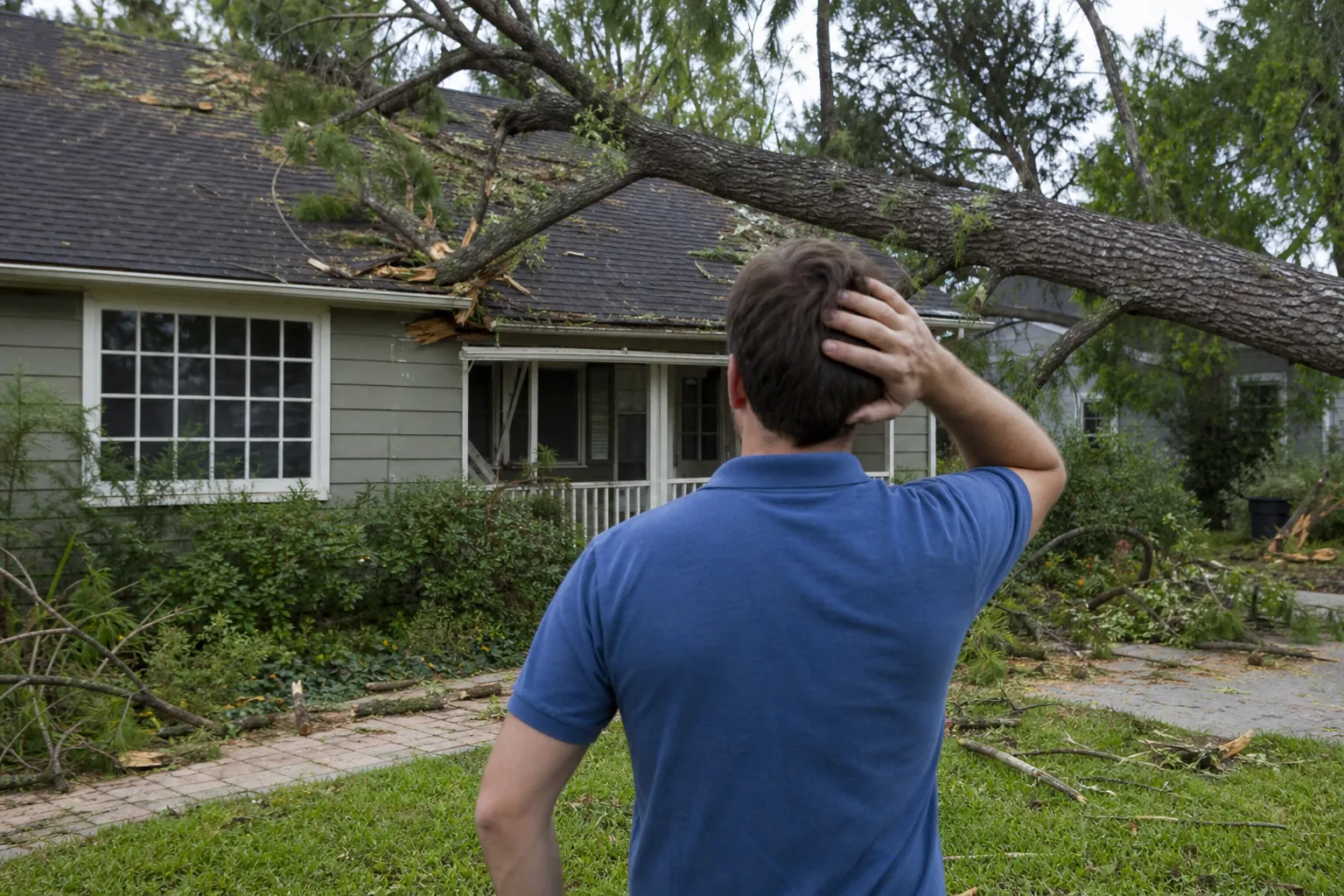
A tree inspection helps define damage, access, and the cleanup scope; It should consider the lodged limb and the tree holding it. OSHA's tree care guidance highlights worksite and equipment hazards. Ready.gov's post-hurricane guidance reinforces caution around damaged surroundings.
Useful assessment starts with the whole tree, not one broken tip; The trunk may show splits that weren't obvious from the house; Nearby limbs may have torn bark or cracked joints. The lodged branch may also have damaged the wood supporting it.
The base of the tree matters during storm assessment; Tell the inspector if its lean seems new; Mention fresh soil movement or a raised root area. These observations need review rather than a homeowner test of the tree's strength.
Access should be part of the same discussion. A narrow gate can affect how equipment reaches the work area. A fence may separate the tree from an open staging spot; Soft ground and storm debris can further change the work plan.
Ask how the proposed work addresses the main concern; Will it remove only the lodged limb and damaged branches? Does broader tree damage support full removal? A clear explanation should connect the service choice to observed damage and safe access.
The tree care team may consider controlled lowering or crane tree removal; Neither method suits every yard or tree; Selection depends on the limb, surroundings, access, and equipment needs. Don't request a method solely because the branch looks large in a photo.
Arborist reports and tree inspections can help record visible findings; Ask what the inspection includes and what form the findings take; Don't assume a photo review replaces an on-site assessment. Hidden damage and support points may remain unclear from ground views.
Before work begins, clarify the intended result in plain terms; For example, the scope might remove lodged wood and named damaged limbs; It might also include full removal after assessment. Keep unrelated yard projects separate so the storm work remains clear.
Which tree services may fit hurricane-damaged limbs?
The right service depends on what the storm damaged; Tree trimming may address broken limbs, while tree removal addresses broader tree concerns. OSHA's tree care resource explains why this work needs hazard planning. NWS wind guidance supports avoiding damaged trees during cleanup.
Emergency and hurricane tree removal can be discussed when damage needs prompt attention; That service name doesn't establish a response time or local availability; Explain the hazard when you call. Then confirm what assessment and scheduling options are actually available.
Tree trimming may remove torn or broken branches after inspection; The goal should be clear, with the damaged limbs identified. Avoid treating storm cleanup as a reason for broad cutting. Sound branches and damaged wood need separate review.
Use this service guide to prepare questions rather than choose work alone:
- Ask about tree trimming when damaged limbs remain on a tree being assessed.
- Discuss tree removal when inspection finds concerns beyond one lodged branch.
- Ask about crane tree removal when the tree and access warrant review.
- Discuss stump grinding after removal if the remaining stump affects yard use.
- Request tree inspections when the extent of hurricane damage remains unclear.
Canopy thinning and crown reduction are distinct services with different goals. They should not be used as blanket fixes after every storm. Ask which problem the proposed work addresses. The answer should relate to the tree's condition and structure.
Stump grinding addresses a stump left after tree removal. It doesn't resolve hanging limbs or damage in nearby trees. Plan overhead hazard work first. Then discuss the stump area, remaining chips, and access for that later task.
Land and lot clearing or brush hogging may fit separate storm cleanup areas. Neither replaces the assessment of lodged wood overhead. Define each work area before combining services. This helps keep brush work from being confused with damaged tree removal.
For shared properties, commercial tree services or HOA and condo tree services may apply. Describe shared walks, parking spaces, and storm-damaged trees clearly. Ask for each hazard area to be included in the review. Avoid assuming one tree assessment covers every tree nearby.
What should a hurricane cleanup scope include?
A useful cleanup scope names the damaged tree, lodged branch, and intended work. It should also describe debris handling and access needs. OSHA's tree care guidance supports clear worksite planning. Ready.gov's hurricane guidance reminds homeowners that hazards can remain after the storm.
Separate overhead work from ground cleanup in your notes. First identify the branch that remains in the crown. Then list fallen wood and brush around it. This makes it easier to discuss what must be assessed before ground work starts.
Describe the cleanup result you want in practical terms. You may need a walkway reopened or fallen wood removed. You may want storm brush gathered from a named area. Ask which parts of that request are included in the proposed scope.
A simple planning sheet can keep the discussion focused:
- Name each tree with lodged limbs so the scope identifies the right location.
- List nearby fences, sheds, paths, and wires without entering the hazard area.
- Ask how branches, logs, and smaller storm brush will be handled.
- Confirm whether stump grinding is included or discussed as a separate task.
- Ask what areas need a final visual review before normal yard use.
Don't assume removal includes every piece of storm debris. Ask about large wood, small brush, and the stump separately. Discuss where equipment may enter and leave. Make sure any agreed access route is clear in the work plan.
Keep yard use separate from the work itself. Ask where household members should stay during cleanup. Don't cross a work area to collect wood or move items. OSHA's guidance addresses falling objects, moving equipment, and other hazards around tree work.
After cleanup, look for unresolved concerns from a safe position. Another limb may still appear broken or out of place. Ask for that concern to be reviewed rather than climbing for a closer look. A tidy ground surface doesn't establish that the crown is sound.
For Milton yards near the Pensacola area, keep the scope tied to the actual property. Avoid relying on a general regional storm description. One yard may have a single damaged tree. Another may need several separate tree assessments and debris areas.
How can you prepare trees before the next hurricane?
Start hurricane tree planning before a storm warning creates time pressure. Arrange inspections and discuss visible defects while access is clear. Ready.gov's hurricane preparation guidance supports advance planning. NWS wind safety guidance explains the dangers that high winds create around trees.
Walk your usual routes and note trees above busy spaces. Include the driveway, front walk, and outdoor seating area. Record broken limbs you can see from the ground. Use those notes to guide a tree inspection, not to diagnose the tree.
Ask about old storm wounds during the inspection. A past break may have left a damaged branch junction. A limb may have shifted without falling. Explain any changes you've noticed since the last storm or tree work.
Discuss tree trimming, canopy thinning, or crown reduction only after assessment. Each should have a clear purpose for that tree. Avoid asking for all trees to receive the same treatment. Species, size, structure, and prior damage can change the plan.
Tree care cannot remove every hurricane risk. Strong winds can damage trees that looked sound beforehand. Preparation should include household storm plans as well as tree care. Follow official alerts and avoid outside tree work when dangerous weather approaches.
Store tree inspection notes with your storm preparation materials. Keep distant tree photos that show earlier crown shape and lean. They may help explain changes after a storm. Date the photos so they don't get confused with newer views.
When hurricane conditions pass, begin again with a cautious ground-level check. Don't assume earlier care means no damage occurred. Look for visible changes from a safe place. Seek assessment when a limb is lodged or the tree's condition is unclear.
Hurricane lodged-branch cleanup FAQs
Can I pull a lodged branch down with a rope?
Don't attempt that cleanup yourself. Pulling can change the branch's support and bring wood down unexpectedly. Keep clear and request assessment instead. OSHA's tree care guidance identifies falling limbs, equipment, and electrical contact as major hazards.
Does one lodged branch mean the whole tree needs removal?
No. The branch and the remaining tree need assessment. Tree trimming may address limited damage, while broader defects may support removal. Describe visible breaks and changes without going beneath the crown. The service choice should follow the inspection findings.
Should I clear small debris beneath the hanging limb?
Leave debris beneath the damaged crown until the overhead concern is addressed. Don't enter that area to collect sticks or move chairs. NWS wind safety guidance supports caution around damaged trees after high winds.
Can a photo show the right hurricane removal method?
A photo can help explain location, access, and visible damage. It may not show hidden breaks or branch support points. Use it to begin the discussion. Ask what further inspection is needed before a method and scope are selected.
How can I ask Florida Foliage about storm-damaged trees?
Describe the lodged branch, nearby structures, and any visible wire concern. Ask about tree inspections and a neutral estimate for the proposed scope. Florida Foliage's headquarters remains Daytona Beach. Confirm service-area fit and scheduling directly rather than assuming Milton availability.
For a storm tree assessment or estimate inquiry, call Florida Foliage at (386) 481-7913. Explain the concern from a safe location and ask about service-area fit.
AI-assisted draft with editorial oversight by Tim Francis; Clinton Funk is the named approving reviewer.
Call (386) 481-7913 to talk through next steps.