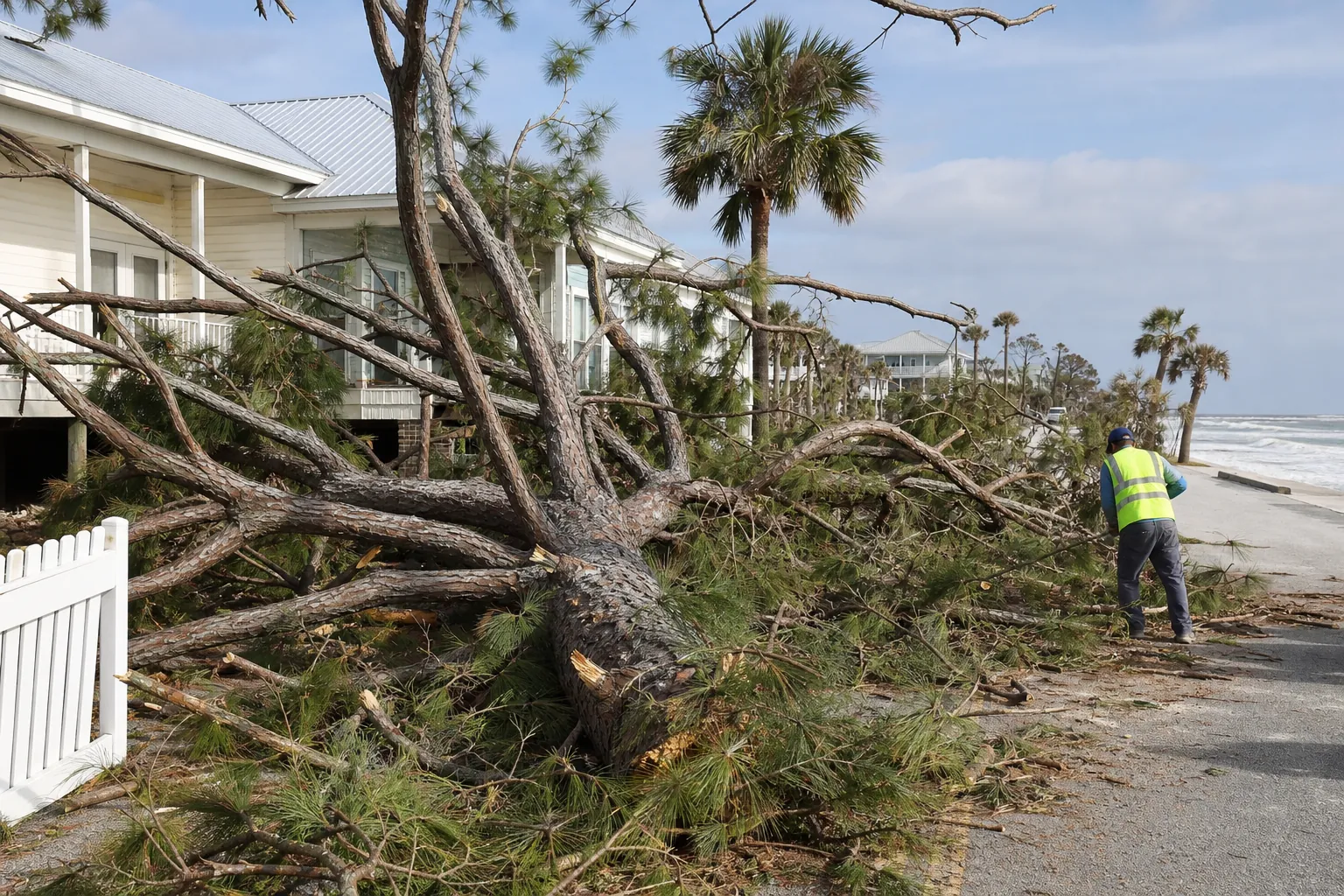
The best hurricane tree removal order starts with safety, then access, then tree care; First, stay clear of wires and unstable trees; Next, have trained workers assess hazards and blocked routes. Leave stump work and yard cleanup until urgent hazards are addressed. Follow local storm updates before going outside. Ready.gov’s hurricane guidance explains when to shelter and how to return safely.
For homeowners in Perdido Key, a tidy yard is the final goal; It isn't the first task after a hurricane. A fallen limb may look simple to move; Yet nearby trees, wires, and shifting wood can change the plan.
The sections below explain how to sort tree work after a storm; It also covers checks you can make before hurricane season; The aim is a clear cleanup scope, with urgent hazards handled first.
What should come first in hurricane tree removal?
Use the UF/IFAS urban forest hurricane recovery guidance for storm-damaged trees; OSHA provides hurricane debris collection safety guidance for cleanup hazards.
Start with hazards that make the area unsafe to enter; Downed wires, hanging limbs, and unstable trees come before loose debris; Keep people away while trained workers assess the site. Don't start cutting to open a path yourself. OSHA’s hurricane recovery guidance addresses hazards during storm cleanup.
A tree touching a wire isn't routine yard debris; Neither is a broken limb caught high in another tree; Those hazards need a different response from small branches on open ground.
If you see downed wires, stay away and contact the utility; Don't touch a tree, fence, or other object touching them. OSHA warns that downed lines may still carry power; Keep children and pets away from the whole area.
Once the site can be assessed safely, sort work by need. A blocked route may matter more than scattered branches. A damaged standing tree may need attention before a fallen one.
- Keep people away from downed wires and anything that may touch them.
- Have hanging limbs and damaged standing trees assessed before nearby cleanup begins.
- Give safe access routes priority when trained workers plan the removal sequence.
- Move routine debris cleanup behind urgent tree hazards and blocked access.
- Leave stump grinding and final yard work for a later cleanup stage.
These are planning steps, rather than a fixed cutting sequence; The crew may need to change the order after inspection; Tree size, nearby structures, and the condition of the ground matter.
Emergency and hurricane tree removal focuses on urgent tree hazards; General tree removal may follow once those hazards are addressed; Ask for a clear explanation of which trees need attention first.
Don't judge priority by how dramatic a fallen tree looks. A large tree lying flat may be less urgent than a hanging limb; The safest sequence depends on the whole scene, not one photo.
How can you check storm damage without entering the hazard area?
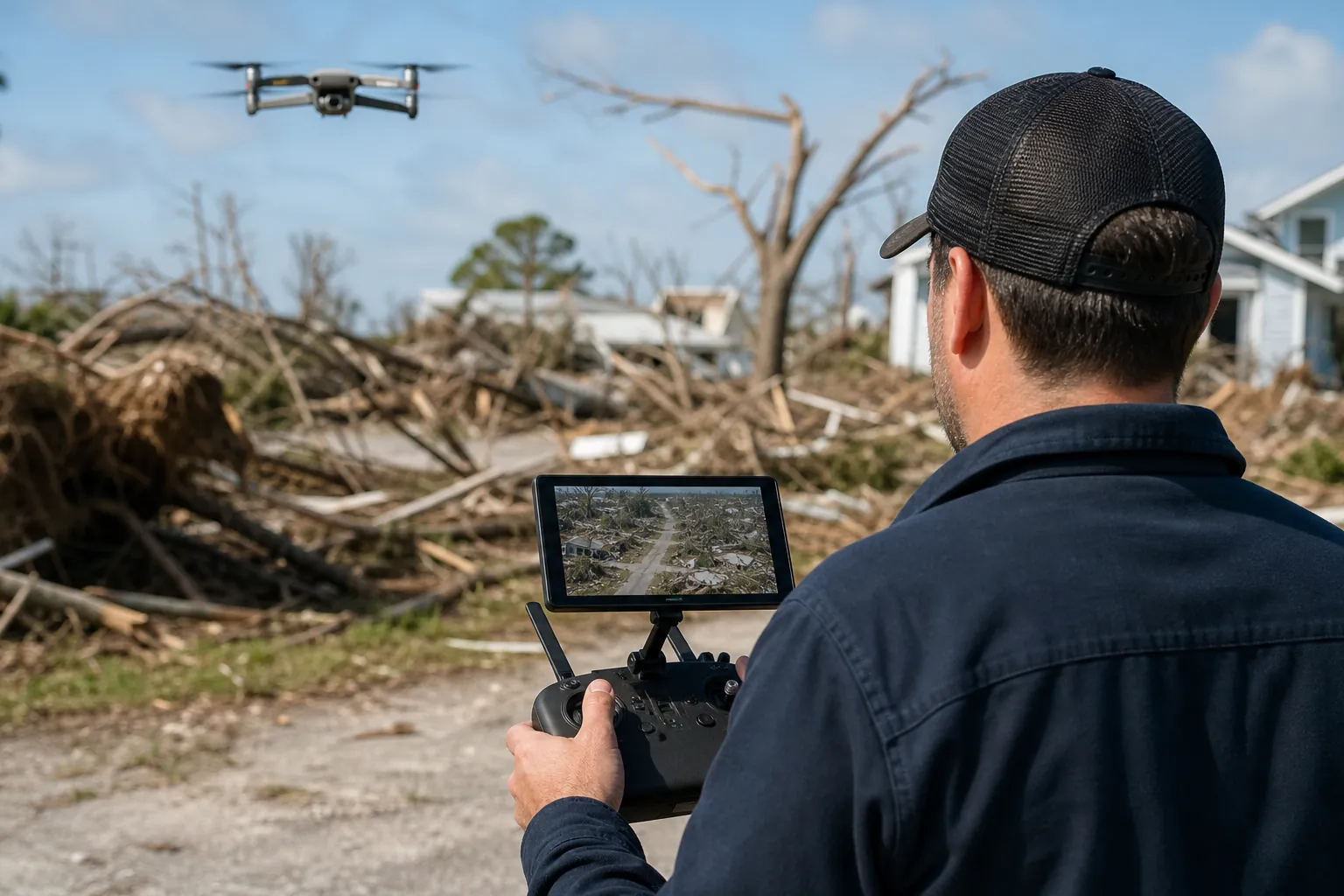
Make your first check from a sheltered place or safe viewpoint; Note blocked paths, broken trees, and visible damage without approaching them; Photos can help explain the site to a tree service. Wait until local officials say conditions are safe. Ready.gov advises following local instructions after a hurricane.
A window may give you enough detail for an initial call; You don't need to stand beneath a tree for photos. A broad view often shows more than a close shot.
Record where the tree stands and what lies around it; Note nearby roofs, fences, driveways, and other trees; Describe what you can see without guessing about hidden damage.
Useful notes might say that a limb hangs above the drive; Another note might describe a tree leaning toward a shed; Avoid labels such as safe or sound without a tree inspection.
Storm damage can be hard to judge from the ground. A tree may keep much of its green crown after damage; Leaves alone don't tell you which work should come first.
An arborist report or tree inspection can help define the next steps; Ask which trees need removal and which may need trimming; Also ask which trees need another check as conditions change.
Don't push a leaning tree to test its strength; Don't climb into a damaged crown for a closer look. OSHA identifies unstable trees and limbs as cleanup hazards; Leave those checks to trained workers.
For a Perdido Key property, explain the site layout clearly. A narrow entrance or shared drive may affect work planning; So can trees close to a porch, fence, or walkway.
Keep your notes focused on what changed during the hurricane; Mention new lean, broken limbs, and blocked areas; That helps separate storm cleanup needs from routine yard work.
How should blocked paths, roofs, and fallen trees be ranked?
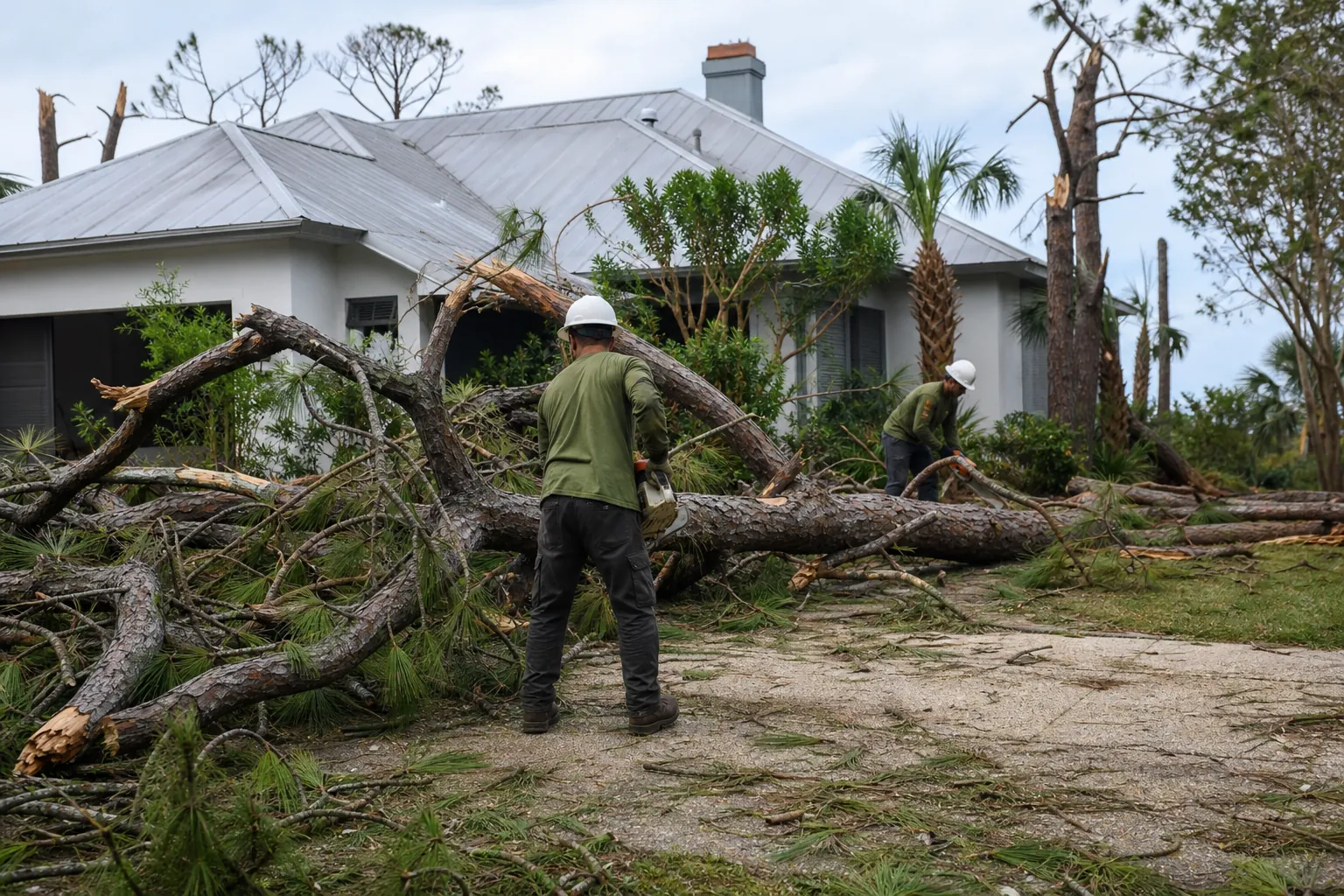
Rank work by hazards and safe access, then by cleanup needs. A tree near a roof requires a different plan from loose branches; Damaged trees beside the work area need assessment too; Trained workers should set the removal sequence. OSHA outlines hazards involving trees, equipment, and power lines.
Start by explaining which routes people normally use; Include doors, gates, drives, and paths to the street; Tell the tree service if one route is completely blocked.
A blocked route doesn't mean you should cut through it; Fallen wood can shift during cutting, especially under tension. OSHA’s cleanup guidance addresses these risks during tree work; Keep a different route open if one is safe.
The table below can help you describe the cleanup scope; It isn't a cutting plan or a tree diagnosis; Actual work order should follow a site assessment.
| Storm condition | Planning priority | Useful detail to share |
|---|---|---|
| Tree or limb near a downed wire. | Keep clear and contact the utility. | Describe the location from a safe place. |
| Hanging limb above a used route. | Keep the route closed pending assessment. | Explain which door, gate, or path is affected. |
| Fallen tree against a roof. | Request a site-specific removal assessment. | Share broad photos of the tree and structure. |
| Tree blocking the main drive. | Include safe access in the early work plan. | Note any other usable entrance. |
| Loose branches in an open area. | Place routine cleanup after urgent hazards. | Describe the debris area and nearby trees. |
| Stump left after tree removal. | Plan stump grinding after removal work. | Discuss the intended use of that yard area. |
A tree resting against a structure may need specialized handling; Crane tree removal may be considered for some sites; That choice depends on access, tree position, and the work plan.
Ask why a proposed method fits your property. A clear answer should connect the method to site conditions; It shouldn't treat every storm-damaged tree as the same job.
Keep the scope easy to follow; Identify urgent trees, access needs, debris areas, and later tasks; This helps you understand what the first cleanup stage includes.
When can trimming help, and when is removal needed?
A storm-damaged tree may need trimming, removal, or further inspection; The choice depends on its condition and the surrounding site; Don't decide from lost leaves or scattered branches alone. A tree inspection can help sort the options. OSHA’s recovery guidance supports caution around damaged trees.
Tree trimming may address broken branches on a retained tree; Removal may be considered when damage leaves serious structural concerns. A site assessment is needed to distinguish those situations.
Ask the inspector to explain the main findings in plain terms; Which parts broke? What remains attached? How does the damage affect the tree care plan?
For each tree, request a clear next step; That might be removal, trimming, or another inspection later; An arborist report can help keep those findings organized.
Before hurricane season, canopy thinning or crown reduction may be discussed; These services should match the tree’s needs and structure; They aren't a one-size-fits-all response to storm concerns.
A useful readiness plan names the trees that need review; It also states the purpose of each proposed task; Ask what the work changes and what concerns remain.
Don't assume a shorter or thinner tree is stormproof; Hurricanes can damage trees despite prior care; Ready.gov recommends preparing for high winds and following storm alerts. Tree care should remain one part of that wider plan.
During cleanup, avoid adding unrelated work without discussing the scope; First address the damage that prompted the visit; Then consider care for retained trees and future storm readiness.
On HOA or condo grounds, label trees by location; Use building names, path names, or numbered site photos. This helps residents understand which areas remain closed during tree work.
What should wait until the main tree hazards are addressed?
Stump grinding, brush cleanup, and final yard work usually belong later. First, address damaged trees and establish safe work access. Then define the remaining debris and ground-level tasks. Keep people outside active work areas. OSHA’s hurricane cleanup guidance covers machinery and tree-work hazards.
A staged plan makes the cleanup easier to follow. The first stage handles the highest-priority tree concerns. Later stages deal with wood, brush, stumps, and the remaining site.
Ask what debris handling is included in the planned work. Be specific about trunks, branches, and brush piles. Clear wording helps prevent confusion when the crew finishes a stage.
- Confirm which damaged trees and broken limbs belong in the first work stage.
- Ask how removed trunks and branches fit into the debris cleanup scope.
- Discuss stump grinding separately from the removal of the standing tree.
- Identify brush areas that need attention after urgent tree work ends.
- Request a final site check before reopening paths near retained trees.
Stump grinding serves a different purpose from tree removal. It addresses the stump left after the tree comes down. Ask when that task fits the rest of the storm cleanup.
Brush hogging may be relevant for storm-related overgrowth or debris access. Land and lot clearing may suit a broader cleanup scope. Neither service replaces assessment of damaged standing trees.
For larger grounds, divide the site into clear work areas. Commercial tree services can be discussed in that context. HOA and condo tree services may involve several shared paths or buildings.
Residents need simple updates about which areas remain closed. Avoid reopening a path just because nearby branches are gone. Ask the workers what hazards remain before changing access.
Keep children and pets away from equipment and tree work. OSHA warns about moving equipment and falling material during cleanup. Choose a separate place for household activity until work ends.
How can you prepare a storm tree-care plan before the next hurricane?
Build a readiness plan around tree inspections, access, and clear records. Identify trees near homes and frequently used paths. Discuss needed care before a storm approaches. Keep photos and service notes easy to find. Ready.gov recommends making a hurricane plan before severe weather arrives.
Start with the parts of the yard people use most. Look at the front entry, drive, and outdoor gathering areas. Arrange a tree inspection for concerns you can't assess yourself.
Save a simple site map with the trees marked. Photos taken before a storm can help explain later changes. Use dates and locations rather than long notes.
- List trees near the home, driveway, gates, and frequently used walking routes.
- Arrange inspections for trees with concerns that need an informed assessment.
- Discuss trimming needs well before a hurricane watch changes household priorities.
- Keep dated tree photos and inspection notes together for easy reference.
- Write down utility contacts and the sources you use for storm updates.
Once a hurricane threatens, shift attention to household storm safety. Follow local instructions rather than rushing outdoor tree work. Ready.gov explains watches, warnings, shelter plans, and evacuation steps.
After the storm, use the same map to record visible changes. Mark blocked routes and areas you haven't entered. This gives a tree service a clearer starting point.
Florida Foliage remains headquartered in Daytona Beach. A call should confirm location fit before any work is discussed. Don't assume a Perdido Key visit or local crew is available.
You can still prepare useful questions before that call. Ask about tree inspections, removal scope, and follow-up tree care. Keep the discussion tied to your actual hurricane damage.
Hurricane tree cleanup FAQs
Should a fallen tree always be removed before a damaged standing tree?
No. A damaged standing tree may pose the more urgent hazard. A fallen tree may also need prompt attention if it blocks access. Trained workers should assess both before setting the sequence. OSHA identifies unstable trees and limbs as storm cleanup hazards.
Can I cut small storm-damaged limbs myself?
Don't use limb size alone to judge the risk. Wires, nearby damage, and tension in wood can make cutting dangerous. Leave hazardous cutting to trained workers. Keep clear of hanging limbs and unstable trees. OSHA explains tree-cutting and chainsaw hazards during recovery.
Does every hurricane-damaged tree need removal?
No. Some trees may be candidates for trimming or later checks. Others may need removal after an inspection. The next step depends on the actual damage and site. Stay out of the hazard area while awaiting assessment. OSHA provides storm cleanup safety guidance.
Should stump grinding happen during the first cleanup visit?
That depends on the work plan and site conditions. Urgent tree hazards and safe access should guide the early stages. Discuss stump grinding as a separate task after tree removal. This keeps the scope clear and helps you understand which parts of cleanup will happen first.
What should I have ready when calling about hurricane tree work?
Have your address, safe-view photos, and a short damage list ready. Note blocked routes and any visible wires without approaching them. Ask about location fit, assessment, and cleanup scope. Florida Foliage is headquartered in Daytona Beach, so confirm service suitability rather than assuming local availability.
For a neutral estimate discussion, call Florida Foliage at (386) 481-7913. Share your Perdido Key location and hurricane tree concerns. Confirm location fit and assessment needs before planning any work.
AI-assisted draft with editorial oversight by Tim Francis; Clinton Funk is the named approving reviewer.
Call (386) 481-7913 to talk through next steps.