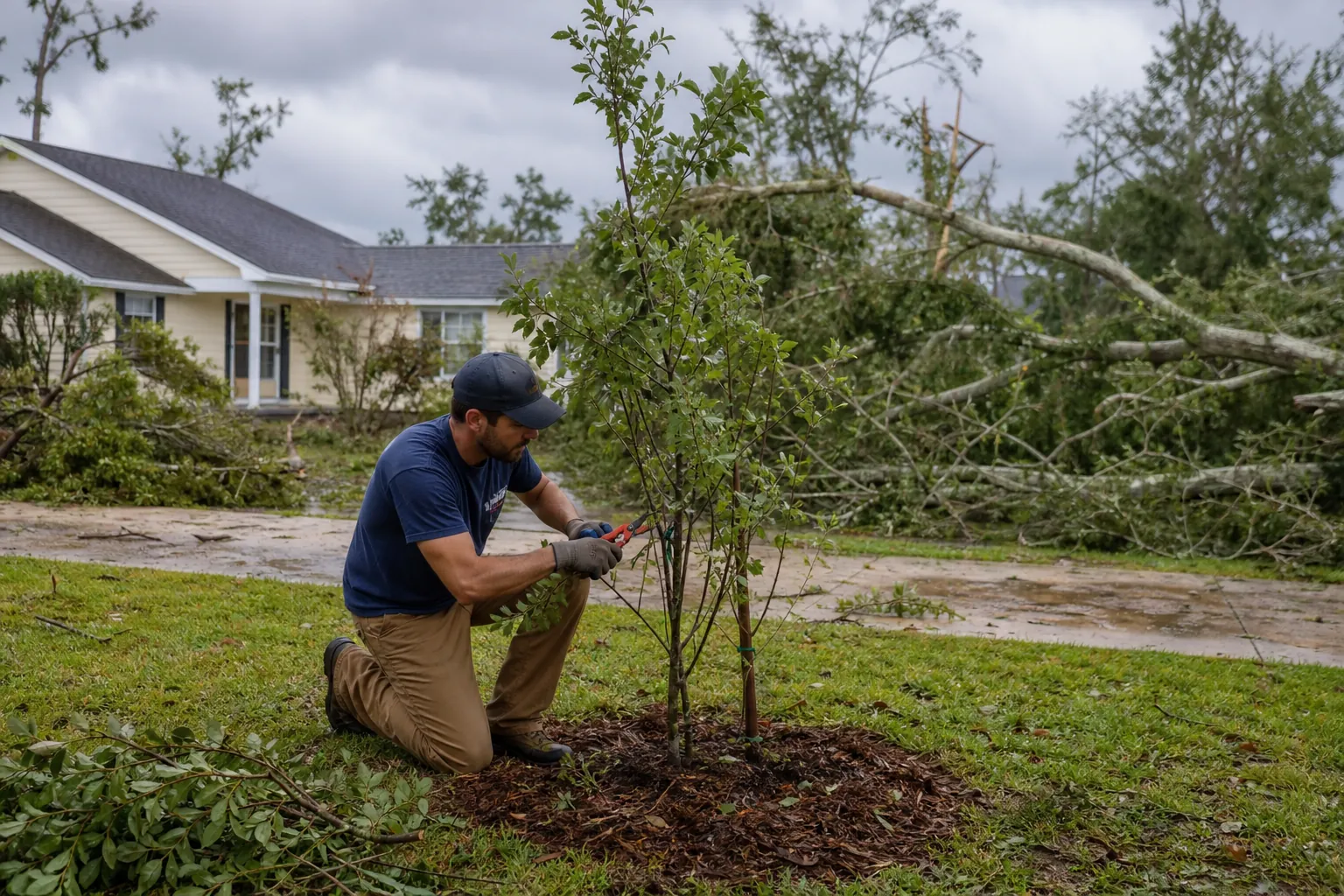
Good hurricane tree trimming young trees need starts with careful checks; The goal is sound growth, not a bare crown; In Milton, FL, inspect roots, branch joints, and old wounds before choosing cuts. Keep storm work separate from routine care, and leave risky tree work to trained crews.
A young tree needs leaves to grow roots and build strength; Heavy cutting can slow that work; Small, planned cuts often make more sense than a rushed trim. Some trees need no pruning before a storm. Others need a closer look because of cracks, lean, or weak branch joints.
These steps help Milton homeowners plan hurricane tree care and later cleanup; Florida Foliage has its headquarters in Daytona Beach; This guide does not state that crews are based in Milton. You can use it to prepare questions about tree inspections, trimming, and storm cleanup scope.
What Does Hurricane Trimming For Young Trees Involve?
Use the UF/IFAS urban forest hurricane recovery guidance for storm-damaged trees; OSHA provides hurricane debris collection safety guidance for cleanup hazards.
Hurricane trimming for young trees means choosing cuts for each tree's needs; It does not mean removing every low limb or thinning every crown; Start with dead branches, damaged growth, and weak joints. Then assess the tree's shape, root health, and nearby space before deciding what work makes sense.
Young trees vary widely in size and growth habit; Some grow around one main stem; Others naturally form several stems. A useful plan respects that shape instead of forcing every tree into the same form. Ask how each cut serves the tree's long-term structure.
Two stems that rise from one narrow joint deserve attention; Bark may become trapped between them as they grow; That does not mean the tree needs a large cut today. A tree inspection can help sort out which stem to guide and when.
Start by listing visible defects from ground level; Note dead tips, cracked branches, rubbing limbs, and broken shoots; Take clear photos from several sides. Include the full tree and close views taken from safe ground. These photos can guide questions, though they cannot replace a site inspection.
- Mark dead or broken branches for review before choosing any live growth to remove.
- Ask how each proposed cut will support the tree's future shape and branch spacing.
- Keep enough healthy leaves to support root growth while the tree becomes established.
- Use the tree's species and condition to guide timing, rather than the storm calendar alone.
A neat outline is not the main goal; Neither is making the tree look sparse; The goal is a tree with sound joints and room to grow. No pruning plan makes a tree stormproof. A good assessment explains both the useful work and its limits.
How Should You Check Roots Before Hurricane Season?
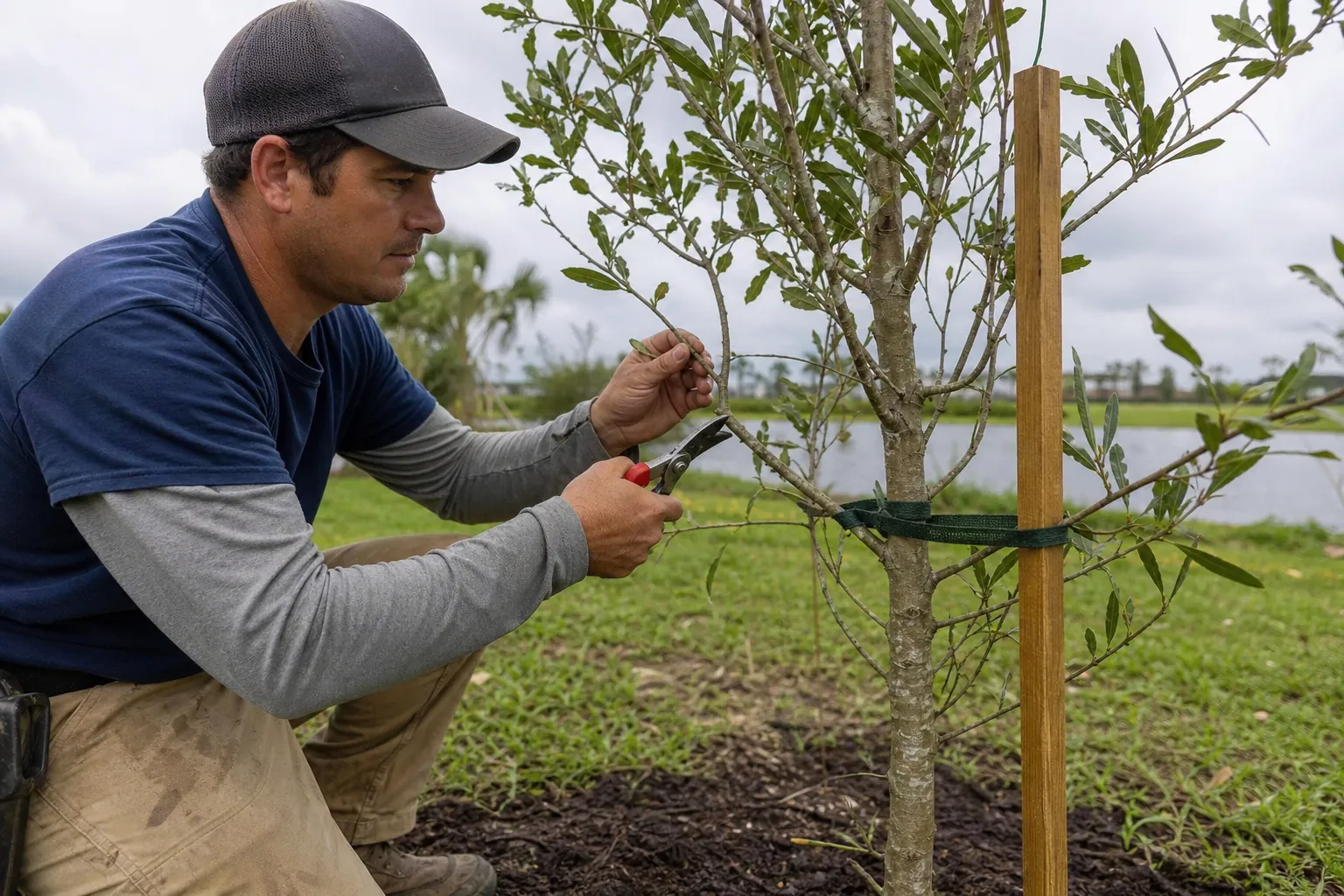
Check the ground and trunk base before focusing on the crown; Look for exposed roots, buried trunk flare, fresh soil cracks, and a new lean; Note standing water near the planting area. These signs help guide an inspection, but they do not establish the cause without a closer assessment.
The trunk flare is where the trunk widens into roots; It should not disappear beneath a deep mound of mulch; Move loose mulch away from direct trunk contact without digging into roots. If soil hides the base, ask for an assessment before changing the grade.
A newly planted tree may still rely on its original root ball. A full crown does not prove that roots have spread well; Record when the tree was planted, if known; Share any changes in lean, drainage, or growth with the person inspecting it.
Check stakes and ties from safe ground; Ties should not cut into bark or hold the trunk rigidly; Do not add tight ropes as a quick hurricane fix. Ask if the tree still needs support and how that support should be adjusted or removed.
Milton yards can differ greatly over short distances; One planting spot may drain well while another stays wet; Describe your own yard rather than relying on a broad regional label. Note where rain collects and whether water lingers around the tree after ordinary showers.
Keep lawn tools and stored items away from the base; Repeated bumps can wound thin bark; Avoid digging trenches or cutting roots while preparing the yard. A tree's storm-care plan should include the ground around it, not simply the branches above it.
If a lean seems new, compare current photos with older ones; Do not pull the trunk upright yourself. A shift may involve the root ball or surrounding soil; That needs assessment before pruning is chosen as the response.
Which Cuts Help Young Trees Prepare For Hurricanes?
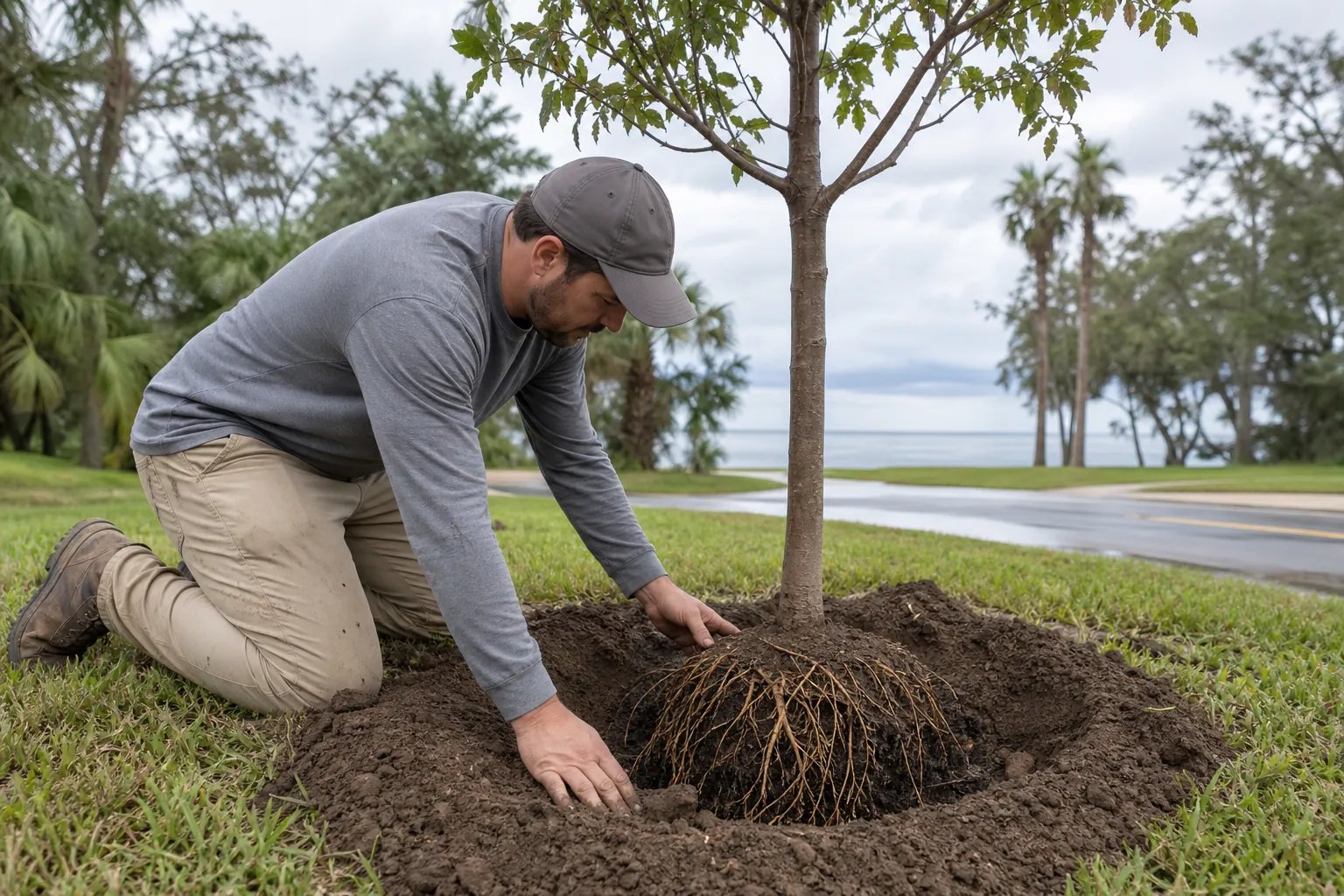
Useful cuts address a clear defect while keeping healthy growth; Small structural cuts may help guide competing stems or poor branch spacing; Dead and broken limbs may need removal. The amount and timing depend on the species, age, and condition, so avoid choosing a fixed trimming percentage for every tree.
Ask for a simple explanation of the proposed cuts; Which branch is damaged? Which stem is being guided? What growth should remain? A clear plan should answer these questions before work begins; It should also explain when leaving a branch alone is the better choice.
Low branches can play a useful role on young trees; Removing them all at once may leave too little foliage; If future clearance is needed, staged trimming may fit better. Tell the person assessing the tree how the space is used during storm preparation and cleanup.
Canopy thinning and crown reduction are different types of work; Thinning removes selected branches within the crown; Reduction shortens selected branches back to suitable side branches. Neither should be treated as a standard hurricane treatment for every young tree.
A young tree with a small crown may need little thinning. A long branch with a weak joint may need a different response; Ask why the proposed method fits that exact tree; Service names alone do not explain the scope or the likely result.
Avoid topping as a shortcut to hurricane readiness; Cutting main stems to stubs changes the tree's form sharply; It can leave large wounds and lead to dense new shoots. A shorter tree is not automatically a sounder tree, especially when the cuts create new defects.
Large cuts need special thought on a young tree; The wound may be large compared with the trunk; Ask if smaller steps over time could meet the same goal. Pruning should guide growth where practical, rather than remove so much that recovery becomes the main task.
After trimming, record what was done and take new photos; Watch future growth around the cuts. A hurricane care plan works best as a series of checks; One visit does not replace later reviews as the tree grows and conditions change.
When Should Hurricane Tree Work Stop?
Stop routine tree work when storm conditions make the yard unsafe; Pruning should happen well before dangerous weather arrives, not during last-minute gusts; Follow local alerts and official instructions. If a storm threatens, shift from tree care to household safety and postpone outdoor work. See Ready.gov's hurricane preparation guidance.
The National Weather Service hurricane safety guide explains watches, warnings, and storm hazards; Use official updates to guide your plans. A tree checklist is not a reason to stay outside as conditions worsen; Finish ordinary yard checks early, while conditions remain calm.
Do not climb a young tree to reach a high limb; Small size does not remove the risk of a fall; Do not set a ladder against branches for storm trimming. OSHA describes falls, electrical contact, and falling objects in its tree care safety guidance.
Tree work near power lines needs trained workers and proper controls; Homeowners should not trim branches touching lines or attempt to free them; Keep away and contact the utility. OSHA's tree care guidance identifies electrical hazards as a major concern during this work.
- Check official storm updates before starting any outdoor hurricane preparation task.
- Leave high branches and ladder work to trained workers with suitable equipment.
- Keep away from trees and branches that touch or hang near power lines.
- Postpone tree work when official warnings or unsafe weather require household safety steps.
Secure loose yard items before dangerous weather arrives, as advised by Ready.gov. Do not tie those items to a young tree; Keep paths clear for normal household use; Once conditions worsen, follow official shelter or evacuation instructions instead of returning outside to finish trimming.
How Do You Check Young Trees After A Hurricane?
Begin with a distant view after officials say it is safe; Look for hanging limbs, downed lines, shifted roots, and cracked stems; Stay away from damaged areas instead of testing branches yourself. Ready.gov advises caution around storm damage and power lines in its hurricane recovery guidance.
A tree that remains standing may still have damaged branches; View it from several safe spots without walking beneath suspect limbs; Use a phone's zoom if needed. Do not shake the trunk to test it. OSHA outlines falling-limb hazards in its tree care safety guidance.
Compare the tree's current lean with earlier photos; Look for a lifted root plate or gaps near the base; Do not push a tilted tree back into place. Record what you can see and ask for a tree inspection before deciding on trimming or removal.
Fresh damage can differ from older wounds. A pale break surface may show where a branch recently split; Take photos without approaching unstable wood; Note the date and what changed during the storm. Clear records help focus the inspection on new damage.
Waterlogged ground can make access harder and hide hazards; Stay out of floodwater and away from downed electrical lines. Follow Ready.gov's post-hurricane safety guidance before entering damaged parts of the yard. A close tree check can wait until access is safe.
Do not rush to remove every tree with torn leaves. Leaf damage and broken twigs differ from a split trunk. The remaining crown, roots, and main stems all matter. A tree inspection can help separate trees that need trimming from those that need removal.
For a young tree that has tipped, ask about root damage first. Replanting may not suit every case. Species, root loss, trunk damage, and time since the storm matter. Avoid assuming that standing the tree upright will restore its former condition.
What Should A Hurricane Cleanup Plan Include?
A cleanup plan should separate urgent hazards from routine debris work. Identify damaged trees, broken limbs, blocked paths, and stumps left after removal. Then match each task to the right service. Keep hazardous work separate from homeowner tidying, using OSHA's tree care safety guidance as a safety reference.
Start with an inspection when the tree's condition is unclear. Arborist reports and tree inspections can help document visible defects and proposed work. Ask which trees need more assessment. A report should describe the tree in front of the inspector, rather than rely on storm damage alone.
Tree trimming may address damaged limbs on a tree kept in place. Tree removal may fit a tree that cannot reasonably be retained. Emergency and hurricane tree removal describes storm-related removal work. The method still depends on site access, nearby structures, and the tree's condition.
Crane tree removal may be considered where access or tree position calls for it. It is not needed for every fallen young tree. Stump grinding is a separate task after removal. Ask what will remain at ground level and which debris the cleanup includes.
- List each damaged tree separately so the inspection and cleanup scope stay clear.
- Ask which limbs need removal and which healthy parts should remain untouched.
- Clarify whether the work includes branch debris, larger wood, and stump grinding.
- Describe narrow gates, soft ground, and nearby structures before cleanup methods are chosen.
- Keep household cleanup outside areas with hanging limbs, unstable trees, or electrical hazards.
Broad clearing is different from care for a few young trees. Land and lot clearing or brush hogging should have a defined storm cleanup purpose. Avoid adding healthy trees to the work simply because equipment is present. Mark trees to retain during the planning stage.
Shared grounds need a clear tree list as well. HOA and condo tree services or commercial tree services may involve several planting areas. Record damage by location and tree, not by a vague whole-site description. That helps keep hurricane cleanup focused on actual needs.
Hurricane Care Questions For Young Trees
These questions cover common choices before and after a hurricane. Each answer depends on the tree's actual condition. Photos and notes help explain concerns, but some defects need an on-site view. Use these answers to prepare focused questions about trimming, tree inspections, removal, and cleanup scope.
Should every young tree be trimmed before a hurricane?
No. A healthy young tree may need no cuts. Trimming should address a clear need, such as a dead branch or poor structure. Removing healthy growth simply because a storm is forecast can harm the tree. Inspect first, then choose work based on what you find.
Does a shorter young tree handle hurricanes better?
Height alone does not show how a tree will respond. Root health, branch joints, species, and existing damage all matter. Topping is not a sound shortcut. Ask if selective trimming fits the tree, and keep the limits of any pruning plan clear.
Can I cut a storm-broken branch myself?
Do not handle hanging, bent, or unstable branches yourself. Stored force can make damaged wood move suddenly. Leave climbing and hazardous cutting to trained workers. OSHA's tree care safety guidance explains the risks from falling wood, equipment, and electrical contact.
What should I record for a hurricane tree inspection?
Record the tree's location, planting date if known, and recent changes. Include photos of its full shape and visible damage. Note drainage problems and past trimming. Take photos only from safe ground, away from damaged limbs and lines, following Ready.gov's recovery precautions.
When does storm damage call for removal?
Removal may be considered when major damage makes retention unsuitable. A split trunk, severe root loss, or unstable position needs close assessment. Torn leaves alone do not settle that choice. Ask what damage supports the recommendation and whether trimming remains a reasonable option.
For questions about tree inspections, trimming, or hurricane cleanup, call Florida Foliage at (386) 481-7913. Ask about an estimate and describe the tree's condition and location. Florida Foliage's headquarters remains in Daytona Beach; confirm service options for Milton directly.
AI-assisted draft with editorial oversight by Tim Francis; Clinton Funk is the named approving reviewer.
Call (386) 481-7913 to talk through next steps.