Reviewed by Clinton Funk
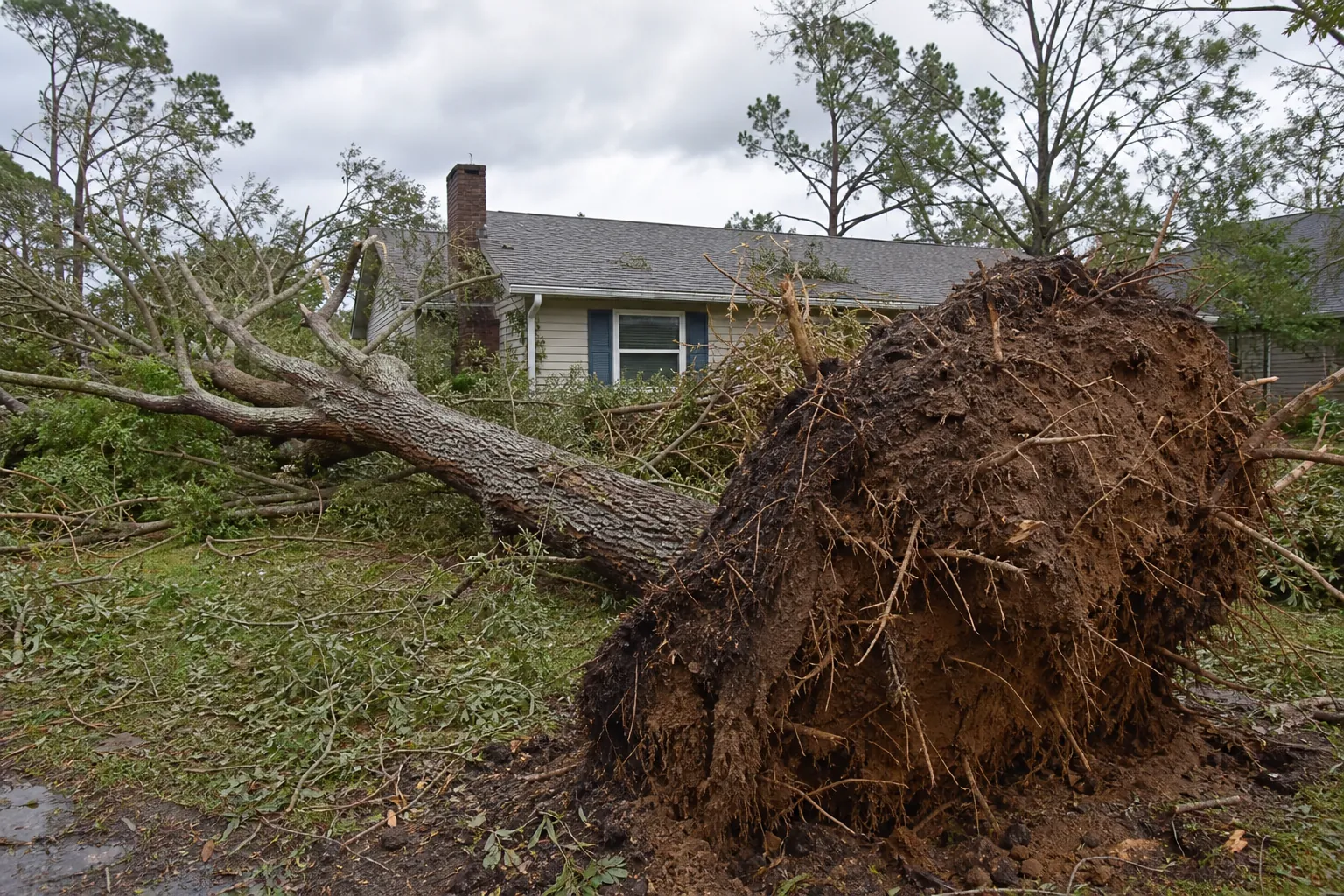
Hurricane uprooted tree cleanup starts with distance, a clear view, and a calm plan. In Pensacola, strong winds and heavy rain can leave trees leaning, split, or resting on structures. Do not rush to cut or move a fallen tree. First, look for hazards from a safe place, then arrange a tree inspection to learn what work the site needs.
Florida Foliage offers tree care services, including emergency and hurricane tree removal. The company is based in Daytona Beach, so this guide offers practical homeowner steps without suggesting local crew availability. For an estimate, call (386) 481-7913. Share what you can see, and ask what information would help plan an inspection.
How Should You Plan Hurricane Uprooted Tree Cleanup?
Begin by staying well back and looking for danger without touching the tree. A lifted root plate, a new lean, or a cracked trunk can signal that the tree may shift. Keep people and pets away from the area. Call emergency services if someone faces immediate danger or needs urgent help.
Look at the tree from several safe spots, such as inside your home or from the far side of a clear yard. Note whether the trunk touches a building, blocks a path, or hangs over an area people use. Do not walk beneath broken limbs to get a closer view. Wind can move branches again.
Take photos only from a safe place. Include the whole tree and the area around it, rather than standing near a damaged trunk. Make a short list of visible problems and where they are. This can help an arborist understand the scene before an inspection. Avoid climbing, pulling branches, or moving debris.
- Keep people and pets away from the tree and its root plate.
- Look for leaning trunks, split wood, hanging limbs, and new ground cracks.
- Take photos from a protected spot without walking under broken branches.
- Write down which paths, doors, or outdoor areas the tree affects.
The National Weather Service advises people to stay away from downed power lines and report them to the utility or emergency services. Treat every fallen line as live, and do not touch a tree or branch that may contact it. Review the NWS hurricane safety guidance for storm hazards. If a line is near the tree, do not approach it.
What Hazards Need Attention First?
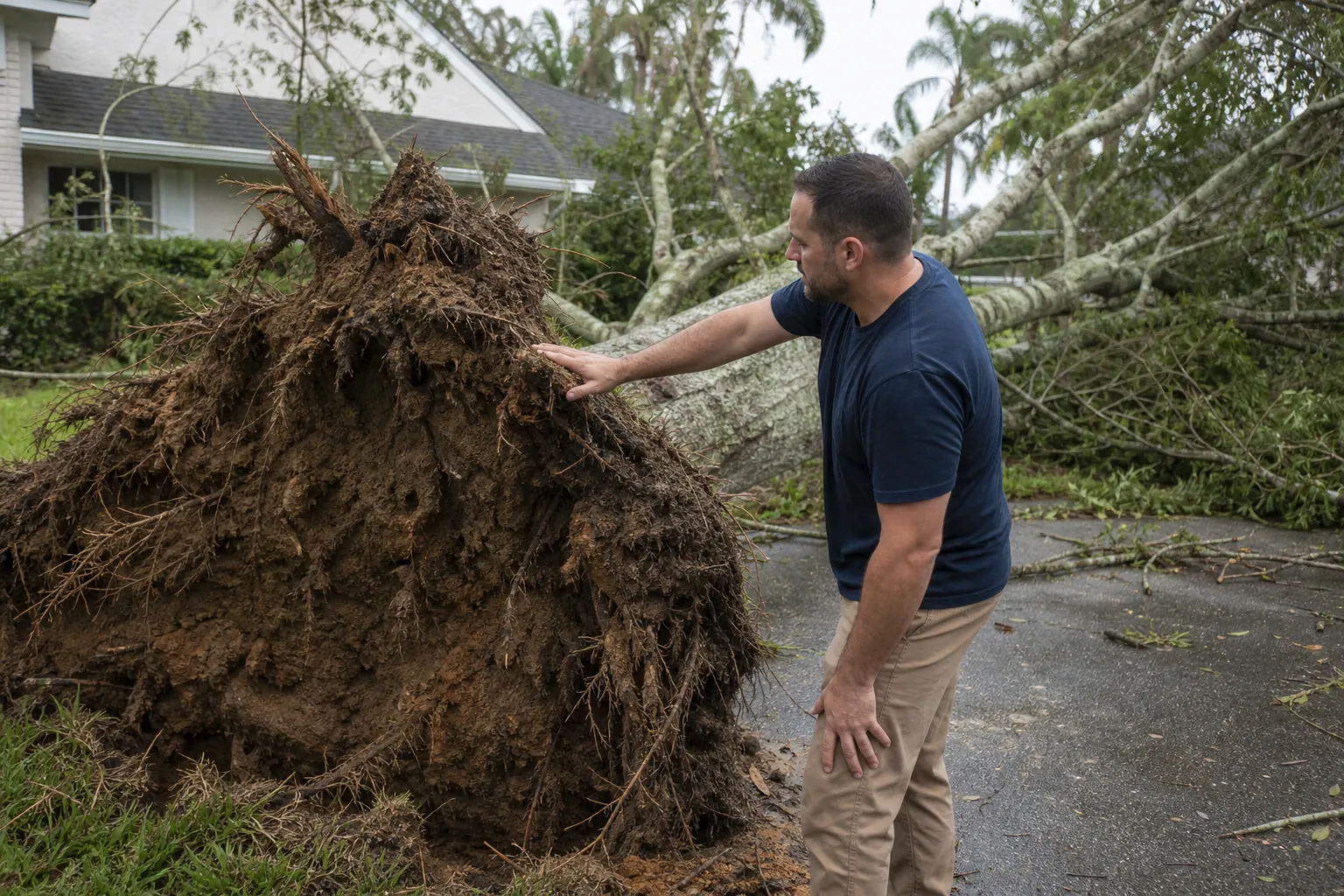
Some storm hazards need urgent attention before any tree work begins. A downed line, smoke, fire, gas odor, or danger to a person calls for emergency help. Keep back, alert others from a safe place, and follow directions from local emergency staff. Do not try to clear a route through an unsafe scene.
After immediate danger is addressed, keep the damaged area closed to foot traffic. A fallen tree can hide sharp limbs, unstable soil, broken fences, or other debris. A large branch can remain caught in the canopy even when the ground looks clear. Do not stand below it or tug on it to see if it will fall.
The NWS hurricane safety page says to avoid downed power lines and report them. This is important during cleanup because a line can be hard to see among leaves and branches. Stay clear of a tree that touches or may touch a wire. Wait for the proper utility response before anyone works near that hazard.
Floodwater also changes how you should approach a site. Do not walk through water to reach a tree, and avoid using tools near wet electrical equipment. Follow local weather alerts and emergency instructions. FEMA’s hurricane safety guidance covers preparation and actions during and after a storm. Take care with each next step.
How Can You Plan Cleanup Safely?
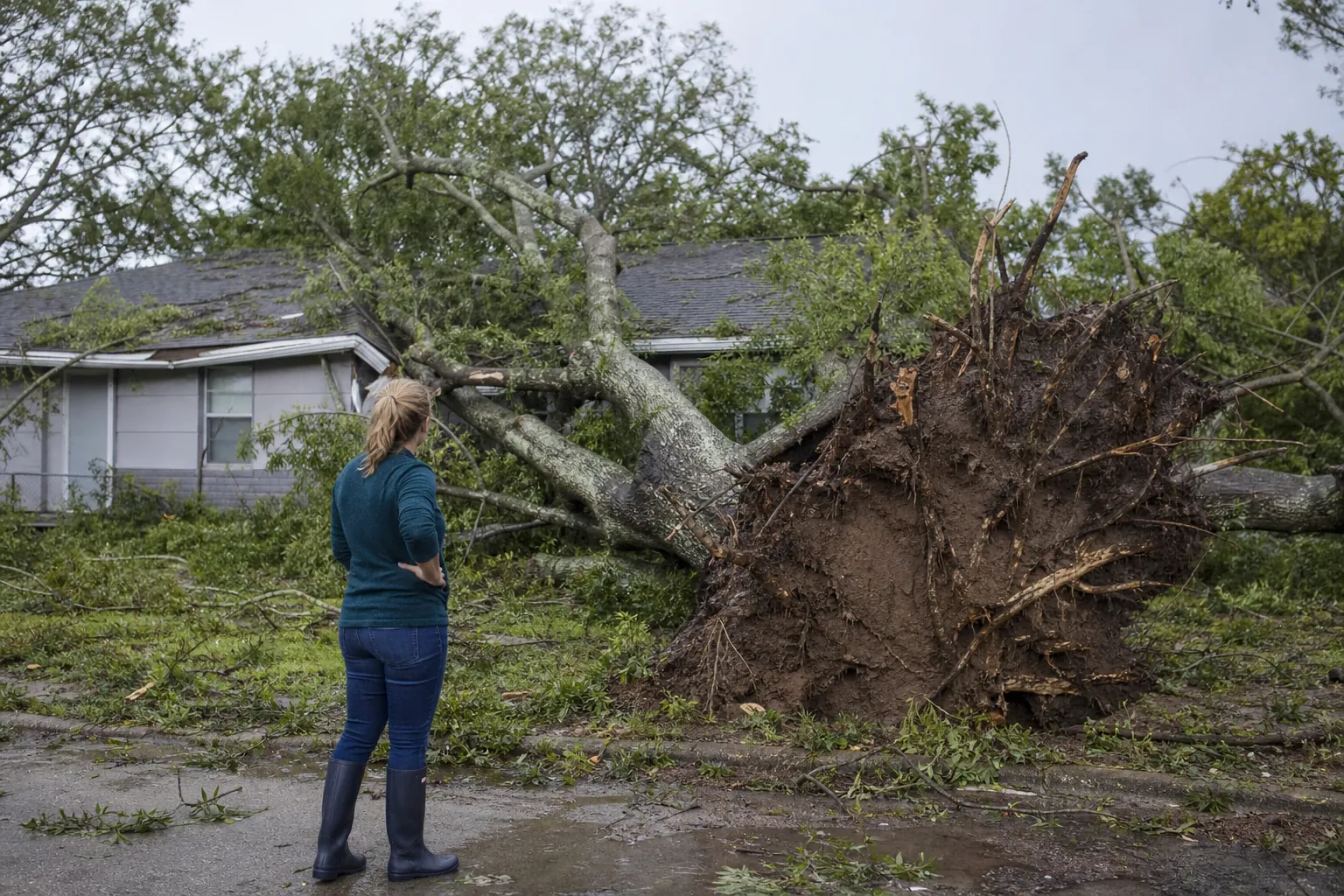
Plan cleanup around the hazards, the tree’s position, and the space around it. A professional inspection can help identify whether a tree is stable, what limbs are damaged, and what work may be needed. Share clear photos and a simple description, but do not enter a hazardous area to gather more details.
Tell the person arranging an inspection what the tree is touching, where it is leaning, and whether any line is nearby. Mention blocked access, hanging limbs, and nearby buildings. These facts help set a useful scope for an assessment. If the scene changes, such as a new shift or falling debris, keep people away and update the plan.
Do not use a chainsaw on a leaning tree or a trunk under tension. A cut can release stored force and make wood move without warning. Do not climb a storm-damaged tree or use a ladder near broken limbs. OSHA guidance for tree care describes hazards tied to chainsaws, falls, and electrical contact. Leave complex cutting to trained workers.
- Describe the tree’s position and nearby hazards from a safe location.
- Ask for an inspection when the trunk has shifted, split, or lifted roots.
- Keep children, pets, and visitors outside the work area.
- Wait for safe conditions before planning non-urgent yard work.
Ask what work is proposed and what areas need to stay clear. A clear scope can separate urgent removal from later trimming or stump work. The goal is a safe, orderly plan that fits the tree and site. Do not treat a quick visual check as a full assessment when damage is hidden.
When Does a Damaged Tree Need Removal?
A tree may need removal when its trunk has split, roots have lifted, or major limbs have failed. These signs do not settle the decision on their own. Tree size, lean, soil, nearby structures, and hidden damage all matter. An inspection can help determine whether removal or another treatment is suitable.
Some trees retain sound wood and stable roots despite losing a limb. Others may look mostly intact while having a deep crack or damaged root plate. Avoid deciding from the amount of debris alone. A trained arborist can inspect the trunk, canopy, and root area, then explain what work the tree needs.
Tree removal may be part of the plan when a tree is severely damaged or presents a continuing hazard. The removal method depends on access, overhead space, tree size, and nearby features. Crane tree removal may suit some tight or complex sites, while other sites need a different approach. Do not assume one method fits every yard.
Florida Foliage provides tree removal and emergency and hurricane tree removal among its listed services. An estimate can help describe the work for a specific site. The company’s base is in Daytona Beach, and this article does not promise a crew in Pensacola. Call (386) 481-7913 to ask about the next step for an estimate.
Can Trimming Help Before or After a Hurricane?
Good tree care can help you spot issues before storm season, though no trimming plan can stop all storm damage. Look for dead limbs, crowded growth, and branches close to places people use. An arborist inspection can help identify what needs attention and what should remain. Avoid cutting major limbs without a sound plan.
Canopy thinning and crown reduction are different forms of tree work. The right choice depends on the tree, its health, and its structure. Heavy cutting can harm a tree or leave poor branch growth. Ask an arborist to explain the goal of any suggested work and how the cuts will affect the canopy.
After a storm, wait until it is safe to assess the tree. A branch that appears loose may be caught under tension or held by other limbs. Do not pull, climb, or cut it yourself. A professional can inspect the canopy and decide whether trimming, removal, or another service is appropriate.
Stump grinding can be considered after a tree has been removed. The stump’s location, access, and nearby features affect the work plan. Keep the area clear until the work is complete, and ask how the work area should be prepared. Tree trimming, stump grinding, and inspections each address different needs, so name the goal when asking for an estimate.
How Can You Prepare Your Yard for Storm Season?
Start with a calm walk around the yard on a clear day. Look for dead limbs, trees with a new lean, and branches close to places people use. Do not climb to inspect a canopy. If you see a concern, take a photo from the ground and ask about an arborist inspection.
Keep a simple storm plan for your household. Decide where people will shelter, how you will receive weather alerts, and which outdoor items need to be secured. FEMA recommends following local guidance and preparing for hurricane hazards. Read its hurricane preparation information before storm season, and check current alerts when a storm approaches.
Move loose yard items indoors or secure them before strong winds arrive, when it is safe to do so. Clear drains and walkways without climbing or working near overhead lines. Do not wait for a storm to handle a tree that already has clear damage. Schedule an assessment early enough to discuss the tree and site conditions.
- Walk the yard on a calm day and note trees with visible defects.
- Keep paths and gathering areas clear of loose branches and yard items.
- Save weather alert sources and review local instructions before a storm.
- Ask about tree inspections when you see changes in a trunk or canopy.
Homeowners in Pensacola may also have shared spaces or larger lots to consider. Florida Foliage lists HOA and condo tree services, commercial tree services, and land and lot clearing. These services address different sites and goals. Explain the location and desired work when requesting an estimate, and ask what inspection steps may be useful.
What Should You Expect During a Tree Inspection?
An inspection looks at the tree and the conditions around it. An arborist may assess the trunk, root area, canopy, lean, and visible breaks. The site also matters: nearby structures, access, overhead hazards, and the position of fallen wood can shape a safe work plan.
Share what changed and when you first noticed it. Mention storm damage, new cracks in the ground, or limbs that have fallen since the storm. Do not hide a hazard by moving debris before the visit. Clear information can help the arborist focus the inspection and explain which concerns need attention first.
Ask for a plain explanation of the findings and the work options. A useful plan should state which tree or limbs are involved, how access will work, and what areas should remain clear. Arborist reports and tree inspections are among Florida Foliage’s listed services. Ask which service fits the question you need answered.
After the inspection, keep people away from any marked work area. Follow the safety directions given for the specific site. If wind or rain returns, pause outdoor work and follow official alerts. Storm conditions can change quickly, so a plan made in calm weather may need to wait until the site is safe.
What Should You Do After Tree Work?
Once work is complete, ask what parts of the yard are safe to use and whether any work remains. Keep away from equipment, cut wood, and marked areas until the crew says they are clear. Do not assume that a tree removal means the stump or every branch has been handled.
Walk the area only when invited and safe. Look for leftover branches, exposed roots, or a blocked path, and raise questions before using the space. If stump grinding is part of the plan, ask how the site will look afterward and what care is appropriate. The details can vary with the stump and the surrounding yard.
For later storm care, keep notes on trees that needed work and any changes you see. A fresh lean, crack, or hanging limb deserves attention before people gather nearby. Schedule an inspection rather than trying to test a damaged tree yourself. Recheck the yard after severe weather, but stay away from any new hazard.
If you need to discuss a tree in Pensacola, call Florida Foliage at (386) 481-7913 to request an estimate. Describe the site and the visible concern. The call can help clarify the information needed to discuss next steps. It does not mean local crew availability; the company’s headquarters remain in Daytona Beach.
Frequently Asked Questions
Should I move a fallen tree myself?
No. A fallen tree may shift, conceal hazards, or hold force in its limbs. Keep people away and arrange an inspection. Stay clear of wires and follow emergency instructions if someone faces immediate danger.
Can I cut a hanging limb with a chainsaw?
Do not cut a hanging limb yourself. It may move or fall without warning, and a chainsaw adds further risk. Keep clear and ask for a professional assessment of the tree and its surroundings.
Does every uprooted tree need removal?
No single sign settles that decision. Root damage, lean, trunk condition, and nearby features all matter. An arborist inspection can help identify the tree’s condition and explain suitable work.
What information helps when I ask for an estimate?
Share the address area, a safe description of the tree, visible hazards, and what the tree touches or blocks. Photos can help if taken from a protected place. Never approach a line or unstable tree to get a better view.
Can tree care prevent hurricane damage?
Tree inspections and sound trimming can address some visible concerns, but they cannot prevent all storm damage. Keep up with weather alerts, follow local instructions, and stay clear of hazards after a storm.
Sources
- National Weather Service hurricane safety guidance.
- Ready.gov hurricane preparation and safety.
- OSHA tree care industry safety guidance.
Call (386) 481-7913 to talk through next steps.