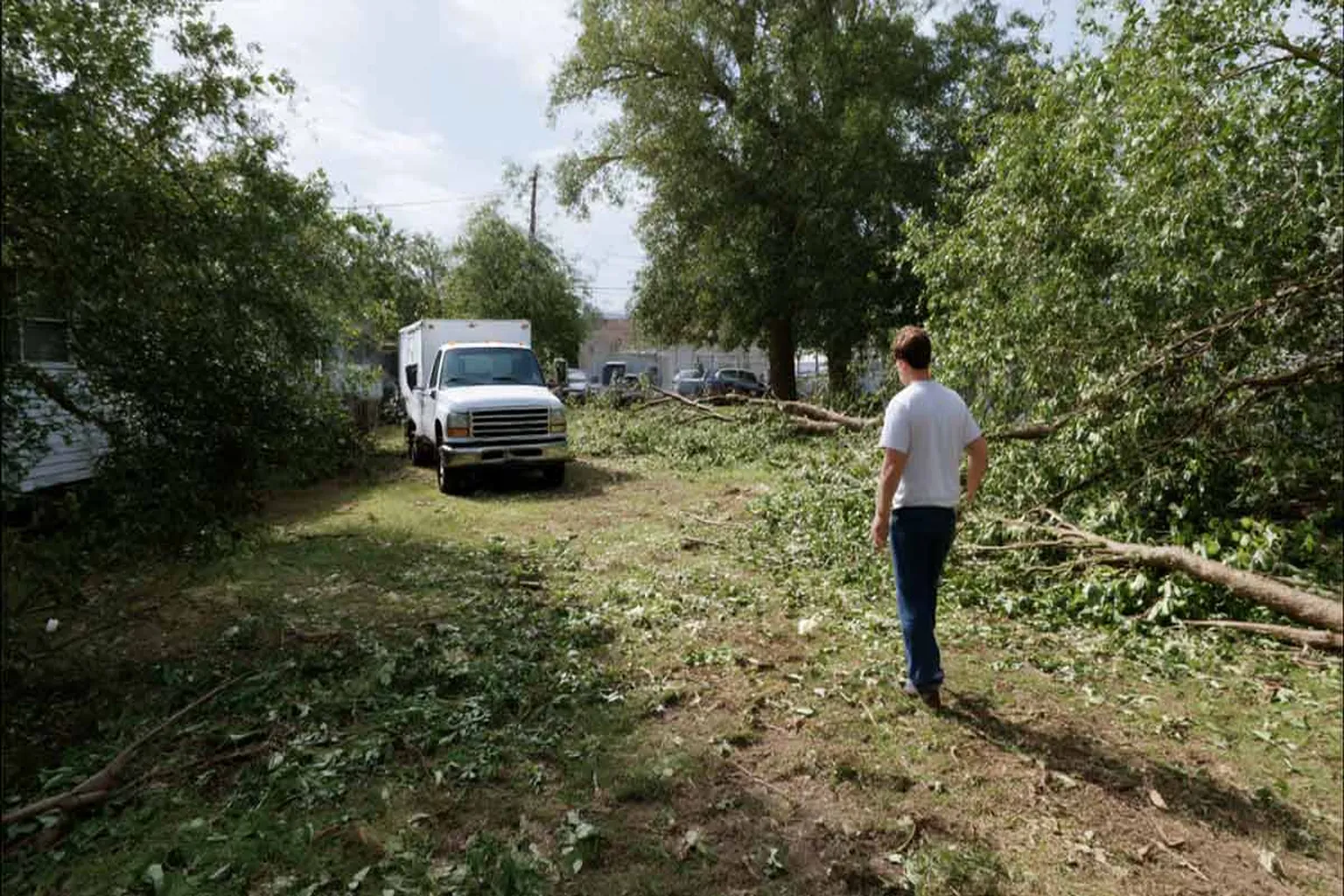
For hurricane uprooted tree plans in Pensacola, FL, start with clear notes and a careful household plan.
Keep clear of a hurricane-uprooted tree. First, organize an alternative household route. Do not try to move the tree. Storm tree work can involve falling limbs and unstable trees. Read OSHA’s storm tree-work guidance. For a Pensacola homeowner, the next step is simple. Provide a description of visible conditions. Decide which household tasks can wait. Ask for a suitable professional assessment. A clear walkway or a photo cannot show that a tree is safe.
What Comes First For Hurricane Uprooted Tree Plans?
Redirect routine household movement away from the affected location. Use Florida Foliage’s tree-removal page to learn about the service. Use the contact page to ask about next steps.
Damage to a familiar entrance can create pressure for an immediate household response. Do not turn that problem into a hazardous tree-moving activity. OSHA lists tight, bent tree parts as hazards. Limbs can also roll or slide. See OSHA’s notes on storm tree hazards.
Organize household activity around immediate needs. Mail, bins, yard tools, and outdoor storage can often wait. Prepare one concise household schedule. This can help people avoid going outside again and again.
- Record which entrance or route is blocked. Use words everyone knows.
- Reschedule optional outdoor activities for later. Do not group them with needed trips.
- Inform household members to remain outside the affected area. Do not gather there to inspect it.
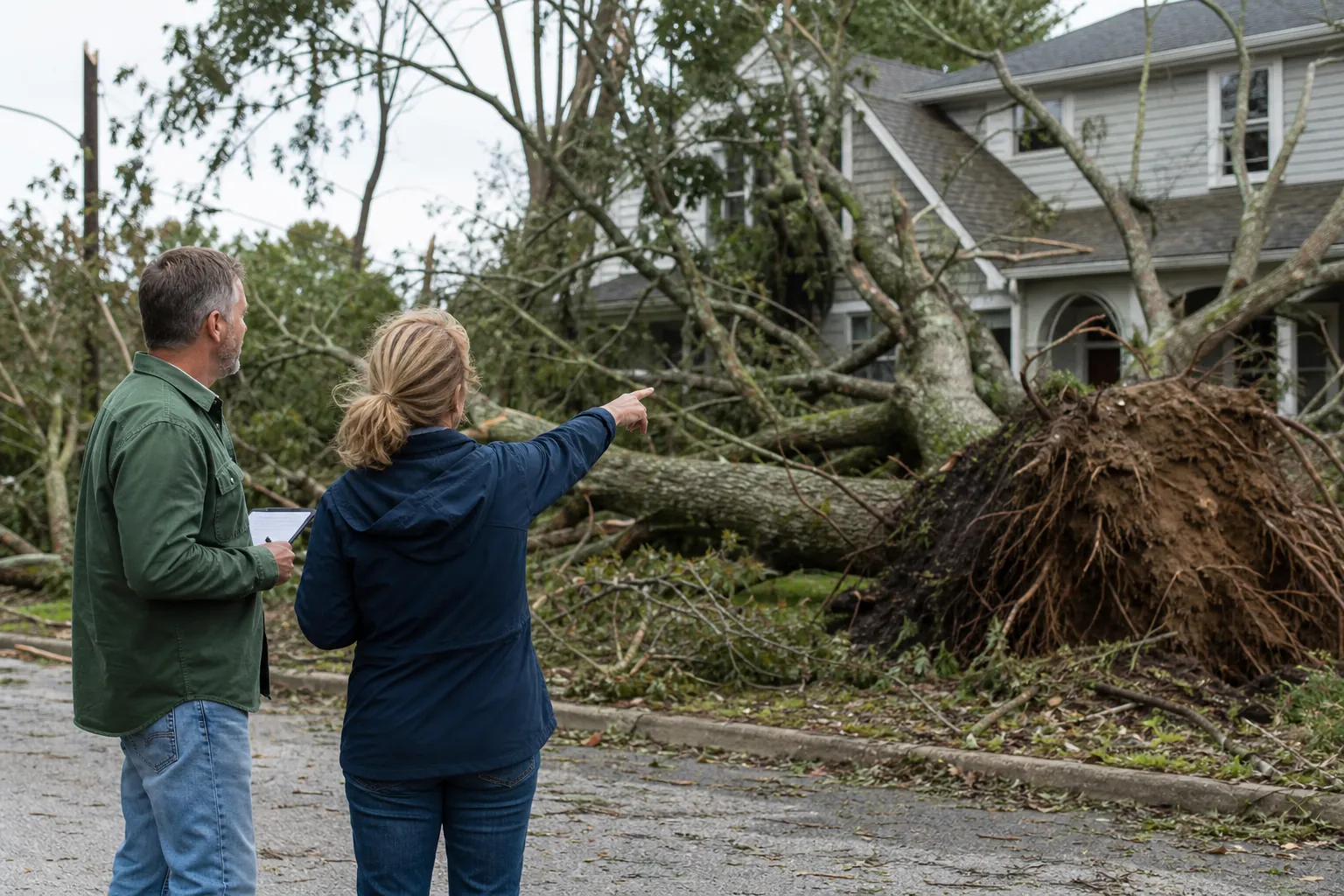
How Can You Plan an Alternate Household Path?
Consider an alternative route as a household planning step. That choice does not prove the yard is safe. The tree-removal page explains the service. The company page gives business details. Use these links to learn about the company and the service it lists.
Begin by identifying essential household trips. These may include leaving home, meeting a visitor, or reaching a ride. Consider whether an alternative existing entrance may serve. Do not create a pathway by relocating limbs or debris. Do not test the tree or ground.
Pavement in view does not mean a route is safe. A fallen power line can send current through trees and fences. OSHA says to avoid both direct and indirect contact. Read OSHA’s electrical safety warning. Do not use nearby objects as handholds or short cuts.
- List the trips that cannot wait. Note which entrance you would usually use.
- Think about another existing entrance. Do not go near the tree to check it.
- Take optional outdoor trips off today’s list. This can make plans simpler.
- Share one clear route note with people at home and expected visitors.
- If the route is still unclear, leave that question open for an assessment.
If no other path seems clear without going near the tree, do not test it. Tell the person you contact that access is still uncertain.
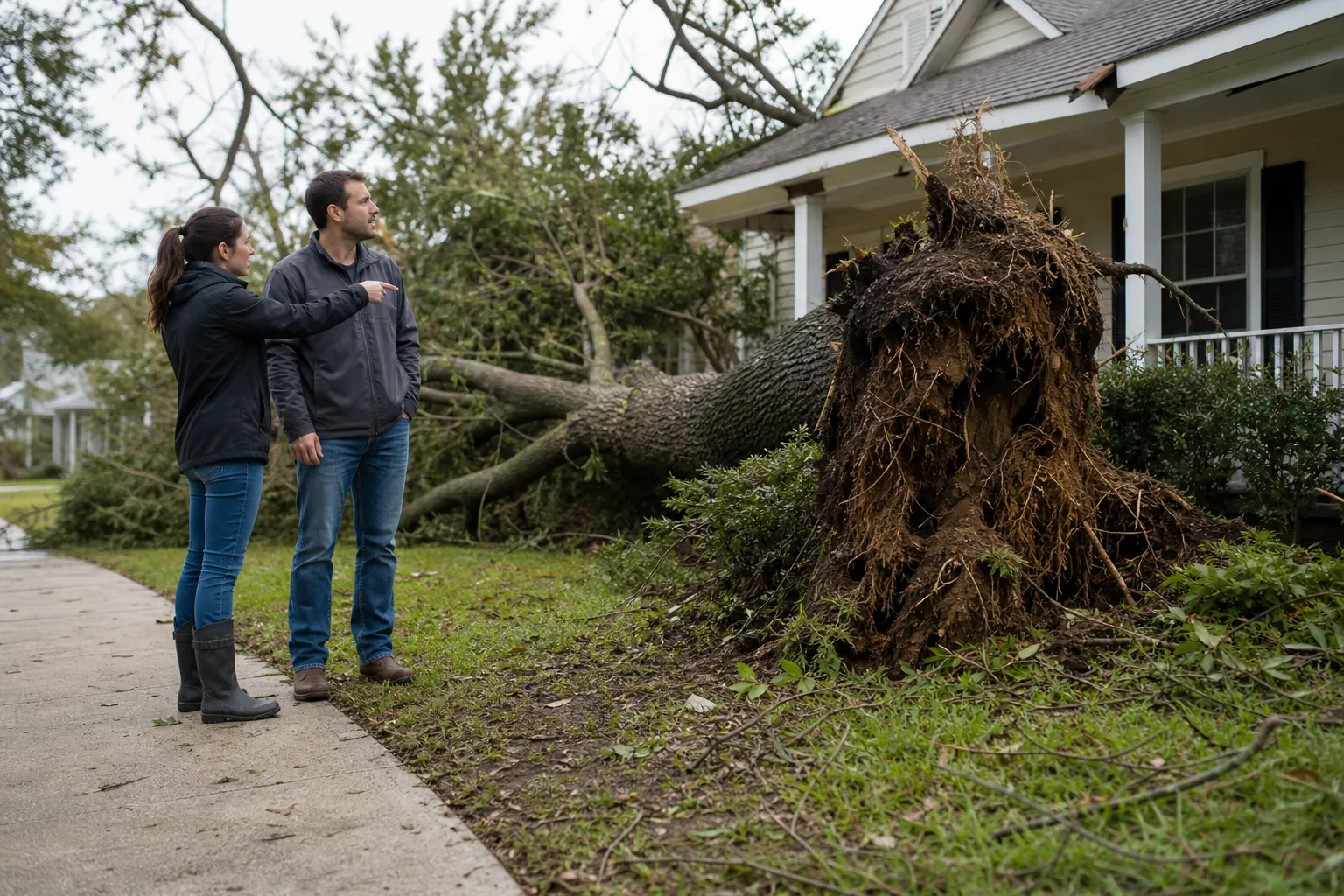
What Can You Observe Without Diagnosing the Tree?
Provide a description of visible conditions. Simple household observations help explain access without attempting a technical evaluation. Do not guess why the tree fell or how steady it is. The tree-removal service page gives context for a removal call. The tree-trimming service page explains a different service.
Keep observations simple and concise. You could say a tree lies across the driveway. You could note that soil is raised beside the trunk. You could say branches cover the usual walk. These describe direct visual observations. They do not show root health, strength, or what work is needed.
Words like “stable,” “settled,” or “only a small branch” are guesses. OSHA lists unstable trees and falling limbs as storm hazards. Separate visible observations from uncertain conclusions. Read OSHA’s storm tree-work guidance.
- Name the part of the home affected: an entry, walk, drive, or storage area.
- Use words like “I can see” and “I cannot tell.” This keeps facts apart from guesses.
- Say what is still unknown. Do not guess about the tree or needed work.
A photo can show a view. It cannot prove the tree or route is safe. Do not go closer to take a better photo. A short written note can still help explain the problem.
Keep Household Activity Separate From Tree Work
Plan home tasks around staying clear of the area. Do not plan to move tree parts. The removal-service page can help you name the service. The contact page gives you a way to ask about it. Please ask about current service options before making plans.
OSHA says people who are not needed for tree work should stay clear of work and drop zones. Read OSHA’s guidance on staying clear. Household members do not need to gather, watch, or point things out in person.
Choose one person to handle home messages. This is just a way to stay organized. That person can keep notes and share questions. Others will not need to make separate trips to the blocked entrance.
- Choose one person at home to collect questions and write down answers.
- Ask visitors to check the current entrance plan before they arrive.
- Keep home errands apart from any tree work. Do not try to fit them together.
If work starts, your earlier route plan may no longer fit. Keep people who are not part of the work away from the work and drop zones. OSHA gives this advice for storm tree work. Leave access questions open. Do not try to cross the area.
Keep questions about electrical hazards separate from routine access. Do not approach a conductor or an energized fence. OSHA advises avoiding direct contact and indirect electrical contact. If a wire is near the tree, leave the area alone and state that concern when seeking help.
Account for Debris Beyond the Tree
When you ask about another route, mention visible debris. Do not turn that into a cleanup plan. The trimming page covers a different service. The removal page gives context for a fallen tree.
OSHA notes that debris can hide meters and fire hydrants. Read OSHA’s debris collection guidance. Say when you cannot see part of an area. Do not treat an obscured space as fully known. You do not need to uncover anything to make your note complete.
A leaking chemical container calls for a different response. OSHA says to stay clear and notes that a specialist must assess it. Read OSHA’s warning about leaking containers. Keep this concern apart from a tree-removal call.
- Note visible debris as a separate issue. Do not assume it is all tree material.
- Say when debris blocks your view. Do not guess what may be under it.
- Keep a possible leak apart from questions about tree removal.
OSHA also says people who are not needed should stay clear of debris machines. Read OSHA’s debris machinery guidance. Do not use machine work as a reason to get a closer look.
Keep the first report focused on access and visible conditions. State which entrance is affected and what remains uncertain. Do not add a diagnosis or recommend a work method. That distinction keeps the conversation useful and accurate. Record follow-up details after the call, while they remain fresh.
Prepare a Clear, Limited Removal Inquiry
A useful first message states the access problem and asks what to do next. Florida Foliage’s contact page has contact options. The company page gives background. Ask about your location instead of assuming the company serves Pensacola.
You do not need a theory about the tree. Start with Pensacola. Say a hurricane left a tree uprooted. Name the home route that is affected. Add whether you know of another existing entrance. If you do not know, say so.
Keep a call separate from an assessment. A note does not tell you the tree’s condition or how it should be removed. It does not prove a path is safe. A service page describes a type of work. It does not answer questions about your property.
- Give your location first. This helps the company answer the service-area question.
- Name the blocked area and any other entrance you are considering. Do not call either route safe.
- Ask what details would support the next step. Say what you do not know.
You could explain: “I am in Pensacola. A hurricane-uprooted tree affects our usual driveway route. We are not moving it. Can you tell me if you handle calls for this area and what details would help?” This keeps the inquiry focused. It does not assume the answer.
Understand Florida Foliage’s Role Before Calling
Florida Foliage is based in Daytona Beach. Call (386) 481-7913 to ask about current service options for your Pensacola property.
Clinton Funk owns Florida Foliage and has decades of hands-on tree-care experience. Tim Francis prepared this article. These details explain the owner’s experience and who wrote the page.
- Start the call by saying your property is in Pensacola.
- Refer to your notes to keep the discussion focused on known details.
- Write down open questions. Do not fill in missing details with guesses.
The immediate household objective remains deliberately modest. Do not turn an uprooted tree into a home project. Explain which route is affected. Keep what you see apart from guesses about the tree. A concise, accurate account is more useful than a lengthy story based on assumptions.
Frequently Asked Questions
- Use these answers to organize household activity, not to assess the tree.
- Keep unknown details in your notes until they can be checked.
Can I walk beside the uprooted tree if the pavement looks clear?
No. Clear pavement does not show that a nearby tree is safe. OSHA warns about unstable trees and falling limbs. Fallen power lines can send current through trees and fences. Avoid direct and indirect contact. Treat another entrance as a question to check, not an automatic fix. Read OSHA’s storm tree-work guidance.
Should I move a limb to reopen the usual walkway?
No. Do not try to move tree parts to open a walk. OSHA warns that bent tree parts can spring and limbs can roll or slide. Identify which household route is obstructed. Put off optional outdoor trips. Ask about an appropriate professional assessment. This page does not give cutting or moving steps. See OSHA’s tree-work guidance.
Can a photograph prove that the uprooted tree is stable?
No. A photograph documents one visible perspective. It cannot determine whether a tree is safe. It may help identify which entrance appears blocked. It cannot show the tree’s full condition. OSHA lists unstable trees as a storm work hazard. Describe a view you already have. Do not go closer to take a better photo. Read OSHA’s storm tree-work guidance.
What if debris near the tree includes a leaking container?
Remain clear of any leaking chemical container. OSHA says a specialist must assess it. Keep this concern apart from a tree-removal call. In your notes, record only what you can directly observe and what you do not know. Do not try to find or move the container. Read OSHA’s debris guidance.
Does Florida Foliage have a Pensacola office?
Florida Foliage is based in Daytona Beach. Call (386) 481-7913 or use the contact page to ask about current service options for your Pensacola property. Explain which home route is affected. Ask directly about any next step before making plans.
For broader information about emergency tree removal after a storm, see the Pensacola emergency tree removal guide.
Call (386) 481-7913 to talk through next steps.