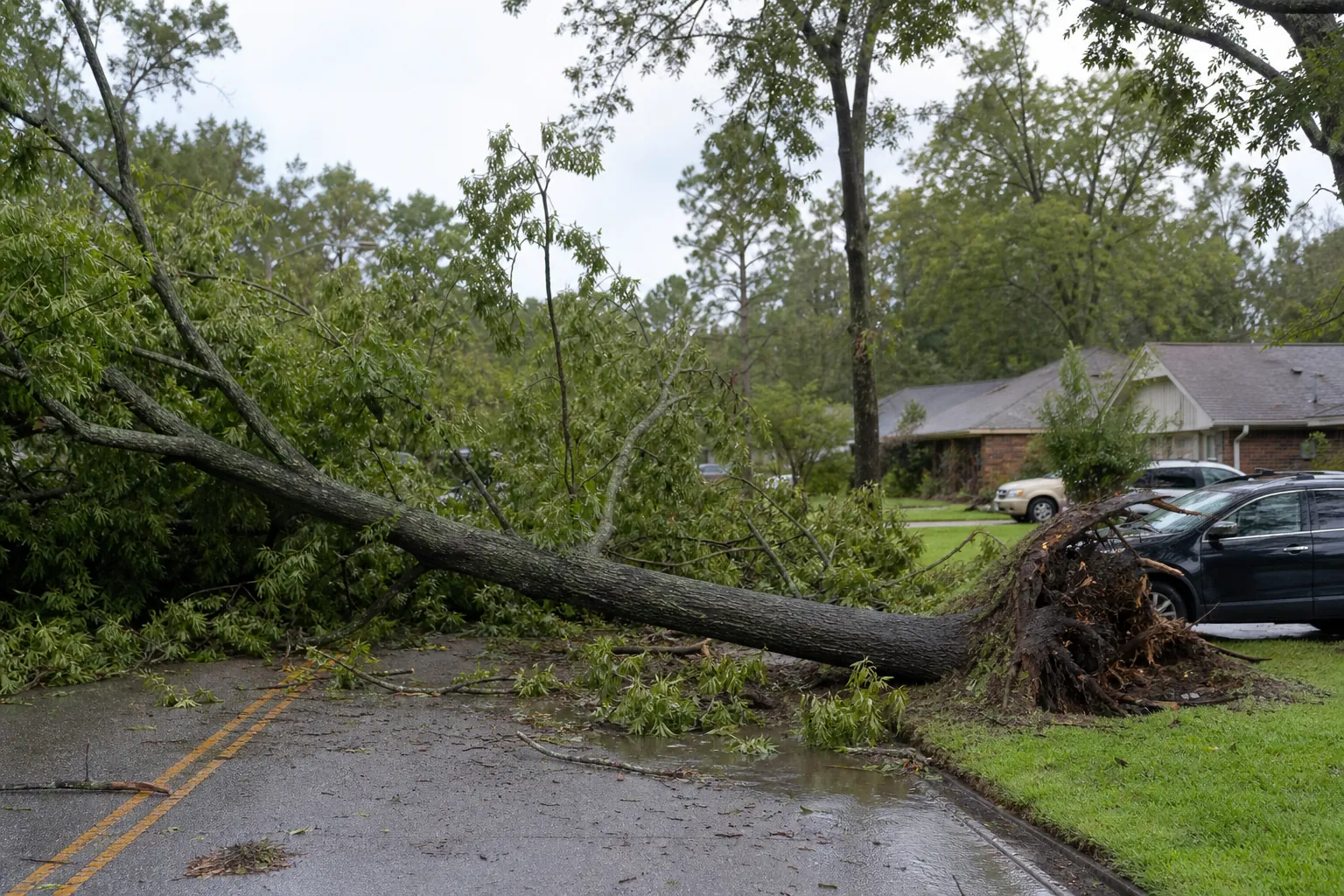
After a hurricane leaves a tree down in Pensacola, focus on household safety and clear communication. Do not start tree work. OSHA says storm-damaged trees can have falling limbs and be unstable. Read OSHA’s storm tree-work guidance. Write down only what you can see. Prepare questions for a tree-care provider, and do not guess when help will arrive. This guide supports our emergency tree removal in Pensacola resource. It offers practical steps for the wait.
What Should You Do While Waiting for Tree Help?
Start by organizing your household’s information, not the fallen tree. The tree removal service overview explains the service. The Florida Foliage contact page gives you a place to ask questions. Neither page confirms service in Pensacola. A short written update helps everyone use the same facts while plans remain uncertain.
Choose one place for updates, such as a notebook or shared message thread. Note when you contacted a provider, what you asked, and the reply. Mark unanswered questions “not confirmed.” This helps keep a possible next step from becoming a household assumption.
OSHA says people who are not needed for tree work should stay outside tree-work and drop areas. See OSHA’s guidance on tree-work areas. Do not gather near the damaged tree to discuss what happens next.
- Choose one household contact to collect questions and share confirmed updates.
- Keep the provider’s name and contact details with your notes.
- Separate “we asked” from “they confirmed” in each update.
- Give family members a short summary, not a long, confusing conversation.
Your plan can be simple. It does not need to solve the tree problem. Its goal is to reduce repeat calls, missing details, and mixed messages while you learn what options are available.
What Can You Observe Without Diagnosing the Tree?
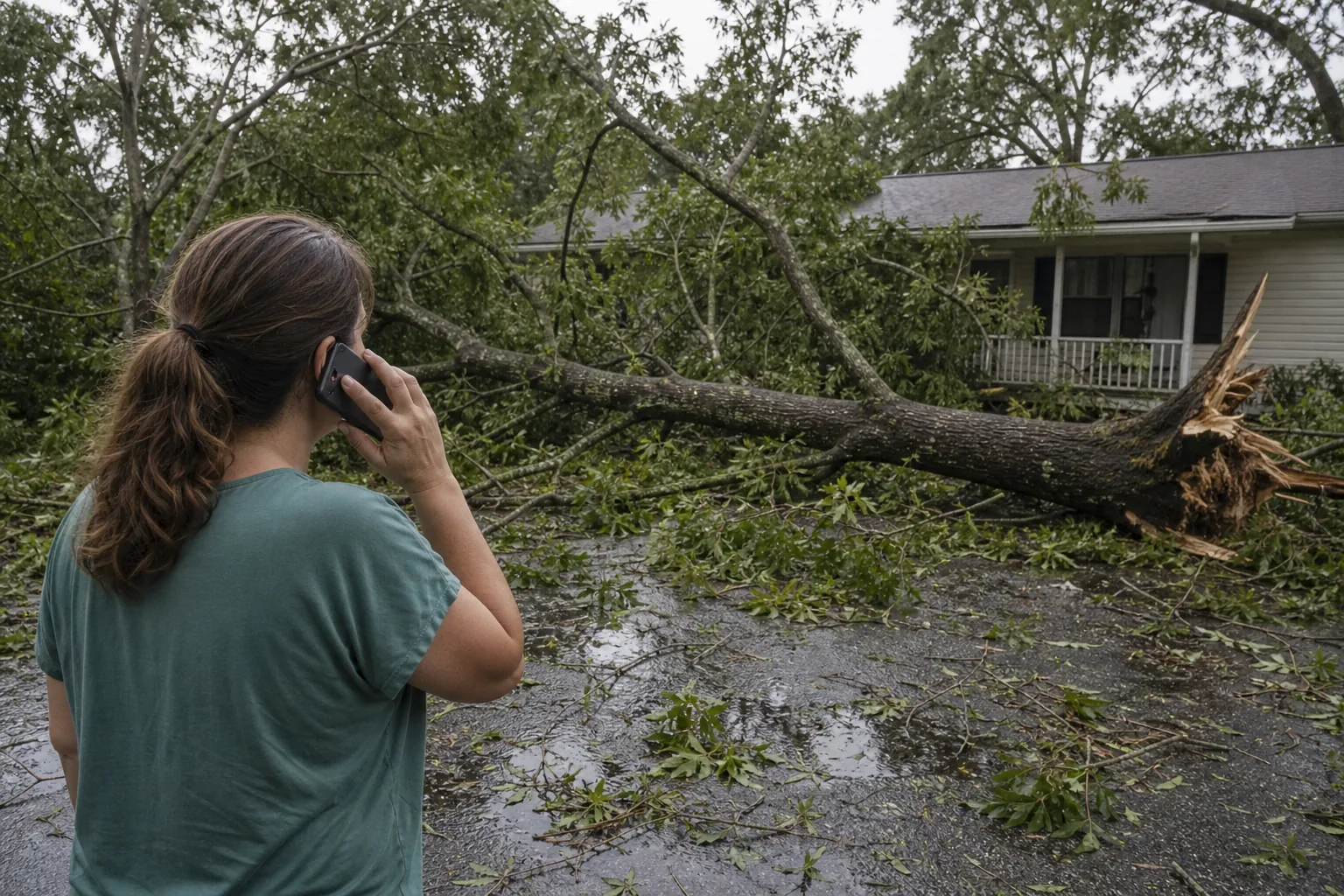
Describe what you can see in plain words. Do not decide what it means. The tree trimming service information gives general service details. The tree removal overview explains another service. Neither replaces an assessment. “A limb is resting on the roof” is an observation, not a conclusion about stability.
Use words that someone can understand without knowing your yard. You might say which side of the house you mean, what is under a limb, or whether the tree looks upright or down. Leave uncertain details uncertain. You do not need to identify the tree species to make an initial inquiry.
OSHA says storm-damaged tree work can involve falling limbs and unstable trees. Read OSHA’s hurricane tree-work guidance. A photo of a tree does not show that it is safe.
- Write “I can see” before a visible detail and “I do not know” before an unanswered question.
- Say where material seems to rest. Do not guess how firmly it is supported.
- Use existing pictures to share information, not as proof of safety.
- Leave out details you cannot give with confidence.
A useful note might say, “A large branch appears to rest across the back roof. I do not know whether it is still attached.” This gives context without treating a household impression as a technical finding.
How Should You Treat Wires Near a Fallen Tree?
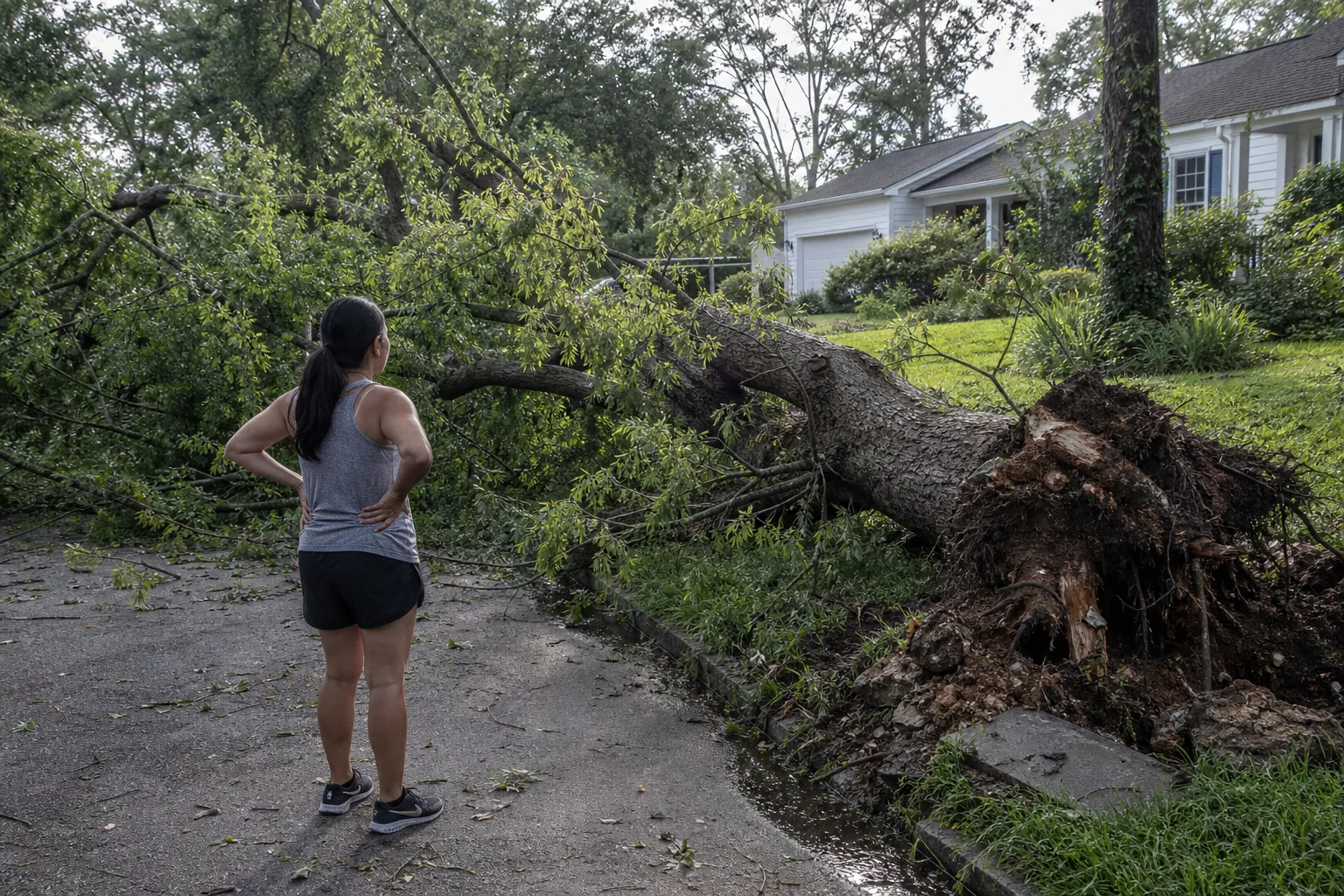
Do not assume a tree or fence near a downed conductor is harmless. OSHA says downed electrical conductors can energize trees and fences. It warns people to avoid direct and indirect contact. Read OSHA’s electrical hazard guidance. Use the contact options and tree removal context to ask questions, not to decide whether the area is safe.
In your notes, separate something that looks like a wire from something you have identified. You can write, “A line is visible beside the fallen tree.” Do not guess what kind of line it is or whether it is energized. Keep unanswered questions marked that way in later messages.
A photo cannot answer those questions. A picture that looks clear also does not prove the area is safe. Keep the original observation when you share it with a household member or tree-care provider.
- Point out the visible line in your notes. Do not bury it in a long story.
- Do not change “a line is visible” to “the line is inactive” without a confirmed basis.
- Note where new information came from so everyone knows its source.
- Keep tree-service questions separate from guesses about electrical conditions.
This matters when conversations move fast. Repeated messages can make a guess sound like a fact. Plain words and a clear record help prevent that. You do not need to diagnose the tree or the line.
Keep Home Conditions Separate From Tree Questions
The fallen-tree service overview concerns tree work. The provider inquiry page is for communication. Neither tells you whether a building is safe to enter. Keep questions about the house in a separate part of your notes. A tree-service conversation does not replace building-safety information.
The National Weather Service advises walking carefully around the outside of your home to check for loose power lines, gas leaks, and structural damage. See its after-hurricane safety guidance. This is not a reason to closely inspect the fallen tree or diagnose damage yourself.
The National Weather Service also says to stay out of a building if you smell gas, floodwaters remain around it, or authorities have not said it is safe. The same National Weather Service guidance states these conditions directly.
- Give house-related observations their own heading in your notes.
- Keep the exact wording of any building-safety update you receive.
- Do not sum up an unresolved home condition as “everything is fine.”
- Keep unanswered house questions separate from questions for the tree provider.
Tree damage and home concerns may come up in the same conversation, but they are different questions. A clear record helps you avoid treating a tree-removal discussion as an answer about entering or using the house.
Make a Simple Household Waiting Plan
Read the Florida Foliage company background to learn about the company. Use the inquiry page to choose a way to get in touch. While you wait for a reply, a basic household plan can keep information in order. It should cover communication, not predict a provider’s schedule or answer technical questions.
Choose someone to keep the shared notes. Name someone else to take over if that person is not available. Put the latest confirmed update at the top. Then no one has to read the whole message history to find it. These are simple ways to organize information, not technical directions.
- Write a short, plain description of what you can see.
- List your questions, including whether the provider serves your location.
- Choose the phone number or message route you want the provider to use.
- Write down each reply without guessing about timing or next steps.
- Share confirmed information with the household and mark unresolved items.
If your household talks about using a generator, the National Weather Service says never to use a portable generator inside a home or garage. Read the National Weather Service’s after-hurricane instructions.
- Keep your phone contact details easy to find in the shared notes.
- Ask household members to add new questions in one place.
- Remove old guesses about scheduling from the current update.
A short plan is easier to keep up to date. Focus on what you need to know now. Update the plan when you get an actual answer, rather than trying to map every possible outcome.
Avoid Turning the Wait Into Tree Cleanup
The tree removal information and tree trimming overview describe services, not household cleanup. You do not need to move damaged tree material while you wait. Use the time to take notes and communicate. Do not treat a pending inquiry as a reason to start tree work.
OSHA identifies tensioned tree material and rolling or sliding limbs as hazards in storm tree work. See OSHA’s storm-damaged tree guidance. Material that looks settled is not harmless just because of how it looks.
Keep your household discussion focused on what is unknown. You may not know if a branch is attached, what is holding it up, or how to assess the tree’s condition. A useful waiting plan does not need to answer these questions.
- Add tree-work questions to your provider question list instead of guessing at answers.
- Keep cleanup ideas out of messages meant to describe what you can see.
- Tell household members which details are observations and which are unknown.
- Do not use a photo or a quiet-looking scene as proof that tree material is safe.
OSHA also says people who are not needed for tree work should stay outside work and drop areas. Read OSHA’s tree-work area guidance. Use the wait to improve communication. Do not gather people around damaged material for a closer discussion.
Contact Florida Foliage Without Assuming Availability
The Florida Foliage contact page gives you a way to ask questions. The company background page gives company details. Florida Foliage is headquartered in Daytona Beach. This article does not confirm a Pensacola office, local crew, service availability, or response time. Ask if your location and situation are within the company’s current service area.
You can call (386) 481-7913 with a brief description and your questions. An inquiry asks for information. It does not confirm that work is arranged. Keep your notes handy so you can record the answer accurately.
- Start with your location and a short description of what you can see.
- Ask if Florida Foliage can consider your location and situation.
- Ask what information would help before you send many messages.
- Repeat any suggested next step in plain words. Ask if you understood it correctly.
For more context, read the guide to emergency tree removal in Pensacola. Keep this household checklist separate from any service discussion. General information does not mean work has been arranged.
Frequently Asked Questions
The tree removal service information gives general details. The contact page for questions offers a way to ask questions. These answers explain how to keep observations, household plans, and service questions separate. They do not confirm local availability or replace an assessment of a tree.
- Use the answer that fits your question. You do not need to treat each item as a task.
- Keep unresolved questions in your notes so they remain clear in later conversations.
Can a photo show that a hurricane-damaged tree is safe?
No. A photo can show visible details, but it cannot prove a tree is safe or replace an assessment. OSHA lists falling limbs and unstable trees as hazards in storm-damaged tree work. See OSHA’s tree-work guidance. Describe what the picture shows. Do not draw conclusions about stability.
What should I say when contacting a tree-care provider?
Give your location, a short description of what you can see, and your preferred contact details. Ask if the provider serves your location and what information it needs. Write down the reply. Mark unanswered questions as unresolved. Do not treat an initial conversation as a confirmed visit or schedule.
What if a wire is visible near the fallen tree?
Report the visible line. Do not guess what kind it is or its electrical condition. OSHA warns that downed electrical conductors can energize trees and fences. It says to avoid direct and indirect contact. Read OSHA’s electrical hazard guidance. Keep this detail clear in your notes. Do not describe the scene as safe.
Does this article mean Florida Foliage is available in Pensacola?
No. Florida Foliage is headquartered in Daytona Beach. This article does not confirm service in Pensacola or a response time. Call (386) 481-7913 to ask about your location and situation. Record the answer as given, including anything not confirmed, before sharing an update with your household.
What household task is useful while I wait for a reply?
Create one short, shared update with what you can see, unanswered questions, and provider contact details. Choose someone to maintain it. Put the latest confirmed information first. This is an organizing suggestion, not technical advice. It helps household members follow the same conversation without making their own guesses about the tree.
Call (386) 481-7913 to talk through next steps.