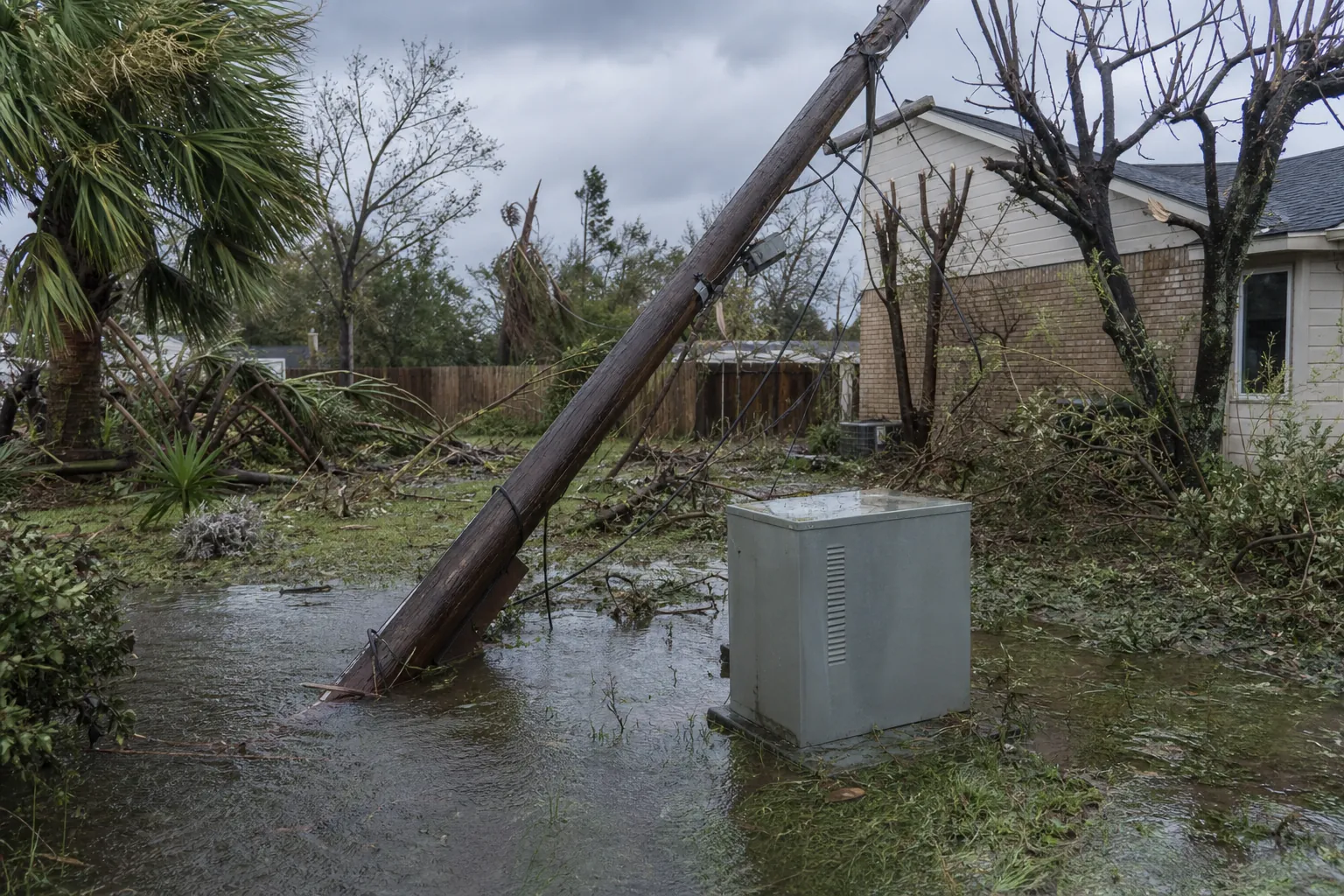
After a hurricane, do not touch wet electrical equipment. Do not touch it while standing in water, either. This is the direction from Ready.gov’s hurricane guidance. Start with that rule, not a yard cleanup checklist. For Pensacola homeowners, this article separates what you can see from questions you cannot answer by looking at a tree, outlet or puddle. Our Pensacola hurricane tree cleanup guide gives broader context. The sections below focus on wet electrical items, standing water and clear household notes.
What Should You Not Touch in a Wet Yard?
Do not touch electrical equipment if it is wet or if you are standing in water, according to Ready.gov. A tree removal service overview gives context about tree work. The contact page for service questions gives you a place to ask Florida Foliage questions. Do not treat a tree inquiry as electrical guidance.
The rule is about the equipment and the water, not whether the yard looks tidy. In your notes, use plain descriptions such as “outdoor outlet appears wet” or “water is visible around yard equipment.” These phrases record what you noticed. They do not say that an item is damaged, working or ready to use.
A household list can keep different concerns from becoming one vague request to “clean everything up.” Give electrical items their own heading. Put questions about branches or a standing tree under a separate heading. This is a way to organize notes, not a technical assessment.
- Write down the type of item you noticed. Use its ordinary name instead of guessing about its electrical condition.
- Describe visible water apart from any question about whether the equipment still works.
- Keep the Ready.gov instruction with your electrical notes. Do not replace it with a personal judgment.
You do not need a diagnosis to describe what you saw. “Wet outlet” is a clearer start than “broken outlet,” unless you know more than its appearance. The same rule applies to equipment that looks unchanged after the storm.
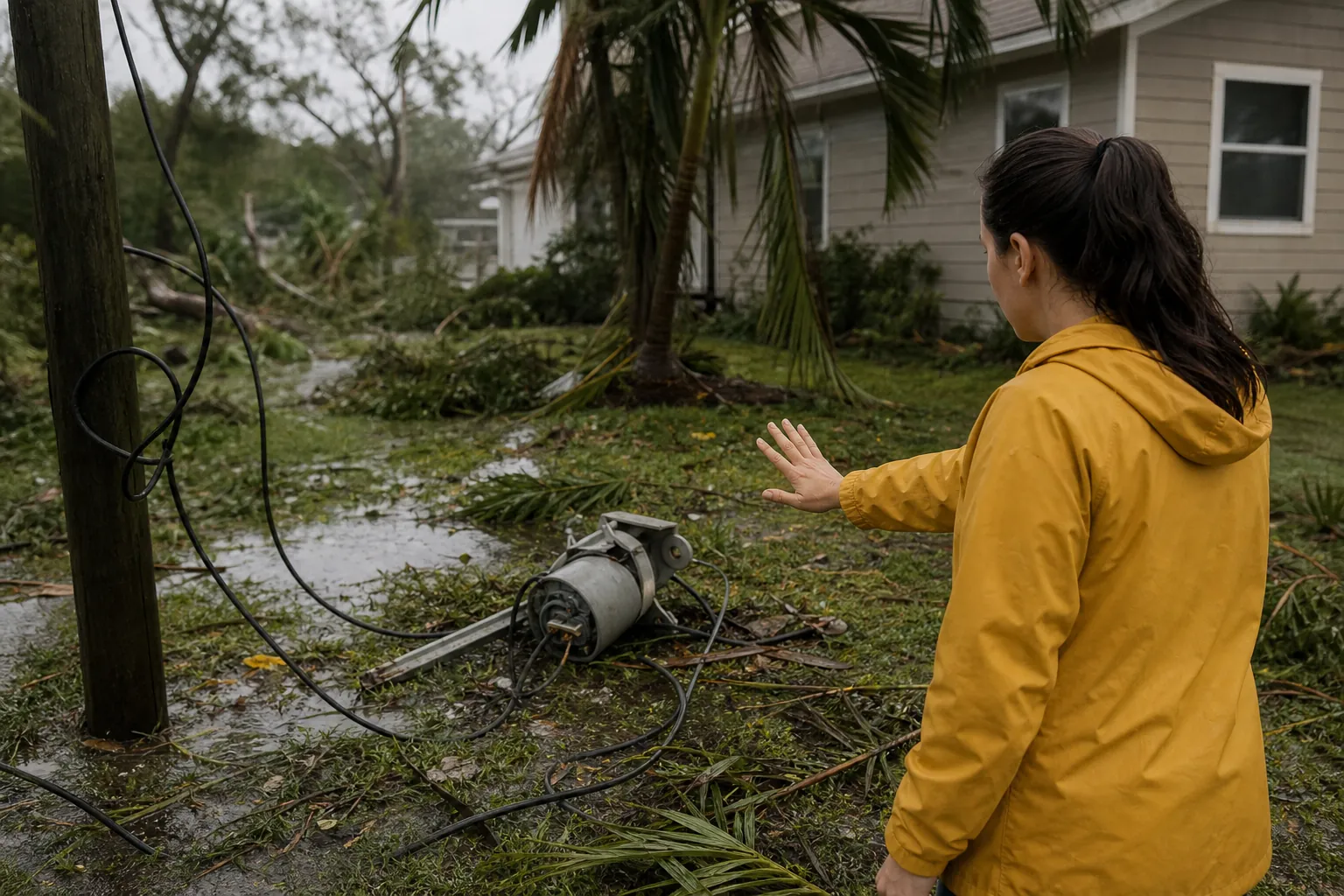
Why Does Standing Water Change the Conversation?
Standing water is more than a housekeeping issue. Underground or downed power lines can electrically charge it, according to Ready.gov. The tree trimming service description explains a separate service category. The Florida Foliage company background helps identify who you are contacting. It does not tell you about the condition of water in your yard.
Floodwater can contain debris, chemicals, waste and wildlife, as stated in Ready.gov’s hurricane guidance. Do not reduce the water part of your notes to “just a puddle.” A description of how it looks does not tell you what it contains.
For household notes, record where you see water. Use familiar features, such as the patio, garden bed or outdoor equipment area. A location label makes a conversation more specific. It does not make your description a measurement or a technical conclusion.
- List each visibly wet area in plain language. This keeps separate locations from becoming one broad description.
- Keep possible causes out of the observation column unless you have a clear source for that information.
- Put unanswered questions in a separate column. Do not fill them with guesses about the water.
A simple note might read, “Water visible beside the patio; contents unknown.” This names both what you saw and what you do not know. It does not confirm a route through the yard or show that anyone has assessed the water.
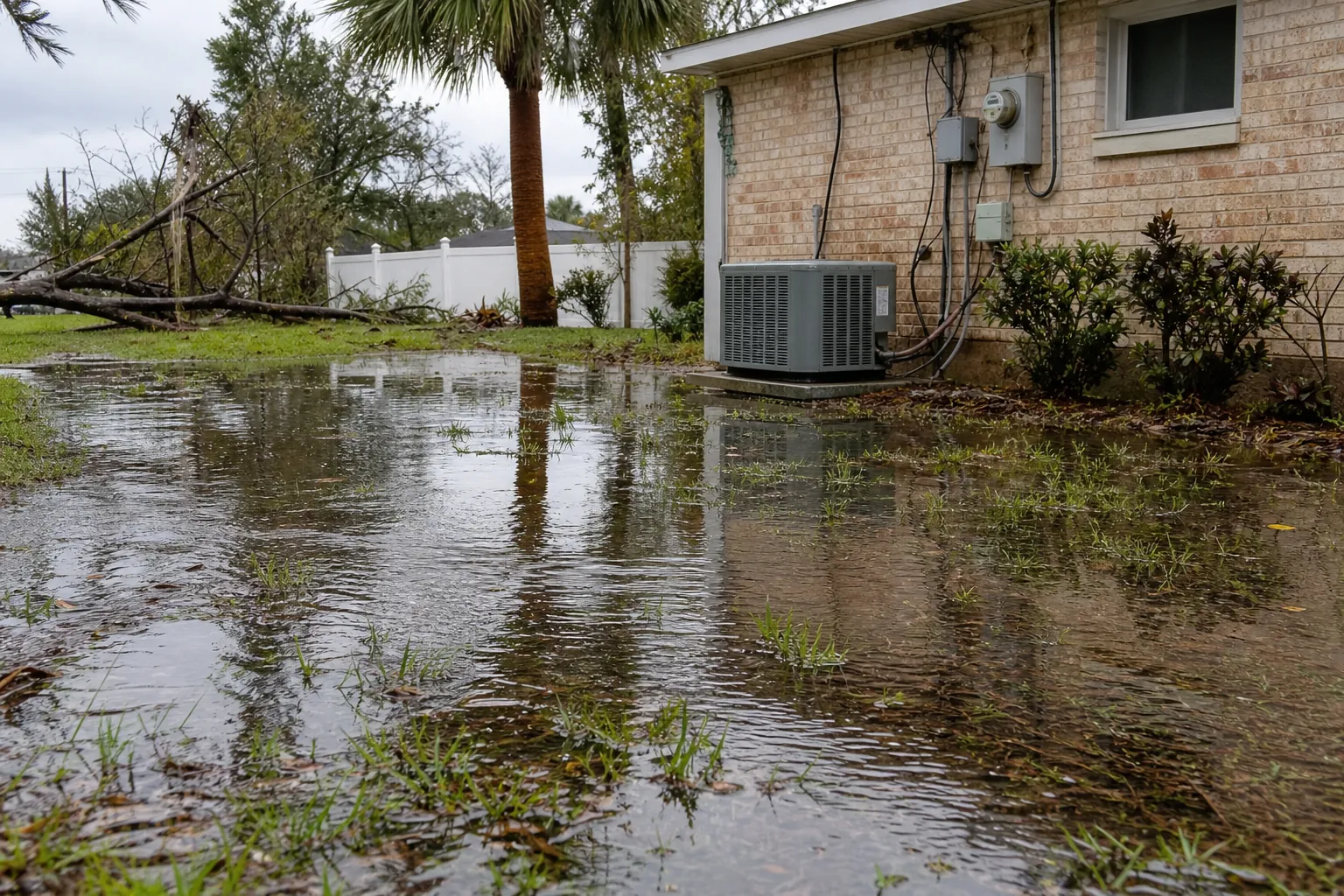
Can You Judge a Tree or Outlet by Appearance?
No. Seeing something is not the same as diagnosing it. This article does not establish that a tree or outlet is safe. Use the information about tree removal and the information about tree trimming to learn about service topics. Do not use them to choose work based only on a photo or short description.
Use words such as “looks,” “appears” and “visible” in your notes when that is all you know. “A branch is lying beside the shed” describes what you can see. “The tree is stable” says more than where the branch is. This article does not diagnose trees.
Photos can be household records of visible conditions. They are not proof that a tree is safe. A photo caption should say what the image shows. It should not give a conclusion about the tree or the right kind of work.
- Use captions that name the visible object and its location, such as a branch beside a patio.
- Keep your observations apart from questions about tree removal or trimming. Do not treat either service as already chosen.
- Mark details you are unsure about as unknown. This keeps the record clear and honest.
Consistent notes help when several people are writing them. Agree on simple labels for the same tree, outlet or yard feature. This helps prevent three descriptions of one object from looking like three different concerns. It is a household filing method, not a way to assess storm damage.
Keep Outside Observations Separate From Entry Decisions
The company information for Florida Foliage and the general inquiry page give business context. They do not tell you whether a building can be entered. Keep notes about the outside of your home apart from tree-service questions and any decision about going inside.
The National Weather Service says to walk carefully around the outside of your home to check for loose power lines, gas leaks and structural damage. Read this direction in its after-hurricane guidance. This article does not add a route, inspection method or test.
Stay out of any building if you smell gas, if floodwaters remain around it, or if authorities have not declared it safe, according to the National Weather Service. A tree cleanup discussion does not replace that direction.
- Give building-related observations their own heading. Do not mix them with notes about branches and leaves.
- Record the source of any information you receive. This keeps someone else’s statement from being confused with your own observation.
- Keep questions about a structure separate from questions about Florida Foliage’s tree service descriptions.
This makes the household record easier to read. It also keeps a broad label such as “yard damage” from hiding several different questions. Clear headings help, even when much remains unknown and you have not chosen a work category.
Keep Generator Questions Out of the Tree Work List
The tree removal page covers a tree-service topic. The Florida Foliage inquiry options give you a business contact. Neither is a generator instruction page. Put generator questions in a separate part of your household notes. This keeps them from becoming an assumed part of a tree cleanup discussion.
Never use a portable generator inside your home or garage, according to the National Weather Service’s after-hurricane guidance. This is the generator instruction in this article. The article does not give placement measurements, connection steps or operating directions.
If your household record includes a generator, note its name and keep any existing product information together. This is a way to organize documents, not an operating recommendation. Do not add instructions from memory or turn someone else’s casual comment into a household checklist.
- Create a separate heading for generator information. Do not bury it among tree and debris notes.
- Keep the National Weather Service instruction linked beside any summary of the indoor-use restriction.
- Mark technical questions as unanswered. Do not write a procedure that this article does not provide.
A well-organized record can be brief. One heading, one trusted link and a clear question may be more useful than a long paragraph of guesses. The goal is to keep published guidance apart from details your household has not established.
Build One Clear Household Storm Record
The overview of tree trimming can help you name a service question. The background on Florida Foliage gives company context. Before you make an inquiry, organize the information you have. This is a writing tip for clear communication, not a technical inspection checklist.
Use one document or notebook instead of several competing lists. Give each entry three parts: what you saw, what remains unknown and what you want to ask. You do not need to decide the answer while writing the question.
- Choose familiar labels for yard areas so everyone uses the same names.
- Write what you can see in plain sentences, without giving a diagnosis.
- Group electrical items, water, building concerns and tree questions under separate headings.
- Add the trusted link beside any safety instruction copied into the record.
- Read the summary once. Remove guesses, repeated entries and claims you cannot support.
An entry might say, “Branches visible beside the garden bed. Tree condition not established. Question: which service topic fits this inquiry?” It is specific without choosing a task or saying how work should be done.
- Date earlier notes so later edits do not erase what you first saw.
- Use a short list of unknowns to show what is missing. This avoids repeating them in every paragraph.
The record should support a conversation. It is not proof that anyone has evaluated the conditions. Keep it brief by using clear categories, not by leaving out questions.
Keep Cleanup Guidance Separate From Work Instructions
The tree removal service information and the tree trimming service information cover different topics. Neither link tells you to begin work. This article focuses on storm guidance and organizing questions. It does not explain how to handle trees or debris.
Ready.gov says to wear protective clothing and appropriate masks when cleaning debris. Keep this direction with Ready.gov’s hurricane guidance. This article does not name specific gear or turn that direction into a detailed cleanup procedure.
For planning notes, keep a general cleanup question separate from a tree-service question. “What information should I provide about these branches?” is different from a request that assumes a certain task is needed. A clear question helps avoid a vague, catch-all message.
- Keep trusted safety directions in their original category. Do not blend them with household preferences.
- Describe what you can see without adding a way to move, handle or change it.
- Use service pages to learn service names, not to diagnose what work a tree needs.
A short summary can say what you saw and what you do not know. It does not need a proposed order of work. Leaving that out keeps the inquiry focused and avoids making this homeowner article sound like technical training.
Contact Florida Foliage Without Assuming Pensacola Availability
The Florida Foliage contact page gives you a way to inquire. The company background page gives context about the business. Florida Foliage is headquartered in Daytona Beach. This Pensacola-focused article does not establish a Pensacola office, local crews, response times or service availability.
You can call (386) 481-7913 or use the contact page to ask whether your location and tree-related question fit the company’s current services. This is a neutral way to make contact. It does not promise a visit, a schedule or a particular outcome.
- State that the property is in Pensacola. Describe your tree-related question in plain language.
- Keep visible observations apart from unanswered questions about electricity, water or buildings.
- Ask directly about service availability. Do not assume that a city-focused article confirms it.
For more to read, return to the Pensacola hurricane tree cleanup resource. Use it for context. Keep the specific instructions about wet equipment and water linked to their trusted sources in this article.
Frequently Asked Questions
Can I touch an outdoor outlet that got wet?
According to Ready.gov, do not touch electrical equipment if it is wet or if you are standing in water. An outlet’s appearance does not show its condition. In your household notes, describe the visible moisture. Leave questions about the equipment unanswered. Do not treat what you see as a diagnosis.
What can be in hurricane floodwater?
Floodwater can contain debris, chemicals, waste and wildlife. Underground or downed power lines can also electrically charge the water, according to Ready.gov. A note about where you see water is only an observation. It does not show what the water contains or answer questions about its electrical condition.
Can a yard photo prove that a tree is safe?
No. This article does not use photos to prove that a tree is safe or provide a tree diagnosis. A photo can be part of a household record of visible conditions. Keep its caption factual, such as “branch beside a patio.” Keep questions about the tree’s condition separate from that description.
Can I use a portable generator in the garage?
According to the National Weather Service, never use a portable generator inside your home or garage. This article gives no setup or operating steps for a generator. Keep generator questions apart from tree-service notes. Do not use a tree cleanup conversation to get electrical equipment instructions.
Does this article confirm Florida Foliage serves Pensacola?
No. Florida Foliage is headquartered in Daytona Beach. This article does not confirm Pensacola availability. Use the contact page or call (386) 481-7913 to ask about your location and tree-related question. Contacting the company does not promise a visit, response time or particular outcome.
Call (386) 481-7913 to talk through next steps.