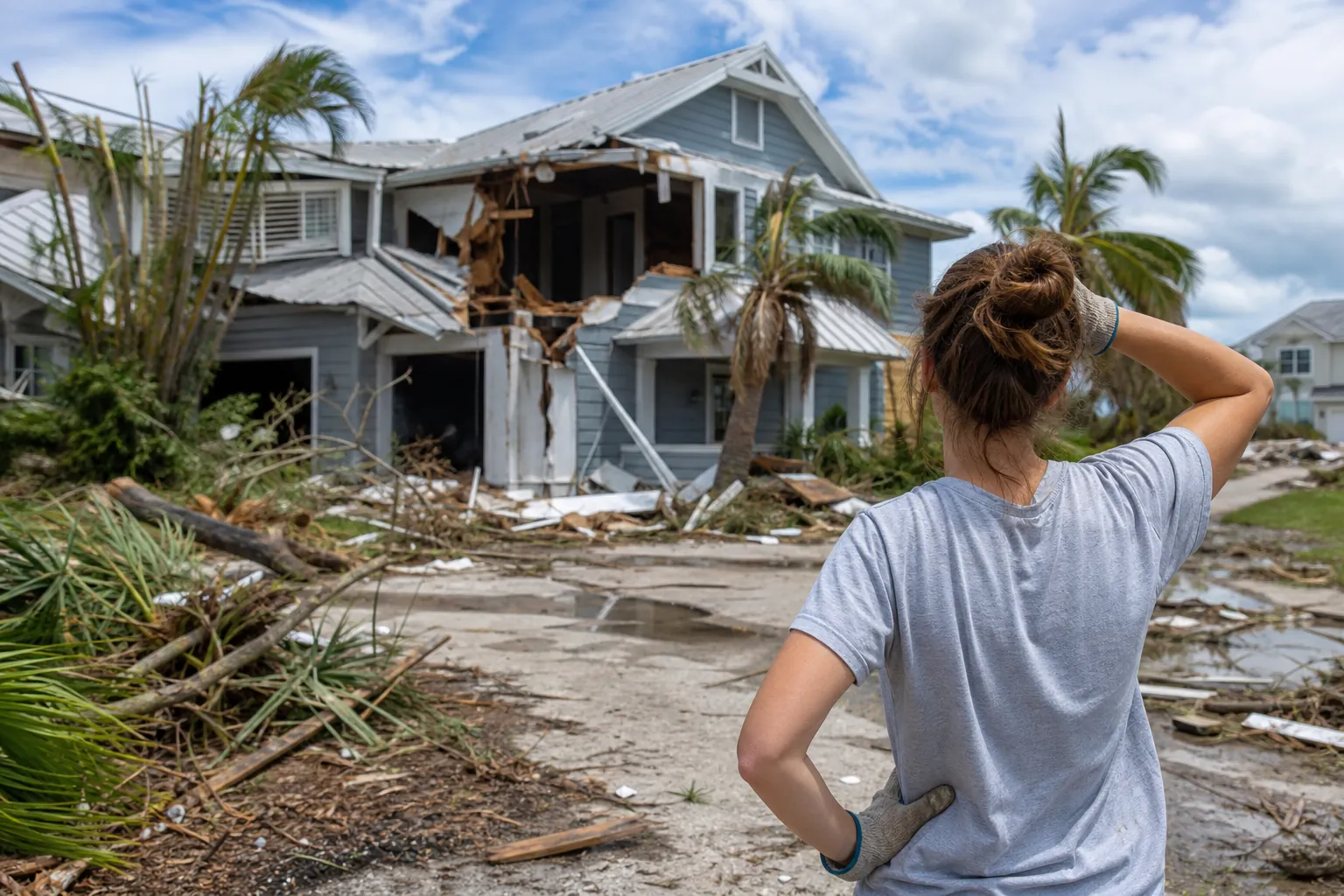
Stop household hurricane cleanup if the task involves hanging limbs, unstable trees, wood under tension, or possible contact with electrical wires. These are hazards in storm-damaged tree work, not household chores. OSHA explains these hazards. For Pensacola homeowners, the next step is to pause and describe what you see without trying to diagnose it. Then organize your questions instead of trying tree work. This guide supports our Pensacola hurricane tree cleanup guide. It explains where household organizing ends.
When Should You Stop DIY Hurricane Cleanup?
Stop when cleanup shifts from sorting household items to handling damaged trees or limbs. OSHA lists falling limbs, unstable trees, wood under tension, and limbs that can roll or slide as hazards. See OSHA's tree-work guidance. The tree removal overview and tree trimming overview explain types of service. They do not tell you what work your tree needs.
A storm can leave both household clutter and tree damage. Keep those topics separate in your notes. Scattered outdoor items are one concern. A limb still caught in a tree is another. Do not put both on one weekend chore list.
Your first decision does not need to name a service. You can simply stop treating the situation as household cleanup. This makes your next conversation clearer. It also helps you avoid stating an uncertain tree condition as a fact.
- Write down what you see that changed your plan, such as a limb caught above the ground.
- Keep household organizing apart from questions about damaged trees.
- Do not choose a service if what you see does not show what work is needed.
What Does a Hanging Limb Tell You?
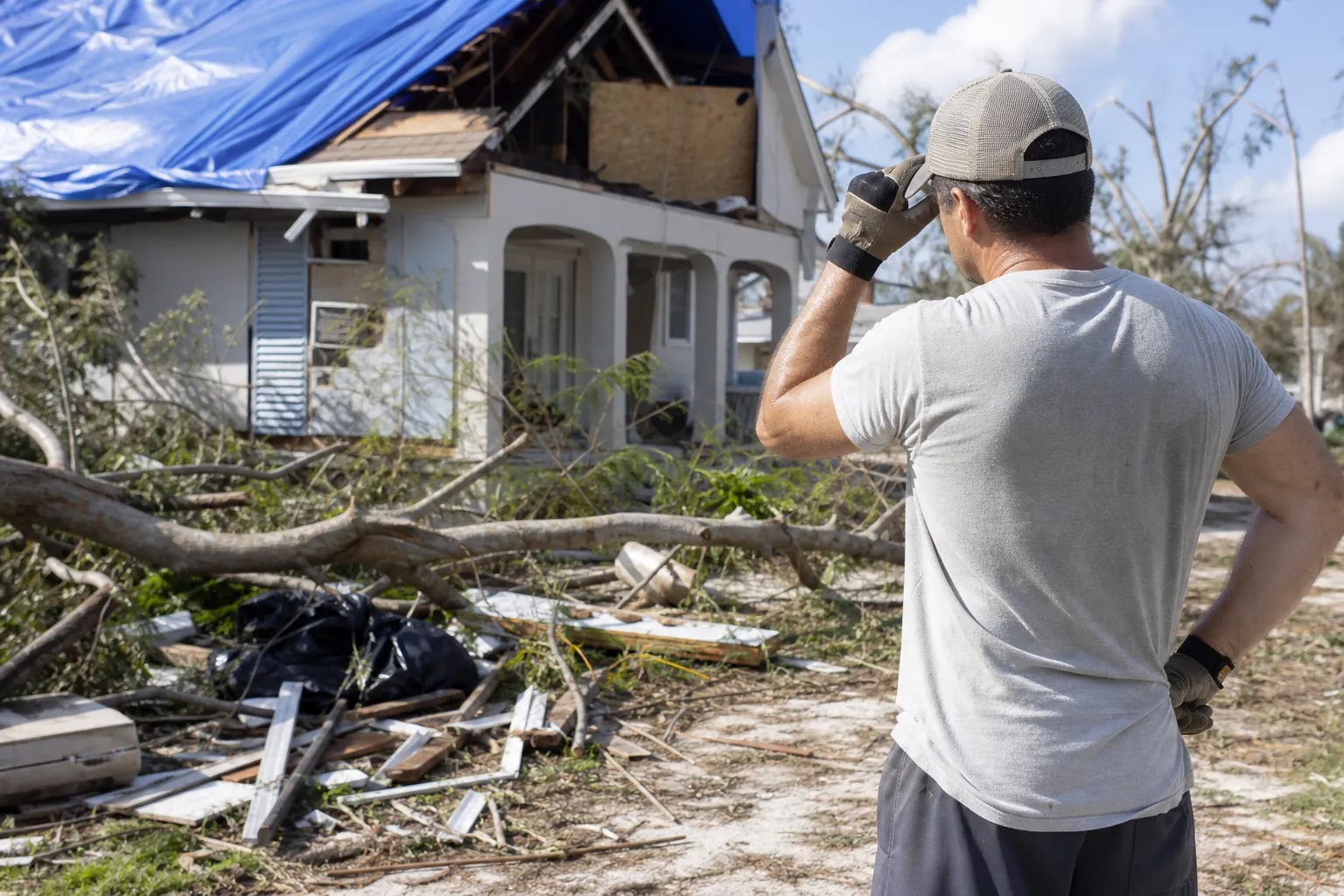
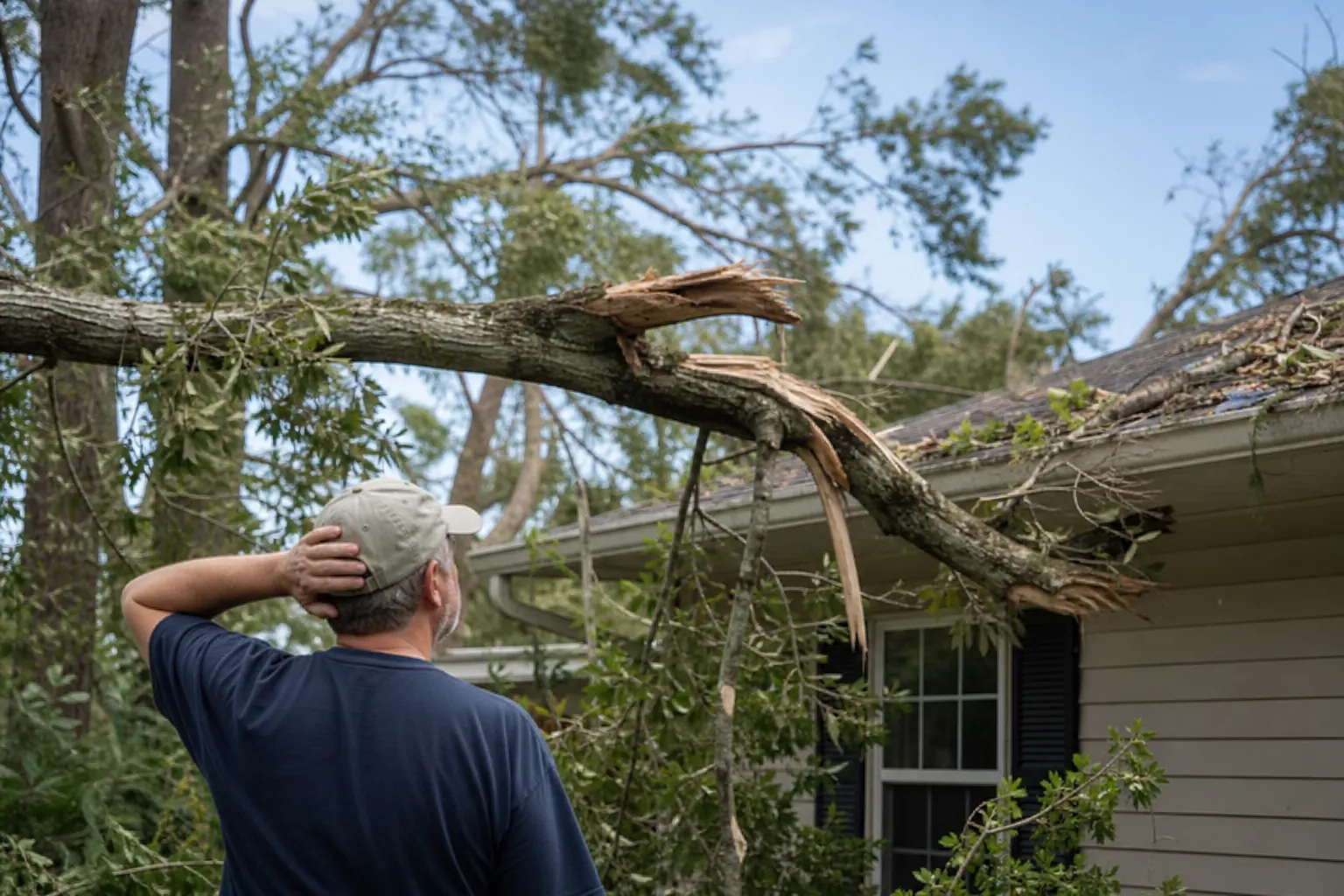
A hanging limb tells you that part of the tree is still overhead. It does not tell you the tree is stable. Falling limbs and unstable trees are known hazards in storm work. OSHA lists both hazards. Read the tree trimming information for context. Use the contact page for questions, not a remote diagnosis.
Describe the shape and place in plain words. For example, “A broken branch seems caught in the upper part of the tree” is an observation. “The tree only needs a quick trim” is a conclusion that what you see does not prove.
A photo can help show what you noticed, but it cannot prove a tree is safe. Do not use an image to change an uncertain description into a certain one. You can say that a detail is hard to see or that you do not know how the parts connect.
- Use words such as “appears,” “visible,” and “I cannot tell” when they show what you do not know.
- Note whether your concern is a hanging branch, a whole tree, or both.
- Do not call a photo a safety check or a confirmed diagnosis.
Why Are Tensioned Limbs Different From Household Debris?
OSHA lists wood under tension and limbs that can roll or slide as hazards. A piece on the ground is not always an ordinary household item. Read OSHA's hazard list. The removal service description gives context. Florida Foliage's company background tells you about the business behind this guide.
You do not need to work out how much tension is present. That goes beyond a simple note about what you see. If wood looks bent, caught, or held between other things, describe its position. Do not say what it will do.
Keep notes about where the wood is apart from guesses about its weight or movement. “The limb rests across two objects” is clearer than “It should move easily.” The first statement tells what you see. The second predicts what will happen, which a homeowner's description cannot prove.
- Describe where the wood seems to rest. Do not give it a technical label.
- List bent or caught wood as a tree-care question, not a household task.
- Instead of guessing that it will move easily, describe what you see.
How Do Wires and Water Change the Decision?
Possible contact with electricity is a reason to stop. Downed wires can carry power into trees and fences. Avoid direct and indirect contact. OSHA explains this hazard. The general inquiry page and company information give business details only. This article and a tree-care inquiry cannot tell you if a wire is live.
Do not touch electrical equipment if it is wet or if you are standing in water. Buried or downed power lines can carry electricity through water. Ready.gov gives these hurricane safety tips.
Floodwater can hold debris, chemicals, waste, and wildlife. Ready.gov lists these floodwater hazards. Keep this concern apart from your notes about branches. One note that says “messy yard” can hide several different questions.
- Note possible wire contact as uncertain unless you have confirmed facts. Avoid direct and indirect contact with trees or fences that may be live. Source: OSHA.
- Give notes about water their own heading.
- Do not use a photo or an unanswered inquiry as proof that the electrical conditions are safe.
Separate Observations From Tree Decisions
For service details, read the overview of tree trimming and the overview of tree removal. These pages can help you frame a question. They do not turn what a homeowner sees into a diagnosis. They also do not show which service is right for a storm-damaged tree.
A useful note has three parts: what you saw, what you do not know, and what you want to ask. This keeps what you do not know clear. It also avoids a long message that hides the main concern in a full account of the storm.
For example, you might write: “A branch seems broken and is still in the tree. I do not know what is holding it. I want to know what details are needed to talk about tree care.” This is more useful than calling the work simple or deciding in advance that the whole tree must go.
- Describe what you see in one or two plain sentences.
- Add a separate sentence for details you cannot work out.
- Ask what details are needed for a tree-care discussion instead of asking someone to confirm your diagnosis.
- Keep your first wording if you add details later, so you can see what changed.
Organize the Household Without Expanding the Task
The Florida Foliage background page tells you who publishes this guide. The contact options give you a place to ask general questions. Household organizing can remain a separate task. You can sort notes, discuss unfinished chores, and choose which questions need attention first.
Use two headings instead of one long cleanup list. Label one “Household organization” and the other “Tree and electrical questions.” These headings help with note-taking. They do not assess safety. A task is not right for DIY work just because someone puts it under household tasks.
Keep people who do not need to be there away from work and drop areas during tree work. OSHA gives this safety tip. Wear protective clothing and suitable masks when cleaning debris. Ready.gov gives this cleanup advice. Clothing does not remove the separate tree hazards discussed here.
- Use one shared note so household members do not follow different task lists.
- Mark things you are unsure about as questions, not decisions.
- Keep plans for tree work apart from normal household plans.
- Review the list together before adding more tasks to an already confusing day.
Use a Simple Record Before Making Contact
The Florida Foliage inquiry form is a way to get in touch. The company overview gives background. Make a short record first. It can help you ask a clear question without assuming that a service, visit, or certain result is available.
You do not need a technical report. A short note with your location, what you see, and what you do not know is enough to help you organize the conversation. Do not fill gaps with guesses about the tree just to make the note seem complete.
- Say that your property is in Pensacola, FL, and that your question is about hurricane-related tree damage.
- Describe the main thing you see in plain words, without naming a diagnosis.
- List what you cannot tell, including whether wires or caught wood may be involved.
- If you have images, label them as context, not proof that the tree is safe.
- Ask whether Florida Foliage can discuss your question and what details would help next.
Keep the record short enough to read without searching through several messages. If you have more than one tree concern, give each its own short entry. This helps keep separate observations clear.
- Use the same description in your note and your first message.
- Put your main question first, not every household chore.
Understand What Contact With Florida Foliage Means
Use the contact page for a general inquiry and the about page for company background. Florida Foliage is based in Daytona Beach. This article about Pensacola does not say that the company has an office or crew there, or that it offers service in the area.
Call (386) 481-7913 to ask whether the company can discuss your situation. Give your location early. Contact is a question, not a promise of a visit, a response time, or a certain tree-care result.
- Confirm your location before you discuss the tree concern.
- Ask what details are needed next without assuming service is available in your area.
- Keep questions that have no answer marked as unanswered in your household notes.
- Do not treat a general service page as a decision about your property.
Keep the Stopping Point Clear
The tree removal information page and tree trimming information page explain different services. Your next task is simpler: separate what you saw from what you do not know. Do not turn an uncertain tree question into a household work plan.
Falling limbs, unstable trees, wood under tension, and limbs that roll or slide are hazards in storm work. Downed wires can carry power into trees and fences. OSHA lists these hazards. A neat list or clear photo does not make them go away.
Return to the wider Pensacola hurricane tree cleanup resource for the main topic. Keep this page's purpose in mind: it helps you know when household cleanup stops. It does not teach tree work.
- Keep notes factual and state what you do not know.
- Use service descriptions to shape questions, not to choose the work yourself.
- Make contact without assuming a visit or service in your area.
Frequently Asked Questions
The general contact page is useful for a specific question. The company background page explains who Florida Foliage is. These answers explain the difference between household organizing and tree-care questions. They do not diagnose a tree or show whether work is available in Pensacola.
Is a hanging branch a reason to stop household cleanup?
Yes. Falling limbs and unstable trees are known hazards in storm-damaged tree work. OSHA lists these hazards. Describe the hanging branch as something you see. Do not decide what work it needs. A branch that seems caught overhead belongs in your tree-care questions, not on a normal household chore list.
Can a photo show that a damaged tree is safe?
No. Treat a photo as context for a question, not proof of safety or a diagnosis. Say what the image seems to show and what is still unclear. Do not change “a branch appears broken” into “the tree is safe” or “the tree needs removal.” Those claims go beyond a simple description of what you see.
What if a wire appears to touch a tree or fence?
Stop cleanup that involves this situation. Downed electrical wires can carry power into trees and fences. OSHA says to avoid direct and indirect contact. Read the OSHA source. Note the possible wire contact without guessing its condition. A tree-care message or photo cannot show whether a wire is live.
What should I write before asking about tree care?
Write your location, a short description of what you see, and what you cannot tell. Put separate concerns in separate entries. Use plain words, not a technical diagnosis. If you have an image, label it as context only. End with a clear question about what details are needed for a discussion.
Does this article mean Florida Foliage serves Pensacola?
No. Florida Foliage is based in Daytona Beach. This article does not say whether the company serves Pensacola. Call (386) 481-7913 or use the contact page to ask whether the company can discuss your question. Give your location first. Contact does not promise a visit, a time, or a certain result.
Call (386) 481-7913 to talk through next steps.