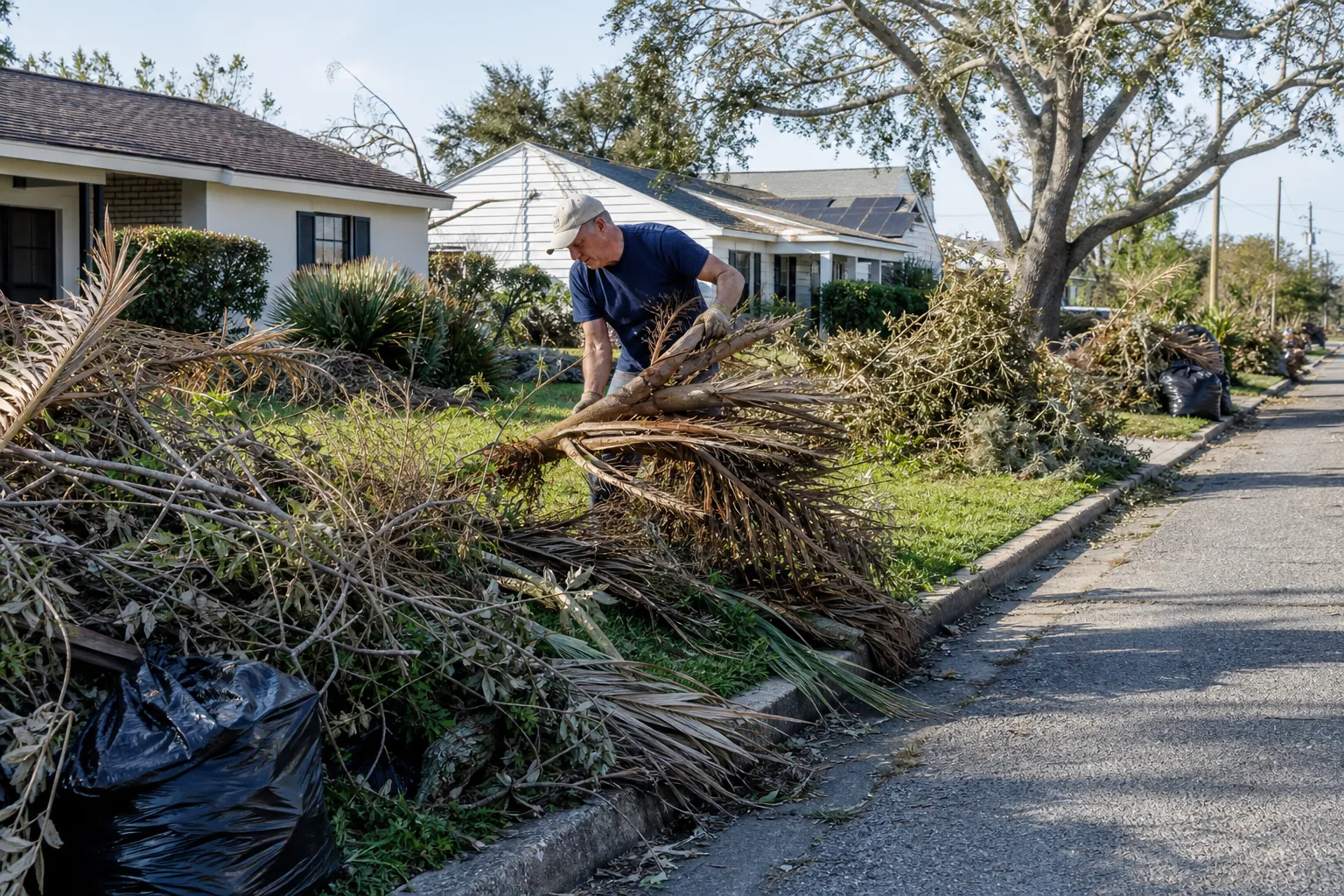
After a hurricane in Pensacola, sort your yard cleanup plan into three labels: safe-now planning, wait, and professional-only assessment. These labels help sort decisions. They do not show that any part of the yard is safe. Start with a written list of what you can see without going out to investigate. Then sort household tasks from tree concerns that still need answers. This guide supports our Pensacola hurricane tree cleanup overview. It helps you prepare clear questions without trying to do tree work.
By Tim Francis, responsible for this article’s content and editorial presentation.
What Do the Three Yard Zones Mean?
The three zones are planning categories, not areas cleared for use. Safe-now is for household organization. Wait is for questions without answers. Professional-only is for tree concerns to discuss with an appropriate professional. Read our tree removal service overview for context. You can also use our contact page for service questions without assuming service is available in your area.
A hurricane can make a yard look very different from before. A path may be hard to recognize. A favorite tree may look changed. Scattered objects may block part of your view. Your first worksheet does not need to explain what happened. It only needs to show what you see and what you do not know.
Use the full phrase “safe-now planning.” A shorter label, such as “safe yard,” could suggest a conclusion your notes cannot support. This category is for organizing information. It does not give you permission to approach storm debris.
Tree work after a storm can involve falling limbs and unstable trees. Keep tree concerns apart from ordinary household plans. Source: OSHA storm-damaged tree work guidance.
- Put writing a household task list in the safe-now planning category.
- Put an unclear view or an unanswered question in the wait category.
- Put a storm-damaged tree concern in the professional-only assessment category.
- Leave a category blank if you do not have enough information to assign it.
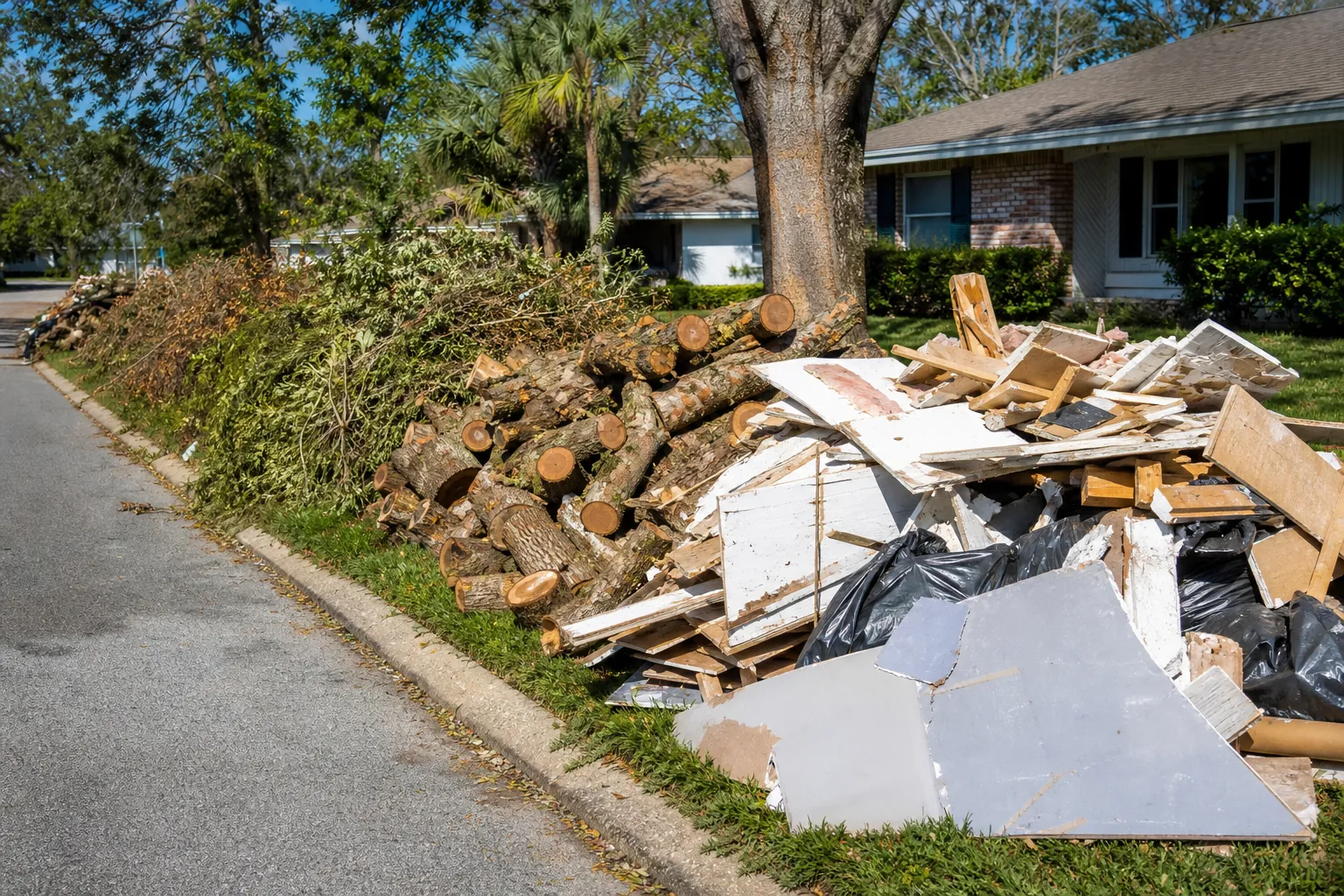
What Can Go in the Safe-Now Planning Zone?
Safe-now planning means organizing your next decisions, not handling yard debris. Make a list, choose someone to keep the notes, and gather questions about trees. Our company background page explains who Florida Foliage is. Our tree trimming service information gives context for questions, not instructions for storm work.
Choose a simple format that everyone in the household can use. A sheet of paper, a shared note, or a basic document is enough. Give each yard area a familiar name, such as front garden, side path, or back lawn. Use the same names each time so later messages refer to the same places.
Add one column for questions and another for the next conversation. You might write, “Back lawn: a large branch is visible; ask about assessment.” This is more useful than “Back lawn: bad tree,” which mixes what you see with a judgment.
Keep your list short enough to use. You do not need to list every leaf or small object. The goal is to make the larger decisions clear and avoid repeating the same discussion about unknowns.
- Choose one person to keep the current yard notes.
- Use the same area names in messages, lists, and phone calls.
- Write questions in plain words instead of searching for technical labels.
- Keep completed conversations apart from tasks that still need a decision.
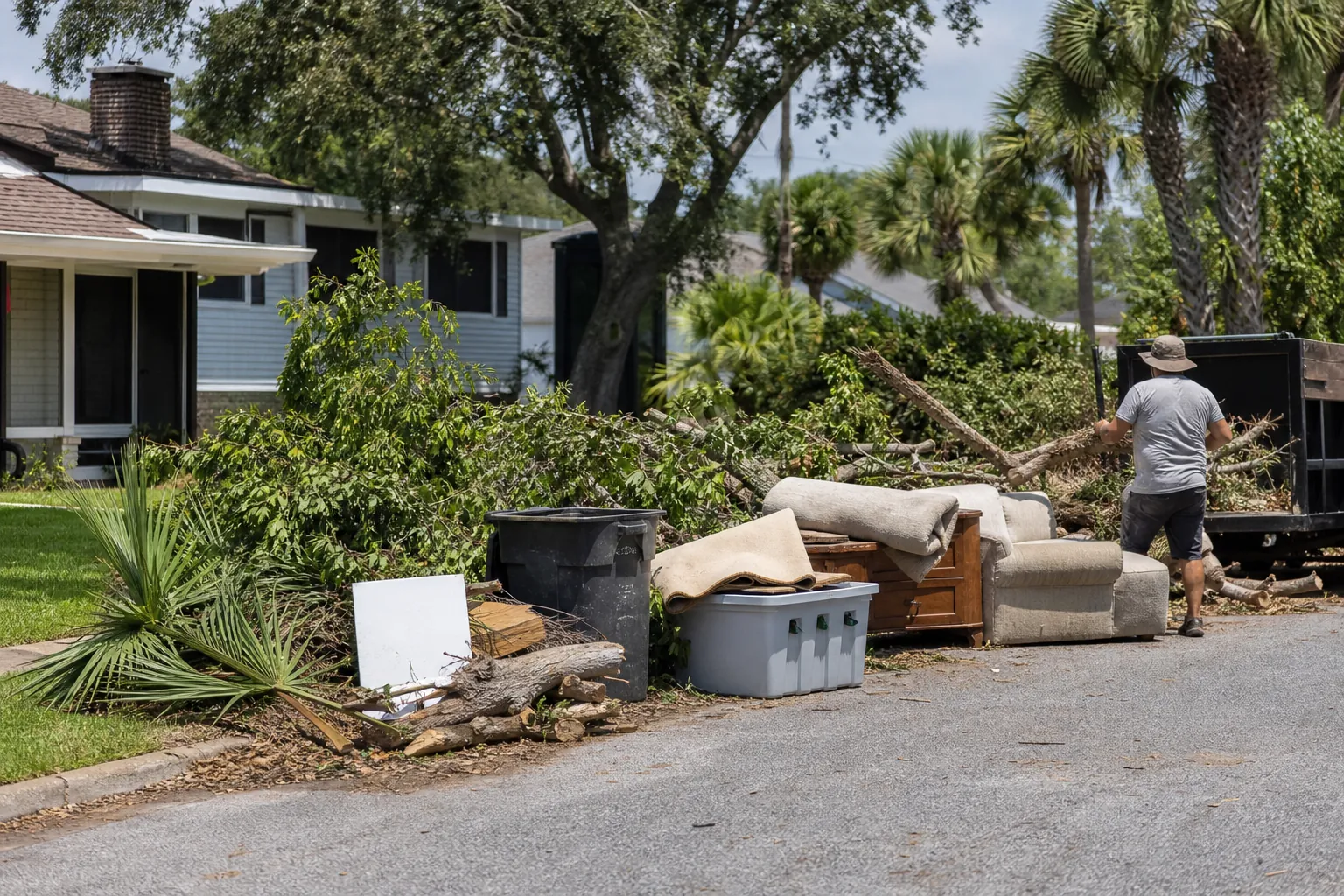
When Should an Area Stay in the Wait Zone?
Keep an area in wait when you lack information or a concern is still unresolved. Wait is a useful answer, not a failed plan. Our information about tree removal can help frame service questions. Our general inquiry page offers a neutral place to ask about next steps.
You may have only a partial view of the side yard. Or you may remember a tree looking different before the storm. Neither gives you enough information to decide what work is right. Record the uncertainty as its own item instead of guessing.
A familiar route does not prove the storm left everything unchanged. For an outside check of a home, the National Weather Service advises walking with care and checking for loose power lines, gas leaks, and structural damage. Source: National Weather Service after-hurricane guidance.
Downed electrical conductors can energize trees and fences. Avoid direct or indirect contact. An uncertain concern about a wire belongs outside an ordinary household cleanup decision. Source: OSHA electrical hazards in storm tree work.
- Write “view incomplete” when you cannot describe part of an area from where you are.
- Record a possible wire concern as unresolved. Do not identify the wire by its appearance alone.
- Keep older notes visible so a changed description does not erase an earlier concern.
- Ask what information is needed. Do not assume that silence means an area is ready.
What Belongs in the Professional-Only Category?
Use professional-only for storm-damaged tree concerns that need an assessment, not household action. This label does not decide whether removal or trimming is right. Compare our tree removal service description with our tree trimming service description to understand what you may need to discuss.
You might see a branch resting on another branch, a trunk that looks different from your earlier notes, or wood across a garden feature. Describe the position you can see. Do not turn that description into a judgment about stability, damage inside the tree, or the right treatment.
Tensioned tree material and limbs that can roll or slide are hazards in storm-related tree work. Appearance alone is not a reason to treat those materials as ordinary yard items. Source: OSHA tree debris hazard guidance.
Keep people who are not needed for the work outside work and drop areas. A household plan should not make a tree work area a place to gather or watch. Source: OSHA work-area guidance.
- Describe where tree material seems to rest. Do not test or move it.
- Ask whether an assessment is needed instead of choosing a tree service by appearance alone.
- List affected yard features as context, not as proof of the tree’s condition.
- Keep household tasks apart from any proposed tree work.
Build One Simple Yard Worksheet
A useful worksheet has an area name, a visible observation, a planning category, and an open question. It does not need technical terms or a detailed drawing. Our contact form for general questions can help start a conversation. Our Florida Foliage company information helps identify the business you are contacting.
Start with the parts of the yard you already know by name. You can sketch where they are in relation to each other from memory. Do not treat the sketch as a current inspection. Mark anything you cannot describe as unknown. The document should show the limits of what you know as clearly as it shows your observations.
- Write a familiar name for each yard area you want to discuss.
- Add only observations you can describe without going out to investigate.
- Assign safe-now planning, wait, or professional-only assessment to the decision involved.
- Write one open question for each unresolved item.
- Date each note and leave room for later updates.
For example, one row might read: “Front garden; branch visible across planting bed; professional-only assessment; what information is needed to discuss this?” Another might read: “Side yard; current view incomplete; wait; what remains unknown?” Neither entry says the area is safe or picks a treatment.
- Use one row for each question so answers are easy to find.
- Replace vague words such as “mess” with a clear description of what you see.
- Mark an item “discussed” only after you record what the conversation covered.
Keep Home Concerns Separate From Yard Tasks
A yard worksheet should not hide concerns about the home itself. Give home-related questions their own heading so they do not become another cleanup task. Our tree removal overview describes a tree service topic. Our company contact information is not a substitute for trusted storm guidance.
The National Weather Service says to stay out of any building if you smell gas, if floodwaters remain around it, or if authorities have not said it is safe. Keep this guidance separate from your yard categories. Source: National Weather Service building safety guidance.
The National Weather Service also says never to use a portable generator inside your home or garage. Put this in the household’s storm reference notes, not in a tree cleanup task list. Source: National Weather Service generator guidance.
One shared document can still cover both topics if the headings are clear. For example, use “Home questions” and “Yard questions” instead of one long list called “Cleanup.” Clear headings help show what a conversation has and has not covered.
- Keep home-related concerns under a heading apart from tree observations.
- Save the trusted storm guidance link beside the related household note.
- Do not mark a home concern as resolved because someone answered a yard question.
- Use plain labels that other household members can understand.
How Should You Share Notes and Ask Questions?
Share a short description of the area, what you can see, and the question you want answered. Do not declare a tree safe or choose a treatment in advance. Our service inquiry page provides a way to get in touch. Our owner and company background gives context but does not mean service is available in Pensacola.
Florida Foliage is headquartered in Daytona Beach. Clinton Funk is the owner and has decades of hands-on tree care experience. These details identify the company. They do not show that it has a Pensacola office, local crews, or availability for your property.
You can call (386) 481-7913 to ask whether Florida Foliage serves your location and what information would help with a conversation. This is a neutral way to get in touch, not a promise of service or a schedule.
If you share existing images, label each with the area name and date. Treat them as context only. Do not use photos as proof that a tree is safe. A clear-looking image does not answer an open question in your worksheet.
- Start with your location. Ask if service is available before discussing arrangements.
- Read your visible observations from the worksheet instead of offering a diagnosis.
- Ask which questions can be discussed and which need more assessment.
- Record the answer as given. Do not turn it into a wider safety conclusion.
Keep the Plan Useful as Questions Change
Update the worksheet when you get new information. Keep observations separate from assessments. Our tree trimming information page is useful for service context. Our contact options can help with follow-up questions, but do not show that service is available locally.
Make each update specific: “Question sent,” “location discussed,” or “more information requested.” A vague note such as “all fine” tells the next reader very little. Keep the original question beside the answer so the limits of the conversation stay clear.
The larger Pensacola hurricane tree cleanup guide provides the main context for this planning worksheet. Use this article to organize decisions, not to diagnose trees or direct storm tree work.
- Keep unanswered questions visible until you have a clear answer to record.
- Remove duplicate tasks but keep distinct concerns about the same area.
- End each update with a clear question or a clearly recorded answer.
Frequently Asked Questions
Does the safe-now label mean my yard is safe?
Does the safe-now label mean my yard is safe?
No. Safe-now planning is a label for household tasks, such as writing notes and preparing questions. It does not tell you that the yard or any tree is safe. Keep the full label on your worksheet. This helps prevent anyone from mistaking a planning category for permission to approach debris or start tree work.
Can I tell from a photo whether a tree needs removal?
Can I tell from a photo whether a tree needs removal?
Do not use a photo to decide that a tree is safe or needs a certain treatment. An existing image can help explain what you saw, but it is not a diagnosis. Label it with the area name and date. Keep your question open for an appropriate assessment.
Why should tree debris stay separate from ordinary yard tasks?
Why should tree debris stay separate from ordinary yard tasks?
Tree work after a storm can involve tensioned material and limbs that may roll or slide. Keep these concerns in the professional-only assessment category, not among routine household tasks. Your notes should say where things are without testing the material. Source: OSHA storm tree debris guidance.
Does Florida Foliage have a Pensacola office?
Does Florida Foliage have a Pensacola office?
Florida Foliage is headquartered in Daytona Beach. This article does not say there is a Pensacola office or that local service is available. Call (386) 481-7913 to ask whether the company serves your location and what information it would need. A conversation does not promise service or a set schedule.
What should I do when a yard note remains uncertain?
What should I do when a yard note remains uncertain?
Leave it in the wait category and write down the exact question that remains open. You do not have to mark every item as complete. Keep the original observation and date any later information. Make clear what someone answered and what you still do not know.
Call (386) 481-7913 to talk through next steps.