Reviewer and contributor: Clinton Funk, Owner, Florida Foliage. Clinton has decades of hands-on tree care experience.
Tim Francis is responsible for the research and editorial quality of this article. AI tools assisted with drafting and the editorial images. This general information does not assess a particular tree.
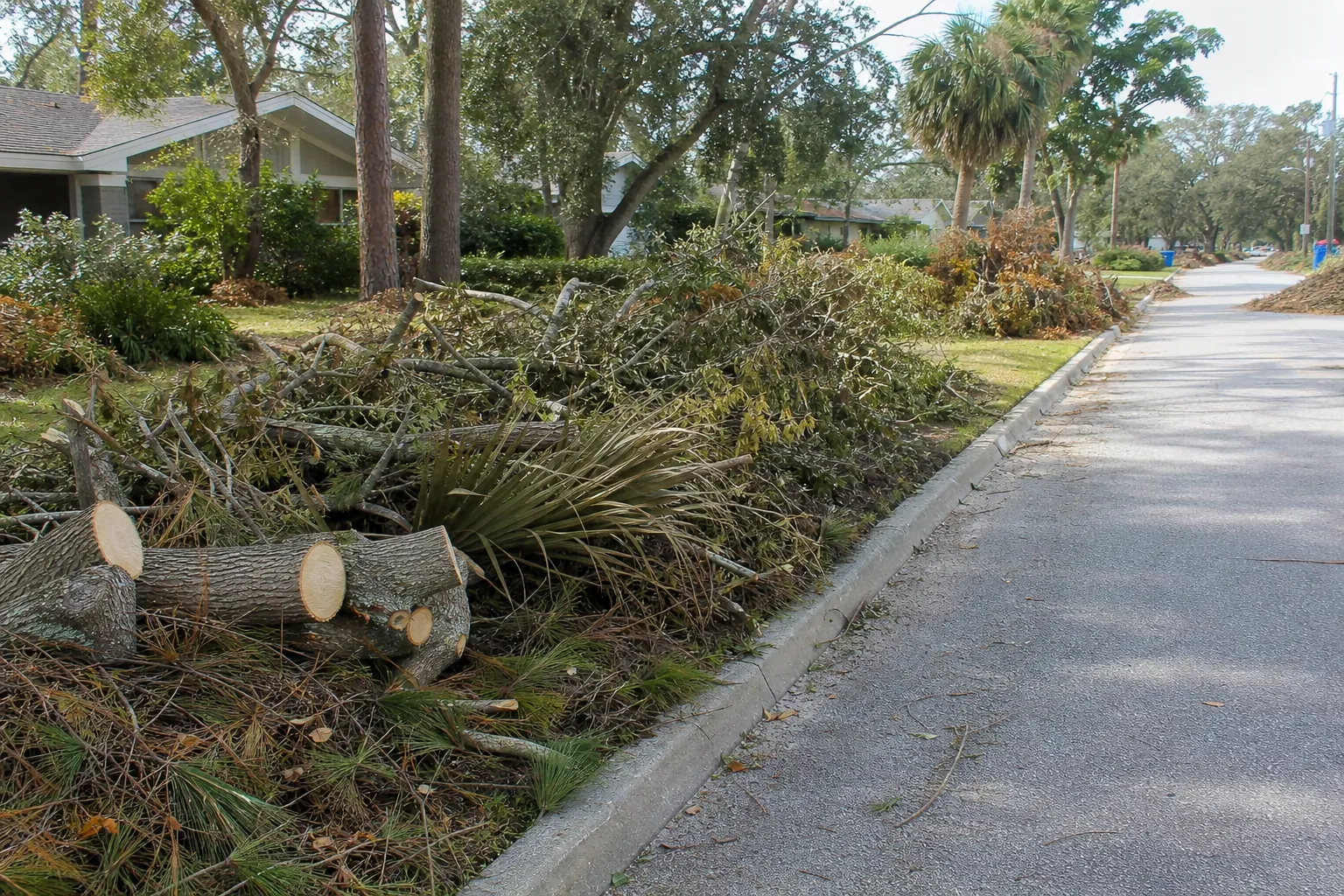
Hurricane Yard Debris Storage in Pensacola, FL calls for clear notes and a careful household plan.
Plan hurricane yard debris storage around the places your household uses. Do not choose a spot only because it is easy to reach. First, list the areas people use. Then note where debris is visible from places you already go. Keep open questions on the list. Do not move material to answer them. This guide offers planning ideas for Pensacola homeowners and points to safety information from OSHA. It does not diagnose trees or set safe distances. A mark on a sketch does not make debris safe.
By Tim Francis. Tim Francis is responsible for this article’s content and editorial presentation. Florida Foliage is based in Daytona Beach. Clinton Funk is the owner and has decades of hands-on tree care experience.
What Comes First For Hurricane Yard Debris Storage?
First name the places people use. On a household sketch, mark debris in a separate area. A suggested pile location is not an approved work area. The tree removal service overview and contact page for location questions give more context about tree debris.
Your sketch can be simple. Draw the house, porch, driveway, and other familiar features. Label each place by how people use it. For example, write “back door used for the dog” or “front steps used for deliveries.” The sketch gives everyone the same reference. It is not a technical plan.
OSHA says people who are not needed for the work should stay outside tree work and drop areas. Keep household activity separate from that work. Do not use this advice to choose a clearance distance. Source: OSHA tree trimming activity sheet.
- Write down which entrances and outdoor spaces the household currently uses.
- Label debris locations separately from occupied areas, using familiar landmarks.
- Mark any proposed storage location as a planning idea, not as a finding that it is safe.
- Keep unresolved questions visible rather than replacing them with guesses.
What Can You Record Without Diagnosing a Tree?
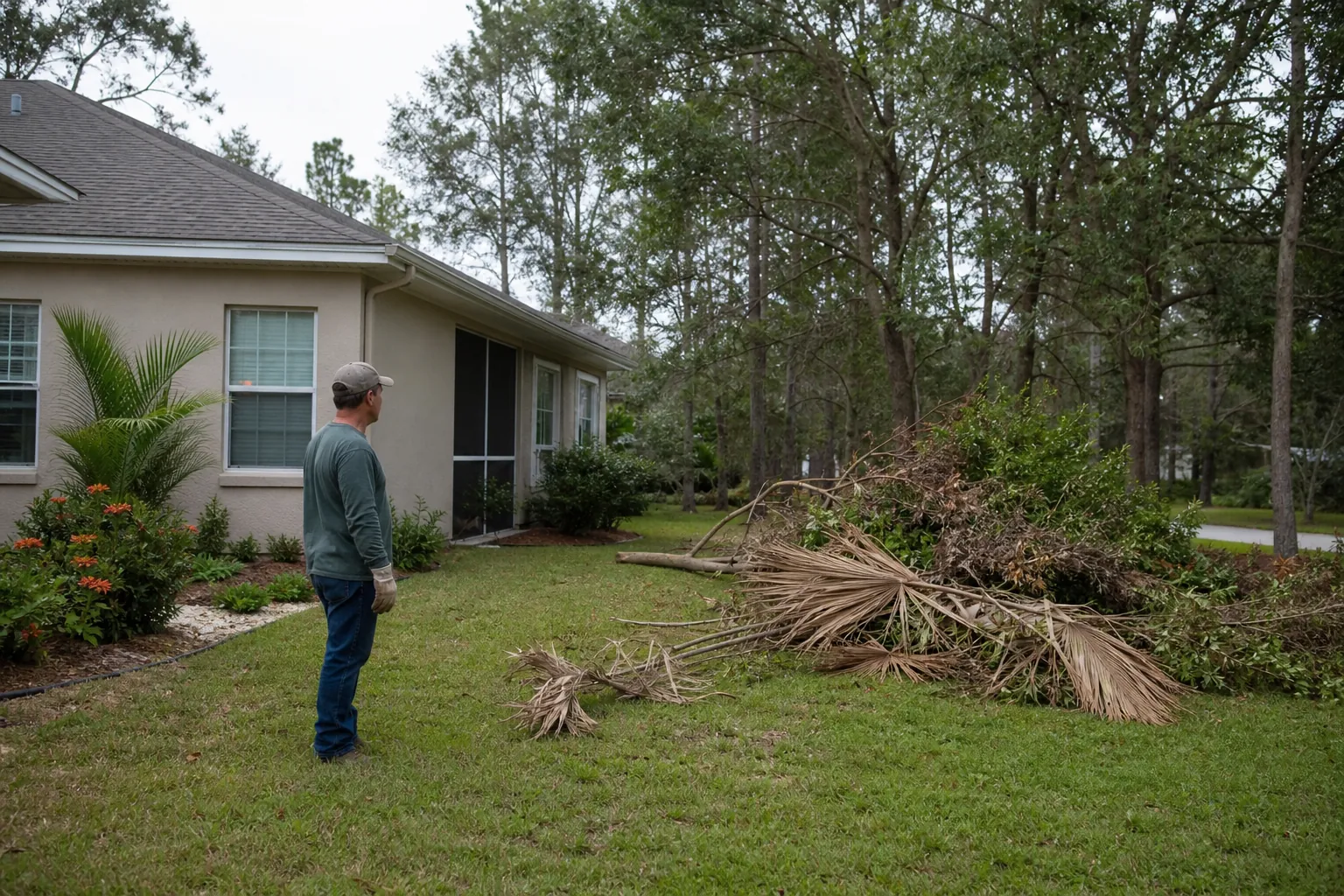
Write down what you can see, where it is, and which household activity it affects. Do not make a judgment about the tree’s condition. The tree trimming service description explains the service. The company background page tells you who you are contacting. These pages do not assess your situation.
“A branch is beside the patio” is an observation. “The tree is stable” is a conclusion to leave out of household notes. “A limb appears caught in another branch” describes what you saw. It does not predict what will happen. Plain words are often easier to understand than tree care terms.
OSHA warns that storm-damaged tree work can involve falling limbs and unstable trees. Material that looks still can still raise a concern. Keep that concern clear in your debris list. Source: OSHA tree trimming activity sheet.
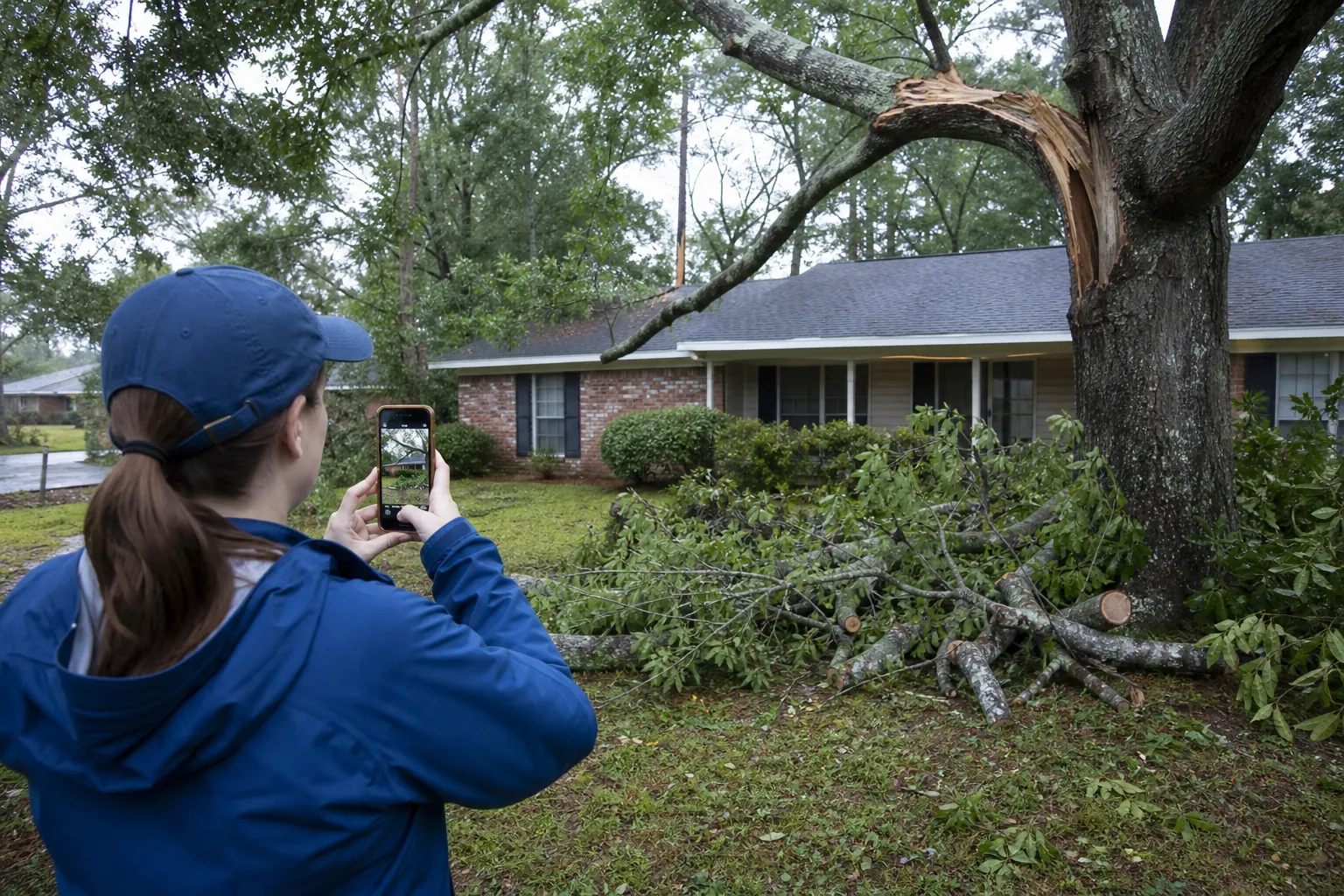
Photos can show a location or help explain a question. They do not prove a tree is safe. Use factual captions. “View from the kitchen window” tells the reader where the image came from. “No danger here” makes a judgment the image does not establish.
- Use descriptions such as “beside the driveway” instead of unsupported condition labels.
- Record when an observation was made so older notes remain distinguishable from newer ones.
- Write “not observed” when you cannot describe an area from your existing viewpoint.
- Use images only as communication aids, not as evidence of tree safety.
Build a Household Debris Planning Sheet
One planning sheet can separate household needs from unanswered questions about debris. The contact form for sharing your location may help you organize an inquiry, and the tree removal information page provides background when your concern involves fallen tree material.
Divide the sheet into three parts: occupied areas, visible debris, and questions. In the first, describe how the household uses each place. In the second, record what you observed. In the third, list what you cannot confirm. This can include whether service is available in your area. Keep questions from turning into assumptions.
Include daily household preferences. One person may use the porch in the morning. Another may use a side entrance for errands. Write down both routines. The plan should reflect how people use the property. It should not label a route or space safe.
- List the occupied outdoor areas and entrances that matter to your household.
- Add the debris locations you can describe without going out to investigate them.
- Note where the description is incomplete, unclear, or based on an older observation.
- Write the questions you want to raise, using the same location names throughout.
- Share one current version with household members and archive earlier drafts.
- Use a short heading for each place so people can find it quickly.
- Keep household preferences separate from statements about tree condition.
- Add a date to the page rather than relying on memory about which version is current.
Which Hazards Should Stay Explicitly Unresolved?
Keep electrical concerns, possible tree movement, and unknown containers out of routine storage plans. List each as an open concern. Do not turn them into household sorting tasks. The overview of tree removal services provides relevant context, while the page for a neutral service inquiry lets you ask about your location without assuming a response.
A downed electrical conductor can energize a tree or fence. OSHA says to avoid direct and indirect contact. A nearby tree or fence may also be part of the electrical hazard. Do not treat it as separate from the concern. Source: OSHA tree trimming activity sheet.
OSHA also warns about tree material under tension and limbs that may roll or slide. A household sketch cannot show how that material may move. Source: OSHA tree trimming activity sheet.
Stay clear of leaking hazardous chemical containers; assessment by hazardous-material response personnel is needed. List this as a separate concern, apart from ordinary yard debris. Source: OSHA debris collection activity sheet.
- Give each unresolved concern its own line instead of hiding it in a general pile description.
- Describe a visible container without guessing its contents.
- Do not turn a question about wires, tree material, or containers into a household moving task.
Keep Debris Notes Separate From Daily Routines
Household notes are easier to follow when they use the same names as daily plans. The Florida Foliage company profile provides business context, and the contact options for an initial question offer a way to ask about service.
A household plan can list outdoor activities that are on hold while questions remain open. This is a household choice, not a yard assessment. Avoid reassuring labels such as “all clear” when the note only means that nobody has reported a new observation.
OSHA says people who are not needed should stay away from debris machinery. If machinery is used for debris work, do not list that area as a place to gather. Source: OSHA debris collection activity sheet.
Keep messages clear and brief. “Patio plans are on hold; see the current yard note” is more precise than “watch out back there.” The first statement describes a household choice and points to a shared reference. The second leaves every person to interpret what it means.
- Use consistent names for entrances, patios, and other occupied spaces.
- Tell household members when a routine has changed rather than assuming they saw the sketch.
- Keep the current note in a familiar place where household members can find it.
- Remove outdated copies from circulation so different versions do not compete.
How Can You Describe Debris Visibility?
A useful debris record names nearby features. It does not focus only on pile size. The tree trimming information page offers background for tree-related questions, and the inquiry page for describing your concern helps you share those questions. A tidy appearance alone cannot show whether the material is safe to store.
OSHA notes that debris can hide meters and fire hydrants. Add their locations if you already know them. Mark unknown details as uncertain. Do not search through debris to find out. Source: OSHA debris collection activity sheet.
Household notes can name familiar landmarks, such as a garden bed or porch corner. These details help others follow the description. They do not set a clearance distance or show where work or storage is safe.
Do not build the whole plan around making the yard look finished. A neat drawing can still hide open questions. Give the questions space on the page. If you are unsure whether you can see it, say so.
- Add known meter and hydrant locations to the record without investigating through debris.
- Use familiar yard features to explain where an observation belongs.
- Separate “looks orderly” from any conclusion about safety.
- Keep missing information visible in the current version of the plan.
Make a Neutral Contact Step
Prepare a short question about your location. Do not assume a company serves your address. The Florida Foliage contact page is the place to start, and the background on Florida Foliage explains the business. Its headquarters is in Daytona Beach; this article makes no statement of Pensacola availability.
Florida Foliage is based in Daytona Beach. Call (386) 481-7913 to ask about current service options for your Pensacola property. Share your area and describe what you can see. Ask what details would help. A call does not promise service or timing.
You might say: “I am in Pensacola. I have hurricane tree debris near an outdoor area my household uses. I wrote down what I can see and what I cannot confirm. Do you serve this location? What details would help you discuss it?”
- Begin with your location so availability is a question, not an assumption.
- Use factual observations rather than saying the tree is safe or unsafe.
- Explain which occupied area appears in your notes.
- Keep the inquiry focused on the situation rather than proposing tree work methods.
Frequently Asked Questions
These answers cover household planning and limits on what it can tell you. The tree removal service page gives context about tree material. Use the contact page for availability questions to take a next step. Neither page assesses a Pensacola yard or confirms a storage spot is safe.
Can I choose a debris storage spot from a yard sketch?
You can use a sketch to note a possible spot and explain household needs. Do not call it approved or safe. Keep occupied areas, visible debris, and open questions separate. The sketch helps organize information. It does not diagnose a tree or show how debris may move.
What should I write about a storm-damaged tree?
Write what you see and where you saw it. Do not say the tree is stable. OSHA warns about falling limbs and unstable trees during storm work. Keep these hazards apart from routine household plans. A photo can show a location. It cannot prove the tree is safe.
What if debris is near a wire or fence?
Treat this as more than a storage question. A downed electrical conductor can energize trees and fences. OSHA says to avoid direct and indirect contact. Use only what you already observed in your notes. Do not say the fence or tree is separate from the electrical hazard.
How should I handle a leaking container in the debris?
Stay clear of leaking hazardous chemical containers. OSHA says hazardous-material response personnel should assess them. List the container as an open concern, apart from ordinary yard debris. Describe only what you can see. Do not guess what is inside or try to identify it yourself.
Does this guide confirm Florida Foliage serves Pensacola?
No. Florida Foliage is based in Daytona Beach. Call (386) 481-7913 to ask about current service options for your Pensacola property. A call does not promise service or timing.
Call (386) 481-7913 to talk through next steps.