Reviewed by Clinton Funk
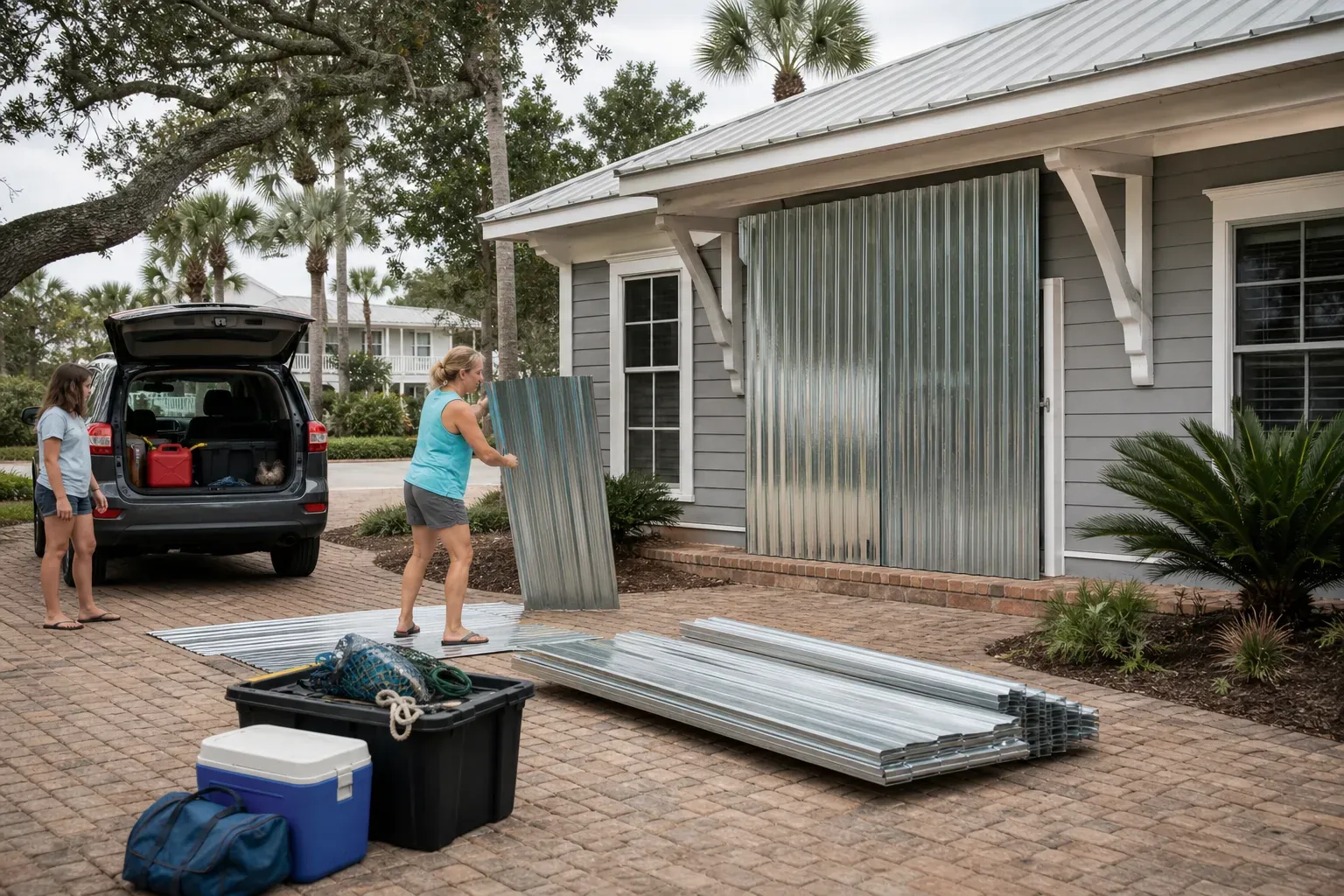
Put people, travel, and official orders before yard work. Hurricane Isaias A Pensacola Yard And Evacuation Plan starts with one rule: no tree task should delay a safe departure. Set a work cutoff, keep needed paths clear, and leave damaged trees to qualified professionals.
This guide helps your household plan yard tasks with public guidance. It cannot tell if your home is safe. It cannot replace an order to leave or a tree risk check. Florida Foliage serves Volusia and Flagler from Daytona Beach, not Pensacola or the Alabama coast.
The supplied October 9 National Hurricane Center advisory identifies Isaias as a named system. That dated snapshot is not a live forecast. Check current official updates before acting. This article does not claim that the storm is arriving at your property.
What comes first in Hurricane Isaias A Pensacola Yard And Evacuation Plan?
Start with trusted alerts and a clear departure plan. Read the tree risk guide for Pensacola owners and Pensacola root recovery guide for related tree-care background. They do not decide claim, contract, or permit questions for your site.
A tidy yard is not proof of a safe home. Nor does an intact tree mean a route will stay open. Wind, flooding, road closures, and utility damage can change access. Your plan must allow time for those changes.
Escambia County's evacuation guidance says to heed local orders. It also identifies storm surge as a major threat to life. An ordered evacuation is not a cue to finish pruning first.
Use this order for household planning:
- Check current official weather and local emergency updates. Check if an order applies to your address.
- Check where you will go, your route, transport, and household needs. Include pets, medicines, and mobility support.
- Set a yard-work cutoff that leaves time to pack and travel. Stop sooner if conditions or official instructions change.
- Give people only low-risk tasks that fit the time you have. Leave climbing, chainsaw work, and damaged trees to qualified experts.
- Share the plan with household members and one outside contact. State when you will check in and who can make decisions.
Do not use the forecast track alone to decide whether to leave. Read the hazards and local instructions too. A regional advisory covers a wide area. An evacuation order for your address answers a different question.
Choose one person to check updates and share them. Others can still watch alerts. One clear summary helps avoid mixed messages. Record the source and time of each update. A forwarded image may show an old warning without its date.
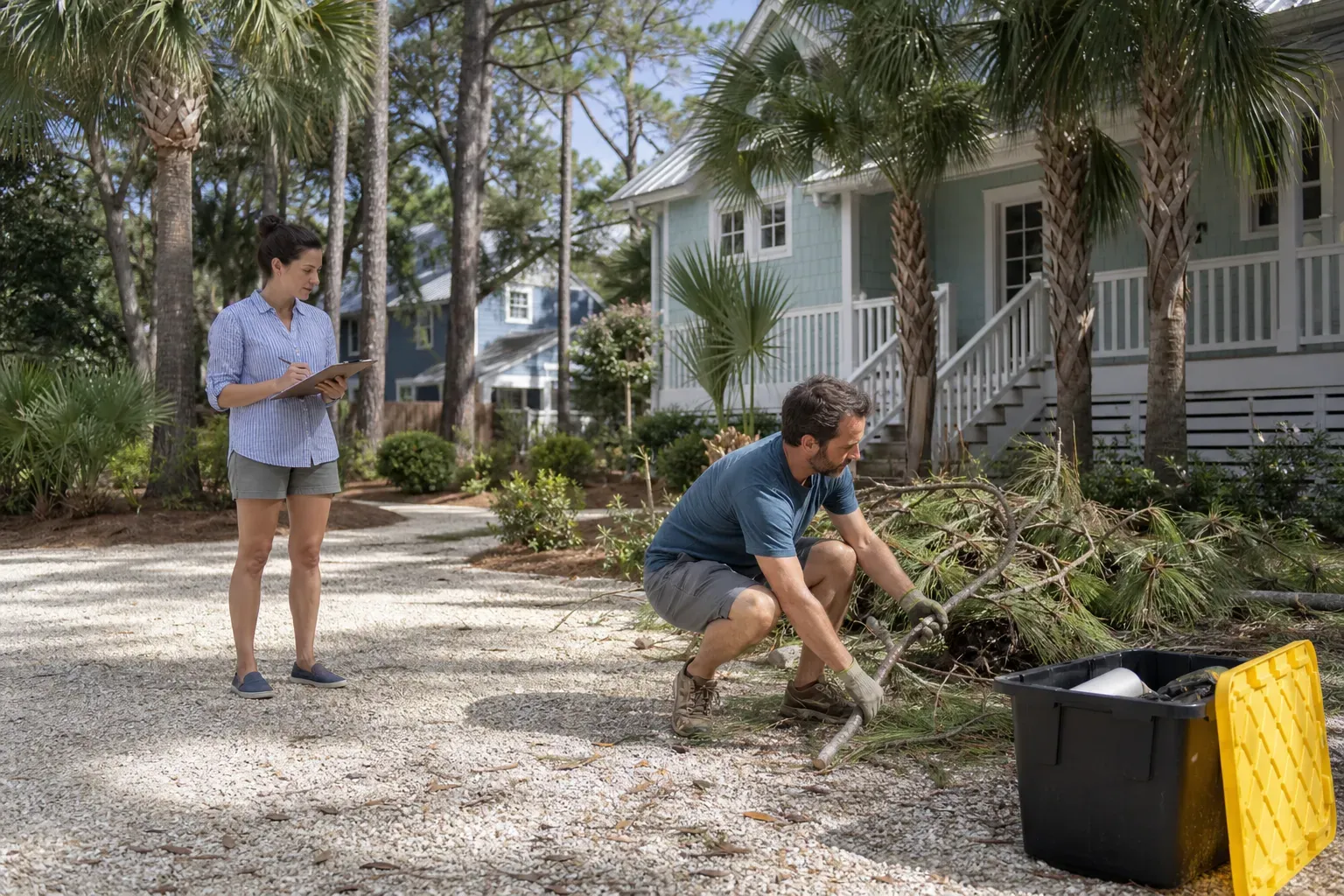
When should yard work stop before evacuation?
Stop when yard work threatens your departure plan or exposes anyone to risk. Read the tree risk guide for Pensacola owners and Pensacola root recovery guide for related tree-care background. They do not decide claim, contract, or permit questions for your site.
There is no single safe work cutoff for every home. Your travel time, care needs, and local orders matter. Set the cutoff before tasks begin. Make it a firm limit, not a goal to stretch.
Sort tasks by what they protect. A clear path to the car may help departure. A cosmetic trim does not. If a task needs special tools, a ladder, or work beneath a damaged limb, it does not belong on a last-minute household checklist.
Use these decision rules:
- Leave work that is not needed undone if it would delay packing, transport, or leaving.
- Stop outdoor work if changing conditions make the task unsafe. Do not wait for every checklist item to be done.
- Keep children, pets, and bystanders away from tree work and unstable branches.
- Do not climb trees, work from a roof, or attempt storm-time pruning.
- Do not ask a neighbor to take risks that your household has ruled out.
A tree expert needs to assess a large limb near a roof. A photo or distant view cannot prove it is safe. The ISA tree owner resources include guidance on tree risk, pruning, and hiring an arborist.
If no one can safely assess it before you leave, keep people away. Do not turn the remaining time into a rushed removal project. Tell your household which area to avoid, then follow official travel guidance.
Build extra time into plans for limited mobility. A task that takes one person minutes may take another much longer. Base your safety plan on your own household. Do not use an ideal schedule.
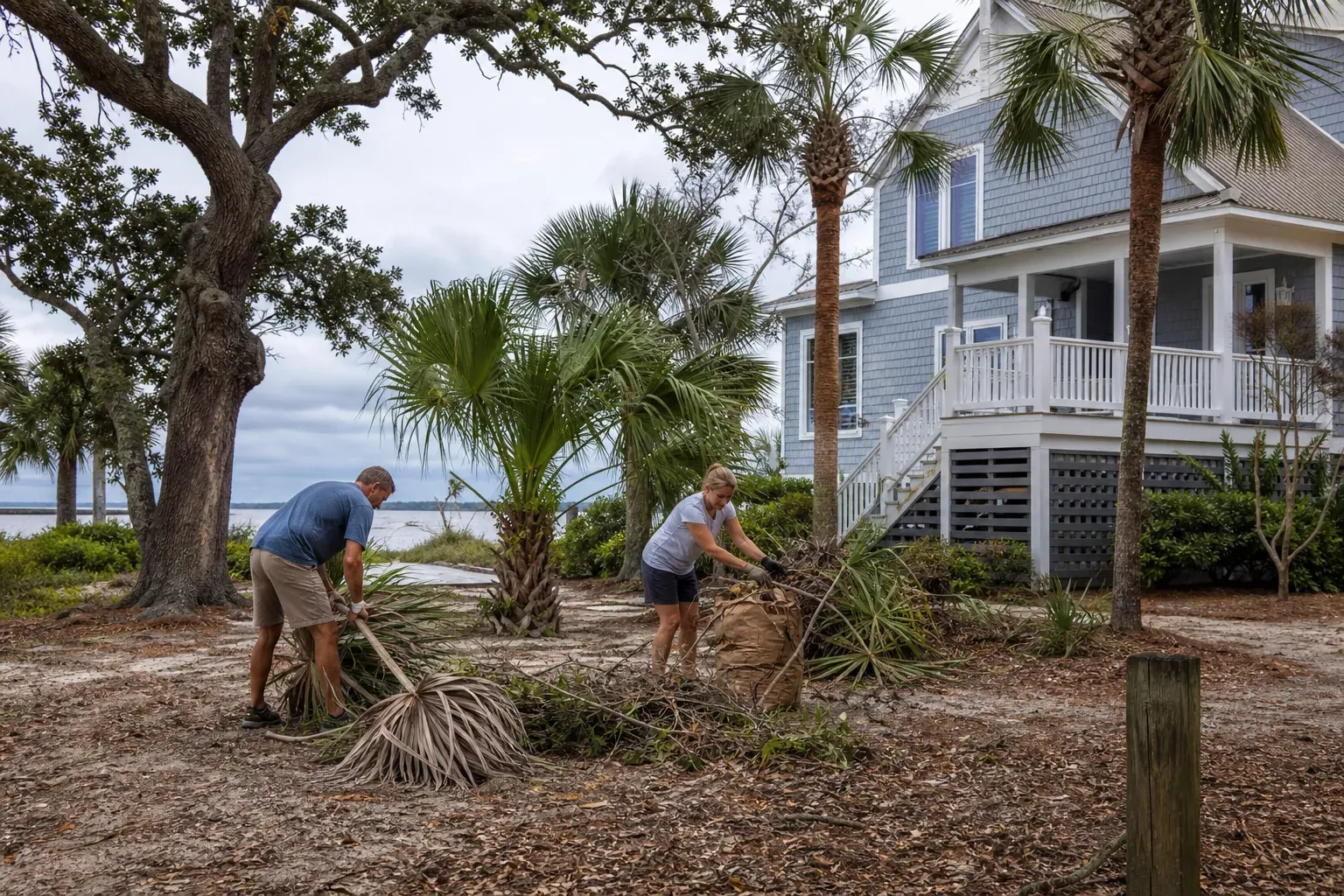
How can you preserve access without taking tree-work risks?
Plan access for people first, then for vehicles and responders. Read the tree risk guide for Pensacola owners and Pensacola root recovery guide for related tree-care background. They do not decide claim, contract, or permit questions for your site.
Walk through the departure route only while conditions are safe. Look at the path from the door to your transport. Note gates, steps, and places where loose items could block the path. Do not enter a suspect tree's fall area to inspect it.
Keep the access plan simple:
- Keep needed walking paths free of loose items when they can be moved safely.
- Avoid placing stored items where they block doors, gates, or vehicle access.
- Tell household members which route they should use and which areas they should avoid.
- Keep keys and needed access details with the person responsible for departure.
- Report blocked public roads or utility hazards to the right public office.
Do not move a fallen tree to open a route yourself. Keep clear and ask the relevant utility, public agency, or tree professional for guidance.
Generator planning needs its own safety check. Consult the maker’s instructions and the relevant public safety agency before choosing a location or using it.
Ask about access needs before the yard fills with stored items. A caregiver may need space beside a vehicle. A person using a mobility aid may need a wider path. Leave that space usable rather than treating it as spare storage.
No access plan can promise that help will reach a home. Follow evacuation guidance instead of relying on later rescue.
How should households coordinate alerts, remote contacts, and assistance?
Give each person a clear role and a backup contact. Read the tree risk guide for Pensacola owners and Pensacola root recovery guide for related tree-care background. They do not decide claim, contract, or permit questions for your site.
Use the National Weather Service Mobile/Pensacola office for official regional weather information. Ask local emergency management about orders to leave and when to return. A weather warning is not the same as permission to enter a closed area.
For homes near a county or state line, check the rules for the home’s actual address. A nearby town's notice may not apply. The route to your destination may cross areas with different restrictions.
Agree on these details before calls or messages become difficult:
- Name the person who will check official updates and share changes.
- Choose an outside contact who can receive household check-ins.
- State who can arrange for an expert to assess the property.
- Share access information only with people who need it.
- Tell remote contacts not to enter the yard until local access is allowed and site hazards are addressed.
A remote owner should not ask a neighbor to inspect a damaged crown. The crown is the leafy upper part of a tree. Damage there may be hard to see from the ground. Safe photos from a place you may enter can record what is there. But they cannot prove that a tree is sound.
For care or mobility needs, contact the appropriate local public agency early. Ask which current shelter and transport plans apply to your household. Do not assume the process is the same as last year.
Keep paper copies of key numbers and plans. Phones can lose power or service. A simple written plan helps someone else take over if they cannot reach the main contact.
What should happen before anyone returns to a tree-damaged yard?
Wait for official return guidance, then treat the yard as a new risk. Read the tree risk guide for Pensacola owners and Pensacola root recovery guide for related tree-care background. They do not decide claim, contract, or permit questions for your site.
An open road does not mean a safe yard. Look from a safe location for fallen limbs, a new lean, lifted soil, or trees resting on structures. These are reasons to keep away and seek expert help. This list cannot prove that a tree is safe.
If wires are down or tangled in branches, stay away. Contact the utility. Do not touch, cut, or move the tree or wire. For an immediate threat to life, contact emergency services rather than waiting for a tree estimate.
Once it is safe to make a record, keep clear notes:
- Take photos from safe locations before cleanup where possible.
- Record which structures, paths, or entrances are affected.
- Keep receipts and written scopes for approved temporary work.
- Ask your insurer what records it needs before discarding damaged items.
The Florida CFO homeowners insurance overview explains that tree and debris removal coverage varies. Damage to insured property may matter, and limits may apply. A tree lying on the ground does not automatically mean removal is covered.
Review your own policy with your insurer or agent. The Florida hurricane deductible guidance explains that deductible rules can affect a claim. This article does not predict payment or decide which deductible applies.
Check permit and disposal rules before work begins. Pensacola's City Arborist page describes permits for heritage trees and trees in public rights of way. It also directs city-tree requests to city channels. Do not treat a public tree as your own removal project.
For other areas, ask the office in charge. Santa Rosa County Development Services and Escambia County Development Review provide official contacts and processes. Ask which rules apply to your job. Do not assume a storm lets you skip them.
Check current collection instructions with Pensacola Sanitation Services. Routine collection information does not establish a storm-debris schedule. Ask what the office will take and where to put it. Do this before piling debris near access routes.
Can damaged trees and palms recover after a hurricane?
Some can recover. Survival and safety need separate assessments. Read the tree risk guide for Pensacola owners and Pensacola root recovery guide for related tree-care background. They do not decide claim, contract, or permit questions for your site.
UF/IFAS storm restoration guidance describes recovery as a process with stages. Broken branches may need repeated pruning visits. Large wounds are less likely to close over than small ones. New shoots do not prove that the whole tree is sound.
A qualified arborist can assess the damage and discuss options. The plan may involve selective pruning, monitoring, or removal. Do not assume every damaged tree must go. Do not assume every leafy tree can stay.
Palms need particular care. UF/IFAS advises preserving live tissue where possible. Bent green fronds can still make food for the palm. Dead fronds that could fall on a target, or broken fronds covering the bud, need a different assessment. The bud is the growing point where new leaves emerge.
Keep these recovery limits in mind:
- Avoid stripping green fronds simply to make a palm look tidy.
- Ask a qualified professional about damaged fronds that may pose a hazard.
- Do not treat yellow leaves alone as proof that a palm is dying.
- Do not add fertilizer or use chemicals just because there was a storm.
UF/IFAS palm hurricane guidance says full canopy replacement takes at least a year and usually longer. It also notes that a storm can force a young leaf open early, making it look pale. Looks alone cannot prove that the bud is healthy.
Fertilizer advice differs for established and replanted palms. Ask for guidance suited to the palm's condition. The same source says no research shows a benefit from routine fungicide use after a hurricane. Do not substitute a general storm-care tip for a tree assessment or product-label requirements.
Recovery planning starts after immediate hazards are addressed. It should not draw people back beneath unstable trees.
Frequently asked questions
Should I finish yard cleanup before obeying an evacuation order?
No. Follow the order and local timing instructions. Leave nonessential cleanup unfinished if it could delay departure. Yard tasks should support the household plan, not control it. An ordered evacuation is not a cue to finish pruning first. Recovery planning starts after immediate hazards are addressed.
Does this article confirm when Isaias will reach Pensacola?
No. The supplied October 9 advisory is a dated source. Forecasts and warnings can change. Check the latest National Hurricane Center, National Weather Service, and local emergency updates before making decisions. Check current official updates before acting. This article does not claim that the storm is arriving at your property.
Can I cut a fallen limb that blocks my driveway?
Do not attempt storm-damaged tree work involving unstable wood, wires, or loaded branches. Keep people away and seek qualified help. If the blockage creates an urgent life-safety issue, contact the appropriate public authority. Trees may also hide wires or rest on structures.
Will homeowners insurance pay for tree removal?
That depends on your policy and the loss. Coverage, limits, exclusions, and deductibles vary. Document damage safely and ask your insurer or agent to explain the terms that apply. Do not assume a cleanup estimate will be reimbursed. Damage to insured property may matter, and limits may apply.
Does Florida Foliage provide Pensacola hurricane crews?
No Pensacola or Alabama service is represented here. Florida Foliage is based in Daytona Beach and serves Volusia and Flagler. This article gives general information for Pensacola-area readers. It does not offer local crews. It cannot tell if your home is safe. It cannot replace an order to leave or a tree risk check.
About the author and drafting: Tim Francis is identified as Tree Content Expert. That title does not imply practitioner credentials. This article was drafted with AI assistance using the listed public sources. Urgent safety decisions belong with public officials; individual tree, permit, and insurance questions need the relevant qualified professional or authority.
Florida Foliage is a Daytona Beach tree service that works with an ISA Certified Arborist consultant.
For tree work in Volusia or Flagler County, call (386) 481-7913 to request a free on-site estimate.
For tree work in Volusia or Flagler County, call (386) 481-7913 to request a free on-site estimate.