Reviewed by Clinton Funk
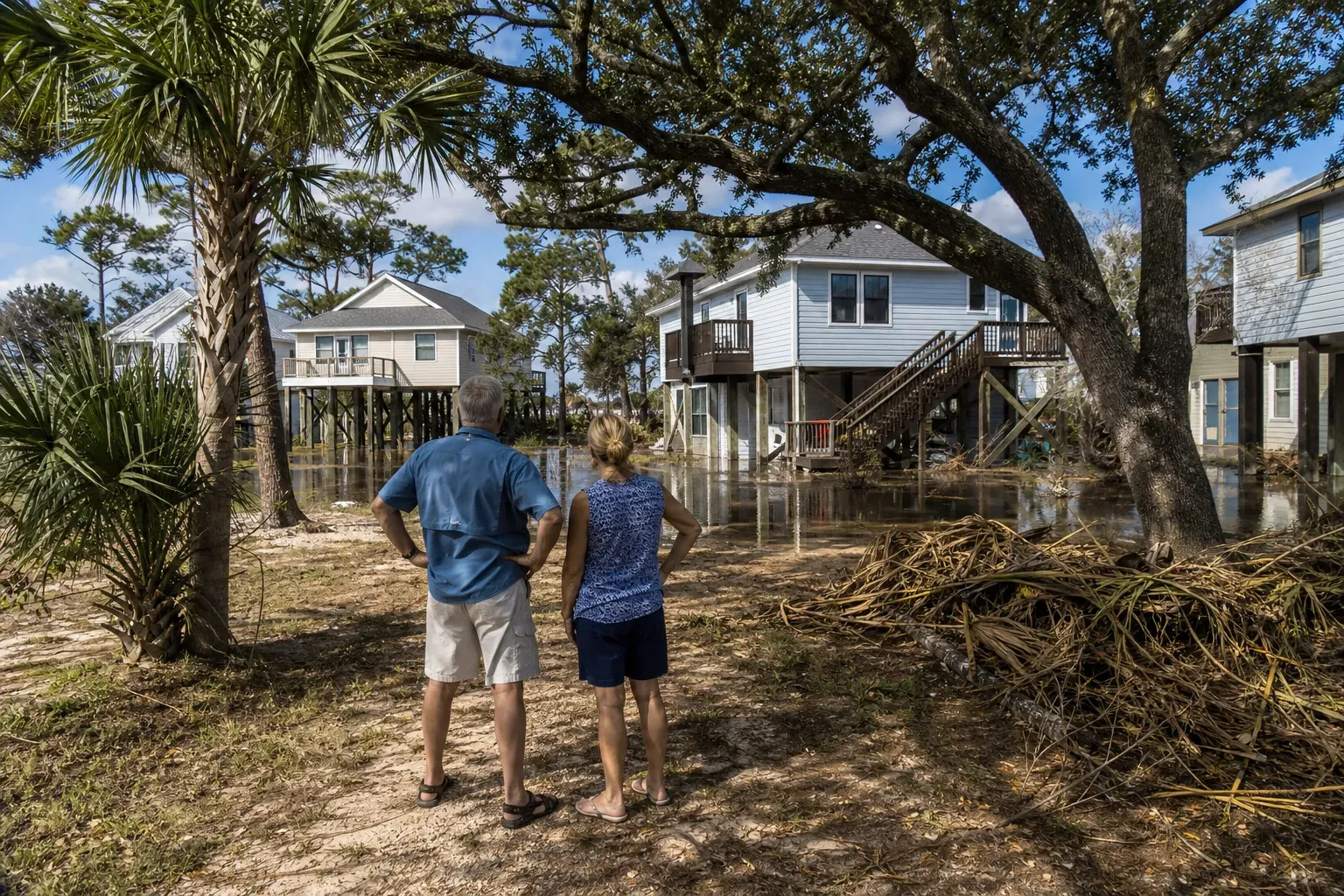
Trees can look dry after a flood even when their roots remain wet. Do not treat wilted leaves or brown tips as proof that a tree needs more water. Hurricane Isaias Drought Stress After Floods In Perdido Key is best approached through safe monitoring, soil checks, and qualified advice, not a tree assessment based on leaves alone.
This guide addresses follow-up care if flooding affects your property. It does not confirm flood damage at any Perdido Key address. The supplied October 9 National Hurricane Center advisory concerns Isaias, but forecasts and warnings can change. Check the latest official information and follow local orders before entering a damaged yard.
Why can Hurricane Isaias Drought Stress After Floods In Perdido Key be hard to identify?
The broader root-zone recovery questions in Pensacola help frame post-flood care. Read the tree risk guide for Pensacola owners and Pensacola root recovery guide for related tree-care background. They do not decide claim, contract, or permit questions for your site.
A leaf tells you that something has changed. It rarely tells you the whole reason. Wilting, fading color, and brown leaf edges can overlap across several types of stress. Wind damage, salt exposure, and root-zone changes may also occur together.
Ask Extension how the flood and later dry-weather history should inform the tree review. Which observations about soil, leaves, and prior watering would help, and which questions require a site check?
Salt adds another concern on coastal sites. UF/IFAS guidance on hurricane-damaged palms explains that saltwater flooding can cause serious injury to many palm species. Risk can be greater when saltwater remains for hours or little rain follows its retreat. Leaf-tip death throughout the canopy is one possible sign of salt injury.
That does not make every brown palm tip a salt tree assessment. The same guidance describes storm-forced opening of a young palm leaf. Such a leaf may look pale or yellow before gaining its normal color. Context matters more than one photo.
Useful distinctions include these:
- A wilted canopy does not prove the soil is dry.
- A dry soil surface does not describe the whole root zone.
- Brown leaf tips do not establish one clear cause.
- New leaf growth can help show a trend, but it does not prove full recovery.
- A tree can have a health concern and a separate safety concern.
Treat these signs as reasons to gather facts. A qualified arborist or Extension adviser can help interpret them. No article can determine the condition of roots at your property.
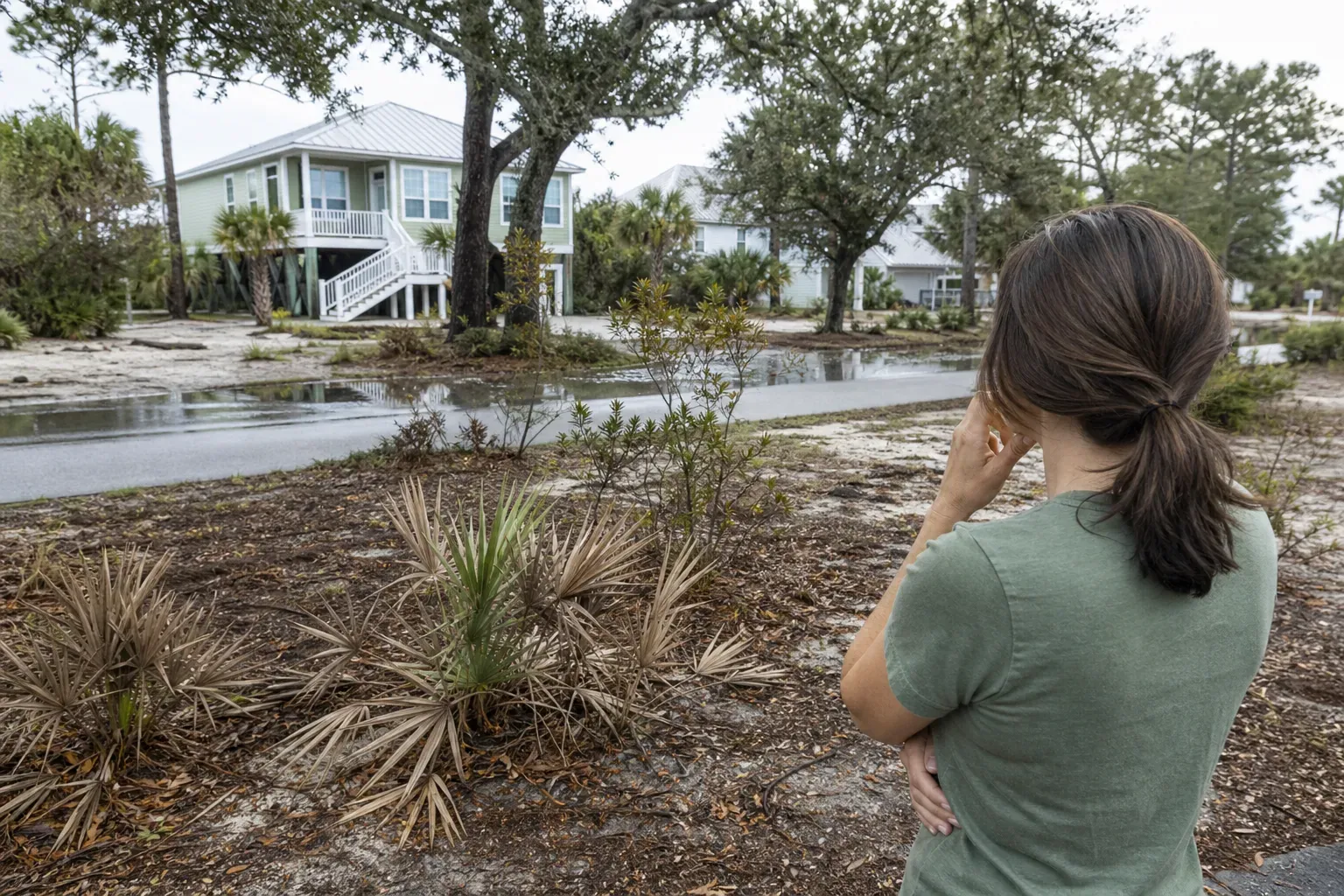
What should you record once the yard is safe?
Start with a clear history, using the Pensacola root-zone recovery guide for broader context. Read the tree risk guide for Pensacola owners and Pensacola root recovery guide for related tree-care background. They do not decide claim, contract, or permit questions for your site.
Safety comes before close inspection. Do not walk beneath broken or hanging limbs. Keep away from leaning trees, exposed roots, and damaged wires. Contact emergency services for an immediate threat to life. Report electrical hazards to the utility.
Follow official access rules even if your yard looks calm. Escambia County's hurricane guidance stresses the need to heed local orders and advice. A yard check is not a reason to return before officials allow it.
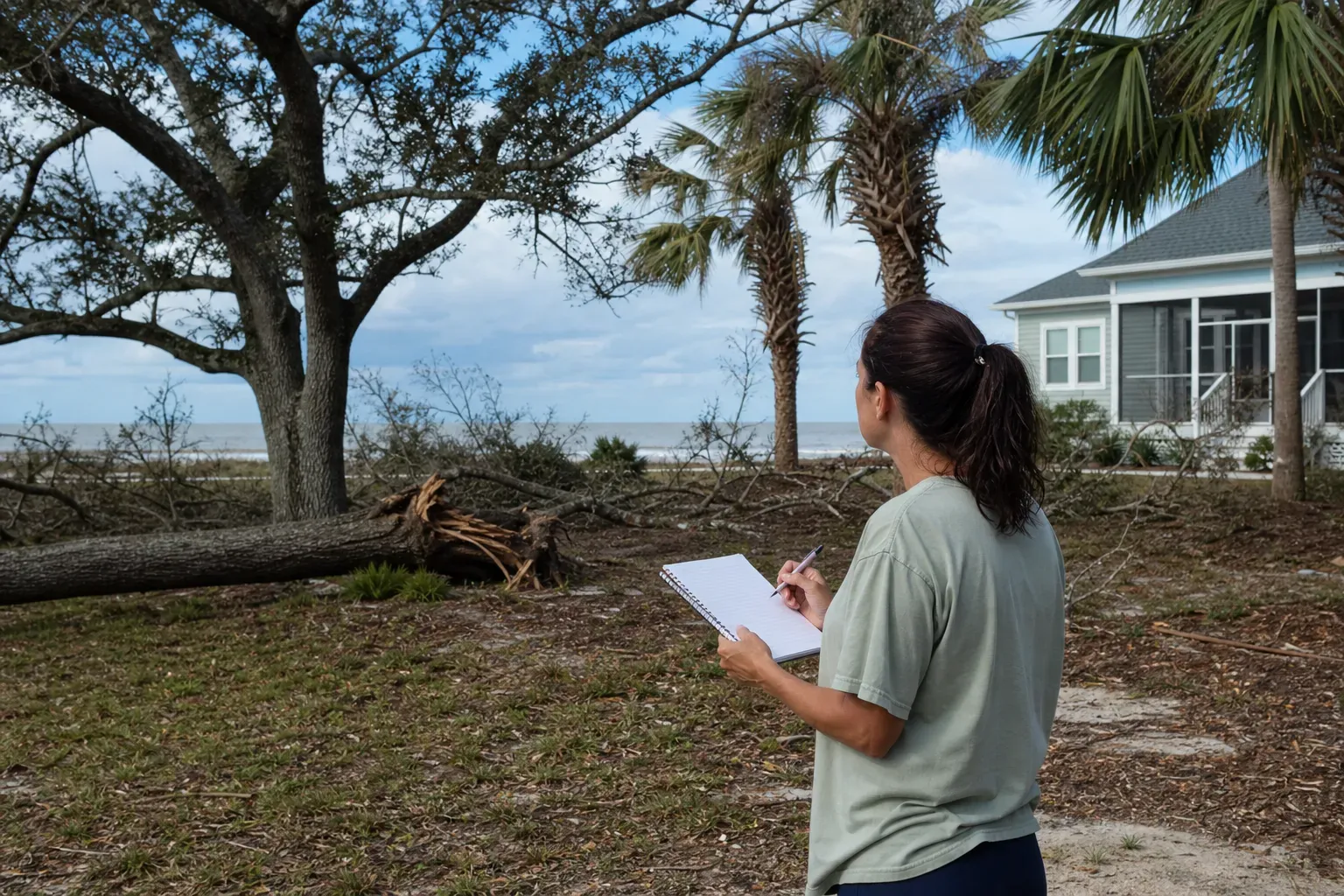
Once safe access is allowed, use this simple record plan:
- Write down the flood history. Note when water appeared and receded, if known. State whether salt exposure was confirmed, suspected, or unknown.
- Take photos from a safe spot. Capture the full canopy and visible ground nearby. Repeat photos from the same place for useful comparisons.
- Describe the leaf changes. Note whether signs affect one branch, older leaves, new leaves, or most of the canopy.
- Record ground changes. Note pooled water, new sediment, exposed roots, or equipment tracks. Do not dig to investigate them.
- Log rain and added water. Include sprinkler use and any broken irrigation lines. Keep dates rather than relying on memory.
- Share the record with an adviser. Ask what further checks would help and when to report changes.
Use plain descriptions. “Brown tips on older fronds” is more useful than “the palm is dying.” “Water still pools beside the trunk” gives more detail than “wet yard.”
Also note any care done after the storm. Pruning, fertilizer, soil additions, and sprinkler changes can affect how symptoms are read. Include work by cleanup crews, not solely work you arranged yourself.
Do not pull palm leaves or test unstable branches. Photos and notes should reduce uncertainty without adding risk.
Should you water a tree that looks dry after flooding?
Water decisions should account for soil compaction near trees in Gulf Breeze and changed soil grades near trees in Milton . Read the tree risk guide for Pensacola owners and Pensacola root recovery guide for related tree-care background. They do not decide claim, contract, or permit questions for your site.
Avoid a blanket watering schedule for all storm-hit trees. A palm in a well-drained spot differs from a hardwood beside standing water. Recent rain, drainage, salt exposure, and root damage all matter.
UF/IFAS storm-restoration guidance says irrigation two to three times weekly may help palms recover when rainfall is lacking. This is not a direction to water flooded ground on that schedule. The rainfall condition is important. So are the palm's site and current soil conditions.
The separate UF/IFAS palm hurricane guide says fresh water may help leach salts after saltwater flooding, especially when significant rain has not followed. Leaching means moving salts through the soil with fresh water. It is a specific salt-management issue, not a general cure for wilted leaves.
These points need to be read together. A suspected salt problem does not justify adding water without regard to drainage. Ask an Extension adviser or qualified arborist whether salt exposure needs further evaluation and whether leaching suits the site.
Before changing irrigation, prepare answers to a few questions:
- You should note whether water still stands nearby.
- You should report any known saltwater exposure.
- You should describe rain since the flood ended.
- You should explain the sprinkler schedule already in use.
- You should identify any leaks or changes in water flow.
- You should ask whether a soil check or test is needed.
Do not add water just to respond to each new brown leaf. Leaves damaged during the storm may remain damaged. Follow-up decisions should consider new growth, ground conditions, and old injury.
If you have received a site-specific watering plan, ask what would trigger a change. That makes the plan easier to follow as rain and drainage shift.
How can soil changes confuse follow-up care?
The guides to silt around tree roots in Navarre and changed soil grades near trees in Milton address separate ground concerns. Read the tree risk guide for Pensacola owners and Pensacola root recovery guide for related tree-care background. They do not decide claim, contract, or permit questions for your site.
A yard may look normal from a distance. Closer views may show new sediment, rutting, or areas where soil washed away. These changes can complicate a review of water movement and root conditions.
Do not assume that every deposit must be removed. Nor should you assume that covering exposed roots will solve the problem. The depth, material, and location matter. So does the tree's condition.
Keep heavy equipment out of the root area where possible. Discuss access routes with cleanup crews before work starts. A plan that avoids needless ground disturbance can also leave clearer evidence for later assessment.
Useful notes for an adviser include these:
- You should identify where sediment appeared after flooding.
- You should describe whether the ground level seems higher or lower.
- You should record where cleanup vehicles crossed the yard.
- You should note where water remains longer than before.
- You should photograph visible roots from a safe distance.
Avoid deep probing, trenching, or soil removal as a home test. Those actions can damage roots and create new problems. Ask what checks are appropriate before any ground work begins.
Permit questions also depend on location and project scope. Do not apply Pensacola city rules to a Perdido Key property. Escambia County Development Review is a public starting point for relevant land-use questions. Ask the county which office handles your proposed work and what review applies.
A storm does not establish a blanket permit exemption. Let the responsible authority answer questions about grading, tree work, and other site changes.
What changes matter during the next few weeks and months?
Use the Pensacola root-zone recovery guide to keep the whole tree in view. Read the tree risk guide for Pensacola owners and Pensacola root recovery guide for related tree-care background. They do not decide claim, contract, or permit questions for your site.
There is no fixed recovery deadline for every tree. Species, prior health, root conditions, and storm damage differ. Ask your adviser how often to check and which changes need prompt contact.
Photos from the same safe spot can show whether canopy loss is spreading. Notes can show whether water still pools after rain. Together, they help separate a lasting injury from a new change.
For palms, watch the center of the canopy from the ground. New leaves emerge from the bud, the palm's growing point. UF/IFAS palm guidance states that replacing a storm-lost canopy takes at least a year and usually longer, provided the bud is not damaged. A sparse crown soon after a storm is not, by itself, proof that a palm cannot recover.
Pruning should not remove useful foliage just to make the crown look tidy. UF/IFAS restoration guidance advises keeping bent green palm fronds unless they pose a hazard. Yellowing fronds and those with brown tips can still support growth. Removing too much foliage can weaken the palm.
Fertilizer decisions need the same care. The UF/IFAS palm guide distinguishes palms that were not uprooted from replanted palms. It advises no extra root-zone fertilizer for replanted palms until new growth appears. The restoration guide also cautions against rushing fertilizer for damaged palms before new leaves grow. Do not treat fertilizer as a quick response to pale leaves.
Seek further help when changes include these:
- You should report new leaning or fresh root movement promptly.
- You should report broken limbs above places people use.
- You should report a marked spread of canopy loss.
- You should report persistent pooling or new drainage problems.
- You should report changes in new palm leaves, not solely older damaged fronds.
Safety concerns take priority over the monitoring schedule. A tree-health record does not replace a risk assessment.
What questions should you ask an arborist or Extension adviser?
Bring the broader root-zone recovery questions in Pensacola alongside any notes on silt around tree roots in Navarre . Read the tree risk guide for Pensacola owners and Pensacola root recovery guide for related tree-care background. They do not decide claim, contract, or permit questions for your site.
Start by separating health from safety. Ask whether the tree presents a hazard. Then ask what evidence is needed to assess drought-like signs. These are related questions, but they are not interchangeable.
The International Society of Arboriculture's tree-owner resources cover arborist selection, tree risk, pruning, and plant health care. Use them to prepare for a clear discussion about the scope of an assessment.
Useful questions include the following:
- Ask which possible causes remain open and why.
- Ask whether soil moisture or salt testing would add useful evidence.
- Ask whether existing irrigation should change based on site conditions.
- Ask which leaves or branches should be left in place.
- Ask what signs would require an earlier follow-up visit.
- Ask whether ground work needs county review before it starts.
Keep financial questions separate from tree-health advice. If damage affects a claim, Florida's homeowners insurance overview advises documenting damage and keeping repair records. Tree and debris coverage varies by policy. Ask your insurer about your contract without assuming removal or treatment will be covered.
This article provides general education. It does not assess a tree, prescribe tree care, interpret your policy, or determine permit requirements.
Frequently asked questions
For broader context, read the Isaias Root Care In Pensacola. It does not decide claim, contract, permit, or safety questions for your site.
Can a tree need water after floodwater recedes?
It can, but that cannot be decided from leaves alone. The root zone may still be wet, or conditions may have changed after drainage. Ask for site-specific advice before increasing water, especially where salt exposure or poor drainage is suspected.
Do brown palm tips prove salt damage?
No. UF/IFAS lists tip damage as a possible sign of salt injury. Brown tips alone do not prove the cause. Share the flood history, rainfall, soil conditions, and pattern of leaf damage with an adviser. These facts can help guide an assessment.
Should all bent palm fronds be removed?
No. UF/IFAS advises leaving bent green fronds unless they pose a hazard. These fronds can help support recovery. Do not remove them just to make the crown look tidy. Keep clear of hanging debris. Let qualified professionals assess work that requires climbing or cutting overhead.
Should fungicide be used after a hurricane?
Do not assume it is needed. UF/IFAS reports no research documenting benefits from routine post-hurricane fungicide use on palms. Ask a qualified adviser to review disease concerns before choosing tree care. Any pesticide use must follow its label. It should not take the place of a tree assessment.
Does Florida Foliage serve Perdido Key?
Florida Foliage is based in Daytona Beach and serves Volusia and Flagler counties. This Perdido Key article is educational. It does not indicate a Panhandle office, crew, service area, or availability.
Author: Tim Francis, Tree Content Expert. This article was drafted with AI assistance using the cited public sources. It is not a site inspection or individualized care plan.
Florida Foliage is a Daytona Beach tree service that works with an ISA Certified Arborist consultant.
For tree work in Volusia or Flagler County, call (386) 481-7913 to request a free on-site estimate.
For tree work in Volusia or Flagler County, call (386) 481-7913 to request a free on-site estimate.