Reviewed by Clinton Funk
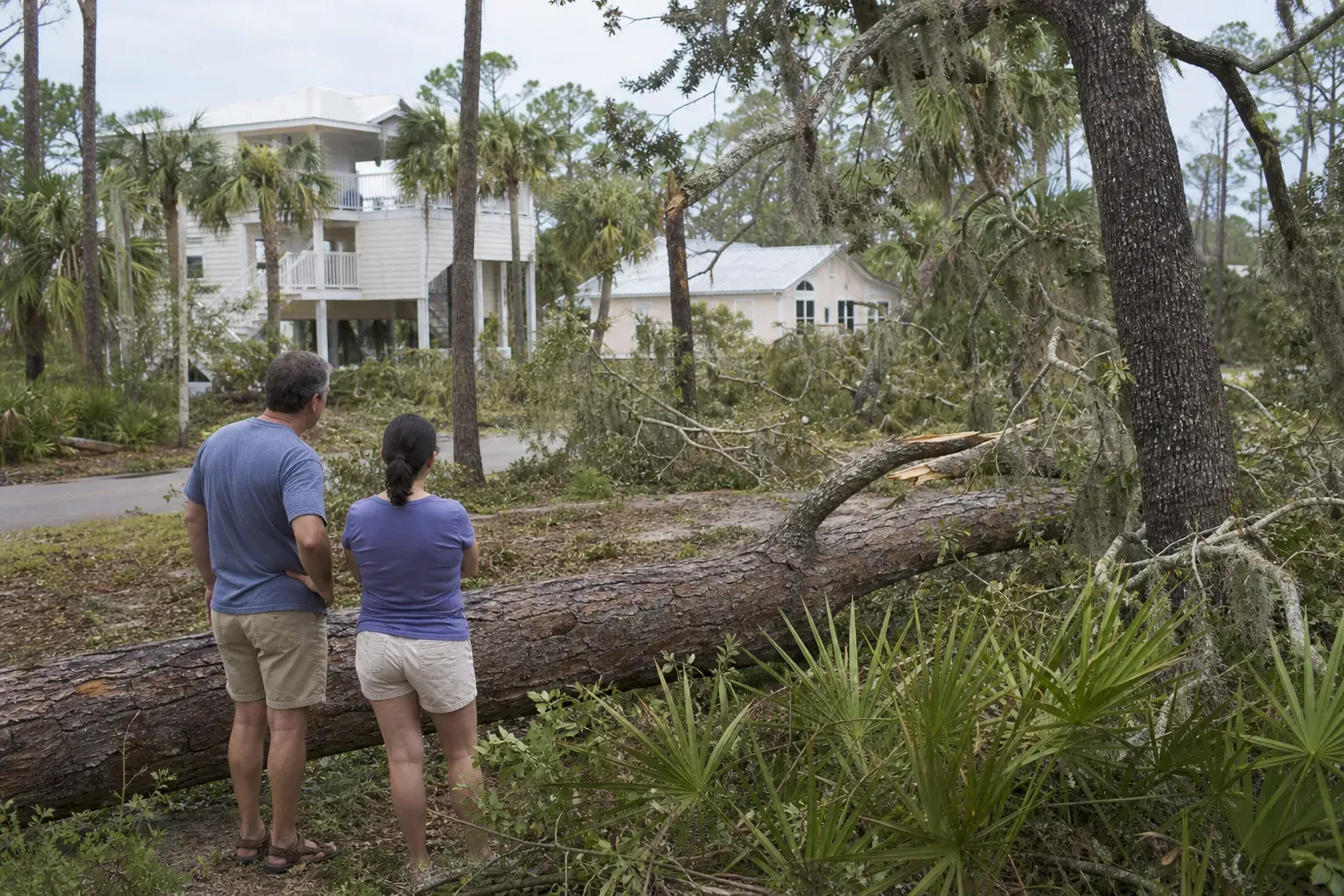
Shared-property tree decisions start with safety, ownership, and consent. Keep people clear of damaged trees. Confirm who may approve work before crews enter land or change a tree. This guide to Hurricane Isaias Shared Property Tree Questions In Pensacola helps you sort those roles without deciding fault or who must pay.
As of the October 9 advisory supplied for this article, the National Hurricane Center identifies Isaias as a current named system. Forecasts can change. Use the latest official advisory, not this article, for storm timing and warnings. Follow local evacuation orders before making plans for tree work.
This is general education, not legal, claim, or site-specific safety advice. Florida Foliage is based in Daytona Beach and serves Volusia and Flagler counties. This Pensacola guide does not offer or imply local crew availability.
How should you handle Hurricane Isaias Shared Property Tree Questions In Pensacola?
Separate the right to approve work from the need for access. See tree risk assessment and the Pensacola guide.
A fallen limb does not prove who owns a tree. A fence may not mark the true lot line. Check where the tree stands, land records, shared-use rights, and rules for the site. An arborist can check the tree. That does not settle a land dispute.
Use this decision map before booking non-urgent work:
- Check the safety status first. Stay away from hanging limbs, leaning trees, and damaged power lines. Report an immediate threat to the appropriate emergency service or utility. Do not enter a hazard zone to gather proof.
- Identify the land and tree involved. Note where the trunk stands and where damage lies. Use existing records from a safe place. If the line is disputed, seek help from a qualified surveyor or legal adviser.
- Find the person who can approve work. This may be an owner, an authorized agent, or an association. A tenant or nearby resident may be able to report damage without having approval rights.
- Define the work in plain terms. Separate assessment, pruning, removal, hauling, and later repairs. Approval for one task should not be treated as approval for all tasks.
- Confirm access and permit questions. Ask where workers and equipment may go. Check with the proper local office before assuming a permit is not needed.
- Keep the records together. Save messages, photos taken safely, written scopes, approvals, and receipts. Share the same scope with all parties whose approval is needed.
These steps help expose gaps before work starts. They do not decide who is at fault. They also do not settle insurance coverage or payment duties.
During unsafe conditions, personal safety comes first. Escambia County's evacuation guidance directs residents to heed local officials. A tree concern is not a reason to ignore an evacuation order.
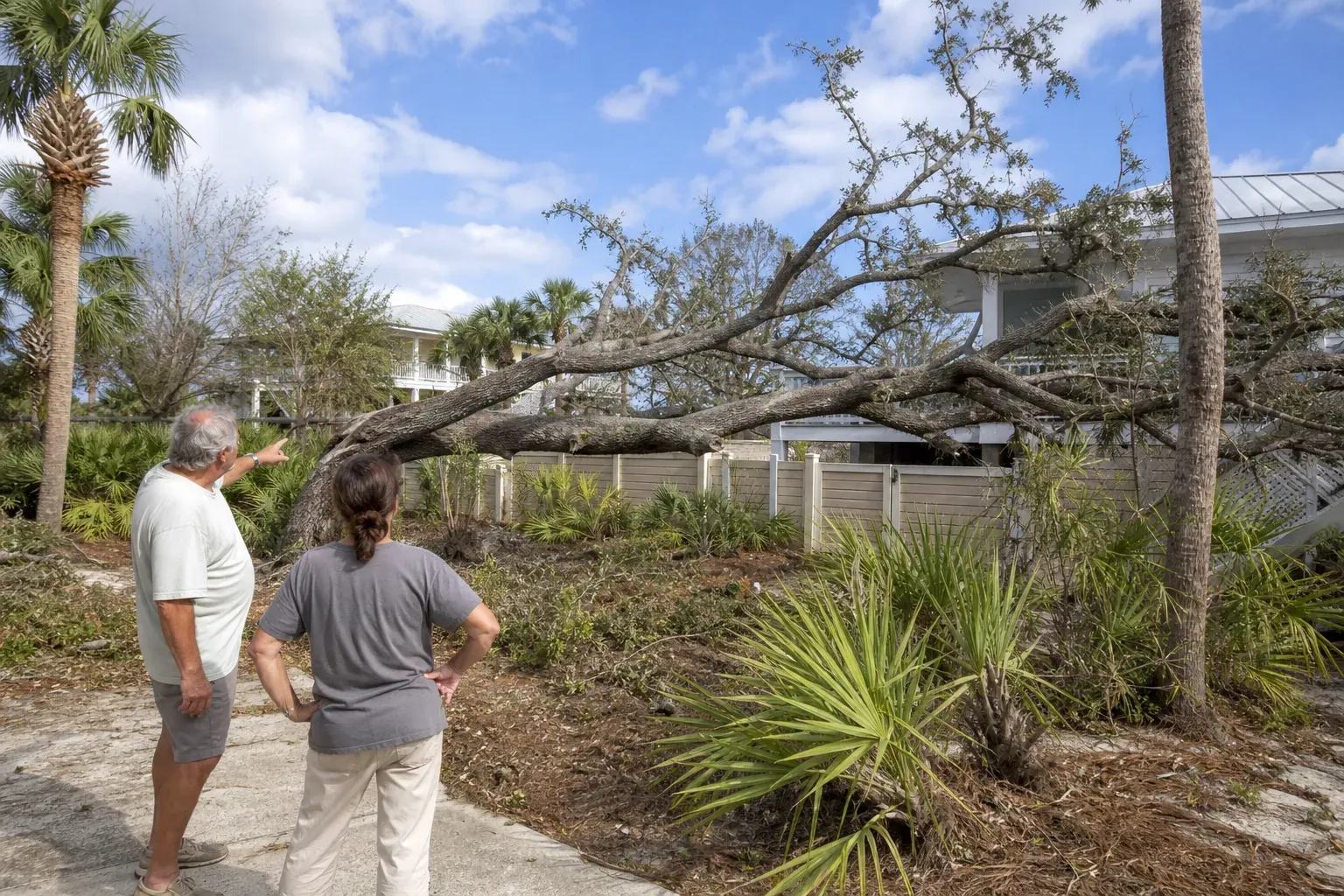
Who can approve work on rental, condo, or HOA trees?
Start with the property's approval rules, not the nearest person's request. See tree risk assessment and the Pensacola guide.
At a rental home, tell the landlord or manager about damage. Ask who may approve a tree check and sign for work. Read the lease. Check the written terms that let a manager act for the owner.
For condo property, contact the manager or board. Ask how the tree is classed and what steps are needed for consent.
For an HOA, distinguish a private lot from common land. A tree near a shared path may still stand on private land. For tree assessment background, see tree risk assessment.
Useful questions include:
- Who has written authority to approve this scope? Ask for the person's role and the basis for that authority.
- Does the work affect common land or shared use? Identify paths, parking spaces, and other areas that may be closed.
- Does an approval limit apply? Ask whether an agent needs further consent for removal or added cost.
- Who will receive the tree assessment? Give all decision-makers the same facts before they compare options.
- Who will handle follow-up work? Clarify whether hauling, stump work, and repairs are separate tasks.
An absent owner adds another layer. A relative, caretaker, or neighbor may know the site well. That does not establish their right to sign. For tree assessment background, see tree risk assessment.
If consent is unclear, seek advice for this job. A manager can explain the site's rules. A legal adviser can help when the right to approve work is in dispute. An arborist can explain the tree's health and care needs. Keep those roles separate.
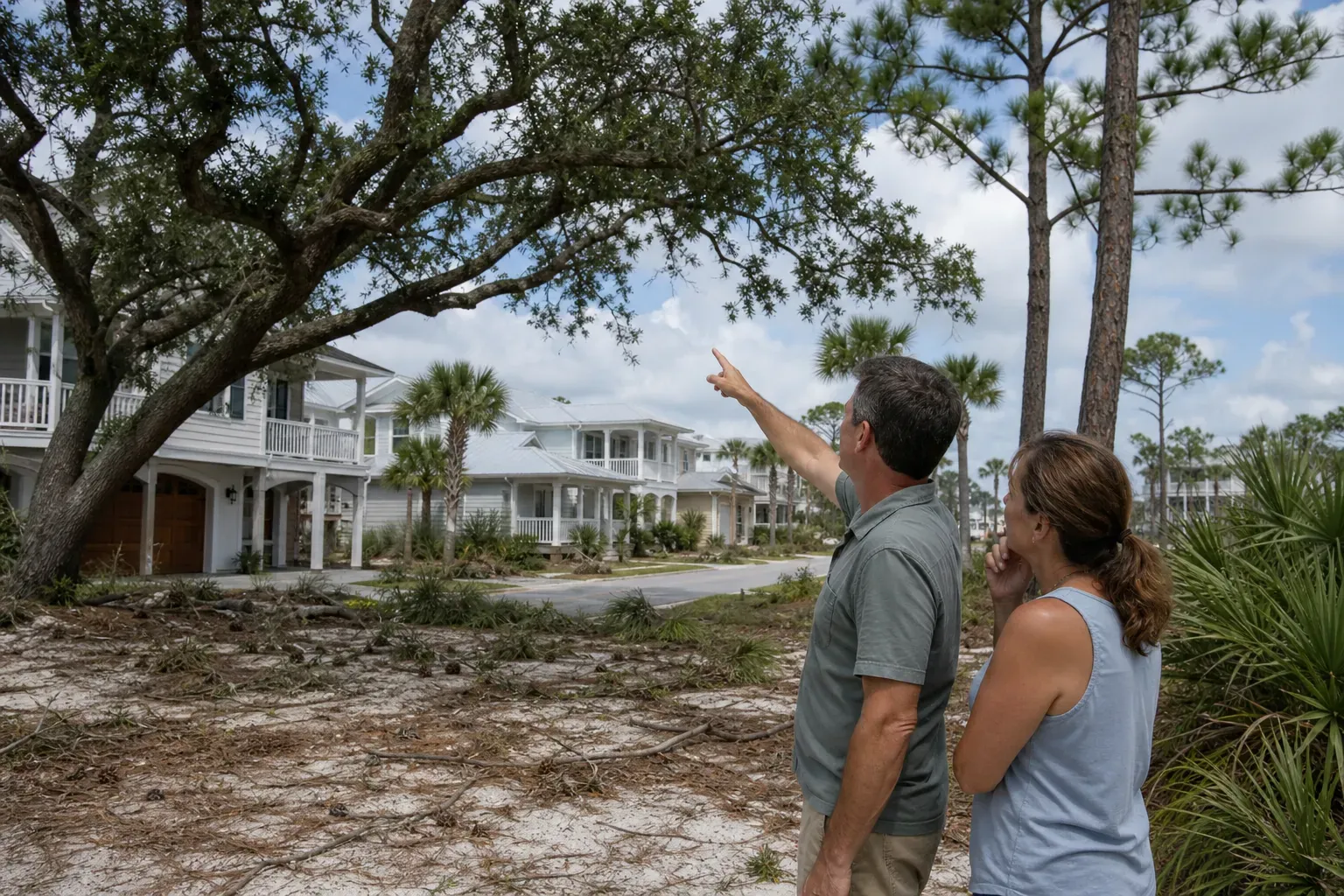
What should neighbors agree on before crews cross a boundary?
Agree on access apart from tree care. See tree risk assessment and the Pensacola guide.
Write down the route and tasks before work starts. Ask the crew to confirm where they would need to go.
A clear access discussion should cover:
- The route should be specific. Name the gate, drive, or yard area under discussion rather than saying “use the property.”
- The allowed tasks should be clear. State whether access is for inspection, equipment, hauling, or another purpose.
- Shared use should be addressed. Ask how residents will reach homes, parking, and exits while work takes place.
- Fence and gate changes need separate attention. Do not treat tree-work consent as permission to remove other property features.
- The scope should explain changes. Ask whom the contractor must contact if the proposed route or work changes.
- Records should describe site conditions. Take photos only where it is safe and permitted to do so.
Keep the agreement factual. Avoid claims that one neighbor must pay because a limb landed on their side. Those claims can turn a planning task into a dispute before the facts are known.
If you disagree, name the point in dispute. Is it the land line, access route, tree care, or cost? Each issue may need a different expert. For tree assessment background, see tree risk assessment. Do not apply one city's rules to another state or town.
Do not cut loaded limbs, climb a damaged tree, or try to shift an unstable trunk. Ask a qualified professional to assess the work. For trees touching lines, contact the utility and keep clear.
Which permits and debris rules should you check in Pensacola?
Confirm the jurisdiction before checking the rules. See tree risk assessment and the Pensacola guide.
Pensacola's City Arborist page states that permits are required for heritage-tree pruning or removal. It also explains that protected-tree permits depend on land use. Work on trees in public rights of way requires a permit under city rules.
Do not assume a tree is yours to alter because it borders your yard. Pensacola identifies trees on city land and public rights of way as city trees. Its guidance directs requests for city-tree work to Parks and Recreation through Pensacola 311.
Before approving a scope, ask the relevant office:
- Is this address within the city or another jurisdiction? Use the property's location, not solely its mailing address.
- Is the tree protected or classed as a heritage tree? Ask which records or measurements the office needs.
- Is any part of the work in a public right of way? Include proposed equipment access in the question.
- What storm-related process applies to this exact work? Do not assume a general storm notice waives all permits.
For nearby properties, use the correct local contact. Santa Rosa County Development Services provides permit and planning contacts. Escambia County Development Review provides development-review contacts. These pages are starting points, not proof that a specific tree job needs or lacks a permit.
Debris pickup is another separate question. Pensacola Sanitation Services handles garbage, recycling, and yard waste for city customers. Confirm current storm collection rules before moving material to the curb. Ask about placement, material types, and any contractor-generated debris limits. Keep hazardous waste out of yard-waste piles.
What records help with claims and long-term tree care?
Keep the record clear without assigning blame. See tree risk assessment and the Pensacola guide.
Note the date, address, damage you can see, and whom you told. Save photos taken from a safe place. Keep written scopes and bills. Keep separate charges for tree checks, removal, hauling, and repairs. Describe what you see. Do not name a cause you cannot prove.
The Florida CFO's homeowners insurance overview explains that debris and tree-removal coverage varies. It notes that many policies cover removal when a fallen tree damages insured property, subject to limits. A tree that falls without damaging covered property may be treated differently. Some policies address a blocked main entrance.
None of those general points confirms your claim. Ask your insurer or agent about the actual policy. The Florida hurricane deductible guide explains how hurricane deductibles can affect a claim. Do not calculate an expected payout from a general article.
Keep these questions separate:
- Coverage concerns belong with the insurer or agent. Ask which policy terms apply and which documents they need.
- Fault disputes need legal advice.
- Tree-care choices need a site assessment. Ask what can be retained and what follow-up may be needed.
Cleanup does not always mean full removal. UF/IFAS restoration guidance describes storm recovery as a process that may take repeated pruning visits. Larger broken branches can take years to develop new leaders and close over cuts. A shared-property scope should leave room for later care when retention is appropriate.
Palms need a different care plan. UF/IFAS hurricane-damaged palm guidance recommends keeping broken green leaves because they help the palm recover. Its restoration guidance also warns against overpruning. Do not request a stripped canopy simply to make a storm-damaged palm look tidy.
The right fertilizer depends on the palm's health and whether it was replanted. Ask for advice for that palm. Do not add products just out of habit. UF/IFAS reports no research that shows a benefit from routine fungicide use after a hurricane. Its guide notes that a full canopy can take at least a year to regrow, often longer.
The ISA's Tree Owner Resources offers background on pruning, storm damage, and tree risk. Use that material to prepare questions for an arborist, not to assess a damaged tree yourself.
Frequently asked questions
Can I approve removal because the tree fell into my yard?
Where a tree lands does not prove who may approve work. Check where it came from, who owns it, what work is planned. Where crews must go. If those facts are in dispute, ask a legal adviser before approving work that can wait. Report urgent hazards to the proper authority.
Does a neighbor's text give enough consent for tree work?
A text can record a discussion. It may leave gaps. It might not identify the tree, tasks, access route, or sender's authority. Ask for clear written approval of the specific scope. A legal adviser can explain whether the record meets your situation's needs.
Can a condo resident order work on a common-area tree?
Start with the manager or board. Check the condo's rules and the steps for consent. A resident can report a hazard but may not have the right to hire a crew. Ask who can approve a tree check, tree care, and access to the site. Get the scope in writing.
Will insurance pay for a shared-property tree removal?
Coverage depends on the policy and facts of the loss. The Florida CFO notes that property damage, access blockage, limits, and policy terms can matter. Ask the insurer or agent directly. Do not treat shared ownership or storm damage alone as a coverage promise.
Does Florida Foliage provide Pensacola storm crews?
This article does not offer Pensacola or Alabama service. Florida Foliage is based in Daytona Beach and serves Volusia and Flagler counties. Pensacola-area readers should use local officials and qualified local professionals for urgent hazards, permit questions, and site-specific work.
Author: Tim Francis, Tree Content Expert. This article was drafted with AI assistance using the supplied public sources. The author title does not represent practitioner credentials.
Florida Foliage is a Daytona Beach tree service that works with an ISA Certified Arborist consultant.
For tree work in Volusia or Flagler County, call (386) 481-7913 to request a free on-site estimate.
Call (386) 481-7913 to talk through next steps.