Reviewed by Clinton Funk
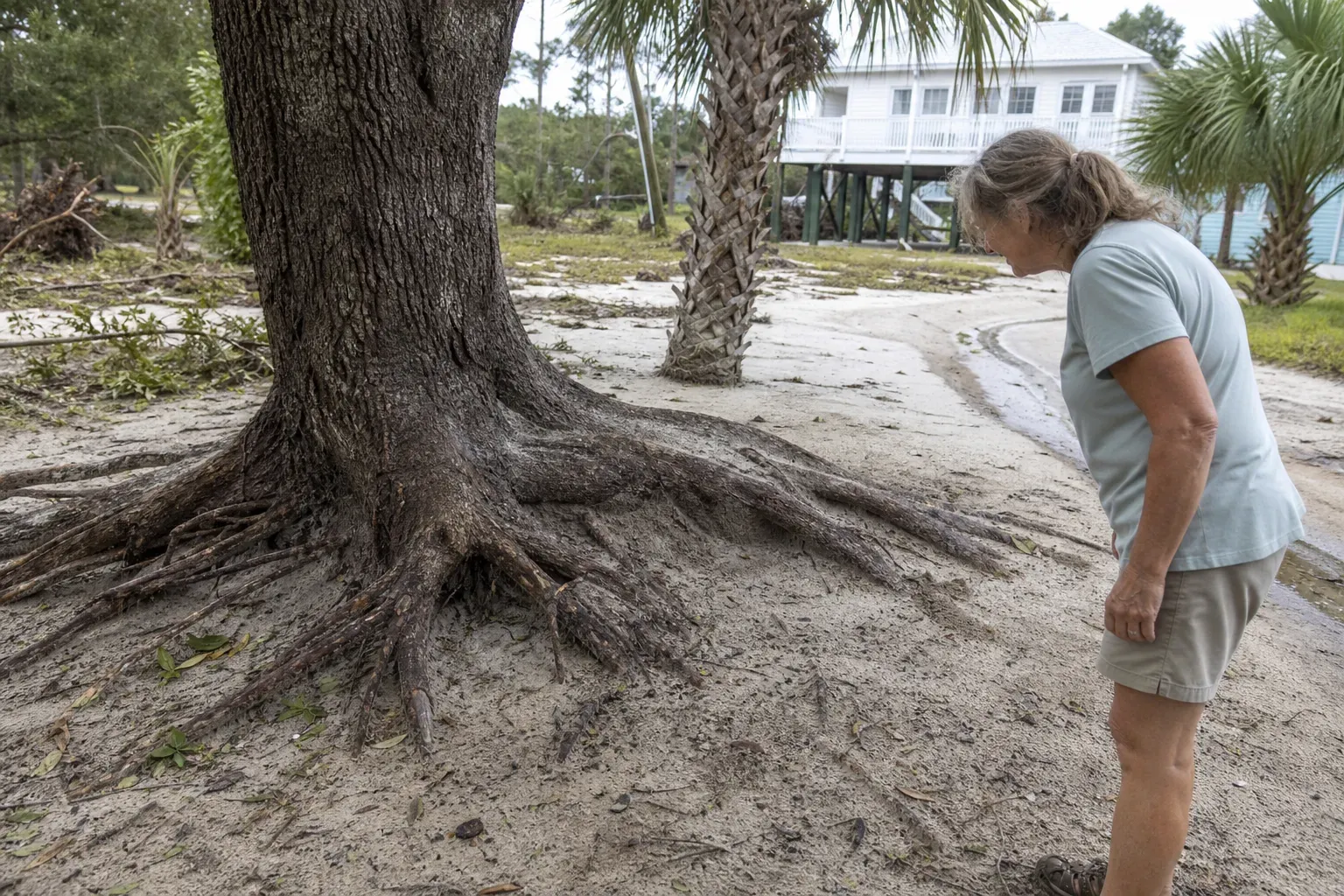
If flooding leaves silt around a Navarre tree, do not assume it needs digging out. Record what changed from a safe spot. Ask UF/IFAS Extension or a qualified local arborist what needs review. This guide to Hurricane Isaias Silt Around Tree Roots In Navarre focuses on those questions, not a cleanup recipe.
Storm forecasts and site conditions can change fast. Consult the latest National Hurricane Center advisory and National Weather Service Mobile/Pensacola updates. This article does not confirm flooding, silt deposits, or tree damage in Navarre. Follow local orders before returning or checking your yard.
What should you do about Hurricane Isaias Silt Around Tree Roots In Navarre?
Start with the broader root-zone recovery questions in Pensacola for context. Read the tree risk guide for Pensacola owners and Pensacola root recovery guide for related tree-care background. They do not decide claim, contract, or permit questions for your site.
The root zone is the ground where roots grow. It is not solely the patch beside the trunk. A deposit there raises questions about depth, drainage, and what the flood carried. Its color alone cannot answer those questions.
Use “flood-deposited sediment” when speaking with an adviser. Silt is a fine soil material. A layer that looks like silt may contain sand, clay, plant matter, or other debris. A photo may show the layer without showing its makeup.
Avoid choosing a fix based on looks alone. Ask Extension which review is needed for the deposits you recorded. Describe a thin film or deeper layer as an observation, and ask which further information would help. The tree species, prior soil level, flood history, and current site all matter.
A useful first request is simple: “Floodwater may have left new soil around this tree. What should I record before anyone changes the ground?” That keeps the next step focused on facts.
Keep these limits in mind:
- Do not enter floodwater to check a tree. Wait for safe access and follow public guidance.
- Do not dig near roots to measure a deposit. Ask how its depth can be checked safely.
- Do not add mulch or more soil to hide the layer. Leave the site unchanged until you get advice.
- Do not treat leaf color as a tree assessment. Note it as one part of the tree’s condition.
The ISA Tree Owner Resources offer guidance on tree risk, plant health, and avoiding damage during construction. They are a useful starting point for choosing the right kind of professional help. They do not replace an on-site review.
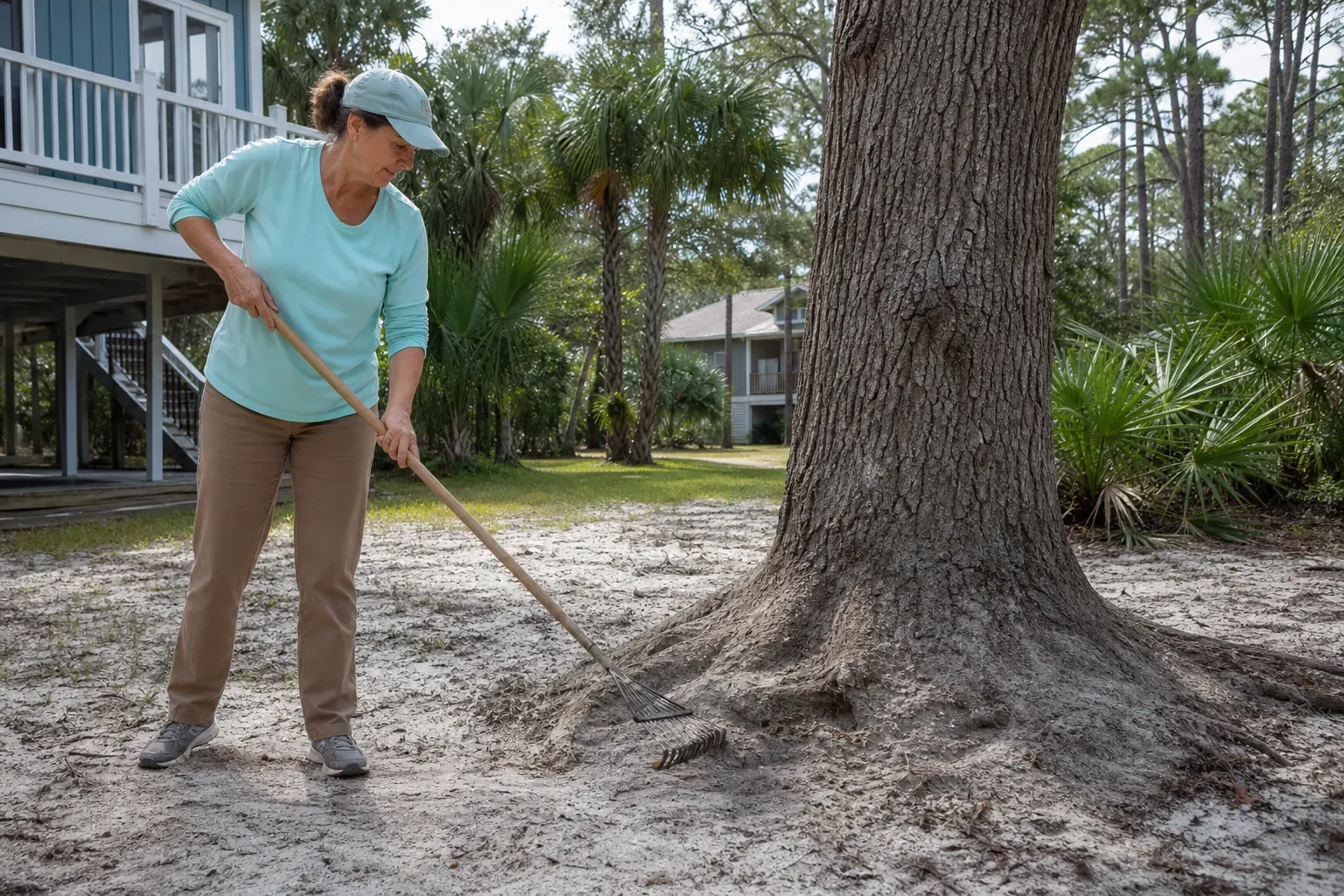
What information will help Extension review the sediment?
Separate new deposits from signs of soil compaction near trees in Gulf Breeze . Read the tree risk guide for Pensacola owners and Pensacola root recovery guide for related tree-care background. They do not decide claim, contract, or permit questions for your site.
Give Extension a clear account of what you know. State what you saw and what you only suspect. For example, “Water stood here overnight” is more useful than “The roots drowned.” The first is an observation. The second assumes a cause and outcome.
Use this order to build a short record:
- Record the place and tree. Give the Navarre property location and tree species, if known. Say when the deposit was first seen.
- Describe the water history. Note where water came from, if known, and how long it stayed. Mark uncertain details as unknown.
- Take safe overview photos. Show the whole tree, trunk base, and nearby ground from safe, dry access. Do not walk under damaged limbs.
- Find older views. Look for yard photos that show the prior soil line, beds, drains, and trunk base. Do not dig to recreate that view.
- List work already done. Include debris removal, vehicle use, soil spreading, pumping, or added mulch. Give dates when possible.
- Ask for the next review step. Find out whether the adviser needs an on-site visit, a soil sample, or a different specialist.
Photos need context. Say which direction each view faces. Identify nearby paving, slopes, and drain outlets. Include a view of the deposit’s edge if it is safe to do so. Avoid close shots that hide the rest of the site.
Do not guess at exact deposit depth. If you have no safe way to judge it, say so. A visible change against a fixed surface may help an adviser, but it does not reveal depth across the whole root zone.
Keep a dated log as the site dries. Note standing water, new leaf changes, and any later work. You do not need to watch the tree constantly. The goal is a clear record, not repeated trips into a risky yard.
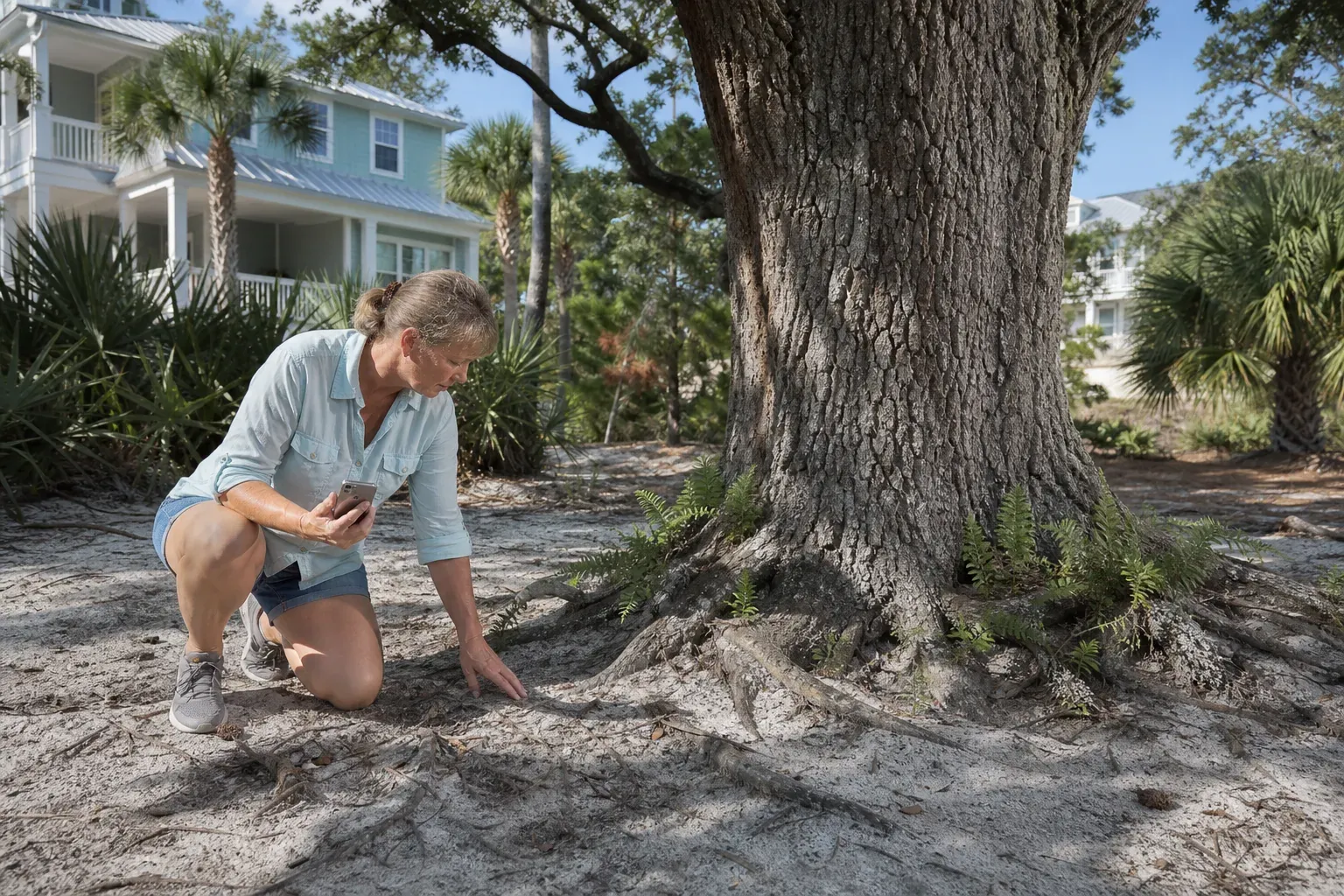
Which questions should you ask before anyone removes silt?
Use the changed soil grade questions for Milton to frame concerns about a raised surface. Read the tree risk guide for Pensacola owners and Pensacola root recovery guide for related tree-care background. They do not decide claim, contract, or permit questions for your site.
Ask whether the material needs testing before it is moved. Ask what the test would answer. “Should I get a soil test?” is a start. “Can a test help check salt exposure or identify this deposit?” is more specific.
Testing is not a substitute for a tree review. It may answer a soil question while leaving root damage or stability unknown. An adviser should explain those limits before you spend money on a test.
Bring these questions to the discussion:
- What evidence would show whether the ground level changed? Ask how old photos and site features can help.
- Can you tell what this deposit contains? Ask whether a sample is needed and how to obtain it safely.
- Is drainage the main concern here? Ask whether nearby fill, blocked outlets, or flood conditions need separate review.
- Does the trunk base need closer inspection? Ask who should assess it without disturbing roots.
- If removal is proposed, what is the goal? Request a clear reason, work area, and method before agreeing.
- What signs should prompt another call? Ask for site-specific follow-up guidance rather than a fixed recovery promise.
There is no sediment-depth threshold in the supplied sources that can safely settle every case. Do not rely on an online inch limit to decide whether to excavate. A rule without tree and site context can give false confidence.
Ask the adviser to explain alternatives, too. The choice may not be simply “remove everything” or “leave everything.” A site review should come before a work plan. This article does not prescribe scraping, trenching, washing, or digging around roots.
If the concern extends beyond the tree, involve the right office. Drainage changes, earthwork, and disposal may raise separate questions. Santa Rosa County Development Services is a public contact for land-use and development questions. Its general page does not establish whether your proposed tree or sediment work needs approval. Describe the project and ask.
How do saltwater, wet soil, and palm damage change the discussion?
Keep flood deposits distinct from soil compaction near Gulf Breeze trees and mulch piled against trunks in Pace . Read the tree risk guide for Pensacola owners and Pensacola root recovery guide for related tree-care background. They do not decide claim, contract, or permit questions for your site.
When discussing possible salt exposure:
- Tell the adviser if saltwater may have reached the yard.
- Do not assume all floodwater is salty.
- State what you know about the water’s path.
The source may be unclear, especially after wind and heavy rain.
UF/IFAS guidance on hurricane-damaged palms says salts left after saltwater flooding can seriously injure many palm species. The risk can be greater when water stays for hours or rain does not follow. The guidance notes that fresh-water leaching may help in some cases.
That is not a general instruction to soak a flooded yard. Ask whether your site can drain and whether salt exposure is likely. Do not apply palm guidance to every tree species. A local adviser can help decide whether testing or a site review is useful.
Palms also need careful leaf decisions. UF/IFAS advises keeping broken green leaves because they still help the palm make energy. Its storm restoration guidance says to leave bent green fronds unless they pose a hazard. Dead fronds and fronds that smother the bud need different consideration.
The bud is the point where new palm leaves emerge. Removing lots of live foliage does not solve a soil concern. UF/IFAS warns that overpruning can reduce vigor and expose the bud to more wind damage.
Fertilizer is not a universal storm fix either. The palm guidance distinguishes established palms from replanted palms. It advises no extra root-zone fertilizer for replanted palms until new growth appears. Ask which guidance fits the plant and what was done to it.
Avoid buying treatments just because leaves look poor. UF/IFAS reports no research documenting benefits from routine post-hurricane fungicide use. Soil deposits, salt exposure, broken leaves, and bud damage are separate questions. A product label or sales claim cannot establish which problem your palm has.
When should tree safety take priority over sediment questions?
The Pensacola root-zone recovery guide gives wider context for post-storm concerns. Read the tree risk guide for Pensacola owners and Pensacola root recovery guide for related tree-care background. They do not decide claim, contract, or permit questions for your site.
Put safety first when a tree shows signs of damage:
- Stay away from hanging limbs, trunk splits, or an apparent new lean.
- Do not approach to check whether the tree moved.
- Keep people and pets out of the area.
- Contact a qualified local tree professional for assessment.
If wires are involved, stay away and contact the utility. For an immediate threat to life, contact emergency services. A tree contractor does not replace public emergency guidance. Never cross a closed area to inspect soil.
Once access is safe, ask for separate findings. A risk assessment concerns potential tree failure and what it could strike. A sediment review concerns the changed soil setting. One does not automatically answer the other.
Storm damage does not always mean a tree must come down. UF/IFAS restoration guidance describes recovery pruning over multiple visits and years. It also notes that large branch wounds are less likely to close than small ones. Those facts support careful assessment, not a promise that any given tree can be saved.
Record property damage from safe access before cleanup when possible. The Florida CFO homeowners insurance overview recommends photos and keeping repair records and receipts. It also explains that tree and debris coverage varies by policy and circumstances.
Do not assume sediment removal is covered because a storm caused it. Ask your insurer about your own contract and documentation. This guide does not predict coverage, deductibles, or claim payment. Keep safety decisions separate from hopes about reimbursement.
Frequently asked questions
For broader context, read the Isaias Root Care In Pensacola. It does not decide claim, contract, permit, or safety questions for your site.
Should I dig silt away from the tree trunk?
Not based on this article. A buried-looking base needs review, but digging may disturb roots. Ask Extension or a qualified local arborist how to assess the deposit first. Share older photos and what you know about the flood. Get a clear work plan before anyone excavates.
Can a photo show whether flood sediment damaged roots?
A photo can show surface changes, not hidden root health. It can help an adviser decide what information is missing. Include older photos, water history, and dates. Take views from safe, dry ground without going under damaged limbs. Treat the photo as evidence for review, not a tree assessment.
How long should I wait to see whether the tree recovers?
There is no single waiting period for all trees and deposits. Ask for a follow-up plan suited to the site. Do not wait on an apparent safety hazard. Palm canopy recovery can take at least a year, according to UF/IFAS, but that is not a sediment recovery deadline.
Should I wash possible salt out of the soil?
Ask for advice before adding water. UF/IFAS describes fresh-water leaching as potentially helpful for salt-exposed palms in some cases. That does not establish the right action for wet soil, poor drainage, or another tree species. Explain the site conditions first.
Does Florida Foliage provide tree service in Navarre?
Florida Foliage is based in Daytona Beach and serves Volusia and Flagler counties. This Navarre article is educational. It does not offer Panhandle crews, a local office, or service availability. Seek local help for Navarre inspections and project-specific work.
By Tim Francis, Tree Content Expert. This article was drafted with AI assistance. It provides general education, not an on-site diagnosis, treatment plan, or legal or insurance advice.
Florida Foliage is a Daytona Beach tree service that works with an ISA Certified Arborist consultant.
For tree work in Volusia or Flagler County, call (386) 481-7913 to request a free on-site estimate.
For tree work in Volusia or Flagler County, call (386) 481-7913 to request a free on-site estimate.