Reviewed by Clinton Funk
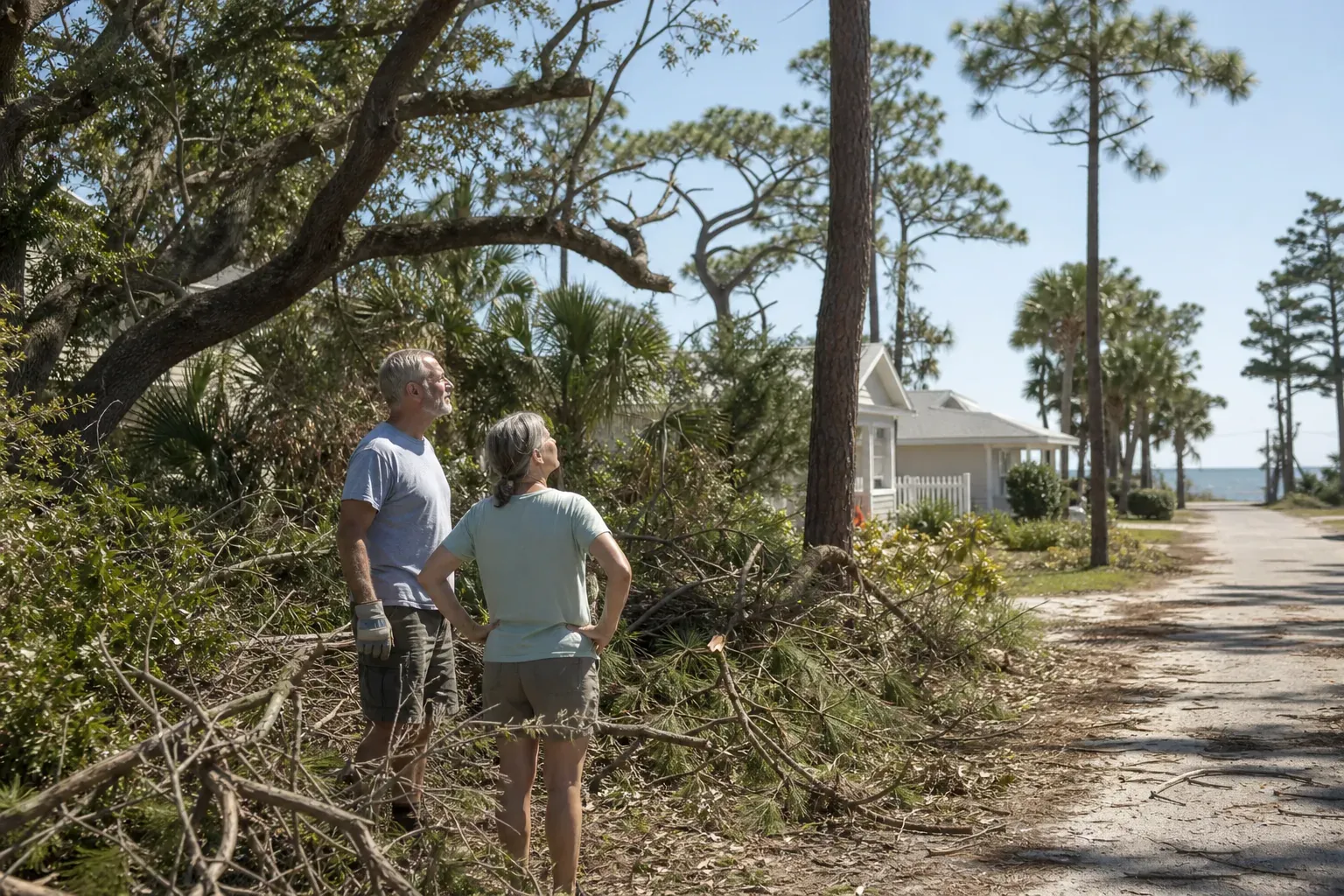
Hurricane Isaias Tree Canopy Recovery In Pensacola starts with safe monitoring and planned professional follow-up. If a tree is retained after an assessment, track changes in its crown, trunk, and base. Keep useful records. Do not treat fresh leaves as proof that the tree is safe.
This guide covers care for retained trees, not a remote save-or-remove tree assessment. It also does not describe local service availability. Florida Foliage is based in Daytona Beach and serves Volusia and Flagler counties, not the Panhandle or Alabama.
The October 9 National Hurricane Center advisory identifies Isaias as a current named system. Forecasts can change. Use the latest official advisory and local National Weather Service updates for weather decisions. Recovery work must wait until conditions and access are safe.
What does Hurricane Isaias Tree Canopy Recovery In Pensacola involve?
Recovery involves repeat checks, careful pruning, and time. Start with Pensacola root recovery guide and Pensacola tree risk guide to understand two parts of that process: when work belongs in the plan and what later visits should review.
A storm can strip leaves and break branch tips. It can also leave damage that is less clear from the ground. A thin crown may look worse than its long-term outlook. A leafy crown may hide weak branch joints. Appearance alone cannot settle either question.
For a retained tree, the aim is not instant fullness. It is a sound recovery plan based on that tree's condition. An arborist should decide which damaged parts need work, which growth should stay, and when to reassess.
UF/IFAS restoration guidance describes a process that can span years. Broken branches may need several pruning visits before later structural work. That later work addresses weak branch arrangements and an uneven crown.
Large wounds matter in this process. UF/IFAS notes that branches at least four inches wide are less likely to close over than smaller branches. Small broken tips can develop a new leader sooner. A leader is the main shoot that extends a branch or trunk. Neither pattern is a promise for an individual tree.
Ask for a written plan with clear goals:
- The plan should name the parts of the tree being watched.
- It should separate immediate hazards from later care needs.
- It should explain what each pruning visit aims to achieve.
- It should give a review schedule suited to the tree.
- It should state which changes call for an earlier visit.
A useful plan also notes nearby targets. These include a home, driveway, footpath, or play area. Changes near a used space can affect the urgency of review. Owners should not judge that risk by leaf color alone.
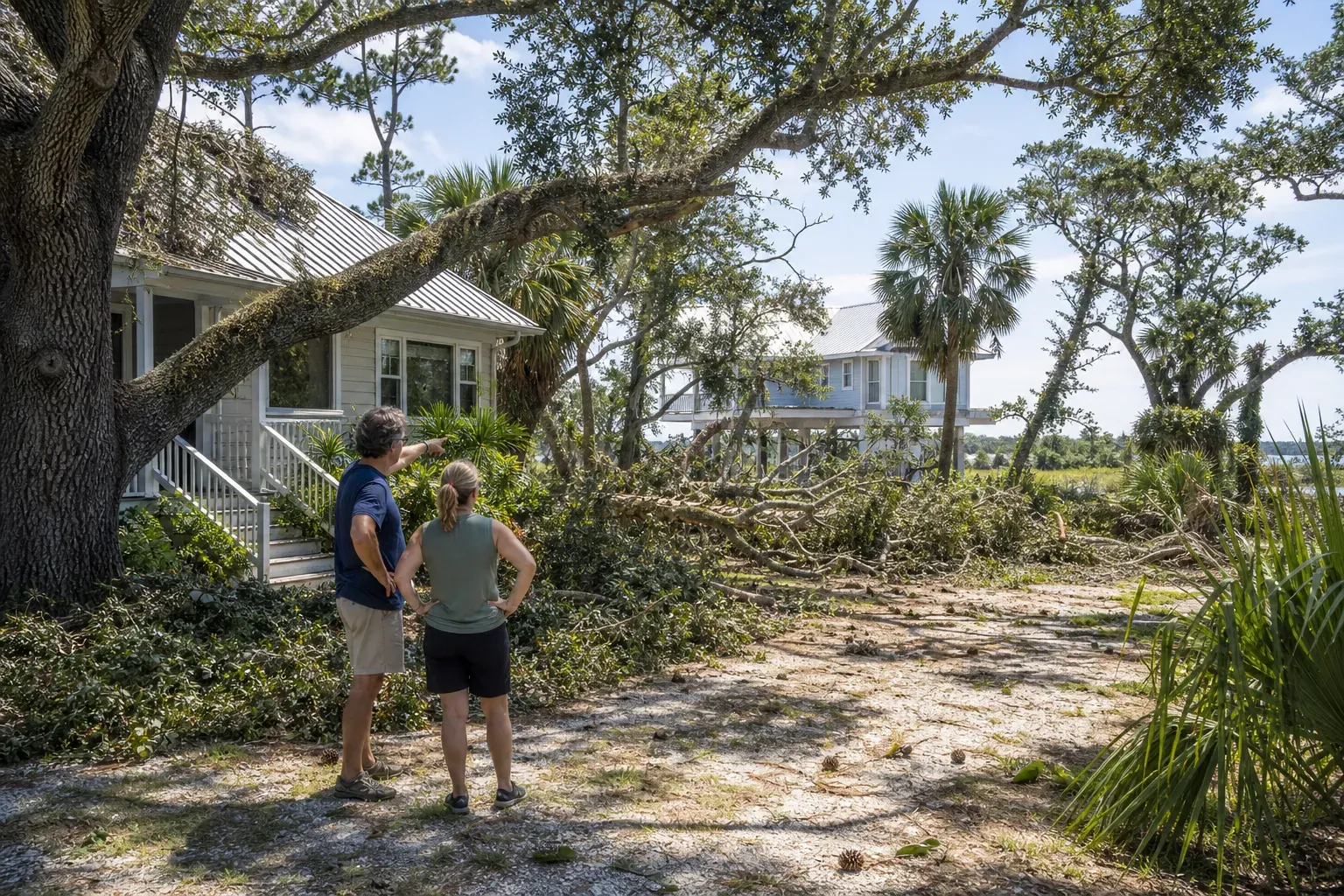
What should owners monitor without approaching a damaged tree?
Monitor visible changes from a safe, clear place. The guides to Pensacola tree risk guide and Pensacola root recovery guide offer related tree-care background.
Only observe when officials say it is safe. Do not enter a closed area or pass beneath hanging limbs. Stay away from downed wires and trees touching wires. Report those conditions to the utility or emergency authorities. Do not move branches to get a better photo.
Escambia County's hurricane guidance stresses following local orders. A tree check never takes priority over an evacuation order. Nor should it become a reason to return early.
Once safe access is allowed, keep observations simple. You are recording changes for a professional, not testing the tree. The ISA tree owner resources provide background on tree risk, pruning, and plant health care.
Use this record-keeping routine:
- Take repeat photos from the same safe spot outside the damaged area.
- Date each record. Use a yard sketch to identify each tree.
- Photograph the crown from safe ground. Never walk beneath it for photos.
- Note changes: fewer leaves, hanging limbs, or newly visible splits.
- Keep notes, orders, receipts, review dates, and reasons for early contact together.
Do not pull shoots, probe wounds, or climb for close views. Leave hands-on checks to the qualified professional.
A change log is more useful than a string of unlabeled photos. Write “more bare branches on the driveway side” rather than “tree looks bad.” Note whether that change was present at the first review. Avoid guessing when a crack formed if you cannot tell.
Ask the arborist which views are helpful. Some owners can safely photograph only one side. That is enough to document a trend, but not enough for a full risk assessment. Make that limit clear when sharing the images.
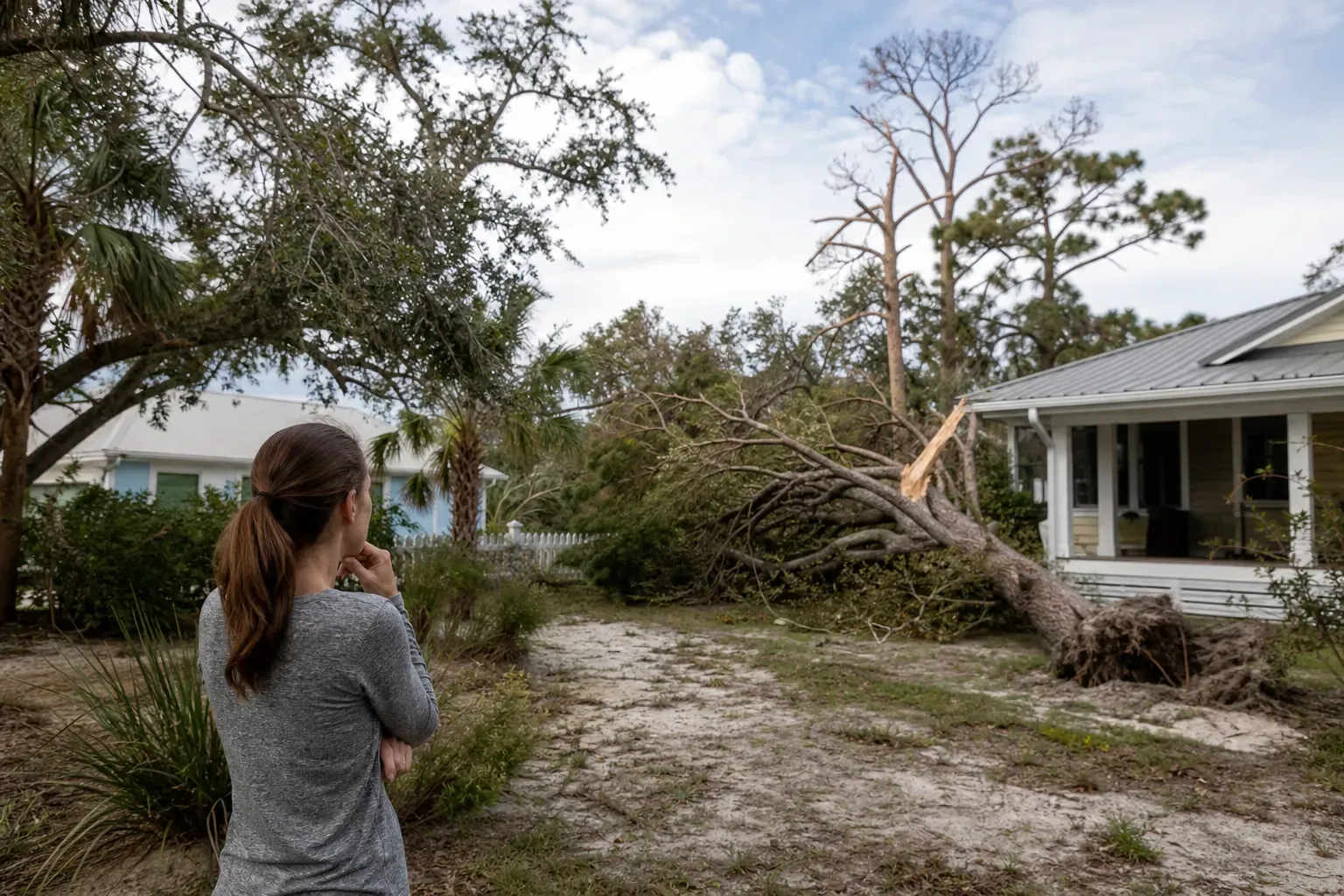
How should pruning and new sprouts be handled over time?
New growth needs review, not automatic removal or praise. Read about Pensacola root recovery guide alongside Pensacola root recovery guide for the narrower questions behind a staged pruning plan. For related tree-care background, read the Pensacola tree risk guide and Pensacola root recovery guide.
Fresh shoots show that some growth is taking place. They do not prove that roots, wood, or branch joints are sound. A dense flush may also make the crown look restored before its structure has been reviewed.
UF/IFAS describes selecting, reducing, and removing sprouts during restoration visits. Some shoots can become future branch leaders. Others may need reduction or removal as the crown develops. This is not a rule to cut every shoot or keep them all.
The timing depends on the damage and the growth that follows. UF/IFAS guidance notes that a new leader may become established within a year or two when a broken tip is one to two inches wide. Larger branches may need many years and more visits. These are general examples, not a fixed schedule.
Later care can include structural pruning after several restoration visits. UF/IFAS places this phase four or more years after the storm in its described process. It addresses issues such as competing stems and overextended limbs. A competing stem is one of two main stems growing alongside each other.
Useful questions for the pruning plan include:
- Which shoots are being kept as possible future leaders?
- Which limbs need attention because of damage or weak structure?
- How much live growth will remain after this visit?
- What should be checked before the next round of work?
- How will later care differ from the first cleanup?
Do not request a fully even crown just for looks. The tree may need to retain uneven live growth during recovery. Ask what that growth contributes before asking for its removal.
Avoid turning a broad timeline into a personal deadline. A neighbor's tree may need different care from yours. Species, wound size, remaining crown, and site conditions all belong in the professional review.
How do bark wounds, pests, and palm leaf loss change follow-up?
These signs add questions to the review; they do not settle the outcome. Use Pensacola root recovery guide and Pensacola root recovery guide to organize what to report without trying to assess the cause. For related tree-care background, read the Pensacola tree risk guide and Pensacola root recovery guide.
Describe bark loss by location and visible extent. Record whether it seems unchanged or different in later photos. Do not peel loose bark for a closer look. Ask the arborist whether the injury changes the care plan.
Share safe photos of any insects, leaf color, holes, or residue you notice. Record where and when you saw them. Ask a qualified professional what further assessment is needed. The ISA's plant health care resources offer topic background, not a diagnosis of your tree.
Questions about coatings deserve their own discussion. The Pensacola tree risk guide offers related tree-care background. Do not assume a coating belongs in a recovery plan. Ask what problem any proposed product would address and what evidence supports its use.
Palms need a different approach from branching trees. Their new leaves emerge from a central growing point, called the bud. UF/IFAS palm recovery guidance explains that replacement of a whole canopy takes at least a year and usually longer, provided the bud remains capable of growth.
Bent green fronds can still help the palm. UF/IFAS restoration guidance recommends retaining them until new foliage fully emerges, unless they pose a hazard. Fronds blocking the bud and dead fronds that could hit a target require a different review.
- Do not treat bent green fronds as dead just because they droop.
- Yellowing fronds or brown tips do not justify stripping the palm's crown.
- Wind may open leaves early; pale color alone cannot prove bud failure.
- Monitor sparse palm crowns over time. Do not promise quick recovery.
Fertilizer advice also depends on the situation. UF/IFAS says non-uprooted palms should maintain their prior program. Replanted palms should receive no extra root-zone fertilizer until new growth appears. Its restoration guidance also advises waiting for new leaves before starting fertilizer to correct deficiencies. Have a qualified professional reconcile that guidance for the palm in question.
UF/IFAS reports no research documenting benefits from post-hurricane fungicide use. Do not treat routine chemical use as a proven recovery step. Product selection and use require qualified advice and label compliance.
When should a retained tree receive another professional review?
Arrange follow-up on the agreed schedule, or sooner when conditions change. The guides to Pensacola tree risk guide and Pensacola tree risk guide offer related tree-care background. For related tree-care background, read the Pensacola tree risk guide and Pensacola root recovery guide.
A decision to retain a tree reflects its assessed condition at that time. It is not a permanent safety guarantee. Tell the arborist about changes rather than waiting for the next routine visit.
Report a newly noticed lean, visible split, hanging limb, or movement at the base. Also report damage from a later storm. Keep people away from the affected area while seeking guidance. For immediate threats to life, contact emergency authorities. For wires, contact the utility.
A less urgent concern may still need review. Examples include ongoing leaf loss, little visible growth, or a marked change on one side. Those observations do not reveal the cause. They give the arborist a reason to compare current conditions with the first assessment.
Before work, check who controls the tree and which rules apply. The Pensacola City Arborist page describes permits for heritage trees and public-right-of-way trees. Protected-tree requirements depend on land use. Do not assume storm damage waives all rules.
For properties outside city limits, contact the correct local office. Santa Rosa County Development Services and Escambia County Development Review are jurisdiction-specific starting points for project questions, not blanket permission to prune or remove trees.
Keep cleanup, tree care, and claim records distinct:
- Ask who is responsible for hauling debris before work starts.
- Check current disposal instructions with the local waste authority.
- Keep safe damage photos and itemized receipts for your records.
- Ask your insurer about coverage rather than relying on a contractor's prediction.
Pensacola Sanitation Services provides city collection information. Storm collection arrangements may differ from routine service, so confirm current instructions.
The Florida CFO homeowners insurance overview explains that tree-debris coverage varies and often depends on damage to covered property. Its hurricane deductible guide explains another part of a possible claim. Neither resource predicts payment under your policy. Direct claim questions to your insurer or agent.
Frequently asked questions
Does new leaf growth mean a retained tree is safe?
No. New leaves show growth, but they do not prove that a tree is safe. Roots, damaged wood, and branch joints still need review. Keep the follow-up plan even when the crown looks greener. Tell the arborist about any new lean, split, or hanging limb.
How long can canopy recovery take?
Recovery can take years. UF/IFAS describes repeated pruning visits for branching trees. It also notes that palms need at least a year, and usually longer, to replace a full canopy. Ask the arborist to base your tree's plan on its damage and the growth that follows.
Should all bent palm fronds be removed?
No. Green, well-attached fronds can help the palm recover. UF/IFAS advises keeping bent green fronds until new leaves emerge unless they pose a hazard. A professional should assess dead fronds and those blocking the bud. Do not treat a green frond as dead just because it droops.
Can photos replace an on-site tree assessment?
No. Photos help track visible changes and explain concerns. They cannot show every defect or prove that a tree is safe. An arborist should decide what checks the tree needs. Take photos only from safe ground, and explain which parts of the tree you could not see.
Does Florida Foliage provide Pensacola storm tree service?
No Panhandle service or availability is represented here. Florida Foliage is based in Daytona Beach and serves Volusia and Flagler counties. Pensacola readers should seek a qualified local arborist and the appropriate public authority. Ask qualified local providers about work at your own site.
About this article: Tim Francis is Tree Content Expert. This article was drafted with AI assistance. It provides general education, not an individual tree assessment, treatment plan, legal opinion, or insurance determination.
Florida Foliage is a Daytona Beach tree service that works with an ISA Certified Arborist consultant.
For tree work in Volusia or Flagler County, call (386) 481-7913 to request a free on-site estimate.
For tree work in Volusia or Flagler County, call (386) 481-7913 to request a free on-site estimate.