Reviewed by Clinton Funk
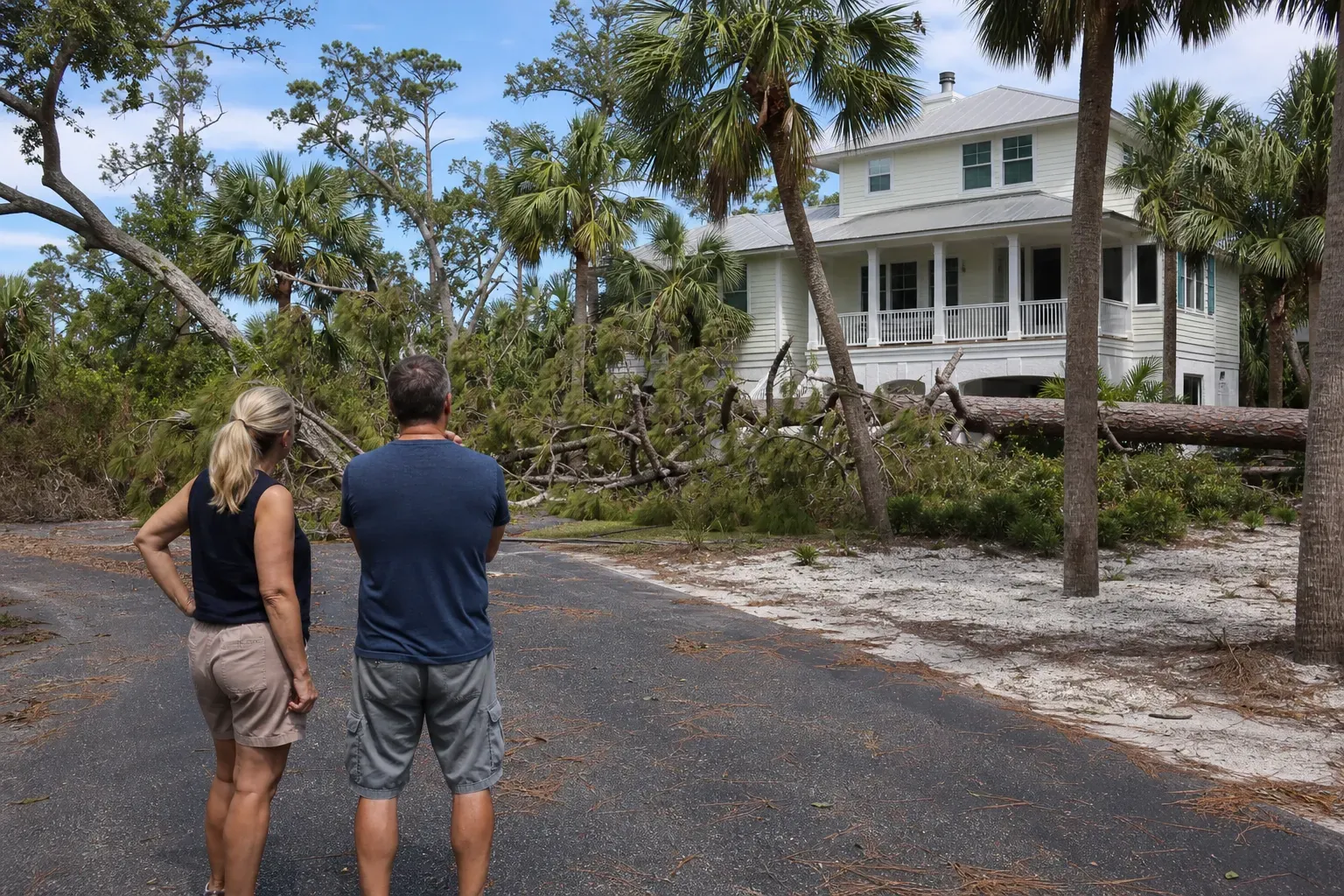
Hurricane Isaias Tree Removal Access Planning In Pensacola starts with a safe route, not a cutting plan. A qualified local provider needs to assess the tree, entry path, ground, work space, and debris exit. Homeowners can share property details from a safe place. They should not clear hazards to make room for equipment.
This guide covers site access for constrained properties. It is not a rigging, cutting, or crane setup guide. Florida Foliage is based in Daytona Beach and serves Volusia and Flagler counties. This Pensacola article is general education, not an offer of Panhandle service.
The supplied October 9 NHC advisory identifies Isaias as a named system. Forecasts can change. Check the latest official advisory and local orders before planning any visit. Do not treat this article as a live weather update.
What should Hurricane Isaias Tree Removal Access Planning In Pensacola cover?
An access plan should cover the full route through the site. Read the tree risk guide for Pensacola owners and Pensacola root recovery guide for related tree-care background. They do not decide claim, contract, or permit questions for your site.
The provider must decide which methods fit the site. That decision depends on tree damage and nearby targets. A target is something that could be struck, such as a home, car, or person. Site access is only one part of that review.
Start with facts you already know. Share an existing site plan, old survey, or clear photos. Take new photos only when you can do so safely. There is no need to walk beneath damaged limbs.
Use this list to organize the first discussion:
- Describe the tree and nearby property. Explain where it stands and what lies around it. Report visible damage without trying to test the tree.
- Identify the proposed entry route. Note gates, turns, slopes, and fixed objects. Tell the provider which routes are shared.
- Flag hidden or fragile areas. Point out known septic systems, buried features, pools, docks, and paved surfaces. Records are more useful than guesses.
- Discuss work and staging space. Ask where trucks, equipment, and removed wood might go. Let the provider judge the space needed.
- Agree on access and cleanup duties. Clarify who checks permits, obtains access consent, and handles debris. Put the agreed scope in writing.
Treat that list as a discussion aid. It is not permission to start work. The provider may reject a route after a site visit. A plan should allow for that change.
Also ask what would stop the job. Weather, unsafe trees, blocked streets, or utility hazards may prevent access. Do not seek a firm start promise based on photos alone.
The ISA tree owner resources cover pruning, tree risk, and storm-related damage. They provide useful background for questions to a qualified professional. They do not replace a site-specific assessment.
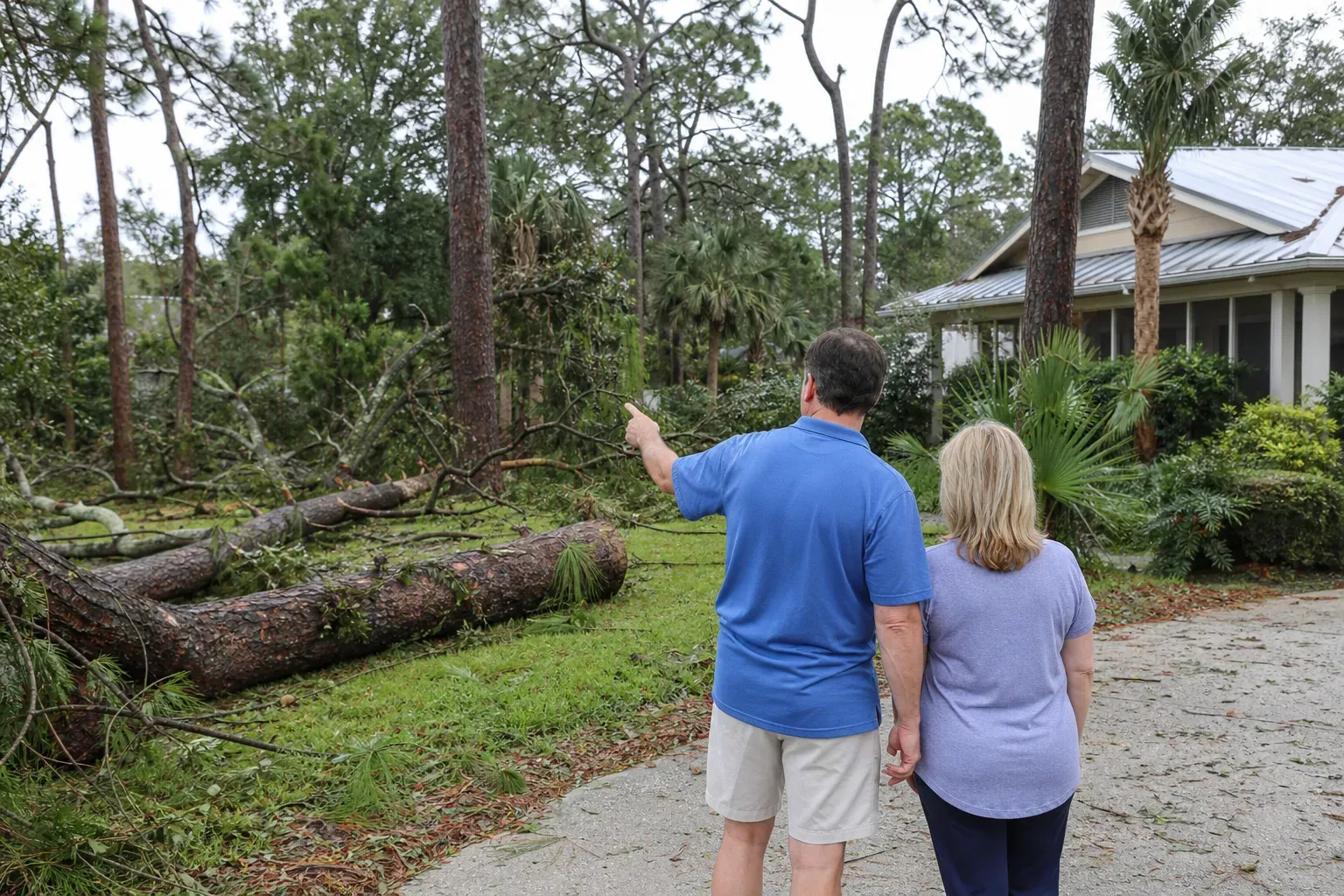
How do gates, paving, and overhead space affect access?
Access depends on more than the gap between gateposts. Read the tree risk guide for Pensacola owners and Pensacola root recovery guide for related tree-care background. They do not decide claim, contract, or permit questions for your site.
A straight entry can lead to a tight turn. A route may also narrow near a shed or porch. Ask the provider to review the whole path, including the exit. Do not assume the same route suits every machine.
Useful details include gate posts, low roof edges, and known slopes. Photos from a safe spot can show these features. Any dimensions you already have may help. The provider should verify what matters before choosing equipment.
Pavers, driveway edges, and buried drains need separate review. Their condition and support may not be clear from above. Ask what protection is proposed and what limits remain. Protective mats are not a blanket guarantee against damage.
- Ask which route the estimate assumes. A front-yard route may differ from rear-yard access. The scope should make that choice clear.
- Point out existing cracks or loose surfaces. Safe, dated photos can record their condition. They also help keep the discussion specific.
- Identify objects that limit turning space. Note walls, fixed planters, sheds, and parked vehicles. Do not move storm-damaged objects yourself.
- Report overhead lines without approaching them. Keep away from fallen or suspect wires. Contact the utility or emergency authorities as appropriate.
Crane access requires its own professional review. A place to park is not proof of a safe setup. Ask whether the provider has assessed the proposed location. Also ask whether street use or traffic controls need approval.
Do not request equipment based only on tree size. A larger machine may need more ground and setup space. A smaller one may not suit the work. Let the qualified provider explain the choice and its limits.
If equipment would use neighboring land, settle consent first. Ask the owner or counsel what consent covers the proposed route through that gate. The agreed route should be clear to all affected parties.
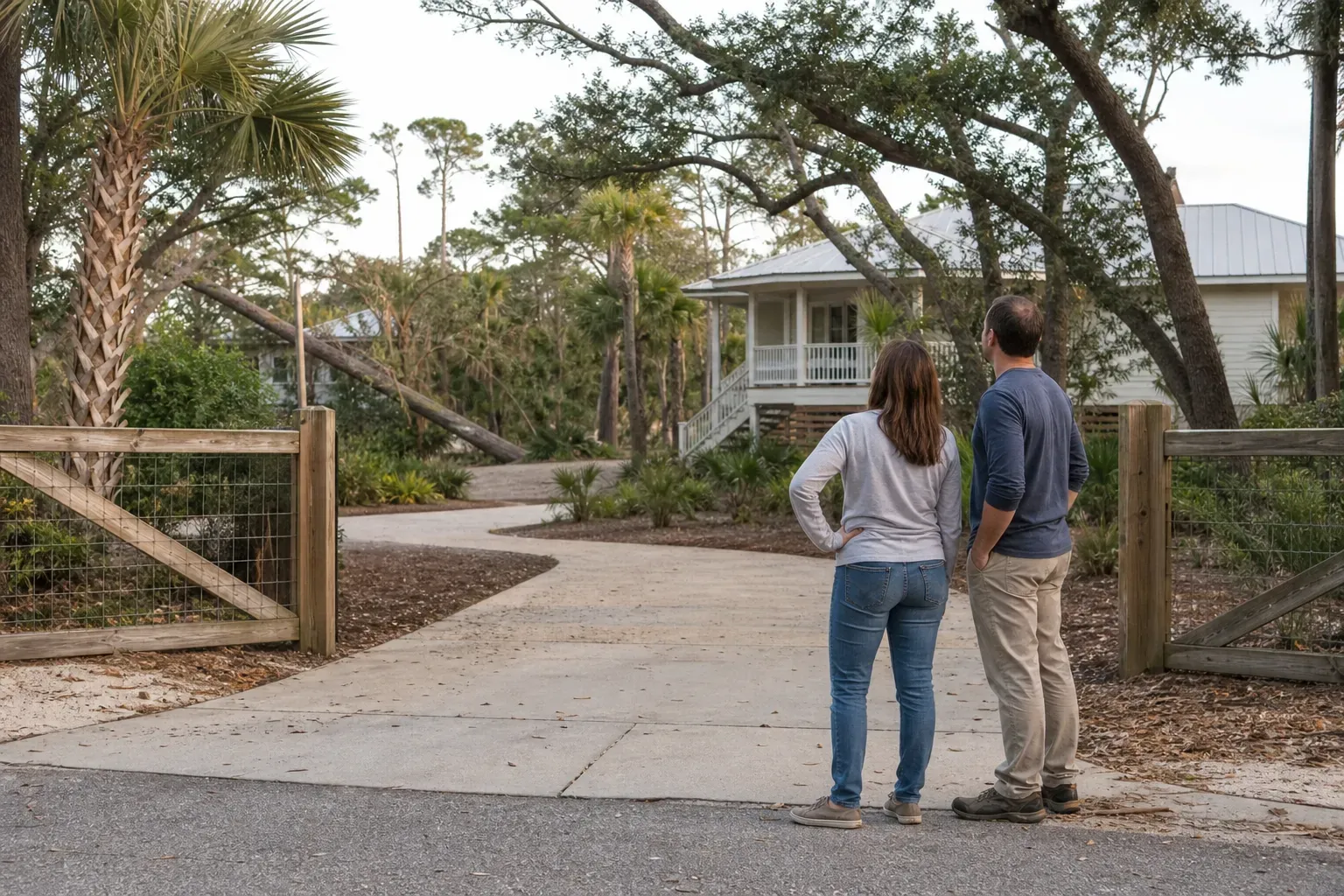
What should owners flag near septic systems, pools, and docks?
Hidden features can make an open yard a poor route. Read the tree risk guide for Pensacola owners and Pensacola root recovery guide for related tree-care background. They do not decide claim, contract, or permit questions for your site.
Septic tanks and drain fields may lie beneath lawn areas. Their exact location may be uncertain. Tell the provider where records are incomplete. Do not guess that a grassy strip can carry equipment.
Ask how the proposed route avoids known buried features. If the plan relies on an uncertain location, seek clarification. The provider may need more information from the owner or an appropriate specialist before proceeding.
Pools raise both access and cleanup questions. The route may pass near coping, a deck, or pool equipment. Ask how the work zone will be separated from these features. Discuss who will remove debris from nearby surfaces afterward.
Waterfront sites need another layer of review. Read the tree risk guide for Pensacola owners and Pensacola root recovery guide for related tree-care background. They do not decide claim, contract, or permit questions for your site.
- Share records for buried property features. Include known irrigation lines, drains, and septic areas. Clearly label any uncertain information.
- Identify pool equipment and deck edges. Explain where access is tight. Ask what protection is included in the scope.
- Flag storm-related ground changes. Report visible erosion, standing water, or displaced paving from a safe place. Do not probe unstable areas.
- Discuss waterfront debris handling. Ask how material will leave the work area. Do not assume wood can be placed beside the water.
Storm damage can also affect whether a tree needs removal. An access plan should not settle that question on its own. Ask whether the proposed scope involves removal, pruning, or further assessment.
UF/IFAS storm restoration guidance describes staged pruning for some damaged trees. Large broken branches may need years of follow-up work. That does not mean every damaged tree can be retained. It means the choice deserves a professional review.
Palms need different care from branching trees. UF/IFAS palm recovery guidance recommends retaining broken green leaves in many cases. Those leaves can still help the palm recover. Do not ask for blanket removal of all bent green fronds. Have the condition and any hazards assessed.
How should shared lanes, parking, and public approvals be handled?
A work site needs access for others, not solely tree equipment. Read the tree risk guide for Pensacola owners and Pensacola root recovery guide for related tree-care background. They do not decide claim, contract, or permit questions for your site.
Tell the provider who uses a shared drive or lane. Include neighbors, delivery access, and known emergency access needs. Agree on who will notify affected people. Do not promise use of land you do not control.
Parking and wood storage are separate issues. A truck space may not also serve as a debris area. Ask where each will go and for how long. The answer should fit the agreed site limits.
Public land requires particular care. The City of Pensacola arborist page states that pruning or removal in public rights of way requires a permit. It also describes permit rules for heritage trees and protected trees. Those rules are not a single blanket rule for all private trees.
Confirm the property's jurisdiction before relying on city guidance. A mailing address alone may not settle which office governs it. Ask the relevant authority what applies to the tree and planned work. Do not assume storm damage removes permit requirements.
- Ask who will verify required approvals. The estimate should not leave this duty unclear. Request confirmation before work that needs approval begins.
- Separate private access from public street use. Permission from a neighbor does not authorize street occupation. Ask the public authority about that part.
- Keep shared access duties explicit. Note who coordinates with neighbors and property managers. Include any agreed limits in the written scope.
- Confirm the debris destination. Ask whether hauling is included or pickup is expected. Do not assume public collection will accept a contractor's pile.
The Pensacola sanitation page identifies city yard-waste collection services. It does not establish that every storm pile will be collected. Check current instructions before choosing a placement area.
Outside Pensacola city limits, use the right local office. Santa Rosa County Development Services and Escambia County Development Review provide jurisdiction-specific contacts. Their general pages do not resolve every tree-work question. Ask about the actual project.
What belongs in the estimate and damage record?
A useful estimate explains access assumptions as well as tree work. Read the tree risk guide for Pensacola owners and Pensacola root recovery guide for related tree-care background. They do not decide claim, contract, or permit questions for your site.
The scope should name the trees and planned work. It should also state whether hauling is included. Ask whether stump work, final cleanup, or surface repair is separate. Do not infer those items from the word “removal.”
Access changes may affect the scope. Ask how the provider will handle a blocked gate or unusable route. Agree on how proposed changes will be discussed. Avoid relying on an informal statement about what equipment can reach.
- Confirm the work scope. List the trees and planned work.
- Check cleanup terms. Ask whether hauling and stump work are included.
- Record access changes. Agree how route changes will be discussed.
- Keep damage records. Save receipts and photos taken from safe places.
Keep safe photos of visible damage and existing site conditions. Include roofs, fences, paving, and access areas when possible. Do not enter a hazard zone for a better view. Safety takes priority over a complete photo record.
The Florida CFO homeowners insurance overview advises documenting damage and retaining repair records and receipts. It also explains that debris and tree-removal coverage varies. A fallen tree does not automatically make removal a covered expense.
Ask your insurer or agent about your own contract. Describe what was damaged and what work is proposed. Ask which records they need. Do not treat a tree-work estimate as a coverage decision.
The Florida hurricane deductible guide explains deductible rules and exceptions. Avoid predicting an out-of-pocket amount from a general guide. Your insurer or agent should explain the policy terms that apply.
Urgent public safety decisions belong to officials. Escambia County evacuation guidance directs residents to heed local orders. Check current notices and local NWS information. A planned tree visit is not a reason to remain in an ordered evacuation area.
Frequently asked questions
Does a wide gate mean equipment can reach the tree?
No. The full route still needs review. Turns, ground conditions, overhead space, and work areas can limit access. Share what you know, then let the provider verify the route. Ask them to check the exit path too. Do not widen or clear the route around hazards yourself.
Should I move a hanging limb to open the driveway?
No. Stay clear of hanging or unstable limbs. Do not cut, pull, or shift them for access. Tell the provider the route is blocked. Share photos only if you can take them from a safe place. Report threats to public roads or utilities to the relevant authority.
Can a provider use a neighbor's driveway?
Ask the owner or counsel what consent the actual route needs. Ask the qualified provider how the proposed route suits the work. Discuss the route, limits, neighbor notices, and shared access, then ask how the agreed plan should be recorded before the job begins. Ask counsel or the owner to confirm what actual consent covers the planned driveway use.
Will insurance pay for tree removal and access damage?
That cannot be determined from this guide. Coverage depends on the policy and loss facts. Keep records, receipts, and safe photos. Ask your insurer or agent about removal costs and any proposed access work before assuming coverage. Ask which records they need to review your claim.
Does Florida Foliage provide Pensacola storm crews?
This article does not offer Pensacola or Panhandle service. Florida Foliage is based in Daytona Beach and serves Volusia and Flagler counties. Pensacola owners should seek a qualified local provider and follow local public guidance.
Author and drafting disclosure: Tim Francis is Tree Content Expert. This article was drafted with AI assistance. It provides general education, not a site inspection, legal opinion, insurance decision, or technical work plan.
Florida Foliage is a Daytona Beach tree service that works with an ISA Certified Arborist consultant.
For tree work in Volusia or Flagler County, call (386) 481-7913 to request a free on-site estimate.
For tree work in Volusia or Flagler County, call (386) 481-7913 to request a free on-site estimate.